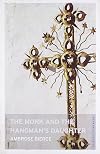
The Monk and the Hangman's Daughter [short story]
by Ambrose Bierce, Adolphe Danziger
On This Page
Description
This highly entertaining novel about three Franciscan monks is something of a departure for author Ambrose Bierce, who typically wrote about his own time. The story, which takes the form of a diary penned by the main character, Ambrosius. Though he faithfully carries out the duties of his office, he struggles with temptation, particularly after meeting the beguiling Benedicta, who happens to be the hangman's daughter of the title..
Tags
Recommendations
























Member Reviews
I thought I was picking up a story of forbidden passion and sundered lovers, but instead got a portrait of religious hypocrisy and, intensely depicted, narcissitic obsession and objectification of the "loved" person as a recepticle for the emotions of the protagonist. It's clear that Bierce has no sympathy for the actions of the main character, the monk, Ambrosius, but neither is he portrayed as a stock, moustache-twirling gothic villain. In presenting the narrative from the single point of view of Ambrosius's diary, Bierce ran the risk of seeming to empathise with or justify the monk's self-absorbed fantasies, but he's too good a writer for that, thankfully.
How much of this sentiment is in the original German-language story by show more [author:Richard Voss|232971], which Bierce co-translated, I don't know, but in his introduction he states that he added much material of his own, as well a translating Voss.
Gothic conventions he did use include: perverse monks; febrile religious passions; peasant village life; wild, rugged mountain landscapes; the dead, and intimations of mortality and doom. All to good effect. show less
How much of this sentiment is in the original German-language story by show more [author:Richard Voss|232971], which Bierce co-translated, I don't know, but in his introduction he states that he added much material of his own, as well a translating Voss.
Gothic conventions he did use include: perverse monks; febrile religious passions; peasant village life; wild, rugged mountain landscapes; the dead, and intimations of mortality and doom. All to good effect. show less
**Warning: this review contains plot spoilers.**
Franciscan monk Ambrosius is sent to the monastery in Passau deep in the Bavarian Alps with two of his brothers. In a clearing they encounter the hangman's daughter, and Ambrosius immediately is struck with her. Over the next few weeks, his brothers fear he may have formed an improper attachment to her, and send him to a hermitage in the mountains to purify his souls and make him contemplate whether this is indeed the right path for him before he is ordaineded priest. When he discovers that she has fallen victim to the charms of a local rogue, he believes it is his duty to cleanse her from her sin before it can corrupt her soul.
Allegedly a rewriting of a lost German original story (which show more is itself supposedly based on a manuscript from a German monastery), this novella commends itself by some very atmospheric descriptions of the dark German forests and bleak mountains, as well as a detailed and insightful psychological profile of a man in turmoil, battling with his inner demons. I was initially put off by the overt religiosity and piety in the narration, but it quickly becomes obvious that the teachings of, and pious intonations by, the Church are in stark contrast to how the clergy and villagers conduct themselves, revealing the innate hypocrisy. Ambrosius' initial encounter with the hangman's daughter chillingly foreshadows the conclusion of the tale, where the reader witnesses Ambrosius commit a terrible deed in a misguided moment of religious fervour. show less
Franciscan monk Ambrosius is sent to the monastery in Passau deep in the Bavarian Alps with two of his brothers. In a clearing they encounter the hangman's daughter, and Ambrosius immediately is struck with her. Over the next few weeks, his brothers fear he may have formed an improper attachment to her, and send him to a hermitage in the mountains to purify his souls and make him contemplate whether this is indeed the right path for him before he is ordaineded priest. When he discovers that she has fallen victim to the charms of a local rogue, he believes it is his duty to cleanse her from her sin before it can corrupt her soul.
Allegedly a rewriting of a lost German original story (which show more is itself supposedly based on a manuscript from a German monastery), this novella commends itself by some very atmospheric descriptions of the dark German forests and bleak mountains, as well as a detailed and insightful psychological profile of a man in turmoil, battling with his inner demons. I was initially put off by the overt religiosity and piety in the narration, but it quickly becomes obvious that the teachings of, and pious intonations by, the Church are in stark contrast to how the clergy and villagers conduct themselves, revealing the innate hypocrisy. Ambrosius' initial encounter with the hangman's daughter chillingly foreshadows the conclusion of the tale, where the reader witnesses Ambrosius commit a terrible deed in a misguided moment of religious fervour. show less
The monk and the hangman's daughter is a short novella by Ambrose Bierce, written in 1892. It is a fairly simple story of impending doom, which is quite easy to predict. Nonetheless, the story takes some interesting turns, which keep the reader interested to go on reading.
Perhaps the most interesting thing about the story is its peculiar, somewhat simplistic style. In the "Preface", by Bierce it is suggested that the story has German origins. This "Preface" is a playful artifice, a parody on the introductions in other nineteenth century novels, suggesting obscure origins of the story, long ago, 1680, and in a faraway place such as the Bavarian Alps. I do not know whether Bierce is the first to set this ploy up in a separate Preface, as show more opposed to the first pages of the novel.
While the story has its interesting moments, it is particularly the style that should draw the readers' attention. The story has something unreal to it. It is obviously very contrived, as it imitates and incorporates many style elements of German Fairy Tales: an innocent maiden / disgraceful wench, the doomed aspect of the gallows, the dark forest, a blond giant, an old, weak father, and many smaller emblems, such the way the characters behave.
At the same time, there are style characteristics of a much more modern type of story-telling. It is obvious, that the main character, Brother Ambrosius is an unreliable narrator: he views the world in a delusion, his delusion being love. As a priest, Brother Ambrosius must remain celibate, but from the time he first saw Benedicta, he has been in love, and makes it the mission of his life to rescue her. However, in his eagerness to do good, he misinterprets many things going on around him, and misunderstands the advice of his Superior. This leads to his inevitable doom.
The novella is very easy to read, with mostly short sentences, and short chapters, to emulate the style of the Fairy tales. The mixture of simplicity and irony make the story feel unreal, something not all readers may appreciate. show less
Perhaps the most interesting thing about the story is its peculiar, somewhat simplistic style. In the "Preface", by Bierce it is suggested that the story has German origins. This "Preface" is a playful artifice, a parody on the introductions in other nineteenth century novels, suggesting obscure origins of the story, long ago, 1680, and in a faraway place such as the Bavarian Alps. I do not know whether Bierce is the first to set this ploy up in a separate Preface, as show more opposed to the first pages of the novel.
While the story has its interesting moments, it is particularly the style that should draw the readers' attention. The story has something unreal to it. It is obviously very contrived, as it imitates and incorporates many style elements of German Fairy Tales: an innocent maiden / disgraceful wench, the doomed aspect of the gallows, the dark forest, a blond giant, an old, weak father, and many smaller emblems, such the way the characters behave.
At the same time, there are style characteristics of a much more modern type of story-telling. It is obvious, that the main character, Brother Ambrosius is an unreliable narrator: he views the world in a delusion, his delusion being love. As a priest, Brother Ambrosius must remain celibate, but from the time he first saw Benedicta, he has been in love, and makes it the mission of his life to rescue her. However, in his eagerness to do good, he misinterprets many things going on around him, and misunderstands the advice of his Superior. This leads to his inevitable doom.
The novella is very easy to read, with mostly short sentences, and short chapters, to emulate the style of the Fairy tales. The mixture of simplicity and irony make the story feel unreal, something not all readers may appreciate. show less
In the title story, a young monk is sent with some of his brothers to an isolated village in the Alps. He soon encounters a beautiful young girl who is shunned by the villagers because her father is the hangman. The monk thinks this injustice is ungodly, and tries to comfort and protect the young girl but is reprimanded by his superiors. The monk is sent up a mountain to a lonely cottage to search his soul and rethink his attraction to the doomed girl, but his life is set on a tragic course and things don't end up turning out very well for anyone up on that mountain.
Bierce has an amusing cynicism, beautifully written prose, and a sense for the perfect twist that make his stories very readable 120 years after they were written.
[full show more review here: http://spacebeer.blogspot.com/2011/10/monk-and-hangmans-daughter-by-ambrose.html ] show less
Bierce has an amusing cynicism, beautifully written prose, and a sense for the perfect twist that make his stories very readable 120 years after they were written.
[full show more review here: http://spacebeer.blogspot.com/2011/10/monk-and-hangmans-daughter-by-ambrose.html ] show less
93 p novella, purporting to be adapted from an ancient German text.
Narrated by young monk Ambrosius, sent to a monastery in Alpine Bavaria. He he encounters the "untouchable" hangman and his lovely daughter Benedikta. She too is- by reason of her parentage- a social outcast, yet Ambrosius begins to fall in love.
Our narrator seems - apart from his romantic feelings- a spiritually minded youth, ever dwelling on his vocation, and the majesty of nature.
But Benedikt is being pursued by a worthless young noble- Rochus.......and an unexpected twist brings the tale to a sudden end.
Quite an involving read.
Narrated by young monk Ambrosius, sent to a monastery in Alpine Bavaria. He he encounters the "untouchable" hangman and his lovely daughter Benedikta. She too is- by reason of her parentage- a social outcast, yet Ambrosius begins to fall in love.
Our narrator seems - apart from his romantic feelings- a spiritually minded youth, ever dwelling on his vocation, and the majesty of nature.
But Benedikt is being pursued by a worthless young noble- Rochus.......and an unexpected twist brings the tale to a sudden end.
Quite an involving read.
Un llibre interessant que s'ha de llegir alhora ¨entre-linees¨ per entendre la situació i context de la història que per altre costat està molt ben descrita i que ens acosta a la convencional literatura romàntica . Una mena de Werther ben carregat de pensaments pietosos i alhora passions terrenals que ho són ben poc.
Nov 20, 2013Catalan
Members
- Recently Added By
Lists

1890s
49 works; 6 members

Books Read in 2020
4,379 works; 124 members
Talk Discussions
Past Discussions
The Monk and the Hangman’s Daughter by Richard Voss – LIMITED EDITIONS CLUB 1967 in George Macy devotees (August 2023)
Author Information

552+ Works 15,280 Members
Ambrose Bierce was a brilliant, bitter, and cynical journalist. He is also the author of several collections of ironic epigrams and at least one powerful story, "An Occurrence at Owl Creek Bridge." Bierce was born in Ohio, where he had an unhappy childhood. He served in the Union army during the Civil War. Following the war, he moved to San show more Francisco, where he worked as a columnist for the newspaper the Examiner, for which he wrote a number of satirical sketches. Bierce wrote a number of horror stories, some poetry, and countless essays. He is best known, however, for The Cynic's Word Book (1906), retitled The Devil's Dictionary in 1911, a collection of such cynical definitions as "Marriage: the state or condition of a community consisting of a master, a mistress, and two slaves, making in all, two." Bierce's own marriage ended in divorce, and his life ended mysteriously. In 1913, he went to Mexico and vanished, presumably killed in the Mexican revolution. (Bowker Author Biography) show less
2 Works 317 Members
Some Editions
Series
Belongs to Publisher Series
Work Relationships
Common Knowledge
- Canonical title
- The Monk and the Hangman's Daughter [short story]
- Original title
- The Monk and the Hangman's Daughter; The monk and the hangman's daughter
- Original publication date
- 1892
- People/Characters
- Gustav Adolf Danziger; Richard Voss; Ambrosius; Ægidius; Romanus; Benedicta (show all 7); Rochus
- Important places
- Berchtesgaden, Bavaria, Germany; Passau, Bavaria, Germany
- First words
- Many years ago - probably in 1890 - Dr Gustav Adolf Danziger brought to me in San Francisco what he said he was a translation by himself of a German story by that brilliant writer, Herr Richar Voss, of Heidelberg. (Preface)
On the first day of May in the year of our Blessed Lord 1680, the Franciscan monks Ægidius, Romanus and Ambrosius were sent by their Superior from the Christian city of Passau to the Monastery of Berchtesgaden, near Salzburg... (show all).
On the first day of May in the year of our Blessed Lord 1680, the Fransiscan monks Aegidius, Romanus and Ambrosius were sent by their Superior from the Christian city of Passau to the Monastery of Berchtesgaden, near Salzburg... (show all). - Last words
- (Click to show. Warning: May contain spoilers.)Pray for him, pray for him!
- Disambiguation notice
- This is Bierce's translated and expanded version of the story by Richard Voss. Please do not combine the Bierce version with Voss's original.
Classifications
- Genres
- Fiction and Literature, General Fiction, Horror
- DDC/MDS
- 813.4 — Literature & rhetoric American literature in English American fiction in English Later 19th Century 1861-1900
- LCC
- PZ3 .B479 .M10 — Language and Literature Fiction and juvenile belles lettres Fiction and juvenile belles lettres Fiction in English
- BISAC
Statistics
- Members
- 317
- Popularity
- 100,319
- Reviews
- 9
- Rating
- (3.46)
- Languages
- English, French, German, Spanish
- Media
- Paper, Audiobook, Ebook
- ISBNs
- 36
- ASINs
- 30