On This Page
Description
According to Wikipedia: ' Wace (c. 1115 - c. 1183) was an Anglo-Norman poet, who was born in Jersey and brought up in mainland Normandy (he tells us in the Roman de Rou that he was taken as a child to Caen), ending his career as Canon of Bayeux. His extant works include: Roman de Brut - a verse history of Britain and Roman de Rou - a verse history of the Dukes of Normandy. Other works, also in verse, include lives of Saint Margaret and Saint Nicholas. Roman de Brut (c. 1155) was based on show more the Historia Regum Britanniae of Geoffrey of Monmouth. It cannot be regarded as a history in any modern sense, although Wace often distinguishes between what he knows and what he does not know, or has been unable to find out. Wace narrates the founding of Britain, by Brutus of Troy, to the end of the legendary British history created by Geoffrey of Monmouth.' show lessTags
Recommendations















Member Recommendations

Member Reviews
A small irritant is the fact that these are not Chronicles, a year by year account, usually concerned with geographical areas, but verse romances. So, the title sucks. The prose style of the translator is not very lively, and his excuse might be that he's gone for accuracy as opposed to liveliness. the collector of Arthuriana should not be without this volume, but very little here has not been covered by other period writers.
Read about half, but having read lots of Arthurian material before it wasn't all that exciting...
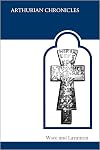
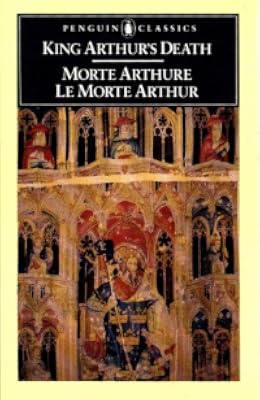
Jacket notes, from the introduction by Gwyn Jones: "The three most important Arthurian chroniclers as far as England is concerned were Geoffrey of Monmouth, Wace and Layamon. Geoffrey of Monmouth's History of the Kings of Britain had proved very popular, and Wace was one of the first to use the matter in verse form in octosyllable couplets.
Layamon followed Wace, but in him we see English verse in the very act of change, making Layamon the first important poet in Middle English. There is a continuous use of alliteration, syllabic strictness, rhyme and assonance. In his pages we meet Arthur for the first time in English, for he transformed Arthurian legend with the Saxon spirit, and divested it of courtly elegance, giving it greater force show more and simplicity... the legends he composed became a source of inspiration to later generations." show less
Layamon followed Wace, but in him we see English verse in the very act of change, making Layamon the first important poet in Middle English. There is a continuous use of alliteration, syllabic strictness, rhyme and assonance. In his pages we meet Arthur for the first time in English, for he transformed Arthurian legend with the Saxon spirit, and divested it of courtly elegance, giving it greater force show more and simplicity... the legends he composed became a source of inspiration to later generations." show less
Ratings
Members
- Recently Added By
Author Information
All Editions
Some Editions
Series
Belongs to Publisher Series
Work Relationships
Classifications
Statistics
- Members
- 194
- Popularity
- 168,666
- Reviews
- 3
- Rating
- (3.81)
- Languages
- English
- Media
- Paper, Ebook
- ISBNs
- 22
- ASINs
- 8