
The History of the Kings of Britain
by Geoffrey of Monmouth
On This Page
Description
Little is definitively known of the life and schooling of Geoffrey of Monmouth, but his extraordinary literary works have survived centuries as a testament to his legacy. Around the time of Geoffrey's life, the written Arthurian legends were mostly fragmentary and often incoherent. He therefore took on the task of creating the first full biographies of King Arthur and Merlin, which from that point on remained the quintessential source for all Arthurian tales. His finest work, "The History of show more the Kings of Britain", traces the reign of nearly a hundred British kings, beginning with the nation's mythical founder, Brutus. It is an imaginative and meticulously written masterpiece. Modeled after "The Aeneid", one-half of the work is devoted towards the first ten centuries of British history. The second half, comprising about two centuries, focuses primarily around King Arthur, the rise and fall of the Round Table, and the declining fortunes of Arthur's heirs. show lessTags
Recommendations











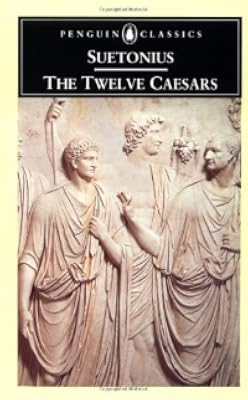

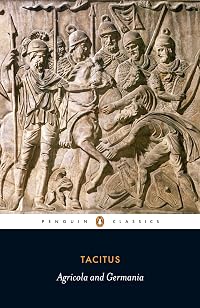
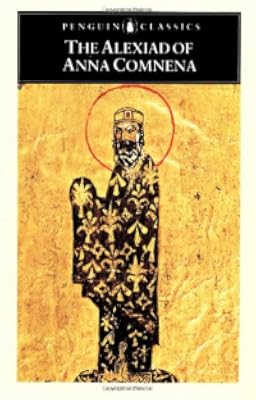
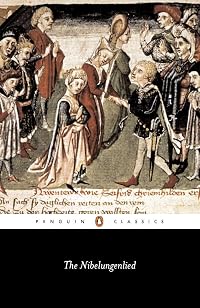


Member Recommendations
ed.pendragon Tolkien was very familar with The History of the Kings of Britain, with its invented history resonant with verisimilitude but, at root, true fantasy, and echoed its approach particularly in The Lord of the Rings.
30


Member Reviews
Geoffrey's fantastical history of Britain, based on a mysterious Welsh tome that has never been found.
Much of it seems more legend than history, claiming that Britain, like Rome, was founded by a Trojan refugee. It's an Aeneid, but for England.
Much of its interest lies in its role as a progenitor of the Arthurian mythos. The story of King Arthur is definitely the climax of the book. The biggest surprise was that there was no mention of any sword in a stone or lady of a lake - it looks like those elements came later.
The most shocking episode was (content warning: sexual violence) that of a princess kidnapped by a raging ogre. Arthur's friend comes upon the maiden's elderly nanny, who reveals that the princess died of shock when the ogre show more tried to rape her. Since then, the ogre has been raping this elderly woman every day. Arthur and his companion slay the ogre and build a monument to the princess, but the fate of the nanny is never revealed.
This seems to betray a very medieval viewpoint. The noble princess's is honoured, but her servant's fate is ignored despite her pitiful situation. I like to think the old woman found peace caring for the princess's tomb, but as far as the narrative is concerned she ceased to exist as soon as her usefulness ran out.
Other than that, I was surprised to learn one of England's ancient kings was homosexual, and hot. Merlin's prophecies were suitably incomprehensible and frankly could have been removed from the book without much loss. Nice to know there were noble queens too. show less
Much of it seems more legend than history, claiming that Britain, like Rome, was founded by a Trojan refugee. It's an Aeneid, but for England.
Much of its interest lies in its role as a progenitor of the Arthurian mythos. The story of King Arthur is definitely the climax of the book. The biggest surprise was that there was no mention of any sword in a stone or lady of a lake - it looks like those elements came later.
The most shocking episode was (content warning: sexual violence) that of a princess kidnapped by a raging ogre. Arthur's friend comes upon the maiden's elderly nanny, who reveals that the princess died of shock when the ogre show more tried to rape her. Since then, the ogre has been raping this elderly woman every day. Arthur and his companion slay the ogre and build a monument to the princess, but the fate of the nanny is never revealed.
This seems to betray a very medieval viewpoint. The noble princess's is honoured, but her servant's fate is ignored despite her pitiful situation. I like to think the old woman found peace caring for the princess's tomb, but as far as the narrative is concerned she ceased to exist as soon as her usefulness ran out.
Other than that, I was surprised to learn one of England's ancient kings was homosexual, and hot. Merlin's prophecies were suitably incomprehensible and frankly could have been removed from the book without much loss. Nice to know there were noble queens too. show less
Lewis Thorpe opens his introduction to the Penguin edition saying that this book "may be said to bear the same relationship to the story of the Early British inhabitants of our own island as do the seventeen historical books in the Old Testament, from Genesis to Esther, to the early history of the Israelites in Palestine". That's probably the best description of what the book is - it has some history in it, it has some elements which cannot be true and there is that middle ground where a lot of the text lives which may be true - and only time will show what the next digs will find.
Finished in 1136 (or so the latest research tells us), it is a history of the Britons from the fall of Troy in 1240 BC (as apparently that's where it all show more started) to 689 and the death of Cadwallader (the historical king o Wales with this name dies in 682; there is another king (Cædwalla of Wessex) whose history is very close to what Geoffrey of Monmouth describes in the last years of the reign which would explain the slight mix-up). This death allows the Anglo-Saxons to take over and thus to put an end to the almost 2 millennia of history which this book covers - the author even points to which historians to read for the next chapters of the story - Caradoc of Llancarfan for the kings of Wales and William of Malmesbury and Henry of Huntington for the Saxon kings (although that specific end note is missing from the most well known manuscript).
While writing the history, Geoffrey took a bit of time to finish another book: Prophetiae Merlini (The Prophecies of Merlin) which is known to had appeared before 1135. When this history came out, that earlier became part of it (together with its individual prologue) - so it seems like "publish an excerpt before the full book as a separate book/story so people get interested and then reuse it as is in a novel/longer text" have been an existing practice even as early as the mid-12th century and not just a 20th century literary journals invention.
The history itself can be almost mind-numbingly boring in places - there are names and places and battles and the same enemies show up again and again. The introduction makes a good job in preparing you for the names you need to watch out for. When I started reading the history I was not sure I want to read the whole of it - I picked it up for the Arthur story so I considered just reading that part and calling it done but decided to give it a chance and start from the start. As it turned out, Merlin is not really in the same timeline with Arthur (both of them never meet) and that there are some interesting bits in the early parts of the history (and not necessarily the giants although they were entertaining as well) and the story references the past so I am happy I read even through the boring parts.
Once Merlin and Utherpendragon showed up on the scene, I settled down to read the first version of a legend that everyone had heard. And as with most first versions, it turns out that the story I thought I knew did not start anywhere close to what I thought it is. Oh, there is a Guinevere and she is unfaithful (although not with who you expect and Geoffrey refuses to tell us any details). There is Merlin. There is Arthur. And there is the island of Avalon and a sword. And you may recognize a few of the names of the knights. But the rest is just missing.
Let's start with Merlin - who is not a wizard but a prophet. He utters his prophecies, he creates Stonehenge by moving the whole thing from Ireland where the giants initially erected it, he changes Utherpendragon to look like another man for a night so he can go and impregnate Ygerna with Arthur and then we never hear his name again. Yes - his actions are these of a man who can make miracles (of some types) so I can see how that got changed into a wizard later but here he is just clever and cunning and touched by God to allow him to see the future and prophesize. In any legend I know of, Merlin is alongside Arthur - but I guess that changed later.
And then Arthur was born, followed by his sister Anna. The only thing that makes him different from the kings before him seem to be the sword he is carrying and the fact that he is unusually successful (and a lot of the prophecies seem to fit him like a glove. So the legend is born. As for the Round Table... it is probably a lot more complicated than that but through the whole history, we are told about knights talking to kings as if they are equal and kings listening to them; about the kings and knights gathering together and discussing things (and we get a lot of speeches from these moments). So Arthur does the same - he follows in the steps of all the other kings that came before him, he invites more knights, especially from other lands to his circle - something natural and normal in these days. Not as much in the Middle Ages I'd guess when this book (and the legends that used it as a base) sprang in - so the round table is kinda here as an idea but we need to wait a couple of decades for Wace to actually name it so and describe it for the first time and then history and time and the numerous authors retelling the story will make it the symbol it is. And there is no Grail - definitely no Grail anywhere - it will be Chrétien de Troyes, half a century after Geoffrey of Monmouth told his own story, who will add that to the legend.
Of course, Geoffrey of Monmouth did not write in a vacuum. He often gives a nod to Gildas, Bede and Nennius - the Latin historians who wrote on the same topics before him. He also claims a book that he was given and is translating (which may have existed - if so, it had been lost; but it may as well have been just the way for Geoffrey of Monmouth to be humble and not to claim that he invented a lot of the stories). And he is really bad at geography - his ideas of how far someone can go and how long it takes between places had perplexed anything trying to research his work for almost a millennia at this point. The fact that his math almost never adds up may actually not be his fault - scribes could have mixed their roman numbers up and typos are not a modern invention.
Thorpe ends the edition I read with two very helpful supplements - a timeline with actual years and names of kings (based on the synchronization with non-British dates which Geoffrey of Monmouth uses extensively) and a name/place index where all references to that name/place are listed and glossed where needed. show less
Finished in 1136 (or so the latest research tells us), it is a history of the Britons from the fall of Troy in 1240 BC (as apparently that's where it all show more started) to 689 and the death of Cadwallader (the historical king o Wales with this name dies in 682; there is another king (Cædwalla of Wessex) whose history is very close to what Geoffrey of Monmouth describes in the last years of the reign which would explain the slight mix-up). This death allows the Anglo-Saxons to take over and thus to put an end to the almost 2 millennia of history which this book covers - the author even points to which historians to read for the next chapters of the story - Caradoc of Llancarfan for the kings of Wales and William of Malmesbury and Henry of Huntington for the Saxon kings (although that specific end note is missing from the most well known manuscript).
While writing the history, Geoffrey took a bit of time to finish another book: Prophetiae Merlini (The Prophecies of Merlin) which is known to had appeared before 1135. When this history came out, that earlier became part of it (together with its individual prologue) - so it seems like "publish an excerpt before the full book as a separate book/story so people get interested and then reuse it as is in a novel/longer text" have been an existing practice even as early as the mid-12th century and not just a 20th century literary journals invention.
The history itself can be almost mind-numbingly boring in places - there are names and places and battles and the same enemies show up again and again. The introduction makes a good job in preparing you for the names you need to watch out for. When I started reading the history I was not sure I want to read the whole of it - I picked it up for the Arthur story so I considered just reading that part and calling it done but decided to give it a chance and start from the start. As it turned out, Merlin is not really in the same timeline with Arthur (both of them never meet) and that there are some interesting bits in the early parts of the history (and not necessarily the giants although they were entertaining as well) and the story references the past so I am happy I read even through the boring parts.
Once Merlin and Utherpendragon showed up on the scene, I settled down to read the first version of a legend that everyone had heard. And as with most first versions, it turns out that the story I thought I knew did not start anywhere close to what I thought it is. Oh, there is a Guinevere and she is unfaithful (although not with who you expect and Geoffrey refuses to tell us any details). There is Merlin. There is Arthur. And there is the island of Avalon and a sword. And you may recognize a few of the names of the knights. But the rest is just missing.
Let's start with Merlin - who is not a wizard but a prophet. He utters his prophecies, he creates Stonehenge by moving the whole thing from Ireland where the giants initially erected it, he changes Utherpendragon to look like another man for a night so he can go and impregnate Ygerna with Arthur and then we never hear his name again. Yes - his actions are these of a man who can make miracles (of some types) so I can see how that got changed into a wizard later but here he is just clever and cunning and touched by God to allow him to see the future and prophesize. In any legend I know of, Merlin is alongside Arthur - but I guess that changed later.
And then Arthur was born, followed by his sister Anna. The only thing that makes him different from the kings before him seem to be the sword he is carrying and the fact that he is unusually successful (and a lot of the prophecies seem to fit him like a glove. So the legend is born. As for the Round Table... it is probably a lot more complicated than that but through the whole history, we are told about knights talking to kings as if they are equal and kings listening to them; about the kings and knights gathering together and discussing things (and we get a lot of speeches from these moments). So Arthur does the same - he follows in the steps of all the other kings that came before him, he invites more knights, especially from other lands to his circle - something natural and normal in these days. Not as much in the Middle Ages I'd guess when this book (and the legends that used it as a base) sprang in - so the round table is kinda here as an idea but we need to wait a couple of decades for Wace to actually name it so and describe it for the first time and then history and time and the numerous authors retelling the story will make it the symbol it is. And there is no Grail - definitely no Grail anywhere - it will be Chrétien de Troyes, half a century after Geoffrey of Monmouth told his own story, who will add that to the legend.
Of course, Geoffrey of Monmouth did not write in a vacuum. He often gives a nod to Gildas, Bede and Nennius - the Latin historians who wrote on the same topics before him. He also claims a book that he was given and is translating (which may have existed - if so, it had been lost; but it may as well have been just the way for Geoffrey of Monmouth to be humble and not to claim that he invented a lot of the stories). And he is really bad at geography - his ideas of how far someone can go and how long it takes between places had perplexed anything trying to research his work for almost a millennia at this point. The fact that his math almost never adds up may actually not be his fault - scribes could have mixed their roman numbers up and typos are not a modern invention.
Thorpe ends the edition I read with two very helpful supplements - a timeline with actual years and names of kings (based on the synchronization with non-British dates which Geoffrey of Monmouth uses extensively) and a name/place index where all references to that name/place are listed and glossed where needed. show less
I'm uncertain of how to file this. It's presented as history, but that's slightly "history" in the sense that Herodotus wrote "history" as well. It is and it isn't. It purports to tell the history of the kings of Britain, from the founding of the nation by Brutus, to the point at which the Saxons gain dominance. In places it's clearly fiction - the prophesies of Merlin & tales of King Arthur are clearly not FACT. but that's not to say that the entire book should be dismissed so lightly. It's one of those books which has influenced so many other piece of work that parts of it you know without ever having read it before. For example, the section where King Arthur was summoned to pay tribute to Rome & takes umbrage is clearly closely show more related to the source material for the poetical version to be found in [b:The Death of King Arthur: A New Verse Translation|10955086|The Death of King Arthur A New Verse Translation|Unknown|http://d.gr-assets.com/books/1302208933s/10955086.jpg|20963433]. This is the oldest source for the king Arthur myth where his life is presented and he's portrayed as a King of the Britons. That being the case, it has an enormous impact on a significant portion of English Literature thereafter. It's also the first known source for the stories of King Lear & Cymbeline, which were referenced in various works that ended up in Holinshed's Chronicles, which Shakespeare "borrowed" from.
The cover notes that this is the "food & drink of poets and provocative goad to historians" and I think that does it justice. it doesn't fit the modern interpretation of the term "history" but it was written to serve a purpose and we can only assume (with the prevalence of 12th to 14th century manuscripts) it served that purpose admirably. the notes with the book put it into context and also makes notes on Geoffrey's sources and other references. I did have to shift my mindset while reading this, from a non-fiction to a story point of view, but I still enjoyed it. show less
The cover notes that this is the "food & drink of poets and provocative goad to historians" and I think that does it justice. it doesn't fit the modern interpretation of the term "history" but it was written to serve a purpose and we can only assume (with the prevalence of 12th to 14th century manuscripts) it served that purpose admirably. the notes with the book put it into context and also makes notes on Geoffrey's sources and other references. I did have to shift my mindset while reading this, from a non-fiction to a story point of view, but I still enjoyed it. show less
An example of the murky boundary between history and romance in Plantagenet times. This is good entertainment, a racy history that would please the Plantagenet court. Modern research has disproved almost everything in it, but it remains an artefact of the period. it definitely provided the basis of other author's work. there's another book that has crossed my shelves a good deal like this in tone, and sadly, veracity, Dudo of Saint Quentin's "History of the Normans." If you like this one give Dudo a try.
ENGL241BE FA25
really enjoyed when this one other guy in the 1190s was like "Geoffrey SUCKS he is MAKING UP LIES DO NOT TRUST HIM EVER"
Where in the world did Merlin go during Arthur's reign bro
oh boy I love thinking about historiography and the making of myths and legends
Geoffrey is actually funny. So is the translator.
really enjoyed when this one other guy in the 1190s was like "Geoffrey SUCKS he is MAKING UP LIES DO NOT TRUST HIM EVER"
Where in the world did Merlin go during Arthur's reign bro
oh boy I love thinking about historiography and the making of myths and legends
Geoffrey is actually funny. So is the translator.
There are too many things to review here. Geoffrey's history is refreshingly well written for a medieval latin work, and the translation is very well done. It's not, of course, 'history' in any sense, and it can be pretty hard work slogging through the parts that don't deal with dramatic or fabulous stories. Parts of this felt like the bible's begats, and nobody needs more of that. The good stories, on the other hand, were genuinely interesting- Arthur of course, but also Locrinus' love for Estrildis, the story of King Leir, and the various narratives of battle trickeration.
The other thing to review is this edition. Good translation, but awful apparatus. I really needed something to tell me what, if anything, was historically accurate show more and what was pure fantasy. As it is, I kind of sort of remembered some names from Bede or recent histories of dark ages Britain (Penda, for instance). I would have loved some footnotes giving me a bit more information; it also would have made the text itself more interesting.
In any case, well worth reading. I'm ready to move on to some later Arthuriana. show less
The other thing to review is this edition. Good translation, but awful apparatus. I really needed something to tell me what, if anything, was historically accurate show more and what was pure fantasy. As it is, I kind of sort of remembered some names from Bede or recent histories of dark ages Britain (Penda, for instance). I would have loved some footnotes giving me a bit more information; it also would have made the text itself more interesting.
In any case, well worth reading. I'm ready to move on to some later Arthuriana. show less
It is hard to place a numerical score on older literature, as our ideas of what is "good" is often constructed from out contemporaries. Geoffrey of Monmouth is a prime example of this time issue.
The History of the Kings of Britain is meant to serve not as a tale of epic proportions, but as a record, translated from British (ancient Welsh) into Latin. Still, the History toes a fine line between history and mythology, as most of the events (insert Merlin and King Arthur) have little root in fact.
That said, pre-orthodox historiography (for some early "normal history," read some Leopold van Ranke or Francis Parkman) tends to flirt with the mythic. You can see this from Herodotus into the early modern period.
So thus the problem emerges: how show more should I judge this? For me, as an academic, I feel inclined to reserve this text as "historical" or "academic," an example of historiography-in-action, yet judging from the other reviews on this site, people seem inclined to read it for pleasure.
My decision is thus: rather than reward this text as "timeless," I choose to give it a rating in scoring of how I perceive the average reader would rate this (my score is not ironically near the average rating). That said, the above points should be noted prior to reading. Still worthwhile, but there are better written books (for the purpose of pleasure reading). show less
The History of the Kings of Britain is meant to serve not as a tale of epic proportions, but as a record, translated from British (ancient Welsh) into Latin. Still, the History toes a fine line between history and mythology, as most of the events (insert Merlin and King Arthur) have little root in fact.
That said, pre-orthodox historiography (for some early "normal history," read some Leopold van Ranke or Francis Parkman) tends to flirt with the mythic. You can see this from Herodotus into the early modern period.
So thus the problem emerges: how show more should I judge this? For me, as an academic, I feel inclined to reserve this text as "historical" or "academic," an example of historiography-in-action, yet judging from the other reviews on this site, people seem inclined to read it for pleasure.
My decision is thus: rather than reward this text as "timeless," I choose to give it a rating in scoring of how I perceive the average reader would rate this (my score is not ironically near the average rating). That said, the above points should be noted prior to reading. Still worthwhile, but there are better written books (for the purpose of pleasure reading). show less
Members
- Recently Added By
Lists

100 Books to Read in a Lifetime (That Are Older Than 200 Years)
415 works; 173 members

Folio Society
831 works; 53 members

Best Arthurian Fiction
104 works; 33 members

Blue Pyramid 1,276 Best Books of All Time
1,248 works; 32 members

Fakes, Forgeries, and Fictitious Authors
112 works; 4 members

Western Canon
206 works; 2 members

Books Read in 2025
4,091 works; 97 members
Author Information

20+ Works 3,262 Members
Some Editions
Series
Belongs to Publisher Series
Work Relationships
Is abridged in
Common Knowledge
- Canonical title
- The History of the Kings of Britain
- Original title
- De gestis Britonum
- Alternate titles
- Historia regum Britanniae; On the Deeds of the Britons
- Original publication date
- 1138
- People/Characters
- Aeneas; Brutus of Troy; Diana; Locrinus; King Camber; Albanactus (show all 39); King Lear (Leir of Britain); Goneril; Regan; Cordelia; Cunedagius; Marganus; Dyfnwal Moelmud; Belinus; Brennius; Julius Caesar; Claudius I, Emperor of Rome; Guiderius; Arvirargus; Magnus Maximus; Conan Meriadoc; Aldroen; Constantine III; Vortigern; Constans II, Byzantine Emperor; Ambrosius Aurelianus; Uther Pendragon; Hengist; Horsa; Merlin; Gorlois; Igraine; King Arthur; Lucius Tiberius; Mordred; Guinevere; Constantine; Cador; Cadwaladr
- Important places
- Ancient Greece; Troy; Totnes, Devon, England, UK; Devon, England, UK; England, UK; Lloegyr (show all 14); Cambria; Alba; Roman Empire; Rome, Italy; Italy; Avalon; Almesbury; UK
- Important events
- Classical Antiquity; Trojan War; Molmutine Laws; Roman Empire; Middle Ages; Battle of Camlann
- Dedication
- For
KERSTIN THORPE
[Thorpe translation] - First words
- Britain, the best of islands, is situated in the Western Ocean, between France and Ireland.
- Last words
- (Click to show. Warning: May contain spoilers.)They threw off completely the dominion of the Britons and under their leader Adelstan, who was the first among them to be crowned king, they ruled over the whole of Loegria.
- Publisher's editor
- Bruce, Sylvia (Penguin)
- Original language
- Latin
Classifications
- Genres
- History, Nonfiction, General Nonfiction
- DDC/MDS
- 941.01 — History & geography History of Europe British Isles Historical periods of British Isles Early history to 1066
- LCC
- DA140 .G353 — History of Europe, Asia, Africa and Oceania Great Britain History of Great Britain England History By period Early and medieval to 1485 Celts. Romans. Saxons. Danes. Normans
- BISAC
Statistics
- Members
- 3,085
- Popularity
- 5,701
- Reviews
- 24
- Rating
- (3.66)
- Languages
- 9 — Dutch, English, French, German, Italian, Japanese, Latin, Multiple languages, Spanish
- Media
- Paper, Audiobook, Ebook
- ISBNs
- 45
- UPCs
- 1
- ASINs
- 51