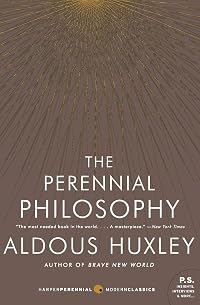
The Perennial Philosophy
by Aldous Huxley 
On This Page
Description
An inspired gathering of religious writings that reveals the "divine reality" common to all faiths, collected by Aldous Huxley. "The Perennial Philosophy," Aldous Huxley writes, "may be found among the traditional lore of peoples in every region of the world, and in its fully developed forms it has a place in every one of the higher religions." With great wit and stunning intellect-drawing on a diverse array of faiths, including Zen Buddhism, Hinduism, Taoism, Christian mysticism, and show more Islam-Huxley examines the spiritual beliefs of various religious traditions and explains how they are united by a common human yearning to experience the divine. The Perennial Philosophy includes selections from Meister Eckhart, Rumi, and Lao Tzu, as well as the Bhagavad Gita, Tibetan Book of the Dead, Diamond Sutra, and Upanishads, among many others. show lessTags
Recommendations


















Member Reviews
Wow! I've been wanting to read this ever since I first heard about it when I was a young teenager (which, yes, was a long time ago). I was a little put off when I saw the number of quotes, thinking it would be less of Huxley's work and more of just a collection of "wise sayings." It was neither of those (alone), but something more. It is, indeed, Huxley's narrative as he weaves in and out of these quotes, describing, from his perspective, The Perennial Philosophy that runs throughout strands of all the world's religions. I wasn't always in agreement with some of his conclusions, and some of the cultural biases stand out from this vantage point, but small quibbles in a really fascinating work. I have no doubt I will refer back to this show more often. show less
The phrase “perennial philosophy” was coined by the 17th-Century mathematician and philosopher Gottfried Leibniz, and refers to the fairly consistent set of mystical beliefs which lie at the heart of all the major religions both East and West. Summarised, it states that: behind or beyond the everyday world lies the divine Ground, Reality, or God; this is both immanent and transcendent; it is possible, if we live the right way, for any of us to become this Reality ourselves, and this should be our chief purpose in life.
Huxley’s detailed account is illustrated throughout with pieces from works such as the Upanishads and Tao Te Ching in the East, to Christian and Muslim mystics in the West. It’s not a discussion, it’s a show more straight description with not a dissenting word on any of its 300 pages. Also, there’s no attempt to help the general reader: books like this should have a glossary, defining precisely how the author is using terms like “self”, “Self”, “detachment”, “real” and so on. But, as is traditional, Huxley just steams straight in. Some of the quotations, too, are in Latin and French, which he doesn’t always bother translating. One thing which did surprise me was the way he refers to such things as mind-reading, telepathy, faith healing and levitation as proven facts, and draws conclusions from them about the universe—at one point he quotes from the Proceedings of the Society for Psychical Research for example, which is not a crime, but does strike me as uncritical and credulous.
As many of the other reviews here attest, this is a fascinating and inspiring book if you’re a believer; but it’s no less fascinating if you’re not. In this “perennial philosophy” the ultimate sin seems to be showing the least shred of curiosity and imagination, thinking for yourself, having a mind of one’s own. So that’s me going straight to Hell then. show less
Huxley’s detailed account is illustrated throughout with pieces from works such as the Upanishads and Tao Te Ching in the East, to Christian and Muslim mystics in the West. It’s not a discussion, it’s a show more straight description with not a dissenting word on any of its 300 pages. Also, there’s no attempt to help the general reader: books like this should have a glossary, defining precisely how the author is using terms like “self”, “Self”, “detachment”, “real” and so on. But, as is traditional, Huxley just steams straight in. Some of the quotations, too, are in Latin and French, which he doesn’t always bother translating. One thing which did surprise me was the way he refers to such things as mind-reading, telepathy, faith healing and levitation as proven facts, and draws conclusions from them about the universe—at one point he quotes from the Proceedings of the Society for Psychical Research for example, which is not a crime, but does strike me as uncritical and credulous.
As many of the other reviews here attest, this is a fascinating and inspiring book if you’re a believer; but it’s no less fascinating if you’re not. In this “perennial philosophy” the ultimate sin seems to be showing the least shred of curiosity and imagination, thinking for yourself, having a mind of one’s own. So that’s me going straight to Hell then. show less
This is a great example of why I don’t assign number ratings to books.
I mean, he’s excessively fearful of conformity; he talks about Luther the way that I talk about Emerson.... Nobody seems to talk smack about Emerson, so I’m not worried about him. And anyway, he was a veneer of respectability and manliness (which I don’t much like anyway, the manly type) over a sewer of self-concern and self-glorying. Luther would have ranted about the devil the way I’m ranting now and lacked charity the way I lack it now, but at least he would have understood. But I digress.
Christ said to make disciples in every nation, (maybe not setting up empire in order to do it, right), but I don’t think that every nation stands in equal need, show more despite the fact that a universal message should be universally available. But Hinduism and Taoism and most of the Asian religions, at least in their most pure forms—and who knows what impure forms of Christianity would look like to a Muslim missionary— are the higher religions of mankind, and not less developed than Catholicism and Calvinism. They’re not like the sex cults of paganism, which magnify sex-violence and diminish the poor, and from which Europe and Africa have stood in such need of saving.... Paganism is the stuff of desire, but I would have had far less love in me had the gospel of Jesus Christ not restrained, with my co-operation, my desire.
[It’s not unique; nothing really is. But it’s rare. It’s not the default....
Agnes Wickfield: This Christmas I want to remember the birth of our Savior so that I can have a new birth of gratitude and hope, so that I can cultivate a more perfect charity and be more like Christ, a help to God and my neighbor.
*beat*
Dora Spenlow: I hope it snows.]
So Huxley gets some things right and some wrong. “Everyone should be perfect if I’m going to let them on Team Perennial, so Calvin is out because he’s a murderer like David, and anyway the Bible is rot because people like it too much.” Nirvana shirts, only ten dollars, right.
“And we really all need the higher life, and we should quit persecuting each other, especially because of the pettiness that’s in it.” How to add to that, right.
.... Huxley is a little too cerebral, in that he thinks he’s going to say just the right thing and give everybody exactly what they deserve, you know. I don’t think I could do that. I fuck up my reviews all the time. So who’s Huxley? I mean, don’t you have to reach out into the darkness, and accept that you’ll see the outlines but not the whole thing? It’s the heart that does it; a mental production is a very mixed bag.
*British accent* ‘So that’s why I don’t do no bloody number ratings, love.’ show less
I mean, he’s excessively fearful of conformity; he talks about Luther the way that I talk about Emerson.... Nobody seems to talk smack about Emerson, so I’m not worried about him. And anyway, he was a veneer of respectability and manliness (which I don’t much like anyway, the manly type) over a sewer of self-concern and self-glorying. Luther would have ranted about the devil the way I’m ranting now and lacked charity the way I lack it now, but at least he would have understood. But I digress.
Christ said to make disciples in every nation, (maybe not setting up empire in order to do it, right), but I don’t think that every nation stands in equal need, show more despite the fact that a universal message should be universally available. But Hinduism and Taoism and most of the Asian religions, at least in their most pure forms—and who knows what impure forms of Christianity would look like to a Muslim missionary— are the higher religions of mankind, and not less developed than Catholicism and Calvinism. They’re not like the sex cults of paganism, which magnify sex-violence and diminish the poor, and from which Europe and Africa have stood in such need of saving.... Paganism is the stuff of desire, but I would have had far less love in me had the gospel of Jesus Christ not restrained, with my co-operation, my desire.
[It’s not unique; nothing really is. But it’s rare. It’s not the default....
Agnes Wickfield: This Christmas I want to remember the birth of our Savior so that I can have a new birth of gratitude and hope, so that I can cultivate a more perfect charity and be more like Christ, a help to God and my neighbor.
*beat*
Dora Spenlow: I hope it snows.]
So Huxley gets some things right and some wrong. “Everyone should be perfect if I’m going to let them on Team Perennial, so Calvin is out because he’s a murderer like David, and anyway the Bible is rot because people like it too much.” Nirvana shirts, only ten dollars, right.
“And we really all need the higher life, and we should quit persecuting each other, especially because of the pettiness that’s in it.” How to add to that, right.
.... Huxley is a little too cerebral, in that he thinks he’s going to say just the right thing and give everybody exactly what they deserve, you know. I don’t think I could do that. I fuck up my reviews all the time. So who’s Huxley? I mean, don’t you have to reach out into the darkness, and accept that you’ll see the outlines but not the whole thing? It’s the heart that does it; a mental production is a very mixed bag.
*British accent* ‘So that’s why I don’t do no bloody number ratings, love.’ show less
What have all the mystics of all times and all religions in common? What are all of them telling and doing with their lives? Mr Huxley goes find about and tell you in this masterpiece, that happens to be double masterpiece for the fact of being published in the most atheist period of Humanity, and not even in a way that would fight such atheism. Because the book is not trying to bring you to any religion. In fact, religions are presented as obstacles to reach the total knowledge (and the total love, which for a mystic I guess is just the same). Precious.
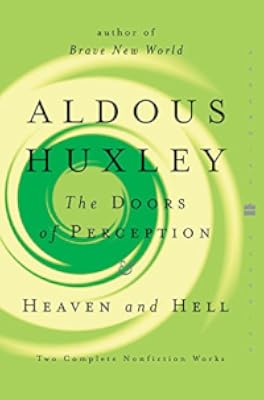
This book in itself is incomplete. Huxley considers this work a metaphysical study of what saints and sages experienced. Their 'personal' experience lay beyond human understanding, but the initial progress was understandable. Huxley does not give his own opinion alongside the sages' texts. I have not yet read his ‘The Doors of Perception.’ I am inclined to think he does pose his opinion there.
Huxley had read many philosophical and religious texts to arrange them to support a philosophy he himself constructed (empirical theology). He termed this the title of the book. Generally speaking, Huxley argued that all systems of thought and especially religious mysticisms all converged. After moving beyond the point of convergence, there show more could be an encounter with 'God' as the Ground of all Being. This anthology of brief texts attempts to help the reader approach this ground of Being (or Reality) as much as possible through knowledge. Huxley says that any change in the knower accompanies "a change in the nature and amount of knowing."(Introduction) By becoming acquainted with many wisdom traditions, Eastern and Western, direct knowledge can become "immediate" or personal for each person. Huxley says that Catholic Christianity taught a version of the Perennial Philosophy but overlaid it with excessive sacramentalism and idolatry. Huxley, instead, encourages people to view all things as symbols and sacraments in relation to the universe and its Ground (p. 271). His presentation is Hindu in orientation but lacks a teleological frame in the Christian sense. Huxley seemed to aim at promoting the unitive aspect of God as primary in this world and a mystical Sanjuanist conception of the Ground of Being itself (Nada). I would categorize this book as syncretist mystical thought but not comparative religious thought since Huxley felt that all people should encounter the Ground without taint from religious traditions, each tradition lacking some aspect to aid a person regardless of their geographic location. Huxley wrote this at a time when this sort of eclectic thinking was not common. show less
Huxley had read many philosophical and religious texts to arrange them to support a philosophy he himself constructed (empirical theology). He termed this the title of the book. Generally speaking, Huxley argued that all systems of thought and especially religious mysticisms all converged. After moving beyond the point of convergence, there show more could be an encounter with 'God' as the Ground of all Being. This anthology of brief texts attempts to help the reader approach this ground of Being (or Reality) as much as possible through knowledge. Huxley says that any change in the knower accompanies "a change in the nature and amount of knowing."(Introduction) By becoming acquainted with many wisdom traditions, Eastern and Western, direct knowledge can become "immediate" or personal for each person. Huxley says that Catholic Christianity taught a version of the Perennial Philosophy but overlaid it with excessive sacramentalism and idolatry. Huxley, instead, encourages people to view all things as symbols and sacraments in relation to the universe and its Ground (p. 271). His presentation is Hindu in orientation but lacks a teleological frame in the Christian sense. Huxley seemed to aim at promoting the unitive aspect of God as primary in this world and a mystical Sanjuanist conception of the Ground of Being itself (Nada). I would categorize this book as syncretist mystical thought but not comparative religious thought since Huxley felt that all people should encounter the Ground without taint from religious traditions, each tradition lacking some aspect to aid a person regardless of their geographic location. Huxley wrote this at a time when this sort of eclectic thinking was not common. show less
It's a good book in principle, but rather repetitive, and a touch too religious in its own way, rather than philosophical. I am not sure of the value of transcending the illusion of "I", in favour of being "nothing", or "everything", according to the book. I leave you with a quote I liked at p.83, "Love seeks no cause beyond itself and no fruit; it is its own fruit, its own enjoyment. I love because I love".
Agnostic quasi-religious treatise on how to realize divinity (a.k.a. reality). It seems Huxley's The Divine Within was more than enough for me.
Members
- Recently Added By
Lists

The Works of Aldous Huxley
49 works; 1 member
Author Information

290+ Works 105,375 Members
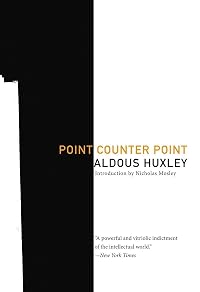
Aldous Huxley was born on July 26, 1894, in Surrey, England, into a distinguished scientific and literary family; his grandfather was the noted scientist and writer, T.H. Huxley. Following an eye illness at age 16 that resulted in near-blindness, Huxley abandoned hope of a career in medicine and turned instead to literature, attending Oxford show more University and graduating with honors. While at Oxford, he published two volumes of poetry. Crome Yellow, his first novel, was published in 1927 followed by Antic Hay, Those Barren Leaves, and Point Counter Point. His most famous novel, Brave New World, published in 1932, is a science fiction classic about a futuristic society controlled by technology. In all, Huxley produced 47 works during his long career, In 1947, Huxley moved with his family to southern California. During the 1950s, he experimented with mescaline and LSD. Doors of Perception and Heaven and Hell, both works of nonfiction, were based on his experiences while taking mescaline under supervision. In 1959, Aldous Huxley received the Award of Merit for the Novel from the American Academy of Arts and Letters. He died on November 22, 1963. (Bowker Author Biography) show less
Aldous Huxley has a Legacy Library. Legacy libraries are the personal libraries of famous readers, entered by LibraryThing members from the Legacy Libraries group.
Awards and Honors
Distinctions
Series
Belongs to Publisher Series
Common Knowledge
- Canonical title
- The Perennial Philosophy
- Original title
- The Perennial Philosophy
- Original publication date
- 1944
- First words
- Introduction:
Philosophia perennis—the phrase was coined by Leibniz; but the thing—the metaphysic that recognizes a divine Reality substantial to the world of things and lives and minds; the psychology that finds in th... (show all)e soul something similar to, or even identical with, divine Reality; the ethic that places man's final end in the knowledge of the immanent and transcendent Ground of all being—the thing is immemorial and universal. (Introduction)
In studying the Perennial Philosophy we can begin either at the bottom, with practice and morality; or at the top, with a consideration of metaphysical truths; or, finally, in the middle, at the focal point where mind and mat... (show all)ter, action and thought have their meeting place in human psychology. - Quotations
- If most of us remain ignorant of ourselves, it is because self-knowledge is painful and we prefer the pleasures of illusion.
- Last words
- (Click to show. Warning: May contain spoilers.)It is they who, dying to themselves, become capable of perpetual inspiration and so are made the instruments through which divine grace is mediated to those whose unregenerate nature is impervious to the delicate touches of the Spirit.
- Blurbers
- Jones, Rufus M.
Classifications
- Genres
- Philosophy, Religion & Spirituality, Nonfiction, General Nonfiction
- DDC/MDS
- 210 — Religion Philosophy & theory of religion Philosophy and theory of religion
- LCC
- BL51 .H98 — Philosophy, Psychology and Religion Religions. Mythology. Rationalism Religions. Mythology. Rationalism Philosophy of religion. Psychology of religion. Religion
- BISAC
Statistics
- Members
- 2,121
- Popularity
- 9,740
- Reviews
- 17
- Rating
- (3.92)
- Languages
- 17 — Catalan, Danish, Dutch, English, Estonian, French, German, Italian, Japanese, Norwegian, Polish, Russian, Serbian, Spanish, Swedish, Turkish, Portuguese (Portugal)
- Media
- Paper, Audiobook, Ebook
- ISBNs
- 44
- ASINs
- 42