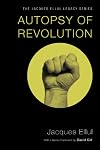
Autopsy of revolution
by Jacques Ellul
45 Members (4.33)
On This Page
Description
In this significant and very timely book, the author of The Technological Society, The Political Illusion, and Propaganda asks a tremendous question and shows that the answer we give it is decisive for the future of our society: Can we learn from history what revolution really is necessary for our survival? That is, can we distinguish between senseless, ineffectual revolt or rebellion and a genuine revolution that can alter fundamentals? In his basic, closely reasoned way, Jacques Ellul show more examines past and recent history in light of the current overwhelming preoccupation with revolution, which seems to have become the daily bread of Western man's thoughts and actions, the immediate explanation for every historical movement. Ellul insists on examining the possibility that today we are projecting onto past events a fairly recent and distorted image of revolution. The new image was created by Marx in the nineteenth century, and Ellul questions how long we can continue to live on his legacy. More important, he suggests that Marx may have brought about an abrupt deviation of the necessary revolutionary current and given a false meaning to the word revolution. Is all our talk about Marxian revolution talk about reality, or a way of filling a void with words? Finally, among so many social eddies and agitations, are we today caught up in a really revolutionary movement--or are we being led into blind combat by false lights that in reality are reflections in distorting mirrors? Are we capable of discerning the real Revolution, the needed Revolution? Ellul does not map out a route in detail: he clears paths into the future, making it possible for a route to be found. His masterly book should help to change our thinking, and therefore our future. show lessTags
Recommendations



























Member Reviews
Members
- Recently Added By
Author Information

122+ Works 5,946 Members
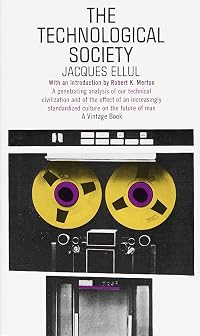
Jacques Ellul, historian, theologian, and sociologist, is one of the foremost and widely known contemporary critics of modern technological society. Born in Bordeaux, France, Ellul received a doctorate in the history of law and social science in 1936 from the University of Bordeaux. In 1947 he was appointed professor of social history at the show more University of Bordeaux, remaining there until his retirement in 1980. Although influenced strongly by his early reading of the Bible Marx, Ellul has been unable to synthesize Marxist doctrine with Christianity. These readings and experiences have influenced his later philosophy and writing. Ellul has taught and written extensively in his areas of specialization - Roman law, the history and sociology of institutions, Marxism, propaganda, and technique in society. He also served in the French Resistance during World War II, worked as a lay pastor, and has been active with various theological organizations, including the World Council of Churches. In addition, Ellul has been active in the environmental movement and has worked to prevent juvenile delinquency and violence. Since 1969, he has been editor of Foi et Vie (Faith and Life). Although retired as a teacher, Ellul has continued writing. One of his writing projects is an autobiography to be published after his death. Ellul has provided a sociopolitical as well as a theological analysis of contemporary society in more than 40 books and 800 articles. The Technological Society (1954) established Ellul as a social critic. The book has had a major impact on the collective consciousness of a society just beginning to recognize the central role and force of technology. Here Ellul develops the notion of "technique," a concept much broader than technology: "Technique is the totality of methods rationally arrived at." In Ellul's view, technology in this sense tends to become all-encompassing. His subsequent books, especially The Political Illusion (1965) and Propaganda (1962), further develop and refine elements of this central theme. This "trilogy" of books reflects Ellul's desire to alert readers to the dangers of technological determinism and thereby help them transcend it. Because of a dialectical approach separating his sociopolitical and theological studies, Ellul has often been criticized as overly pessimistic in his sociologically based writings. His theological works, however, provide a more positive perspective and counterpoint to his sociological work. Most notable are The Politics of God and the Politics of Man (1966), The Meaning of the City (1970), and especially The Ethics of Freedom (1973). The main body of Ellul's sociopolitical critique of technical society is reflected by The Technological Society, The Political Illusion, Propaganda, and The Technological System. Among his other works are Autopsy of Revolution (1969), which questions what kind of revolution is realistically possible, The Humiliation of the Word (1981), which expands upon the concept of "human techniques", and The Technological Bluff (1990), which discusses the state of contemporary society, especially in regard to such technologies as computers and genetic engineering and the progressive "discourse" that surrounds their societal incorporation. (Bowker Author Biography) show less
Classifications
- Genres
- Sociology, Nonfiction, General Nonfiction, Anthropology, History, Philosophy, Religion & Spirituality
- DDC/MDS
- 301.6 — Society, government, & culture Social sciences, sociology & anthropology Sociology and anthropology Formerly: Social conflict and accommodation
- LCC
- JC491 .E5513 — Political Science Political theory Political theory. The state. Theories of the state Forms of the state
- BISAC
Statistics
- Members
- 45
- Popularity
- 661,756
- Rating
- (4.33)
- Languages
- English, French, Italian
- Media
- Paper
- ISBNs
- 3