The 13 Clocks & The Wonderful O
by James Thurber
On This Page
Description
With the help of his magical protector, Golux, Prince Zorn performs impossible tasks to win the hand of Princess Saralina. The second story relates what happened when an evil sea captain banished the letter O from the island Ooroo.Tags
Recommendations












Member Reviews
Thurber’s wonderfully bonkers children’s books were so short that Puffin reissued two of them in one edition in the 1960s. This is very convenient because Thurber’s writing is the kind that leaves you wanting more. Having finished The 13 Clocks, the reader finds The Wonderful O lined up, ready and waiting. It’s hard not to just plough on through.
But Thurber’s prose is carefully crafted. He’s a man who clearly loved the actual process of writing. Sure, there are stories here and with vivid characters and plot devices, but the real magic lies at the molecular level of morpheme, word and sentence.
I read this aloud to Mrs Arukiyomi and was so glad I did so. The rhyme and rhythm bounce off the tongue so easily. This is writing show more that was intended to be read aloud, and aloud it should be read.
Both stories have a common moral message: controlling those around you to satisfy your own greed will end badly for you. And while the wordplay is alive within them both, the two stories are told in very different ways.
The 13 Clocks is a simple fairy tale in essence, with a captive princess, an evil uncle, a daring hero and some magic along the way. It’s The Wonderful O, though, that will be memorable for me.
In search of hidden treasure, the evil Black and Littlejack arrive at an island aboard their ship, the curiously named Aeiu. They set about ransacking the place but find no trace of the fabled jewels they seek to steal. Realising that everything they’ve looked in so far (closets, pools, roofs and woods) contains the letter O, Black issues an edict
"I’ll get rid of O, in upper case and lower … and so the locksmith became a lcksmith…"
As more and more Os are removed, the islanders rue the loss of poetry, pianos, flowers and forests and Thurber has great fun with the resulting language which even leads to breakdowns in communication between the evil duo.
This was particularly enjoyable to read aloud, too. Kids and adults alike will love it. But aside from the humour, there’s a deeper message here about language, how we police it and why we do so. That message is still very relevant today.
Children’s literature the world over has given us illustrations of lasting brilliance. Very, very few adult books can hold a candle to them. The only ones that really comes to mind are Mervyn Peake’s self-illustrated Gormenghast series.
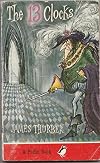
With Thurber blind while composing these, illustrator Robert Searle asked him to describe his characters and their environment. From those descriptions, he created his fabulous illustrations, and they are a very fitting tribute to Thurber’s tales.
For more reviews and the 1001 Books Spreadsheet, visit http://arukiyomi.com show less
But Thurber’s prose is carefully crafted. He’s a man who clearly loved the actual process of writing. Sure, there are stories here and with vivid characters and plot devices, but the real magic lies at the molecular level of morpheme, word and sentence.
I read this aloud to Mrs Arukiyomi and was so glad I did so. The rhyme and rhythm bounce off the tongue so easily. This is writing show more that was intended to be read aloud, and aloud it should be read.
Both stories have a common moral message: controlling those around you to satisfy your own greed will end badly for you. And while the wordplay is alive within them both, the two stories are told in very different ways.
The 13 Clocks is a simple fairy tale in essence, with a captive princess, an evil uncle, a daring hero and some magic along the way. It’s The Wonderful O, though, that will be memorable for me.
In search of hidden treasure, the evil Black and Littlejack arrive at an island aboard their ship, the curiously named Aeiu. They set about ransacking the place but find no trace of the fabled jewels they seek to steal. Realising that everything they’ve looked in so far (closets, pools, roofs and woods) contains the letter O, Black issues an edict
"I’ll get rid of O, in upper case and lower … and so the locksmith became a lcksmith…"
As more and more Os are removed, the islanders rue the loss of poetry, pianos, flowers and forests and Thurber has great fun with the resulting language which even leads to breakdowns in communication between the evil duo.
This was particularly enjoyable to read aloud, too. Kids and adults alike will love it. But aside from the humour, there’s a deeper message here about language, how we police it and why we do so. That message is still very relevant today.
Children’s literature the world over has given us illustrations of lasting brilliance. Very, very few adult books can hold a candle to them. The only ones that really comes to mind are Mervyn Peake’s self-illustrated Gormenghast series.
With Thurber blind while composing these, illustrator Robert Searle asked him to describe his characters and their environment. From those descriptions, he created his fabulous illustrations, and they are a very fitting tribute to Thurber’s tales.
For more reviews and the 1001 Books Spreadsheet, visit http://arukiyomi.com show less
listened on CD from library - would never have guessed Thurber as the author - wild story
Ratings
Members
- Recently Added By
Author Information

136+ Works 18,298 Members
Born in Columbus, Ohio, Thurber was blinded in one eye in a childhood accident. He attended Ohio State University but left without earning a degree. In 1925 he moved to New York City, where he joined the staff of the New Yorker in 1927 at the urging of his friend E. B. White. For the rest of his lifetime, Thurber contributed to the magazine his show more highly individual pieces and those strange, wry, and disturbing pen-and-ink drawings of "huge, resigned dogs, the determined and sometimes frightening women, the globular men who try so hard to think so unsuccessfully." The period from 1925, when the New Yorker was founded, until the death of its creator-editor, Harold Ross, in 1951, was described by Thurber in delicious and absorbing detail in The Years with Ross (1959). Of his two great talents, Thurber preferred to think of himself primarily as a writer, illustrating his own books. He published "fables" in the style of Aesop (see Vol. 2) and La Fontaine (see Vol. 2)---usually with a "barbed tip of contemporary significance"---children's books, several plays (two Broadway hits, one successful musical revue), and endless satires and parodies in short stories or full-length works. "The Secret Life of Walter Mitty," included in My World---and Welcome to It (1942), is probably his best-known story and continues to be frequently anthologized. T. S. Eliot described Thurber's work as "a form of humor which is also a way of saying something serious." (Bowker Author Biography) show less
Some Editions
Series
Belongs to Publisher Series
Puffin Story Books (180)
Work Relationships
Contains
Common Knowledge
- Canonical title
- The 13 Clocks & The Wonderful O
- Original title
- The 13 Clocks & The Wonderful O
- Original publication date
- 1962
Classifications
- Genres
- Fiction and Literature, Children's Books, Fantasy
- DDC/MDS
- 813.52 — Literature & rhetoric American literature in English American fiction in English 1900-1999 1900-1945
- LCC
- PZ7 .T422 .A — Language and Literature Fiction and juvenile belles lettres Fiction and juvenile belles lettres Juvenile belles lettres
Statistics
- Members
- 182
- Popularity
- 180,305
- Reviews
- 2
- Rating
- (4.20)
- Languages
- English, German, Italian
- Media
- Paper
- ISBNs
- 5
- ASINs
- 9