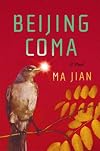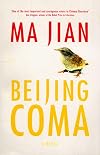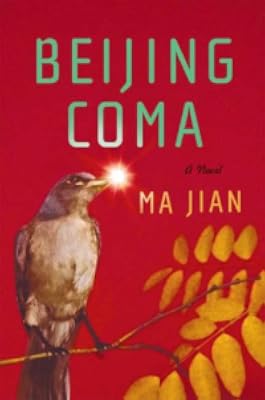
Beijing Coma
by Ma Jian
On This Page
Description
Awakening after a decade of unconsciousness, former Tiananmen Square protester Dai Wei learns that his mother had sold one of his kidneys to finance his care, and that the China he knew has undergone radical change.Tags
Recommendations
















Member Recommendations

Member Reviews
Ma Jian’s “Beijing Coma” traces the events leading up to the Tiananmen Square massacre through the eyes of one of its victms. Dai Wei, shot in the head, and trapped in a coma remembers his life while China continues to undergo rapid change. Remembering his father’s imprisonment during China’s Cultural Revolution, he traces the brutality of life in China under a repressive government. He recalls hustling in China’s emerging economy and the beginnings of economic liberalization, and provides an account of being a Beijing Univeristy student during the Tiananmen Square movement.
Dai Wei, as head of security for the student movement, provides perspectives on the passionate, yet contentious student leadership, filled with power show more struggles and a doomed romanticism. Ma Jian’s writing captures the confusion and excitement of being in the movement, and the bulk of the novel recounts the hunger strike and days leading up to the Tiananmen Square massacre. The paranoia and ruthlessness of the government is exposed while the irrationality and anger of the students is pursued as well. The ending sequence of Beijing Coma is shocking for the violence used against students protesting for Democracy. Ma Jian, also a participant in the movement, creates an admirable telling of a tale China would like to forget.
Beijing Coma has two narrative streams, the flashbacks to the student movement, and Dai Wei’s life in a coma cared for by his mother. Trapped in his body, but able to hear, Dai Wei spends ten years in bed. Visited by friends, he discovers the sudden economic changes China undergoes, while hearing which friends have become wealthy and which continue to suffer under China’s regime. As a student protestor, his mother is forbidden to seek official medical care for her son and is routinely visited by the security bureau. Her search for alternative treatments eventually leads her to the Falun Gong, once again exposing the family to the government’s repressive practices. With the family apartment about to be bull – dozed for a new shopping mall in preparation for the Beijing Olympics, the sense of progress and need for cohesiveness at all costs is given, while Beijing Coma’s dark humor and tragic telling of China’s modern history lingers.
Excerpt from my review at
http://poetsandpolicymakers.com/ show less
Dai Wei, as head of security for the student movement, provides perspectives on the passionate, yet contentious student leadership, filled with power show more struggles and a doomed romanticism. Ma Jian’s writing captures the confusion and excitement of being in the movement, and the bulk of the novel recounts the hunger strike and days leading up to the Tiananmen Square massacre. The paranoia and ruthlessness of the government is exposed while the irrationality and anger of the students is pursued as well. The ending sequence of Beijing Coma is shocking for the violence used against students protesting for Democracy. Ma Jian, also a participant in the movement, creates an admirable telling of a tale China would like to forget.
Beijing Coma has two narrative streams, the flashbacks to the student movement, and Dai Wei’s life in a coma cared for by his mother. Trapped in his body, but able to hear, Dai Wei spends ten years in bed. Visited by friends, he discovers the sudden economic changes China undergoes, while hearing which friends have become wealthy and which continue to suffer under China’s regime. As a student protestor, his mother is forbidden to seek official medical care for her son and is routinely visited by the security bureau. Her search for alternative treatments eventually leads her to the Falun Gong, once again exposing the family to the government’s repressive practices. With the family apartment about to be bull – dozed for a new shopping mall in preparation for the Beijing Olympics, the sense of progress and need for cohesiveness at all costs is given, while Beijing Coma’s dark humor and tragic telling of China’s modern history lingers.
Excerpt from my review at
http://poetsandpolicymakers.com/ show less
This is not a book for the faint hearted. Dai Wei lies in a coma after being shot in the head during the Tiananmen Square massacre. As a scientist, he is aware of the degradation of his body with clinical detail. His present -- tended by his faltering mother -- merges with his past, especially his months as a student activist and the final days of the democracy movement. Most of his friends have moved on -- some have moved abroad and some are prosperous members of the new China. It is clear, however, that the new China is as corrupt and oppressive as the world. Dai Wei is left to wonder if there is anything worthwhile left for him. This book is poetic, exciting in parts, a bit revolting (Dai Wei is hypersensitive to smells and records show more them in detail) and also is and feels very long. You will feel like you have truly experienced Dai Wei's Beijing coma. show less
I started in this book and only stopped because I needed to sleep, to eat and to work. It captivated me entirely. I wanted to keep reading and know more about what happens next. The horrifying story about the history of China and the student protests on the Tienanmen Square will intrigue you. The writer knows how to keep your interest. I understand why this book is forbidden by the Chinese government. And that detail alone is enough to convince you to read it. Do not let the number of pages scare you (800+), because I'm not an easy reader, but I read this entire book in a little over a week time. Compliments to the writer for revealing a hidden history of China.
A fascinating portrait of China and its recent history. Beijing Coma is told through the eyes of Dai Wei, a student protester who falls into a coma after the Tienanmen Square protest of 1989. Dai Wei's recounting of the energy of the student protesters brings their movement to life and details of life in China highlight the practices the students were fighting against. However, one of the most interesting things about this novel is the depiction of the changes China experienced after the Tienanmen Square protest. Despite his coma, Dai Wei hears of the changes, of the new kinds of jobs, of new technologies, and the transformation of China he grew up in. I would recommend this novel to anyone with an interest in China today.
It took a lot of perseverance (and a long break halfway through) to get through this book, but I think it was worth it in the end. Paints a horrifying picture of Communist China before and after Tienanmen Square.
It took some time to get into, but I really appreciated learning about Tienanmen Revolt through the author's eyes.
Starred Review* China is a vast graveyard, thinks college student Dai Wei when he learns of his violinist father's horrendous treatment during the surreally brutal Cultural Revolution. China is one huge prison, Dai Wei's long-suffering mother declares more than a decade later. Dai Wei has been in a coma ever since he was shot in the head during the 1989 massacre at Tiananmen Square. He cannot open his eyes, speak, or move, but he is conscious and sensate, listening intently, traveling the long, winding river of memory, and finding solace in the companionship of a sparrow. A courageous and clarion writer, Ma Jian draws on Kafka and the Chinese epic The Book of Mountains and Seas in this mythic, soul-bruising, powerfully allegorical show more masterwork. He combines reportorial exactitude with potent lyricism and unnerving physicality in his blow-by-blow dramatization of the doomed student protests and heartbreaking cast of terrorized young people starved for learning and love. With particular sensitivity to women, Ma Jian maps the tyrannical madness that flows from the Maoist bloodbath to Tiananmen Square to the persecution of the Falun Gong. Epically detailed yet deeply mysterious, Ma Jian's compassionate and magnificent novel exposes China's catastrophic moral paralysis, and celebrates the inalienable freedom of the mind and spirit.--Seaman, Donna Copyright 2008 Booklist show less
Members
- Recently Added By
Lists

Best Fiction Set in China
43 works; 27 members
Author Information

14+ Works 2,099 Members
Ma Jian was born in 1953 in Qingdoo, China. In 1986 he moved to Hong Kong, where he published novels, essays, short stories & collections of poetry & reportage; edited political & cultural magazines & founded a publishing company. He currently lives in London. (Bowker Author Biography)
Awards and Honors
Awards
Common Knowledge
- Canonical title
- Beijing Coma
- Original title
- Beijing Coma
- Original publication date
- 2008
- People/Characters
- Dai Wei
- Important places
- Tiananmen Square, Beijing, China; Beijing University; Beijing, China
- Important events
- Tiananmen Square Protests and Massacre
- Dedication
- For my mother
- First words
- Through the gaping hole where the covered balcony used to be, you see the bulldozed locust tree slowly begin to rise again.
- Last words
- (Click to show. Warning: May contain spoilers.)But once you've climbed out of this fleshy tomb, where is there left for you to go?
Classifications
- Genres
- General Fiction, Fiction and Literature, Historical Fiction
- DDC/MDS
- 895.1352 — Literature & rhetoric Literatures of other languages Literatures of East and Southeast Asia Chinese Chinese fiction Modern period 1912–2010 1949–2010
- LCC
- PL2948.3 .J53 .B45 — Language and Literature Languages and literatures of Eastern Asia, Africa, Oceania Languages of Eastern Asia, Africa, Oceania Chinese language and literature Chinese literature Individual authors and works
- BISAC
Statistics
- Members
- 527
- Popularity
- 56,989
- Reviews
- 12
- Rating
- (3.55)
- Languages
- 10 — Chinese, Dutch, English, French, German, Italian, Norwegian (Bokmål), Polish, Portuguese, Spanish
- Media
- Paper, Ebook
- ISBNs
- 26
- ASINs
- 7