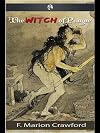
The Witch of Prague
by F. Marion Crawford
On This Page
Description
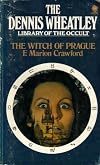
For fantasy fans bored with the same old cookie-cutter plots and themes, Francis Marion Crawford's The Witch of Prague is a welcome reprieve. This truly original and imaginative novel revolves a beautiful young witch, Unorna, and her attempts to win the love of an enigmatic figure known only as The Wanderer -- and to overcome the evil influence of dark wizard Keyork Arabian..
Tags
Recommendations











Member Reviews
Not, I realize, for every taste, this novel strikes me as one of F. Marion Crawford's best.
It will be despised by most critics, and I assume it was at the time of its premiere. Further, not all lovers of fantasy will take to it, either, it being such a strange brew of Gothic and romance and even philosophy.
But I greatly enjoyed the book. The tattered copy I first bought served me throughout this first reading, and still exists, not fallen apart, dirtied by too many readings as it is. I've purchased other editions, since.
And it is, I assure the reader, an almost unique experience, a rare thing in literature. The main character is never called anything but The Wanderer. The witch is a powerful and magical hypnotist, putting the Mesmerists show more to shame. The magician, Keyork Arabian, is a wicked man, full of life and vinegar and brimstone and smoke. And Israel Kafka, he's a character pitiful and much abused. Indeed, the witch Unorna's most grievous abuse of him would shock most readers then, and will now. The author built the abuse out of a shocking tale from Prague's history, and it demanded a footnote to the novel, the novel's only one.
Finally, there's Beatrice, the Wanderer's true love. I can't help but almost snigger when I write "true love," but Crawford didn't, and the reader won't, in context.
At least, the good reader won't.
I wonder: how many good readers of books like this are left in this world of video games and blood-drenched film? show less
It will be despised by most critics, and I assume it was at the time of its premiere. Further, not all lovers of fantasy will take to it, either, it being such a strange brew of Gothic and romance and even philosophy.
But I greatly enjoyed the book. The tattered copy I first bought served me throughout this first reading, and still exists, not fallen apart, dirtied by too many readings as it is. I've purchased other editions, since.
And it is, I assure the reader, an almost unique experience, a rare thing in literature. The main character is never called anything but The Wanderer. The witch is a powerful and magical hypnotist, putting the Mesmerists show more to shame. The magician, Keyork Arabian, is a wicked man, full of life and vinegar and brimstone and smoke. And Israel Kafka, he's a character pitiful and much abused. Indeed, the witch Unorna's most grievous abuse of him would shock most readers then, and will now. The author built the abuse out of a shocking tale from Prague's history, and it demanded a footnote to the novel, the novel's only one.
Finally, there's Beatrice, the Wanderer's true love. I can't help but almost snigger when I write "true love," but Crawford didn't, and the reader won't, in context.
At least, the good reader won't.
I wonder: how many good readers of books like this are left in this world of video games and blood-drenched film? show less
The note I left myself after reading this is: not to my taste, really.
Ratings
Members
- Recently Added By
Author Information

181+ Works 1,730 Members
F. Marion Crawford was born on August 2, 1854, in Bagni de Lucca, Tuscany, Italy. He was the son of the American sculptor Thomas Crawford. He was educated by a French governess; then at St. Paul's School, Concord, N.H.; in the quiet country village of Hatfield Regis, under an English tutor; at Trinity College, Cambridge, where they thought him to show more become a mathematician; at Heidelberg and Karlsruhe, and at the University of Rome, where a special interest in Oriental languages sent him to India with the idea of preparing for a professorship. He spent a short time as a newspaper editor there. His first novel, Mr. Isaacs, was published in 1882. During his lifetime, he wrote over forty novels and one play, Francesca da Rimini. His novels include Dr. Claudius, A Roman Singer, A Cigarette Maker's Romance, The Witch of Prague, The Heart of Rome, and The Diva's Ruby. He died on April 9, 1909. (Bowker Author Biography) show less
Some Editions
Series
Belongs to Publisher Series
Work Relationships
Common Knowledge
- Original publication date
- 1891
Classifications
- Genres
- Fiction and Literature, General Fiction, Fantasy, Horror
- DDC/MDS
- 813.4 — Literature & rhetoric American literature in English American fiction in English Later 19th Century 1861-1900
- LCC
- PS1455 .W58 — Language and Literature American literature American literature Individual authors 19th century
- BISAC
Statistics
- Members
- 76
- Popularity
- 411,885
- Reviews
- 2
- Rating
- (3.69)
- Languages
- English, Italian
- Media
- Paper, Ebook
- ISBNs
- 22
- ASINs
- 8