On This Page
Description
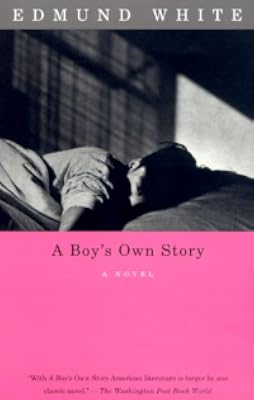
A groundbreaking novel about coming out from one of America's preeminent gay writers. Critically lauded upon its initial publication in 1982 for its pioneering depiction of homosexuality, A Boy's Own Story is a moving tale about coming-of-age in midcentury America. With searing clarity and unabashed wit, Edmund White's unnamed protagonist yearns for what he knows to be shameful. He navigates an uneasy relationship with his father, confounds first loves, and faces disdain from his peers at show more school. In the embrace of another, he discovers the sincere and clumsy pleasures of adolescent sexuality. But for boys in the 1950s, these desires were unthinkable. Looking back on his experiences, the narrator notes, "I see now that what I wanted was to be loved by men and to love them back but not to be a homosexual." This trailblazing autobiographical story of one boy's youth is a moving, tender, and heartbreaking portrait of what it means to grow up. show lessTags
Recommendations










Member Recommendations
by anonymous user
Member Reviews
"What I wanted was to be loved by men and love them back but not to be a homosexual"
By sally tarbox on 3 June 2018
Format: Paperback
Very readable and vivid account of the author's teens, growing up gay when such things were not discussed. His efforts to date a girl, to tell himself he's just going through a phase, while spending his days yearning for men.
Yet while homosexuality is not openly mentioned, it's going on all around him, from a neighbour's young son to his classmates and teachers... He dabbles in religion and psychoanalysis; he contends with a rather dysunctional broken family.
I thought his descriptions of his insecure mother were fabulous:
-"You're handsome and intelligent."
-"Handsome! With these big nostrils?"
-"Oh, that's show more just your sister. She's so frustrated she has to pick on you. There's nothing wrong with your nostrils. At least I don't see anything wrong. Of course, I know you too well. If you like, we could consult a nose doctor". A long pause. "Nostrils...Do people generally dwell on them? I mean, do people think about them a lot?" Smal high voice: "Are mine okay?"
A hopeless silence.
White's evocation of adolescence, the efforts to fit in, be popular will strike a note with readers whatever their gender or sexual orientation. show less
By sally tarbox on 3 June 2018
Format: Paperback
Very readable and vivid account of the author's teens, growing up gay when such things were not discussed. His efforts to date a girl, to tell himself he's just going through a phase, while spending his days yearning for men.
Yet while homosexuality is not openly mentioned, it's going on all around him, from a neighbour's young son to his classmates and teachers... He dabbles in religion and psychoanalysis; he contends with a rather dysunctional broken family.
I thought his descriptions of his insecure mother were fabulous:
-"You're handsome and intelligent."
-"Handsome! With these big nostrils?"
-"Oh, that's show more just your sister. She's so frustrated she has to pick on you. There's nothing wrong with your nostrils. At least I don't see anything wrong. Of course, I know you too well. If you like, we could consult a nose doctor". A long pause. "Nostrils...Do people generally dwell on them? I mean, do people think about them a lot?" Smal high voice: "Are mine okay?"
A hopeless silence.
White's evocation of adolescence, the efforts to fit in, be popular will strike a note with readers whatever their gender or sexual orientation. show less
"Like a blind man's hands exploring a face, the memory lingers over an identifying or beloved feature but dismisses the rest as just a curve, a bump, an expanse. Only this feature—these lashes tickling the palm like a firefly or this breath pulsing hot on a knuckle or this vibrating Adam's apple—only this feature seems lovable, sexy. But in writing one draws in the rest, the forgotten parts. One even composes one's improvisations into a quite new face never glimpsed before, the likeness of an invention. Busconi once said he prized the most those empty passages composers make up to get from one "good part" to another. He said such workmanlike but minor transitions reveal more about a composer—the actual vernacular of his show more imagination—than the deliberately bravura moments. I say all this by way of hoping that the lies I've made up to get from one poor truth to another may mean something—may even mean something most particular to you, my eccentric, patient, scrupulous reader, willing to make so much of so little, more patient and more respectful of life, of a life, than the author you're allowing for a moment to exist yet again." show less
Although I'm aware of the stellar reputation for this title, I have to admit I didn't like it. While superbly written, the story itself falls into the genre of the homosexual being some kind of moral failure. While there is not suicide or such, he never admits he is a homosexual, only that he wants to be loved by men. His image of gay men are as effeminate fops which he at one point terms "vampires."
In tone I had felt it provided a companion backstory to Forster's Maurice, with the struggle to deal with homosexual desire leading similarly to psychoanalysis. But it ends nowhere as happily. The boy's conniving betrayal at the end just seals his fate, in my opinion, as manipulative and self-involved. His innocence long since erased. If show more the first chapters are an insightful account of how a young boy would handle his awakening attraction to other men, by the end he's gone well off track. show less
In tone I had felt it provided a companion backstory to Forster's Maurice, with the struggle to deal with homosexual desire leading similarly to psychoanalysis. But it ends nowhere as happily. The boy's conniving betrayal at the end just seals his fate, in my opinion, as manipulative and self-involved. His innocence long since erased. If show more the first chapters are an insightful account of how a young boy would handle his awakening attraction to other men, by the end he's gone well off track. show less
This is the fascinating story of a young man growing up gay in 1950s America. He's clearly attracted to men, but knows that this is seen as wrong by everyone around him. This book charts several years in his life, through bizarre psychotherapy with a therapist more interested in his own life and diet pill addiction, falling in and out of love hard with men (and one woman), and struggling to find a place for himself in the world.
Even though the narrator is gay, much of what he describes is common to many young people: the need for acceptance, for love, for parental approval.
This was recommended to me by my mother (I even borrowed her copy) and while she put it as "this isn't the sort of book I normally read" I shall be more blunt: there show more is an explicit gay sex scene very early on in the book between our narrator and a younger teen. If that's not your cup of tea, look elsewhere for your tales of young people struggling for acceptance.
But I can also see why she recommended it. It is beautifully written, and strikes many a true chord when it comes to the awkwardness of adolescence and growing up. show less
Even though the narrator is gay, much of what he describes is common to many young people: the need for acceptance, for love, for parental approval.
This was recommended to me by my mother (I even borrowed her copy) and while she put it as "this isn't the sort of book I normally read" I shall be more blunt: there show more is an explicit gay sex scene very early on in the book between our narrator and a younger teen. If that's not your cup of tea, look elsewhere for your tales of young people struggling for acceptance.
But I can also see why she recommended it. It is beautifully written, and strikes many a true chord when it comes to the awkwardness of adolescence and growing up. show less
First published in 1982, A Boy's Own Story's main character has been compared to Teddy Roosevelt and characters from Lolita and Huckleberry Finn. The first in a trilogy and supposedly autobiographical in nature, A Boy's Own Story introduces themes of desire, coming of age, and identity. The book's nameless young narrator navigates his own sexuality in an age when parents simply warn their children about predators who seem "oversexed" and "take advantage of younger boys." Our hero fights his homosexual tendencies while wondering why the adult camp counselor doesn't rub his back in the middle of the night. Torn between propriety and passion, he struggles to find normalcy in his desires. Will his feelings for other boys fade in time? It show more this something to grow out of? In an effort to "change" he first seeks the advice of a priest. When that does not work, he convinces his father to send him to an all-boys boarding school. Maybe being in the presence of so many males would normalize his sexuality and set him straight? Not so. Next came a psychiatrist. Maybe he can address the psychological aspects of being attracted to men? A Boy's Own Story is all at once poignant and sad. show less
"Like a blind man's hands exploring a face, the memory lingers over an identifying or beloved feature but dismisses the rest as just a curve, a bump, an expanse."
Originally published in 1982 'A Boy's Own Story' is the first of White’s trilogy of semi-autobiographical novels. Initially the book was banned which almost certainly added to its popularity it became an instant classic for its pioneering portrayal of homosexuality. .
Told from the perspective of an adolescent boy who represents the author growing up during 1950's America, the unnamed narrator struggles to embrace his own sexuality whilst also dealing with distant parents, a cruel sister and having few friends. The novel casts an eye on American gay life during that era, a show more time when many saw it as a sickness that could be cured by either doctors or priests, and is a coming of age story packed with yearning and shame.
The narrator longs to be loved by the men in his life (father, teachers or peers) but must also give the outward impression of being straight which becomes apparent very early on in the book. When at the age fifteen he is asked by Kevin, the son of his father's house-guests and himself only twelve, about his experiences with women, he pretends to have had female lovers before the two boys share the first of several sexual encounters with each other. This is an experience the narrator in particular has longed for but also shows a curiosity for pleasure and intimacy in young boys. A point underlined when the narrator is surprised that the physical act of love can mean giving as well as receiving pleasure.
No doubt the very age of these two boys became, along with the narrators parting shot, one of the main reasons why the book was banned. It was the fact that the book had once been banned and I wanted to see what all the fuss was all about was one of my motivations for picking up this book along with the fact that it is on the 1001 list. I have little interest in the homosexual nature of the novel however, I still feel that this story is one that is worth reading. The prose is quite wonderful, sometimes sad sometimes funny. It fully captures a lonely young boy with a vivid imagination struggling on many fronts and never slips out of that adolescent voice.
So why didn't I enjoy it more? As the author himself admits in the afterword, homosexuality is no longer a taboo subject in Western literature, film and television, bookshops that once catered solely for this sort of material have been put out of business by mainstream outlets. Therefore, as stories like this have become more acceptable I feel that they now lack the shock value that they once enjoyed. I'm not saying that this isn't a good thing but it does mean that I've read other books of a similar vein and just did't really grab me as it might once have done. The rather jumbled timeline also meant I found it unbalanced with many of the more interesting points at the beginning of the book and some of the events totally unbelievable.
I have yet to read the following two novels but no doubt will at some point. However, I believe that 'A Boy’s Own Story' can read as a stand-alone novel and I would recommend this to anyone who enjoys well written 'coming of age' stories whatever their sexual orientation. show less
Originally published in 1982 'A Boy's Own Story' is the first of White’s trilogy of semi-autobiographical novels. Initially the book was banned which almost certainly added to its popularity it became an instant classic for its pioneering portrayal of homosexuality. .
Told from the perspective of an adolescent boy who represents the author growing up during 1950's America, the unnamed narrator struggles to embrace his own sexuality whilst also dealing with distant parents, a cruel sister and having few friends. The novel casts an eye on American gay life during that era, a show more time when many saw it as a sickness that could be cured by either doctors or priests, and is a coming of age story packed with yearning and shame.
The narrator longs to be loved by the men in his life (father, teachers or peers) but must also give the outward impression of being straight which becomes apparent very early on in the book. When at the age fifteen he is asked by Kevin, the son of his father's house-guests and himself only twelve, about his experiences with women, he pretends to have had female lovers before the two boys share the first of several sexual encounters with each other. This is an experience the narrator in particular has longed for but also shows a curiosity for pleasure and intimacy in young boys. A point underlined when the narrator is surprised that the physical act of love can mean giving as well as receiving pleasure.
No doubt the very age of these two boys became, along with the narrators parting shot, one of the main reasons why the book was banned. It was the fact that the book had once been banned and I wanted to see what all the fuss was all about was one of my motivations for picking up this book along with the fact that it is on the 1001 list. I have little interest in the homosexual nature of the novel however, I still feel that this story is one that is worth reading. The prose is quite wonderful, sometimes sad sometimes funny. It fully captures a lonely young boy with a vivid imagination struggling on many fronts and never slips out of that adolescent voice.
So why didn't I enjoy it more? As the author himself admits in the afterword, homosexuality is no longer a taboo subject in Western literature, film and television, bookshops that once catered solely for this sort of material have been put out of business by mainstream outlets. Therefore, as stories like this have become more acceptable I feel that they now lack the shock value that they once enjoyed. I'm not saying that this isn't a good thing but it does mean that I've read other books of a similar vein and just did't really grab me as it might once have done. The rather jumbled timeline also meant I found it unbalanced with many of the more interesting points at the beginning of the book and some of the events totally unbelievable.
I have yet to read the following two novels but no doubt will at some point. However, I believe that 'A Boy’s Own Story' can read as a stand-alone novel and I would recommend this to anyone who enjoys well written 'coming of age' stories whatever their sexual orientation. show less
This is an important book but it is not an easy one to read. The front cover of my edition had blurb on it that said it combined J D Salinger and Oscar Wilde. Well, there’s very little wit but there’s a lot of Holden Caulfield type angst at the world. I’m not a big fan of intimate descriptions of sex either, particularly homosexual sex.
So, why important? Well, it came out in the early 90s at an important time in the gay rights movement, and when the gay community faced the threat of HIV/AIDS also. It gave voice to many who felt the same as Kevin, it’s narrator or who had, like Kevin, grown up in the 1950s and had struggled to find their identity during that era.
At 15, Kevin is a complex individual who is difficult to understand show more and who is confused by who he is and how he should express that. In that way, he’s exactly like the rest of us, if we’re honest with ourselves, particularly in our teenage years. This has undoubtedly been strengthened by relationships with his father and mother which aren’t exactly right. His father seems distant and almost a stranger to him. His mother seems far too friendly for a mother. I wondered whether this has something to do with the nurture of Kevin’s sexual choices, as opposed to their nature.
He sets out to satisfy his inner longings for the boys/men around him and very often does so. Like Holden Caulfied in Catcher, he doesn’t give a fig about what the moral or social implications of his actions might be and this continues right until the very end of the book when he has a run in with a teacher in which he plays a less than praiseworthy role.
About halfway through though, he has a date with one of the most attractive girls in the school and, the way it’s described, you get the feeling that had she reciprocated the obvious feelings he has for her, then he would have abandoned his homosexuality for heterosexuality. He even wonders himself if this encounter will finally cure him of his homosexual feelings. He talks as if he’s been trying to shake them all his life despite his behaviour telling a contrary story. But she rejects him and so he turns once again to those of his own sexuality. This didn’t quite fit right for me; it seemed far too arbitrary for such an important element of one’s identity.
Although Kevin is often confused and concerned about his sexual propensities, there wasn’t a moment in the book where I sympathised with him. He’s just not a very nice character. Again, like Holden Caulfield, he was a character I watched behaving in a way that seemed devoid of emotion and driven by desires he himself didn’t understand or hold any control over. And he didn’t seem any more in control or at a deeper level of understanding by the end of the novel. Just more determined to let his desires take him where they would. Hmmm… show less
So, why important? Well, it came out in the early 90s at an important time in the gay rights movement, and when the gay community faced the threat of HIV/AIDS also. It gave voice to many who felt the same as Kevin, it’s narrator or who had, like Kevin, grown up in the 1950s and had struggled to find their identity during that era.
At 15, Kevin is a complex individual who is difficult to understand show more and who is confused by who he is and how he should express that. In that way, he’s exactly like the rest of us, if we’re honest with ourselves, particularly in our teenage years. This has undoubtedly been strengthened by relationships with his father and mother which aren’t exactly right. His father seems distant and almost a stranger to him. His mother seems far too friendly for a mother. I wondered whether this has something to do with the nurture of Kevin’s sexual choices, as opposed to their nature.
He sets out to satisfy his inner longings for the boys/men around him and very often does so. Like Holden Caulfied in Catcher, he doesn’t give a fig about what the moral or social implications of his actions might be and this continues right until the very end of the book when he has a run in with a teacher in which he plays a less than praiseworthy role.
About halfway through though, he has a date with one of the most attractive girls in the school and, the way it’s described, you get the feeling that had she reciprocated the obvious feelings he has for her, then he would have abandoned his homosexuality for heterosexuality. He even wonders himself if this encounter will finally cure him of his homosexual feelings. He talks as if he’s been trying to shake them all his life despite his behaviour telling a contrary story. But she rejects him and so he turns once again to those of his own sexuality. This didn’t quite fit right for me; it seemed far too arbitrary for such an important element of one’s identity.
Although Kevin is often confused and concerned about his sexual propensities, there wasn’t a moment in the book where I sympathised with him. He’s just not a very nice character. Again, like Holden Caulfield, he was a character I watched behaving in a way that seemed devoid of emotion and driven by desires he himself didn’t understand or hold any control over. And he didn’t seem any more in control or at a deeper level of understanding by the end of the novel. Just more determined to let his desires take him where they would. Hmmm… show less
Members
- Recently Added By
Lists

1001 Books You Must Read Before You Die
1,448 works; 1,137 members

Favorite Coming of Age Novels.
164 works; 51 members

Top Five Books of 2014
1,064 works; 398 members

Best Books Set in Boarding Schools
160 works; 57 members
TML 200 Best Books 1950-1999
202 works; 10 members

Publishing Triangle 100 Best Lesbian and Gay Novels
97 works; 6 members

1,001 BYMRBYD Concensus
723 works; 27 members

Relationships: LGTBQ
40 works; 2 members

Good LGBT fiction for LGBT folk and friends
553 works; 55 members
Overdue Podcast
808 works; 9 members

A Novel Cure
742 works; 23 members

The Modern Library (The Two Hundred Best Novels....
202 works; 1 member
Author Information

68+ Works 13,124 Members
Author Edmund White was born in Cincinnati, Ohio on January 13, 1940. He majored in Chinese at the University of Michigan. Before spending a year in Rome, he worked for Time-Life Books from 1962 until 1970. Upon his return, he became an editor for The Saturday Review and Horizon. He lived in France from 1983 until 1990. His works have chronicled show more gay life with such books as A Boy's Own Story, The Beautiful Room Is Empty, and The Farewell Symphony. (Bowker Author Biography) show less
Awards and Honors
Notable Lists
Series

Belongs to Publisher Series
Work Relationships
Is contained in
Has the adaptation
Is abridged in
Common Knowledge
- Canonical title
- A Boy's Own Story
- Original title
- A boy's own story
- Original publication date
- 1982
- People/Characters
- Edmund White
- Dedication
- To Christopher Cox
- First words
- We're going for a midnight boat ride. It's cold, clear summer night and four of us- the two boys, my dad and I- are descending the stairs that zigzag down the hill from the house to the dock.
- Last words
- (Click to show. Warning: May contain spoilers.)I wiped my mouth with the back of an adult hand, smiled and walked up to the dining hall humming a little tune.
- Blurbers*
- Sontag, Susan
- Original language*
- Engels
*Some information comes from Common Knowledge in other languages. Click "Edit" for more information.
Classifications
Statistics
- Members
- 1,920
- Popularity
- 11,167
- Reviews
- 27
- Rating
- (3.63)
- Languages
- 11 — Catalan, Danish, Dutch, English, French, German, Italian, Polish, Portuguese, Spanish, Swedish
- Media
- Paper, Audiobook, Ebook
- ISBNs
- 42
- ASINs
- 13