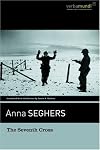
The Seventh Cross
by Anna Seghers
On This Page
Description
A revelatory World War II novel about a German prisoner of war fleeing for the border and encountering a variety of Germans, good and bad and indifferent, along his way. Now available in a new English translation. The Seventh Cross is one of the most powerful, popular, and influential novels of the twentieth century, a hair raising thriller that helped to alert the world to the grim realities of Nazi Germany and that is no less exciting today than when it was first published in 1942. Seven show more political prisoners escape from a Nazi prison camp; in response, the camp commandant has seven trees harshly pruned to resemble seven crosses: they will serve as posts to torture each recaptured prisoner, and capture, of course, is certain. Meanwhile, the escapees split up and flee across Germany, looking for such help and shelter as they can find along the way, determined to reach the border. Anna Seghers's novel is not only a supremely suspenseful story of flight and pursuit but also a detailed portrait of a nation in the grip and thrall of totalitarianism. Margot Bettauer Dembo's expert new translation makes the complete text of this great political novel available in English for the first time. show lessTags
Recommendations








































Member Recommendations
by marieke54

Member Reviews
Netty Reiling, pen name Anna Seghers, was a German Jew and a communist, both of which made her a target when the National Socialists came to power in 1933. She fled with her Marxist husband and two children to Paris, and then had to flee again in 1940 when the Germans occupied France. She stayed in Mexico City until 1947 when she returned to East Germany. Her experiences as a communist and having to continually flee, one step ahead of the Nazis, lend authenticity to the novel, as does the research she did into conditions within prison camps at the time. Her novel was extremely popular in the US and was made into a movie starring Spencer Tracey in 1944 and an abridged edition was given to US soldiers going to the European theatre, show more although many of the references to communism were deleted. The main character was seen as a symbol of successful resistance, as well as the book as a whole being a window into the German psyche.
Although divided into seven chapters, taking place over seven days, the novel moves between the main character, George Heisler, and thirty other characters in over 100 episodes. The continual movement between characters and scenes might have been choppy in another author's hands, but instead works well here, creating increasing tension. The novel opens in a prison barracks, with the prisoners wondering if the seventh escapee is still at large. We then immediately switch to descriptions of the countryside outside Mainz as a young man, Franz Marnet, pedals his bike through the early morning fog on his way to work. At the factory, he learns of an escape from the nearby concentration camp of seven prisoners, one of whom he might know. It is only then that George Heisler is introduced, hiding in a ditch outside the camp, heart-pounding and desperate. Although George's desperate attempt to reach safety is the main plotline, the back and forth between him and the other escapees, people he knows, his family, and the guards at the camp creates an almost unbearable tension. As one by one the other escapees are captured and George's situation becomes increasing tenuous, I had to put the book down to break the spell, only to find myself drawn back to it, unable to escape as well.
The situation of German communists, labor organizers, and others in the years 1933 to the start of the war was a time period about which I was not well versed. I knew that many were sent to prisons such as Dachau, but the conditions and treatment of communists both by the SA and by everyday Germans was complex. Families sometimes contained both SS members and communists. Former party members might still be loyal, but silent, or they may have succumbed to societal pressure and economics. Communities might come together to help a neighbor on the run, or might isolate an entire family. Segher's novel sheds light on these complexities while at the same time being very straightforward and realistic. Although parts of it read like an adrenaline-driven escape novel, on another level it's a testament to the ties that bind people even when faced with unbearable consequences. And although some people will break under pressure, others find the strength to resist, even unto death. show less
Although divided into seven chapters, taking place over seven days, the novel moves between the main character, George Heisler, and thirty other characters in over 100 episodes. The continual movement between characters and scenes might have been choppy in another author's hands, but instead works well here, creating increasing tension. The novel opens in a prison barracks, with the prisoners wondering if the seventh escapee is still at large. We then immediately switch to descriptions of the countryside outside Mainz as a young man, Franz Marnet, pedals his bike through the early morning fog on his way to work. At the factory, he learns of an escape from the nearby concentration camp of seven prisoners, one of whom he might know. It is only then that George Heisler is introduced, hiding in a ditch outside the camp, heart-pounding and desperate. Although George's desperate attempt to reach safety is the main plotline, the back and forth between him and the other escapees, people he knows, his family, and the guards at the camp creates an almost unbearable tension. As one by one the other escapees are captured and George's situation becomes increasing tenuous, I had to put the book down to break the spell, only to find myself drawn back to it, unable to escape as well.
The situation of German communists, labor organizers, and others in the years 1933 to the start of the war was a time period about which I was not well versed. I knew that many were sent to prisons such as Dachau, but the conditions and treatment of communists both by the SA and by everyday Germans was complex. Families sometimes contained both SS members and communists. Former party members might still be loyal, but silent, or they may have succumbed to societal pressure and economics. Communities might come together to help a neighbor on the run, or might isolate an entire family. Segher's novel sheds light on these complexities while at the same time being very straightforward and realistic. Although parts of it read like an adrenaline-driven escape novel, on another level it's a testament to the ties that bind people even when faced with unbearable consequences. And although some people will break under pressure, others find the strength to resist, even unto death. show less
I read an ARC (Netgalley) of the NYRB edition translated by Margot Bettauer Dembo.
There is a breakout at a German concentration camp for political prisoners in the 1930s. Seven men escape. Seven 'crosses' are erected in front of the parade ground, and the officer in charge of the camp announces that all the men will be returned.
Told through multiple voices, as inexorably the Nazi regime hunts down the tired, underfed, overworked and tortured men on the run, I found this slow at first. Then the pace accelerates as prisoner after prisoner is tracked down. Seghers shows the great courage (often alongside fear) required to step out from the crowd and challenge the system. At first it seems impossible that anyone will make it, when even show more small children are weaponised to hunt. Guards stand at every crossing point on the river. Wives and girlfriends are taken in, questioned. Photos of the escapees are posted in the press. Alongside the narrative of escape, friends question what they can do to help (if they can help?) but in the rural areas around the camp men and women largely continue their daily lives.
One of the other reviewers who has recently read this book on LT talks about the similarities to the present day. I also felt this, Seghers points to the difficulties of opposing unjust political systems, but you never feel that it is anything less than vital that we do. This is more than a narrative of heroes, of those who are somehow different from everyone else, superhuman. Instead, she acknowledges the role of chance, of people who are flawed human beings, of the power of friendship and of challenging the idea of those who claim opposition is impossible.
I think the style is of its time (1942) - I wondered how it would have been edited if submitted today. But an amazing book.
Recommended.
(and then read Transit!) show less
There is a breakout at a German concentration camp for political prisoners in the 1930s. Seven men escape. Seven 'crosses' are erected in front of the parade ground, and the officer in charge of the camp announces that all the men will be returned.
Told through multiple voices, as inexorably the Nazi regime hunts down the tired, underfed, overworked and tortured men on the run, I found this slow at first. Then the pace accelerates as prisoner after prisoner is tracked down. Seghers shows the great courage (often alongside fear) required to step out from the crowd and challenge the system. At first it seems impossible that anyone will make it, when even show more small children are weaponised to hunt. Guards stand at every crossing point on the river. Wives and girlfriends are taken in, questioned. Photos of the escapees are posted in the press. Alongside the narrative of escape, friends question what they can do to help (if they can help?) but in the rural areas around the camp men and women largely continue their daily lives.
One of the other reviewers who has recently read this book on LT talks about the similarities to the present day. I also felt this, Seghers points to the difficulties of opposing unjust political systems, but you never feel that it is anything less than vital that we do. This is more than a narrative of heroes, of those who are somehow different from everyone else, superhuman. Instead, she acknowledges the role of chance, of people who are flawed human beings, of the power of friendship and of challenging the idea of those who claim opposition is impossible.
I think the style is of its time (1942) - I wondered how it would have been edited if submitted today. But an amazing book.
Recommended.
(and then read Transit!) show less
Between the history of how and when this book was written and the execution of the novel, this ended up being a fascinating and enjoyable read. [[Anna Seghers]] was a German Jewish woman with communist beliefs born in 1900. She fled Germany in in the 1930s to France and, when France no longer felt safe, left for Mexico. It was in Mexico in 1942 that this book was published.
In [The Seventh Cross], seven prisoners escape from one of Hitler's concentration camps. They split up immediately and most are quickly captured, but the action follows George Heisler. He somehow manages to avoid the Gestapo, even though he has no real plan and makes several mistakes. George is not particularly a hero. He is just a man who wants to be free. During show more the week following his escape, while he is trying to get to a safe space, we see an enormous cross section of German life. There are people unaffected by and uninterested in the political change. There are people benefitting from the new system and turning a blind eye. There are people who are scared of Hitler's policies but go with the flow because they don't know what else to do. There are people working against the new system but in extreme hiding with their beliefs. And because this is all believed in extreme secrecy, George doesn't know who to trust and those he turns to don't know who to trust either.
I thought it was brilliant that the novel isn't about what you think it would be about. From the description, I was expecting more about the escape from the concentration camp. I was expecting to hear a lot about the beliefs of the men who escaped and why they were in the camp in the first place. By not addressing this, Seghers makes clear that there wasn't much rhyme or reason to who ended up targeted by the Gestapo. George was politically against Hitler, but he was young and it's doubtful to me that he was doing anything particularly effective. And once George escapes, it wasn't a high-octane thriller.
I really enjoyed this. [[Anna Seghers]] is a great writer. This book was published at a time when it made a great impact on readers around the world and began to clue people in to what had happened in Germany. This book was a great mix of a novel that was enjoyable to read and opens up some insight into a troubling era. show less
In [The Seventh Cross], seven prisoners escape from one of Hitler's concentration camps. They split up immediately and most are quickly captured, but the action follows George Heisler. He somehow manages to avoid the Gestapo, even though he has no real plan and makes several mistakes. George is not particularly a hero. He is just a man who wants to be free. During show more the week following his escape, while he is trying to get to a safe space, we see an enormous cross section of German life. There are people unaffected by and uninterested in the political change. There are people benefitting from the new system and turning a blind eye. There are people who are scared of Hitler's policies but go with the flow because they don't know what else to do. There are people working against the new system but in extreme hiding with their beliefs. And because this is all believed in extreme secrecy, George doesn't know who to trust and those he turns to don't know who to trust either.
I thought it was brilliant that the novel isn't about what you think it would be about. From the description, I was expecting more about the escape from the concentration camp. I was expecting to hear a lot about the beliefs of the men who escaped and why they were in the camp in the first place. By not addressing this, Seghers makes clear that there wasn't much rhyme or reason to who ended up targeted by the Gestapo. George was politically against Hitler, but he was young and it's doubtful to me that he was doing anything particularly effective. And once George escapes, it wasn't a high-octane thriller.
I really enjoyed this. [[Anna Seghers]] is a great writer. This book was published at a time when it made a great impact on readers around the world and began to clue people in to what had happened in Germany. This book was a great mix of a novel that was enjoyable to read and opens up some insight into a troubling era. show less
Set in Germany during the Nazi regime prior to WW II, this is not only a gripping thriller, but also a stark look at life in a country in the grip of totalitarianism. Seven political prisoners escape from a concentration camp. The camp commander sets up seven crosses, one for each escapee to be tortured on when he is recaptured. One by one the escapees are tracked down, captured, and returned to their fates, until there is only one cross remaining, one escapee still at large. It was fascinating to see how so many good people in Germany had so quickly and totally been made so fearful that they could no longer do what was right. A chilling read.
A break-out from German concentration camp (this in the lead-up to war, when prisoners were more non-compliant Germans than Jews). Seven inmates split up and go on the run, while back at the camp, the Commandant- who has the Big Bosses on HIS back- assembles seven cross-like structures in the grounds, in preparation for their inevitable return...
We encounter all seven men, but the main story hangs on Georg, as he lies low, hides out, comes within a whisker of capture and is never sure who to trust. People may be motivated to betray him from fear, from political conviction...or equally from past grudges. You can never be sure...a close relative who's sold out to Nazism...or a stranger with an inner sense of right and wrong...
Very very show more gripping read, as Georg's connections are all under surveillance and there seems no way out.
I normally read accounts of this era with a great sense of distance; a totally different world. You may disagree, but the sense of continual creeping dread and increasing state control in 2020 strikes a chord with this reader. show less
We encounter all seven men, but the main story hangs on Georg, as he lies low, hides out, comes within a whisker of capture and is never sure who to trust. People may be motivated to betray him from fear, from political conviction...or equally from past grudges. You can never be sure...a close relative who's sold out to Nazism...or a stranger with an inner sense of right and wrong...
Very very show more gripping read, as Georg's connections are all under surveillance and there seems no way out.
I normally read accounts of this era with a great sense of distance; a totally different world. You may disagree, but the sense of continual creeping dread and increasing state control in 2020 strikes a chord with this reader. show less
"The Seventh Cross" does not get its value from being a great work of literature, from unusual characters, or from being a great mystery. It gets its value from being a very human picture of the impact of authoritarian regimes on ordinary people. In our current political climate there is no more important read.
I expected the book to be a tale of violence. Although there is some violence, the heart of the book is the heroism of ordinary people living through not at all ordinary times. However, this is not a tale of larger than life people manifesting themselves as superheros. These are people with flaws, fears and limitations simply struggling to be the best they can be.
The book is both sad and uplifting. Definitely a book not to be show more missed. show less
I expected the book to be a tale of violence. Although there is some violence, the heart of the book is the heroism of ordinary people living through not at all ordinary times. However, this is not a tale of larger than life people manifesting themselves as superheros. These are people with flaws, fears and limitations simply struggling to be the best they can be.
The book is both sad and uplifting. Definitely a book not to be show more missed. show less
A brilliantly written escape novel, written while the Nazis were in power and one of the only depictions of a concentration camp to be seen in the midst of war. The Seventh Cross was an international bestseller in 1942, but it hasn’t been in print in the UK since".
That blurb is a story in itself, eh? Anna Seghers was a significant author of novels and short stories in pre-war Germany, but as a Communist of Jewish descent she fled with her husband and children to Mexico. This novel was published there and it became a movie starring Spencer Tracy in 1944.
At this distance it looks like a woeful movie, disappointing because it fails to capture the nuances of the book. Yes, The Seventh Cross is an escape novel, but it’s also more than show more that, it’s a cautionary tale about the dangers of surveillance and the way distrust sabotages the sense of community which binds us together as human.
The seventh cross of the title, is the last of seven erected for the purpose of executing the escapees from the (fictional) Westhofen Concentration Camp. The inmates of the camp are political prisoners – dissident communists and unionists and people who’ve spoken out against the Nazi regime. The commandant of the camp is unhinged by the mass breakout: his petty ambitions are on the line and so he butchers these seven plane trees to prepare a cross for each escapee – as a warning to the rest of the camp and a signal to his superiors that this escape will not go unpunished. The allusions to the crucifixion of Christ are an overt reminder that many of the Nazi perpetrators of evil were Christians.
The novel follows the pursuit of the seventh man, George Heisler. One by the others are recaptured and subjected to interrogation by Fahrenberg to find out how the escape was planned. Segher’s great strength in this novel is her sense of restraint: the rather matter-of-fact way she exposes their brutality makes it all the more horrific because it is so routine. The recaptured prisoners know what is coming, and hope only to survive without giving out information until their inevitable death…
To read the rest of my review please visit https://anzlitlovers.com/2018/06/19/the-seventh-cross-by-anna-seghers-translated... show less
That blurb is a story in itself, eh? Anna Seghers was a significant author of novels and short stories in pre-war Germany, but as a Communist of Jewish descent she fled with her husband and children to Mexico. This novel was published there and it became a movie starring Spencer Tracy in 1944.
At this distance it looks like a woeful movie, disappointing because it fails to capture the nuances of the book. Yes, The Seventh Cross is an escape novel, but it’s also more than show more that, it’s a cautionary tale about the dangers of surveillance and the way distrust sabotages the sense of community which binds us together as human.
The seventh cross of the title, is the last of seven erected for the purpose of executing the escapees from the (fictional) Westhofen Concentration Camp. The inmates of the camp are political prisoners – dissident communists and unionists and people who’ve spoken out against the Nazi regime. The commandant of the camp is unhinged by the mass breakout: his petty ambitions are on the line and so he butchers these seven plane trees to prepare a cross for each escapee – as a warning to the rest of the camp and a signal to his superiors that this escape will not go unpunished. The allusions to the crucifixion of Christ are an overt reminder that many of the Nazi perpetrators of evil were Christians.
The novel follows the pursuit of the seventh man, George Heisler. One by the others are recaptured and subjected to interrogation by Fahrenberg to find out how the escape was planned. Segher’s great strength in this novel is her sense of restraint: the rather matter-of-fact way she exposes their brutality makes it all the more horrific because it is so routine. The recaptured prisoners know what is coming, and hope only to survive without giving out information until their inevitable death…
To read the rest of my review please visit https://anzlitlovers.com/2018/06/19/the-seventh-cross-by-anna-seghers-translated... show less
Members
- Recently Added By
Lists

German Literature
518 works; 55 members

Read the book and saw the movie
1,170 works; 192 members

Books I've Read More Than Once
602 works; 49 members

Female Author
1,235 works; 67 members

Top Five Books of 2020
982 works; 350 members

Books about World War II
241 works; 22 members

Next 100 books
9 works; 1 member

Books Read in 2020
4,379 works; 124 members

Books Read in 2019
4,052 works; 110 members

Best Book and Movie Combos
70 works; 11 members

Canon de la narrativa universal del s. XX (cicutadry)
499 works; 3 members
Author Information

147+ Works 2,601 Members
Anna Seghers was born to a wealthy Jewish family in Mainz. During the twenties she established a modest reputation as a writer committed to social reform. In 1933, when Hitler came to power, Seghers went into exile in France. When France capitulated to the Nazis, she proceeded to Mexico, barely escaping the gestapo. In 1942 she published her novel show more The Seventh Cross, which tells of seven prisoners who attempt to leave a Nazi labor camp and elude the police. It was immediately translated into English and became an international best-seller. In 1947 she settled in East Berlin, where she was greeted as a national heroine. Seghers began to publish even more prolifically, producing novels and stories in the style of socialist realism. In 1966 she was named president of the East German Writers' Union, an office in which she had considerable influence on cultural policy. She resigned, for personal reasons, in 1978. Seghers's prose is notable for its epic scope and psychological insight. Her reputation, like that of Brecht, remains somewhat clouded by unresolved questions of complicity with the Stalinist regime in former East Germany. After the unification of Germany in 1990, archivists uncovered a novel of hers entitled Der gerechte Richter (The Just Judge), which was critical of the state and which she had deliberately withheld from publication. (Bowker Author Biography) show less
Some Editions
Awards and Honors
Awards
Distinctions
Notable Lists
Series
Belongs to Publisher Series
Voices of Resistance (712)
Sammlung Luchterhand (108)
Medusa [Mondadori] (204)
Gallimard, Folio (1695)
Bibliothek des 20. Jahrhunderts (Dt. Bücherbund) (Seghers, Anna)
Virago Modern Classics (709)
Work Relationships
Is contained in
Has as a reference guide/companion
Has as a student's study guide
Common Knowledge
- Canonical title
- The Seventh Cross
- Original title
- Das siebte Kreuz. Ein Roman aus Hitlerdeutschland
- Original publication date
- 1942 (1e édition originale américaine en anglais) (1e édition originale américaine en anglais); 1942 (1e édition originale mexicaine en allemand, El Libro Libre , Mexique) (1e édition originale mexicaine en allemand, El Libro Libre , Mexique); 1946 (1e édition allemande, Aufbau Verlag) (1e édition allemande, Aufbau Verlag); 1947-12 29 (1e traduction par F. Delmas et édition française, Blanche, Gallimard) (1e traduction par F. Delmas et édition française, Blanche, Gallimard); 1986-01-03 (Réédisiton française, Folio, N° 1695, Gallimard) (Réédisiton française, Folio, N° 1695, Gallimard); 2020-01-23 (Nouvelle traduction française par Françoise Toraille, Bibliothèque allemande, Métaillé) (Nouvelle traduction française par Françoise Toraille, Bibliothèque allemande, Métaillé)
- People/Characters
- George Heisler
- Important places
- Germany 1933-1945
- Important events*
- Konzentrationslager Deutschland (1930-1940)
- Related movies
- The Seventh Cross (1944 | IMDb)
- Epigraph*
- /
- Dedication
- This book is dedicated to Germany's antifascists, living and dead. Its publication in Mexico came about through the friendship and join efforts of German and Mexican authors, artists, and printers.
—Anna Seghers - First words
- Never perhaps in man's memory were stranger trees felled than the seven plane trees growing the length of Barrack III.
- Last words
- (Click to show. Warning: May contain spoilers.)But we also sensed that in that innermost core there was something that was unassailable and inviolable.
- Blurbers
- Kanon, Joseph; Prescott, Orville; Grass, Gunter; Zuckmayer, Carl
- Original language
- German
*Some information comes from Common Knowledge in other languages. Click "Edit" for more information.
Classifications
- Genres
- General Fiction, Fiction and Literature
- DDC/MDS
- 833.912 — Literature & rhetoric German & related literatures German fiction 1900- 1900-1990 1900-1945
- LCC
- PT2635 .A27 .S513 — Language and Literature German, Dutch and Scandinavian literatures German literature Individual authors or works 1860/70-1960
- BISAC
Statistics
- Members
- 935
- Popularity
- 28,383
- Reviews
- 19
- Rating
- (4.12)
- Languages
- 16 — Danish, Dutch, English, Finnish, French, German, Greek, Hungarian, Italian, Norwegian (Bokmål), Polish, Romanian, Russian, Spanish, Swedish, Turkish
- Media
- Paper, Audiobook, Ebook
- ISBNs
- 63
- ASINs
- 37