
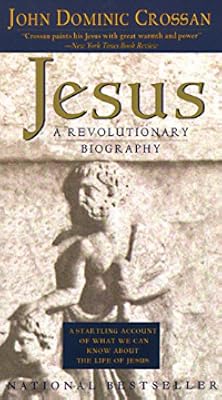
Jesus: A Revolutionary Biography
by John Dominic Crossan, John Dominic Crossan (Author)
On This Page
Description
"John Dominic Crossan, widely regarded as the leading authority on the words and life of Jesus, cuts through the minutiae and arcane research of much biblical scholarship to present the best possible historical depiction of Jesus - the man and his message. In elegant prose marked by startling revelations, Crossan presents Jesus as a social revolutionary who preached and practiced a message of radical egalitarianism. The Jesus portrayed by Crossan is a savvy and courageous Jewish show more Mediterranean peasant who challenged the sacrosanct social rules regarding class, gender, and status. What emerges from this stunning biography is a vision of Jesus as a Jewish Socratic philosopher and political agitator who gave voice to those who had never been heard and love to the most cast-out members of society. He proclaimed - in thought and action - that all may participate in the rule of God."--Jacket. show lessTags
Recommendations



Member Reviews
This is a book I've been waiting to come along since I was in 2nd grade. That was back in the sixties when my family lived and worked on a farm in New Mexico and every Sunday went to a small Grace Assembly of God church. Even being so young, the convoluted Jesus story with its strange ancient magic didn't make sense to me. It wasn't supposed to make sense,I was told. It was all real and I just had to have faith.
Not being able to just have faith has continued my whole life. I don't reject Jesus. I believe he lived and remarkably changed the world. But I never have been able to throw in with Christianity and its oddly self-congratulatory emphasis on belief and conversely its general rejection of inquiry and doubt. In my Western culture show more it's a subject -- overt and covert -- that never goes away . It makes me ask periodically but regularly, who was Jesus really and how did "his" religion become derisive like this?
At last, in Jesus: A Revolutionary Biography there are answers, answers that don't dismiss the questions, answers that for me are even more inspirational because of their realism. In this "revolutionary biography," Crossan presents a realistic portrait of Jesus without dismissing his remarkable message. Of course, so much information has been lost to time, and so much was never saved in time anyway it's probably impossible to be sure about anything about Jesus, but Crossan puts the man Jesus in context based on what can be known by using contemporaneous written sources, plus modern archaeology and sociology. He places Jesus firmly in the life and times of a Jewish peasant man living under brutal Roman rule and steeped in a highly religious and highly regulated society that was under great pressure. Jesus had ideas and teachings that were original, amazingly progressive and, probably even then, puzzling. These ideas were -- and were not -- what we often are led to believe they were.
In a nutshell, Jesus was teaching and living radical social egalitarianism. (Remarkable how 2000 years of devotion and study later, we can fall so very far below the mark.) He used healing and communal eating to set the example of the Kingdom of God he believed in.
After his ignominious and tortuous death, the message morphed, and Crossan sifts through the many ways that happened.
Scribes went searching for and incorporating exegesis items to the gospels in order to boost Jesus as the Jewish prophesied messiah. Crossan points where messages were politically tweaked and subsequently encoded into the gospels based on the leadership struggles of the First Christian factions. Then there was even the need to make Jesus interesting and competitive with the standard gods of the day, when gentiles were accustomed to a good yarn about a god's magical life and was a virtual requirement in order for the new message to be received. In spite of all that, Jesus' message is still there to be teased out from the New Testament, and in the non-canonical gospels too. (Like Crossan, I dig the Gospel of Thomas for the feeling of it being the least adulterated voice and message of Jesus.)
Of course I'm not a Biblical scholar and am aware Crossan's ideas are controversial to some. While reading, I wasn't always fully convinced by certain of his arguments. But I doubt there is anyone else who has given more rational study and intelligence to Jesus than Crossan. I am indebted to his work, it's been a revelation. Good to know someone is out there dedicated to understanding a profound (not magical) Jesus. show less
Not being able to just have faith has continued my whole life. I don't reject Jesus. I believe he lived and remarkably changed the world. But I never have been able to throw in with Christianity and its oddly self-congratulatory emphasis on belief and conversely its general rejection of inquiry and doubt. In my Western culture show more it's a subject -- overt and covert -- that never goes away . It makes me ask periodically but regularly, who was Jesus really and how did "his" religion become derisive like this?
At last, in Jesus: A Revolutionary Biography there are answers, answers that don't dismiss the questions, answers that for me are even more inspirational because of their realism. In this "revolutionary biography," Crossan presents a realistic portrait of Jesus without dismissing his remarkable message. Of course, so much information has been lost to time, and so much was never saved in time anyway it's probably impossible to be sure about anything about Jesus, but Crossan puts the man Jesus in context based on what can be known by using contemporaneous written sources, plus modern archaeology and sociology. He places Jesus firmly in the life and times of a Jewish peasant man living under brutal Roman rule and steeped in a highly religious and highly regulated society that was under great pressure. Jesus had ideas and teachings that were original, amazingly progressive and, probably even then, puzzling. These ideas were -- and were not -- what we often are led to believe they were.
In a nutshell, Jesus was teaching and living radical social egalitarianism. (Remarkable how 2000 years of devotion and study later, we can fall so very far below the mark.) He used healing and communal eating to set the example of the Kingdom of God he believed in.
After his ignominious and tortuous death, the message morphed, and Crossan sifts through the many ways that happened.
Scribes went searching for and incorporating exegesis items to the gospels in order to boost Jesus as the Jewish prophesied messiah. Crossan points where messages were politically tweaked and subsequently encoded into the gospels based on the leadership struggles of the First Christian factions. Then there was even the need to make Jesus interesting and competitive with the standard gods of the day, when gentiles were accustomed to a good yarn about a god's magical life and was a virtual requirement in order for the new message to be received. In spite of all that, Jesus' message is still there to be teased out from the New Testament, and in the non-canonical gospels too. (Like Crossan, I dig the Gospel of Thomas for the feeling of it being the least adulterated voice and message of Jesus.)
Of course I'm not a Biblical scholar and am aware Crossan's ideas are controversial to some. While reading, I wasn't always fully convinced by certain of his arguments. But I doubt there is anyone else who has given more rational study and intelligence to Jesus than Crossan. I am indebted to his work, it's been a revelation. Good to know someone is out there dedicated to understanding a profound (not magical) Jesus. show less
Reading Crossan is both enlightening and depressing. He’s well-known in the historical Jesus school and has written numerous books for both the professional and layperson on what we can really know about the life and sayings of Jesus. For those who take the Bible literally, whatever version you’ve chosen to take literally, I’d say read this only if you’re willing to be challenged. For the rest, Crossan offers a detailed exegesis that will make your hair stand on end. In short, he sees the historical person as (1) an illiterate peasant teaching a type of radical social change at a time when the entrenched political and religious elites were stamping out such troublemakers brutally and without thought, sympathy, or delay; (2) show more likely killed for causing a scene in the crowded temple at Passover, when Jerusalem was at its busiest and Roman authorities were primed to put down any sign of disturbance; (3) left on the cross or the ground as carrion with no chance of burial, for which a special request would have had to be made and, as he points out, no one with the chops to make such a request would have cared and anyone who cared wouldn’t have had the contacts to make the request. Non-burial was considered the ultimate insult to the deceased and a deterrent to crime.
The teachings themselves are distilled down to just a few, which are so far from the hierarchical church structure which developed that organized Christianity ends up in the same position to Jesus as all the other institutions he was trying to bring down. Crossan concludes that Jesus practiced, and taught, that the Kingdom of God can be here now only if people will 1) practice complete, open table-sharing and spiritual healing, without any care for status, class, wealth, physical condition, race, freedom, or any other division humans have invented over time; and 2) set down no roots where a hierarchy or center of power can be identified (and the reason he instructed his followers to leave anywhere after a day or two) so that the typical 1st century system of patronage (elites), brokerage (middlemen) and clients (everyone else) could not be set up. He didn’t want anyone to be the head of an organization. He wanted complete equality and sharing, which no institution can pull off by definition, let alone given human predilection for power, status and hoarding of wealth.
One of the most fascinating points Crossan makes is about the woman who anointed Jesus’ feet. In her, Jesus found the only person, male or female, who actually listened when he talked about the death he expected and who recognized his need for burial preparation, knowing he’d never get it later. In an age when a couple of the major Christian organizations still won’t recognize women as equals in the church, isn’t it interesting to speculate on why that might be?
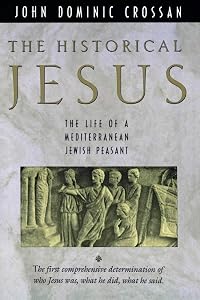
This book is the layperson version of Crossan’s arguments. The more scholarly version is "The Historical Jesus". show less
The teachings themselves are distilled down to just a few, which are so far from the hierarchical church structure which developed that organized Christianity ends up in the same position to Jesus as all the other institutions he was trying to bring down. Crossan concludes that Jesus practiced, and taught, that the Kingdom of God can be here now only if people will 1) practice complete, open table-sharing and spiritual healing, without any care for status, class, wealth, physical condition, race, freedom, or any other division humans have invented over time; and 2) set down no roots where a hierarchy or center of power can be identified (and the reason he instructed his followers to leave anywhere after a day or two) so that the typical 1st century system of patronage (elites), brokerage (middlemen) and clients (everyone else) could not be set up. He didn’t want anyone to be the head of an organization. He wanted complete equality and sharing, which no institution can pull off by definition, let alone given human predilection for power, status and hoarding of wealth.
One of the most fascinating points Crossan makes is about the woman who anointed Jesus’ feet. In her, Jesus found the only person, male or female, who actually listened when he talked about the death he expected and who recognized his need for burial preparation, knowing he’d never get it later. In an age when a couple of the major Christian organizations still won’t recognize women as equals in the church, isn’t it interesting to speculate on why that might be?
This book is the layperson version of Crossan’s arguments. The more scholarly version is "The Historical Jesus". show less
Crossan is one of the premier Jesus scholars of today, and this book is quintessential Crossan. It’s a condensed, recently reprinted, more readable version of his 1994 masterpiece, The Historical Jesus.
Crossan’s research is controversial, more focused on the real life of a first-century sage (Jesus) than in the messianic God-man Christianity turned him into. I believe Crossan’s most irritating position (to conservative Christians) is his insistence that Jesus never rose from the tomb … because he was never entombed in the first place. Jesus’ body was probably pulled from the cross and eaten by dogs, with his remains dumped in a shallow grave, like the majority of other Roman crucifixion victims. Nevertheless, Crossan’s show more portrayal of Jesus is warm and powerful.
This little 200-page book is for people who want a quick introduction to Crossan’s research without tomes or tangents. show less
Crossan’s research is controversial, more focused on the real life of a first-century sage (Jesus) than in the messianic God-man Christianity turned him into. I believe Crossan’s most irritating position (to conservative Christians) is his insistence that Jesus never rose from the tomb … because he was never entombed in the first place. Jesus’ body was probably pulled from the cross and eaten by dogs, with his remains dumped in a shallow grave, like the majority of other Roman crucifixion victims. Nevertheless, Crossan’s show more portrayal of Jesus is warm and powerful.
This little 200-page book is for people who want a quick introduction to Crossan’s research without tomes or tangents. show less
Great biography of Jesus. Crossan, a member of the famed jesus seminar succiently writes a penetrating look at the ministry of Jesus separated from the theological additions which dominate the New Testament Gospels. Crossan's conclusions are that Jesus was first and foremost an apolcalyptic teacher. Second he taught that all people were equal in the eyes of the lord and that on earth in preparation for the apocalypse there should be no discrimination based upon priestly class, social class, economic class, etc. Jesus' formula for sharing this idea was the communal meal. The virgin birth, reserrection, and most of the miracle working in the new testament are mythical according to Crossan. Great Analysis, A1 book.
Highly speculative, but all books claiming to be factual accounts of Jesus' life are, and he makes his speculations explicit. I disagree with a lot that he has to say, but it's interesting.
Jesus: A Revolutionary Biography by John Dominic Crossan. Epiphany library section 3 A: Christianity: Jesus. Copy signed by the author. Crossan is a leading scholar in the historical Jesus movement which tries to determine what we know with certainty about the life and work of Jesus by comparing and contrasting New Testament writings with other early writings by Romans, Dead Sea scroll fragments, the Gospel of Thomas, and others.
Crossan says that dining tables in the Bible symbolize society, a concept called commensality. Closed commensality would be a banquet where rulers recline on cushions, surrounded by warriors and statesmen, with women serving, and the lowly not included. But Jesus stressed open commensality, his directive alive show more in our communion liturgy when Pastor says, “all are welcome to the table.” Christ was executed, Crossan says, because he radically spoke and acted out against closed commensality not just in eating but in the whole Roman social structure.
The last two chapters discuss Christ’s crucifixion, what actually happened to the bodies of the thousands who were crucified, and what most probably happened to Christ’s crucified body. Crossan’s claims are not what Christians normally hear about crucifixion and resurrection, but his claims are intriguing and still allow us to believe in a living Jesus and a living faith.
He intrigues us with additional questions: Who was the woman who washed and anointed Jesus’ feet before his crucifixion, and why does she receive a stunning accolade from Jesus? What do the nature miracles mean – Jesus walking on water or stilling a storm? Are they meant to be read literally or do they symbolize something else? Did early gospel readers read them literally? Why were the gospels written as they were?
He ends the book with Emperor Constantine who wanted to unify Christian belief, and in 312 CE ordered Christian bishops to meet in Nicea for the purpose. Constantine held an imperial banquet, with detachments of guards surrounding the banquet hall to keep out the riffraff. Suddenly Christian meal and emperor were linked! How, Crossan asks, did the open commensality of Jesus morph into an imperial banquet with king and toadies? Crossan sounds like he’d like to have it out with Constantine. It would be interesting to be a fly on the wall of a meeting between Crossan and the pope! YIKES! show less
Crossan says that dining tables in the Bible symbolize society, a concept called commensality. Closed commensality would be a banquet where rulers recline on cushions, surrounded by warriors and statesmen, with women serving, and the lowly not included. But Jesus stressed open commensality, his directive alive show more in our communion liturgy when Pastor says, “all are welcome to the table.” Christ was executed, Crossan says, because he radically spoke and acted out against closed commensality not just in eating but in the whole Roman social structure.
The last two chapters discuss Christ’s crucifixion, what actually happened to the bodies of the thousands who were crucified, and what most probably happened to Christ’s crucified body. Crossan’s claims are not what Christians normally hear about crucifixion and resurrection, but his claims are intriguing and still allow us to believe in a living Jesus and a living faith.
He intrigues us with additional questions: Who was the woman who washed and anointed Jesus’ feet before his crucifixion, and why does she receive a stunning accolade from Jesus? What do the nature miracles mean – Jesus walking on water or stilling a storm? Are they meant to be read literally or do they symbolize something else? Did early gospel readers read them literally? Why were the gospels written as they were?
He ends the book with Emperor Constantine who wanted to unify Christian belief, and in 312 CE ordered Christian bishops to meet in Nicea for the purpose. Constantine held an imperial banquet, with detachments of guards surrounding the banquet hall to keep out the riffraff. Suddenly Christian meal and emperor were linked! How, Crossan asks, did the open commensality of Jesus morph into an imperial banquet with king and toadies? Crossan sounds like he’d like to have it out with Constantine. It would be interesting to be a fly on the wall of a meeting between Crossan and the pope! YIKES! show less
This book deserves careful and extended consideration by everyone seriously interested in the enigmatic sage from Galilee. With his work on Jesus, Crossan joins the ranks of the truly great Biblical scholars of the 20th century.
Members
- Recently Added By
Author Information

72+ Works 11,302 Members
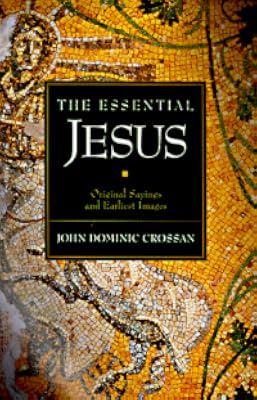
Considered by many to be the most learned scholar on the topic of Jesus Christ, John Dominic Crossan's adversaries question how he reconciles his Catholic faith with 20th century secular study. A former priest, Crossan is the author of The Essential Jesus: Original Sayings and Earliest Images, The Historical Jesus: The Life of a Mediterranean show more Jewish Peasant, Jesus: A Revolutionary Biography; The Birth of Christianity: Discovering What Happened in the Years Immediately After the Execution of Jesus, and The Cross That Spoke: The Origins of the Passion Narrative, among others. (Bowker Author Biography) show less
Common Knowledge
- Original publication date
- 1994
- People/Characters
- Augustus Caesar (Roman empire's first Emperor, Gaius Octavius Caesar); Herod Antipater; Jesus Christ; John the Baptist; Flavius Josephus (37 to 100?); Publius Quinctilius Varus (show all 8); Vespasian; Lucius Quinctius Flaminius
- Important places
- Palestine
Classifications
- Genres
- Religion & Spirituality, Nonfiction, History, Biography & Memoir, General Nonfiction
- DDC/MDS
- 232.901 — Religion Christianity Jesus Christ and his family Family and life of Jesus Life of Jesus
- LCC
- BT301.2 .C77 — Philosophy, Psychology and Religion Doctrinal Theology Doctrinal Theology Christology Life of Christ
- BISAC
Statistics
- Members
- 1,270
- Popularity
- 19,213
- Reviews
- 18
- Rating
- (3.72)
- Languages
- 7 — Danish, Dutch, English, German, Italian, Portuguese, Spanish
- Media
- Paper, Ebook
- ISBNs
- 13
- ASINs
- 8
