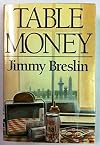
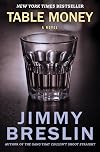
Table Money
by Jimmy Breslin
On This Page
Description
As a city worker and former war hero tumbles into alcoholism, his wife fights to hold on to her newfound freedom Owney Morrison has walked the catacombs underneath New York City since he was eleven. His father was a sandhog--a tunnel worker--and the first to introduce him to the miles of passageways snaking beneath the ground. Now an adult, back from Vietnam with a Medal of Honor and no work prospects, Owney takes up the family legacy, digging and maintaining the tunnels that provide show more the city with water. It is dangerous work, and at the end of each shift he deserves a few drinks. But when alcohol takes control of him, his wife Dolores is left with a decision. Should she take her baby daughter and cut ties with her husband, or stay and risk being dragged under by a man who feels safest one hundred feet below the street? At once witty and moving, Table Money is a memorable portrait of family and marriage in modern America. This ebook features an illustrated biography of Jimmy Breslin including rare photos and never-before-seen documents from the author's personal collection. show lessTags
Recommendations



















Member Reviews
Write what you know. Whoever it was that first said those words of wisdom, must have said them loud and clear to Jimmy Breslin. Better still, it was probably Breslin that announced–in his unmistakable Queens accent–this most excellent advice to any and all writers that would listen.
Table Money is a nonpareil example of this 'write what you know' craftsmanship in all of its glory.
The 1970s, Viet Nam war issues, good cops, bad cops, drinking problems, mob guys, societal / neighborhood expectations, religious insanity, the understood roles of men and women, ugly racism, and the importance of always having money on the table. A terrific novel from someone who brilliantly wrote volumes about the city and the people and the neighborhoods show more he knew so very well. show less
Table Money is a nonpareil example of this 'write what you know' craftsmanship in all of its glory.
The 1970s, Viet Nam war issues, good cops, bad cops, drinking problems, mob guys, societal / neighborhood expectations, religious insanity, the understood roles of men and women, ugly racism, and the importance of always having money on the table. A terrific novel from someone who brilliantly wrote volumes about the city and the people and the neighborhoods show more he knew so very well. show less
I need to go wash my hair.
The first time I ever heard the term "sandhog," was when I read about workmen on the Brooklyn bridge. I was impressed with a job that looks horrifying, and it's probably much more so in reality. In this case, sand hogs are creating tunnels that will carry water to the billions of people that live in the New York City area. I say billions because it's an unthinkable amount of people living there.
The best parts of this book were accidents that happened because of the dangerous nature of this job.
It was a love-hate relationship with this book. The wife of the protagonist, Dolores, was an admirable character. She reminded me so much of myself when I was younger and I married someone who took my innocence, my show more youth, my heart, and gave back nothing. I hated the character of the protagonist, "Ownie," whose real name was owen. He was an alcoholic for whom the bottle meant more than anything: more than his marriage, more than his child. Willing to throw away what was so meaningful, to prove that no woman would tell him what to do. It was terribly triggering for me, as so many books are. I wish so much I could reach through the pages and slap the crap out of the son of a b.
Here's the first of the accidents that were so thrilling:
".. when at work one day, deep in the tunnel under the dam, Morrison's friend, Jerry barry, who was here 3 months from donegal, turned off his acetylene torch at the tip but left the tank open. Lit up like he deserved a good smoke for himself. Lit up in a tight chamber far under a reservoir. Barry blew straight up through the roof and into the water. Later, standing on the gravel shore, somebody spotted Barry out in the reservoir. The head was bobbing along, the face looking up, with sometimes no water covering the face at all, looking up at the sky as the water swept it toward the gate in the dam that led to the tunnel in the city. Somebody handed Morrison a pole with a small net on it and said, 'well, this is about all you'll need to fish Barry out of the water.' It was. When Morrison picked it up in the net, the man rowing the boat looked at the head in the net and said, 'I guess he sure left a sour taste in the drinking water.' "
Here's an accident that happened to Owen Morrison's ancestor, Jimmy Morrison. It was a pretty good accident, too:
" A year later, working in High Bridge, Jimmy Morrison and three others got on a lift that dropped like a flower pot off a windowsill, dropped down a 900 ft shaft with the four men on it trying to scream out but unable to make a sound. Jimmy was on his hands and knees and forcing an Act of Contrition through his Frozen mind when the elevator cable caught and the elevator stopped at once. The four were thrown against the steel sides of the shaft with bones breaking and the first cries coming from them. Then the lift broke Free again and dropped the last 50 ft to the bottom. It splintered and the four men were pulled out and had to remain in the shaft for several hours until a new lift was fashioned and sent down to them. One of the four, Gene Cooney, went berserk and, when healed, had to be put away. The other two left sandhog work. Jimmy Morrison, with fractured vertebrae, was in a ward in Bronx general hospital for 6 months."
Throughout the book, mentions are made of a woman named cindy. Cindy is a sex worker, though to her friends it's more like friends with benefits. What I disliked immensely was the author's attitude toward her, as if she's something dirty and smelly, instead of directing it back to the men that make the bad smells and the dirt.
"in the middle of the night or the start of the morning, or whenever it was, he sat on a wicker hamper in the bathroom of Fat's apartment. He knew it was Fat's apartment and he knew his throat throbbed. She stepped out of the shower and stood directly in front of him with the towel held up under her chin. show less
The first time I ever heard the term "sandhog," was when I read about workmen on the Brooklyn bridge. I was impressed with a job that looks horrifying, and it's probably much more so in reality. In this case, sand hogs are creating tunnels that will carry water to the billions of people that live in the New York City area. I say billions because it's an unthinkable amount of people living there.
The best parts of this book were accidents that happened because of the dangerous nature of this job.
It was a love-hate relationship with this book. The wife of the protagonist, Dolores, was an admirable character. She reminded me so much of myself when I was younger and I married someone who took my innocence, my show more youth, my heart, and gave back nothing. I hated the character of the protagonist, "Ownie," whose real name was owen. He was an alcoholic for whom the bottle meant more than anything: more than his marriage, more than his child. Willing to throw away what was so meaningful, to prove that no woman would tell him what to do. It was terribly triggering for me, as so many books are. I wish so much I could reach through the pages and slap the crap out of the son of a b.
Here's the first of the accidents that were so thrilling:
".. when at work one day, deep in the tunnel under the dam, Morrison's friend, Jerry barry, who was here 3 months from donegal, turned off his acetylene torch at the tip but left the tank open. Lit up like he deserved a good smoke for himself. Lit up in a tight chamber far under a reservoir. Barry blew straight up through the roof and into the water. Later, standing on the gravel shore, somebody spotted Barry out in the reservoir. The head was bobbing along, the face looking up, with sometimes no water covering the face at all, looking up at the sky as the water swept it toward the gate in the dam that led to the tunnel in the city. Somebody handed Morrison a pole with a small net on it and said, 'well, this is about all you'll need to fish Barry out of the water.' It was. When Morrison picked it up in the net, the man rowing the boat looked at the head in the net and said, 'I guess he sure left a sour taste in the drinking water.' "
Here's an accident that happened to Owen Morrison's ancestor, Jimmy Morrison. It was a pretty good accident, too:
" A year later, working in High Bridge, Jimmy Morrison and three others got on a lift that dropped like a flower pot off a windowsill, dropped down a 900 ft shaft with the four men on it trying to scream out but unable to make a sound. Jimmy was on his hands and knees and forcing an Act of Contrition through his Frozen mind when the elevator cable caught and the elevator stopped at once. The four were thrown against the steel sides of the shaft with bones breaking and the first cries coming from them. Then the lift broke Free again and dropped the last 50 ft to the bottom. It splintered and the four men were pulled out and had to remain in the shaft for several hours until a new lift was fashioned and sent down to them. One of the four, Gene Cooney, went berserk and, when healed, had to be put away. The other two left sandhog work. Jimmy Morrison, with fractured vertebrae, was in a ward in Bronx general hospital for 6 months."
Throughout the book, mentions are made of a woman named cindy. Cindy is a sex worker, though to her friends it's more like friends with benefits. What I disliked immensely was the author's attitude toward her, as if she's something dirty and smelly, instead of directing it back to the men that make the bad smells and the dirt.
"in the middle of the night or the start of the morning, or whenever it was, he sat on a wicker hamper in the bathroom of Fat's apartment. He knew it was Fat's apartment and he knew his throat throbbed. She stepped out of the shower and stood directly in front of him with the towel held up under her chin. show less
First chapter is great. Writing is locally very good but globally disjointed (yeah, yeah life is random, but a book about it shouldnt be). Knows what he writes about: he himself is Queens, Irish, and all that means.
Ratings
Members
- Recently Added By
Author Information

31+ Works 1,863 Members
Jimmy Breslin was born James Earle Breslin on October 17, 1928 in Queens, New York. In the late 1940's, The Long Island Press hired him as a copy boy. After getting a job as a sportswriter for The New York Journal-American, he wrote a book about the first season of the Mets entitled Can't Anybody Here Play This Game? This book led to him being show more hired as a news columnist for The New York Herald Tribune in 1963. He later wrote for The New York Post, The Daily News, New York Newsday, and New York magazine. He wrote both fiction and nonfiction books. His novels included The Gang That Couldn't Shoot Straight; World Without End, Amen; and Table Money. His nonfiction books included The Good Rat, The Short Sweet Dream of Eduardo Gutierrez, I Want to Thank My Brain for Remembering Me, The Church That Forgot Christ, and biographies of Damon Runyon and Branch Rickey. He died on March 19, 2017 at the age of 88. (Bowker Author Biography) show less
Awards and Honors
Distinctions
Common Knowledge
- Original title
- Table money
- Original publication date
- 1986
- Important places
- Queens, New York, New York, USA
- Dedication
- For Ronnie Meyers Eldridge
- First words
- The first water for a civilization moves slowly, perhaps a couple of inches a second, as it runs through the woods in the night, the brook widening at the end of the woods and the water now moving at a foot a second and then ... (show all)much faster as it runs downhill on land that drops one foot in each ten thousand over the 115 miles to the city.
- Original language
- English
- Canonical DDC/MDS
- 813.54
- Canonical LCC
- PS3552.R39
- Disambiguation notice
- Not written by Irving Stone.
Classifications
Statistics
- Members
- 90
- Popularity
- 357,103
- Reviews
- 3
- Rating
- (3.55)
- Languages
- English, Swedish
- Media
- Paper, Ebook
- ISBNs
- 9
- ASINs
- 4