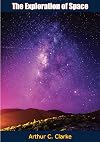
The Exploration of Space
by Arthur C. Clarke
On This Page
Description
""This book has been written to answer all the questions which the intelligent layman asks about the new science of astronautics"-a subject which is increasingly in the public eye. The treatment, though scientifically accurate, is entirely non-technical and the many remarkable plates-four in full colour-give a vivid impression of the way in which space-travel may be achieved. Among the subjects illustrated are: the refuelling of spaceships in free orbit outside the atmosphere, the show more construction of a "space-station", an automatic rocket surveying Mars, the lunar base, and dawn on the planet of a multiple sun. All these illustrations are based on a sound scientific foundation and every effort has been made to be factually accurate and to avoid mere fantasy. None of the difficulties of interplanetary travel has been shirked, and the many engineering, medical and similar problems which must be overcome before space-travel is possible are fully discussed The book also gives a clear and very readable picture of Man's place in the Universe, describing the planets he may explore during the next century, the methods that could be used to colonise them despite their alien conditions, and the ultimate effects which astronautics may have upon humanity. Quite apart from its interplanetary theme, The Exploration Of Space is thus a fascinating introduction to astronomy and combines excitement and instruction in a manner which should appeal to everyone."-Print ed.""-- show lessTags
Recommendations




















Member Reviews
Published in 1951 Clarke wanted to bridge the gap between a text book and science fiction and despite the odds being against him I think he succeeded. He certainly managed to include that sense of wonder which could inspire readers to take an active interest in the subject. In his preface he says:
"The present work has been prepared for the benefit for all those who are interested in the "why" and "how" of astronautics yet do not wish to go into too many scientific details. I believe that there is nothing in this book that the intelligent layman could not follow."
So am I an intelligent layman I wondered? - well I had to re-read the section on how a rocket is pro pulsed, but I got there in the end.
Clarke attained a fist class degree in show more mathematics and physics and although he was writing in 1951, he had the technical knowledge to demonstrate the challenges to space flight and how they could be overcome. He starts his book with a brief run through of early science fiction writing, but then plunges into the technical knowledge required for man to launch himself into space. He cites Herman Oberth a Rumanian professor of mathematics who he claims wrote 'the bible' of astronautics and explains how a rocket works and how it could be propelled to a speed of 25,000 mph to achieve escape velocity to escape the earths atmosphere. He talks about how gravity and atmosphere act to slow down a rockets acceleration and predicts that in the future atomic fuelled motors could be used. From now on his book mixes fact and fiction; he describes how a spaceship would carry astronauts to the moon and from existing knowledge at the time he describes the conditions that man would face on the surface of the moon.
He has chapters on navigation and communication in space and the benefits of putting unmanned satellites in orbit around the earth for communications, both radio and TV and meteorology. His mix of fact and fiction continues with his ideas of building a base on the moon and also stations in space for scientific work, medical research and refuelling of spaceships. He tells his readers what is known of our neighbouring planets and the outer planets including their moons and how it could be possible to travel between them. His final chapters consider what is known about outer space, the stars and the shape and movement of our galaxy. He also considers the possibilities of alien life and thinks "we are not alone", but will probably not be found anytime soon and so it is up to us to do the searching. He says:
"The crossing of space may do much to turn mens minds outwards and away from the present tribal squabbles. In this sense the rocket, far from being one of the destroyers of civilisation may provide the safety-valve that is needed to preserve it."
Clarke writes appealingly about the last great frontier. His enthusiasm along with his pared down scientific knowledge is a winning formula. I was reminded of many things I thought I knew and learnt a little more about the technical aspects of space flight. The only downside is that the book is based on 1951 knowledge and so will be a curiosity for readers more informed than me. I rate this as 4 stars. show less
"The present work has been prepared for the benefit for all those who are interested in the "why" and "how" of astronautics yet do not wish to go into too many scientific details. I believe that there is nothing in this book that the intelligent layman could not follow."
So am I an intelligent layman I wondered? - well I had to re-read the section on how a rocket is pro pulsed, but I got there in the end.
Clarke attained a fist class degree in show more mathematics and physics and although he was writing in 1951, he had the technical knowledge to demonstrate the challenges to space flight and how they could be overcome. He starts his book with a brief run through of early science fiction writing, but then plunges into the technical knowledge required for man to launch himself into space. He cites Herman Oberth a Rumanian professor of mathematics who he claims wrote 'the bible' of astronautics and explains how a rocket works and how it could be propelled to a speed of 25,000 mph to achieve escape velocity to escape the earths atmosphere. He talks about how gravity and atmosphere act to slow down a rockets acceleration and predicts that in the future atomic fuelled motors could be used. From now on his book mixes fact and fiction; he describes how a spaceship would carry astronauts to the moon and from existing knowledge at the time he describes the conditions that man would face on the surface of the moon.
He has chapters on navigation and communication in space and the benefits of putting unmanned satellites in orbit around the earth for communications, both radio and TV and meteorology. His mix of fact and fiction continues with his ideas of building a base on the moon and also stations in space for scientific work, medical research and refuelling of spaceships. He tells his readers what is known of our neighbouring planets and the outer planets including their moons and how it could be possible to travel between them. His final chapters consider what is known about outer space, the stars and the shape and movement of our galaxy. He also considers the possibilities of alien life and thinks "we are not alone", but will probably not be found anytime soon and so it is up to us to do the searching. He says:
"The crossing of space may do much to turn mens minds outwards and away from the present tribal squabbles. In this sense the rocket, far from being one of the destroyers of civilisation may provide the safety-valve that is needed to preserve it."
Clarke writes appealingly about the last great frontier. His enthusiasm along with his pared down scientific knowledge is a winning formula. I was reminded of many things I thought I knew and learnt a little more about the technical aspects of space flight. The only downside is that the book is based on 1951 knowledge and so will be a curiosity for readers more informed than me. I rate this as 4 stars. show less
Indeholder "1. Drømmen tager form", "2. Jorden og dens naboer", "3. Raketten", "4. Bort fra Jorden", "5. Vejen til planeterne", "6. Rumskibet", "7. Rejsen til Månen", "8. Navigation og kommunikation i rummet", "9. Livet i rumskibet", "10. Månen", "11. Månestationen", "12. De indre planeter", "13. De ydre planeter", "14. Udforskningen af planeterne", "15. Stationer i rummet", "16. Fremmede sole", "17. Mod stjernerne", "18. Nutid og fremtid".
Bogen starter med Biskop Godwin og hans rejse til Månen vha svaner. Han forudsagde mindre tyngdekraft på Månen, hvilket var godt set, for det var 50 år før Newtons opdagelse af tyngdeloven. Han forudsagde ikke at et ur på Månen går 56 mikrosekunder hurtigere på et døgn end et ur på show more Jorden på grund af den mindre tyngdekraft. Men det gør det.
Simon Newcomb skrev i 1903 en artikel om hvorfor flyvning var umuligt. I 1908 ditto om at en flyvemaskine aldrig ville kunne fremføre både en passager og en pilot.
Bogen beskriver i detaljer hvordan en flertrinsraket er påkrævet og at en sådan vil kunne skaffe os til Månen og de nærmeste planeter. Clarke nævner også muligheden for at det hele ender i en atomkrig, men han vil hellere tænke over en lysere fremtid.
Bogen er en nydelig populærvidenskabelig fremstilling af rumforskningens muligheder. show less
Bogen starter med Biskop Godwin og hans rejse til Månen vha svaner. Han forudsagde mindre tyngdekraft på Månen, hvilket var godt set, for det var 50 år før Newtons opdagelse af tyngdeloven. Han forudsagde ikke at et ur på Månen går 56 mikrosekunder hurtigere på et døgn end et ur på show more Jorden på grund af den mindre tyngdekraft. Men det gør det.
Simon Newcomb skrev i 1903 en artikel om hvorfor flyvning var umuligt. I 1908 ditto om at en flyvemaskine aldrig ville kunne fremføre både en passager og en pilot.
Bogen beskriver i detaljer hvordan en flertrinsraket er påkrævet og at en sådan vil kunne skaffe os til Månen og de nærmeste planeter. Clarke nævner også muligheden for at det hele ender i en atomkrig, men han vil hellere tænke over en lysere fremtid.
Bogen er en nydelig populærvidenskabelig fremstilling af rumforskningens muligheder. show less
Jun 5, 2011 (Edited)Danish
Ratings
Members
- Recently Added By
Lists

The Non-Fiction Works of Arthur C. Clarke
27 works; 2 members
Author Information

863+ Works 130,388 Members
Arthur C. Clarke was born in Minehead, Somerset, England, on December 16, 1917. During World War II, he served as a radar specialist in the RAF. His first published piece of fiction was Rescue Party and appeared in Astounding Science, May 1946. He graduated from King's College in London with honors in physics and mathematics, and worked in show more scientific research before turning his attention to writing fiction. His first book, Prelude to Space, was published in 1951. He is best known for his book 2001: A Space Odyssey, which was later turned into a highly successful and controversial film under the direction of Stanley Kubrick. His other works include Childhood's End, Rendezvous with Rama, The Garden of Rama, The Snows of Olympus, 2010: A Space Odyssey II, 2062: Odyssey III, and 3001: The Final Odyssey. During his lifetime, he received at least three Hugo Awards and two Nebula Awards. He died of heart failure on March 19, 2008 at the age of 90. (Bowker Author Biography) show less
Awards and Honors
Awards
Common Knowledge
- Canonical title
- The Exploration of Space
- Original title
- The Exploration of Space
- Original publication date
- 1951 (Temple) (Temple); 1959 [rev. ed.]
- First words
- THE very conception of interplanetary travel was, of course, impossible until it was realised that there were other planets.
- Last words
- (Click to show. Warning: May contain spoilers.)With the landing of the first space ship on Mars and Venus, the childhood of our race was over and history as we know it began. . . "
- Original language
- English
- Disambiguation notice
- Please do not combine this book with excerpts from it published under the same title in collections with essays, for instance Greetings, Carbon-Based Bipeds! (1999).
Classifications
- Genres
- Nonfiction, Science & Nature, General Nonfiction
- DDC/MDS
- 629.1388 — Applied science & technology Engineering Transportation Vehicles Airplanes, Helicopters, and other aircrafts Aviation engineering
- LCC
- TL789 .C6 — Technology Motor vehicles. Aeronautics. Astronautics Motor vehicles. Aeronautics. Astronautics Astronautics. Space travel
- BISAC
Statistics
- Members
- 344
- Popularity
- 91,843
- Reviews
- 2
- Rating
- (3.85)
- Languages
- Danish, Dutch, English, Italian
- Media
- Paper, Ebook
- ISBNs
- 8
- ASINs
- 25