On This Page
Description
"Watch as Barbara Buncle blossoms and finds within herself the strength that's always been there, just waiting for its chance. RECOMMENDED READ"—Dear AuthorWho Knew One Book Could Cause So Much Chaos?
Barbara Buncle is in a bind. Times are harsh, and Barbara's bank account has seen better days. Maybe she could sell a novel ... if she knew any stories. Stumped for ideas, Barbara draws inspiration from her fellow residents of Silverstream, the little English village she knows inside and show more out.
To her surprise, the novel is a smash. It's a good thing she wrote under a pseudonym, because the folks of Silverstream are in an uproar. But what really turns Miss Bunde's world around is this: what happens to the characters in her book starts happening to their real-life counterparts. Does life really imitate art?
A beloved author who has sold more than seven million books, D. E. Stevenson is at her best with Miss Buncle's Book, crafting a highly original and charming tale about what happens when people see themselves through someone else's eyes.
. show less
Tags
Recommendations







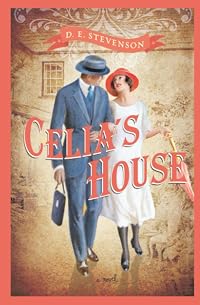



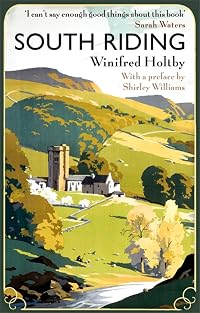






Member Recommendations
wisemetis Main characters are both overlooked and underappreciated/taken for granted.
30
Member Reviews
English spinster Barbara Buncle decides to write a book in this delightfully humorous novel from the 1930s, and the result is village drama unlike anything she could ever have imagined. With her dividend payments drying up, and no discernible job skills, Miss Buncle debates between raising hens and writing stories as a means of supplementing her income. Deciding upon stories, she creates a faithful portrait of the residents of Silverstream, with only their names changed, and then writes about what she thinks these neighbors of her should do next. When the book is published under the pseudonym 'John Smith,' it soon becomes a controversy in the village, as people begin to recognize themselves in the ostensibly fictional characters. Some show more end up doing exactly what Miss Buncle predicted, while others start a witch hunt to discover the true identity of 'John Smith.' Miss Buncle herself, in the meantime, undergoes a transformation, and finds love in her own way...
Long on my radar, Miss Buncle's Book is a title I have been meaning to read, and I am glad I finally did. I found it completely charming, and finished it in a single day, once I finally got started with it. Miss Buncle is an interesting character, precisely because she seems such a blank slate at the beginning of the book, and then grows more interesting as she grows more confident. It was really quite interesting to see the changes wrought by Miss Buncle's book on the villagers around her, as they see themselves through another's eye. The good ones like Colonel Weatherhead seem inspired to seek happiness, the deeply flawed but not irredeemable ones like Mr. Bulmer improve and change themselves, and the truly villainous ones like Mrs. Greensleeves get their just deserts. The sub-plot involving Miss King and Miss Pretty, in which they are clearly lesbians, was quite interesting as well. Miss Buncle's remains oblivious to the fact, and Stevenson never comes right out and says what's what, but Miss King's outsized reaction to Miss Buncle's book, her sensitivity to public opinion regarding her relationship with Miss Pretty, is a clear indication of what's going on under the surface. I found this entire book immensely entertaining, and definitely intend to track down the sequels. Recommended to anyone looking for charming English village fiction, with a little bit of romance, and a whole heap of drama! show less
Long on my radar, Miss Buncle's Book is a title I have been meaning to read, and I am glad I finally did. I found it completely charming, and finished it in a single day, once I finally got started with it. Miss Buncle is an interesting character, precisely because she seems such a blank slate at the beginning of the book, and then grows more interesting as she grows more confident. It was really quite interesting to see the changes wrought by Miss Buncle's book on the villagers around her, as they see themselves through another's eye. The good ones like Colonel Weatherhead seem inspired to seek happiness, the deeply flawed but not irredeemable ones like Mr. Bulmer improve and change themselves, and the truly villainous ones like Mrs. Greensleeves get their just deserts. The sub-plot involving Miss King and Miss Pretty, in which they are clearly lesbians, was quite interesting as well. Miss Buncle's remains oblivious to the fact, and Stevenson never comes right out and says what's what, but Miss King's outsized reaction to Miss Buncle's book, her sensitivity to public opinion regarding her relationship with Miss Pretty, is a clear indication of what's going on under the surface. I found this entire book immensely entertaining, and definitely intend to track down the sequels. Recommended to anyone looking for charming English village fiction, with a little bit of romance, and a whole heap of drama! show less
A favorite read of the year! Miss Buncle’s Book is cozy, funny and clever. It follows Barbara Buncle, an outwardly ordinary and unassuming character who is hiding a big secret: she is the author of a novel written under the pen name John Smith. The characters of the novel are explicitly based on the people in her own town. Barbara arranges the lives of their novel counterparts for the better, giving them happier connections and storylines than their real life versions. But not all of the townspeople’s incisively accurate descriptions are flattering. As a result, many of the townspeople get together to figure out what to do about that pesky scoundrel John Smith, unaware that he is actually Barbara Buncle.
The tone of Miss Buncle’s show more Book is like a cozier, more slice of life P.G. Wodehouse. I feel like it embodies the saying “don’t mistake kindness for weakness,” because, while it’s gentle and feel-good, it has a kick to it that makes you realize it’s more than it appears to be. It’s totally a book to read to escape the stress of real life.
My favorite part of this book was how good D.E. Stevenson is at writing characters. She knows how to write people that feel real, down to the most minute details! Her two standout characters for me were Sally, and Mrs. Featherstone Hogg. I loved Sally’s entrance into Barbara’s life. Sally is so full of pep and cheer! She’s the perfect counterpart to Barbara. I only wish we could’ve seen them together more often in the story, because they are truly a dream team. But it’s Mrs. Featherstone Hogg that truly makes this book work. She is SO fun to hate! Probably one of my favorite book villains, I couldn’t stop laughing at her increasingly ridiculous antics as she vies to gain control.
It looks like there are four books in this series, and I can’t wait to read them all! show less
The tone of Miss Buncle’s show more Book is like a cozier, more slice of life P.G. Wodehouse. I feel like it embodies the saying “don’t mistake kindness for weakness,” because, while it’s gentle and feel-good, it has a kick to it that makes you realize it’s more than it appears to be. It’s totally a book to read to escape the stress of real life.
My favorite part of this book was how good D.E. Stevenson is at writing characters. She knows how to write people that feel real, down to the most minute details! Her two standout characters for me were Sally, and Mrs. Featherstone Hogg. I loved Sally’s entrance into Barbara’s life. Sally is so full of pep and cheer! She’s the perfect counterpart to Barbara. I only wish we could’ve seen them together more often in the story, because they are truly a dream team. But it’s Mrs. Featherstone Hogg that truly makes this book work. She is SO fun to hate! Probably one of my favorite book villains, I couldn’t stop laughing at her increasingly ridiculous antics as she vies to gain control.
It looks like there are four books in this series, and I can’t wait to read them all! show less
Oh, this is lovely. And so possible... Miss Buncle writes about her neighbors, who (mostly) don't appreciate it at all. She complains, several times, that she has no imagination and can only write about real people. And the people are beautifully real - nice solid characters, with their quirks certainly but not made up only of quirks. I was amused at the comment near the end, about her second book, that it was a woman writing about a woman writing a book... And of course it was in a book written by a woman. One more echo. Fun, and I'll be looking for more by this author. It's not _quite_ a four-star book for me, but it's distinctly better than a 3.5 star so it gets four.
When Barbara Buncle published her first novel under the assumed name of John Smith, it set off quite a storm in her village. Claiming she could only write about what she knew, Barbara used her keen powers of observation to develop characters based on village inhabitants, and then put them in situations ranging from probable to well-deserved. The book went viral, in an early 20th century sort of way, becoming the principal topic of conversation and, in some cases, consternation or outrage as people see themselves in the story.
Barbara is surprised by her novel's success and the resulting financial dividends, and also by the outrage. But she remains anonymous, continuing to collect anecdotes for a sequel. No one suspects she's the author; show more in fact, Barbara is such a peripheral figure in village life that she is practically invisible. Then, little by little, Barbara's book infiltrates real life, as villagers are inspired to act in ways either supporting or preventing outcomes described in the novel.
This "book-within-a-book" approach makes for delightful reading, and perhaps most delightful is the way the experience transforms Miss Buncle herself. Because the story is told from her perspective, it takes a little longer to realize what is happening, but when this piece of the puzzle is fully developed, everything snaps into place in a most satisfying way. By the time I turned the last page of this book, I was grinning from ear to ear. show less
Barbara is surprised by her novel's success and the resulting financial dividends, and also by the outrage. But she remains anonymous, continuing to collect anecdotes for a sequel. No one suspects she's the author; show more in fact, Barbara is such a peripheral figure in village life that she is practically invisible. Then, little by little, Barbara's book infiltrates real life, as villagers are inspired to act in ways either supporting or preventing outcomes described in the novel.
This "book-within-a-book" approach makes for delightful reading, and perhaps most delightful is the way the experience transforms Miss Buncle herself. Because the story is told from her perspective, it takes a little longer to realize what is happening, but when this piece of the puzzle is fully developed, everything snaps into place in a most satisfying way. By the time I turned the last page of this book, I was grinning from ear to ear. show less
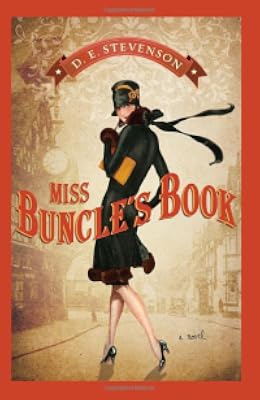
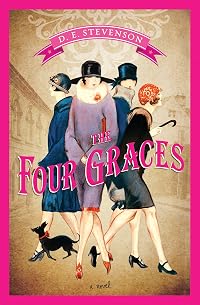
I love the cover of [Miss Buncle's Book]. The book itself is a gentle and charming read, with some good snark and a winning, always overlooked, heroine in Miss Buncle.
In an attempt to make some much-needed money, Miss Buncle has written a book about her pre-WWII village of Silverstream, with the names of it and its inhabitants changed. She claims no imagination, and believes she has merely described people as she sees them. Turns out she's keenly insightful, and that her village is full of characters that are entertaining to read about. She does do a bit of wish fulfillment in the last third of the book, in which she has characters fall in love, travel to exotic places, and so on. The book is published under the pseudonym "John Smith". show more When villagers begin to recognize themselves - warts and all - in the book, a hue and cry goes up to find the real identity of the dastardly author. No one thinks of the mousy Miss Buncle; it would be too absurd.
The effect of the reader knowing Miss Buncle intimately, and seeing how she is viewed and treated, helps remind us of the short-sighted assumptions we often make about others. She is honest and innocent and altogether worthy of attention, but gets dismissed automatically by nearly everyone because of her modest manner and somewhat frumpy appearance. The head of her publisher, Mr. Abbott, sees the genius of the book but at first doesn't know what to make of her. Gradually he comes to appreciate her and prod her to write a second book. The success of the first gives her some confidence, and she has a good bit of fun being present while villagers like the peremptory and ostentatious Ms. Featherstone Hogg complain about their portrayal in the book and plot to harm its author. Miss Buncle also sees the last part of the book, with its projection of the villagers' behavior into a created future, begin to have an effect on their actions toward one another.
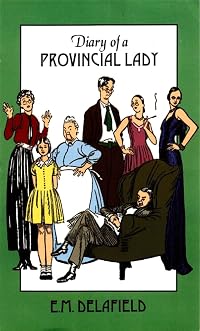
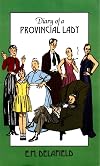
There is romance, there are villagers to cheer for, like the cheerful and wrongly accused Sarah, happily married to the village's stolid and reliable Dr. Walker, and villagers to hiss and boo at, like the gold-digging Miss Greensleeves. It reminded me in tone of [Miss Pettigrew Lives for a Day] and [Diary of a Provincial Lady]. If you enjoy these kinds of "comfort" books, you'll want to give this one a try. I'll be looking for more by the Scot author [D.E. Stevenson], including the sequel to this one. show less
In an attempt to make some much-needed money, Miss Buncle has written a book about her pre-WWII village of Silverstream, with the names of it and its inhabitants changed. She claims no imagination, and believes she has merely described people as she sees them. Turns out she's keenly insightful, and that her village is full of characters that are entertaining to read about. She does do a bit of wish fulfillment in the last third of the book, in which she has characters fall in love, travel to exotic places, and so on. The book is published under the pseudonym "John Smith". show more When villagers begin to recognize themselves - warts and all - in the book, a hue and cry goes up to find the real identity of the dastardly author. No one thinks of the mousy Miss Buncle; it would be too absurd.
The effect of the reader knowing Miss Buncle intimately, and seeing how she is viewed and treated, helps remind us of the short-sighted assumptions we often make about others. She is honest and innocent and altogether worthy of attention, but gets dismissed automatically by nearly everyone because of her modest manner and somewhat frumpy appearance. The head of her publisher, Mr. Abbott, sees the genius of the book but at first doesn't know what to make of her. Gradually he comes to appreciate her and prod her to write a second book. The success of the first gives her some confidence, and she has a good bit of fun being present while villagers like the peremptory and ostentatious Ms. Featherstone Hogg complain about their portrayal in the book and plot to harm its author. Miss Buncle also sees the last part of the book, with its projection of the villagers' behavior into a created future, begin to have an effect on their actions toward one another.
There is romance, there are villagers to cheer for, like the cheerful and wrongly accused Sarah, happily married to the village's stolid and reliable Dr. Walker, and villagers to hiss and boo at, like the gold-digging Miss Greensleeves. It reminded me in tone of [Miss Pettigrew Lives for a Day] and [Diary of a Provincial Lady]. If you enjoy these kinds of "comfort" books, you'll want to give this one a try. I'll be looking for more by the Scot author [D.E. Stevenson], including the sequel to this one. show less
This book was a sweet and funny summer treat set in the 1930s in the English village of Silverstream. Miss Barbara Buncle is a dowdy, fairly nondescript middle aged woman whose dividends are terribly thin. Strapped for cash, she writes a book about the inhabitants of her little village, changing names, but pegging identifying characteristics with brutal honesty. The first part of her book is a chronicle of an English village, which is also its initial title. In the second half, Miss Buncle shakes up the residents of "Copperfield," fictionally, of course. The book, published under the pseudonym John Smith, is a runaway success, and soon the village of Silverstream is in an uproar, determining to figure out who this wretched John Smith show more really is and have him horsewhipped for libel. Part of the fun of the book is the readership's assumptions about the author -- evenly divided of the opinions that he is a satirical genius, or a simple idiot. Amid the uproar however, the real residents of Silverstream actually live out the wildly imagined doings of their Copperfield counterparts. This was such a fun read, and a perfect summer book. show less
Barbara Buncle lives in genteel poverty in early 30s rural England. When her finances take a hit, she decides to turn to writing, and her book—written under a nom de plume, is a runaway hit. Only Miss Buncle has based her characters on the people who live in her village, who aren't all best pleased with how they've been portrayed, and shenanigans ensue. This is soufflé light, and there are some parts which are a bit far-fetched, but the whole point of this kind of book is to provide some frothy entertainment where the good end happily and the bad (or at least, the not so nice) end unhappily, and that's the kind of book I needed just now.
Members
- Recently Added By
Lists

wilfully eccentric little england (cosy read novels, england)
45 works; 15 members

Comfort Reads
221 works; 41 members

In or About the 1930s
198 works; 27 members

Favourite Books
1,820 works; 308 members

Female Author
1,234 works; 65 members

One Book, Many Authors
441 works; 40 members

Best Love Stories
107 works; 14 members

Backlisted
109 works; 9 members
Small Town Fiction
66 works; 13 members

Best books read in 2011
200 works; 51 members

Books Read in 2017
4,249 works; 129 members
Books Set in Small Towns and Villages
278 works; 16 members

1930s
262 works; 5 members

Books Read in 2015
3,299 works; 129 members

Llibres que he llegit el 2017
49 works; 1 member

Comedy of Manners
73 works; 1 member

Books Read in 2021
5,361 works; 113 members
Favorite Romance Fiction
247 works; 115 members

Books Read in 2024
4,727 works; 128 members

Canon de la narrativa universal del s. XX (cicutadry)
499 works; 3 members

Persephone
148 works; 3 members

Books We Discovered On LibraryThing
530 works; 130 members

Books Read in 2026
2,134 works; 70 members
Author Information

62 Works 8,712 Members
D. E. (Dorothy Emily) Stevenson was born in Edinburgh, Scotland on November 18, 1892. She married Captain James Reid Peploe in 1916. She wrote over 40 books in her lifetime. Her first novel Peter West was published in 1923. Her other books include Mrs. Tim of the Regiment, Miss Buncle's Book, Miss Buncle Married, and Listening Valley. Her Mrs. Tim show more books were inspired by the diaries she kept while an army wife. She died on December 30, 1973. (Bowker Author Biography) show less
Some Editions
Awards and Honors
Notable Lists
Series

Belongs to Publisher Series
El cercle de Viena (52)
Persephone (81)
Work Relationships
Is contained in
Common Knowledge
- Canonical title
- Miss Buncle's Book
- Original title
- Miss Buncle's book
- Original publication date
- 1934
- People/Characters
- Barbara Buncle; Arthur Abbott; Dorcas; Sarah Walker; Vivian Greensleeves; Agatha Featherson Hogg (show all 13); Isabella Snowden; Olivia Snowden; Dorothea Bold; John Walker; Ellen King; Angela Pretty; Ernest Hathaway
- Important places
- Silverstream, England, UK
- First words
- One fine summer's morning the sun peeped over the hills and looked down on the valley of Silverstream.
- Quotations
- It crossed his (the vicar's) mind that Vivian had been a little inconsiderate, and somewhat domineering. Was he taking unto himself a domineering wife?...Of course he was not yet Vivian's husband, she would be different when... (show all) they were married.
- Last words
- (Click to show. Warning: May contain spoilers.)Barbara Buncle had gone.
Classifications
Statistics
- Members
- 1,452
- Popularity
- 16,223
- Reviews
- 103
- Rating
- (4.11)
- Languages
- 5 — Catalan, Danish, English, German, Spanish
- Media
- Paper, Audiobook, Ebook
- ISBNs
- 28
- UPCs
- 1
- ASINs
- 14