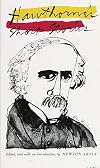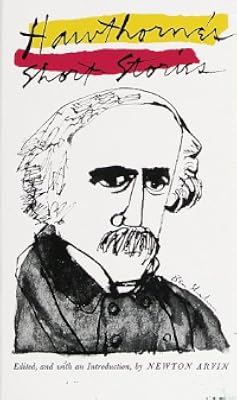
Hawthorne's Short Stories
by Nathaniel Hawthorne
On This Page
Description
Twenty four of the best of Hawthorne's short stories.Tags
Recommendations














Member Recommendations

Member Reviews
Specter and Science:
The tales in this collection include the best written by Hawthorne. Among them it is hard to rate one over another, however Rappaccini's Daughter is near the top. A tale of the natural versus the supernatural with overtones of professional jealousy, first love, and the desire for perfection. Perfection as desiderata, but unwillingness to pay the price. There are two scientists in Baglioni and Rappaccini himself. The latter seems to have created a new Eden with his garden that is lovingly overseen by his daughter, Beatrice, who is even more lovely than the flowers that surround her. Enter the young student, Giovanni, who is in Padua to study but is distracted by the view from his window: first, by the beautiful purple show more blossoms of a shrub in the center of the garden that illuminated it with a light that rivaled the sun; and second, by the entrance of Beatrice who made such an impression on the young student that it was as if "here were another flower . . . more beautiful than the richest of them,". The story develops into a question of whether the poison in the flowers (yes, they are poisonous plants) has overtaken Beatrice as well making her dangerous to other plants, animals, and even Giovanni. The question of whether she is a supernatural being or mere mortal is answered by the end of the story, but Giovanni's life is forever changed - how we may only speculate.
This story only hints at some of the myriad emotions and strange occurrences in these stories of men and women in settings as disparate as Salem Massachusetts and Padua Italy. show less
The tales in this collection include the best written by Hawthorne. Among them it is hard to rate one over another, however Rappaccini's Daughter is near the top. A tale of the natural versus the supernatural with overtones of professional jealousy, first love, and the desire for perfection. Perfection as desiderata, but unwillingness to pay the price. There are two scientists in Baglioni and Rappaccini himself. The latter seems to have created a new Eden with his garden that is lovingly overseen by his daughter, Beatrice, who is even more lovely than the flowers that surround her. Enter the young student, Giovanni, who is in Padua to study but is distracted by the view from his window: first, by the beautiful purple show more blossoms of a shrub in the center of the garden that illuminated it with a light that rivaled the sun; and second, by the entrance of Beatrice who made such an impression on the young student that it was as if "here were another flower . . . more beautiful than the richest of them,". The story develops into a question of whether the poison in the flowers (yes, they are poisonous plants) has overtaken Beatrice as well making her dangerous to other plants, animals, and even Giovanni. The question of whether she is a supernatural being or mere mortal is answered by the end of the story, but Giovanni's life is forever changed - how we may only speculate.
This story only hints at some of the myriad emotions and strange occurrences in these stories of men and women in settings as disparate as Salem Massachusetts and Padua Italy. show less
The Gray Champion - political
The Minister's Black Veil - righteousness
The May-Pole of Merry Mount - NH despised Endicott
The Gentle Boy - NH despised all Puritans
Wakefield - a man spends 20 years in the next street, leaving his wife to assume widowhood... how is she provided for is my question? NH's question is, how foolish can a man be? And is Mr. Wakefield odd, or could 'most anyone do what he did?
The Great Carbuncle - romance of a legend
The Prophetic Pictures - inspiration for [b:The Picture of Dorian Gray|5297|The Picture of Dorian Gray|Oscar Wilde|https://i.gr-assets.com/images/S/compressed.photo.goodreads.com/books/1546103428l/5297._SY75_.jpg|1858012], no doubt
Dr. Heidegger's Experiment - could have been 'be careful what you wish show more for' but fell flat, imo
Lady Eleanore's Mantle - a moral lesson?
Old Esther Dudley - NH admires this staunch Loyalist, whilst of course looking to the future.
The Ambitious Guest - given the title, it seems that there's something extra going on. I see only that the message is 'seize the day,' as in, if they'd gone on the adventure the child wished for, they'd be better off.
The White Old Maid - horror
Peter Goldthwaite's Treasure - irony
Endicott and the Red Cross - historical
The Birthmark - hard to read because the 'science' is so bad
Young Goodman Brown - ? All of us are complicit w/ Satan?
Rappaccini's Daughter - definitely could be adapted for modern readers of fantasy.
The Celestial Railroad - an update of Pilgrim's Progress, still very relevant. Includes "The Giant Transcendentalist,"
Feathertop - a golem who is more than/ a better man.
Egotism; or, The Bosom Serpent - um, sure, whatever.
The Christmas Banquet - skipped the bulk of it cuz Nat was getting 'purple' but the gist is, I think, that any feeling is 1. one's own, no matter one's circumstances and 2. better than no feeling at all.
Drowne's Wooden Image - an oaken figurehead foretells what we now label The Uncanny Valley, "Then came a sensation of fear; as if, not being actually human, yet so like humanity, hse must therefore be something preternatural."
Earth's Holocaust - a classic I've enjoyed in other anthologies
The Artist of the Beautiful - clearly a fable and commentary on obsession... but to what point, exactly?
The Great Stone Face - a sentimental favorite
Ethan Brand - a too obvious moral tale
The Wives of the Dead - I'm not sure I 'get' this.
The Antique Ring - a conceit, and, yes, sentimental
Alice Doane's Appeal - even after reading other's reviews, I'm not sure I decoded this sufficiently, but I do know I don't care for it.
And now I'm done. I hope to not encounter double negatives so often ever again. ("... who was not unstudied" followed a scant page later by "not improbably" gets old.)
But there are some good lines. "Like all other men around whom an engrossing purpose wreaths itself, he was insulated from the mass of human kind." (Context reveals that this is a bad thing.) show less
The Minister's Black Veil - righteousness
The May-Pole of Merry Mount - NH despised Endicott
The Gentle Boy - NH despised all Puritans
Wakefield - a man spends 20 years in the next street, leaving his wife to assume widowhood... how is she provided for is my question? NH's question is, how foolish can a man be? And is Mr. Wakefield odd, or could 'most anyone do what he did?
The Great Carbuncle - romance of a legend
The Prophetic Pictures - inspiration for [b:The Picture of Dorian Gray|5297|The Picture of Dorian Gray|Oscar Wilde|https://i.gr-assets.com/images/S/compressed.photo.goodreads.com/books/1546103428l/5297._SY75_.jpg|1858012], no doubt
Dr. Heidegger's Experiment - could have been 'be careful what you wish show more for' but fell flat, imo
Lady Eleanore's Mantle - a moral lesson?
Old Esther Dudley - NH admires this staunch Loyalist, whilst of course looking to the future.
The Ambitious Guest - given the title, it seems that there's something extra going on. I see only that the message is 'seize the day,' as in, if they'd gone on the adventure the child wished for, they'd be better off.
The White Old Maid - horror
Peter Goldthwaite's Treasure - irony
Endicott and the Red Cross - historical
The Birthmark - hard to read because the 'science' is so bad
Young Goodman Brown - ? All of us are complicit w/ Satan?
Rappaccini's Daughter - definitely could be adapted for modern readers of fantasy.
The Celestial Railroad - an update of Pilgrim's Progress, still very relevant. Includes "The Giant Transcendentalist,"
Feathertop - a golem who is more than/ a better man.
Egotism; or, The Bosom Serpent - um, sure, whatever.
The Christmas Banquet - skipped the bulk of it cuz Nat was getting 'purple' but the gist is, I think, that any feeling is 1. one's own, no matter one's circumstances and 2. better than no feeling at all.
Drowne's Wooden Image - an oaken figurehead foretells what we now label The Uncanny Valley, "Then came a sensation of fear; as if, not being actually human, yet so like humanity, hse must therefore be something preternatural."
Earth's Holocaust - a classic I've enjoyed in other anthologies
The Artist of the Beautiful - clearly a fable and commentary on obsession... but to what point, exactly?
The Great Stone Face - a sentimental favorite
Ethan Brand - a too obvious moral tale
The Wives of the Dead - I'm not sure I 'get' this.
The Antique Ring - a conceit, and, yes, sentimental
Alice Doane's Appeal - even after reading other's reviews, I'm not sure I decoded this sufficiently, but I do know I don't care for it.
And now I'm done. I hope to not encounter double negatives so often ever again. ("... who was not unstudied" followed a scant page later by "not improbably" gets old.)
But there are some good lines. "Like all other men around whom an engrossing purpose wreaths itself, he was insulated from the mass of human kind." (Context reveals that this is a bad thing.) show less
Ratings
Members
- Recently Added By
Lists

New Lifetime Reading Plan by Fadiman and Major
225 works; 5 members
Author Information

874+ Works 79,123 Members
Nathaniel Hawthorne was born on July 4, 1804 in Salem, Massachusetts. When he was four years old, his father died. Years later, with financial help from his maternal relatives who recognized his literary talent, Hawthorne was able to enroll in Bowdoin College. Among his classmates were the important literary and political figures Horatio Bridge, show more Henry Wadsworth Longfellow, and Franklin Pierce. These friends supplied Hawthorne with employment during the early years after graduation while Hawthorne was still establishing himself as a legitimate author. Hawthorne's first novel, Fanshawe, which he self-published in 1828, wasn't quite the success that he had hoped it would be. Not willing to give up, he began writing stories for Twice-Told Tales. These stories established Hawthorne as a leading writer. In 1842, Hawthorne moved to Concord, Massachusetts, where he wrote a number of tales, including "Rappaccini's Daughter" and "Young Goodman Brown," that were later published as Mosses from an Old Manse. The overall theme of Hawthorne's novels was a deep concern with ethical problems of sin, punishment, and atonement. No one novel demonstrated that more vividly than The Scarlet Letter. This tale about the adulterous Puritan Hester Prynne is regarded as Hawthorne's best work and is a classic of American literature. Other famous novels written by Hawthorne include The House of Seven Gables and The Blithedale Romance. In 1852, Hawthorne wrote a campaign biography of his college friend Franklin Pierce. After Pierce was elected as President of the United States, he rewarded Hawthorne with the Consulship at Liverpool, England. Hawthorne died in his sleep on May 19, 1864, while on a trip with Franklin Pierce. (Bowker Author Biography) show less
All Editions
Some Editions
Common Knowledge
- Disambiguation notice
- This is a selection of 24 Hawthorne stories by Newton Arvin. Do not combine with other selections or the complete short stories.
Classifications
Statistics
- Members
- 531
- Popularity
- 56,242
- Reviews
- 2
- Rating
- (4.33)
- Languages
- English
- Media
- Paper, Ebook
- ISBNs
- 6
- ASINs
- 14