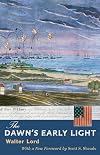
The dawn's early light
by Walter Lord
On This Page
Description
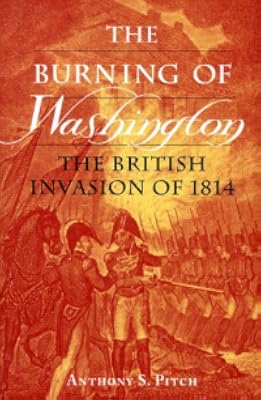
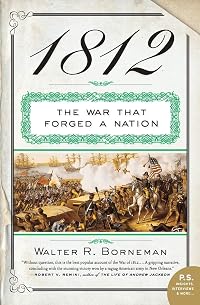
Lord's stunning account of the War of 1812, when a young nation won its independence once and for allAt the dawn of the nineteenth century, the great powers of Western Europe treated the United States like a disobedient child. Great Britain blocked American trade, seized its vessels, and impressed its sailors to serve in the Royal Navy. America's complaints were ignored, and the humiliation continued until James Madison, the country's fourth president, declared a second war on Great Britain. show more British forces descended on the United States, shattering its armies and burning its capital, but America rallied, and survived the conflict with its sovereignty intact.This is the story of the turning points of that strange war, which inspired the writing of ';The Star Spangled Banner' and led to the Era of Good Feeling that all but erased partisan politics in America for almost a decade. It was in 1812 that America found its identity, and first assumed its place on the world stage. show lessTags
Recommendations























Member Reviews
Published in 1972, this book is narrative non-fiction about the War of 1812. It includes the Battle of Bladensburg, the burning of Washington, the Battle of Baltimore, defense of Fort McHenry, Francis Scott Key’s writing of a poem that became America’s anthem, and the Battle of New Orleans. The majority takes place in 1814. A highlight for me is Monroe scouting hither and yon on horseback to surveil the terrain and report back to President Madison. Another was Madison finding himself on the front line of battle at Bladensburg, finally relocating to the rear at his aides’ suggestions. Walter Lord had the rare ability to paint pictures with words. He follows individuals from both the American and British sides at all levels. He show more provides the background, context, and reasons this war occurred. It is well-written and kept my interest from beginning to end. show less
This is a really rather exciting, even thrilling tale of the military adventures of the British in America in the War of 1812 focusing on occupying DC and destroying or damaging key buildings and other area destruction before being repelled by Fort McHenry, thus saving Baltimore from its full wrath. There is also the story of the Battle of New Orleans. What stood out to me was in this pointless war (no side got what it wanted or much of anything) was the shenanigans of Villeré whose name is on a street I often travel. Disregarding orders to secure Bayou Bienvenue for the convenience of his own plantation, he was captured there by the British only to jump out of a window and claim importance as the first to warn Jackson.
Being a military show more history, really, there is little political history. So, Federalists are remarked as being tolerant of or supportive of the British. It is not explained if this is due to specific policies of the Democratic-Republican Party or of Madison particularly.
There are a lot of details of Key's negotiations to free a civilian POW and inspiring witness to the Congreve "rocket's red glare".
I am reading now in Odessa: Genius and Death in a City of Dreams of "the many independent groups that form during war and revolution" during the "rolling pogroms" of the Russian civil war and see in this book with the vignettes of collaboration, indifference, bartering for private property and lack of success in enlisting American slaves (Britain did have some success in forcible deportation, including to Halifax) and I suspect such stories of varied loyalty and alignment will emerge from the histories to be written of the 2022 Russian invasion of Ukraine. show less
Being a military show more history, really, there is little political history. So, Federalists are remarked as being tolerant of or supportive of the British. It is not explained if this is due to specific policies of the Democratic-Republican Party or of Madison particularly.
There are a lot of details of Key's negotiations to free a civilian POW and inspiring witness to the Congreve "rocket's red glare".
I am reading now in Odessa: Genius and Death in a City of Dreams of "the many independent groups that form during war and revolution" during the "rolling pogroms" of the Russian civil war and see in this book with the vignettes of collaboration, indifference, bartering for private property and lack of success in enlisting American slaves (Britain did have some success in forcible deportation, including to Halifax) and I suspect such stories of varied loyalty and alignment will emerge from the histories to be written of the 2022 Russian invasion of Ukraine. show less
The United States seemed on the point of collapse. With the British blockade strangling her trade, the economy of the young nation was in ruins, and no w Washington itself lay at the mercay of an inva ding English army. But there was a turning point and..
Ratings
Members
- Recently Added By
Author Information

20+ Works 7,939 Members
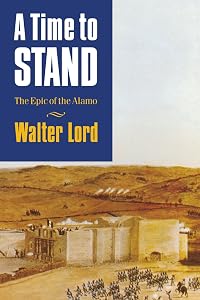
Walter Lord is the author of several best-selling works of history, including "A Night to Remember", the recreation of the sinking of the Titanic. He lives in New York City. (Publisher Provided) John Walter Lord, Jr. (October 8, 1917- May 19, 2002), was an American author, best known for his documentary-style non-fiction account A Night to show more Remember, about the sinking of the RMS Titanic. He was born in Baltimore, Maryland; he attended Princeton University and alo earned a law degree from Yale Law School. Lord wrote 11 bestselling books on such subjects as Pearl Harbor (Day of Infamy, 1957), the Battle of Midway (Incredible Victory, 1967), the Battle of the Alamo (A Time to Stand, 1961). He is perhaps best known for his classic work about the crash of the Titanic, A Night to Remember (1955). Lord died at age 84 after a long battle with Parkinson's disease. He resided in Manhattan, New York. (Bowker Author Biography) show less
Common Knowledge
- Canonical title
- The dawn's early light
- Original publication date
- 1972
- Important events
- War of 1812 (1812 | 1815)
- First words
- [Foreword] Today, it is called the War of 1812.
The guests at the Pleasure House, a popular inn near Cape Henry, Virginia, could hardly believe their eyes. - Last words
- (Click to show. Warning: May contain spoilers.)More than a banner of shining stars and stripes, a whole new sense of national identity shone forth in the smoky haze of what Francis Scott Key so lyrically called "the dawn's early light."
- Canonical DDC/MDS
- 973.52
Classifications
- Genres
- History, Nonfiction, General Nonfiction
- DDC/MDS
- 973.52 — History & geography History of North America United States Jacksonian Era (1809-1837) War pf 1812, Burning of Washington D.C., Battle of New Orleans
- LCC
- E354 .L85 — History of the United States United States Revolution to the Civil War, 1775/1783-1861 By period Early nineteenth century, 1801/1809-1845 Madison's administrations, 1809-1817 War of 1812
- BISAC
Statistics
- Members
- 482
- Popularity
- 63,240
- Reviews
- 3
- Rating
- (3.70)
- Languages
- English
- Media
- Paper, Audiobook, Ebook
- ISBNs
- 8
- ASINs
- 11