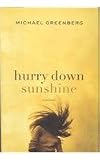
Hurry Down Sunshine
by Michael Greenberg
On This Page
Description
Hurry Down Sunshine tells the story of the extraordinary summer when, at the age of fifteen, Michael Greenberg's daughter was struck mad. It begins with Sally's visionary crack-up on the streets of Greenwich Village, and continues, among other places, in the out-of-time world of a Manhattan psychiatric ward during the city's most sweltering months.Tags
Recommendations































Member Recommendations
Member Reviews
The subject was a bit tough to listen to but what an awesome writer Mr. Greenberg is - just to listen to how he writes is sentences describing the neighborhood and the hospital and his brother and daughter was a pleasure. I'm sorry they've had such issues (and our family does too, so I can totally empathize) but, wow, I really enjoyed just listening to a word craftsman. Mr. Greenberg is a good narrator (audiobook) too. Highly recommend just for the quality of writing, though if you have issues with reading about mental breakdowns in their raw form, this might not be the best book for that.
In the opening pages of his sort-of memoir, Michael Greenberg says it's "something of a sacrilege" to speak of mental illness as anything besides the "chemical brain disease that it on one level is." Nonetheless, in Hurry Down Sunshine, Greenberg takes on the subject from a father's perspective and tells the story of his fifteen-year-old daughter's swift mental decline.
Greenberg names the day of his daughter Sally's crack-up: July 5, 1996. He wakes up to discover that Sally isn't home, and when he finds her walking around in the streets, the daughter he knows is gone. Instead, a raging young girl who kicks down trashcans and speaks in abstractions seems to have taken her place.
Hurry Down Sunshine is a book that, I think, will draw in show more readers who have first-hand experience with mental illness, and it will connect with others who are interested in reading about personal and family drama. For the former, this story will read like a testament of survival and perseverance in light of a family tragedy. Like any hopeful father, Greenberg first rationalizes Sally's illness as a teenage spell, but when she lashes out on him-leaving bloody scratch marks on his face, he knows something more serious has taken hold. A therapist advises Greenberg and his wife to take Sally to the emergency room on the grounds of "acute psychosis." They comply, shocked that such a phrase could apply to their daughter.
Greenberg signs a consent form for Sally's treatment, and paramedics strap her to a gurney. Sally doesn't fight them but rather "races on about her epiphanies, the piercing nature of light, the lightness of light, the genius in us all." Just like that, Greenberg watches his daughter be whisked away to a psychiatric hospital, where she undergoes intense treatment.
For those who have never been inside a psych ward, Greenberg does a good job evoking a place that is deeply sad and curiously exciting at the same time. Family members show up at visiting hours, baffled by what has happened to their loved ones. Patients in various stages of treatment wander the halls, such as Fabulosa, who becomes infatuated with Sally's brother and lifts her shirt as a sign of affection. Doctors eventually pronounce Sally "bipolar 1" and, after lengthy treatment, release her from the hospital. Greenberg and his wife continue to grapple with the fact that their daughter is not healed, nor will she ever be the same. At home, Sally follows a strict health regime, involving a long list of medications, dietary restrictions, and regular doctor's visits. She worries that her friends will shun her and that she won't be able to return to school, as her meds have affected her concentration so much that she struggles to read a single sentence.
Alongside Sally's story, Greenberg offers medical and literary perspectives on mental illness, and he introduces a caring cast of characters who rally to Sally's side. He explains the workings of psychotropic drugs, giving an insider's account of their effects after he becomes fed up with Sally's treatment and swallows a "full dose" of her pills. Greenberg also draws upon the story of author James Joyce's dealings with his daughter Lucia, who suffered from mental illness during a time when treatment was much more precarious.
In the end, readers will find themselves rooting for Sally and her health. Hurry Down Sunshine elicits a powerfully emotional response, whether or not its author delves deeply into his own emotions. For this family, we want to see Sally's full recovery, but this book offers no happy ending. In doing so, it is truthful in its treatment of mental illness and doesn't shy away from the sad reality that Sally and those who love her are not alone in their struggles. show less
Greenberg names the day of his daughter Sally's crack-up: July 5, 1996. He wakes up to discover that Sally isn't home, and when he finds her walking around in the streets, the daughter he knows is gone. Instead, a raging young girl who kicks down trashcans and speaks in abstractions seems to have taken her place.
Hurry Down Sunshine is a book that, I think, will draw in show more readers who have first-hand experience with mental illness, and it will connect with others who are interested in reading about personal and family drama. For the former, this story will read like a testament of survival and perseverance in light of a family tragedy. Like any hopeful father, Greenberg first rationalizes Sally's illness as a teenage spell, but when she lashes out on him-leaving bloody scratch marks on his face, he knows something more serious has taken hold. A therapist advises Greenberg and his wife to take Sally to the emergency room on the grounds of "acute psychosis." They comply, shocked that such a phrase could apply to their daughter.
Greenberg signs a consent form for Sally's treatment, and paramedics strap her to a gurney. Sally doesn't fight them but rather "races on about her epiphanies, the piercing nature of light, the lightness of light, the genius in us all." Just like that, Greenberg watches his daughter be whisked away to a psychiatric hospital, where she undergoes intense treatment.
For those who have never been inside a psych ward, Greenberg does a good job evoking a place that is deeply sad and curiously exciting at the same time. Family members show up at visiting hours, baffled by what has happened to their loved ones. Patients in various stages of treatment wander the halls, such as Fabulosa, who becomes infatuated with Sally's brother and lifts her shirt as a sign of affection. Doctors eventually pronounce Sally "bipolar 1" and, after lengthy treatment, release her from the hospital. Greenberg and his wife continue to grapple with the fact that their daughter is not healed, nor will she ever be the same. At home, Sally follows a strict health regime, involving a long list of medications, dietary restrictions, and regular doctor's visits. She worries that her friends will shun her and that she won't be able to return to school, as her meds have affected her concentration so much that she struggles to read a single sentence.
Alongside Sally's story, Greenberg offers medical and literary perspectives on mental illness, and he introduces a caring cast of characters who rally to Sally's side. He explains the workings of psychotropic drugs, giving an insider's account of their effects after he becomes fed up with Sally's treatment and swallows a "full dose" of her pills. Greenberg also draws upon the story of author James Joyce's dealings with his daughter Lucia, who suffered from mental illness during a time when treatment was much more precarious.
In the end, readers will find themselves rooting for Sally and her health. Hurry Down Sunshine elicits a powerfully emotional response, whether or not its author delves deeply into his own emotions. For this family, we want to see Sally's full recovery, but this book offers no happy ending. In doing so, it is truthful in its treatment of mental illness and doesn't shy away from the sad reality that Sally and those who love her are not alone in their struggles. show less
Greenberg's memoir of his teen daughter's first bipolar manic episode is both engaging and problematic.
"Engaging" because of Greenberg's ability to tell the tale with emotion and immediacy. This wrenching family narrative is well worth reading to understand a parent's experience of extremely difficult and frightening events. It appears that Greenberg's daughter and family received inadequate and indifferent treatment, which is extremely troubling. His description of the events and their effects on his family is wrenching and raw.
"Problematic" first because Greenberg presents the story angrily. This is understandable and certainly warranted given the circumstances, but over the course of the book, the reader's impression is that show more Greenberg is angry in general. He describes the lack of adequate care his daughter received, and in the absence of context, I assume his report is accurate. However, he doesn't describe which interventions his daughter does receive, and when he alludes later to the course of her recovery from this episode, he is silent on whether he believes that her hospitalization and therapy were helpful. In many descriptions of his and his family's life, he accentuates the negative, which raises some concerns about the potential narrowness of his focus. Greenberg is trying to be clear and brutally honest about himself, but sometimes just seems brutal.
Further, Greenberg makes some puzzling errors that may speak both to his confusion and a lack of adequate editing. For example, he refers several times to "narcoleptics." He means "neuroleptics," a category of antipsychotic medication. "Narcoleptic" means a person with narcolepsy, a neurological sleep disorder. Unfortunately this error occurs several times; in and of itself this would just be unfortunate, but in conjunction with other areas of lack of clarity, it makes me wonder how well Greenberg and his family understood his daughter's treatment. Treatment can be confusing under the best of circumstances, and I would have no problem with a description of how confusing this experience was. However, it's not obvious whether Greenberg ever got clarity on this. Greenberg expresses his frustration that medical people do not know what causes bipolar disorder, a frustration that is, in fact, shared by many practitioners. However, Greenberg seems to have an ambivalent relationship with the idea that this disorder may be biologically based, often describing his shame and worry that he caused his daughter's bipolar disorder. Other family members worry that they, too contributed to the problem, and ruminate about the stigma associated with mental illness. One would expect that part of this story would be the family's realization that accepting this stigma is unreasonable, and the information that they were radicalized by this experience in some way. However, Greenberg does not report this, which seems to me to imply that he accepts the legitimacy of that stigma, and that a primarily biological description (if not explanation) of bipolar disorder is not sufficient for him. He still seems to see the origin of his daughter's illness as interpersonal or psychodynamic. While relational stress is often a contributor to increased symptoms and decreased functioning, a review of the research literature would show that stress and dysharmony are not sufficient to cause bipolar disorder in the absence of a biological substrate. The omission of this information seems strange to me given that Greenberg is a journalist and presumably is able to do his own background reading, call sources who could answer questions, etc. It again raises the question of where his editor was. The overall effect is of a story without a point, at least so far as the narrator's or his daughter's development or learning. In this way, its structure is that of a case report, not a plot.
Because the problems outweigh the benefits of this narrative, I would not recommend it for people or families trying to understand bipolar disorder. I would not assign it for a class on diagnosis, but might in a class focused on disconnections between families and providers.
For a more accurate and more nuanced report on bipolar disorder, read Jamison's An Unquiet Mind: A Memoir of Moods and Madness. Jamison describes her own bipolar disorder, and, as one of the major contributors to the scientific research on bipolar disorder, characterizes the diagnosis both more accurately and more hopefully. show less
"Engaging" because of Greenberg's ability to tell the tale with emotion and immediacy. This wrenching family narrative is well worth reading to understand a parent's experience of extremely difficult and frightening events. It appears that Greenberg's daughter and family received inadequate and indifferent treatment, which is extremely troubling. His description of the events and their effects on his family is wrenching and raw.
"Problematic" first because Greenberg presents the story angrily. This is understandable and certainly warranted given the circumstances, but over the course of the book, the reader's impression is that show more Greenberg is angry in general. He describes the lack of adequate care his daughter received, and in the absence of context, I assume his report is accurate. However, he doesn't describe which interventions his daughter does receive, and when he alludes later to the course of her recovery from this episode, he is silent on whether he believes that her hospitalization and therapy were helpful. In many descriptions of his and his family's life, he accentuates the negative, which raises some concerns about the potential narrowness of his focus. Greenberg is trying to be clear and brutally honest about himself, but sometimes just seems brutal.
Further, Greenberg makes some puzzling errors that may speak both to his confusion and a lack of adequate editing. For example, he refers several times to "narcoleptics." He means "neuroleptics," a category of antipsychotic medication. "Narcoleptic" means a person with narcolepsy, a neurological sleep disorder. Unfortunately this error occurs several times; in and of itself this would just be unfortunate, but in conjunction with other areas of lack of clarity, it makes me wonder how well Greenberg and his family understood his daughter's treatment. Treatment can be confusing under the best of circumstances, and I would have no problem with a description of how confusing this experience was. However, it's not obvious whether Greenberg ever got clarity on this. Greenberg expresses his frustration that medical people do not know what causes bipolar disorder, a frustration that is, in fact, shared by many practitioners. However, Greenberg seems to have an ambivalent relationship with the idea that this disorder may be biologically based, often describing his shame and worry that he caused his daughter's bipolar disorder. Other family members worry that they, too contributed to the problem, and ruminate about the stigma associated with mental illness. One would expect that part of this story would be the family's realization that accepting this stigma is unreasonable, and the information that they were radicalized by this experience in some way. However, Greenberg does not report this, which seems to me to imply that he accepts the legitimacy of that stigma, and that a primarily biological description (if not explanation) of bipolar disorder is not sufficient for him. He still seems to see the origin of his daughter's illness as interpersonal or psychodynamic. While relational stress is often a contributor to increased symptoms and decreased functioning, a review of the research literature would show that stress and dysharmony are not sufficient to cause bipolar disorder in the absence of a biological substrate. The omission of this information seems strange to me given that Greenberg is a journalist and presumably is able to do his own background reading, call sources who could answer questions, etc. It again raises the question of where his editor was. The overall effect is of a story without a point, at least so far as the narrator's or his daughter's development or learning. In this way, its structure is that of a case report, not a plot.
Because the problems outweigh the benefits of this narrative, I would not recommend it for people or families trying to understand bipolar disorder. I would not assign it for a class on diagnosis, but might in a class focused on disconnections between families and providers.
For a more accurate and more nuanced report on bipolar disorder, read Jamison's An Unquiet Mind: A Memoir of Moods and Madness. Jamison describes her own bipolar disorder, and, as one of the major contributors to the scientific research on bipolar disorder, characterizes the diagnosis both more accurately and more hopefully. show less
On July 5, 1996, Michael Greenberg suddenly had to face the fact that his fifteen-year-old daughter was exhibiting severe mental problems. Hoping at first that her mania was drug-induced so that it could more easily be corrected, Greenberg finally came to realize that he and the girl’s stepmother had completely missed his daughter’s gradual descent into the illness that would require her to be committed for a time to a New York City mental health facility for treatment. Hurry Down Sunshine is Greenberg’s account of what his family faced that summer and how they survived the crisis.
What Michael Greenberg has to say as he describes his family’s experience is somewhat terrifying and comforting at the same time. On the one hand, he show more and his daughter, Sally, were lucky that they stumbled onto caring professionals from the beginning, starting with the policeman who recognized Sally’s irrational behavior on the street and brought her home, on to those who manned the mental health facility itself, and ending with the woman who treated Sally after her release from that hospital. Sally’s best interests were always foremost in the minds of these people. On the other hand, Greenberg was a self-employed writer with very little in the way of cash or other assets that could be earmarked to pay for Sally’s treatment. Consider his shock, for instance, when he went to the pharmacy to pick up her prescription drugs for the first time and was told that they would cost him $750 since he had no medical insurance.
Sally was slow to get better and, as Greenberg and his wife faced mental, physical and emotional exhaustion, they found indications that Sally was making any progress hard to detect. Greenberg had to deal with a multitude of family situations in addition to his worries about his daughter’s future, assuring that the summer of 1996 would be one he would never forget. There was the older brother, suffering mental problems of his on and for whom Greenberg had assumed some financial responsibility, the tension of watching his former and current wives forced into intimate proximity during the immediate crisis, the pressure to write something that would generate an immediate income, and the stress that culminated one night with him slapping his wife in the face and having to deal with the policemen called to the apartment by his terrified daughter.
Hurry Down Sunshine is an unflinching look through the eyes of a man who would have done anything to spare his daughter the pain of her illness and still wonders how he could have missed the early signs that she needed professional help. Much too harshly, he seems to blame himself for what happened to Sally and still mourns the loss of the daughter he once had, that bright teenager with an unlimited future ahead of her, who was replaced by a fragile young woman forever dependent on the medication that makes it possible for her to cope with life.
Sally’s story, sad as it is, is the perfect illustration of how mental illness changes the lives of more people than just the one bearing the brunt of the illness. Parents may find this a difficult book to read but what Michael Greenberg has to say about his family’s tragic summer and its aftermath will leave them better able to cope with anything similar that might one day happen to them and their own children.
Rated at: 4.0 show less
What Michael Greenberg has to say as he describes his family’s experience is somewhat terrifying and comforting at the same time. On the one hand, he show more and his daughter, Sally, were lucky that they stumbled onto caring professionals from the beginning, starting with the policeman who recognized Sally’s irrational behavior on the street and brought her home, on to those who manned the mental health facility itself, and ending with the woman who treated Sally after her release from that hospital. Sally’s best interests were always foremost in the minds of these people. On the other hand, Greenberg was a self-employed writer with very little in the way of cash or other assets that could be earmarked to pay for Sally’s treatment. Consider his shock, for instance, when he went to the pharmacy to pick up her prescription drugs for the first time and was told that they would cost him $750 since he had no medical insurance.
Sally was slow to get better and, as Greenberg and his wife faced mental, physical and emotional exhaustion, they found indications that Sally was making any progress hard to detect. Greenberg had to deal with a multitude of family situations in addition to his worries about his daughter’s future, assuring that the summer of 1996 would be one he would never forget. There was the older brother, suffering mental problems of his on and for whom Greenberg had assumed some financial responsibility, the tension of watching his former and current wives forced into intimate proximity during the immediate crisis, the pressure to write something that would generate an immediate income, and the stress that culminated one night with him slapping his wife in the face and having to deal with the policemen called to the apartment by his terrified daughter.
Hurry Down Sunshine is an unflinching look through the eyes of a man who would have done anything to spare his daughter the pain of her illness and still wonders how he could have missed the early signs that she needed professional help. Much too harshly, he seems to blame himself for what happened to Sally and still mourns the loss of the daughter he once had, that bright teenager with an unlimited future ahead of her, who was replaced by a fragile young woman forever dependent on the medication that makes it possible for her to cope with life.
Sally’s story, sad as it is, is the perfect illustration of how mental illness changes the lives of more people than just the one bearing the brunt of the illness. Parents may find this a difficult book to read but what Michael Greenberg has to say about his family’s tragic summer and its aftermath will leave them better able to cope with anything similar that might one day happen to them and their own children.
Rated at: 4.0 show less
This honest, compelling memoir is the story of one father's understanding of his 15-year-old daughter's "crack-up". Micheal Greenberg's love and admiration for his daughter, Sally, shine through, even as he struggles to understand her and come to her rescue. Greenberg's very straightforward writing style strengthens this book's wrenching impact; the reader has a sense of watching Sally's madness unfold and shares Greenberg's frustration with the medical world's efforts to help her. He shows us Sally's fear of losing herself, her unique outlook on the world, and how that impacts her willingness to accept treatment. As Sally's adoring father, Greenberg also wants her to maintain her self, an impulse that sometimes comes into conflict with show more managing her mental illness. Throughout this memoir the reader never looses the sense of this as a father's story of love and hope for his intelligent, creative, beautiful daughter. show less
 This review was written for LibraryThing Early Reviewers.
On July 5, 1996, Michael Greenberg’s 15-year-old daughter Sally had what he calls her first “crack-up,” an acute manic episode that seemed to come out of nowhere, during which she believed that she alone understood the genius within each of us and had been chosen to bring her message to the world. Hurry Down Sunshine is Greenberg’s memoir of that summer, in which it became clear that nothing was as it seemed, and everything was changing.
This is the book all those other “I-or-someone-in-my-family-went-crazy” memoirs wish they could be. Greenberg handles the subject matter with sensitivity and insight, weaving in pieces of research and information without becoming pedantic, and he describes Sally’s “crack-up” in all of show more its absurdity and confusion without belittling or demeaning her or people with mental illness as a group. He is not out to entertain or to shock or to garner pity, and the matter-of-factness with which he tells Sally’s story makes it that much more powerful. His tone is neither too detached nor too emotional, and this makes his voice and his story incredibly accessible.
Read my full review at The Book Lady's Blog. show less
This is the book all those other “I-or-someone-in-my-family-went-crazy” memoirs wish they could be. Greenberg handles the subject matter with sensitivity and insight, weaving in pieces of research and information without becoming pedantic, and he describes Sally’s “crack-up” in all of show more its absurdity and confusion without belittling or demeaning her or people with mental illness as a group. He is not out to entertain or to shock or to garner pity, and the matter-of-factness with which he tells Sally’s story makes it that much more powerful. His tone is neither too detached nor too emotional, and this makes his voice and his story incredibly accessible.
Read my full review at The Book Lady's Blog. show less
Hurry Down Sunshine is Michael Greenberg’s candid memoir of the summer of 1996, the summer his 15-year-old daughter, Sally, suffered a manic breakdown that left her hospitalized for several weeks, and medicated for years. It is a vivid portrayal of a father watching his child struggle against the inner turmoil that has a hold on her. As a parent, I found it difficult to read - we all want to protect our children from any kind of “monster”; yet it was also compelling - I felt Greenberg’s compassion for Sally, and pieces of her brilliance shone through.
As Greenberg describes it, Sally is his bright beautiful daughter one day, and a complete stranger the next. Convinced that she has uncharacteristically experimented with drugs, he show more tries to wait out the madness; soon, with the encouragement of his wife, Pat, Greenberg accepts that they need professional help to deal with Sally’s crisis. The reader follows their heart-wrenching journey through the next few months, guided by the author’s honest and descriptive prose.
Throughout most of the book, Greenberg uses long narrative passages which flow smoothly in the present tense, as the hot sticky Manhattan summer trudges along outside the doors of the psychiatric hospital. His experience as a freelance writer and widely-published essayist are reflected in this polished style. A few passages reflect a more urgent telling - at one point the family becomes “initiates to [the psych ward's] tacit code of behavior and arcane ways”; Greenberg lists them in a quick staccato burst.
The author writes of his marriage to Sally’s step-mother, “we have been married for two years and our life together is still emerging from under the weight of the separate worlds each of us brought along.” That weight, in his case, includes not only Sally and her illness, but also Greenberg’s older brother for whom he acts as guardian and caretaker, awkward interactions between Pat and Robin (Greenberg’s former wife), financial strain, and an uncertain living arrangement.
Greenberg is distressed, yet as supportive as he knows how to be, and surprisingly doesn’t show anger. He remembers to bring special treats to Sally, artichokes and chocolates, although he is almost paralyzed at the newsstand, overwhelmed by the magazine choices and wondering if any of the cover articles would spark a reaction from her. Greenberg keeps up a steady stream of positive hope, despite the weight of the situation; day after day he waits with family in the visitors’ lounge, hoping that Sally will emerge from the ward and sit with them, “when I question why we’re sitting here without her, I tell myself: If we weren’t waiting for her to come back to us, she would lose the sense that there was a point of return.”
The memoir is divided into three parts, breaking at each major turning point over the summer. The tone stays the same throughout - bewildered and cautiously optimistic. The author does an excellent job telling his experience; he makes no attempt to get inside Sally’s head and make her story his own. It is a tale that leaves you rooting for the best for each member of the family, yet knowing that there are rarely fairy-tale endings in real life.
full review at www.sheIsTooFondOfBooks.com show less
As Greenberg describes it, Sally is his bright beautiful daughter one day, and a complete stranger the next. Convinced that she has uncharacteristically experimented with drugs, he show more tries to wait out the madness; soon, with the encouragement of his wife, Pat, Greenberg accepts that they need professional help to deal with Sally’s crisis. The reader follows their heart-wrenching journey through the next few months, guided by the author’s honest and descriptive prose.
Throughout most of the book, Greenberg uses long narrative passages which flow smoothly in the present tense, as the hot sticky Manhattan summer trudges along outside the doors of the psychiatric hospital. His experience as a freelance writer and widely-published essayist are reflected in this polished style. A few passages reflect a more urgent telling - at one point the family becomes “initiates to [the psych ward's] tacit code of behavior and arcane ways”; Greenberg lists them in a quick staccato burst.
The author writes of his marriage to Sally’s step-mother, “we have been married for two years and our life together is still emerging from under the weight of the separate worlds each of us brought along.” That weight, in his case, includes not only Sally and her illness, but also Greenberg’s older brother for whom he acts as guardian and caretaker, awkward interactions between Pat and Robin (Greenberg’s former wife), financial strain, and an uncertain living arrangement.
Greenberg is distressed, yet as supportive as he knows how to be, and surprisingly doesn’t show anger. He remembers to bring special treats to Sally, artichokes and chocolates, although he is almost paralyzed at the newsstand, overwhelmed by the magazine choices and wondering if any of the cover articles would spark a reaction from her. Greenberg keeps up a steady stream of positive hope, despite the weight of the situation; day after day he waits with family in the visitors’ lounge, hoping that Sally will emerge from the ward and sit with them, “when I question why we’re sitting here without her, I tell myself: If we weren’t waiting for her to come back to us, she would lose the sense that there was a point of return.”
The memoir is divided into three parts, breaking at each major turning point over the summer. The tone stays the same throughout - bewildered and cautiously optimistic. The author does an excellent job telling his experience; he makes no attempt to get inside Sally’s head and make her story his own. It is a tale that leaves you rooting for the best for each member of the family, yet knowing that there are rarely fairy-tale endings in real life.
full review at www.sheIsTooFondOfBooks.com show less
This review was written for LibraryThing Early Reviewers.Members
- Recently Added By
Lists

Read These Too
458 works; 9 members
Author Information

5 Works 965 Members
Awards and Honors
Awards
Notable Lists
Common Knowledge
- First words
- On July 5, 1996, my daughter was struck mad.
Classifications
- Genres
- Biography & Memoir, Nonfiction, General Nonfiction
- DDC/MDS
- 362.1968950092 — Society, government, & culture Social problems and social services Social Welfare People with physical illnesses Services to people with specific conditions Diseases Diseases of nervous system and mental disorders Mental disorders
- LCC
- RC516 .G74 — Medicine Internal medicine Internal medicine Neurosciences. Biological psychiatry. Neuropsychiatry Psychiatry Psychopathology Psychoses
- BISAC
Statistics
- Members
- 698
- Popularity
- 40,968
- Reviews
- 40
- Rating
- (3.54)
- Languages
- 6 — Dutch, English, German, Italian, Spanish, Swedish
- Media
- Paper, Audiobook, Ebook
- ISBNs
- 22
- ASINs
- 6