On This Page
Description
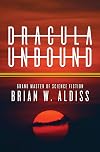
In a brilliant reimagining of Bram Stoker's horror classic, an inventor travels back in time to save humankind from a nightmarish enslavement by vampires Joe Bodenland has figured out how to manipulate time--a discovery that leads him to Utah and an impossible sixty-five-million-year-old human gravesite. It is here that he learns of the existence of a monstrous race of intelligent predators as old as the dinosaur, and of the remarkable "train" the undead creatures use to travel back and show more forth from a Paleolithic past to a monstrous far future in which Homo sapiens are enslaved cattle. With the fate of all humanity at stake, Joe commandeers the ghostly transportation and rides it back to Victorian England, where he enlists the aid of a powerful ally, the author Bram Stoker, in the battle to secure Earth. But to prevent the coming apocalyptic nightmare, they must first confront and destroy the most cunning and deadly being the world has ever known: Lord Dracula, the immortal vampire. The recipient of numerous awards and honors, including multiple Hugo and Nebula Awards and the Prix Jules Verne, Grand Master Brian W. Aldiss puts a bold new science ficion spin on Bram Stoker's classic tale of vampiric horror. An ingenious reinvention of the Nosferatu myth, Dracula Unbound is a breakneck thrill ride from one of the most revered names in science fiction and fantasy. show lessTags
Recommendations










Member Reviews
It could be worse; I appreciate that the story is hilariously elaborate-- whereas someone else might've stuck to the basics for a time-traveling-vampire-hunters story, Aldiss threw in feuding archeologists and nuclear waste disposal inventions and ghost trains and three different kinds of vampire and a ruined Earth at the end of time. It's just horribly written, with characters out of an R-rated Tom Swift knockoff. Since it's a sequel to a book that Roger Corman made a movie of, I suspect this one was meant as more of a quick treatment for a second movie.
The author Brian Aldiss was a distinguished British SF writer who died last week at the age of 92. I had never read anything by him and this was on my Kindle already, so it seemed the right time to read it. As its title suggests it's a spin off the classic horror novel, set partly in the modern day, partly in late Victorian London around the time of the novel's original publication, and featuring Bram Stoker as a character, and partly 65 million years ago. Aldiss's story opens in modern day Utah, where two coffins are found containing human remains, but buried at a stratum dating from the era of the end of the dinosaurs, and one of whom has a stake through its heart. Despite this promising beginning, and the intriguing combination of show more vampires and time travel, I found the novel a bit disappointing in practice. I found most of the modern day characters rather annoying for various reasons and the late 19th and late 20th century characters accepted each other rather implausibly quickly given their completely different assumptions. Some of the dialogue jarred as well. The plot jolted along well enough to keep me reading and I'm sure I'll read the others in the trilogy (indeed I've already downloaded them), but this is not representative of Aldiss's work (I must retry his famous Helliconia trilogy). show less
In the very far future the Sun is dying and on Earth the last remaining humans are being farmed by the Fleet Ones; vampires who subsist on human blood. Meanwhile in 1999 the inventor Joe
Bodenland has created a machine to dispose of toxic waste by freezing it in time. The story draws the two positions together with the discovery of a grave which apparently contains humans dating back to the Cretaceous period and Bodenland finds himself confronting Count Dracula in a fight to save humanity.
I bought this bound up with the rest of the Aldiss Monster Trilogy some time ago and hadn't got round to reading it. I am an Aldiss fan and was looking forward to discovering some books I hadn't read. These books are Aldiss's reimagining of three show more classic horror novels of the Victorian/Edwardian era- Dracula, Frankenstein and The Island of Doctor Moreau. What a disappointment. Dracula Unbound was twaddle. A time story with vampires thrown in and serious plot holes. It didn't work at all and I am not looking forward to reading the others. show less
Bodenland has created a machine to dispose of toxic waste by freezing it in time. The story draws the two positions together with the discovery of a grave which apparently contains humans dating back to the Cretaceous period and Bodenland finds himself confronting Count Dracula in a fight to save humanity.
I bought this bound up with the rest of the Aldiss Monster Trilogy some time ago and hadn't got round to reading it. I am an Aldiss fan and was looking forward to discovering some books I hadn't read. These books are Aldiss's reimagining of three show more classic horror novels of the Victorian/Edwardian era- Dracula, Frankenstein and The Island of Doctor Moreau. What a disappointment. Dracula Unbound was twaddle. A time story with vampires thrown in and serious plot holes. It didn't work at all and I am not looking forward to reading the others. show less
Brian W. Aldiss is known as one of the greats of Science Fiction. He has published many stories and books, and is still active. Whenever I come across one of his works while thrift-shopping, I pick it up. I have 22 works by now, and have read only three, of which only one was one hundred percent science fiction. The other two, this one and Frankenstein Unbound, are a mix of science fiction (time travel mostly) and classic horror.
It is the future (1999, but still) where one inventor/entrepreneur, Joe Bodenland, has developed a machine that can keep a thing (like toxic waste) at one certain point in time, making it effectively disappear. He is also involved with archaeological research, and because of that he is called when one show more archaeologist finds a casket with a human body below the K-T boundary (so more than 65 million years old). While looking into this the team gathered at the site get the feeling one night that a train is coming out of nowhere and travels over them at high-speed. Of course Bodenland must investigate, and thus he enters the Time Train that travels through time while carrying "The Fleet Ones", vampires. He ends up in the nineteenth century, picks up Bram Stoker and his gardener, and together they must fight to save humanity from near extinction and servitude in the future by killing the vampires (led by Lord Dracula himself, of course) in the far past.
Like 'Frankenstein Unbound' the book was a bit chaotic, another 300 pages and more time to work out the ideas in this book (time travel, vampires as an evolved species, humankind in the future) would make it so great. As it is now, the ideas are original, the action is pretty good, and the conclusion was good. Still, three out of five stars. show less
It is the future (1999, but still) where one inventor/entrepreneur, Joe Bodenland, has developed a machine that can keep a thing (like toxic waste) at one certain point in time, making it effectively disappear. He is also involved with archaeological research, and because of that he is called when one show more archaeologist finds a casket with a human body below the K-T boundary (so more than 65 million years old). While looking into this the team gathered at the site get the feeling one night that a train is coming out of nowhere and travels over them at high-speed. Of course Bodenland must investigate, and thus he enters the Time Train that travels through time while carrying "The Fleet Ones", vampires. He ends up in the nineteenth century, picks up Bram Stoker and his gardener, and together they must fight to save humanity from near extinction and servitude in the future by killing the vampires (led by Lord Dracula himself, of course) in the far past.
Like 'Frankenstein Unbound' the book was a bit chaotic, another 300 pages and more time to work out the ideas in this book (time travel, vampires as an evolved species, humankind in the future) would make it so great. As it is now, the ideas are original, the action is pretty good, and the conclusion was good. Still, three out of five stars. show less
Esta novela es una secuela de 'Frankenstein desencadenado'; aunque no es una secuela propiamente dicha porque el único personaje en común es Joe Bodenland. En este caso, Aldiss homenajea a Bram Stoker y a 'Drácula', pero no le sale tan bien como en 'Frankenstein desencadenado'.
La historia de 'Drácula desencadenado' es delirante hasta decir basta. Los Voladores, los esbirros de Drácula, recorren el tiempo y la historia a sus anchas. Tienen agentes en cualquier época y pueden saciar su sed de sangre con cualquiera. Además, viven miles de años en el futuro. Después tenemos a Bodenland, en el año 1999, que realiza un descubrimiento en el desierto de Utah: dos cuerpos que vivieron hace 65 millones de años, algo completamente show more imposible. Al mismo tiempo, por el desierto cruza una extraña luz, como un tren, con no-muertos en su interior. Se trata de un tren que viaja en el tiempo. Bodenland ya tiene una nueva misión: hacerse con el tren, ver dónde conduce, y acabar con Drácula y todos los vampiros. Para ello contará con ayuda, por supuesto, y qué mejor que le creador del mito, el propio Stoker.
La novela es bastante imaginativa, pero no está muy bien estructurada. Aparte de algunas escenas, apenas me ha dejado huella. show less
La historia de 'Drácula desencadenado' es delirante hasta decir basta. Los Voladores, los esbirros de Drácula, recorren el tiempo y la historia a sus anchas. Tienen agentes en cualquier época y pueden saciar su sed de sangre con cualquiera. Además, viven miles de años en el futuro. Después tenemos a Bodenland, en el año 1999, que realiza un descubrimiento en el desierto de Utah: dos cuerpos que vivieron hace 65 millones de años, algo completamente show more imposible. Al mismo tiempo, por el desierto cruza una extraña luz, como un tren, con no-muertos en su interior. Se trata de un tren que viaja en el tiempo. Bodenland ya tiene una nueva misión: hacerse con el tren, ver dónde conduce, y acabar con Drácula y todos los vampiros. Para ello contará con ayuda, por supuesto, y qué mejor que le creador del mito, el propio Stoker.
La novela es bastante imaginativa, pero no está muy bien estructurada. Aparte de algunas escenas, apenas me ha dejado huella. show less
A time-travel story with s twist, set in 1999 Dallas and Utah, 1896 England, and a dying Earth in 2599, this excellent novel is probably not as good as some of Grand Master Aldiss' earlier works, but I recommend it for the blend of horror and fantasy.
Normally I enjoy books about a) vampires, b) time travel and c)time travel paradox. But I have to say that I did not enjoy this one very much until a few pages just before the end when it seemed like the author got his act back together and got on track. I said to my husband that this is probably one of the worst books I've ever read, and yet I felt compelled to finish it. Why? No clue.
here's a brief look, no spoilers:
According to this book, vampires (which are definitely real here) are the evolutionary descendants of very simplistic carrion-eater life forms. Events (which I won't go into here, it would spoil the story for anyone who wants to read it), help further the evolution of the vampires along through millenia. I could actually show more totally have lived with that notion (fresh premise, actually; always looking for that) except that it took FOREVER through all of the winding around plot wise for us to get there. Aldiss sets his story first in the desert of Texas, where an archaeological dig reveals 2 rather human skeletons which are found below the K-T boundary, meaning that they seemingly co-existed with the dinosaurs. That was a rocking discovery indeed. As the group of main characters are pondering this, they witness a mysterious phenomenon of light in the desert sky, and attempt to capture it. This is when all of the "fun" begins.
I will say that this novel involves time travel, and one of the joys of reading this (perhaps the only one) was that the author placed Bram Stoker in the novel -- those parts were really good and made the book much more palatable.
My advice: unless you're a true, die-hard fan of stories about vampires flying through space and time on ghost trains, skip it. show less
here's a brief look, no spoilers:
According to this book, vampires (which are definitely real here) are the evolutionary descendants of very simplistic carrion-eater life forms. Events (which I won't go into here, it would spoil the story for anyone who wants to read it), help further the evolution of the vampires along through millenia. I could actually show more totally have lived with that notion (fresh premise, actually; always looking for that) except that it took FOREVER through all of the winding around plot wise for us to get there. Aldiss sets his story first in the desert of Texas, where an archaeological dig reveals 2 rather human skeletons which are found below the K-T boundary, meaning that they seemingly co-existed with the dinosaurs. That was a rocking discovery indeed. As the group of main characters are pondering this, they witness a mysterious phenomenon of light in the desert sky, and attempt to capture it. This is when all of the "fun" begins.
I will say that this novel involves time travel, and one of the joys of reading this (perhaps the only one) was that the author placed Bram Stoker in the novel -- those parts were really good and made the book much more palatable.
My advice: unless you're a true, die-hard fan of stories about vampires flying through space and time on ghost trains, skip it. show less
Members
- Recently Added By
Author Information

565+ Works 27,508 Members
Brian W. Aldiss was born in Dereham, United Kingdom on August 18, 1925. In 1943, he joined the Royal Signals regiment, and saw action in Burma. After World War II, he worked as a bookseller at Oxford University. His first book, The Brightfount Diaries, was published in 1955. His first science fiction novel, Non-Stop (Starship in the United show more States), was published in 1958. He wrote more than 80 books including Hothouse, Greybeard, The Helliconia Trilogy, The Squire Quartet, Frankenstein Unbound, The Malacia Tapestry, Walcot, and Mortal Morning. His short story Super-Toys Last All Summer Long was the basis for the film A.I. Artificial Intelligence. He has received numerous awards for his work including two Hugo Awards, the Nebula Award, the John W. Campbell Memorial Award, and an OBE for services to literature. He was also an anthologist and an artist. He was the editor of 40 anthologies including Introducing SF, The Penguin Science Fiction Omnibus, Space Opera, Space Odysseys, Galactic Empires, Evil Earths, and Perilous Planets. He was an abstract artist and his first solo exhibition, The Other Hemisphere, was held in Oxford in August-September 2010. He died on August 19, 2017 at the age of 92. (Bowker Author Biography) show less
Series

Work Relationships
Is abridged in
Common Knowledge
- Original publication date
- 1991
- People/Characters
- Dracula; Bram Stoker
- Epigraph
- Nicht sein kann, was nicht sein darf
- Dedication
- FOR FRANK who was sitting at our dining table when the spectre arose
- First words
- Gondwana Ranch Texas 75042 USA 18 August 1999
Dearest Mina,
Soon we'll be living in a new century. - Last words
- (Click to show. Warning: May contain spoilers.)But as he reached his wife's side, to put an arm round her waist, she unzipped a side pocket of her baggage, and out tumbled her well-thumbed copy of Stoker's famous novel, published and bound, and now signed by its author.
- Original language
- English
Classifications
Statistics
- Members
- 299
- Popularity
- 107,754
- Reviews
- 12
- Rating
- (2.93)
- Languages
- English, Italian, Portuguese, Spanish
- Media
- Paper, Audiobook, Ebook
- ISBNs
- 16
- ASINs
- 6