On This Page
Description
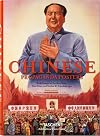
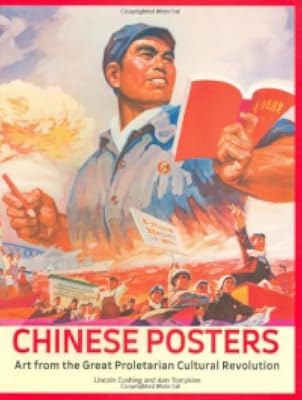
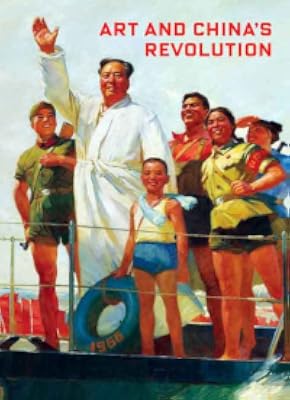
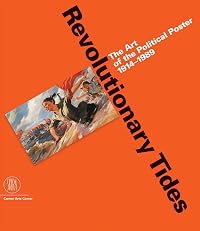
With his smooth, warm, ruddy face which radiated light in all directions, Chairman Mao Zedong was a fixture in Chinese propaganda posters produced between the birth of the People's Republic in 1949 and the early 1980s. Chairman Mao, portrayed as a stoic superhero (aka the Great Teacher, the Great Leader, the Great Helmsman, the Supreme Commander), appeared in all kinds of situations (inspecting factories, smoking a cigarette with peasant workers, standing by the Yangzi River in a bathrobe, show more presiding over the bow of a ship, or floating over a sea of red flags), flanked by strong, healthy, ageless men and "masculinized" women and children wearing baggy, sexless, drab clothing. The goal of each poster was to show the Chinese people what sort of behavior was considered morally correct and how great the future of Communist China would be if everyone followed the same path toward utopia by uniting together. This book brings together a selection of colorful propaganda artworks and cultural artifacts from Max Gottschalk's vast collection of Chinese propaganda posters, many of which are now extremely rare. show lessTags
Recommendations

























Member Reviews
Taschen now offers a pocket version of this book about Chinese Communist propaganda posters in Soviet realism style (or in the US, Norman Rockwell-type idealistic illustrations). While the Chinese people endured war, famine and misery, the propaganda battle was waged in bright colors with happy protagonists marching towards a bright modern future of wealth, knowledge and technology. Unlike the kitsch of North Korea (which was exhibited in Vienna's MAK only a few years ago) or Romania's Ceaușescu, many of these posters have artistic merit and a positive message. Especially the powerful and modern role of women and girls in these paintings is appealing.
In the West, such idealistic and futuristic paintings died out in the 1960s (the Mad show more Men era) to the 1970s (the fantasy idealism of Star Wars - commemorated by the genius retro travel posters). The end of Communism in Eastern Europe has killed off such illustrations in Eastern Europe (and also China), so that the Middle East, India and the rest of Asia are the remaining places for such non-ironic posters of the Great Leaders and the march of the people towards a brighter future. show less
In the West, such idealistic and futuristic paintings died out in the 1960s (the Mad show more Men era) to the 1970s (the fantasy idealism of Star Wars - commemorated by the genius retro travel posters). The end of Communism in Eastern Europe has killed off such illustrations in Eastern Europe (and also China), so that the Middle East, India and the rest of Asia are the remaining places for such non-ironic posters of the Great Leaders and the march of the people towards a brighter future. show less
Over 300 posters from the Michael Wolf collection get the Taschen treatment. They give us a picture of Chinese Communist propaganda (which is just the Communist version of mass consumer advertising in the West) from the 1950s to the 1980s.
There is not much to say about it other than that the propaganda has its own integrity and sincerity even while it is manipulating popular opinion and that it helped China move from recovery from revolutionary war through to conditions that since permitted China's surge into superpower status.
The design of the posters is remorselessly 'volkisch' and the volume contains not only posters but educative illustration. Little of it is remarkable but, based on the testimony of Anchee Min in an informative show more essay from a contemporary, it seems to have worked for a very long while.
It all looks rather transitional now - a long phase of ensuring momentum or stability through troubled times until China could observe the failure of mere exhortation in the neighbouring Soviet experiment and start delivering the material needs and desires of its population. show less
There is not much to say about it other than that the propaganda has its own integrity and sincerity even while it is manipulating popular opinion and that it helped China move from recovery from revolutionary war through to conditions that since permitted China's surge into superpower status.
The design of the posters is remorselessly 'volkisch' and the volume contains not only posters but educative illustration. Little of it is remarkable but, based on the testimony of Anchee Min in an informative show more essay from a contemporary, it seems to have worked for a very long while.
It all looks rather transitional now - a long phase of ensuring momentum or stability through troubled times until China could observe the failure of mere exhortation in the neighbouring Soviet experiment and start delivering the material needs and desires of its population. show less
This is a very good collection of Chinese propaganda posters ranging from 1949 to the 1980s, when the propaganda poster art began to decline as China opened itself more to the West. The book is arranged by themes: discipline, children, women, etc. The art itself is excellent. Granted, this was art for propaganda of the Chinese Communist Party (CCP), but it is clear they put a lot of effort and brought in very good artists to create the art. Within that, you can see the clear patterns and expectations of the art: certain looks, women depicted in somewhat manly fashions, so on. But there was also a lot of attention to detail.
This particular edition is an oversized book. So, I suggest reading it flat on a table or laying in bed. The show more reproduction quality seems very good, and the annotations are informative, including telling you what banners and book titles in the paintings mean. The book also features some good introductory material to put the posters in context. Nowadays, these posters have mostly become collector items in and out of China. But they do depict a specific time period in China, and I think they do reflect a lot of the aspirations of the people, or at least of the CCP and what they wanted for their nation. This is definitely an interesting book to look through, but one also has to look at it as a piece to learn about history. Academic libraries with art collections or any history of Asia collections probably should have this. show less
This particular edition is an oversized book. So, I suggest reading it flat on a table or laying in bed. The show more reproduction quality seems very good, and the annotations are informative, including telling you what banners and book titles in the paintings mean. The book also features some good introductory material to put the posters in context. Nowadays, these posters have mostly become collector items in and out of China. But they do depict a specific time period in China, and I think they do reflect a lot of the aspirations of the people, or at least of the CCP and what they wanted for their nation. This is definitely an interesting book to look through, but one also has to look at it as a piece to learn about history. Academic libraries with art collections or any history of Asia collections probably should have this. show less
this is an important and impressive single collection presented by Taschen. there is little text crowding out the large reproductions in this coffee table book. among the introductory essays is one by a woman that grew up with this propaganda emphasizing the impact of growing up with these illustrations. i am impressed individual artists, print runs and original price are all known.
This book offers an insight into the modernist utopian visions that permeated the Chinese political class in the 20th century. Modernist realist kitsch is the order of the day in all of the posters.
Art Library - shelved at: B70
Ratings
Members
- Recently Added By
Lists

The Books I've Read 2018
143 works; 1 member

Books Read in 2018
4,360 works; 110 members

Paul French's Ultimate China Bookshelf
31 works; 1 member
Author Information
8+ Works 387 Members
Series

Common Knowledge
- Original publication date
- 1995
- People/Characters
- Mao Zedong
Classifications
- Genres
- Art & Design, Nonfiction, History, General Nonfiction
- DDC/MDS
- 741 — Arts & recreation Drawing & decorative arts Drawing
- LCC
- JQ1512 .Z13 .P85 — Political Science Political institutions and public administration (Asia, Africa, Australia, Pacific Area, etc.) Political institutions and public administration (Asia, East Asia
- BISAC
Statistics
- Members
- 353
- Popularity
- 89,765
- Reviews
- 6
- Rating
- (4.15)
- Languages
- English, German, Multiple languages
- Media
- Paper, Ebook
- ISBNs
- 15
- ASINs
- 1