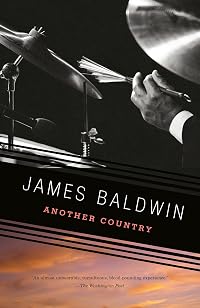
Another Country
by James Baldwin
On This Page
Description
Set in Greenwich Village, Harlem, and France, among other locales, Another Country is a novel of passions--sexual, racial, political, artistic--that is stunning for its emotional intensity and haunting sensuality, depicting men and women, blacks and whites, stripped of their masks of gender and race by love and hatred at the most elemental and sublime. In a small set of friends, Baldwin imbues the best and worst intentions of liberal America in the early 1970s.Tags
Recommendations

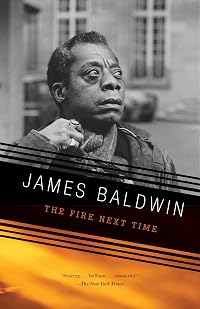






Member Reviews
Seething with sex and racial hatred this novel must have knocked people's socks off when it was published in 1962. I read it because I am loosely following the recommended list from the London `review of Books - 100 books to be read over the next twenty years. It has been many years since I have read any James Baldwin and the first thing that struck me was the quality of the writing and the sheer pleasure and readability of his prose. His writing is not difficult to follow, but his themes and thoughts will be challenging for some people; It has been banned in parts of the 'usual suspect' countries.
Those themes then: racial hatred, inter-racial homosexuality, bisexuality, nationalism, artistic integrity, white liberal blindness to show more reality, misogyny and power. It all bubbles up in various relationships in the more bohemian life styles of a loose group of New Yorkers in the late 1950's. The story starts with Rufus; a black jazz drummer who enters into a disastrous relationship with Leona; a white Southern woman who has left her abusive husband and two children. Rufus soon becomes yet another abuser in Leona's life, but Baldwin focuses on Rufus whose guilt, bisexuality and connections with the white community eventually leads to his suicide. The story picks up on Rufus at his lowest ebb, but does introduce us to Vivaldo a struggling white unpublished writer and Cass the wife of Richard: a white couple with children who live more comfortably and are part of the artistic community. Part one of the book ends with Rufus suicide after Vivaldo has failed in his attempt to straighten him out. Part two introduces us to Ida: Rufus sister who comes to seek answers to her bother's death from the white community who had befriended him. She has a fierce hatred of white people who she knows live off the backs of black people, but despite this she falls in love with Vivaldo who she realises was her brothers best friend. Through Richard's connections she meets Steve Ellis a television producer who hearing her sing says he can make her a star. Life gets even more complicated when Cass has an affair with Eric who has returned to America following an offer of a part in a Broadway production. Eric has been living with a younger man: Yves in Paris and Yves is about to come over to America to hook up again with Eric.
The main theme of the book is the lack of understanding by the white characters of the position of the black people that they meet, mingle and have sex with. They know how black people are treated, they hear Ida's coruscating verbal abuse, but they are not able to walk in black people's shoes. They hear the anger, they feel the hatred, but it is all something outside of themselves. This all leads to relationships that are complicated enough without this overlaying and deep trauma at large in American societies in the late 1950's. Vivaldo's and Ida's love and sexual attraction soon runs into problems and these are the same problems that people face when they are looking outside of their main relationship for something else, but the black and white racial issues add yet another dimension.
The fact that Baldwin can manage to keep all these themes hanging in the air and still tell a fantastic human story is a tribute to his writing skills. His characters leap off the page, bury themselves in the reader's psyche and if one allows it to happen; the sexual charge that the descriptions and dialogue provide will add a glow to a fascinating tale. Black people are abused women are abused, poor people struggle to get on in an unequal society, we all know this, but Baldwin throws this into the face of his readers, while telling an all too human story. I found this a brilliant and thought provoking read - 5 stars. show less
Those themes then: racial hatred, inter-racial homosexuality, bisexuality, nationalism, artistic integrity, white liberal blindness to show more reality, misogyny and power. It all bubbles up in various relationships in the more bohemian life styles of a loose group of New Yorkers in the late 1950's. The story starts with Rufus; a black jazz drummer who enters into a disastrous relationship with Leona; a white Southern woman who has left her abusive husband and two children. Rufus soon becomes yet another abuser in Leona's life, but Baldwin focuses on Rufus whose guilt, bisexuality and connections with the white community eventually leads to his suicide. The story picks up on Rufus at his lowest ebb, but does introduce us to Vivaldo a struggling white unpublished writer and Cass the wife of Richard: a white couple with children who live more comfortably and are part of the artistic community. Part one of the book ends with Rufus suicide after Vivaldo has failed in his attempt to straighten him out. Part two introduces us to Ida: Rufus sister who comes to seek answers to her bother's death from the white community who had befriended him. She has a fierce hatred of white people who she knows live off the backs of black people, but despite this she falls in love with Vivaldo who she realises was her brothers best friend. Through Richard's connections she meets Steve Ellis a television producer who hearing her sing says he can make her a star. Life gets even more complicated when Cass has an affair with Eric who has returned to America following an offer of a part in a Broadway production. Eric has been living with a younger man: Yves in Paris and Yves is about to come over to America to hook up again with Eric.
The main theme of the book is the lack of understanding by the white characters of the position of the black people that they meet, mingle and have sex with. They know how black people are treated, they hear Ida's coruscating verbal abuse, but they are not able to walk in black people's shoes. They hear the anger, they feel the hatred, but it is all something outside of themselves. This all leads to relationships that are complicated enough without this overlaying and deep trauma at large in American societies in the late 1950's. Vivaldo's and Ida's love and sexual attraction soon runs into problems and these are the same problems that people face when they are looking outside of their main relationship for something else, but the black and white racial issues add yet another dimension.
The fact that Baldwin can manage to keep all these themes hanging in the air and still tell a fantastic human story is a tribute to his writing skills. His characters leap off the page, bury themselves in the reader's psyche and if one allows it to happen; the sexual charge that the descriptions and dialogue provide will add a glow to a fascinating tale. Black people are abused women are abused, poor people struggle to get on in an unequal society, we all know this, but Baldwin throws this into the face of his readers, while telling an all too human story. I found this a brilliant and thought provoking read - 5 stars. show less
In New York City a group of friends, black, white, married, single, bi and gay try to negotiate life. Rufus is a black musician in a tumultuous relationship with Leona, a southern white woman. “They fought each other with their hands and their voices and then their bodies.” He’s homeless and eventually comes to a bad end. His white friend, Vivaldo begins to see life through the eyes of Rufus, harsh and racist.
Rufus’ sister, Ida, tries to love Vivaldo, but the race gap is too much. She learns to use white men to get what she wants. Another friend, Richard, finds that finally approaching his goal of becoming a successful novelist has its drawbacks in his personal life. Eric, an actor, has been sequestered in France with his show more lover, Yves, but has returned for a part on Broadway. He becomes enmeshed with both Vivaldo and Richard’s wife, Cass.
Baldwin equates love with hostility and cruelty. He also paints a picture of the creative life as one of struggle, despair and compromise, especially if you’re black. This is anxiety fiction. No one is happy. They may have been happy once, long ago, but may not be again. show less
Rufus’ sister, Ida, tries to love Vivaldo, but the race gap is too much. She learns to use white men to get what she wants. Another friend, Richard, finds that finally approaching his goal of becoming a successful novelist has its drawbacks in his personal life. Eric, an actor, has been sequestered in France with his show more lover, Yves, but has returned for a part on Broadway. He becomes enmeshed with both Vivaldo and Richard’s wife, Cass.
Baldwin equates love with hostility and cruelty. He also paints a picture of the creative life as one of struggle, despair and compromise, especially if you’re black. This is anxiety fiction. No one is happy. They may have been happy once, long ago, but may not be again. show less
Rufus, ein junger begabter Jazzmusiker aus Harlem, nimmt sich das Leben, weil er mit dem rassistischen Alltag nicht mehr klar kommt. Seine besten Freunde und seine Familie sind entsetzt, haben jedoch mit ihren eigenen Problemen schwer zu kämpfen. Rufus' bester Freund Vivaldo, ein erfolgloser Schriftsteller aus armen Verhältnissen, hat sich in dessen Schwester Ina verliebt, doch diese ist trotz ihrer Beziehung zu Vivaldo völlig von ihrem Hass auf Weiße erfüllt. Cass und Richard, ein gut situiertes Paar Ende Dreißig mit zwei Kindern, wirken wie das Ideal einer glücklichen Familie. Doch auch ihr Leben zeigt Risse, sie scheinen sich auseinanderzuleben. Und da ist Eric, ein früherer Geliebter Rufus', der mittlerweile zufrieden in show more Frankreich lebt und jetzt plant, gemeinsam mit seinem französischen Freund Yves nach New York zurückzukehren.
Baldwin zeigt eindringlich, wie der alltägliche Rassismus es den davon betroffenen Menschen fast unmöglich macht, sich selbst zu lieben geschweige denn einen anderen Menschen. Ihm gelingen beeindruckende Beschreibungen von Zärtlichkeit, der Sehnsucht nach Nähe, aber auch von Wut und Zorn. Wir, die solchen Rassismus zum Glück nie erleben mussten, erfahren von dem Schmerz und den Wunden, die dadurch verursacht werden und nicht so ohne weiteres zu heilen sind.
1962 wurde dieses Buch erstmals veröffentlicht, doch es könnte kaum einen besseren Zeitpunkt für die jetzige Neuerscheinung geben. Heute, wo Rassismus in aller Munde ist, aber vermutlich Viele gar nicht richtig wissen, was er für die Einzelnen bedeutet und welche Auswirkungen er hat, hilft dieses Buch beim Verstehen. Aber auch die Probleme von queeren Menschen hat Baldwin in diesem Buch bereits aufgegriffen, zu einer Zeit, als dieser Begriff noch lange nicht verwendet wurde.
Wer die gesellschaftlichen Probleme der USA (und auch die anderer Länder) besser verstehen möchte, sollte dieses Buch lesen. show less
Baldwin zeigt eindringlich, wie der alltägliche Rassismus es den davon betroffenen Menschen fast unmöglich macht, sich selbst zu lieben geschweige denn einen anderen Menschen. Ihm gelingen beeindruckende Beschreibungen von Zärtlichkeit, der Sehnsucht nach Nähe, aber auch von Wut und Zorn. Wir, die solchen Rassismus zum Glück nie erleben mussten, erfahren von dem Schmerz und den Wunden, die dadurch verursacht werden und nicht so ohne weiteres zu heilen sind.
1962 wurde dieses Buch erstmals veröffentlicht, doch es könnte kaum einen besseren Zeitpunkt für die jetzige Neuerscheinung geben. Heute, wo Rassismus in aller Munde ist, aber vermutlich Viele gar nicht richtig wissen, was er für die Einzelnen bedeutet und welche Auswirkungen er hat, hilft dieses Buch beim Verstehen. Aber auch die Probleme von queeren Menschen hat Baldwin in diesem Buch bereits aufgegriffen, zu einer Zeit, als dieser Begriff noch lange nicht verwendet wurde.
Wer die gesellschaftlichen Probleme der USA (und auch die anderer Länder) besser verstehen möchte, sollte dieses Buch lesen. show less
A complex, tangled masterpiece. Really this is probably closer to four stars but I can’t bear to give it less than five. Difficult in theme and subject but radiant in language—the writing sings, it wails. Characters are deep and intricate and the world through which they move pushes up against them at every turn, the way the world pushes up against all of us, the way we have to steel ourselves just to be people in this world, like walking in the wind.
____________________
Global Challenge: United States of America
____________________
Global Challenge: United States of America
In the 1950s, liberalism took a different form than it does today. For many, rejecting the norm and what was proper meant possibilities. For others, it wasn't subversive--it was just who they were. But society didn't do anyone any favors. Race, sexuality, and class weren't areas where there was much room for latitude or forgiveness.
Another Country follows a group of friends who try to navigate this environment while seeking truths about themselves. What does it mean to be an artist? How does one know when their life is fulfilled? Are they really universal truths in life? All questions with no easy answers. But over the course of several months the characters wrestle with them in search of some truth.
--
Glimpses of history are always very show more interesting to me. And here James Baldwin gives us just that. And not only is this book a window into the time period, he wrote it at a time when these weren't the kinds of things people regularly wrote about. So the book itself goes against convention by telling the story of people who went against convention. It's a bit meta, but it's also really well written and engaging. show less
Another Country follows a group of friends who try to navigate this environment while seeking truths about themselves. What does it mean to be an artist? How does one know when their life is fulfilled? Are they really universal truths in life? All questions with no easy answers. But over the course of several months the characters wrestle with them in search of some truth.
--
Glimpses of history are always very show more interesting to me. And here James Baldwin gives us just that. And not only is this book a window into the time period, he wrote it at a time when these weren't the kinds of things people regularly wrote about. So the book itself goes against convention by telling the story of people who went against convention. It's a bit meta, but it's also really well written and engaging. show less
Another Country is a fantastic book with many themes and messages that are sadly still relevant for our times. James Baldwin is a talented author who tells a story set in the late 1950s, explaining racism through splendidly developed characters. Rufus Scott, a Black drummer who is deeply affected by a world that does not understand his soul, commits suicide early in the story, and the rest of the book focuses on the people who knew him and their imperfect relationships. Few authors can develop characters as powerful as Baldwin’s. Through the characters’ interactions, love affairs, and dialog, the reader comes to appreciate Black Americans’ issues. Ida, Rufus’s sister, vividly conveys the plight of the Black American female. Ida show more is so overpowered by some of the men in the story that we begin to see how important it is for Black women to tell their stories. Interracial relationships are depicted throughout the novel, and the omniscient narrator describes the feelings of the characters and those they encounter in a realistic, thought-provoking manner.
Additionally, Baldwin’s narrative includes explicit sexual encounters between gay and bisexual characters in a world that is unaccepting. Some of the most poignant takeaways are about relationships and commonalities in all relationships. Baldwin’s characters converse in a manner that is universally understood and relatable. show less
Additionally, Baldwin’s narrative includes explicit sexual encounters between gay and bisexual characters in a world that is unaccepting. Some of the most poignant takeaways are about relationships and commonalities in all relationships. Baldwin’s characters converse in a manner that is universally understood and relatable. show less
This is a gritty book, and true to form, Baldwin does not hold back in venturing into dangerous territory by 1961 standards, and perhaps even by today’s standards. “Another Country” delves into homosexuality, adultery, interracial love, and the inherent difficulties in black/white relations.
And yet somehow I have difficulty in pinning down exactly what this book is “about”. Is it the tawdriness of love and the human condition in general? The fundamental gulf that exists between blacks and whites in America that may never truly be bridged? The need to stand up and be true to oneself, despite societal pressures? Probably a bit of all of those.
There are many variations on the themes of taboo love - hell, everyone around Rufus, show more the character at the hub of the story, seems to be having sex - white/black, man/man, married/single, and multiple versions of all of those – and all of these types of relationships have difficulties. Is Baldwin illustrating that there is a commonality in the trials and tribulations that lovers of any type go through? That all people are tormented?
Maybe a further hint comes from the novel’s title. Perhaps in writing a book about those who are so different from the conventional norm, those who might seem to be a part of “Another Country” despite being every bit as American as the accepted mainstream image of 1950’s White America, Baldwin seeks to educate us, such that we’ll have greater understanding and be more accepting of the people who occasionally threaten our worldview. Hmm. Maybe.
Quotes:
On adultery:
“Eric’s entrance into her, her fall from – grace? – had left her prey to ambiguities whose power she had never glimpsed before. Richard had been her protection, not only against the evil in the world, but also against the wilderness of herself. And now she would never be protected again. She tried to feel jubilant about this. But she did not feel jubilant. She felt frightened and bewildered.
…
The terror was not merely that she did not know how she would rebuild her life, or that she feared, as she grew older, coming to despise herself: the terror was that her children would despise her.”
On the African-American experience:
“Even when she was being friendly there was something in her manner, in her voice, which carried a warning; she was always waiting for the veiled insult or the lewd suggestion. And she had good reason for it, she was not being fantastical or perverse. It was the way the world treated girls with bad reputations and every colored girl had been born with one.
…
She was very, very dark, she was beautiful; and he was proud to be with her, artlessly proud, in the shining, overt, male way; but the eyes they passed accused him, enviously, of a sniggering, back-alley conquest. White men looked at her, then looked at him. They looked at her as though she were no better, though more lascivious and rare, than a whore. And then the eyes of the men sought his, inviting a wet complicity.”
And:
“Ages and ages ago, Ida had not been merely the descendant of slaves. Watching her dark face in the sunlight, softened and shadowed by the glorious shawl, it could be see that she had once been a monarch. Then he looked out of the window, at the air shaft, and thought of the whores on Seventh Avenue. He thought of the white policemen and the money they made on black flesh, the money the whole world made.”
And:
“’…wouldn’t you hate all white people if they kept you in prison here?’ They were rolling up startling Seventh Avenue. The entire population seemed to be in the streets, draped, almost, from lampposts, stoops, and hydrants, and walking through the traffic as though it were not there. ‘Kept you here, and stunted you and starved you, and made you watch your mother and father and sister and lover and brother and son and daughter die or go mad or go under, before your very eyes? And not in a hurry, like from one day to the next, but every day, every day, for years, for generations? Shit. They keep you here because you’re black, the filthy, white cock suckers, while they go around jerking themselves off with all that jazz about the land of the free and the home of the brave. And they want you to jerk yourself off with the same music, too, only, keep your distance. Some days, honey, I wish I could turn myself into one big fist and grind this miserable country to powder.”
On America:
“This isn’t a country at all, it’s a collection of football players and Eagle Scouts. Cowards. We think we’re happy. We’re not. We’re doomed.”
On change:
“It was not hard to imagine that horse carriages had once paraded proudly up this wide avenue and ladies and gentlemen, ribboned, beflowered, brocaded, plumed, had stepped down from their carriages to enter these houses which time and folly had so blasted and darkened. The cornices had once been new, had once gleamed as brightly as now they sulked in shame, all tarnished and despised. The windows had not always been blind. The doors had not always brought to mind the distrust and secrecy of a city long besieged. At one time people had cared about these houses – that was the difference; they had been proud to walk on this Avenue; it had once been home, whereas now it was prison.”
On the danger of getting close to someone:
“Strangers’ faces hold no secrets because the imagination does not invest them with any. But the face of a lover is an unknown precisely because it is invested with so much of oneself. It is a mystery, containing, like all mysteries, the possibility of torment.”
On being a dreamer, and different:
“The aim of the dreamer, after all, is merely to go on dreaming and not to be molested by the world. His dreams are his protection against the world. But the aims of life are antithetical to those of the dreamer, and the teeth of the world are sharp.”
On jealousy:
“Where was she? the hell with her. She would say, ‘Oh, honey, don’t be like that, suppose I made a fuss every time you went out and had a drink with someone else? I trust you, now, you’ve got to trust me. Suppose I really make it as a singer and have to see lots of people, what’re you going to do then?’ She trusted him because she didn’t give a damn about him, the hell with her. The hell with her. The hell with her.”
On life in the city:
“The train came in, filling the great scar of the tracks. They all got on, sitting in the lighted car which was far from empty, which would be choked with people before they got very far uptown, and stood or sat in the isolation cell into which they transformed every inch of space they held.
…
At Fifty-ninth Street many came on board and many rushed across the platform to the waiting local. Many white people and many black people, chained together in time and in space, and by history, and all of them in a hurry. In a hurry to get away from each other, he thought, but we ain’t never going to make it. We been fucked for fair.”
On love lost:
“But it’s not possible to forget anybody you were that hung up on, who was that hung up on you. You can’t forget anything that hurt so badly, went so deep, and changed the world forever. It’s not possible to forget anybody you’ve destroyed.”
And this one:
“People don’t have any mercy. They tear you limb from limb, in the name of love. Then, when you’re dead, when they’ve killed you by what they made you go through, they say you didn’t have any character. They weep big, bitter tears – not for you. For themselves, because they’ve lost their toy.”
On sex, such a rawness here:
“Her breath came with moaning and short cries, with words he couldn’t understand, and in spite of himself he began moving faster and thrusting deeper. He wanted her to remember him the longest day she lived. And, shortly, nothing could have stopped him, not the white God himself nor a lynch mob arriving on wings. Under his breath he cursed the milk-white bitch and groaned and rode his weapon between her thighs. She began to cry. I told you, he moaned, I’d give you something to cry about, and, at once, he felt himself strangling, about to explode or die. A moan and a curse tore through him while he beat her with all the strength he had and felt the venom shoot out of him, enough for a hundred black-white babies.”
And:
“She was aware, as though she stood over them both with a camera, of how sordid the scene must appear: a married woman, no longer young, already beginning to moan with lust, pinned down on this untidy and utterly transient bed by a stranger who did not love her and whom she could not love. Then she wondered about that: love; and wondered if anyone really knew anything about it. Eric put one hand on her breast, and it was a new touch, not Richard’s, no; but she knew that it was Eric’s; and was it love or not? and what did Eric feel? Sex, she thought, but that was not really the answer, or if it was, it was an answer which clarified nothing.” show less
And yet somehow I have difficulty in pinning down exactly what this book is “about”. Is it the tawdriness of love and the human condition in general? The fundamental gulf that exists between blacks and whites in America that may never truly be bridged? The need to stand up and be true to oneself, despite societal pressures? Probably a bit of all of those.
There are many variations on the themes of taboo love - hell, everyone around Rufus, show more the character at the hub of the story, seems to be having sex - white/black, man/man, married/single, and multiple versions of all of those – and all of these types of relationships have difficulties. Is Baldwin illustrating that there is a commonality in the trials and tribulations that lovers of any type go through? That all people are tormented?
Maybe a further hint comes from the novel’s title. Perhaps in writing a book about those who are so different from the conventional norm, those who might seem to be a part of “Another Country” despite being every bit as American as the accepted mainstream image of 1950’s White America, Baldwin seeks to educate us, such that we’ll have greater understanding and be more accepting of the people who occasionally threaten our worldview. Hmm. Maybe.
Quotes:
On adultery:
“Eric’s entrance into her, her fall from – grace? – had left her prey to ambiguities whose power she had never glimpsed before. Richard had been her protection, not only against the evil in the world, but also against the wilderness of herself. And now she would never be protected again. She tried to feel jubilant about this. But she did not feel jubilant. She felt frightened and bewildered.
…
The terror was not merely that she did not know how she would rebuild her life, or that she feared, as she grew older, coming to despise herself: the terror was that her children would despise her.”
On the African-American experience:
“Even when she was being friendly there was something in her manner, in her voice, which carried a warning; she was always waiting for the veiled insult or the lewd suggestion. And she had good reason for it, she was not being fantastical or perverse. It was the way the world treated girls with bad reputations and every colored girl had been born with one.
…
She was very, very dark, she was beautiful; and he was proud to be with her, artlessly proud, in the shining, overt, male way; but the eyes they passed accused him, enviously, of a sniggering, back-alley conquest. White men looked at her, then looked at him. They looked at her as though she were no better, though more lascivious and rare, than a whore. And then the eyes of the men sought his, inviting a wet complicity.”
And:
“Ages and ages ago, Ida had not been merely the descendant of slaves. Watching her dark face in the sunlight, softened and shadowed by the glorious shawl, it could be see that she had once been a monarch. Then he looked out of the window, at the air shaft, and thought of the whores on Seventh Avenue. He thought of the white policemen and the money they made on black flesh, the money the whole world made.”
And:
“’…wouldn’t you hate all white people if they kept you in prison here?’ They were rolling up startling Seventh Avenue. The entire population seemed to be in the streets, draped, almost, from lampposts, stoops, and hydrants, and walking through the traffic as though it were not there. ‘Kept you here, and stunted you and starved you, and made you watch your mother and father and sister and lover and brother and son and daughter die or go mad or go under, before your very eyes? And not in a hurry, like from one day to the next, but every day, every day, for years, for generations? Shit. They keep you here because you’re black, the filthy, white cock suckers, while they go around jerking themselves off with all that jazz about the land of the free and the home of the brave. And they want you to jerk yourself off with the same music, too, only, keep your distance. Some days, honey, I wish I could turn myself into one big fist and grind this miserable country to powder.”
On America:
“This isn’t a country at all, it’s a collection of football players and Eagle Scouts. Cowards. We think we’re happy. We’re not. We’re doomed.”
On change:
“It was not hard to imagine that horse carriages had once paraded proudly up this wide avenue and ladies and gentlemen, ribboned, beflowered, brocaded, plumed, had stepped down from their carriages to enter these houses which time and folly had so blasted and darkened. The cornices had once been new, had once gleamed as brightly as now they sulked in shame, all tarnished and despised. The windows had not always been blind. The doors had not always brought to mind the distrust and secrecy of a city long besieged. At one time people had cared about these houses – that was the difference; they had been proud to walk on this Avenue; it had once been home, whereas now it was prison.”
On the danger of getting close to someone:
“Strangers’ faces hold no secrets because the imagination does not invest them with any. But the face of a lover is an unknown precisely because it is invested with so much of oneself. It is a mystery, containing, like all mysteries, the possibility of torment.”
On being a dreamer, and different:
“The aim of the dreamer, after all, is merely to go on dreaming and not to be molested by the world. His dreams are his protection against the world. But the aims of life are antithetical to those of the dreamer, and the teeth of the world are sharp.”
On jealousy:
“Where was she? the hell with her. She would say, ‘Oh, honey, don’t be like that, suppose I made a fuss every time you went out and had a drink with someone else? I trust you, now, you’ve got to trust me. Suppose I really make it as a singer and have to see lots of people, what’re you going to do then?’ She trusted him because she didn’t give a damn about him, the hell with her. The hell with her. The hell with her.”
On life in the city:
“The train came in, filling the great scar of the tracks. They all got on, sitting in the lighted car which was far from empty, which would be choked with people before they got very far uptown, and stood or sat in the isolation cell into which they transformed every inch of space they held.
…
At Fifty-ninth Street many came on board and many rushed across the platform to the waiting local. Many white people and many black people, chained together in time and in space, and by history, and all of them in a hurry. In a hurry to get away from each other, he thought, but we ain’t never going to make it. We been fucked for fair.”
On love lost:
“But it’s not possible to forget anybody you were that hung up on, who was that hung up on you. You can’t forget anything that hurt so badly, went so deep, and changed the world forever. It’s not possible to forget anybody you’ve destroyed.”
And this one:
“People don’t have any mercy. They tear you limb from limb, in the name of love. Then, when you’re dead, when they’ve killed you by what they made you go through, they say you didn’t have any character. They weep big, bitter tears – not for you. For themselves, because they’ve lost their toy.”
On sex, such a rawness here:
“Her breath came with moaning and short cries, with words he couldn’t understand, and in spite of himself he began moving faster and thrusting deeper. He wanted her to remember him the longest day she lived. And, shortly, nothing could have stopped him, not the white God himself nor a lynch mob arriving on wings. Under his breath he cursed the milk-white bitch and groaned and rode his weapon between her thighs. She began to cry. I told you, he moaned, I’d give you something to cry about, and, at once, he felt himself strangling, about to explode or die. A moan and a curse tore through him while he beat her with all the strength he had and felt the venom shoot out of him, enough for a hundred black-white babies.”
And:
“She was aware, as though she stood over them both with a camera, of how sordid the scene must appear: a married woman, no longer young, already beginning to moan with lust, pinned down on this untidy and utterly transient bed by a stranger who did not love her and whom she could not love. Then she wondered about that: love; and wondered if anyone really knew anything about it. Eric put one hand on her breast, and it was a new touch, not Richard’s, no; but she knew that it was Eric’s; and was it love or not? and what did Eric feel? Sex, she thought, but that was not really the answer, or if it was, it was an answer which clarified nothing.” show less
Members
- Recently Added By
Lists

Novels from The Guardian's Great American Novelist Tournament
148 works; 24 members

Pre-1969 LGBTQ Literature
182 works; 69 members

20th Century Literature
1,161 works; 55 members
PBS The Great American Read
100 works; 21 members

Pleasant Surprises: Books That Exceeded Our Expectations
418 works; 143 members

Anthony Burgess 99 Post War Novels
99 works; 7 members

Best African American Literature
53 works; 9 members

1960s, Best books published therein
254 works; 22 members

Publishing Triangle 100 Best Lesbian and Gay Novels
97 works; 6 members

1964 College Preparatory Reading List
202 works; 8 members
The American Experience
173 works; 18 members

1960s
281 works; 16 members
Best LGBT Fiction
144 works; 25 members

Top Five Books of 2016
795 works; 229 members
Black Authors
384 works; 32 members

Literature by People of Color
81 works; 9 members
LibraryThingers' 1001 Books You Must Read Before You Die
442 works; 30 members

Urban Fiction
74 works; 7 members
Favorite Books from the 1960s
34 works; 3 members

Five star books
1,767 works; 110 members

Sad Queer Stories
18 works; 1 member

Books Read in 2016
4,666 works; 199 members

What are your favourite books?
121 works; 11 members
Best Books of the 20th Century
193 works; 5 members

Good LGBT fiction for LGBT folk and friends
551 works; 55 members

Maybe This Year? Books to Look Forward To
412 works; 9 members

Books Read in 2017
4,249 works; 129 members

Americans Abroad
11 works; 6 members
American Lit for Eng 11 Research Project
368 works; 6 members

Literature About Suicide
24 works; 4 members

Meditations on Death
18 works; 3 members

AP Lit
363 works; 6 members

The Atlantic's The Great American Novel
136 works; 12 members

Books We Couldn't Put Down
443 works; 197 members

Books read in 1997
22 works; 1 member

Classics you know you should have read but probably haven't
421 works; 408 members
Author Information

120+ Works 41,816 Members
James Baldwin was born on August 2, 1924, in New York. Baldwin's father was a pastor who subjected his children to poverty, abuse, and religious fanaticism. As a result, many of Baldwin's recurring themes, such as alienation and rejection, are attributable to his upbringing. Living the life of a starving artist, Baldwin went through numerous jobs, show more including dishwasher, office boy, factory worker, and waiter. In 1948, he moved to France, where much work originated. Baldwin published Go Tell It on the Mountain in 1953. A largely autobiographical work, it tells of the religious awakening of a fourteen-year-old. In addition to his childhood experiences, his experiences as a black man and a homosexual provided inspiration for such works as Giovanni's Room, Nobody Knows My Name, and Another Country. Baldwin holds a distinguished place in American history as one of the foremost writers of both black and gay literature. He was an active participant in the Civil Rights movement. Baldwin succumbed to cancer on December 1, 1987. (Bowker Author Biography) show less
Some Editions
Awards and Honors
Distinctions
Notable Lists
Series
Belongs to Publisher Series
Grote Beren (7)
Dell (0200)
Work Relationships
Is contained in
Has as a commentary on the text
Common Knowledge
- Canonical title*
- Toinen maa
- Original title
- Another Country
- Original publication date
- 1962
- People/Characters
- Rufus Scott; Daniel Vivaldo Moore; Eric Jones; Leona; Yves; Steve Ellis (show all 8); Cass Silenski; Ida Scott
- Important places
- Greenwich Village, New York, New York, USA; Harlem, New York, New York, USA
- Epigraph
- They strike one, above all, as giving no account of themselves, in any term already consecrated by human use; to this inarticulate state they probably form, collectively, the most unprecendented of monuments; abysmal the myst... (show all)ery of what they think, what they feel, what they want, what they suppose themselves to be saying. HENRY JAMES
- Dedication
- For Mary S. Painter
- First words
- He was facing Seventh Avenue, at Times Square.
- Last words
- (Click to show. Warning: May contain spoilers.)Then even his luggage belonged to him again, and he strode through the barriers, more high-hearted than he had ever been as a child, into that city which the people from heaven had made their home.
- Original language
- English
*Some information comes from Common Knowledge in other languages. Click "Edit" for more information.
Classifications
Statistics
- Members
- 3,497
- Popularity
- 4,744
- Reviews
- 52
- Rating
- (4.15)
- Languages
- 11 — Czech, Danish, Dutch, English, Finnish, French, German, Italian, Norwegian (Bokmål), Spanish, Portuguese (Portugal)
- Media
- Paper, Audiobook, Ebook
- ISBNs
- 47
- UPCs
- 1
- ASINs
- 50