Fremder
by Russell Hoban
On This Page
Description
Existential science fiction with a family secret at its heart Fourth Galaxy, 4 November 2052 - in the blackness of space a figure in blue overalls tumbles over and over as it drifts towards the planet Badr-al-Budur. No space suit, no helmet, no oxygen. He can't be alive, can he? But he is. First Navigator Fremder Gorn is the only survivor when the Corporation tanker Clever Daughter disappears. Nobody knows how he did it, and everybody, including Fremder himself, wants to know. Dr Caroline show more Lovecraft, Head of the Physio/Psycho unit, finds that intimacy doesn't lead to answers and Fremder's own memories are resolutely obscure. Fremder's name means stranger, and his story is otherworldly and yet ultimately life-affirming. show lessTags
Recommendations




























Member Reviews
'This is the real thing,' said Caroline. 'It's the deepest, the profoundist. It's the big bazonga, it's really existential.'[return][return]"OK," I said, watching a distant sweeper with a faulty program banging again and again into the information kiosk, 'just don't tell me it's a metaphor, OK?"[return][return]A beautiful short science fiction novel, from a Master of the art of the difficult, the arcane, the mythic, the timeless ... and the metaphor. In 180-odd pages (some of them, be warned, very odd pages), Hoban weaves the story of Fremder Gorn, sole survivor of a "flicker drive" accident that resulted in the disappearance of the deep space transport Clever Daughter and seven of its crew. The eighth, Fremder, is left tumbling in the show more vacuum of space, with no space suit, no oxygen -- and he survives. This alone would be enough to pique the interest of Sheela-na-Gig, the Corporation responsible for flicker drive, which has opened up deep space for human colonists, entrepreneurs, and a lot of profit. When we learn that Fremder is the son of Helen Gorn, the troubled young woman who (long story short) invented flicker drive -- well, let's just say, the plot thickens.[return][return]"Fremder" means "stranger" in German. And "Gorn" is an abbreviation of grandfather Elias' original name, adopted to disguise the family's Jewish heritage when he escaped to London from Nazi Germany. "'Gorn today, here tomorrow,' he's quoted as saying ..."[return][return]The novel is dense with word play, allusions to Jewish mythology, Biblical references and a stream of musical and poetical hooks. (A mix tape of the music Hoban refers to, both in-text, as as chapter headings, would have been very interesting.) [return][return]Beautifully written. Just a random example: "Lots of noise but behind the hiss of purple rain the silence is cruising like a shark." Now, that's a sentence.[return][return]The dystopian world of the 2020-2050s that Hoban uses as the background to Fremder's search for answers feels frighteningly plausible, and darkly funny.[return][return]Short as it is, it's not an easy read -- I am looking forward to reading it again, one day, after giving it time to mature in my mind. How many SF novels can you say that about? (There are a few. This is one of them.) Perhaps on a future reading, I'll understand some of the physics. Perhaps I'll make that mix tape, and listen as I read. show less
Hoban has a mind that is unusual, to say the least, and Fremder lives up magnificently to his reputation. His flights of fancy are always highly literate, and they are therefore stimulating to the reader, whatever the reader may perceive as the subject of the book. Fremder is superficially that bastard of a concept, science fiction, but that is a form of set-dressing that is essential to encompass Hoban's wild imaginings. Here we have a thoroughly Jewish combination of concepts that manages to treat Elijah in the same breath as Vermeer, popular song and – above all – Bach's intricate fugues. It explores the concept of reality – What is truth, indeed? - in the context of a thoroughly dystopian world in which consciousness, even show more time travel, is passionately examined. It's a book of wonders and wondering that invites multiple visits, but isn't that what one expects from Hoban. Wonderful! show less
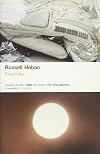
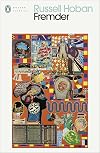
I decided that it was about time I took a look at some sci-fi, a new genre of fiction for me. I picked this up the other day at a charity store based entirely on the cover and the blurb on the back. I didn't know what to expect and came out pleasantly surprised.
The story has some nice twist and turns throughout and remains engaging. Its only a short book at 180 pages but that feels about perfect, anymore would just be filling. Strangely after reading it feels as though there is so much more to the whole story though, almost like this episode 1 of a series.
Apart from that, there isnt a lot more I can say, I enjoyed the story and the writing evoked a lot of good imagery in my mind. I thought that the use of classical music and paintings show more was a little overdone but not to the detriment of the storyline. I will certainly be hunting out some Hoban in the future. show less
The story has some nice twist and turns throughout and remains engaging. Its only a short book at 180 pages but that feels about perfect, anymore would just be filling. Strangely after reading it feels as though there is so much more to the whole story though, almost like this episode 1 of a series.
Apart from that, there isnt a lot more I can say, I enjoyed the story and the writing evoked a lot of good imagery in my mind. I thought that the use of classical music and paintings show more was a little overdone but not to the detriment of the storyline. I will certainly be hunting out some Hoban in the future. show less
Ratings
Members
- Recently Added By
Lists

Reading LIst
648 works; 1 member
Author Information

111+ Works 30,710 Members
Russell Hoban was born in Lansdale, Pennsylvania on February 4, 1925. He attended art school in Philadelphia and during World War II, he served in the Army and earned a Bronze Star. He taught art in New York and Connecticut, and also worked as an advertising copywriter and a freelance illustrator before beginning his career as a writer. He began show more publishing children's books in the late 1950s, including What Does It Do and How Does It Work?, Bedtime for Frances and the six other books featuring Frances, The Story of Hester Mouse Who Became a Writer, What Happened When Jack and Daisy Tried to Fool the Tooth Fairies, and The Mouse and His Child, which was adapted as an animated film in 1977. In 1973, he published his first adult novel, The Lion of Boaz-Jachin and Jachin-Boaz. His other books for adults include Turtle Diary, Pilgermann, and Ridley Walker. He received the John W. Campbell Memorial Award and the Australian Science Fiction Achievement Award for Ridley Walker. He died on December 13 at the age of 86. In 2015 he made the Kate Greenaway Medal shortlist for his title Jim's Lion wth illlustrator Alexis Deacon. (Bowker Author Biography) show less
Common Knowledge
- Original publication date
- 1996
- Epigraph
- Once we had a country and we thought it fair,
Look in the atlas and you'll find it there:
We cannot go there now, my dear, we cannot go there now.
W. H.... (show all) Auden
Songs and Other Musical Pieces
who do you have to fuck to get into this picture ?
Dory Previn
starlet starlet on the screen... (show all), who will follow norma jean? - Dedication
- For Brom
- First words
- In the deep chill and the darkness of the Fourth Galaxy, in the black sparkle of deep space, oh so lonely, see a figure in a blue coverall tumbling over and over as it comes towards you: no space suit, no helmet, no oxygen.
- Last words
- (Click to show. Warning: May contain spoilers.)Which brings me to another question: is this world (lacking as it does half a rat, one human head, one very large brain, a couple of spacecraft, and seven crew) the one I started out with?
Flick, flick - flick and fade, John,
on the planet where you are.
Classifications
Statistics
- Members
- 152
- Popularity
- 213,571
- Reviews
- 3
- Rating
- (3.82)
- Languages
- English, Spanish
- Media
- Paper, Ebook
- ISBNs
- 6
- ASINs
- 2