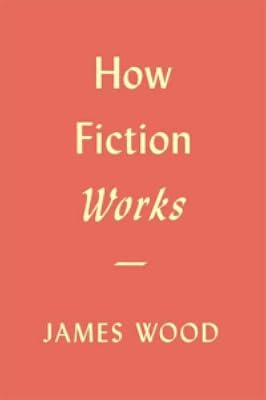
How Fiction Works
by James Wood
On This Page
Description
What makes a story a story? What is style? What's the connection between realism and real life? These are some of the questions James Wood answers in How Fiction Works, the first book-length essay by the preeminent critic of his generation. Ranging widely--from Homer to David Foster Wallace, from What Maisie Knew to Make Way for Ducklings--Wood takes the reader through the basic elements of the art, step by step.--From publisher description.Tags
Recommendations






Member Recommendations
Member Reviews
“When I talk about free indirect style I am really talking about point of view, and when I talk about point of view I am really talking about the perception of detail, and when I talk about detail I'm really talking about character, and when I talk about character I am really talking about the real, which is at the bottom of my inquiries.”
― James Wood, How Fiction Works
You might not agree with everything James Wood has to say about a particular author or work of literature, but you have to admit there isn’t another booklover more passionately dedicated to careful reading, finely honed criticism and upholding high standards. How Fiction Works is case in point: very much like an expert mechanic examining the assorted parts of the show more engine in an Italian or German sports car, James Wood rolls up his sleeves and scrutinizes various aspects of what goes into the writing of fiction, especially the novel.
His particular method is to undergird his analysis and reasoning with numerous examples – this is a fairly short book but there are over 100 individual literary novels quoted or referenced, from Don Quixote, Jane Eyre, Madame Bovary, What Maisie Knew, Sister Carrie and Ulysses to Invisible Man, Lolita, Seize the Day, Blood Meridian, Atonement and Gilead. And this is not exactly an easy book to read; I myself had to break an intellectual sweat, rereading passages again and again to grasp more completely Mr. Wood’s thinking. To share some of the many insights a reader will find in its pages, below are specific James Wood quotes coupled with my comments:
“In reality, we are stuck with third- and first-person narration. The common idea is that there is a contrast between reliable narration (third-person omniscient) and unreliable narrator (the unreliable first-person narrator, who knows less about himself than the reader eventually does). On one side Tolstoy, say; and on the other, Humbert Humbert or Italo Sveno’s narrator, Zeno Cosini, or Bertie Wooster.” ---------- The author spends a good number of his opening pages explaining the dynamics of voice, that is, the manner in which a story is told. At one point he notes: “Actually, the first-person narration is generally more reliable than unreliable; and third-person “omniscient” narration is generally more partial than omniscient.” I’m reminded of a personal favorite, the way Colin Harrison opens his Bodies Electric using a first-person narrator who is both completely reliable and painfully honest: “My name is Jack Whitman and I should never have had the first thing to do with her. I shouldn’t have indulged myself – my loneliness, my attraction to her – not with what was happening at the Corporation at the time. But I’m as weak hearted for love and as greedy for power as the next guy, maybe more so. And I was crazy for the sex – of course that was part of it.” These opening four sentences, set off like a string of explosions, give us a clear indication of what fireworks we can expect as we turn the pages.
“It is useful to watch good writers make mistakes. Plenty of excellent ones stumble at free indirect style.” ---------- Free indirect style being a blending of objective third-person narration with the thoughts and words of a character. James Wood shares the example of how John Updike in his novel Terrorist, in order to propel the story, puts impossible thoughts in the head of his eighteen-year old main character, impossible in the sense that an eighteen-year old could never have such thoughts and could never express such thoughts in the novelist’s sophisticated language. Major blunder! By the way, years ago when Updike’s novel S was first published, I recall reviewers claiming that the main character in the novel, a young woman by the name of Sarah Worth, wrote letters as if she had the literary talent of a John Updike. Again, major blunder!
“Novelists should thank Flaubert the way poets thank spring: it all begins again with him. There really is a time before Flaubert and a time after him. Flaubert decisively established what most readers and writers think of as modern realist narration, and his influence is almost too familiar to be visible.” --------- In order to fully dissect how fiction works and why fiction works, the author delves into the history of the novel, particularly innovations made within the nineteenth century.
James Wood details why no novelist ever had a more profound influence on the novel than Gustave Flaubert.
“Literature makes us better noticers of life; we get to practice on life itself; which in turn makes us better readers of detail in literature; which in turn makes us better readers in life. And so on and on. You have only to teach literature to realize that most young readers are poor noticers.” ---------- I can speak to the truth of Wood’s claim by my own first-hand experience: after reading Aleksandr Solzhenitsyn's Cancer Ward in my early 20s, I was better prepared to deal with my own father's confinement to a hospital bed for an extended time.
“There is nothing harder than the creation of fictional character. I can tell it from the number of apprentice novels I read that begin with descriptions of photographs.” ---------- Ha! First-rate fiction writers like Richard Russo and Elmore Leonard make the creation of their interesting, lifelike characters look so easy. It’s a kind of magic – it ain’t easy, as anyone who has ever tried their hand at fiction writing realizes very quickly.
“There is something deeply philosophical about Dostoevsky’s analysis of human behavior, and Nietzsche and Freud were attracted to his work (One chapter of Dostoevsky’s novella The Eternal Husband is entitled “Analysis.”). Proust, who said that all of Dostoevsky’s novels might have the one title, Crime and Punishment, studied him with perhaps more care than he would admit to.” ---------- One great characteristic of a truly great novelist: they expand and deepen what it means to write a novel. Certainly the case with Dostoevsky.
“This new approach to character meant a new approach to form. When character is stable, form is stable and linear – the novelist begins at the beginning, telling us about his hero’s childhood and education, moving decisively forward into the hero’s marriage, and then toward the dramatic crux of the book (something is wrong with the marriage). But if character is changeable, then why begin at the beginning? Surely it would be more effective to begin in the middle, and then move backward, and then move forward, and then move backward again? This is just the kind of form Conrad would use in Lord Jim and The Secret Agent, and Ford in The Good Soldier.” ---------- Along with voice, novelists must make clear decisions on how their novel will be structured in time. I vividly recall Charles Baxter’s First Light, a novel beginning with the main character, a middle-age Michigan car salesman by the name of Hugh Welsh, confronting a crisis involving his younger sister Dorsey, a university physicist. Each chapter moves further back in time, until we reach the last chapter when Hugh is a four-year-old boy at the hospital holding his newborn baby sister for the first time. Such authorial creativity made for unique reading.
"Ford Madox Ford, in his book Joseph Conrad: A Personal Remembrance, writes wonderfully about getting a character up and running - what he calls "getting the character in." -- Ample are the reasons given in Mr. Wood's book as to why Ford's words sparkle.
“We have to read musically, testing the precision and rhythm of a sentence, listening for the almost inaudible rustle of historical association clinging to the hems of modern words, attending to patterns, repetitions, echoes, deciding why one metaphor is successful and another is not, judging how the perfect placement of the right verb or adjective seals a sentence with mathematical finality.” ---------- Let me share what has helped me develop my own musical ear for reading fiction: I make it a point to occasionally read aloud. Respecting the musicality of fiction, the ear has it all over the eye.
“All the great realists, from Austen to Alice Munro, are at the same time great formalists. But this will be unceasingly difficult: for the writer has to act as if the available novelistic methods are continually about to turn into mere convention and so has to try to outwit that inevitable aging. The true writer, that free servant of life, is one who must always be acting as if life were a category beyond anything the novel has yet grasped; as if life itself were always on the verge of becoming conventional.” ----------- When it comes to fiction, a writer can have all the technical skills in the world but what will really, really set them apart is . . . drum roll with capitals: IMAGINATION.
A great realist; a great formalist - Canadian author Alice Munro show less
It was thrilling, at first, to read contemporary criticism which addressed obviously important authors like DFW and Sebald (though they are dead too) in the same terms as Flaubert and James, explaining why what they do is good when it is and offering no excuses when it isn't. And it was exciting to see someone discuss novels in the same terms of narrative mechanics as workshop teachers apply to the short story. I'm very interested in novels and I would love to understand more about how they work or don't.
But it turns out that, like any organism, novels are more than the sum of their mechanical parts. As the book progresses, Wood trails off deeper and deeper into incomprehensible minutiæ—there were passages I could make neither head show more nor tail of—and, as much as I should've been expecting it, I was disappointed to be left without the total manual for the novel implied by the book's title. Wood seems to know as well as any critic around what's worth thinking and writing about, but he doesn't have the answers any more than anyone else.
Wood places (p. 154) [b:Rameau's Nephew|18217|Rameau's Nephew and D'Alembert's Dream|Denis Diderot|http://photo.goodreads.com/books/1270450405s/18217.jpg|550912] and [b:Invisible Man|16981|Invisible Man|Ralph Ellison|http://photo.goodreads.com/books/1346634923s/16981.jpg|170957] in the same lineage as Stendhal, Conrad, Svevo, and Bernhard, which reminds me to read or reread them all—though I still doubt I will enjoy Dostoyevsky, also in the same list. His description (p. 110) of how Saramago's exploration of fictional construction of character is a mirror image of the American postmodernists' (Barth, Auster) gimmickry reassures me in my own naïve sense of what's good and bad. The book is full of worthwhile reading suggestions, handily collected at the end; you could do a lot worse for a canon of classics.
Wood writes, "I think that novels tend to fail not when the characters are not vivid or deep enough, but when the novel in question has failed to teach us how to adapt to its conventions" (p. 120). (The clumsy switch from plural to singular shows how ill Wood's own writing serves his ideas.) I think this may be the key to the whole enterprise, and if he'd really concentrated on how a novel might "teach us how to adapt to its conventions" he could've lived up to his title. But Wood remains largely outside his examples, explicating them rather than letting them unfold themselves.
Partly that's the impossibility of making an excerpt do the work of the entire text, but I think he also lowers his own standards over the course of the book. It doesn't conclude, it just trails off—with Wood, in defiance of his own complaints about other critics introducing meaningless jargon, introducing his own. When Wood suggests at the end that the secret to fictional realism is "what I must call lifeness: life on the page, life brought to different life by the highest artistry" (p. 247), it sounds profound but explains exactly diddly-squat about "How Fiction Works." Fair enough—it's a tall order—except he was the one who chose that misleading title. If Wood's book had taught us appropriately to adapt to its own conventions, this wouldn't be such a letdown. show less
But it turns out that, like any organism, novels are more than the sum of their mechanical parts. As the book progresses, Wood trails off deeper and deeper into incomprehensible minutiæ—there were passages I could make neither head show more nor tail of—and, as much as I should've been expecting it, I was disappointed to be left without the total manual for the novel implied by the book's title. Wood seems to know as well as any critic around what's worth thinking and writing about, but he doesn't have the answers any more than anyone else.
Wood places (p. 154) [b:Rameau's Nephew|18217|Rameau's Nephew and D'Alembert's Dream|Denis Diderot|http://photo.goodreads.com/books/1270450405s/18217.jpg|550912] and [b:Invisible Man|16981|Invisible Man|Ralph Ellison|http://photo.goodreads.com/books/1346634923s/16981.jpg|170957] in the same lineage as Stendhal, Conrad, Svevo, and Bernhard, which reminds me to read or reread them all—though I still doubt I will enjoy Dostoyevsky, also in the same list. His description (p. 110) of how Saramago's exploration of fictional construction of character is a mirror image of the American postmodernists' (Barth, Auster) gimmickry reassures me in my own naïve sense of what's good and bad. The book is full of worthwhile reading suggestions, handily collected at the end; you could do a lot worse for a canon of classics.
Wood writes, "I think that novels tend to fail not when the characters are not vivid or deep enough, but when the novel in question has failed to teach us how to adapt to its conventions" (p. 120). (The clumsy switch from plural to singular shows how ill Wood's own writing serves his ideas.) I think this may be the key to the whole enterprise, and if he'd really concentrated on how a novel might "teach us how to adapt to its conventions" he could've lived up to his title. But Wood remains largely outside his examples, explicating them rather than letting them unfold themselves.
Partly that's the impossibility of making an excerpt do the work of the entire text, but I think he also lowers his own standards over the course of the book. It doesn't conclude, it just trails off—with Wood, in defiance of his own complaints about other critics introducing meaningless jargon, introducing his own. When Wood suggests at the end that the secret to fictional realism is "what I must call lifeness: life on the page, life brought to different life by the highest artistry" (p. 247), it sounds profound but explains exactly diddly-squat about "How Fiction Works." Fair enough—it's a tall order—except he was the one who chose that misleading title. If Wood's book had taught us appropriately to adapt to its own conventions, this wouldn't be such a letdown. show less
Hiding behind the dreadfully self-helpish title of this little book(*) is a thoughtful examination of the main elements of prose fiction, explicitly cast as a 21st century reworking of E.M. Forster's famous lecture-course Aspects of the novel. Wood looks at the usual suspects — style, form, dialogue, characters, and so on — and gives us a quick resumé of where the big names of world literature stand on those points and how (selected) contemporary writers are dealing with them. Wood evidently isn't setting out to be either polemical or prescriptive, he seems to feel that the writers he appreciates most are those who work within a given framework whilst pushing out its boundaries, rather than those who slavishly adhere either to past show more convention or to new theoretical doctrines. The great writer is one who does something unexpected, that no-one else would have done at that point, but that with hindsight is the obvious right thing to do.
I don't think this is likely to be a very useful book for someone setting out to be a creative writer, especially if you want to write genre fiction, a topic that is clearly of no interest to Wood. But it would be an excellent preparation for a reader setting out to (re-)read Flaubert, Tolstoy, or Henry James.
---
(*) Wood jokingly comments that he really wanted to call it He knew he was right show less
I don't think this is likely to be a very useful book for someone setting out to be a creative writer, especially if you want to write genre fiction, a topic that is clearly of no interest to Wood. But it would be an excellent preparation for a reader setting out to (re-)read Flaubert, Tolstoy, or Henry James.
---
(*) Wood jokingly comments that he really wanted to call it He knew he was right show less
You don't have to know how a car works in order to enjoy driving it. Likewise, you don't have to know how novels work in order to enjoy reading them. Having said that, some people enjoy taking a peek under the hood. James Wood's "How Fiction Works" takes such a peek and explores the various systems that come together to make a novel: point of view, character development, selection of detail, and so on.
The book is not pedantic in tone although it teaches well. I found myself taking several pages of notes. Wood teaches point of view and detail by sharing short passages that illustrate his point. He shows us what the author is doing, and how he/she is doing it (or not quite). The section on character development was less specific, and I show more did not get a lot out of this section. The next section on the development of consciousness was superb, as Wood traces the development of consciousness through the tales of David, MacBeth and Raskolnikov.
At the back of a book is a bibliography of books Wood used in this work, taken from his own library. In reading over the list, I realized I had read a good number of the works. I would like to add most of the remaining books to my "to-read" list. You do not have to have read all of the books to understand the points he makes, he gives you enough of a passage to get the idea. However, it is an interesting reading list.
I did not always agree with Wood's analysis, and this is natural given the subjective nature of response to art. For example in talking of detail, Wood relates a scene from a Chekhov story in which, after making love to his mistress, a man eats a slice of watermelon for half an hour. Wood finds this detail perplexing and superfluous. I have not read that story (yet) but I think there are many possible things that Chekhov is saying here: that the man has a great appetite for both food and sex, or that the man took more care and attention devouring the flesh of the watermelon than he did making love to his woman.
The primary benefit of this book to a lover of fiction is an increased appreciation for the craft of writing. It's like taking a walk through an art museum with someone who has devoted their life to studying the techniques of great artists. They see on a different level, and their insights add depth and enjoyment to your experience. show less
The book is not pedantic in tone although it teaches well. I found myself taking several pages of notes. Wood teaches point of view and detail by sharing short passages that illustrate his point. He shows us what the author is doing, and how he/she is doing it (or not quite). The section on character development was less specific, and I show more did not get a lot out of this section. The next section on the development of consciousness was superb, as Wood traces the development of consciousness through the tales of David, MacBeth and Raskolnikov.
At the back of a book is a bibliography of books Wood used in this work, taken from his own library. In reading over the list, I realized I had read a good number of the works. I would like to add most of the remaining books to my "to-read" list. You do not have to have read all of the books to understand the points he makes, he gives you enough of a passage to get the idea. However, it is an interesting reading list.
I did not always agree with Wood's analysis, and this is natural given the subjective nature of response to art. For example in talking of detail, Wood relates a scene from a Chekhov story in which, after making love to his mistress, a man eats a slice of watermelon for half an hour. Wood finds this detail perplexing and superfluous. I have not read that story (yet) but I think there are many possible things that Chekhov is saying here: that the man has a great appetite for both food and sex, or that the man took more care and attention devouring the flesh of the watermelon than he did making love to his woman.
The primary benefit of this book to a lover of fiction is an increased appreciation for the craft of writing. It's like taking a walk through an art museum with someone who has devoted their life to studying the techniques of great artists. They see on a different level, and their insights add depth and enjoyment to your experience. show less
I previously read “The Nearest Thing”, a collection of several lectures on literature, from 2013, by British-American literary expert James Wood (° 1965). The book under review (How Fiction Works) is both older and newer: it was originally published in 2007, but was updated in a second edition to 2018. Here Wood explains, somewhat more systematically than in the first book, how literature actually works. Of course, this concerns technical aspects of writing (the narrator's point of view, the difference between plot and form, the use of indirect style and authorial irony, etc.), but a great many more substantive aspects are also discussed.
In particular the question whether fiction is realistic is central: at first glance this seems show more like a 'contradictio in terminis', but Wood perfectly illustrates how authors can approach reality very closely through fiction. He cleverly sidesteps the ‘question of truth’ by emphasizing liveliness: “Realism, seen broadly as truthfulness to the way things are, cannot be mere verisimilitude, cannot be mere lifelikeness, or lifesameness, but what I must call lifeness: life on the page, life brought to different life by the highest artistry.” Again, Wood appeals to ‘imagination’ as the ultimate technique of good literature: not life as it is, but as we can imagine it. And just as in his previous book, that is actually a religious finality: “So fiction – here I’m extrapolating from Walter Benjamin – ideally offers us a power we tend to lack in our own lives: to reflect on the form and direction of our existence; to see the birth, development and end of a completed life. The novel provides us with the religious power to see beginnings and endings.” As mentioned, this edition has been updated to include (next to classics like Tolstoy and Flaubert) authors such as Karl-Ove Knausgard, Elena Ferrante and Teju Cole. Wood really helps you to pay attention to the details, and thus to appreciate literature (even more). show less
In particular the question whether fiction is realistic is central: at first glance this seems show more like a 'contradictio in terminis', but Wood perfectly illustrates how authors can approach reality very closely through fiction. He cleverly sidesteps the ‘question of truth’ by emphasizing liveliness: “Realism, seen broadly as truthfulness to the way things are, cannot be mere verisimilitude, cannot be mere lifelikeness, or lifesameness, but what I must call lifeness: life on the page, life brought to different life by the highest artistry.” Again, Wood appeals to ‘imagination’ as the ultimate technique of good literature: not life as it is, but as we can imagine it. And just as in his previous book, that is actually a religious finality: “So fiction – here I’m extrapolating from Walter Benjamin – ideally offers us a power we tend to lack in our own lives: to reflect on the form and direction of our existence; to see the birth, development and end of a completed life. The novel provides us with the religious power to see beginnings and endings.” As mentioned, this edition has been updated to include (next to classics like Tolstoy and Flaubert) authors such as Karl-Ove Knausgard, Elena Ferrante and Teju Cole. Wood really helps you to pay attention to the details, and thus to appreciate literature (even more). show less
I confess, I came into this expecting to dislike it. But the first chapters were perfectly readable if derivative, and had enough small moments of insight that I was really keen to keep reading. Reviews such as Walter Kirn's in the NYT pushed me even further towards wanting to like Wood, since citing Huck Finn, On the Road and Jesus' Son as three 'masterpieces'* that Wood can't account for is a bit like suggesting that a book about fashion can't account for fashion masterpieces such as happy pants, pith helmets and edible underwear: maybe it can't, but that's probably for the best. And, pace Kirn, Wood can write--the fact that he doesn't feel the need to dip his penis in LSD prior to yawping about his own genius is, I think, a virtue. show more
And then it all falls to pieces, because Wood is not only propagandizing for his own view of what good fiction is--as any critic should do. He also pretends that all good literature is what he thinks good literature is. I'm fine with someone writing a book about how 'realism' is the central impulse behind writing fiction, and saying that that realism consists in 'visual noticing,' detail (visual and or intellectual), sympathy with others, and revealing to us the motives of characters without spelling it out to us. I disagree, but this is a decent statement of a reasonable position.
When you end up saying things like: "Shakespeare is essentially being a novelist" when Lady Macbeth and Macbeth have an argument onstage, or that Pope's 'Rape of the Lock' is "an early form of free indirect style," you can only do damage to those works or our understanding of them. The fact that Pope's work and Shakespeare's works are great *despite* not being realism suggests that fiction can be great without being what Wood considers realism. Claiming them for your argument is underhanded, like saying Karl Malone is a Laker great because he played one season for the Lakers; any sensible understanding of his career sees him as a Jazz great.
And it goes downhill from there. Wood considers plot to be essentially juvenile (his words, 149), he has nothing interesting to say about dialogue, and concludes that fiction is concerned mainly to accurately see "the way things are", that is, to be true to life. Therefore, any literature that tries mainly to do something else (e.g., tries to make you laugh, tries to make you cry, tries to suggest how things *should* be, complains about the way things are) falls outside his understanding of fiction, unless it's so great (Shakespeare; Pope; Kafka is about how it would feel to be an insect) that it just can't be doing anything other than what a few nineteenth and twentieth century novelists are trying to do.
Wood has written a polemic against the likes of Roland Barthes, without understanding the force of their argument--an argument that is, I agree, foolish and misguided. He quotes Barthes:
"The function of narrative is not to 'represent,' it is to constitute a spectacle still very enigmatic for us but in any case not of a mimetic order... 'what takes place' in narrative is, from the referential (reality) point of view literally nothing; 'what happens' is language alone, the adventure of language, the unceasing celebration of its coming."
Wood argues against
i) the obviously true claim that literature doesn't refer to anything. But, to take one of Wood's own examples: Isabel Archer does not exist, therefore the name Isabel Archer is not referring to some actually existing thing. Something else is going on. How is that anything other than a statement of fact?
ii) Barthes's opposition to conventionality. Despite the fact that there is no mention here of conventionality, Wood assumes that the argument must be something like 'because fiction uses conventions, it can't refer to reality.' And that that is an attack on conventions in literature.
His response is to say that everything is conventional, therefore Barthes is talking nonsense. But the the really obnoxious bit here is the completely unfounded claim that literature is just the celebration of the 'coming' of language, a human tool that Barthes (and many others) more or less deify. If that was true, there'd be no reason to read one thing rather than another. My review of this book would be just as celebratory of language's coming down from the heavens as would, say, Gulliver's Travels.
Barthes makes language a god, and Wood claims that there is one thing that authors are trying to do. They're both wrong. Authors try to do different things at different times, many of them try to do those things well, and you need to use different standards for different works. Barthes' work was an okay explanation and spirited defense of one thing that a couple of authors did in the sixties. Wood's book is a great explanation and defense of *one* thing that authors have done for the last 200 years. But to claim anything more for 'realism' than that is to do a tremendous disservice to the wonderful range of literature out there, everything from invective to epic, from Jane Austen to Javier Marias. You should read this book, so you'll know about the two extreme positions; and then you should read The Memoirs of Martinus Scriblerus, to remind yourself that both Barthes and Wood are dead wrong.
*************************************************************************
* I find it hard to think of any book the citation of which is more likely to make me viscerally disagree with or even hate you, than those three. One is a children's book, one is slumming drug-lit drivel by an otherwise talented author, and one is Americo-libertarian drivel that should come with a #firstworldproblems warning. And all of are considered masterpieces. It's too bizarre. show less
And then it all falls to pieces, because Wood is not only propagandizing for his own view of what good fiction is--as any critic should do. He also pretends that all good literature is what he thinks good literature is. I'm fine with someone writing a book about how 'realism' is the central impulse behind writing fiction, and saying that that realism consists in 'visual noticing,' detail (visual and or intellectual), sympathy with others, and revealing to us the motives of characters without spelling it out to us. I disagree, but this is a decent statement of a reasonable position.
When you end up saying things like: "Shakespeare is essentially being a novelist" when Lady Macbeth and Macbeth have an argument onstage, or that Pope's 'Rape of the Lock' is "an early form of free indirect style," you can only do damage to those works or our understanding of them. The fact that Pope's work and Shakespeare's works are great *despite* not being realism suggests that fiction can be great without being what Wood considers realism. Claiming them for your argument is underhanded, like saying Karl Malone is a Laker great because he played one season for the Lakers; any sensible understanding of his career sees him as a Jazz great.
And it goes downhill from there. Wood considers plot to be essentially juvenile (his words, 149), he has nothing interesting to say about dialogue, and concludes that fiction is concerned mainly to accurately see "the way things are", that is, to be true to life. Therefore, any literature that tries mainly to do something else (e.g., tries to make you laugh, tries to make you cry, tries to suggest how things *should* be, complains about the way things are) falls outside his understanding of fiction, unless it's so great (Shakespeare; Pope; Kafka is about how it would feel to be an insect) that it just can't be doing anything other than what a few nineteenth and twentieth century novelists are trying to do.
Wood has written a polemic against the likes of Roland Barthes, without understanding the force of their argument--an argument that is, I agree, foolish and misguided. He quotes Barthes:
"The function of narrative is not to 'represent,' it is to constitute a spectacle still very enigmatic for us but in any case not of a mimetic order... 'what takes place' in narrative is, from the referential (reality) point of view literally nothing; 'what happens' is language alone, the adventure of language, the unceasing celebration of its coming."
Wood argues against
i) the obviously true claim that literature doesn't refer to anything. But, to take one of Wood's own examples: Isabel Archer does not exist, therefore the name Isabel Archer is not referring to some actually existing thing. Something else is going on. How is that anything other than a statement of fact?
ii) Barthes's opposition to conventionality. Despite the fact that there is no mention here of conventionality, Wood assumes that the argument must be something like 'because fiction uses conventions, it can't refer to reality.' And that that is an attack on conventions in literature.
His response is to say that everything is conventional, therefore Barthes is talking nonsense. But the the really obnoxious bit here is the completely unfounded claim that literature is just the celebration of the 'coming' of language, a human tool that Barthes (and many others) more or less deify. If that was true, there'd be no reason to read one thing rather than another. My review of this book would be just as celebratory of language's coming down from the heavens as would, say, Gulliver's Travels.
Barthes makes language a god, and Wood claims that there is one thing that authors are trying to do. They're both wrong. Authors try to do different things at different times, many of them try to do those things well, and you need to use different standards for different works. Barthes' work was an okay explanation and spirited defense of one thing that a couple of authors did in the sixties. Wood's book is a great explanation and defense of *one* thing that authors have done for the last 200 years. But to claim anything more for 'realism' than that is to do a tremendous disservice to the wonderful range of literature out there, everything from invective to epic, from Jane Austen to Javier Marias. You should read this book, so you'll know about the two extreme positions; and then you should read The Memoirs of Martinus Scriblerus, to remind yourself that both Barthes and Wood are dead wrong.
*************************************************************************
* I find it hard to think of any book the citation of which is more likely to make me viscerally disagree with or even hate you, than those three. One is a children's book, one is slumming drug-lit drivel by an otherwise talented author, and one is Americo-libertarian drivel that should come with a #firstworldproblems warning. And all of are considered masterpieces. It's too bizarre. show less
“When I talk about free indirect style I am really talking about point of view, and when I talk about point of view I am really talking about the perception of detail, and when I talk about detail I'm really talking about character, and when I talk about character I am really talking about the real, which is at the bottom of my inquiries.”
― James Wood, How Fiction Works
You might not agree with everything James Wood has to say about a particular author or work of literature, but you have to admit there isn’t another booklover more passionately dedicated to careful reading, finely honed criticism and upholding high standards. How Fiction Works is case in point: very much like an expert mechanic examining the assorted parts of the show more engine in an Italian or German sports car, James Wood rolls up his sleeves and scrutinizes various aspects of what goes into the writing of fiction, especially the novel.
His particular method is to undergird his analysis and reasoning with numerous examples – this is a fairly short book but there are over 100 individual literary novels quoted or referenced, from Don Quixote, Jane Eyre, Madame Bovary, What Maisie Knew, Sister Carrie and Ulysses to Invisible Man, Lolita, Seize the Day, Blood Meridian, Atonement and Gilead. And this is not exactly an easy book to read; I myself had to break an intellectual sweat, rereading passages again and again to grasp more completely Mr. Wood’s thinking. To share some of the many insights a reader will find in its pages, below are specific James Wood quotes coupled with my comments:
“In reality, we are stuck with third- and first-person narration. The common idea is that there is a contrast between reliable narration (third-person omniscient) and unreliable narrator (the unreliable first-person narrator, who knows less about himself than the reader eventually does). On one side Tolstoy, say; and on the other, Humbert Humbert or Italo Sveno’s narrator, Zeno Cosini, or Bertie Wooster.” ---------- The author spends a good number of his opening pages explaining the dynamics of voice, that is, the manner in which a story is told. At one point he notes: “Actually, the first-person narration is generally more reliable than unreliable; and third-person “omniscient” narration is generally more partial than omniscient.” I’m reminded of a personal favorite, the way Colin Harrison opens his Bodies Electric using a first-person narrator who is both completely reliable and painfully honest: “My name is Jack Whitman and I should never have had the first thing to do with her. I shouldn’t have indulged myself – my loneliness, my attraction to her – not with what was happening at the Corporation at the time. But I’m as weak hearted for love and as greedy for power as the next guy, maybe more so. And I was crazy for the sex – of course that was part of it.” These opening four sentences, set off like a string of explosions, give us a clear indication of what fireworks we can expect as we turn the pages.
“It is useful to watch good writers make mistakes. Plenty of excellent ones stumble at free indirect style.” ---------- Free indirect style being a blending of objective third-person narration with the thoughts and words of a character. James Wood shares the example of how John Updike in his novel Terrorist, in order to propel the story, puts impossible thoughts in the head of his eighteen-year old main character, impossible in the sense that an eighteen-year old could never have such thoughts and could never express such thoughts in the novelist’s sophisticated language. Major blunder! By the way, years ago when Updike’s novel S was first published, I recall reviewers claiming that the main character in the novel, a young woman by the name of Sarah Worth, wrote letters as if she had the literary talent of a John Updike. Again, major blunder!
“Novelists should thank Flaubert the way poets thank spring: it all begins again with him. There really is a time before Flaubert and a time after him. Flaubert decisively established what most readers and writers think of as modern realist narration, and his influence is almost too familiar to be visible.” --------- In order to fully dissect how fiction works and why fiction works, Mr. Wood delves into the history of the novel, particularly innovations made within the nineteenth century.
James Wood details why no novelist ever had a more profound influence on the novel than Gustave Flaubert.
“Literature makes us better noticers of life; we get to practice on life itself; which in turn makes us better readers of detail in literature; which in turn makes us better readers in life. And so on and on. You have only to teach literature to realize that most young readers are poor noticers.” ---------- I can speak to the truth of Wood’s claim by my own first-hand experience: after reading Aleksandr Solzhenitsyn's Cancer Ward in my early 20s, I was better prepared to deal with my own father's confinement to a hospital bed for an extended time.
“There is nothing harder than the creation of fictional character. I can tell it from the number of apprentice novels I read that begin with descriptions of photographs.” ---------- Ha! First-rate fiction writers like Richard Russo and Elmore Leonard make the creation of their interesting, lifelike characters look so easy. It’s a kind of magic – it ain’t easy, as anyone who has ever tried their hand at fiction writing realizes very quickly.
“There is something deeply philosophical about Dostoevsky’s analysis of human behavior, and Nietzsche and Freud were attracted to his work (One chapter of Dostoevsky’s novella The Eternal Husband is entitled “Analysis.”). Proust, who said that all of Dostoevsky’s novels might have the one title, Crime and Punishment, studied him with perhaps more care than he would admit to.” ---------- One great characteristic of a truly great novelist: they expand and deepen what it means to write a novel. Certainly the case with Dostoevsky.
“This new approach to character meant a new approach to form. When character is stable, form is stable and linear – the novelist begins at the beginning, telling us about his hero’s childhood and education, moving decisively forward into the hero’s marriage, and then toward the dramatic crux of the book (something is wrong with the marriage). But if character is changeable, then why begin at the beginning? Surely it would be more effective to begin in the middle, and then move backward, and then move forward, and then move backward again? This is just the kind of form Conrad would use in Lord Jim and The Secret Agent, and Ford in The Good Soldier.” ---------- Along with voice, novelists must make clear decisions on how their novel will be structured in time. I vividly recall Charles Baxter’s First Light, a novel beginning with the main character, a middle-age Michigan car salesman by the name of Hugh Welsh, confronting a crisis involving his younger sister Dorsey, a university physicist. Each chapter moves further back in time, until we reach the last chapter when Hugh is a four-year-old boy at the hospital holding his newborn baby sister for the first time. Such authorial creativity made for unique reading.
"Ford Madox Ford, in his book Joseph Conrad: A Personal Remembrance, writes wonderfully about getting a character up and running - what he calls "getting the character in." -- Ample are the reasons given in Mr. Wood's book as to why Ford's words sparkle.
“We have to read musically, testing the precision and rhythm of a sentence, listening for the almost inaudible rustle of historical association clinging to the hems of modern words, attending to patterns, repetitions, echoes, deciding why one metaphor is successful and another is not, judging how the perfect placement of the right verb or adjective seals a sentence with mathematical finality.” ---------- Let me share what has helped me develop my own musical ear for reading fiction: I make it a point to occasionally read aloud. Respecting the musicality of fiction, the ear has it all over the eye.
“All the great realists, from Austen to Alice Munro, are at the same time great formalists. But this will be unceasingly difficult: for the writer has to act as if the available novelistic methods are continually about to turn into mere convention and so has to try to outwit that inevitable aging. The true writer, that free servant of life, is one who must always be acting as if life were a category beyond anything the novel has yet grasped; as if life itself were always on the verge of becoming conventional.” ----------- When it comes to fiction, a writer can have all the technical skills in the world but what will really, really set them apart is . . . drum roll with capitals: IMAGINATION.
A great realist; a great formalist - Canadian author Alice Munro show less
Members
- Recently Added By
Published Reviews
ThingScore 75
How Fiction Works is, or is intended to be, a specialist's guide for the nonspecialist, and with this aim in view it remains resolutely nontechnical and amply accommodating. Wood displays his usual genius for apt quotation, and as always his enthusiasm for those writers about whom he is enthusiastic is both convincing and endearing.
added by jburlinson
Lists

Craft Books
41 works; 1 member

Literature and Criticism
12 works; 1 member
Author Information

16+ Works 3,420 Members
James Wood is currently a senior editor at The New Republic and a visiting lecturer in English and American literature at Harvard.
Awards and Honors
Common Knowledge
- Original title
- How fiction works
- Original publication date
- 2008
- Epigraph
- There is only one recipe -- to care a great deal for the cookery.
--Henry James - Dedication
- For Norman and Elsa Rush
And for C.D.M. - First words
- The house of fiction has many windows, but only two or three doors.
- Last words
- (Click to show. Warning: May contain spoilers.)The true writer, that free servant of life, is one who must always be acting as if life were a category beyond anything the novel had yet grasped; as if life itself were always on the verge of becoming conventional.
- Blurbers
- Ozick, Cynthia; Schuessler, Jennifer; Mendelsohn, Daniel
- Original language
- English
Classifications
- Genres
- Literature Studies and Criticism, Nonfiction
- DDC/MDS
- 808.3 — Literature & rhetoric Literature, rhetoric & criticism Rhetoric and collections of literary texts from more than two literatures Rhetoric of fiction
- LCC
- PN3331 .W67 — Language and Literature Literature (General) Literature (General) Prose. Prose fiction Philosophy, theory, etc.
- BISAC
Statistics
- Members
- 1,956
- Popularity
- 10,907
- Reviews
- 65
- Rating
- (3.83)
- Languages
- 9 — Dutch, English, French, German, Italian, Portuguese, Spanish, Swedish, Turkish
- Media
- Paper, Audiobook, Ebook
- ISBNs
- 36
- ASINs
- 12