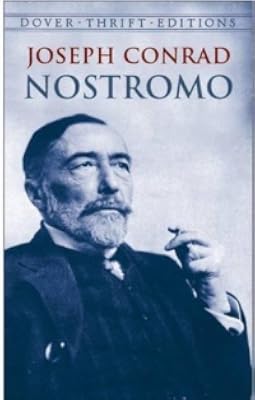
Nostromo: A Tale of the Seaboard
by Joseph Conrad
On This Page
Description
Nostromo is a classic anti-hero, who lives in a fictitious mining village on the coast of a fictitious South American country. Many regard the imagined setting of the novel to be some of Conrad's finest work. The characters in the novel are also more highly-developed than those of his other novels, and were inspired by a group of mental patients Conrad had met shortly before beginning the novel..
Tags
Recommendations













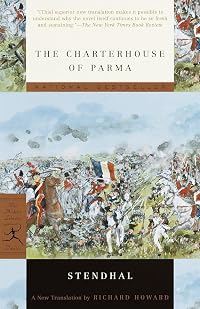
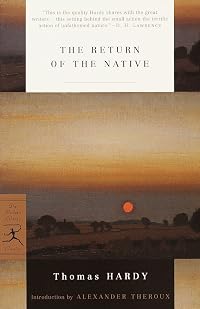
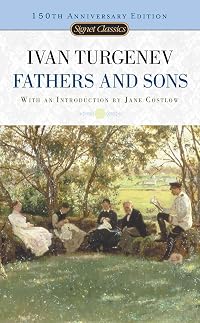
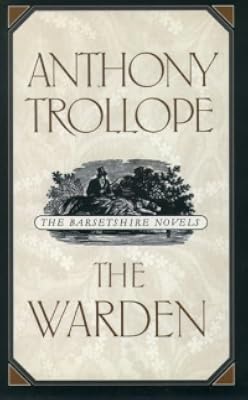




Member Recommendations

Member Reviews
With Nostromo Conrad plumbs the depths of human frailty, offering an intimate study in psychology and human relations. Unlike his other novels he uses a greater canvas to consider the wider political and economic world. That canvas is constructed from fragmented plots containing fractures and divides that interrupt the narrative to the point that the landscape seems to "vanish into thin air" (p 31).
The story is one of a silver mine in the Occidental Province of “the imaginary (but true)” Latin American country of Costaguana, and the crisis by which the province passes from the chaos of post-colonial misrule to the unquiet prosperity of Anglo-American imperial capitalism. With the country beset by instability and warfare, Senor show more Gould, the mine's owner, decides to remove the silver and keep it out of the hands of the warlords.
To do so, Gould turns to Nostromo, the top stevedore and the most trusted man in Sulaco. Nostromo is resourceful, daring, loyal and—above all—incorruptible. His illustrious reputation is his most prized possession. Says one character, "the only thing he seems to care for...is to be well spoken of." Well, you can see the potential for a tragic flaw right there. Even the most incorruptible are, ultimately, corruptible. In spite of that he continues to enjoy a favorable opinion from most because they see him not as he is but how they believe that he is. The differing views of Nostromo connect through his own inner strength that makes him ultimately the title character even though there are many more pages expended upon the plethora of other interesting characters in the novel; including, Charles Gould - owner of the mine, his wife Emilia, Martin Decoud, Dr. Monygham, Guzman Bento - a former dictator, and Ribiera - the current head of state.
The book's psychological depth and narrative structure, with its distorted timeline that travels backward and forward in time, were innovative for the era, marking this novel as one of the prime examples of a literary modernism that would within a couple of decades culminate in the works of Proust and Joyce. The huge array of characters and interactions have been compared by some to War and Peace. Irony abounds: the non-chronological plot line tips us off to consequences before we know what led up to them—and results in a sense of inexorable fate pulling characters to their ultimate destiny.
Ultimately the story hinges on the struggle between actions concerning the silver and love interests. While Gould's marriage succumbs to his passionate interest in the silver mine an even more fascinating turn of events yields a love triangle between Nostromo and two sisters Linda and Giselle. These events, along with many others, create an entertaining and intriguing novel. Told in Conrad's inimitable prose style this is one of his greatest achievements. show less
The story is one of a silver mine in the Occidental Province of “the imaginary (but true)” Latin American country of Costaguana, and the crisis by which the province passes from the chaos of post-colonial misrule to the unquiet prosperity of Anglo-American imperial capitalism. With the country beset by instability and warfare, Senor show more Gould, the mine's owner, decides to remove the silver and keep it out of the hands of the warlords.
To do so, Gould turns to Nostromo, the top stevedore and the most trusted man in Sulaco. Nostromo is resourceful, daring, loyal and—above all—incorruptible. His illustrious reputation is his most prized possession. Says one character, "the only thing he seems to care for...is to be well spoken of." Well, you can see the potential for a tragic flaw right there. Even the most incorruptible are, ultimately, corruptible. In spite of that he continues to enjoy a favorable opinion from most because they see him not as he is but how they believe that he is. The differing views of Nostromo connect through his own inner strength that makes him ultimately the title character even though there are many more pages expended upon the plethora of other interesting characters in the novel; including, Charles Gould - owner of the mine, his wife Emilia, Martin Decoud, Dr. Monygham, Guzman Bento - a former dictator, and Ribiera - the current head of state.
The book's psychological depth and narrative structure, with its distorted timeline that travels backward and forward in time, were innovative for the era, marking this novel as one of the prime examples of a literary modernism that would within a couple of decades culminate in the works of Proust and Joyce. The huge array of characters and interactions have been compared by some to War and Peace. Irony abounds: the non-chronological plot line tips us off to consequences before we know what led up to them—and results in a sense of inexorable fate pulling characters to their ultimate destiny.
Ultimately the story hinges on the struggle between actions concerning the silver and love interests. While Gould's marriage succumbs to his passionate interest in the silver mine an even more fascinating turn of events yields a love triangle between Nostromo and two sisters Linda and Giselle. These events, along with many others, create an entertaining and intriguing novel. Told in Conrad's inimitable prose style this is one of his greatest achievements. show less
The silver corrupts everyone in their own special way in accordance with the particular flaws in their character. The result is a progressive descent into the hopeless futility of the human condition against the machinations of what is labeled 'material interest'. It is really something to behold.
This was my second stab at Nostromo, reputed to be one of Conrad’s best novels. On my first try, I didn’t get very far; this time, it took me a while to get into it. The book seemed off-center in that the first part focused on Charles Gould and his wife, Emilia. This left me wondering why the book was named for one of the many characters mentioned in passing. As the book progresses, Nostromo moves steadily to the center, first enigmatically, then tragically.
This is not his real name, of course. That Gian’ Battista Fidanza, a proud Italian revolutionary who washes ashore in the South American land of Costaguana, should be known to all by the slangy “our man” ironically shows how little he was truly known.
The Bible says that show more avarice is a root of all evil. For all the instability of who the protagonist is, the theme of Nostromo is constant: the effect of a fabulously rich silver lode on both Gould and Nostromo, foremost, as well as on most other characters in this richly populated book.
The number of characters Conrad introduces and the shifting narrative that focuses first on some and then on others contribute to the difficulty of reading this book. It was challenging to keep them straight despite Conrad’s use of motifs, such as Dr. Monygham’s limp and the copper highlights in Giselle Viola’s blond hair. Nevertheless, many of these characters remained types rather than fully-rounded figures. Conrad doesn’t hold a high opinion of most of the men, whether the succession of corrupt dictators, Decoud, the feckless liberal, or Holroyd (easily misread as “holy rood”), the prototype Yankee imperialist, for whom the increase of his wealth and the spread of evangelical Protestantism seem to be one project. Conrad’s patronizing, condescending treatment of his female characters can be excused as typical of the time. It was amusing how often symbolism used in conjunction with Dona Emilia evoked either the Madonna or a pagan goddess (“her face powdered white like a plaster cast”). But sometimes, Conrad’s comments are risible: “A woman with a masculine mind is not a being of superior efficiency; she is simply a phenomenon of imperfect differentiation—interestingly barren and without importance.”
I sensed that Conrad also had difficulty juggling the timeline as he shifted from one narrative strand to another.
Now that I’ve listed why this book shouldn’t work, I’ll confess that it grew on me the longer I read. I highlighted many passages and savored many of Conrad’s psychological analyses. And as the plot approached its climax, I found I couldn’t turn the pages fast enough. A flawed, unforgettable masterpiece. show less
This is not his real name, of course. That Gian’ Battista Fidanza, a proud Italian revolutionary who washes ashore in the South American land of Costaguana, should be known to all by the slangy “our man” ironically shows how little he was truly known.
The Bible says that show more avarice is a root of all evil. For all the instability of who the protagonist is, the theme of Nostromo is constant: the effect of a fabulously rich silver lode on both Gould and Nostromo, foremost, as well as on most other characters in this richly populated book.
The number of characters Conrad introduces and the shifting narrative that focuses first on some and then on others contribute to the difficulty of reading this book. It was challenging to keep them straight despite Conrad’s use of motifs, such as Dr. Monygham’s limp and the copper highlights in Giselle Viola’s blond hair. Nevertheless, many of these characters remained types rather than fully-rounded figures. Conrad doesn’t hold a high opinion of most of the men, whether the succession of corrupt dictators, Decoud, the feckless liberal, or Holroyd (easily misread as “holy rood”), the prototype Yankee imperialist, for whom the increase of his wealth and the spread of evangelical Protestantism seem to be one project. Conrad’s patronizing, condescending treatment of his female characters can be excused as typical of the time. It was amusing how often symbolism used in conjunction with Dona Emilia evoked either the Madonna or a pagan goddess (“her face powdered white like a plaster cast”). But sometimes, Conrad’s comments are risible: “A woman with a masculine mind is not a being of superior efficiency; she is simply a phenomenon of imperfect differentiation—interestingly barren and without importance.”
I sensed that Conrad also had difficulty juggling the timeline as he shifted from one narrative strand to another.
Now that I’ve listed why this book shouldn’t work, I’ll confess that it grew on me the longer I read. I highlighted many passages and savored many of Conrad’s psychological analyses. And as the plot approached its climax, I found I couldn’t turn the pages fast enough. A flawed, unforgettable masterpiece. show less
Joseph Conrad’s [Nostromo] is a novel for the ages, premonitory and haunting. Though written at the turn of the twentieth century, the blistering account of a small, South American country stumbling toward political and economic identity accurately forecasts a full century of human civilization.
Nostromo provides the heart of Conrad’s story in tragic Greek fashion. As civil war erupts in the region, the stevedore is drawn into a revolution. Gould, an Englishman raised in the country, chooses Nostromo to hide silver from his mine before marauding forces can steal it. Worshipped by all for his moral certainty and physical mettle, Nostromo seems the perfect choice to protect the silver, and, with it, the hope of the rebellion. But the show more treasure poisons all who touch it, even Nostromo.
A dark fatalism permeates the story, a feeling that governance is predestined toward corruption and failure, that men are, as Conrad puts it, “short-sighted in good and evil.” Though he promises himself differently, Gould is consumed by the silver mine, just as his father and grandfather before him were. He proclaims, “…I pin my faith to material interests. Only let the material interests get a firm footing, and they are bound to impose the conditions on which alone they can continue to exist. … A better justice will come afterwards.” So, Gould bribes and manipulates in order to maintain the mine, and the wealth feeds on itself in an endless cycle.
Even in his distaste for materialism, Conrad still sees man as bound by a fatal destiny. “In our activity alone do we find the sustaining illusion of an independent existence as against the whole scheme of things of which we form a helpless part.” And, even as he chastises imperialists and dictators with his story, he has little hope that alternative political efforts will make a difference. “There is a curse of futility upon our character; Don Quixote and Sancho Panza, chivalry and materialism, high sounding sentiment and a supine morality, violent efforts for an idea and a sullen acquiescence in every form of corruption. We convulsed a continent for our independence only to become the passive prey of a democratic parody, the helpless victims of scoundrels and cutthroats, our institutions a mockery, our laws a farce…” Such a description accurately captures our own political and social history in the United States, certainly in the last century.
Conrad sets a majestic and powerful landscape against all of the futile efforts of his characters. Large mountains, capped with an ever-present crown of snow, loom over the follies below. The sun, dripping with yellow heat, illuminates without partiality. Jungles and oceans persist, undaunted by the events that play out in or upon them. The message is clear: Do what you will; only the earth and sky will remain.
For all of its darkness, the book beautifully captures the challenges of civilization, and champions individual moral choices, the simple pleasures of life, and the value of work for its own sake. show less
Nostromo provides the heart of Conrad’s story in tragic Greek fashion. As civil war erupts in the region, the stevedore is drawn into a revolution. Gould, an Englishman raised in the country, chooses Nostromo to hide silver from his mine before marauding forces can steal it. Worshipped by all for his moral certainty and physical mettle, Nostromo seems the perfect choice to protect the silver, and, with it, the hope of the rebellion. But the show more treasure poisons all who touch it, even Nostromo.
A dark fatalism permeates the story, a feeling that governance is predestined toward corruption and failure, that men are, as Conrad puts it, “short-sighted in good and evil.” Though he promises himself differently, Gould is consumed by the silver mine, just as his father and grandfather before him were. He proclaims, “…I pin my faith to material interests. Only let the material interests get a firm footing, and they are bound to impose the conditions on which alone they can continue to exist. … A better justice will come afterwards.” So, Gould bribes and manipulates in order to maintain the mine, and the wealth feeds on itself in an endless cycle.
Even in his distaste for materialism, Conrad still sees man as bound by a fatal destiny. “In our activity alone do we find the sustaining illusion of an independent existence as against the whole scheme of things of which we form a helpless part.” And, even as he chastises imperialists and dictators with his story, he has little hope that alternative political efforts will make a difference. “There is a curse of futility upon our character; Don Quixote and Sancho Panza, chivalry and materialism, high sounding sentiment and a supine morality, violent efforts for an idea and a sullen acquiescence in every form of corruption. We convulsed a continent for our independence only to become the passive prey of a democratic parody, the helpless victims of scoundrels and cutthroats, our institutions a mockery, our laws a farce…” Such a description accurately captures our own political and social history in the United States, certainly in the last century.
Conrad sets a majestic and powerful landscape against all of the futile efforts of his characters. Large mountains, capped with an ever-present crown of snow, loom over the follies below. The sun, dripping with yellow heat, illuminates without partiality. Jungles and oceans persist, undaunted by the events that play out in or upon them. The message is clear: Do what you will; only the earth and sky will remain.
For all of its darkness, the book beautifully captures the challenges of civilization, and champions individual moral choices, the simple pleasures of life, and the value of work for its own sake. show less
‘Nostromo’ is the best illustration of the Resource Curse I’ve ever come across, although the phrase probably didn’t exist when Conrad was writing. It refers to countries that have plentiful natural resources and weak governance as a result of rapacious colonialism, so suffer from political instability and chronic corruption. Nigeria is a commonly cited example. In ‘Nostromo’, Conrad invents a South American country with a history of revolutions and dictatorships, centring his narrative on a silver mine. The concession on the mine belongs to a white man named Gould who was born there, a second or third generation coloniser. The novel proceeds at a dilatory pace to show how obsession with mining the silver overtakes not only show more Gould but everyone in any contact with the mine’s affairs. And because the mine brings in such wealth, its affairs touch everyone. Although I doubt they were intended, there are definite Marxist subtexts of class struggle and commodity fetishism.
‘Nostromo’ greatly reminded me of a Greek tragedy in which the gods have been replaced by capitalism. It is clear from the beginning that the souls and lives of the characters will be claimed by their great deity, silver. While the plot is full of tension, this is sustained by inexorable threat rather than uncertainty. It isn’t so much a matter of who will be destroyed as how. Romantic love, however passionate, always ends up taking second place to the prospect of wealth. Conrad’s pitiless depiction of imperialist capitalism recalls Zola, although unlike [b:Germinal|28407|Germinal|Émile Zola|https://images.gr-assets.com/books/1388208755s/28407.jpg|941651] ‘Nostromo’ doesn’t drag the reader down into the mine itself. The mine’s destructiveness is existential rather than physical. Although it unleashes extensive political violence, the horror of actually getting silver out of the earth remains unseen.
It took me at least a hundred pages to get into ‘Nostromo’, due to lengthy scene-setting and non-linear narrative. Some of the most exciting and dramatic events are told second hand through a sailor’s chatty anecdotes. Events slowly gather an extraordinary momentum, seemingly external to the characters involved. Nostromo himself is a very distinctive individual, yet it seems unlikely that his personal involvement actually changed the course of events.Similarly, the sudden death of Decoud did not prevent his idea of independence becoming reality. At first I appreciated the rich texture of the writing and atmospheric description, while struggling to grasp who was who and what was happening. Once that had been established, I read more than 300 pages in a day and was totally fascinated by the political and personal machinations. Conrad has a subtle dramatic flair that richly rewards the reader’s patience. I haven’t found myself so immersed in a novel for several months.
Given other Conrad fiction I’ve read, I wasn’t surprised to find a certain amount of sexism, racism, and antisemitism in the narrative, however the way it manifested was actually quite interesting. The characters who aren’t white men are mostly critiqued via generalisation, while the white men are critiqued with harsh specificity for their individual greed, obsessiveness, pride, cowardice, or foolhardiness. Conrad focuses mercilessly on the flaws of his characters; he is the antithesis of Victor Hugo in this respect. He shows how the silver mine brings out the worst in everyone, rich or poor, man or woman, white or black, politician or worker. Yet, like Greek tragedy, ‘Nostromo’ doesn’t preach. The reader can claim no moral superiority over the characters, whose actions evoke understanding, even sympathy, given the context. This makes the novel all the more powerful as a condemnation of capitalist imperialism and its politics. I’m so glad that I finally got round to reading ‘Nostromo’. While these lines of Mrs. Gould’s don’t end the book, they make a fitting conclusion:
‘Nostromo’ greatly reminded me of a Greek tragedy in which the gods have been replaced by capitalism. It is clear from the beginning that the souls and lives of the characters will be claimed by their great deity, silver. While the plot is full of tension, this is sustained by inexorable threat rather than uncertainty. It isn’t so much a matter of who will be destroyed as how. Romantic love, however passionate, always ends up taking second place to the prospect of wealth. Conrad’s pitiless depiction of imperialist capitalism recalls Zola, although unlike [b:Germinal|28407|Germinal|Émile Zola|https://images.gr-assets.com/books/1388208755s/28407.jpg|941651] ‘Nostromo’ doesn’t drag the reader down into the mine itself. The mine’s destructiveness is existential rather than physical. Although it unleashes extensive political violence, the horror of actually getting silver out of the earth remains unseen.
It took me at least a hundred pages to get into ‘Nostromo’, due to lengthy scene-setting and non-linear narrative. Some of the most exciting and dramatic events are told second hand through a sailor’s chatty anecdotes. Events slowly gather an extraordinary momentum, seemingly external to the characters involved. Nostromo himself is a very distinctive individual, yet it seems unlikely that his personal involvement actually changed the course of events.
Given other Conrad fiction I’ve read, I wasn’t surprised to find a certain amount of sexism, racism, and antisemitism in the narrative, however the way it manifested was actually quite interesting. The characters who aren’t white men are mostly critiqued via generalisation, while the white men are critiqued with harsh specificity for their individual greed, obsessiveness, pride, cowardice, or foolhardiness. Conrad focuses mercilessly on the flaws of his characters; he is the antithesis of Victor Hugo in this respect. He shows how the silver mine brings out the worst in everyone, rich or poor, man or woman, white or black, politician or worker. Yet, like Greek tragedy, ‘Nostromo’ doesn’t preach. The reader can claim no moral superiority over the characters, whose actions evoke understanding, even sympathy, given the context. This makes the novel all the more powerful as a condemnation of capitalist imperialism and its politics. I’m so glad that I finally got round to reading ‘Nostromo’. While these lines of Mrs. Gould’s don’t end the book, they make a fitting conclusion:
An immense desolation, the dread of her own continued life, descended upon the first lady of Sulaco. With a prophetic vision she saw herself surviving alone the degradation of her young ideals of life, of love, of work - all alone in the Treasure House of the World. The profound, blind suffering expression of a painful dream settled on her face with its closed eyes. In the indistinct voice of an unlucky sleeper, lying passive in the toils of a merciless nightmare, she stammered out aimlessly the words -show less
“Material interests.”
This is not an easy read. It is Conrad's longest novel and being aware that it was originally conceived as a short story I found myself bogged down with a considerable amount of padding, especially in the first 150 pages, when the story hardly gets going, at this point it is difficult to pick out any major themes and Conrads sentence structure is as its most abstruse. However once Dacoud and the enigmatic Nostromo steal the silver from the mine and take to the sea waters of the gulf, then Conrad was in his natural element and the narrative drive kicks in, only to stall again further on, when events are once more told in flashback form, before we finally learn the fates of Dacoud, Nostromo and the silver. The novel has the feeling of a show more melange, it is as though it was too difficult for Conrad to conceive of, or to go through the hard graft of a complete re-write and so what we have is a modernist novel published in 1904 and very much ahead of the game: there are flashbacks, flash forwards, and changes of points of view (though it is mostly an omniscient POV)
Admittedly the novel has a huge canvas on which to draw the events. The backstory of imperial intervention in a fledgling South American state leading to yet another revolution and its consequences for the many characters in the story. There are a number of characters that appear and reappear as the story progresses, but the need for their back stories makes the novel appear to advance in a crab like fashion and as Conrad changes the nomenclature from time to time this can be initially confusing, however when I got to the end of the novel I had a pretty firm grasp of who did what and in some instances why, and in most cases when, so the narrative works after a fashion. The novel is set in the fictional South American country of Costaguana mainly in the seaboard town of Sulaco. Charles Gould an English business man has reopened a silver mine in the mountain above the town, providing work and infrastructure along with a relatively stable government headed by the dictator Ribiera. The mine has been financed through American capitalism which works well enough with the Ribieran regime. Genral Montero and his brother Pedrito have organised an army from the indigenous population and have taken over the capital of Costaguana on the other side of the mountain range and it is only a question of time before a conquering army gets to the gates of Sulaco, when murder, rapine and destruction will follow. Every six months a large consignment of silver comes down from the mine to be shipped and general Montero is hurrying across the mountains with his invasion force to capture the booty.
The first part of the novel deals with the mostly ex-patriot community that run much of Sulaco (the Blancos) in conjunction with the local Ribierists. Nostromo himself is of Italian origin and has made a name for himself in organising the ports dockers, he is an adventurous, competent man; a sailor of fortune that can often be found in Conrad's novels. In the first part Nostromo is hardly introduced, we get to know him gradually through third party references. When he speaks there are no words of wisdom, merely cliches.
When the revolution comes, when the hordes arrive; what will happen to the altruistic Emilia wife of Charles Gould, the french adventurer Martin Decoud, Don José Avellanos head of one of the oldest families, Dr Monygham a misanthropic English doctor, Giorgio Viola an exiled Italian revolutionary and his two daughters and many others? this is the narrative that drives the novel along with what will happen to the silver. Nostromo held in esteem by most of the central characters does his best to make himself useful, when a tricky situation is encountered Nostromo and his team of dockworkers are called into action.
Conrad's novels have been denounced because of an inherent racism and there is plenty of evidence in this novel. The indigenous population are described as negroes, riff-raff unable to think for themselves, uncivilised just wanting to satisfy their immediate animal needs. The ex-patriots however fare little better, with their need to constantly exploit the situation for their own needs. They are driven by the need to make money and have little thought for the people they exploit. Only Emilia Gould and Dr Monygham seem to have other virtues, but Nostromo! who knows where he stands. Conrads novels can today come across as anti-imperialist which sits uneasily with his characters racist attitudes, but this is a novel written in 1902 when thoughts and attitudes were in many respects different from today.
Doctor Monygham says to Emilia Gould towards the end of the novel:
"There is no peace and no rest in the development of material interests"
This is certainly the case for her husband Charles who is a workaholic, but characters are always thinking about Nostromo. What drives him? Nostromo hardly gives away any clues, the best that he can come up with is that he wants to be esteemed by others, he needs to cut a figure. He is the hero of the counter revolution, but nobody publicly acknowledges this. He ends up feeling betrayed and the silver of the mine is a corruption that he cannot ignore. Nostromo is the title of this novel, but Conrad never seems to come to grips with his central character and this seems to be a weakness and makes the whole novel appear a little hollow. I find Nostromo a curious mixture, there are passages of excellent writing and themes that are resonant today, but the whole thing feels unbalanced. 4 stars. show less
Admittedly the novel has a huge canvas on which to draw the events. The backstory of imperial intervention in a fledgling South American state leading to yet another revolution and its consequences for the many characters in the story. There are a number of characters that appear and reappear as the story progresses, but the need for their back stories makes the novel appear to advance in a crab like fashion and as Conrad changes the nomenclature from time to time this can be initially confusing, however when I got to the end of the novel I had a pretty firm grasp of who did what and in some instances why, and in most cases when, so the narrative works after a fashion. The novel is set in the fictional South American country of Costaguana mainly in the seaboard town of Sulaco. Charles Gould an English business man has reopened a silver mine in the mountain above the town, providing work and infrastructure along with a relatively stable government headed by the dictator Ribiera. The mine has been financed through American capitalism which works well enough with the Ribieran regime. Genral Montero and his brother Pedrito have organised an army from the indigenous population and have taken over the capital of Costaguana on the other side of the mountain range and it is only a question of time before a conquering army gets to the gates of Sulaco, when murder, rapine and destruction will follow. Every six months a large consignment of silver comes down from the mine to be shipped and general Montero is hurrying across the mountains with his invasion force to capture the booty.
The first part of the novel deals with the mostly ex-patriot community that run much of Sulaco (the Blancos) in conjunction with the local Ribierists. Nostromo himself is of Italian origin and has made a name for himself in organising the ports dockers, he is an adventurous, competent man; a sailor of fortune that can often be found in Conrad's novels. In the first part Nostromo is hardly introduced, we get to know him gradually through third party references. When he speaks there are no words of wisdom, merely cliches.
When the revolution comes, when the hordes arrive; what will happen to the altruistic Emilia wife of Charles Gould, the french adventurer Martin Decoud, Don José Avellanos head of one of the oldest families, Dr Monygham a misanthropic English doctor, Giorgio Viola an exiled Italian revolutionary and his two daughters and many others? this is the narrative that drives the novel along with what will happen to the silver. Nostromo held in esteem by most of the central characters does his best to make himself useful, when a tricky situation is encountered Nostromo and his team of dockworkers are called into action.
Conrad's novels have been denounced because of an inherent racism and there is plenty of evidence in this novel. The indigenous population are described as negroes, riff-raff unable to think for themselves, uncivilised just wanting to satisfy their immediate animal needs. The ex-patriots however fare little better, with their need to constantly exploit the situation for their own needs. They are driven by the need to make money and have little thought for the people they exploit. Only Emilia Gould and Dr Monygham seem to have other virtues, but Nostromo! who knows where he stands. Conrads novels can today come across as anti-imperialist which sits uneasily with his characters racist attitudes, but this is a novel written in 1902 when thoughts and attitudes were in many respects different from today.
Doctor Monygham says to Emilia Gould towards the end of the novel:
"There is no peace and no rest in the development of material interests"
This is certainly the case for her husband Charles who is a workaholic, but characters are always thinking about Nostromo. What drives him? Nostromo hardly gives away any clues, the best that he can come up with is that he wants to be esteemed by others, he needs to cut a figure. He is the hero of the counter revolution, but nobody publicly acknowledges this. He ends up feeling betrayed and the silver of the mine is a corruption that he cannot ignore. Nostromo is the title of this novel, but Conrad never seems to come to grips with his central character and this seems to be a weakness and makes the whole novel appear a little hollow. I find Nostromo a curious mixture, there are passages of excellent writing and themes that are resonant today, but the whole thing feels unbalanced. 4 stars. show less
"for life to be large and full, it must contain the care of the past and the future in every passing moment of the present. Our daily work must be done to the glory of the dead, and for the good of those who come after."
Located just outside the coastal town of Sulaco, in the fictional South American country of Costaguana, the silver mine of San Tomé is a source of great wealth for its English owner, Charles Gould, the local economy and the Costaguanan government in the way of bribes. When yet another political revolution brings down the Government of President Ribiera, Gould’s initial inclination is to shore up the tottering regime. However, other voices in Sulaca have another suggestion- break up the nation and set up an independent show more state with the mine at its heart.
As forces of the leader of the latest revolution converge on the town, Nostromo, the incorruptible and indispensable “Capataz de Cargadores” is asked to take a lighter loaded with the latest shipment of silver offshore so that the revolutionaries won’t get hold of it. An accident as he is leaving port means Nostromo has to hide the silver on an island in the bay whilst he returns to the town to take on yet another perilous mission.
Set around the turn of the 19th/20th century, this novel looks at the destructive nature of economic colonisation by capitalist nations on those countries whose resources they exploit whilst taking no responsibility for the impacts of their actions. The major capital investment in the mine comes from America but neither Britain or Spain escape Conrad's scorn, Gould is English, and Spain, through its historical economic control of the continent. All the major characters in the book, and in Sulaca, are foreigners either by birth or heritage, while the indigenous natives are relegated to being poor helpless pawns and onlookers.
Costaguana is apparently based on Colombia, but in terms of its political identity, it could be any one of a number of Southern or Central American, or even African states who were colonised and their people and natural resources exploited.
Nostromo is an incomer, Italian, but for him wealth is not the major motivation instead he wants to be respected, for his character, integrity and courage. The leaders of Sulacan society trust him absolutely and turn to him whenever they have a problem but they never treat him as one of their own. This treatment eventually takes its toll on the very integrity for which he is so valued. However, the corrosive nature of greed is also a major element of this book.
Gould is a third generation resident of Costaguana, but sent home to England to be educated and when it’s time to marry, naturally selects an English bride. None of this makes him feel he doesn't have the right to use his economic power to influence the politics of this country with little concern for the needs of its people. Nostromo, Gould and his wife, Emilia, are particularly well drawn but then so too are many of the secondary characters.
In some respects this is one of the more straight forward Conrad novels that I've read, however, its fragmented time-line and a text that is sprinkled with Spanish terms meant that I really had to concentrate and back-track on a few occasions so as to keep a handle on what was happening. All of which meant IMHO it falls short in comparison with say Heart of Darkness or even The Secret Agent, a real shame because despite being written over 100 years ago I feel that Conrad's message is insightful and unfortunately still relevant today. show less
Located just outside the coastal town of Sulaco, in the fictional South American country of Costaguana, the silver mine of San Tomé is a source of great wealth for its English owner, Charles Gould, the local economy and the Costaguanan government in the way of bribes. When yet another political revolution brings down the Government of President Ribiera, Gould’s initial inclination is to shore up the tottering regime. However, other voices in Sulaca have another suggestion- break up the nation and set up an independent show more state with the mine at its heart.
As forces of the leader of the latest revolution converge on the town, Nostromo, the incorruptible and indispensable “Capataz de Cargadores” is asked to take a lighter loaded with the latest shipment of silver offshore so that the revolutionaries won’t get hold of it. An accident as he is leaving port means Nostromo has to hide the silver on an island in the bay whilst he returns to the town to take on yet another perilous mission.
Set around the turn of the 19th/20th century, this novel looks at the destructive nature of economic colonisation by capitalist nations on those countries whose resources they exploit whilst taking no responsibility for the impacts of their actions. The major capital investment in the mine comes from America but neither Britain or Spain escape Conrad's scorn, Gould is English, and Spain, through its historical economic control of the continent. All the major characters in the book, and in Sulaca, are foreigners either by birth or heritage, while the indigenous natives are relegated to being poor helpless pawns and onlookers.
Costaguana is apparently based on Colombia, but in terms of its political identity, it could be any one of a number of Southern or Central American, or even African states who were colonised and their people and natural resources exploited.
Nostromo is an incomer, Italian, but for him wealth is not the major motivation instead he wants to be respected, for his character, integrity and courage. The leaders of Sulacan society trust him absolutely and turn to him whenever they have a problem but they never treat him as one of their own. This treatment eventually takes its toll on the very integrity for which he is so valued. However, the corrosive nature of greed is also a major element of this book.
Gould is a third generation resident of Costaguana, but sent home to England to be educated and when it’s time to marry, naturally selects an English bride. None of this makes him feel he doesn't have the right to use his economic power to influence the politics of this country with little concern for the needs of its people. Nostromo, Gould and his wife, Emilia, are particularly well drawn but then so too are many of the secondary characters.
In some respects this is one of the more straight forward Conrad novels that I've read, however, its fragmented time-line and a text that is sprinkled with Spanish terms meant that I really had to concentrate and back-track on a few occasions so as to keep a handle on what was happening. All of which meant IMHO it falls short in comparison with say Heart of Darkness or even The Secret Agent, a real shame because despite being written over 100 years ago I feel that Conrad's message is insightful and unfortunately still relevant today. show less
Members
- Recently Added By
Lists

1001 Books You Must Read Before You Die
1,448 works; 1,137 members

The Guardian's 1000 Novels Everyone Must Read
1,005 works; 549 members

The 100 Best Books of All Time by Norwegian Book Club (World Library)
104 works; 21 members
20th Century Literature
1,161 works; 54 members

Unread books
1,063 works; 83 members

1900s (Decade, not century)
73 works; 17 members

The Guardian's 100 greatest novels of all time
100 works; 16 members
Best Political Fiction
92 works; 12 members

Canon de la narrativa universal del siglo XX
254 works; 6 members

Folio Society
831 works; 48 members

Global Reads: Books Set South and Central America
40 works; 7 members

Western World's Greatest Books - Project Gutenberg
295 works; 15 members

Harold Bloom - The Western Canon: D. The Chaotic Age
833 works; 24 members
Blue Pyramid 1,276 Best Books of All Time
1,248 works; 32 members
1,001 BYMRBYD Concensus
723 works; 27 members

The Greatest Books
99 works; 5 members

Fiction Set During a Revolution
55 works; 24 members
The Modern Library's 100 Best Novels: The Board's List
85 works; 6 members

Greatest Books
40 works; 3 members

BBC Top Books
78 works; 3 members

University literature
145 works; 5 members

My TBR
371 works; 3 members
Read These Too
458 works; 9 members
Modern Library's 100 Best Novels
100 works; 2 members
.
396 works; 1 member

Top Five Books of 2025
954 works; 304 members
School Made Us Read It
380 works; 197 members

.
194 works; 2 members

DigitalDreamDoor top 300
300 works; 4 members
Canon de la narrativa universal del s. XX (cicutadry)
499 works; 3 members

Books available on Open Library
171 works; 4 members

The 150 Greatest Novels of All Time
150 works; 6 members
Books You Read For University
184 works; 3 members
New Lifetime Reading Plan by Fadiman and Major
225 works; 5 members

Conrad ranked
16 works; 2 members

Greatest Books, allegedly
484 works; 9 members
the preppy handbook
36 works; 1 member

Books We Resisted Reading
178 works; 113 members
Talk Discussions
Past Discussions
Nostromo in George Macy devotees (February 2024)
Author Information

729+ Works 91,358 Members
Joseph Conrad is recognized as one of the 20th century's greatest English language novelists. He was born Jozef Konrad Nalecz Korzeniowski on December 3, 1857, in the Polish Ukraine. His father, a writer and translator, was from Polish nobility, but political activity against Russian oppression led to his exile. Conrad was orphaned at a young age show more and subsequently raised by his uncle. At 17 he went to sea, an experience that shaped the bleak view of human nature which he expressed in his fiction. In such works as Lord Jim (1900), Youth (1902), and Nostromo (1904), Conrad depicts individuals thrust by circumstances beyond their control into moral and emotional dilemmas. His novel Heart of Darkness (1902), perhaps his best known and most influential work, narrates a literal journey to the center of the African jungle. This novel inspired the acclaimed motion picture Apocalypse Now. After the publication of his first novel, Almayer's Folly (1895), Conrad gave up the sea. He produced thirteen novels, two volumes of memoirs, and twenty-eight short stories. He died on August 3, 1924, in England. (Bowker Author Biography) show less
Some Editions
Awards and Honors
Awards
Notable Lists
Daniel S. Burt's Novel 100 (044 – 44)
Series
Belongs to Publisher Series
Gallimard, Folio Classique (2407)
Penguin English Library, 2012 series (2012-11)
Modern Library (275)
Penguin Modern Classics (2062)
Gallimard, Folio (2407)
Work Relationships
Is contained in
Has as a study
Has as a commentary on the text
Common Knowledge
- Canonical title
- Nostromo; Nostromo: A Tale of the Seaboard
- Original title
- Nostromo: A Tale of the Seaboard
- Alternate titles*
- Nostromo : kertomus rannikolta; Hopealaiva (vanhempi suomennos) (vanhempi suomennos)
- Original publication date
- 1904
- People/Characters
- Charles Gould; Nostromo; Emilia Gould; Don Jose Avellanos; Antonia Avellanos; Martin Decoud (show all 10); Dr Monygham; Giorgio Viola; Linda Viola; Giselle Viola
- Important places*
- Etelä-Amerikka
- Related movies
- Nostromo (1996 | TV mini-series | IMDb); The Silver Treasure (1926 | IMDb)
- Epigraph
- "So foul a sky clears not without a storm"
- Shakespeare, [King John, iv. ii. 109] - Dedication
- To John Galsworthy
- First words
- In the time of Spanish rule, and for many years afterwards, the town of Sulaco—the luxuriant beauty of the orange gardens bears witness to its antiquity—had never been commercially anything more important than a coasting ... (show all)port with a fairly large local trade in ox-hides and indigo.
- Quotations
- He was ruined in every way, but a man possessed of passion is not bankrupt in life.
- Last words
- (Click to show. Warning: May contain spoilers.)Dr. Monygham, pulling round in the police-galley, heard the name pass over his head. It was another of Nostromo’s triumphs, the greatest, the most enviable, the most sinister of all. In that true cry of undying passion that seemed to ring aloud from Punta Mala to Azuera and away to the bright line of the horizon, overhung by a big white cloud shining like a mass of solid silver, the genius of the magnificent Capataz de Cargadores dominated the dark gulf containing his conquests of treasure and love.
- Original language
- English
*Some information comes from Common Knowledge in other languages. Click "Edit" for more information.
Classifications
Statistics
- Members
- 5,345
- Popularity
- 2,544
- Reviews
- 70
- Rating
- (3.83)
- Languages
- 18 — Catalan, Czech, Danish, Dutch, English, Estonian, Finnish, French, German, Greek, Hungarian, Italian, Norwegian (Bokmål), Polish, Portuguese, Spanish, Swedish, Turkish
- Media
- Paper, Audiobook, Ebook
- ISBNs
- 306
- UPCs
- 2
- ASINs
- 147