Of Other Worlds: Essays and Stories
by C. S. Lewis
On This Page
Description
A repackaged edition of the revered author's treasury of essays and stories which examine the value of creative writing and imaginative exploration. C. S. Lewis--the great British writer, scholar, lay theologian, broadcaster, Christian apologist, and bestselling author of Mere Christianity, The Screwtape Letters, The Great Divorce, The Chronicles of Narnia, and many other beloved classics--presents a well-reasoned case for the importance of story and wonder, elements often ignored by critics show more of his time. He also discusses his favorite kinds of stories--children's stories and fantasies--and offers insights into his most famous works, The Chronicles of Narnia and the Space Trilogy. show lessTags
Recommendations
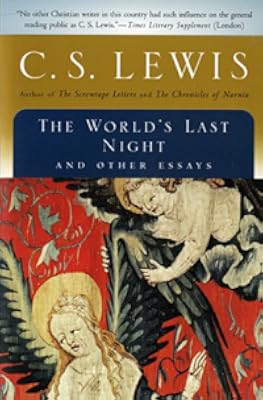

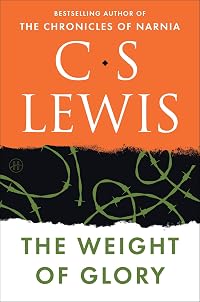
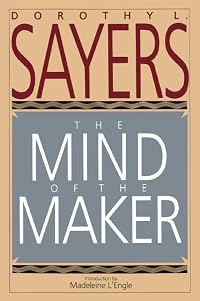


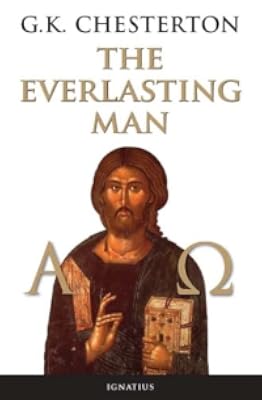
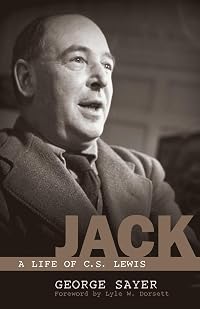









Member Recommendations
Member Reviews
I have not read all of the pieces in this book, but what I've read is fantastic. I will make some comments about the pieces I most enjoyed, and list some quotations from each.
"On Stories" is Lewis' quintessential essay about, well, the "story-ness" of stories; it may be likened to Tolkien's essay "On Fairy-Stories," which despite its narrower scope, covers many of the same ideas. Lewis describes the two different ways in which stories are enjoyed by different people, which is really a distinction of the people and not the stories themselves: Through "excitement" or through the greater atmosphere created by the story. He prefers the latter. A few great quotes, completely out of context:
In "On Criticism," Lewis admirably touches on one of my great pet peeves (along with another problems of literary critique): Those people who claim to know what the author intended. "In fact," he says, "most of what we call critical writing contains quite a lot of things beside evaluation." He goes on to name those things and show why they are bad. Some more discontextual quotations:
I originally read "After Ten Years" in college (in the fall of 1998, I believe...) in [b:The Dark Tower and Other Stories|22548|The Dark Tower and Other Stories|C.S. Lewis|http://photo.goodreads.com/books/1328876445s/22548.jpg|14571577] and loved it immediately. I was immensely intrigued with the idea of Helen's fading beauty, and it inspired me to write a rather poorly constructed song called "Yellow-haired Man," which I still melancholically sing in my echoing boudoir from time to time. It's too bad Lewis never finished it; I think it could have rivaled [b:Till We Have Faces|17343|Till We Have Faces A Novel of Cupid and Psyche|C.S. Lewis|http://photo.goodreads.com/books/1328875067s/17343.jpg|2072983]. show less
"On Stories" is Lewis' quintessential essay about, well, the "story-ness" of stories; it may be likened to Tolkien's essay "On Fairy-Stories," which despite its narrower scope, covers many of the same ideas. Lewis describes the two different ways in which stories are enjoyed by different people, which is really a distinction of the people and not the stories themselves: Through "excitement" or through the greater atmosphere created by the story. He prefers the latter. A few great quotes, completely out of context:
show more
(After describing a scene from [b:Last of the
Mohicans|38296|The Last of the Mohicans|James Fenimore Cooper|http://photo.goodreads.com/books/1320511322s/38296.jpg|2064030]) "Dangers, of course, there must be: how else can you keep a story going? But they must...be Redskin dangers. The 'Redskinnery' was what really mattered."
"Nature has that in her which compels us to invent giants: and only giants will do."
"No book is really worth reading at the age of ten which is not equally (and often far more) worth reading at the age of fifty...."
(After referring to the story of Oedipus and [b:The Hobbit|5907|The Hobbit|J.R.R. Tolkien|http://photo.goodreads.com/books/1328953407s/5907.jpg|1540236]) "We have just had set before our imagination something that has always baffled the intellect: we have seen how destiny and free will can be combined, even how free will is the modus operandi of destiny. The story does what no theorem can quite do."
"The more imagination the reader has, being an untrained reader, the more he will do for himself."
"The real theme may be, and perhaps usually is, something that has no sequence in it, something other than a process and much more like a state or quality."
"In life and art both, as it seems to me, we are always trying to catch in our net of successive moments something that is not successive."
In "On Criticism," Lewis admirably touches on one of my great pet peeves (along with another problems of literary critique): Those people who claim to know what the author intended. "In fact," he says, "most of what we call critical writing contains quite a lot of things beside evaluation." He goes on to name those things and show why they are bad. Some more discontextual quotations:
"I think fatuous praise from a manifest fool may hurt more than any depreciation."
"Ignorant as [an author] may be of his book's value, he is at least an expert on its content."
"To have read an author who affects one like a bad smell or a toothache is hard work."
"...the meaning of a book is the series or system of emotions, reflections, and attitudes produced by reading it." [cf. the penultimate quote from "On Stories" referenced above]
"Where [the critic] seems to me most often to go wrong is in the hasty assumption of an allegorical sense..." (Tolkien also disliked hasty allegory)
I originally read "After Ten Years" in college (in the fall of 1998, I believe...) in [b:The Dark Tower and Other Stories|22548|The Dark Tower and Other Stories|C.S. Lewis|http://photo.goodreads.com/books/1328876445s/22548.jpg|14571577] and loved it immediately. I was immensely intrigued with the idea of Helen's fading beauty, and it inspired me to write a rather poorly constructed song called "Yellow-haired Man," which I still melancholically sing in my echoing boudoir from time to time. It's too bad Lewis never finished it; I think it could have rivaled [b:Till We Have Faces|17343|Till We Have Faces A Novel of Cupid and Psyche|C.S. Lewis|http://photo.goodreads.com/books/1328875067s/17343.jpg|2072983]. show less
A gem of a collection. The essays on literature and criticism are fine. Notable also for an hilarious discussion of science fiction between Brian Aldiss, Lewis and Kingsly Amis (!). Watch for the latter's monopolization of the scotch decanter. The short fragment of a story "Ten Years Later" has stayed with me for at least ten years...
"The trap I remember forever: how they got out I have long since forgotten."
"The trap I remember forever: how they got out I have long since forgotten."
I love virtually every entry in this book, especially the literary essays on stories in general, fairy stories, 3 ways of writing for children and juvenile tastes in stories. Much of this is a great complement to Tolkien's three hour Oxford lecture On Faerie Stories--which is drier but serves as a good grounding for Lewis' essays in this book
I have doubts whether Lewis would have pubbed the accompanying illustrative short stories if left to his own devices. However the book was published three years after his death and edited by Walter Hooper.
Anyway, I pretty much ignored the stories in rating the book.
I have doubts whether Lewis would have pubbed the accompanying illustrative short stories if left to his own devices. However the book was published three years after his death and edited by Walter Hooper.
Anyway, I pretty much ignored the stories in rating the book.
A collection of essays on the theme of writing, storytelling, fantasy, science fiction, and children’s fiction. Most of them are pretty short and I really liked them! It also includes some fictional stories which were the same as in The Dark Tower.
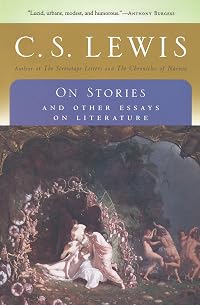
I was going to three-star this because each piece here can be found in either [b:On Stories: And Other Essays on Literature|242140|On Stories And Other Essays on Literature|C.S. Lewis|https://images.gr-assets.com/books/1390778300s/242140.jpg|234584] or [b:The Dark Tower and Other Stories|22548|The Dark Tower and Other Stories|C.S. Lewis|https://images.gr-assets.com/books/1388899227s/22548.jpg|14571577]. However, this one was published first, so four stars it is.
A grab bag of Lewis's writings about science fiction and story telling, plus three (minor) short stories and the fragments of his unfinished last novel. My review is at http://stromata.tripod.com/id135.htm
Ex-lib Nottingham school libraries
Members
- Recently Added By
Author Information

528+ Works 522,829 Members
C. S. (Clive Staples) Lewis, "Jack" to his intimates, was born on November 29, 1898 in Belfast, Ireland. His mother died when he was 10 years old and his lawyer father allowed Lewis and his brother Warren extensive freedom. The pair were extremely close and they took full advantage of this freedom, learning on their own and frequently enjoying show more games of make-believe. These early activities led to Lewis's lifelong attraction to fantasy and mythology, often reflected in his writing. He enjoyed writing about, and reading, literature of the past, publishing such works as the award-winning The Allegory of Love (1936), about the period of history known as the Middle Ages. Although at one time Lewis considered himself an atheist, he soon became fascinated with religion. He is probably best known for his books for young adults, such as his Chronicles of Narnia series. This fantasy series, as well as such works as The Screwtape Letters (a collection of letters written by the devil), is typical of the author's interest in mixing religion and mythology, evident in both his fictional works and nonfiction articles. Lewis served with the Somerset Light Infantry in World War I; for nearly 30 years he served as Fellow and tutor of Magdalen College at Oxford University. Later, he became Professor of Medieval and Renaissance English at Cambridge University. C.S. Lewis married late in life, in 1957, and his wife, writer Joy Davidman, died of cancer in 1960. He remained at Cambridge until his death on November 22, 1963. (Bowker Author Biography) show less
Some Editions
Work Relationships
Common Knowledge
- Original publication date
- 1966
Classifications
Statistics
- Members
- 816
- Popularity
- 33,723
- Reviews
- 8
- Rating
- (4.04)
- Languages
- English, Spanish
- Media
- Paper, Ebook
- ISBNs
- 7
- ASINs
- 7