On This Page
Description
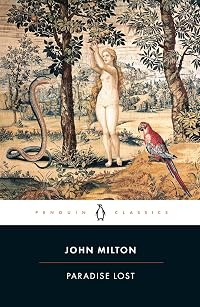
Often considered the greatest epic in any modern language, Paradise lost tells the story of the revolt of Satan, his banishment from Heaven, and the ensuing fall of man and his expulsion from Eden. It is a tale of immense drama and excitement, of rebellion and treachery, of innocence pitted against corruption, in which God and Satan fight a bitter battle for control of mankind's destiny. The struggle ranges across Heaven, Hell, and earth, as Satan and his band of rebel angels conspire show more against God. At the center of the conflict are Adam and Eve, motivated by all too human temptations, but whose ultimate downfall is unyielding love. show lessTags
Recommendations




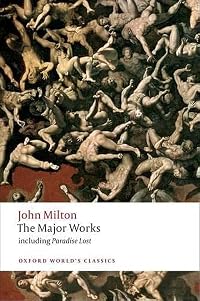

Member Recommendations
His Dark Materials Trilogy (The Golden Compass; The Subtle Knife; The Amber Spyglass) by Philip Pullman
Jannes Looking for a children's series ispired by Milton, you say? Well then, look no further!
31
Cain by Lord Byron
by FFortuna
Member Reviews
One of those rare books that feels absolutely complete, that feels like supreme art. Paradise Lost manages to be in harmony with its Biblical roots, its Classical forebears (blank verse epics like those of Homer and Virgil) and also with those of a more modern disposition. His reading of the character of Satan is particularly fascinating; the Adversary is charismatic and (whisper it) speaks a lot of sense regarding faith, reason and deference to power.
This reading is particularly bold when you consider when the book was written. People were being imprisoned and killed for heresy and for blasphemy (Milton went over to Florence at one point and met with Galileo), and lines regarding the righteous overthrow of rulers were particularly show more dangerous at a time when Charles II had ascended to the restored throne of England after a period of civil war. The story behind the book shows the importance of physical and moral courage for a writer who wants to write honestly, who is principled in his art, and you cannot but respect Milton for that.
But for all the subversive energy which Milton's lines contain, particularly in the early Books of Paradise Lost, the book also works just as well – if not better – with a straight reading. Milton's conceptualization of Hell as a place where you end up if you are bitter and resentful and unwilling to accept (and then transcend) your limitations – a conceptualization expanded on through Satan's soliloquizing – is one that shows why the Christian mythos remains one of enduring utility. Milton's Satan is attractive and modern, but Milton also shows you why it is dangerous to follow him down, turning your back on God.
In addition to getting its philosophy harmonious, Paradise Lost also works exceptionally well as story. There are some arresting dramatic scenes, from the imperial fury of the battle for Heaven between Satan's rebels and the loyal angels, to Satan's lonely moment of lust for Eve, and Adam's wide-eyed exploration of Paradise. Adam's decision to knowingly follow Eve down into Sin – a decision made out of love – aches with poignancy, as does the perfect ending in which the angel Michael takes Adam and Eve by their hands and gently leads them out of Eden into their exile. Milton's conceptualization of the cosmos is also fascinating to explore, and extraordinarily prescient. He brings to us concepts such as the void of space, infinity, alien worlds ("Space may produce new worlds" (pg. 19)), and perhaps even – this is my own personal reading – an early conceptualization of dark matter ("Things not revealed, which th' invisible King, Only omniscient, hath suppressed in night, To none communicable in earth or Heaven." (pg. 153)).
Admittedly, the blank verse poetry can be difficult, and you can tire easily when reading the book, but it is also incredibly rich, with lines that have become iconic ("Better to reign in Hell, than serve in Heav'n," for example (pg. 9)), a wealth of allusion (the endnotes to my Penguin Classics edition are almost as long as the book itself) and a cultural imprint shared by precious few books. The use of the word 'space' to describe the cosmos comes from Milton, and much of what we think we know as the Biblical story of Adam and Eve, and of the rebellion of the angels under Satan, comes not from Genesis but from here. You're reading a book of phenomenal influence when you read Paradise Lost, a fundamental exploration of the Western cultural conceptualization of life. Like the new Adam addressing the sun, you marvel that there can be such sublime magnificence brought into the world. show less
This reading is particularly bold when you consider when the book was written. People were being imprisoned and killed for heresy and for blasphemy (Milton went over to Florence at one point and met with Galileo), and lines regarding the righteous overthrow of rulers were particularly show more dangerous at a time when Charles II had ascended to the restored throne of England after a period of civil war. The story behind the book shows the importance of physical and moral courage for a writer who wants to write honestly, who is principled in his art, and you cannot but respect Milton for that.
But for all the subversive energy which Milton's lines contain, particularly in the early Books of Paradise Lost, the book also works just as well – if not better – with a straight reading. Milton's conceptualization of Hell as a place where you end up if you are bitter and resentful and unwilling to accept (and then transcend) your limitations – a conceptualization expanded on through Satan's soliloquizing – is one that shows why the Christian mythos remains one of enduring utility. Milton's Satan is attractive and modern, but Milton also shows you why it is dangerous to follow him down, turning your back on God.
In addition to getting its philosophy harmonious, Paradise Lost also works exceptionally well as story. There are some arresting dramatic scenes, from the imperial fury of the battle for Heaven between Satan's rebels and the loyal angels, to Satan's lonely moment of lust for Eve, and Adam's wide-eyed exploration of Paradise. Adam's decision to knowingly follow Eve down into Sin – a decision made out of love – aches with poignancy, as does the perfect ending in which the angel Michael takes Adam and Eve by their hands and gently leads them out of Eden into their exile. Milton's conceptualization of the cosmos is also fascinating to explore, and extraordinarily prescient. He brings to us concepts such as the void of space, infinity, alien worlds ("Space may produce new worlds" (pg. 19)), and perhaps even – this is my own personal reading – an early conceptualization of dark matter ("Things not revealed, which th' invisible King, Only omniscient, hath suppressed in night, To none communicable in earth or Heaven." (pg. 153)).
Admittedly, the blank verse poetry can be difficult, and you can tire easily when reading the book, but it is also incredibly rich, with lines that have become iconic ("Better to reign in Hell, than serve in Heav'n," for example (pg. 9)), a wealth of allusion (the endnotes to my Penguin Classics edition are almost as long as the book itself) and a cultural imprint shared by precious few books. The use of the word 'space' to describe the cosmos comes from Milton, and much of what we think we know as the Biblical story of Adam and Eve, and of the rebellion of the angels under Satan, comes not from Genesis but from here. You're reading a book of phenomenal influence when you read Paradise Lost, a fundamental exploration of the Western cultural conceptualization of life. Like the new Adam addressing the sun, you marvel that there can be such sublime magnificence brought into the world. show less
I've just finished reading Book X of *Paradise Lost*, and I need to start putting down my thoughts about what the book appears to selling as its lesson. First off, I want to note that I was sold on *Paradise Lost* by it being described as the origin of the suave, charismatic bastard version of Satan that is usually adopted in the modern day, in contrast to the pathetic and monstruous Satan seen in *The Divine Comedy*. To clarify: this is not what the book is about, at least not most of it. Only Books I, II and VI touch on the fall of Lucifer and his grand plan to take revenge against Heaven. The
However, at this point I can no longer look past the paternalistic themes ingrained in the nature of God creating Man to worship him, then birthing Eve from Adam's rib as a submissive and subservient mate. Eve here is always, always depicted as either: a) wrong and incapable of grasping current situations, or b) actively playing into Satan's tricks and treated as some sort of tool to be used by Sin. Book X is by far the worst offender, in this chapter Satan gloats over his success in perverting Eve and through her wheedling, Adam, we also see God reaffirm Jesus' role in taking blame for humanity's sins, and lastly how Adam and Eve try to amend their failure to ignore Satan's perversions. But the details of this tame description reveal a shocking moral framework which the book appears to hold.
Naturally we're meant to view Adam, and certainly God, as the "good guys" of this story, and yet we're treated to a thoughtless Creator who places a mousetrap in front of a child and is surprised when the get hurt, and to an emotionally abusive husband who asks why God didn't keep all femininity out of mankind like he did in his angels. Maybe that's what people meant when they called *Paradise Lost* the inspiration for the romantic Lucifer, that he's by comparison no worse than God and Man themselves.
I want to single out the view that God holds on Adam and Eve's failure because it's a truly nihilistic take on human existence. In his conversation with his angels and with Jesus, God declares that the punishment of death that he'd emphasized to Adam and Eve was not fit, and instead that their seed be "like lead". This idea is parroted by Lucifer, Sin, and Death in their conversation and with Adam and Eve in theirs. The three takes vary slightly:
- God implies that the mere existence of free will led to an inevitable downfall met with the temptation of Satan.
- Sin and Death rejoice at the idea that the lineage of humanity following Adam and Eve will be weakened to Satan's temptations, which plays up to his ego.
- Eve suggests willful abstinence to defeat the will of Lucifer, and is shot down by Adam because it goes against God's gifts.
Ultimately though all of these come from God's (ironically) lack of faith in his creation. So I have to ask: are we meant to agree with God here? Are we meant to think that the point of *Paradise Lost* is that when faced with temptation humans will always falter, and are therefore beyond hope? He serves the role of a jailor, someone who condemns all humanity to death and continued subjection to sin for one Original Sin. It reminds me of that part of the episode "Mac Day" of *It's Always Sunny In Philadelphia*, where Mac describes God as someone people live in constant fear of, like he's breathing down their back every second, whereas Country Mac describes the beauty of our world and the miracle of our lives. For a book like this, failing its moral framework and the ethical implications that it holds up feels antithetical to its purpose. If the point isn't to investigate and reaffirm the moral victory of God and Jesus over Satan and his rebellion, then what is the point? Is it really just John Milton playing with action figures?
I get it now. I get why people like Satan in this book so much. Even I fell for his spell, good lord.
With that out of the way, let me actually start reviewing what I thought about the book. Because goddam, did it take me forever to read. I'm not joking! I've read plenty of classics in my time that had taken a bit of my brain power to get through, but I did it at a decent pace. I finished "Frankenstein" in about a week, "Camilla" in about 3 days, and even read several from antiquity and completed them in less than a week. "Interview With The Vampire" was a gothic brick of a book where paragraphs ran for several pages, and "chapters" that went on for hundreds of pages, and I still completed it in around a week and a half.
But this? I felt show more like I needed this book open in one tab, Cliff Notes in another, and a YouTube Essay on it in another, and I still got lost in the narrative a dozen times and had to reread passages several times before I figured out what was going on. "Paradise Lost" and its sequel, "Paradise Regained", is one hell of a tome to parse through, which took me Three Months to read through!
Yeah, you heard me. THREE MONTHS!
Short summary of my review: It is beautifully written and made, and while it is technically classical fanfiction, I feel it is in the same way that The Divine Comedy is. It takes a part of the Bible that isn't really fleshed out and actually gives the characters in the story characterization. All of the characters - from God, to Satan, to the Demons, to the Angels, to Adam and Eve - are fleshed out with motivations for what they do rather than just being the archetypes telling fables and theological lessons. It leaves little wonder why it's been such an impactful story throughout the centuries, even to the modern day, and I believe it also does a great job of humanizing the devil. We come to understand his reasons for becoming evil and corruptive, and while I certainly can't agree with his decisions (as pride was certainly what led to his fall), I can understand why others would sympathize with him and even like him.
With that said, let me get into my longer review to accurately put down my thoughts on a book I've spent so much damn time trying to get through.
Positives
So, the best parts of the poem.
For starters, I see why it is an epic. It took what otherwise were a few passages of the Bible and expanded upon it to show how Lucifer had fallen, taken on the mantle of Satan, took command of the legions of hell, and then sought to corrupt God's project in creating the new world. It even gives context as to why God created the Earth and man, and upon the nature of what evil and Sin even is.
I mean that as well. In the Bible, Adam and Eve eat the forbidden fruit and suddenly gain knowledge of good and evil, and that's it. They broke a commandment and pissed off God, and now they have to suffer for it. In "Paradise Lost", it's a lot more overt in what knowledge of good and evil even is. Before they ate, all they knew was that they had to obey God, live well like pets, and that their innocence made them rulers of the Paradise that was created for them. After they had eaten the fruit, they come to understand that they can break Gods commandments for their benefit, what Death was, how to have sex (in fact one of the first things they do is have sex with one another and then post nut clarity hits them like a truck), and then they argue, grow spiteful and angry with one another, and even have darker thoughts before they forgive one another for their flaws.
While the poem is thick with aliteration, similes, and of course, anachronistic words and phrases where the characters speak and never get to the point, there's just a lot that's there. Plus, one of my favorite parts of the poem is when Satan, upon thinking of his fall and his reasons for corrupting Adam and Eve, concludes that he could just ask God for forgiveness and he would be forgiven, but then decides not to because his pride prevents him from admitting he was wrong. In fact, he does this several times. It even angers him when Adam and Eve ask for forgiveness near the end, and God does, but with caveats.
Negatives
Goddamn, is this book dense with descriptions.
That's not an exaggeration either. In modern times we're told as writers to keep our prose and dialogue sparse so as to move the story along at a decent pace and not bore readers, but in this, characters will talk on and on and on, often circling around their points to make them either clearer, or make it intentional to what they're trying to say, which often makes it feel like they never really catch their breathe. On top of that, the descriptions for characters, scenes, and more are so vivid that it often becomes hard to parse what we're actually supposed to be visualizing in our heads.
As an example: Pandemonium, the demon city. The demons erect the city in the hour of their fall, and are holding a conference on what to do. Instead of writng "The city was erected of brass and studded in the gems of the earth, and in its epicenter was a vast confrence hall where all the fallen seraphims and cherubs met" we instead get pages about the tall monuments, pillars that held aloft the ceilings, and callbacks to ancient greek gods and more (who are also demons in this story).
It's beautiful, but because it's written in an epic poem style, it also makes it hard to tell who is talking, what is description, what is Satan's (or our other PoV characters like Adam or Eve) memory, and what really is happening. At least for me, and is what necessitated a few re-reads of certain pages just to understand.
For a lot of people, this might be a major turn-off. Had I not a keen interest in theology, and wanting to understand this book, then I would have turned away from it after Book 1 because I don't know if I would have been willing to put my time into it. I can't say for sure that I had FUN with "Paradise Lost", but I do feel better for having read it and come to understand it in the first place.
Basically, if you're looking for fun, skip; if you're looking for literary understanding, read.
Overall Thoughts
Mesmerized and glad I dove into it. I just wish that I hadn't spent as much time with it as I did, because 3 months is just... It's a lot to take in. Normally, I read classic books quickly, but this one just pulled me in and didn't want me to let go, and I still find myself looking over summaries and more, just in case there was something deeper there that I wasn't able to grasp because of how dense it was.
Overall, it did make me feel smarter to finish it, which... yay!(?) I don't really consider myself scholarly when it comes to my reading of classic literature, because to me, as a writer, I want to start at a foundational level and work my way up into understanding the history of the written word, and how things are put together from older times to now. Yet now that I finished this, I can understand why so many classics from the 1800s and even early 1900s called upon this poem as a literary masterpiece. Because it is. I might even delve into more of Milton's works just to see what they're like. God help me, though. I'll do that after a brain rest. show less
With that out of the way, let me actually start reviewing what I thought about the book. Because goddam, did it take me forever to read. I'm not joking! I've read plenty of classics in my time that had taken a bit of my brain power to get through, but I did it at a decent pace. I finished "Frankenstein" in about a week, "Camilla" in about 3 days, and even read several from antiquity and completed them in less than a week. "Interview With The Vampire" was a gothic brick of a book where paragraphs ran for several pages, and "chapters" that went on for hundreds of pages, and I still completed it in around a week and a half.
But this? I felt show more like I needed this book open in one tab, Cliff Notes in another, and a YouTube Essay on it in another, and I still got lost in the narrative a dozen times and had to reread passages several times before I figured out what was going on. "Paradise Lost" and its sequel, "Paradise Regained", is one hell of a tome to parse through, which took me Three Months to read through!
Yeah, you heard me. THREE MONTHS!
Short summary of my review: It is beautifully written and made, and while it is technically classical fanfiction, I feel it is in the same way that The Divine Comedy is. It takes a part of the Bible that isn't really fleshed out and actually gives the characters in the story characterization. All of the characters - from God, to Satan, to the Demons, to the Angels, to Adam and Eve - are fleshed out with motivations for what they do rather than just being the archetypes telling fables and theological lessons. It leaves little wonder why it's been such an impactful story throughout the centuries, even to the modern day, and I believe it also does a great job of humanizing the devil. We come to understand his reasons for becoming evil and corruptive, and while I certainly can't agree with his decisions (as pride was certainly what led to his fall), I can understand why others would sympathize with him and even like him.
With that said, let me get into my longer review to accurately put down my thoughts on a book I've spent so much damn time trying to get through.
Positives
So, the best parts of the poem.
For starters, I see why it is an epic. It took what otherwise were a few passages of the Bible and expanded upon it to show how Lucifer had fallen, taken on the mantle of Satan, took command of the legions of hell, and then sought to corrupt God's project in creating the new world. It even gives context as to why God created the Earth and man, and upon the nature of what evil and Sin even is.
I mean that as well. In the Bible, Adam and Eve eat the forbidden fruit and suddenly gain knowledge of good and evil, and that's it. They broke a commandment and pissed off God, and now they have to suffer for it. In "Paradise Lost", it's a lot more overt in what knowledge of good and evil even is. Before they ate, all they knew was that they had to obey God, live well like pets, and that their innocence made them rulers of the Paradise that was created for them. After they had eaten the fruit, they come to understand that they can break Gods commandments for their benefit, what Death was, how to have sex (in fact one of the first things they do is have sex with one another and then post nut clarity hits them like a truck), and then they argue, grow spiteful and angry with one another, and even have darker thoughts before they forgive one another for their flaws.
While the poem is thick with aliteration, similes, and of course, anachronistic words and phrases where the characters speak and never get to the point, there's just a lot that's there. Plus, one of my favorite parts of the poem is when Satan, upon thinking of his fall and his reasons for corrupting Adam and Eve, concludes that he could just ask God for forgiveness and he would be forgiven, but then decides not to because his pride prevents him from admitting he was wrong. In fact, he does this several times. It even angers him when Adam and Eve ask for forgiveness near the end, and God does, but with caveats.
Negatives
Goddamn, is this book dense with descriptions.
That's not an exaggeration either. In modern times we're told as writers to keep our prose and dialogue sparse so as to move the story along at a decent pace and not bore readers, but in this, characters will talk on and on and on, often circling around their points to make them either clearer, or make it intentional to what they're trying to say, which often makes it feel like they never really catch their breathe. On top of that, the descriptions for characters, scenes, and more are so vivid that it often becomes hard to parse what we're actually supposed to be visualizing in our heads.
As an example: Pandemonium, the demon city. The demons erect the city in the hour of their fall, and are holding a conference on what to do. Instead of writng "The city was erected of brass and studded in the gems of the earth, and in its epicenter was a vast confrence hall where all the fallen seraphims and cherubs met" we instead get pages about the tall monuments, pillars that held aloft the ceilings, and callbacks to ancient greek gods and more (who are also demons in this story).
It's beautiful, but because it's written in an epic poem style, it also makes it hard to tell who is talking, what is description, what is Satan's (or our other PoV characters like Adam or Eve) memory, and what really is happening. At least for me, and is what necessitated a few re-reads of certain pages just to understand.
For a lot of people, this might be a major turn-off. Had I not a keen interest in theology, and wanting to understand this book, then I would have turned away from it after Book 1 because I don't know if I would have been willing to put my time into it. I can't say for sure that I had FUN with "Paradise Lost", but I do feel better for having read it and come to understand it in the first place.
Basically, if you're looking for fun, skip; if you're looking for literary understanding, read.
Overall Thoughts
Mesmerized and glad I dove into it. I just wish that I hadn't spent as much time with it as I did, because 3 months is just... It's a lot to take in. Normally, I read classic books quickly, but this one just pulled me in and didn't want me to let go, and I still find myself looking over summaries and more, just in case there was something deeper there that I wasn't able to grasp because of how dense it was.
Overall, it did make me feel smarter to finish it, which... yay!(?) I don't really consider myself scholarly when it comes to my reading of classic literature, because to me, as a writer, I want to start at a foundational level and work my way up into understanding the history of the written word, and how things are put together from older times to now. Yet now that I finished this, I can understand why so many classics from the 1800s and even early 1900s called upon this poem as a literary masterpiece. Because it is. I might even delve into more of Milton's works just to see what they're like. God help me, though. I'll do that after a brain rest. show less
I'm about to lose some of my cool points here, because this was absolutely dreadful. Long-winded, repetitive, and rambling throughout its entirety, ESPECIALLY the dialogue, almost nothing actually happens here. If you cut out all of the needless fat and just kept what little plot there is it would be, like, a third of its length. I don't need one hundred lines of wordy poetry just to say "Satan to turned into a cormorant". Hell, I tried skipping ahead multiple times just to see if it would pick up and it actually got WORSE as it went on. The "plot" seems to deviate needlessly and it becomes a padded, bloated mess.
You can pull some great lines out of it: "better to reign in hell than serve in heaven", "not light but a darkness visible", show more etc., but if I'm going to be totally honest, this is literally the most mind-crushingly boring thing I've ever tried to read in my life. I was actually getting outwardly angry trying to slog through this thing. Not entertaining in the least. I'll just stick with Homer and Dante for some actually good epic poetry.
Ugh...2/10 show less
You can pull some great lines out of it: "better to reign in hell than serve in heaven", "not light but a darkness visible", show more etc., but if I'm going to be totally honest, this is literally the most mind-crushingly boring thing I've ever tried to read in my life. I was actually getting outwardly angry trying to slog through this thing. Not entertaining in the least. I'll just stick with Homer and Dante for some actually good epic poetry.
Ugh...2/10 show less
I read this as part of what I call "a Book Challenge". I found people to read this with my daughter Diana and my son's girlfriend Maggie. It was interesting to hear their opinions about the book.
In preparation, we listened to several podcasts about the life of Milton. (The History of Literature: episodes 154, 376, and 484.) We learned that he was blind at the time he decided to write Paradise Lost- so he actually dictated the books to an assistant.
We decided that it would be best to read or listen to 2 Books at a time (there are 12). Then discuss them.
So Milton was influenced by his time- the beliefs, the social mores, the politics. Even so, we were able to discuss the plot points and quotations that interested us. Our discussions show more became very philosophical. We often mused whether we were projecting our modern beliefs on Milton's writing. As we were all raised Catholic, we also discussed religious influences as well as our interpretations of what was written as compared to what is in the religious texts. It became very metacognitive at times!
Some quotes we discussed:
"Better to reign in hell than serve in Heaven."
"The mind is its own place and in itself
Can make a Heaven of hell, and a hell of Heaven."
"Nor love thy life nor hate, but what thou liv'st
Live well- how long or short permit to Heaven."
It is worth reading. It becomes much more enjoyable to have a small group to encourage each other and to discuss the interesting ideas within the book. As a final enrichment, we all listened to the podcast "This American Life", episode 666- "The Theme that Shall not be Named" which is about
Satan! In his many surprising manifestations, all around us. show less
In preparation, we listened to several podcasts about the life of Milton. (The History of Literature: episodes 154, 376, and 484.) We learned that he was blind at the time he decided to write Paradise Lost- so he actually dictated the books to an assistant.
We decided that it would be best to read or listen to 2 Books at a time (there are 12). Then discuss them.
So Milton was influenced by his time- the beliefs, the social mores, the politics. Even so, we were able to discuss the plot points and quotations that interested us. Our discussions show more became very philosophical. We often mused whether we were projecting our modern beliefs on Milton's writing. As we were all raised Catholic, we also discussed religious influences as well as our interpretations of what was written as compared to what is in the religious texts. It became very metacognitive at times!
Some quotes we discussed:
"Better to reign in hell than serve in Heaven."
"The mind is its own place and in itself
Can make a Heaven of hell, and a hell of Heaven."
"Nor love thy life nor hate, but what thou liv'st
Live well- how long or short permit to Heaven."
It is worth reading. It becomes much more enjoyable to have a small group to encourage each other and to discuss the interesting ideas within the book. As a final enrichment, we all listened to the podcast "This American Life", episode 666- "The Theme that Shall not be Named" which is about
Satan! In his many surprising manifestations, all around us. show less
Paradise Lost is an epic poem, detailing the fall of Satan as well as the fall of Adam and Eve. Milton's purpose, stated in Book I, is to "justify the ways of God to men"
I love the deeper look into this tale, such as showing Adam created a larger sin than Eve, due to the fact Eve was tricked and Adam willingly choose to be with Eve than be obedient to God. It show the arguments Satan has against God, how he convinces angels to follow him, convinces Eve to eat from the tree and other details that makes the account more real. It also show why God choose to deal with the three rebels the way he did.
I loved the conversation between Satan and Beelzebub (Satan's right hand man), when Beelzebub can't comprehend why God did not destroy them, show more Satan's and Adams feeling to losing perfection.
I greatly enjoyed this but at times I got lost who was talking or what was going on and it took some deep concentration considering its in verse.
I look forward to reading Paradise Regained, the sequel. show less
I love the deeper look into this tale, such as showing Adam created a larger sin than Eve, due to the fact Eve was tricked and Adam willingly choose to be with Eve than be obedient to God. It show the arguments Satan has against God, how he convinces angels to follow him, convinces Eve to eat from the tree and other details that makes the account more real. It also show why God choose to deal with the three rebels the way he did.
I loved the conversation between Satan and Beelzebub (Satan's right hand man), when Beelzebub can't comprehend why God did not destroy them, show more Satan's and Adams feeling to losing perfection.
I greatly enjoyed this but at times I got lost who was talking or what was going on and it took some deep concentration considering its in verse.
I look forward to reading Paradise Regained, the sequel. show less
I put off reading this epic poem for years because its length scared me. I wasn’t sure it would sustain my interest for the amount of time it would take to read it. I wish I hadn’t waited so long. I found it engaging thanks to Simon Vance’s narration. Milton expands on biblical stories and themes of Satan’s rebellion and fall, the creation of the world and of Adam and Eve, Satan’s temptation of Adam and Eve, their disobedience and expulsion from the Garden of Eden, and the promise of Satan’s final defeat through the Son. It helped me see a familiar story through fresh eyes.
Members
- Recently Added By
Lists

Worst religious books
19 works; 8 members

My 100 Favorite Books of All Time
57 works; 2 members

Greatest Books, allegedly
484 works; 9 members

College Reads (Lit Edition)
75 works; 5 members

Books Read in 2006
424 works; 8 members

Well-Educated Mind
150 works; 3 members

Pleasant Surprises: Books That Exceeded Our Expectations
418 works; 143 members

Fake Top 100 Fiction
81 works; 4 members

How to Read a Book's Recommended Reading List
309 works; 10 members

Mustich's 1000 Books to Read Before You Die: A Life Changing List
1,001 works; 20 members

The Art of Manliness' 100+ Books Every Man Should Read
108 works; 2 members

Jones & Newman: Best Horror Books Further Recommended Reading
577 works; 4 members

Favourite Books
1,820 works; 310 members

Top Five Books of 2021
604 works; 180 members
A Reading List
100 works; 3 members

Mitski!
25 works; 1 member

AP Lit
363 works; 6 members

Classical Conversations Challenge II Exposition
18 works; 1 member

Blackwell's Five Foot Bookshelf
72 works; 4 members

Books in The Club Dumas
72 works; 1 member

Books Read in 2026
2,116 works; 70 members
.
396 works; 1 member
Books talked about in Pamela Dean's Tam Lin
74 works; 1 member
School Made Us Read It
380 works; 196 members

.
194 works; 2 members

Ambleside Year 8
80 works; 1 member

Recommended Reading : 600 Classics Reviewed, Editors of Salem Press, 2015
634 works; 6 members
Books We'd Want on a Desert Island
204 works; 133 members

The Well-Educated Mind, Susan Wise Bauer, 2016
179 works; 3 members

Book Titles Mentioned In Newberry Medal And Honor Books
884 works; 3 members

Book ideas
6 works; 1 member

readingList
38 works; 1 member

Christian Classics (Old and Modern)
53 works; 3 members

My List
302 works; 1 member

Books You Read For University
184 works; 3 members

100 books that changed the world
31 works; 2 members

Books Read in 2021
5,361 works; 114 members

Unread books
1,063 works; 87 members
The Telegraph's 110 Best Books: The Perfect Library
101 works; 18 members

GreatBooks Worldview Academy Lists
133 works; 4 members
100 Books to Read in a Lifetime (That Are Older Than 200 Years)
415 works; 176 members

Ambleside Books
459 works; 18 members

Sonlight Books
1,487 works; 25 members
Christianity Books You've Read
179 works; 19 members

The Top Ten: Writers Pick Their Favorite Books
240 works; 32 members

Works with inappropriate subject headings on LibraryThing
35 works; 5 members

I Can't Finish This Book
189 works; 22 members

17th Century
14 works; 6 members
Epic Fiction
42 works; 12 members
Folio Society
831 works; 48 members

Books You Read During High School (For School)
301 works; 53 members

Classics you know you should have read but probably haven't
421 works; 409 members

It Just Wasn't Worth the Effort
21 works; 8 members

Best Books Involving Satan
63 works; 24 members

Literary Works Read in College
316 works; 15 members

Church Times 100 Best Christian Books
106 works; 26 members

Recommend the 20 best books you've read in the last five years
2,168 works; 607 members
http://thegreatestbooks.org's Greatest Fiction Books
59 works; 1 member

Books available on Open Library
171 works; 4 members

Top Five Books of 2018
802 works; 265 members

BBC Top Books
78 works; 3 members
Five star books
1,767 works; 110 members
Books on my Kindle
162 works; 3 members

Genesis in literature
47 works; 7 members

100 Most Recommended Works
100 works; 11 members

Poetry Corner
187 works; 15 members

thinking of reading in 2016
99 works; 1 member

Harold Bloom - The Western Canon: B. The Aristocratic Age
231 works; 13 members

Western World's Greatest Books - Project Gutenberg
295 works; 15 members

Best Antiheroes and Antiheroines
119 works; 7 members

Summer Reading 2015
18 works; 1 member
Blue Pyramid 1,276 Best Books of All Time
1,248 works; 32 members
100 World Classics
99 works; 15 members
bound
100 works; 1 member
Talk Discussions
Past Discussions
Arion Press Don Quixote or Paradise Lost? Opinions please. in Fine Press Forum (July 2025)
How did you manage to read Paradise Lost? in Poetry Fool (August 2021)
John Milton in Philosophy and Theory (May 2016)
Milton? in Book talk (December 2015)
Photos of Paradise Lost A Poem in Twelve Books illustrated by Ian Pollock in Folio Society Devotees (October 2013)
GROUP DISCUSSION: Milton's Paradise Lost in 75 Books Challenge for 2012 (November 2012)
Author Information

764+ Works 35,355 Members
John Milton, English scholar and classical poet, is one of the major figures of Western literature. He was born in 1608 into a prosperous London family. By the age of 17, he was proficient in Latin, Greek, and Hebrew. Milton attended Cambridge University, earning a B.A. and an M.A. before secluding himself for five years to read, write and study show more on his own. It is believed that Milton read evertything that had been published in Latin, Greek, and English. He was considered one of the most educated men of his time. Milton also had a reputation as a radical. After his own wife left him early in their marriage, Milton published an unpopular treatise supporting divorce in the case of incompatibility. Milton was also a vocal supporter of Oliver Cromwell and worked for him. Milton's first work, Lycidas, an elegy on the death of a classmate, was published in 1632, and he had numerous works published in the ensuing years, including Pastoral and Areopagitica. His Christian epic poem, Paradise Lost, which traced humanity's fall from divine grace, appeared in 1667, assuring his place as one of the finest non-dramatic poet of the Renaissance Age. Milton went blind at the age of 43 from the incredible strain he placed on his eyes. Amazingly, Paradise Lost and his other major works, Paradise Regained and Samson Agonistes, were composed after the lost of his sight. These major works were painstakingly and slowly dictated to secretaries. John Milton died in 1674. (Bowker Author Biography) show less
Some Editions
Awards and Honors
Notable Lists
Series

Belongs to Publisher Series
Letras Universales (53)
Gouden Reeks (10)
Crisol (187)
Penguin Clothbound Classics (2014)
Arion Press (64)
Doubleday Dolphin (C73)
Perpetua reeks (79)
Work Relationships
Is contained in
Has the adaptation
Is abridged in
Inspired
Has as a reference guide/companion
Has as a study
Has as a commentary on the text
Has as a concordance
Has as a student's study guide
Has as a teacher's guide
Common Knowledge
- Canonical title
- Paradise Lost
- Original title
- Paradise Lost
- Original publication date
- 1667
- People/Characters
- God; Satan; Adam; Eve; Raphael, the Archangel; Michael, the Archangel (show all 12); Beelzebub, prince of demons; Sin; Death; Moloch; Belial; Mammon
- Important places
- Heaven (Christian); Hell; Eden
- Important events
- Creation
- Epigraph
- Three poets, in three distant ages born,
Greece, Italy, and England did adorn.
The first in loftiness of thought surpassed;
The next in majesty; in both the last.
The force of nature could no further go:
To ... (show all)make a third she joined the former two.
— John Dryden (added to frontispiece of the fourth edition, 1688) - First words
- Of man's first disobedience, and the fruit
Of that forbidden tree, whose mortal taste
Brought death into the world, and all our woe - Quotations*
- " E di chi è la colpa? Di chi se non di lui che da me ebbe, ingrato, tutto quello che poteva: lo feci giusto e retto, ed abbastanza forte per non cadere, benchè libero."
- Last words
- (Click to show. Warning: May contain spoilers.)They, hand in hand, with wandering steps and slow,
Through Eden took their solitary way. - Original language
- English
*Some information comes from Common Knowledge in other languages. Click "Edit" for more information.
Classifications
Statistics
- Members
- 16,808
- Popularity
- 399
- Reviews
- 132
- Rating
- (3.98)
- Languages
- 20 — Catalan, Chinese, Czech, Danish, Dutch, English, Finnish, French, German, Greek, Hungarian, Italian, Japanese, Norwegian (Bokmål), Polish, Slovenian, Spanish, Swedish, Turkish, Portuguese (Portugal)
- Media
- Paper, Audiobook, Ebook
- ISBNs
- 461
- UPCs
- 5
- ASINs
- 225