
Frans G. Bengtsson (1894–1954)
Author of The Long Ships
About the Author
Image credit: 1922. Bonniers arkiv
Series
Works by Frans G. Bengtsson
A Walk to an Ant Hill and Other Essays 25 copies
Epistlar till vänner : Frans G. Bengtssons brev till Olle Holmberg, Algot Werin och Fredrik Böök : tre brevsviter (1993) 8 copies, 1 review
Frans G. Bengtsson-lyrik : dikter utgivna av Frans G. Bengtsson-sällskapet och belysta av nio av dess medlemmar (1994) — Author — 3 copies, 1 review
Konsten att läsa 3 copies
The Long Ships [videorecording] 2 copies
Röde Orm (Swedish Edition) 2 copies
Legenden om Babel : dikter 2 copies
ORM PUNAINEN. - (KOMPASSI) 1 copy
Hur jag blev skribent 1 copy
Den lustgr̄d som jag minns 1 copy
Ruĝa Orm : fragmento 1 copy
Tre Essays 1 copy
Rudy Orm 1 copy
Breven till Tristan 1 copy
Tankar i gräset 1 copy
A Walk to an Ant Hill 1 copy
Folk som sjöng 1 copy
Associated Works
Mitt skattkammer. b.9 Gjennom tidene — Contributor — 9 copies
Piirakkasota; valikoima huumoria — Contributor — 3 copies
Tagged
Common Knowledge
- Legal name
- Bengtsson, Frans Gunnar
- Birthdate
- 1894-10-04
- Date of death
- 1954-12-19
- Gender
- male
- Education
- University of Lund
- Occupations
- translator
poet
essayist
biographer
novelist - Awards and honors
- De Nios stora pris (1945)
- Relationships
- Lindström, Sigfrid (friend)
Harrie, Ivar (friend)
Linklater, Eric (friend)
Gierow, Karl Ragnar (friend, publisher) - Nationality
- Sweden
- Birthplace
- Rössjöholm, Tåssjö, Sweden
- Places of residence
- Tåssjö, Sweden
Gullspång, Sweden - Place of death
- Ribbingsfors, Gullspångs kommun, Sweden
- Burial location
- Amnehärads kyrkogård, Gullspång, Sweden
- Associated Place (for map)
- Sweden
Members
Discussions
Group Read: The Long Ships in 2013 Category Challenge (August 2013)
Reviews
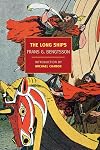
Perhaps the most delicious aspect of this delightful novel about marauding Northmen is that the joy Bengsston had writing it radiates from every page. The story begins when youngest son, Orm, seventeen or so and already a strapping fellow, is held back from going on a plundering voyage with his father and brother by his mother. Well, wouldn't you know, raiders come along, led by Krok, and kidnap him. Among these men Orm soon proves himself a valiant and intelligent member of the crew. There show more are various adventures and misadventures, in Spain, in Ireland and England, in Denmark where King Harald holds court, and beyond, even down the Dneiper to find buried treasure. It is at the court of the King that Orm meets the lovely Ylva, daughter of Harald, but he can't have her until he proves himself worthy. But it isn't at all an "and then and then" sort of adventure novel. What makes it rise far above that is the dialogue, the spontaneous poetry, and Bengsston's slyly hilarious way of crafting a description or giving out information of the thought processes of these (mostly) men. At all times these Vikings find hilarious work-arounds to justify their greed and to balance it with their (often self-serving and malleable) concepts of honor. An example: Orm is huge, obviously, and insanely strong and healthy, and yet he is a bit of a hypochondriac. He worries about catching colds, is convinced at one point, when injured, that he is doomed since the lice have left his hair. It's never over-done, but such details make Orm fully human. I took my time reading it so as to savor every word. It is definitely a book I would love to listen to too. ***** show less

This wonderfully entertaining Viking epic is written in a very distinctive, dry style, with lots of action and dialogue and no analysis or moral, obviously in conscious imitation of the style of the Sagas, but also rather reminiscent of Sir Walter Scott at his best. We are encouraged to take the characters at face value, and enter into the surprisingly foreign moral world of the Norse warriors, where violence is always a more powerful argument than law or custom, property belongs to anyone show more strong enough to keep it, and human life is cheap. Bengtsson follows these ideas through to their logical conclusions and shows us how a society like that could - just about - function. Sometimes we have to admire the strength and determination of the warriors who manage to make their presence felt over most of the known world; sometimes it becomes so bizarre that we just have to laugh (rather like the opening of Asterix and the Vikings, where we are shown the practical problems that arise when no-one knows the meaning of fear - kids who won't eat their porridge, ships that keep colliding because no-one gives way, etc.). show less
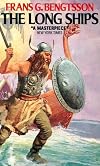
An absolute classic of adventure fiction, bounding along with energy and bravura and lashings of sly, ironic wit, following the exploits of Red Orm the Danish Viking who, despite his mother's best efforts to keep him at home, ends up haring off on a lengthy voyage against his will. Despite this apparently unpromising start, Orm fairs well at first and it looks as if all is going to go his way, but alas, luck, an all-important component of Viking life, goes astray and he ends up a galley show more slave for seven years BUT THAT'S JUST THE START. This tale has barely warmed up before they're sneaking across from Spain to Ireland with the biggest bell in Christendom. Modern readers, like myself, may occasionally find one's attention slipping as it struggles to find purchase on the largely plotless series of events that unfolds on the page, because this is a Life, and Lives tend to be plotless, though not sub-plotless. It's episodic, but those episodes are juicy and amazing and hair-raising.
There are any number of historical novels and series and fantasies epic and grimdark for which, if one was looking for influences beyond the obvious, this must surely be the motherlode. Judgment on the Viking's antics and atrocities are very much left to the reader, but there is no doubt in their own mind that they are fully in accordance with their own rules and standards of behaviour, and the propensity for violence, rape and pillage is belied by a way of living that works and allows for functioning society with a capacity for justice, redress, fairness and progress. The rise of Christianity features heavily on the story, and while the book doesn't suggest it's a civilising influence per se - though there are occasions when it mitigates against a more sensible ruthlessness - it definitely suggests a transition of sorts, a great sea-change of which the cast are blissfully ignorant.
Big, muscular, funny, fast, filled with speeches about theology, women, law, wisdom, gold, the joys of fighting and ale and all sorts of odd digressions with wandering Irish jesters and forlornly randy magisters, this is a gem of a book that completely immerses the reader in its world. show less
There are any number of historical novels and series and fantasies epic and grimdark for which, if one was looking for influences beyond the obvious, this must surely be the motherlode. Judgment on the Viking's antics and atrocities are very much left to the reader, but there is no doubt in their own mind that they are fully in accordance with their own rules and standards of behaviour, and the propensity for violence, rape and pillage is belied by a way of living that works and allows for functioning society with a capacity for justice, redress, fairness and progress. The rise of Christianity features heavily on the story, and while the book doesn't suggest it's a civilising influence per se - though there are occasions when it mitigates against a more sensible ruthlessness - it definitely suggests a transition of sorts, a great sea-change of which the cast are blissfully ignorant.
Big, muscular, funny, fast, filled with speeches about theology, women, law, wisdom, gold, the joys of fighting and ale and all sorts of odd digressions with wandering Irish jesters and forlornly randy magisters, this is a gem of a book that completely immerses the reader in its world. show less
I adored this. It's the NYRB reissue of two books originally written in the 1940s: the tale of Red Orme, a Viking chieftain, and his 10th-century life of voyaging, plundering, fighting, and—yes—becoming a family man. Swashbuckling, action-packed, but also oddly sweet, with an undercurrent of dry-as-a-bone, deeply funny humor throughout. This was exactly what I needed to read, plus I learned a lot referencing maps and looking up names as I went. For instance, Harald Bluetooth, the great show more king of Norway and Denmark, gave his name to Bluetooth wireless—"based on an analogy that the technology would unite devices the way Harald Bluetooth united the tribes of Denmark into a single kingdom," according to Wikipedia. But mostly this was pure fun, intelligent escapism, and recommended for everyone. show less
Lists
Favourite Books (2)
The "A" List (1)
Awards


You May Also Like


Associated Authors
Statistics
- Works
- 71
- Also by
- 12
- Members
- 3,174
- Popularity
- #8,050
- Rating
- 3.9
- Reviews
- 112
- ISBNs
- 98
- Languages
- 15
- Favorited
- 16