
Paris to the Moon
by Adam Gopnik
On This Page
Description
Paris. The name alone conjures images of chestnut-lined boulevards, sidewalk cafes, breathtaking facades around every corner-in short, an exquisite romanticism that has captured the American imagination for as long as there have been Americans.In 1995, Adam Gopnik, his wife, and their infant son left the familiar comforts and hassles of New York City for the urbane glamour of the City of Light. For Gopnik this was above all a personal pilgrimage to the undisputed capital of everything show more cultural and beautiful. So, in the grand tradition of the American abroad, Gopnik walked the paths of the Tuileries, enjoyed philosophical discussions at his local bistro, and wrote as violet twilight fell on the arrondissements.Yet, at the end of the day, there was still the matter of raising a child and carrying on with the day-to-day, not-so-fabled life. As Gopnik describes, the dual processes of navigating a foreign city and becoming a parent are not completely dissimilar journeys-both hold new routines, new languages, a new set of rules by which everyday life is lived. Weaving the magical with the mundane, he offers a wholly delightful, often hilarious look at what it was to be an American family man in Paris at the end of the twentieth century. show lessTags
Recommendations








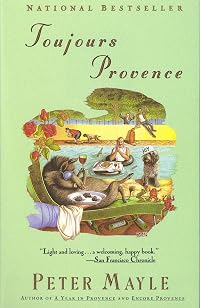
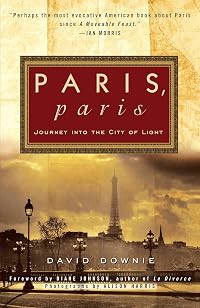

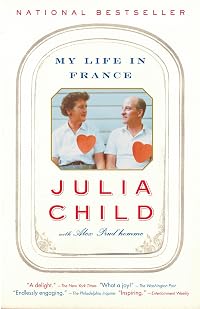


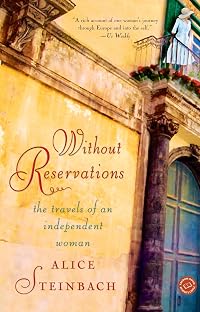

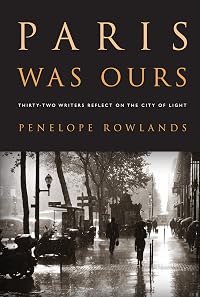
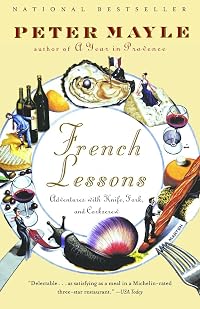

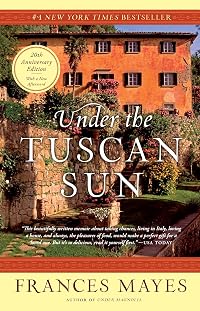



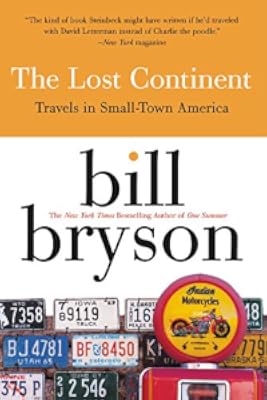



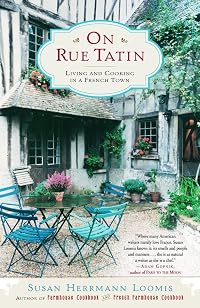








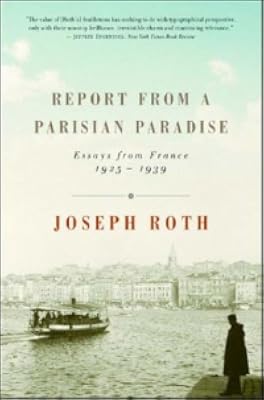


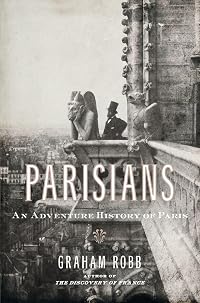




Member Recommendations

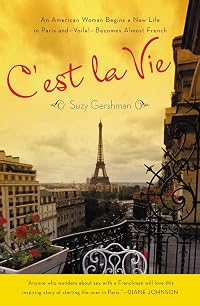
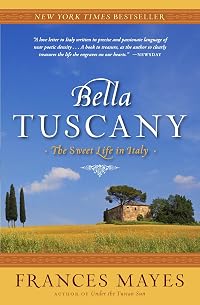
rakerman The Sweet Life and Paris to the Moon are similar perspectives on living in Paris. Sweet Life is a light, humourous take on the challenges of moving a new city, as seen mostly through food and food-related activities. It has a bit more of a travel-guide tone. Paris to the Moon tries to explore more in detail the peculiarities of Paris from an outsider's viewpoint, with wry commentary. It also has a bit of a wistful tone as many of the tales are of the author's son exploring the city. Both are very good starting points to understanding the French, giving the positives but also the many difficulties of adapting from American to Parisian culture.
20
rakerman Paris to the Moon is a much more wistful, intimate look at Paris, but both books are from the perspective of someone who has spent years living in Paris. In the book Paris, Paris the approach is to give a sense of the city through the people, places and phenomena that have shaped it, as filtered through the experiences of the author. In Paris to the Moon it's much more about getting a sense of what it is like to live in the city as an outsider.
20



Member Reviews
In 1995, Adam Gopnik, a writer for the New Yorker magazine, along with his wife and infant son moved from NYC to Paris.
From Paris to the Moon by Adam Gopnik photo 211686ce-fb8b-46ef-9e73-04f0426431e1_zpscunxnxnm.jpgThis book is a collection of his award-winning “Paris Journals” that he filed for the magazine. But unlike other books that are an assemblage of essays, this book is not choppy or undisciplined. It’s an intelligent, heartfelt look at the most beautiful city in the world at the turn of the twenty-first century. (Gopnik was there for Y2K but returned to America shortly thereafter.)
Some critics have complained that Gopnik’s essays are outdated, but I think they transcend time. He has captured the very heart of Paris show more culture and attitude. It’s well worth reading whether you’re planning to visit Paris or not.
I loved this book. 5 stars show less
From Paris to the Moon by Adam Gopnik photo 211686ce-fb8b-46ef-9e73-04f0426431e1_zpscunxnxnm.jpgThis book is a collection of his award-winning “Paris Journals” that he filed for the magazine. But unlike other books that are an assemblage of essays, this book is not choppy or undisciplined. It’s an intelligent, heartfelt look at the most beautiful city in the world at the turn of the twenty-first century. (Gopnik was there for Y2K but returned to America shortly thereafter.)
Some critics have complained that Gopnik’s essays are outdated, but I think they transcend time. He has captured the very heart of Paris show more culture and attitude. It’s well worth reading whether you’re planning to visit Paris or not.
I loved this book. 5 stars show less
There are travel memoirs that become classics. While they take place at a particular time, they either manage to grasp what is eternal about a place or they perfectly capture a lost version of the place they're writing about. Down and Out in Paris and London captures the eternal of being poor in a great place, I think, and A Moveable Feast is a snapshot of a great time that is gone and still mourned.
Adam Gopnik's account of a American family living in Paris for five years falls into a second category; a book that is a snapshot of a time and a place, but one that is rapidly fading and which will be forgotten in a few more years. It's a very specific memoir, full of a young father's infatuation with his son, and it's the story of a show more specific family (well-to-do New Yorkers writing for The New Yorker) in a specific place (Paris, circa 1995).
Which is not to say that this is not a highly readable book. It is. But I suspect that my enjoyment of it is based on the similarities of our experiences. I lived in Paris for a year and we started our family in a European country and watched our children being not altogether American. So much of what I liked about it were the parts where our experiences overlapped. Gopnik interviewed Bernard-Henri Levy; I had a crush on Levy when I lived in Paris (I was taken with the idea that a philosopher could be a sex-symbol). Gopnik's wife had their second child in Paris; I had my two children in Munich, and found Gopnik's experience to be similar to my own. My time in Paris occurred just a few years before Gopnik's, so that I recognized his version of Paris more readily than I do Paris of today.
There are pieces of this book that are very, very good. The chapter on the trial and surrounding media storm of a French public official charged with war crimes was excellent and a brief segment on the French interviewee's astonishment over being called by fact-checkers was funny and thought-provoking.
There is simply a lot of this book that is specific to Gopnik's own experiences and which doesn't expand to universality. His search for an American-style place to work out, for example, or the long story of his son's first crush at age five. And while the reader gets an painstaking account of the bedtime story Gopnik told his son, complete with his son's trenchant commentary, there is almost nothing about his wife or how the move affected their relationship.
I loved this book, but I think that I loved it because of the memories it brought back, more than for the writing itself. show less
Adam Gopnik's account of a American family living in Paris for five years falls into a second category; a book that is a snapshot of a time and a place, but one that is rapidly fading and which will be forgotten in a few more years. It's a very specific memoir, full of a young father's infatuation with his son, and it's the story of a show more specific family (well-to-do New Yorkers writing for The New Yorker) in a specific place (Paris, circa 1995).
Which is not to say that this is not a highly readable book. It is. But I suspect that my enjoyment of it is based on the similarities of our experiences. I lived in Paris for a year and we started our family in a European country and watched our children being not altogether American. So much of what I liked about it were the parts where our experiences overlapped. Gopnik interviewed Bernard-Henri Levy; I had a crush on Levy when I lived in Paris (I was taken with the idea that a philosopher could be a sex-symbol). Gopnik's wife had their second child in Paris; I had my two children in Munich, and found Gopnik's experience to be similar to my own. My time in Paris occurred just a few years before Gopnik's, so that I recognized his version of Paris more readily than I do Paris of today.
There are pieces of this book that are very, very good. The chapter on the trial and surrounding media storm of a French public official charged with war crimes was excellent and a brief segment on the French interviewee's astonishment over being called by fact-checkers was funny and thought-provoking.
There is simply a lot of this book that is specific to Gopnik's own experiences and which doesn't expand to universality. His search for an American-style place to work out, for example, or the long story of his son's first crush at age five. And while the reader gets an painstaking account of the bedtime story Gopnik told his son, complete with his son's trenchant commentary, there is almost nothing about his wife or how the move affected their relationship.
I loved this book, but I think that I loved it because of the memories it brought back, more than for the writing itself. show less
A funny collection of essays by a New Yorker writer who moves to Paris with his family in the late 90's. Lots of pre-internet anecdotes about the difficulties of adjusting to life in a foreign country and foreign language. Very enjoyable.
For anyone who loves reading the daily-life-of-a-foreigner-transplanted books, this one is a superior treat. For a start, Gopnik writes really well, both elegantly and with great humour. He was the Paris correspondent for New Yorker magazine for the five years covered in this book. What sets it apart is his ability to weigh and measure his own prejudices and cultural biases, and, whilst not always wholeheartedly agreeing with the Parisian approach and attitude, he never condemns.
The essays appeared originally in "New Yorker", so if you are a fan you will be pleased to see them in collected form. If, like me, you have never read them before the insightful observations and intelligent writing will capture you. The book seems to be ordered show more chrnologically, and at the end of each section is a 'Christmas diary' with observations and 'lessons learned' from the previous year.
I was particularly attracted to this book because of the promise of some insight into living life in an adopted city with a young child. This promise is delivered and provides a delightfully different insight than that offered by a Mayle or Mayes (well off later-life part-time emigres). show less
The essays appeared originally in "New Yorker", so if you are a fan you will be pleased to see them in collected form. If, like me, you have never read them before the insightful observations and intelligent writing will capture you. The book seems to be ordered show more chrnologically, and at the end of each section is a 'Christmas diary' with observations and 'lessons learned' from the previous year.
I was particularly attracted to this book because of the promise of some insight into living life in an adopted city with a young child. This promise is delivered and provides a delightfully different insight than that offered by a Mayle or Mayes (well off later-life part-time emigres). show less
Gopnik's meditations on France are insightful, funny, and humanistic. He peels away layers of shiny French surfaces to reveal an ethos both alien and attractive to our Americanisms. Features an outstanding story of a beloved local restaurant resisting conglomeration, as well as a striking analysis of the antipodes of French thought: astute observation of the particular versus methodical classification of the abstract.
Articulate reflective compilation of articles written over five years from Pairs for the New Yorker Magazine. Gopnik brings an underlying warmth and affection for Parians, and adds a lovely self-awareness, whic allows him to discourse knowledgeably on the differences between life in New York and Paris. This was not a book to be gulped down in one sitting, but rather enjoyed as if each chapter (article) were a different course, or even meal. Enjoyed the discussion of couture fashion shows, soccer, a bureaucrat on trial for war crimes, and efforts to 'save' a favorite restaurant. 'The Rookie' was a personal favorite.
Paris To the Moon isn't exactly a quick, easy read, as the stories it collects were originally printed as essays in The New Yorker and are wonderfully dense. Adam Gopnik moved with his wife to Paris shortly after their son was born, and stayed for the next five years, through the turn of the century and the birth of their daughter. Each chapter addresses its own topic, from finding an apartment to French politics, to high couture, to raising a son in a culture and surroundings in which his own parents are not entirely comfortable themselves.
This book captivated me, and is partially responsible for rekindling my own urge to spend some serious time not only in the City of Lights, but in the rest of France. Gopnik is witty and eloquent and show more captures perfectly the charm that I imagine Paris to have, all while patiently exploring and navigating the many differences between his native culture and that of his adopted city. show less
This book captivated me, and is partially responsible for rekindling my own urge to spend some serious time not only in the City of Lights, but in the rest of France. Gopnik is witty and eloquent and show more captures perfectly the charm that I imagine Paris to have, all while patiently exploring and navigating the many differences between his native culture and that of his adopted city. show less
Members
- Recently Added By
Lists

Best Autobiographies and Memoirs
370 works; 67 members

To Read - Non Fiction
46 works; 4 members

Non-Fiction Worth Reading
1,016 works; 262 members

Best Travel Writing - Non-Fiction
110 works; 6 members

Best Essay Collections
61 works; 24 members

Paris, City of Lights
103 works; 17 members
French Books
102 works; 15 members

Sense of place
156 works; 13 members

Books With Place Names in the Title
257 works; 11 members

Short Nonfiction Collections
51 works; 4 members

Biographies of Little Known People
39 works; 2 members
Author Information

46+ Works 6,617 Members
Adam Gopnik is the author of Paris to the Moon and Through the Children's Gate and is a contributor to The New Yorker. He lives in New York City with his wife and two children. His most recent book is Angels and Ages: A Short Book About Darwin, Lincoln and Modern Life, a comparison about how those men changed our nation with their history-making show more actions. (Bowker Author Biography) show less
Awards and Honors
Common Knowledge
- Canonical title
- Paris to the Moon
- Original publication date
- 2000-10-17
- Important places
- Paris, France
- Epigraph
- "I dare say, moreover," she pursued with an interested gravity, "that I do, that we all do here, run too much to mere eye. But how can it be helped? We're all looking at each other - and in the light of Paris one sees w... (show all)hat things resemble. That's what the light of Paris seems always to show. It's the fault of the light of Paris - dear old light!"
"Dear Old Paris!" little Bilham echoed.
"Everything, everyone shows," Miss Barrace went on.
"But for what they really are?" Strether asked.
"Oh, I like your Boston 'reallys'! But sometimes - yes."
-- The Ambassadors - First words
- Not long after we moved to Paris, in the fall of 1995, my wife, Martha, and I saw, in the window of a shop on the rue Saint-Sulpice a nineteenth-century engraving, done in the manner, though I'm now inclined to think not from... (show all) the hand, of Daumier.
- Original language
- English
Classifications
- Genres
- Travel, Nonfiction, Biography & Memoir, General Nonfiction
- DDC/MDS
- 944.3600413 — History & geography History of Europe France and Monaco Champagne; Ile de France; Lorraine Île-de-France
- LCC
- DC718 .A44 .G67 — History of Europe, Asia, Africa and Oceania France – Andorra – Monaco History of France Local history and description Paris
- BISAC
Statistics
- Members
- 2,984
- Popularity
- 5,999
- Reviews
- 33
- Rating
- (3.73)
- Languages
- English, Italian, Japanese
- Media
- Paper, Audiobook, Ebook
- ISBNs
- 16
- UPCs
- 2
- ASINs
- 14