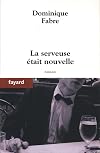
The Waitress Was New
by Dominique Fabre
On This Page
Description
Pierre is a veteran bartender in a caf© on the outskirts of Paris. He observes his customers as they come and go - the young man who drinks beer as he reads Primo Levi, the fellow who, from time to time, strips down and plunges into the nearby Seine, the few regulars who eat and drink there on credit - sizing them up with great accuracy and empathy. Soon, however, the caf© must close its doors and Pierre finds himself at a loss. As readers follow his stream of thoughts over three days, show more Pierre's humanity and profound solitude both emerge. A moving portrait of human emotions. show lessTags
Recommendations













































Member Recommendations


bluepiano Accounts of everyday life in a Parisian cafe. Nothing earth-shattering occurs, though in both books the everyday routine is suddenly disrupted. Sempe's book is slightly more charming and Fabre's slightly more melancholy but both are very nice indeed.
Member Reviews
The Book Report: Over the course of three days, fifty-six-year-old barman Pierre's life at Le Cercle cafe goes from six-year-long trudge towards retirement to unemployment as his creep of a midlife-crisis-ridden boss apparently abandons wife and business for the arms of a younger woman. Said wife even sends Pierre looking for her husband in all the usual suspects' haunts. Pierre, faithful to his own code of honor, does his best to make the situation work by hunting boss-man down, but comes up empty and reports failure; this is followed by the boss-lady's decision to close the cafe. Temporarily, she says, while she finds her husband and sorts things out.
Pierre, lacking other commitments and entanglements in his life, watches over the show more bar, lets the food and liquor delivery people in, wipes his spotless bar down, and watches his regulars drink and eat at La Rotonde, the competing bar across the square. At the end of a week of this useless work, plus the more useful work of getting his pension paperwork in order (four and a half years to go until the full ride is achieved), Pierre gets the call: The boss and wife are in Saint-Malo, starting afresh, and they've agreed to sell Le Cercle to someone else. The staff will be paid to the end of the month, and goodbye.
So what does Pierre do? He opens up. He serves the regulars, the staff, all comers, on the house. Why not? He's been screwed out of a safe and secure position, one he does well, and so why not do it one last time? Then he goes home. And because he can't think of anything else to do, he goes to bed. Fin.
My Review: How wonderful to read a book like this, short and to the point, one that allows me the reader to discover what kind of person the narrator/PoV character is without being spoon-fed opinions by a mistrustful author.
How interesting to be a fly on the wall behind the bar looking on as a business, a thriving one, loses its anchor and spins out of control. How pleasurable to see that not all the occupants of this anchorless business flee like rats from a sinking ship; the staunchness of the narrator is made up from equal parts honor and lack of imagination, which he sort of vaguely realizes.
And how very ordinary a man he is: Old enough to have weathered midlife, too young to view retirement with equanimity, still alive enough to notice the lack of a love in his life, and yet not vital enough to break the deadhanded grip of his difficult past (adopted at ten by the woman he still thinks of as his mother, dead these 12 years) and participate fully in the emotional life of the world. In short, there are millions of him walking around, a part of one small segment of the world yet apart from all the main channels of life.
The new waitress of the title replaced the waitress that the boss was having an affair with for two and more years. She started on Monday, and by Wednesday the cafe had closed. She lived in the farthest reaches of Paris, traveled over an hour to get to the job, and she was already tired of the job. Pierre reports these facts, he comments on them only in the briefest passages, but the reader feels, thanks to deft authorial choices made by the translator, the whole history of Pierre's life in the short transit of the new girl: He's always in transit, is Pierre, always looking at the ground he's standing on, waiting for it to root him, when he can't imagine how he should send down his own roots.
What a joy it was to read this book. Please, do the same for yourself, and revel in the short moment of being treated to a close look at someone more like you than is probably comfortable to view, and at the same time as the adult you certainly are at this point in your reading life. show less
Pierre, lacking other commitments and entanglements in his life, watches over the show more bar, lets the food and liquor delivery people in, wipes his spotless bar down, and watches his regulars drink and eat at La Rotonde, the competing bar across the square. At the end of a week of this useless work, plus the more useful work of getting his pension paperwork in order (four and a half years to go until the full ride is achieved), Pierre gets the call: The boss and wife are in Saint-Malo, starting afresh, and they've agreed to sell Le Cercle to someone else. The staff will be paid to the end of the month, and goodbye.
So what does Pierre do? He opens up. He serves the regulars, the staff, all comers, on the house. Why not? He's been screwed out of a safe and secure position, one he does well, and so why not do it one last time? Then he goes home. And because he can't think of anything else to do, he goes to bed. Fin.
My Review: How wonderful to read a book like this, short and to the point, one that allows me the reader to discover what kind of person the narrator/PoV character is without being spoon-fed opinions by a mistrustful author.
How interesting to be a fly on the wall behind the bar looking on as a business, a thriving one, loses its anchor and spins out of control. How pleasurable to see that not all the occupants of this anchorless business flee like rats from a sinking ship; the staunchness of the narrator is made up from equal parts honor and lack of imagination, which he sort of vaguely realizes.
And how very ordinary a man he is: Old enough to have weathered midlife, too young to view retirement with equanimity, still alive enough to notice the lack of a love in his life, and yet not vital enough to break the deadhanded grip of his difficult past (adopted at ten by the woman he still thinks of as his mother, dead these 12 years) and participate fully in the emotional life of the world. In short, there are millions of him walking around, a part of one small segment of the world yet apart from all the main channels of life.
The new waitress of the title replaced the waitress that the boss was having an affair with for two and more years. She started on Monday, and by Wednesday the cafe had closed. She lived in the farthest reaches of Paris, traveled over an hour to get to the job, and she was already tired of the job. Pierre reports these facts, he comments on them only in the briefest passages, but the reader feels, thanks to deft authorial choices made by the translator, the whole history of Pierre's life in the short transit of the new girl: He's always in transit, is Pierre, always looking at the ground he's standing on, waiting for it to root him, when he can't imagine how he should send down his own roots.
What a joy it was to read this book. Please, do the same for yourself, and revel in the short moment of being treated to a close look at someone more like you than is probably comfortable to view, and at the same time as the adult you certainly are at this point in your reading life. show less
The Waitress Was New is the story of an aging French bartender working in a small cafe in a middle-class neighborhood. Everything about the setting connotes ordinariness, and yet through the character of Pierre, we are gently reminded of the uniqueness of each life story. An internal monologue, the book relates the Pierre's thoughts over the course of a few pivotal days.
Pierre has worked at Le Cercle for many years, establishing cordial relationships with the regulars, the owners, and the two other employees. He is settled and content with the world inside the cafe, rarely looking outside. His internal life is preoccupied with his solitude, his age, and the respect he has earned from his customers and colleagues. Life is quiet, show more respectable, and secure. But things begin to unravel around him, and Pierre must weather the changes as best he can.
Only a hundred pages long, the novel resembles a vignette or a character study. Fabre's ability to draw a character is deft, and the language is delicate and by turns funny and bittersweet. The Waitress Was New is Fabre first book to be translated into English, and I will definitely look for more as they are (hopefully) published. show less
Pierre has worked at Le Cercle for many years, establishing cordial relationships with the regulars, the owners, and the two other employees. He is settled and content with the world inside the cafe, rarely looking outside. His internal life is preoccupied with his solitude, his age, and the respect he has earned from his customers and colleagues. Life is quiet, show more respectable, and secure. But things begin to unravel around him, and Pierre must weather the changes as best he can.
Only a hundred pages long, the novel resembles a vignette or a character study. Fabre's ability to draw a character is deft, and the language is delicate and by turns funny and bittersweet. The Waitress Was New is Fabre first book to be translated into English, and I will definitely look for more as they are (hopefully) published. show less
This is an absolute gem of a book. The plot of this story does not contain any edge-of-the-seat excitements, no stunning revelations nor great insights into the human condition. Yet, despite that, I didn't want to put this book down. What Fabre—an author whose two-sentence Wikipedia entry describes as a...novelist who focuses 'on the lives of individuals on the margins of society'—has done is to let the reader experience a fellow human being.
The old adage is that an author should show, not tell, and this story has that in spades. I felt I was looking through the eyes of Pierre, an ordinary, slightly lonely, middle-aged man who tends bar in a Parisian café, watching his customers and fellow staff, and worrying a bit about his show more retirement. It's done well: it's thoughtful, poignant, and humorous. In only 115 pages I felt I knew Pierre and, to the extent he knew and understood them himself, all those around him.
I can't decide if this book will work for everyone. So many of Pierre's thoughts are set in a context of middle age. But, for those who can empathize with his concerns, this is well worth reading. show less
The old adage is that an author should show, not tell, and this story has that in spades. I felt I was looking through the eyes of Pierre, an ordinary, slightly lonely, middle-aged man who tends bar in a Parisian café, watching his customers and fellow staff, and worrying a bit about his show more retirement. It's done well: it's thoughtful, poignant, and humorous. In only 115 pages I felt I knew Pierre and, to the extent he knew and understood them himself, all those around him.
I can't decide if this book will work for everyone. So many of Pierre's thoughts are set in a context of middle age. But, for those who can empathize with his concerns, this is well worth reading. show less
I [have] developed a fondness—one might almost call it a kind of literary “fetish” —for stories set in restaurants and diners. I find them irresistible, to the point where they have earned almost an entire shelf on one of my book cases: Empire Falls, Last Night at the Lobster, Fried Green Tomatoes at the Whistlestop Cafe, Chocolat, Miramar, Bailey’s Café, and The Minotaur Takes a Cigarette Break.
The newest book on that shelf is a slim novella called The Waitress Was New by Dominique Fabre, a quiet little story about a week in the life of an aging bartender at a small, unexceptional café in the outskirts of Paris. Like the waitresses used to do at my diner, like wait staff does in any restaurant, Pierre lives his life show more watching. He watches patrons come and go, allowing them to float in and out of his life as he must drift in and out of theirs. His day is meted out by the small rituals of running a business, from the time he opens the doors and wipes down the tables to the final moment he locks up for the evening. He is trusted by the café owner, on casually good terms with the cook and the other waitress, relied upon by the owner’s wife. It is an easy, undemanding existence, only occasionally punctuated by something a little more interesting, like the patron who, when he drinks too much, will take off his clothes and dive into the Seine unless he and the cook can stop him. Pierre lives his life passively (he says that he decided to divorce his wife during a melancholic moment when he went to buy a pack of cigarettes), letting whim and chance blow him where they will. He decides he will read Primo Levi’s If This is a Man at one point because he saw a customer reading it and the young man’s “eyes were shining the whole time.” But on the whole the people who come and go seem to have little impact on Pierre, and he almost none at all upon them. Whim and chance have blown him to this café, where he has landed like a dry autumn leaf caught in a corner. It is a curious state of non-existence, and one that seems to satisfy the bartender, until the day that the new waitress arrives.
The unsettling thing about the new waitress is what she implies by her mere presence. For if there is a new waitress, then what has become of the old waitress? Has she left? Will she return? Pierre watches, in some resignation, as later on in the day his boss also walks out the door and doesn’t come back. Pierre has seen the boss do this before—the man has a wandering eye and it has lately wandered in the direction of Sabrina, the missing waitress. But this disappearance feels different, perhaps because Sabrina is also gone. Perhaps because the cook, Amedee, is shaking his head and contemplating finding another job. Perhaps because the boss’s wife has yet to even come down from their upstairs flat and make her usual appearance. Suddenly, the quiet, unchanging existence of the café begins to unravel. The following day the boss still doesn’t return, and although it turns out he has not gone to her, Sabrina doesn’t come back. The wife cries. Pierre and the new waitress handle the evening dinner rush on their own. Amedee mutters that no one has placed that week’s order with the market and they will run out of food in a day.
In the end, it takes almost no effort at all for the secure little life of the café to disintegrate completely. The new waitress only lasted one busy shift. The wife goes after her missing husband, telling Pierre to put a sign on the door. The regular customers gather around the posted notice that reads “closed for a week” and the buzz lasts all of half a day before they drift to other cafes in the neighborhood. The cook salutes Pierre and disappears into the neighborhood streets, no doubt to be snatched up by the first establishment he walks into, (for he is an excellent cook). Within the space of three days, it is as if the café had never existed, never mattered. And Pierre is left to lock up for a final time, his life, always precariously unimportant, now completely irrelevant.
The Waitress Was New is a melancholy little story, but strangely not a bleak or hopeless one. Pierre’s life seems empty in the telling, but in fact his days are made up of a hundred small and vivid moments. There are only 117 pages in this story and yet his life feels real and detailed. It’s almost like a particularly good landscape painting or street scene. One of those pictures where you, the viewer, see a hundred different stories hinted at in the expressions and gestures of the people on the canvas. Pierre lives, it seems, always in the present, always glimpsing those stories. He neither regrets the past nor has ambitions for the future. Instead he shuffles through his days always alert to the life all around him. And if he doesn’t take joy in it, he at least derives some satisfaction from the small part he plays—walking an elderly neighbor to the market one day, reading Levi in the hopes of discussing it with his customer the next. His life is one of transient moments, but he tries more often than not to make those moments good. Which, in the end, is all that any of us can do.read full review show less
The newest book on that shelf is a slim novella called The Waitress Was New by Dominique Fabre, a quiet little story about a week in the life of an aging bartender at a small, unexceptional café in the outskirts of Paris. Like the waitresses used to do at my diner, like wait staff does in any restaurant, Pierre lives his life show more watching. He watches patrons come and go, allowing them to float in and out of his life as he must drift in and out of theirs. His day is meted out by the small rituals of running a business, from the time he opens the doors and wipes down the tables to the final moment he locks up for the evening. He is trusted by the café owner, on casually good terms with the cook and the other waitress, relied upon by the owner’s wife. It is an easy, undemanding existence, only occasionally punctuated by something a little more interesting, like the patron who, when he drinks too much, will take off his clothes and dive into the Seine unless he and the cook can stop him. Pierre lives his life passively (he says that he decided to divorce his wife during a melancholic moment when he went to buy a pack of cigarettes), letting whim and chance blow him where they will. He decides he will read Primo Levi’s If This is a Man at one point because he saw a customer reading it and the young man’s “eyes were shining the whole time.” But on the whole the people who come and go seem to have little impact on Pierre, and he almost none at all upon them. Whim and chance have blown him to this café, where he has landed like a dry autumn leaf caught in a corner. It is a curious state of non-existence, and one that seems to satisfy the bartender, until the day that the new waitress arrives.
The unsettling thing about the new waitress is what she implies by her mere presence. For if there is a new waitress, then what has become of the old waitress? Has she left? Will she return? Pierre watches, in some resignation, as later on in the day his boss also walks out the door and doesn’t come back. Pierre has seen the boss do this before—the man has a wandering eye and it has lately wandered in the direction of Sabrina, the missing waitress. But this disappearance feels different, perhaps because Sabrina is also gone. Perhaps because the cook, Amedee, is shaking his head and contemplating finding another job. Perhaps because the boss’s wife has yet to even come down from their upstairs flat and make her usual appearance. Suddenly, the quiet, unchanging existence of the café begins to unravel. The following day the boss still doesn’t return, and although it turns out he has not gone to her, Sabrina doesn’t come back. The wife cries. Pierre and the new waitress handle the evening dinner rush on their own. Amedee mutters that no one has placed that week’s order with the market and they will run out of food in a day.
In the end, it takes almost no effort at all for the secure little life of the café to disintegrate completely. The new waitress only lasted one busy shift. The wife goes after her missing husband, telling Pierre to put a sign on the door. The regular customers gather around the posted notice that reads “closed for a week” and the buzz lasts all of half a day before they drift to other cafes in the neighborhood. The cook salutes Pierre and disappears into the neighborhood streets, no doubt to be snatched up by the first establishment he walks into, (for he is an excellent cook). Within the space of three days, it is as if the café had never existed, never mattered. And Pierre is left to lock up for a final time, his life, always precariously unimportant, now completely irrelevant.
The Waitress Was New is a melancholy little story, but strangely not a bleak or hopeless one. Pierre’s life seems empty in the telling, but in fact his days are made up of a hundred small and vivid moments. There are only 117 pages in this story and yet his life feels real and detailed. It’s almost like a particularly good landscape painting or street scene. One of those pictures where you, the viewer, see a hundred different stories hinted at in the expressions and gestures of the people on the canvas. Pierre lives, it seems, always in the present, always glimpsing those stories. He neither regrets the past nor has ambitions for the future. Instead he shuffles through his days always alert to the life all around him. And if he doesn’t take joy in it, he at least derives some satisfaction from the small part he plays—walking an elderly neighbor to the market one day, reading Levi in the hopes of discussing it with his customer the next. His life is one of transient moments, but he tries more often than not to make those moments good. Which, in the end, is all that any of us can do.read full review show less
"I'm only a barman, and when I forget that, the world around me seems like a bunch of different movies running at the same time. There are romance movies and sad movies, and if you pay attention most of their stories start to get all mixed together, till there's no way you can go on telling them to yourself. It's like they're all chasing after each other..."
This excerpt shows the complications inherent in the life of the "simple" bartender. Rather than being the nameless face behind the bar, important only in his quick delivery of a cocktail or beer, this novella by Dominique Fabre goes much deeper into the life of a very complex man. The story takes place over only a few days, yet we see, in detail, the conflicts within him and within show more his profession in the upscale cafe Le Cercle, where he's worked some eight years.
There's an abundance of unique characters, from the black-dressed young man who covers his poetry books with paper to hide the contents, to the articulate, kindly man who argues with the Moon and on to the beautiful but betrayed owner's wife. One of the underlying themes appears to be the pathological desire for order that Pierre, our fifty-six year old barman seeks. From his keeping the restaurant functioning to the way he does his laundry, Pierre is the picture of routine efficiency mixed with constant self-analysis. Yet his memories, that flood him often, reveal a past far from the orderly and efficient one he is living now. show less
This excerpt shows the complications inherent in the life of the "simple" bartender. Rather than being the nameless face behind the bar, important only in his quick delivery of a cocktail or beer, this novella by Dominique Fabre goes much deeper into the life of a very complex man. The story takes place over only a few days, yet we see, in detail, the conflicts within him and within show more his profession in the upscale cafe Le Cercle, where he's worked some eight years.
There's an abundance of unique characters, from the black-dressed young man who covers his poetry books with paper to hide the contents, to the articulate, kindly man who argues with the Moon and on to the beautiful but betrayed owner's wife. One of the underlying themes appears to be the pathological desire for order that Pierre, our fifty-six year old barman seeks. From his keeping the restaurant functioning to the way he does his laundry, Pierre is the picture of routine efficiency mixed with constant self-analysis. Yet his memories, that flood him often, reveal a past far from the orderly and efficient one he is living now. show less
Translated from the French by Jordan Stump, The Waitress Was New is a novella set on the outskirts of modern-day Paris in a small cafe owned by a husband and wife. When the husband disappears, the wife and tiny staff try to forge on: Amedee the Senegalese cook, Madeleine the new waitress, and the reflective narrator Pierre, a bartender who’s nearing retirement after a complicated life.
I love work-based stories and this one is melancholy and full, very much like Stewart O’Nan’s Last Night at the Lobster. The little book itself is also physically lovely -- it’s one of a few I’ve borrowed from the library and then purchased a copy to keep. And it’s Fabre’s only story available in English; I hope more will be translated.
I love work-based stories and this one is melancholy and full, very much like Stewart O’Nan’s Last Night at the Lobster. The little book itself is also physically lovely -- it’s one of a few I’ve borrowed from the library and then purchased a copy to keep. And it’s Fabre’s only story available in English; I hope more will be translated.
Pierre is a bartender, a sweet man who has almost reached the age at which he could retire. He loves what he does, it is what he lives for and how he breathes. This book humble, yet so triumphant and full of life at the same time! It is very real, no huge ups and downs, no drum rolls, no brass bands. It is just what the author Dominique Fabre has intended: plain, simple, beautiful. He aims to share the life of a person on the margins, or someone that would not usually be interesting enough to write about, someone who you may not even notice. For some reason it feels like he could have chosen me or you in choosing Pierre, it is a person that is not worthy, and yet he never says that he is. It's pureness is very attractive.
The Waitress show more Was New drives the reader a desire to know this raw individual, Pierre. To learn more about him and his situation, and what will become of him in the end. The novel is human, and real and is not full of dramatic effect moments or overly sentimental junk. It is a story of a regular bartender, in a regular place, doing regular things. It is the way that Fabre conveys it all that is interesting...you dive down deep and come up with your fists full, and at the end of this novel he leaves you wishing for more, but knowing at the same time that it was the way it should be.
For the full 117 pages I was engulfed in reading this book it is so full of heart and personality. I am always more interested in the books that are about people that seem real to me and this is definitely one of those. It is about people-watching, living, loving, dying, old age, changes and sticking through it. I loved it. Here are some quotes for you that I thought were really great:
"I'm a fixture around here, people realize that. I served a few beers, brought the school kids their coffee, two coffees plus three glasses of water, and the girl greeted me with a peck on the cheek" (p. 16).
"I don't look outside too much because everything that matters to me in life always ends up sitting down at my bar, but just then I had a feeling, and I looked out toward the street. Yes, it was going to rain" (p. 22).
" I get off at seven but I'm never a stickler about leaving on time, what have I got to do at home? I'm just a barman, and the longer I stay on the more life goes by in the best possible way. So there we are" (p. 38).
"They come and go, for the most part. Let the world turn around us, beyond our spotless bars, in the end every day will be carefully wiped away to make room for the next. That's why I make myself watch the late-night news on Channel 3, you can't just forget everything, after all" (p. 98). show less
The Waitress show more Was New drives the reader a desire to know this raw individual, Pierre. To learn more about him and his situation, and what will become of him in the end. The novel is human, and real and is not full of dramatic effect moments or overly sentimental junk. It is a story of a regular bartender, in a regular place, doing regular things. It is the way that Fabre conveys it all that is interesting...you dive down deep and come up with your fists full, and at the end of this novel he leaves you wishing for more, but knowing at the same time that it was the way it should be.
For the full 117 pages I was engulfed in reading this book it is so full of heart and personality. I am always more interested in the books that are about people that seem real to me and this is definitely one of those. It is about people-watching, living, loving, dying, old age, changes and sticking through it. I loved it. Here are some quotes for you that I thought were really great:
"I'm a fixture around here, people realize that. I served a few beers, brought the school kids their coffee, two coffees plus three glasses of water, and the girl greeted me with a peck on the cheek" (p. 16).
"I don't look outside too much because everything that matters to me in life always ends up sitting down at my bar, but just then I had a feeling, and I looked out toward the street. Yes, it was going to rain" (p. 22).
" I get off at seven but I'm never a stickler about leaving on time, what have I got to do at home? I'm just a barman, and the longer I stay on the more life goes by in the best possible way. So there we are" (p. 38).
"They come and go, for the most part. Let the world turn around us, beyond our spotless bars, in the end every day will be carefully wiped away to make room for the next. That's why I make myself watch the late-night news on Channel 3, you can't just forget everything, after all" (p. 98). show less
Members
- Recently Added By
Lists

Best Workplace Fiction
47 works; 18 members

stories at work
43 works; 7 members
Author Information

20 Works 319 Members
Some Editions
Awards and Honors
Common Knowledge
- Original title
- La serveuse etait nouvelle
- Original publication date
- 2005 (original French) (original French); 2008 (English: Stump) (English: Stump)
- People/Characters
- Pierre
- Important places
- Paris, France; Asnières-sur-Seine, France
- Epigraph
- Oh yes! I hated Sundays,
Because that's the day when I think
And count the days past and to come.
-- Pierre Morhange - First words
- The waitress was new here.
- Quotations
- I've slept alone for too long. I've never even had a chance to try Viagra, which apparently works wonders, and ends lots of marriages, from what I hear in the cafe. I'd like to from time to time.
The young couple finally left, they seemed very much in love, the way people are when it's part-time, if you don't mind my saying. - Last words
- (Click to show. Warning: May contain spoilers.)Then I couldn't think of anything else to do, so I went to bed.
- Blurbers
- Davis, Lydia
Classifications
Statistics
- Members
- 176
- Popularity
- 186,427
- Reviews
- 17
- Rating
- (3.94)
- Languages
- English, French, Spanish
- Media
- Paper, Ebook
- ISBNs
- 6
- ASINs
- 2