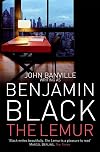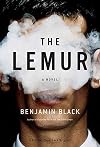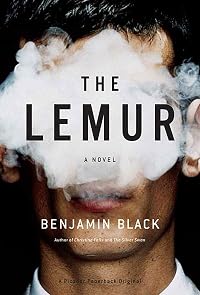
The Lemur
by Benjamin Black
On This Page
Description
John Glass's life in New York should be plenty comfortable having given up his career as a journalist to write an authorized biography of his father-in-law, communications magnate and former CIA agent Big Bill Mulholland. When a shifty young researcher whom he calls 'The Lemur," turns up some unflattering information about the family, Glass's whole easy existence is threatened.Tags
Recommendations















Member Recommendations
Member Reviews
This is an architectural drawing of a mystery novel: light, cool, precise, and bloodless.
From the first, I was frequently confused about what time period the book was set in, because all outward signs indicate that it takes place in contemporary New York City, but all inward signs would seem more at home in the 1950s.
The aptly named narrator, John Glass, is stalled in early middle age, lacking interest or agency and 'unmanned' by the comfortable lifestyle that surrounds him. This arrested state characterizes just about every person you will encounter, most of whom are members of or otherwise tied to the family into which Glass has married. All strong feelings belong to the past -- except someone in the mix rustles up enough gumption show more to murder a dirt-digging researcher.
Although the facts of this mystery will be revealed, my warning is that understanding is unlikely to follow. The "take away" from this cleanly incised text is that lacking great wealth, especially family wealth, is among the luckiest fates that can befall a person. show less
From the first, I was frequently confused about what time period the book was set in, because all outward signs indicate that it takes place in contemporary New York City, but all inward signs would seem more at home in the 1950s.
The aptly named narrator, John Glass, is stalled in early middle age, lacking interest or agency and 'unmanned' by the comfortable lifestyle that surrounds him. This arrested state characterizes just about every person you will encounter, most of whom are members of or otherwise tied to the family into which Glass has married. All strong feelings belong to the past -- except someone in the mix rustles up enough gumption show more to murder a dirt-digging researcher.
Although the facts of this mystery will be revealed, my warning is that understanding is unlikely to follow. The "take away" from this cleanly incised text is that lacking great wealth, especially family wealth, is among the luckiest fates that can befall a person. show less
 This review was written for LibraryThing Early Reviewers.
Tengo un problema con John Banville, o Benjamin Black, el seudónimo que utiliza este autor irlandés para escribir novela policíaca, y es que muchas veces me resulta inevitable imaginármelo manejando los hilos cual titiritero tras el escenario, y no hay nada peor que imaginarte a un escritor frente a su máquina de escribir haciendo su magia. La prosa de Banville es rica, sugerente, perfecta, calificativo este último que utilizan muchos de sus colegas de profesión, como Martin Amis o Don DeLillo, y es entonces cuando me viene a la mente a Banville recortando y puliendo aquí y allá hasta lograr la frase perfecta, cuando lo que yo querría es imbuirme en la historia. Pero supongo que este es un problema únicamente mío. De todos show more modos, no le quito mérito a Banville, porque es un gran escritor y tiene libros que me gustaron bastante.
’El Lémur’ es el primer libro que leo bajo el nombre de Benjamin Black, y la verdad es que se nota, es un Banville más ligero y menos profundo, donde encontramos al Banville más suelto. La historia tiene como protagonista a John Glass, un periodista retirado al que su suegro, Bill Mullholland, un antiguo agente de la CIA, le encarga que escriba su biografía. Glass requiere entonces de la ayuda de un investigador, Dylan Riley para ahondar en la historia de Bill. Pero en cuanto empiezan a aparecer ciertos secretos, todo se complicará con una muerte que nadie esperaba.
La novela es ágil y de lectura sencilla, aúna crimen, investigación, infidelidades y engaños, todo ello marca del género, y Banville logra mantener la atención sobre la trama, siendo lo más destacado sus personajes, pero hacia el final peca un tanto de previsible. Una novela buena, pero de la que espera mucho más. show less
’El Lémur’ es el primer libro que leo bajo el nombre de Benjamin Black, y la verdad es que se nota, es un Banville más ligero y menos profundo, donde encontramos al Banville más suelto. La historia tiene como protagonista a John Glass, un periodista retirado al que su suegro, Bill Mullholland, un antiguo agente de la CIA, le encarga que escriba su biografía. Glass requiere entonces de la ayuda de un investigador, Dylan Riley para ahondar en la historia de Bill. Pero en cuanto empiezan a aparecer ciertos secretos, todo se complicará con una muerte que nadie esperaba.
La novela es ágil y de lectura sencilla, aúna crimen, investigación, infidelidades y engaños, todo ello marca del género, y Banville logra mantener la atención sobre la trama, siendo lo más destacado sus personajes, pero hacia el final peca un tanto de previsible. Una novela buena, pero de la que espera mucho más. show less
This is such a slender book that I kept looking at the pages remaining unread, trying to figure out how the author was going to tie up the various intrigues before the book's end. He does, but it turns into a much simpler tale than that alluded to in the first hundred pages. The Lemur is marvelously written; I kept rereading sentences for the enjoyment of reading them again. The writing is anything but lazy; each word is carefully chosen and fits perfectly with those around it, part of the book's slender size is surely due to the author's unwillingness to set down a single unnecessary phrase.
On the other hand, the plot begins by hinting at an immense complexity involving big business, an important charitable foundation, a shady internet show more researcher, journalists discovering dark secrets, infidelity and the CIA. This is pared down to a much simpler story, not always to the benefit of the story; much remains unexplained or reduced. show less
On the other hand, the plot begins by hinting at an immense complexity involving big business, an important charitable foundation, a shady internet show more researcher, journalists discovering dark secrets, infidelity and the CIA. This is pared down to a much simpler story, not always to the benefit of the story; much remains unexplained or reduced. show less
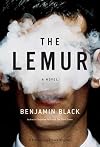
This review was written for LibraryThing Early Reviewers.The only reason I can't give this 5 stars is because it's such a perfect example of it's category - it's perfect Noir! That cloud on the cover is NOT cigarette smoke -- it's the oppressive haze of despairing hopelessness that weights the entire novel. It's short; which is good because much more would be suffocating. The writing is elegantly beautiful. And -- dare I say? -- it packs a wallop! Highly recommended.
This review was written for LibraryThing Early Reviewers.The most impressive thing about this book is the quality of the writing. Not only the use of words more often seen in poetry than prose, but also the smooth transition of character roles that classifies good drama.
The only detraction was the lack of likable characters, but in a book this short, it's not too much of a burden to follow them. While I would be hard pressed to call the protagonist a hero, he is presented so that I cannot help but identify with him. The little details of how his mind wanders and the physical effects of being angry make him feel real.
Most importantly for any type of mystery, the twists and turns managed to be both unanticipated and reasonable in light of the rest of the story.
This is the first book I've read show more by Benjamin Black. I'll certainly be looking for more. show less
The only detraction was the lack of likable characters, but in a book this short, it's not too much of a burden to follow them. While I would be hard pressed to call the protagonist a hero, he is presented so that I cannot help but identify with him. The little details of how his mind wanders and the physical effects of being angry make him feel real.
Most importantly for any type of mystery, the twists and turns managed to be both unanticipated and reasonable in light of the rest of the story.
This is the first book I've read show more by Benjamin Black. I'll certainly be looking for more. show less
This review was written for LibraryThing Early Reviewers.Just the kind of thing I was in the mood for. Well written, plotful, good characters and not too long. Not too long is probably pushing the boundaries of definition actually, it's a really short book. But that makes it better rather than seeming like a half arsed attempt at stretching a short story into novel. Like the author knew just exactly how much to put in to tell the story and didn't add anything else just for the hell of it.
I don't want to mention the plot at all - it didn't go where I was expecting it to go but after finishing it I can't imagine how I ever thought it was going anywhere else.
Oh, and really good, highly recommended. Future classic, quite possibly. And probably the only book I've ever read that mentions show more websites by name and it doesn't feel like the author's just trying to seem hip and trendy."Well," Riley said, "let's say I go way beyond Wikipedia."Quite. show less
I can't decide if this is supposed to be a thriller or a mystery. The set up contains elements of both. John Glass disillusioned Irish journalist living in New York who has married money and now works on a biography of his father-in-law, an ex-CIA operative. The researcher Glass has hired to do his legwork for him quickly turns up dead. The questions are: who killed him and why? If it's a mystery, then Glass must transform himself back into a great reporter, but he doesn't quite do that. If it's a thriller, then we wait to see how quickly his life disintegrates. The narrator does a good job of promising both outcomes, a solution and a train wreck, and the promise of each is plenty enticing, and yet neither one, when played out, actually show more satisfies.
I found myself more struck by the writing, the insights and attention to detail that can give us a maid in uniform serving lemonade while showing the crush she has on her boss, or the disdain that Glass endures from a woman who is about to become his mistress. At one point, the narrator describes a policeman as having "the face of an El Greco martyr." Wonderful. These small moments, and they come along frequently, offer great entertainment. Black's signature is writing scenes in which emotions detonate and the dialog takes such abrupt left turns that the reader can barely keep up. He offers the true sensation of eavesdropping.
I think the book first appeared as a magazine serial, and it reads as such. The chapters are tight and of uniform length and they march along to a conclusion without the subplots and diversions that might otherwise be half the fun. Still, it's a good, quick read. show less
I found myself more struck by the writing, the insights and attention to detail that can give us a maid in uniform serving lemonade while showing the crush she has on her boss, or the disdain that Glass endures from a woman who is about to become his mistress. At one point, the narrator describes a policeman as having "the face of an El Greco martyr." Wonderful. These small moments, and they come along frequently, offer great entertainment. Black's signature is writing scenes in which emotions detonate and the dialog takes such abrupt left turns that the reader can barely keep up. He offers the true sensation of eavesdropping.
I think the book first appeared as a magazine serial, and it reads as such. The chapters are tight and of uniform length and they march along to a conclusion without the subplots and diversions that might otherwise be half the fun. Still, it's a good, quick read. show less
This review was written for LibraryThing Early Reviewers.Members
- Recently Added By
Author Information

17 Works 7,590 Members
Series
Belongs to Publisher Series
L'eclèctica (164)
Common Knowledge
- Canonical title
- The Lemur
- Original title
- The Lemur
- Original publication date
- 2008-06-24
- People/Characters
- John Glass; Dylan Riley; Big Bill Mulholland; Louise Glass; David Sinclair; John Huston (show all 10); Alison O'Keeffe; Wilson Cleaver; Charles Varriker; Terri Taylor
- Important places
- New York, New York, USA
- First words
- The researcher was a very tall, very thin young man with a head too small for his frame and an Adam's apple the size of a golf ball.
- Last words
- (Click to show. Warning: May contain spoilers.)She stood up, very slowly, like a person in pain. "I'm going now," she said. "You have to decide what to do. You have your" - she laughed shortly - "your story. She looked at him with compassion, almost. "It's up to you, John," she said. "I'm sorry, but it's up to you."
- Disambiguation notice*
- original title: The Lemur
*Some information comes from Common Knowledge in other languages. Click "Edit" for more information.
Classifications
Statistics
- Members
- 417
- Popularity
- 74,399
- Reviews
- 38
- Rating
- (3.05)
- Languages
- 6 — Catalan, Dutch, English, German, Italian, Spanish
- Media
- Paper, Audiobook, Ebook
- ISBNs
- 28
- ASINs
- 5