On This Page
Description
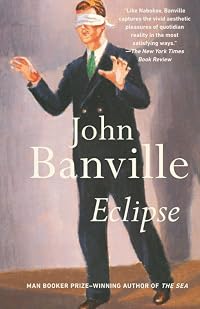
In this deeply moving and original book, John Banville alloys mystery, fable, and ghost story with poignant psychological acuity to forge the riveting story of a man wary of the future, plagued by the past, and so uncertain in the present that he cannot discern the spectral from the real. When renowned actor Alexander Cleave was a boy living in a large house with his widowed mother and various itinerant lodgers, he encountered a strikingly vivid ghost of his father. Now that he’s fifty and show more has returned to his boyhood home to recover from a nervous breakdown on stage, he is not surprised to find the place still haunted. He is surprised, however, at the presence of two new lodgers who have covertly settled into his old roost. And he is soon overwhelmed by how they, coupled with an onslaught of disturbing memories, compel him to confront the clutter that has become his life: ruined career, tenuous marriage, and troubled relationship with an estranged daughter destined for doom. show lessTags
Recommendations


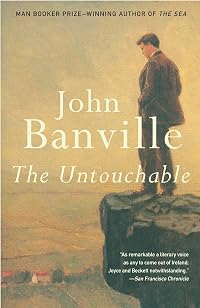
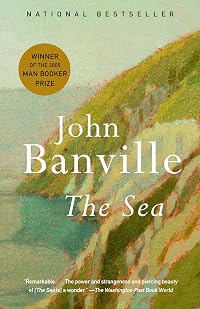



Member Recommendations
by bergs47
Member Reviews
Retreat
“At the core of it all there is an absence.”
When empty, broken, and destroyed, where does one go for solitary reflection? For a few hours, I head to the forest, step confidently off the path, and lose myself among the trees. No wolves round here, so I may wear my blood-red coat. But to live alone for a period, I would seek an uninhabited version of my grandparents’ farmhouse: rooms, corridors, and cupboards sheltering deep memories and aromas from a distant age; fur and pawprints of the only dog I ever loved; hidden nooks crammed with curious mementos and friendly phantoms; a fragrant fruitful garden tapping at the leaded windows, and sunlight twinkling through the sheltering shade of the giant cedar, as it sings in the show more breeze. But would that heal, or hurt?
“When I fled the peopled world I had no one except myself to keep me from coming to grief. And it was to grief that I came.”
After the crisis of corpsing on stage, Alex Cleave retreats to his abandoned childhood home. He leaves his wife Lydia behind, and is out of contact with their troubled adult daughter Cass. As a child, he was familiar with the “alien presences” of lodgers, and once saw his father’s ghost. Returning, he finds there are phantoms still: real, imagined, or both.
Haunted by memories and premonitions, he devotes himself to indulgent introspection, “A way of being alive without living”, until “I catch myself, red-handed, in the act of living; alone, without an audience.” One of many contrasts and contradictions.
Poetic Incongruity
Almost every page is studded with highly-polished gems that distract from unsettling suspicions. There is something ghostly and intangible about the startling, but carefully chosen words, and about the images and ideas they simultaneously conjure and conceal. Read Banville for the language (the plot is sparse and uncertain).
“In the corners of the room brownish shadows thronged.”
The rhythm is perfect, and several of the words carry so much unexpected meaning they’re irreplaceable.
Just as people take on ghostly forms, so light takes on corporeal form.
“Around us the shocked shadows congregated... On the lino... a sunburst streamed and shivered.”
In the examples below (spoilered for brevity, not plot secrets), there is at least one ordinary word that gains heft by incongruity
:
• “The garden’s menacing greenery crowding in the windows.”
• “The sun was causing a livid commotion behind a heaping of clouds.”
• “A tall sharp wedge of sunlight leaned against the white wall of the convent, motionless and menacing.”
• “Calm summer light stood in the hall.”
• “The open door of a hardware shop breathed brownly at me.”
• “The protuberant pale eyes reminded me of a virulent kind of boiled sweet.”
• “A flabby smell of overcooked food stood in the corridors night and day.”
• “A white-capped sea of a deep, malignant blueness.”
• “The plane unzipped the flooded runway and lifted.”
Banville even makes the “desolating rapture” of masturbating to “antique smut” transcendent and almost beautiful.
Voices, Phantoms, and an Unreliable Narrator
Amid a mix of inadvertent and deliberate dishonesty, truth is hinted at, whether Alex realises or not.
When he first met Lydia, he “was not entirely what I pretended to be”. Alex is always a performer; he toys with truth and dodgy memories, “unknown, even to myself”..
When Cass was born, he saw “a host of shadowy ancestors, all of them jostling together”. As a child, she started hearing voices - an inverse of Alex being an actor, something he silently accuses her of being. Seeing phantoms helps him empathise with her “uncertainty as to what is real”, but it makes his account more questionable.
Fathers and Daughters, Mothers and Sons
Alex is an outsider in his own town, in his own family. Like an anthropologist or a vivisectionist, he stalks, observes, and collects strays and “anomalies”. Phantoms are more enticing than his living, breathing family.
He is a lifelong “devotee of the goddess… in various forms” starting with his misunderstood mother. The allure of an older woman is a major theme of his teenage years, told in Ancient Light (my review HERE), and there are strong Oedipal overtones in his marriage.
But Alex was always committed to Cass and her needs - at least in his telling. Lydia sees it differently: jealousy, or something else? Certainly there is always the hint of tragedy to come that reminded me slightly of Emperor Augustus and Julia (see my review of Augustus) and Stoner and Grace (see my review of Stoner).
There is another father and daughter here, initially in the shadows: Quirke the caretaker, and teenage Lily. They have a curious and rather detached relationship. Alex’s arrival disturbs that dynamic, and distorts the lens through which he views his estrangement from Cass. His interest in Lily is overtly paternal. But unspoken spectres hover.
Solar Eclipse
The certainty of an eclipse is that the sun so suddenly extinguished will reappear just as abruptly. But despite the many and glorious mentions of light, this book is shaded by the fearful expectation of darkness, foreshadowing the title of the next book, Shroud.
Near the end, Alex experiences the partial (and cloudy) solar eclipse of 1999: “Peculiar light, insipid and shrouded, like the light in a dream.” I visited Cornwall then, where it was total. Despite the clouds, there was an instant unleashing of visceral, elemental, primordial power that made me eager to experience another, better eclipse.
Quotes about Light
Light is a leitmotif, just as in Ancient Light (and maybe in Shroud, tbc), but where there is light, there are also shadows. Smells, usually unpleasant, are frequently and vividly mentioned, as in The Sea. But sound (except for a wonderful passage about manic seagulls), taste, and touch are secondary.
Spoilered for brevity, not plot secrets.
• “The evening sun… an ancient light, golden, dense, dust-laden.”
• “The woods leaned inward… blackly brown against the last faint radiance of the dying day.”
• “The damp half-darkness folding me about, making me its own.”
• “The room in sunlight was a luminous tuat tend held down by studs of light reflecting at many corners.”
• “The sunlight was turning brazen as the afternoon lost its strength.”
• “The oleaginous slither of light… a livid twilight.”
• “Even the sunlight seems bored.”
• “The early sun had an intense lemony cast, and the morning was all glitter and glassy splinterings.”
Alex’s Aphorisms
Spoilered for brevity, not plot secrets.
• “Boredom is the brother of misery.”
• “Sentimentality: unearned emotion. Nostalgia: longing for what never was.”
• “Lodgers… like actors compelled to play themselves.”
• “Grief takes the taste out of things.”
• “Death bores the young, like a glum intruder come to spoil an already dull party.”
• “It’s a parent’s posthumous revenge, the legacy of increasing resemblance.”
• “What is happiness but a refined form of pain?”
• “I wonder if my ghosts would have known I was not in the house. Do they appear when I am not present? Is a rose red in the dark?”
• “There is no present, the past is random, and only the future is fixed.”
• “I was looking the wrong way. I was looking into the past, and that was not where those phantoms were from.”
• “Now that the worst had happened, I would no longer have to live in fear of it.”
Miscellaneous Quotes
Spoilered for brevity, not plot secrets.
• “One of those vague hazy days of early June that seem made half of weather and half of memory.”
• “The countryside’s slovenly and uncaring loveliness.”
• “Maundering chaotically in my disordered heart” made me want to return to bed, to be “swaddled in flocculent warmth”.
• An old phone “had the osseous heft of a tribal artefact, shaped and polished by a long and murderous use”.
• Processed ham, “pallid, marbled, evilly aglisten”.
• At the cinema, “phantasmally peopled darkness” and “luminously peopled darkness”.
• A man near death was “lost inside his clothes... moving wraithlike... a stooping figure flickering from sunlight into shadow... leaving no trace of his passing save a sort of shimmer, a fold in the air, and a coiling question mark of cigarette smoke.”
• Smoking with “negligent deftness, as if it were a tricky exercise in prestidigitation… tapping and twirling the miniature white baton… with a magician’s fluency.”
• “The surface of the water, taut and burnished like billowing silk… The waves… more a wrinkle running along the edges of a sluggishly swaying vast bowl of water.”
• “Water is uncanny in the way, single-minded and uncontrollable, it keeps seeking its own level.”
• “Drowning is strange… for those on shore. It all seems done so discreetly.”
• It “happened out of time… not as a real event… [but] in some special dimension of dream or memory”.
• “Lily’s bare arm beside mine, each tiny strand of down on it agleam; the evening sunlight in the window, goldening the draining board… my plate, with one limp round of tomato, a bruised lettuce leaf, a smear of crumbled egg yolk.” Triva are more memorable and evocative than headline events.
• “The trees were white with hoar-frost and a crepuscular pinkish mist hung on the motionless air.”
• “A forgotten cigarette was smoking itself in surreptitious haste.”
• “She gives herself to inaction almost sensuously. She is a voluptuary of indolence… exudes a kind of negative radiance, a dark light.”
• At music school, “five-fingered exercises tinkled, precise, monotonous and insane”.
• “The silence that radiated off her like heat had a furious force.”
• “What is it about such occasions of timeless time that afterwards makes them seem touched with such a precious, melancholy sweetness? Sometimes it seems to me that it is in these vacant intervals… that my true life has been most authentically lived.”
Notes
Spoilered for brevity, not plot secrets.
• Alice: A revelation is likened to stepping through a looking glass, where “everything is exactly as it was and at the same time entirely transformed” and is followed by a comparison with Tweedledum and Tweedledee.
• Bible: There are surprisingly few Biblical allusions, with the notable exception of a longish scene where Quirke, in priestly mode, proffers water to a distraught Lydia, as if it were the sacrament.
• Blood: The red stuff of life can never be insignificant, and it is casually mentioned several times, literally, and as a colour. But towards the end, there is a more disturbing and ambiguous memory of a white dress, apparently splashed - deliberately - with a stranger’s blood.
• Circus: Lily’s childish enthusiasm for the circus has an oddly sinister air. Darkness, always darkness lurking.
• Names: In Banville’s books, names have import, and characters often have similar names, whether by rhyme or near anagram. It was less obvious here, even when Alex considers the possible impact of changing names: his wife is really Leah, but he misheard her name as Lydia (which stuck), and when he started acting, he used his full first name (which didn’t stick). And then there’s Lily, which is not dissimilar to Leah and Lydia. Quirke’s name is too obvious to merit attention.
• Bonnie Tyler: I wanted an excuse to weave her Total Eclipse of the Heart into this review, but other than the novel’s title, I can’t make a worthwhile association. Nevertheless, here she is singing it.
Image Sources:
• Bruno Catalano sculpture of an empty man: http://www.boredpanda.com/hollow-sculptures-les-voyageurs-bruno-catalano/
• Irish eclipse, 11 August 1999: http://www.mythicalireland.com/astronomy/astrophotos/eclipse.php
• Shaft of light, with photographer’s comments: http://newsblogs.chicagotribune.com/assignment-chicago/2013/08/light-an-apprecia....
The Cleave Trilogy
The ancient light of the past illuminates the present and future.
The publication order of the Alex and Cass Cleave father/daughter trilogy is Eclipse, then Shroud, and finally, Ancient Light.
However, there’s no need to read them in sequence, as they all have a current storyline intertwined with reflections of earlier events. (My reading order was 3, 1, 2.) The middle one is more about Cass, and the other two focus on Alex.
Hidden for brevity.
Read the additional spoilers below only if you have read the book and want to jog your memory. Links are to my reviews, where any further spoilers are hidden.
• Eclipse, 5*: The main narrative is set in 1999, when Alex, the narrator, is ~50, and returns to his abandoned childhood home, after a catastrophic episode of stage-fright. The reminiscences are of his childhood, and that of his daughter, Cass, who has blackouts and hears voices. He develops a friendship with the caretaker’s teen daughter that hints beyond the mere paternal. It ends shortly after Cass’s death.
• Shroud, 3*: The main narrative is set over a few months in 1999, narrated by literature professor, Axel Vander (in his late 70s), who meets adult Cass in Turin. Aspects of her story are told in the third person, probably by Vander, though with implausible omniscience. Vander wrote a famous essay about the play which was her father’s most successful role. She is now an amateur researcher who has discovered secrets about Vander’s past, so the reminiscences are primarily about his teen and young adult years. Vander and Cass have a brief and disturbing relationship, and the book ends shortly after her death in 1999.
• Ancient Light, 5*: The main narrative is set around 2009, when Alex, narrating again, is ~60. The reminiscences are of his teen relationship with his best friend’s mother, of Cass’s teen years, and the aftermath of her death a decade ago. Things are muddied when he takes on the role of Axel Vander (Cass’s lover in Shroud) in a biopic. The woman playing Cass has recently lost her father. She and Alex become close: another father/daughter relationship, with sexual undertones.
Oedipus, meet Humbert. show less
“At the core of it all there is an absence.”
When empty, broken, and destroyed, where does one go for solitary reflection? For a few hours, I head to the forest, step confidently off the path, and lose myself among the trees. No wolves round here, so I may wear my blood-red coat. But to live alone for a period, I would seek an uninhabited version of my grandparents’ farmhouse: rooms, corridors, and cupboards sheltering deep memories and aromas from a distant age; fur and pawprints of the only dog I ever loved; hidden nooks crammed with curious mementos and friendly phantoms; a fragrant fruitful garden tapping at the leaded windows, and sunlight twinkling through the sheltering shade of the giant cedar, as it sings in the show more breeze. But would that heal, or hurt?
“When I fled the peopled world I had no one except myself to keep me from coming to grief. And it was to grief that I came.”
After the crisis of corpsing on stage, Alex Cleave retreats to his abandoned childhood home. He leaves his wife Lydia behind, and is out of contact with their troubled adult daughter Cass. As a child, he was familiar with the “alien presences” of lodgers, and once saw his father’s ghost. Returning, he finds there are phantoms still: real, imagined, or both.
Haunted by memories and premonitions, he devotes himself to indulgent introspection, “A way of being alive without living”, until “I catch myself, red-handed, in the act of living; alone, without an audience.” One of many contrasts and contradictions.
Poetic Incongruity
Almost every page is studded with highly-polished gems that distract from unsettling suspicions. There is something ghostly and intangible about the startling, but carefully chosen words, and about the images and ideas they simultaneously conjure and conceal. Read Banville for the language (the plot is sparse and uncertain).
“In the corners of the room brownish shadows thronged.”
The rhythm is perfect, and several of the words carry so much unexpected meaning they’re irreplaceable.
Just as people take on ghostly forms, so light takes on corporeal form.
“Around us the shocked shadows congregated... On the lino... a sunburst streamed and shivered.”
In the examples below (spoilered for brevity, not plot secrets), there is at least one ordinary word that gains heft by incongruity
• “The garden’s menacing greenery crowding in the windows.”
• “The sun was causing a livid commotion behind a heaping of clouds.”
• “A tall sharp wedge of sunlight leaned against the white wall of the convent, motionless and menacing.”
• “Calm summer light stood in the hall.”
• “The open door of a hardware shop breathed brownly at me.”
• “The protuberant pale eyes reminded me of a virulent kind of boiled sweet.”
• “A flabby smell of overcooked food stood in the corridors night and day.”
• “A white-capped sea of a deep, malignant blueness.”
• “The plane unzipped the flooded runway and lifted.”
Banville even makes the “desolating rapture” of masturbating to “antique smut” transcendent and almost beautiful.
Voices, Phantoms, and an Unreliable Narrator
Amid a mix of inadvertent and deliberate dishonesty, truth is hinted at, whether Alex realises or not.
When he first met Lydia, he “was not entirely what I pretended to be”. Alex is always a performer; he toys with truth and dodgy memories, “unknown, even to myself”..
When Cass was born, he saw “a host of shadowy ancestors, all of them jostling together”. As a child, she started hearing voices - an inverse of Alex being an actor, something he silently accuses her of being. Seeing phantoms helps him empathise with her “uncertainty as to what is real”, but it makes his account more questionable.
Fathers and Daughters, Mothers and Sons
Alex is an outsider in his own town, in his own family. Like an anthropologist or a vivisectionist, he stalks, observes, and collects strays and “anomalies”. Phantoms are more enticing than his living, breathing family.
He is a lifelong “devotee of the goddess… in various forms” starting with his misunderstood mother. The allure of an older woman is a major theme of his teenage years, told in Ancient Light (my review HERE), and there are strong Oedipal overtones in his marriage.
But Alex was always committed to Cass and her needs - at least in his telling. Lydia sees it differently: jealousy, or something else? Certainly there is always the hint of tragedy to come that reminded me slightly of Emperor Augustus and Julia (see my review of Augustus) and Stoner and Grace (see my review of Stoner).
There is another father and daughter here, initially in the shadows: Quirke the caretaker, and teenage Lily. They have a curious and rather detached relationship. Alex’s arrival disturbs that dynamic, and distorts the lens through which he views his estrangement from Cass. His interest in Lily is overtly paternal. But unspoken spectres hover.
Solar Eclipse
The certainty of an eclipse is that the sun so suddenly extinguished will reappear just as abruptly. But despite the many and glorious mentions of light, this book is shaded by the fearful expectation of darkness, foreshadowing the title of the next book, Shroud.
Near the end, Alex experiences the partial (and cloudy) solar eclipse of 1999: “Peculiar light, insipid and shrouded, like the light in a dream.” I visited Cornwall then, where it was total. Despite the clouds, there was an instant unleashing of visceral, elemental, primordial power that made me eager to experience another, better eclipse.
Quotes about Light
Light is a leitmotif, just as in Ancient Light (and maybe in Shroud, tbc), but where there is light, there are also shadows. Smells, usually unpleasant, are frequently and vividly mentioned, as in The Sea. But sound (except for a wonderful passage about manic seagulls), taste, and touch are secondary.
Spoilered for brevity, not plot secrets.
• “The evening sun… an ancient light, golden, dense, dust-laden.”
• “The woods leaned inward… blackly brown against the last faint radiance of the dying day.”
• “The damp half-darkness folding me about, making me its own.”
• “The room in sunlight was a luminous tuat tend held down by studs of light reflecting at many corners.”
• “The sunlight was turning brazen as the afternoon lost its strength.”
• “The oleaginous slither of light… a livid twilight.”
• “Even the sunlight seems bored.”
• “The early sun had an intense lemony cast, and the morning was all glitter and glassy splinterings.”
Alex’s Aphorisms
Spoilered for brevity, not plot secrets.
• “Boredom is the brother of misery.”
• “Sentimentality: unearned emotion. Nostalgia: longing for what never was.”
• “Lodgers… like actors compelled to play themselves.”
• “Grief takes the taste out of things.”
• “Death bores the young, like a glum intruder come to spoil an already dull party.”
• “It’s a parent’s posthumous revenge, the legacy of increasing resemblance.”
• “What is happiness but a refined form of pain?”
• “I wonder if my ghosts would have known I was not in the house. Do they appear when I am not present? Is a rose red in the dark?”
• “There is no present, the past is random, and only the future is fixed.”
• “I was looking the wrong way. I was looking into the past, and that was not where those phantoms were from.”
• “Now that the worst had happened, I would no longer have to live in fear of it.”
Miscellaneous Quotes
Spoilered for brevity, not plot secrets.
• “One of those vague hazy days of early June that seem made half of weather and half of memory.”
• “The countryside’s slovenly and uncaring loveliness.”
• “Maundering chaotically in my disordered heart” made me want to return to bed, to be “swaddled in flocculent warmth”.
• An old phone “had the osseous heft of a tribal artefact, shaped and polished by a long and murderous use”.
• Processed ham, “pallid, marbled, evilly aglisten”.
• At the cinema, “phantasmally peopled darkness” and “luminously peopled darkness”.
• A man near death was “lost inside his clothes... moving wraithlike... a stooping figure flickering from sunlight into shadow... leaving no trace of his passing save a sort of shimmer, a fold in the air, and a coiling question mark of cigarette smoke.”
• Smoking with “negligent deftness, as if it were a tricky exercise in prestidigitation… tapping and twirling the miniature white baton… with a magician’s fluency.”
• “The surface of the water, taut and burnished like billowing silk… The waves… more a wrinkle running along the edges of a sluggishly swaying vast bowl of water.”
• “Water is uncanny in the way, single-minded and uncontrollable, it keeps seeking its own level.”
• “Drowning is strange… for those on shore. It all seems done so discreetly.”
• It “happened out of time… not as a real event… [but] in some special dimension of dream or memory”.
• “Lily’s bare arm beside mine, each tiny strand of down on it agleam; the evening sunlight in the window, goldening the draining board… my plate, with one limp round of tomato, a bruised lettuce leaf, a smear of crumbled egg yolk.” Triva are more memorable and evocative than headline events.
• “The trees were white with hoar-frost and a crepuscular pinkish mist hung on the motionless air.”
• “A forgotten cigarette was smoking itself in surreptitious haste.”
• “She gives herself to inaction almost sensuously. She is a voluptuary of indolence… exudes a kind of negative radiance, a dark light.”
• At music school, “five-fingered exercises tinkled, precise, monotonous and insane”.
• “The silence that radiated off her like heat had a furious force.”
• “What is it about such occasions of timeless time that afterwards makes them seem touched with such a precious, melancholy sweetness? Sometimes it seems to me that it is in these vacant intervals… that my true life has been most authentically lived.”
Notes
Spoilered for brevity, not plot secrets.
• Alice: A revelation is likened to stepping through a looking glass, where “everything is exactly as it was and at the same time entirely transformed” and is followed by a comparison with Tweedledum and Tweedledee.
• Bible: There are surprisingly few Biblical allusions, with the notable exception of a longish scene where Quirke, in priestly mode, proffers water to a distraught Lydia, as if it were the sacrament.
• Blood: The red stuff of life can never be insignificant, and it is casually mentioned several times, literally, and as a colour. But towards the end, there is a more disturbing and ambiguous memory of a white dress, apparently splashed - deliberately - with a stranger’s blood.
• Circus: Lily’s childish enthusiasm for the circus has an oddly sinister air. Darkness, always darkness lurking.
• Names: In Banville’s books, names have import, and characters often have similar names, whether by rhyme or near anagram. It was less obvious here, even when Alex considers the possible impact of changing names: his wife is really Leah, but he misheard her name as Lydia (which stuck), and when he started acting, he used his full first name (which didn’t stick). And then there’s Lily, which is not dissimilar to Leah and Lydia. Quirke’s name is too obvious to merit attention.
• Bonnie Tyler: I wanted an excuse to weave her Total Eclipse of the Heart into this review, but other than the novel’s title, I can’t make a worthwhile association. Nevertheless, here she is singing it.
Image Sources:
• Bruno Catalano sculpture of an empty man: http://www.boredpanda.com/hollow-sculptures-les-voyageurs-bruno-catalano/
• Irish eclipse, 11 August 1999: http://www.mythicalireland.com/astronomy/astrophotos/eclipse.php
• Shaft of light, with photographer’s comments: http://newsblogs.chicagotribune.com/assignment-chicago/2013/08/light-an-apprecia....
The Cleave Trilogy
The ancient light of the past illuminates the present and future.
The publication order of the Alex and Cass Cleave father/daughter trilogy is Eclipse, then Shroud, and finally, Ancient Light.
However, there’s no need to read them in sequence, as they all have a current storyline intertwined with reflections of earlier events. (My reading order was 3, 1, 2.) The middle one is more about Cass, and the other two focus on Alex.
Hidden for brevity.
Read the additional spoilers below only if you have read the book and want to jog your memory. Links are to my reviews, where any further spoilers are hidden.
• Eclipse, 5*: The main narrative is set in 1999, when Alex, the narrator, is ~50, and returns to his abandoned childhood home, after a catastrophic episode of stage-fright. The reminiscences are of his childhood, and that of his daughter, Cass, who has blackouts and hears voices.
• Shroud, 3*: The main narrative is set over a few months in 1999, narrated by literature professor, Axel Vander (in his late 70s), who meets adult Cass in Turin. Aspects of her story are told in the third person, probably by Vander, though with implausible omniscience.
• Ancient Light, 5*: The main narrative is set around 2009, when Alex, narrating again, is ~60. The reminiscences are of his teen relationship with his best friend’s mother, of Cass’s teen years, and the aftermath of
Oedipus, meet Humbert. show less
La crítica es unánime: "...resplandor nabokoviano...aspereza beckettiana...Banville tiene muy pocos rivales...el escritor en lengua inglesa más inteligente, el estilista más elegante..." También es admirado por otros escritores: "...Banville es grande porque desciende al fondo más oscuro de la existencia..." (Claudio Magris); "Es un maestro, y su prosa es un deleite incesante." (Martin Amis)... Y así podría seguir y seguir, los halagos para Banville no tienen fin.
No cabe ninguna duda, John Banville escribe bien. Su prosa es de admirar, sobre todo en las descripciones. En pocas palabras es capaz de hacerte ver (de explicar) imágenes que siempre has tenido ante tus ojos pero que pocas veces te has parado a pensar en ellas. (Ahora show more me viene a la cabeza la pequeña descripción sobre un recuerdo que tiene el protagonista cuando era niño; se trata de esas luces que se reflejan en el techo, producto de los coches que pasan por la carretera, resplandores que lo atraviesan (el techo) y que avivan la imaginación mientras estás tumbado en la cama; lo que a mí me cuesta horrores describir, Banville lo logra de la manera más bella y perfecta.)
La historia. Alex Cleave es un actor de éxito, que a sus cincuenta años le sucede algo inexplicable en el escenario y entonces decide retirarse a su antigua casa, la casa de su niñez. Lydia, su mujer, lo acompaña al principio. Aunque intenta comprender las motivaciones de su marido, termina por ceder a sus deseos y lo deja solo en la casa. Aquí, Alex tendrá que convivir con unos huéspedes inesperados, unos de carne y hueso, y otros fantasmales. ¿Pero son fantasmas del pasado o del porvenir? La novela, narrada en primera persona por Alex, transcurre entre recuerdos, pasados y presentes, en los que su hija Cass tiene un papel preponderante.
No es un libro fácil de leer, en el sentido que no es de los que se leen de un tirón, al menos a mí así me lo ha parecido. Pero la prosa de Banville y lo que te cuenta, te arrastran hasta el final. Además, el autor se guarda algunos golpes de efecto que dan un giro inesperado a la historia. Lo que no me ha gustado tanto del libro, y parece que es una seña de identidad de Banville, es que no llegas a implicarte con los personajes, están perfilados de una manera demasiado fría. Pero, aun así, merece la pena, por las palabras y por ciertas imágenes que han quedado grabadas en mi mente. show less
No cabe ninguna duda, John Banville escribe bien. Su prosa es de admirar, sobre todo en las descripciones. En pocas palabras es capaz de hacerte ver (de explicar) imágenes que siempre has tenido ante tus ojos pero que pocas veces te has parado a pensar en ellas. (Ahora show more me viene a la cabeza la pequeña descripción sobre un recuerdo que tiene el protagonista cuando era niño; se trata de esas luces que se reflejan en el techo, producto de los coches que pasan por la carretera, resplandores que lo atraviesan (el techo) y que avivan la imaginación mientras estás tumbado en la cama; lo que a mí me cuesta horrores describir, Banville lo logra de la manera más bella y perfecta.)
La historia. Alex Cleave es un actor de éxito, que a sus cincuenta años le sucede algo inexplicable en el escenario y entonces decide retirarse a su antigua casa, la casa de su niñez. Lydia, su mujer, lo acompaña al principio. Aunque intenta comprender las motivaciones de su marido, termina por ceder a sus deseos y lo deja solo en la casa. Aquí, Alex tendrá que convivir con unos huéspedes inesperados, unos de carne y hueso, y otros fantasmales. ¿Pero son fantasmas del pasado o del porvenir? La novela, narrada en primera persona por Alex, transcurre entre recuerdos, pasados y presentes, en los que su hija Cass tiene un papel preponderante.
No es un libro fácil de leer, en el sentido que no es de los que se leen de un tirón, al menos a mí así me lo ha parecido. Pero la prosa de Banville y lo que te cuenta, te arrastran hasta el final. Además, el autor se guarda algunos golpes de efecto que dan un giro inesperado a la historia. Lo que no me ha gustado tanto del libro, y parece que es una seña de identidad de Banville, es que no llegas a implicarte con los personajes, están perfilados de una manera demasiado fría. Pero, aun así, merece la pena, por las palabras y por ciertas imágenes que han quedado grabadas en mi mente. show less
Not a great deal of plot, but a lot of introspection, beautifully written. Few people can write so precisely and evocatively as Banville.
Alexander Cleave is a 50 year old actor who suddenly loses his moorings and withdraws to the house of his deceased mother. However, the peace of mind he hopes to get there is hard to find, since he has to share the house with secret inhabitants and ghosts. He is also haunted by his wife and by thoughts of his severely troubled daughter.
A joy to read.
Alexander Cleave is a 50 year old actor who suddenly loses his moorings and withdraws to the house of his deceased mother. However, the peace of mind he hopes to get there is hard to find, since he has to share the house with secret inhabitants and ghosts. He is also haunted by his wife and by thoughts of his severely troubled daughter.
A joy to read.
This John Banville novel shares a time-frame and characters with his book Shroud. I read Shroud first (about ten years ago), although Eclipse was the first of the two to be published. They have a single development in common for their respective endings, so that no matter in which sequence one might read them, the first will "spoil" the second in some measure. In neither case should that be a problem, though. The value of both books is in their language, the interior dramas of their first-person central characters (I hesitate to use the word "protagonist," particularly for Shroud), and the ways in which understandings dawn on them.
Eclipse is gentler by far than its sequel. Alex Cleave is a stage actor in the twilight of his career. His show more marriage is failing, and he returns to stay in the empty boarding house that he had inherited from his mother. In this place, he is subjected to a variety of hauntings. He has profound feelings of loss, but he is seeking solitude to identify their object, which remains obscure to him. As in Shroud (and even more so the novel which Banville wrote after that, the award-winning The Sea) much of the text consists of the reminiscences of an older man immersing himself in a nostalgic solitude.
This might be my least favorite of the Banville novels I've read to date, but it's still impressive and engaging. show less
Eclipse is gentler by far than its sequel. Alex Cleave is a stage actor in the twilight of his career. His show more marriage is failing, and he returns to stay in the empty boarding house that he had inherited from his mother. In this place, he is subjected to a variety of hauntings. He has profound feelings of loss, but he is seeking solitude to identify their object, which remains obscure to him. As in Shroud (and even more so the novel which Banville wrote after that, the award-winning The Sea) much of the text consists of the reminiscences of an older man immersing himself in a nostalgic solitude.
This might be my least favorite of the Banville novels I've read to date, but it's still impressive and engaging. show less
When the renowned stage actor Alexander Cleave is stricken one night with self-consciousness, he abandons his theater career and return to his childhood home where he hopes to find himself. Once there he ruminates on his past and attempts to interpret the ghostly visions he receives in what should be an otherwise empty house. He soon discovers, however, that the one-time caretaker of the house Quirke and his teenage daughter Lily have been living there all along. Cleave becomes fascinated with Lily and senses that she shares some indescribable trait with his own daughter. Cleave’s wife arrives, and believing that her husband is trying to recreate some form of domestic family for himself, she becomes a part of it. But their life is show more interrupted by news of their real daughter’s suicide.
Eclipse explores the idea of self, the notion that like actors we continually mask ourselves in the persona necessary for the performance. But where, if anywhere, does the true self lie within us? This seems to be the question Alexander Cleave unwittingly wants answered, but is unable to break through narcissism and an ingrained habit to perform. In fact, his first-person narrative—one as highly wrought as those by Nabakov—is itself a performance that never allows Cleave to speak the truth about himself. And yet one has the feeling that his relationship with Lily as a surrogate daughter may yet offer him some hope—perhaps even teach him the lesson that to love is an act of selflessness. This, of course, is only one of many possible directions the story between Cleave and Lily could take. But his daughter’s suicide interrupts and brings to an end the development of this story; the lesson—any lesson—is neither taught nor learned and, anyway, perhaps for Cleave it would have come too late.
Banville is clearly not a moral writer—that is, not particularly interested in the moral lessons stories have the power to deliver. Nevertheless the novel is considered a ‘tragic tale’, and one might consider Cleave’s endless self-involvement to be the character flaw which brings about his daughter’s suicide. But, in truth, the connection is a far stretch, and the suicide feels like a non-sequitur. In its blurb for the novel, Guardian writes that ‘Banville’s skill with words is phenomenal,’ a statement that I can wholly support, but his skill with story, at least in Eclipse, left me wanting. show less
Eclipse explores the idea of self, the notion that like actors we continually mask ourselves in the persona necessary for the performance. But where, if anywhere, does the true self lie within us? This seems to be the question Alexander Cleave unwittingly wants answered, but is unable to break through narcissism and an ingrained habit to perform. In fact, his first-person narrative—one as highly wrought as those by Nabakov—is itself a performance that never allows Cleave to speak the truth about himself. And yet one has the feeling that his relationship with Lily as a surrogate daughter may yet offer him some hope—perhaps even teach him the lesson that to love is an act of selflessness. This, of course, is only one of many possible directions the story between Cleave and Lily could take. But his daughter’s suicide interrupts and brings to an end the development of this story; the lesson—any lesson—is neither taught nor learned and, anyway, perhaps for Cleave it would have come too late.
Banville is clearly not a moral writer—that is, not particularly interested in the moral lessons stories have the power to deliver. Nevertheless the novel is considered a ‘tragic tale’, and one might consider Cleave’s endless self-involvement to be the character flaw which brings about his daughter’s suicide. But, in truth, the connection is a far stretch, and the suicide feels like a non-sequitur. In its blurb for the novel, Guardian writes that ‘Banville’s skill with words is phenomenal,’ a statement that I can wholly support, but his skill with story, at least in Eclipse, left me wanting. show less
John Banville won the Booker Prize in 2005 for The Sea. Of his 14 novels, Eclipse is the 7th I have read. At first, I feared this one did not have the interesting characters I have come to expect from Banville, but as I traveled more and more deeply into the novel, I realized my fears had no basis when confronted with the power of his prose. Banville always provides an interesting plot, characters drawn in great and interesting detail, with lots of introspection – exactly the kind of novel I love.
Alexander Cleave has built a career as an acclaimed actor performing all over the world. One day, he steps onto the stage and goes “dry.” He can “see” his lines, yet he cannot utter a word. He skulks off the stage to a falling curtain show more and some cat calls from the audience. He retreats to his abandoned childhood home by the sea to escape his shame. As an actor, who has spent his life living an imaginary existence in the clothes and character of strangers, he has difficulty separating reality from fantasy. He lives mostly in the past.
Banville used the idea of a retreat in his Booker Prize novel. In The Sea, Max has lost his wife to divorce, and travels to his boyhood home to sort out the ruins of his marriage. Alex retreats to sort out the ruins of his career. Banville’s prose delves into all the minutiae of Alex’s life as well as his deep-seated psychological self-examination.
The use of detail can be overwhelming, but in order to travel through Alex’s life, it becomes necessary to an understanding of how he arrived at the house by the sea. Here is an example as Alex begins to unpack when he arrives at his retreat:
“Things to do, things to do. Store the kitchen supplies, set out my books, my framed photographs, my lucky rabbit’s paw. Too soon it was all done. There was no avoiding upstairs any longer. Grimly I mounted the steps as if I were climbing into the past itself, the years pressing down on me, like a heavier atmosphere. Here is the room looking out on the square that used to be mine. Alex’s room. Dust, and a mildew smell, and droppings on an inside sill where birds had got in through a broken windowpane. Strange, how places, once so intimate, can go neutral under the dust-fall of time. (17)
Whenever, I read Banville, I must have a dictionary close at hand. Every novel helps me add five or six words to my vocabulary. For example, in Eclipse I learned “anaglyptal,” “tannoys,” “verrucas,” “crepuscular,” “sizar,” and “leverets.” I will leave the adventure of a dictionary search to my faithful readers.
Banville writes, “It was that torpid hour of afternoon in summer when all falls silent and even the birds cease their twitterings. At such a time, in such a place, a man might lose his grip on all that he is” (76). Having spent many, many summer days by the ocean, I understand this sentiment entirely. Banville has heightened my desire to get back near the ocean, for night time walks on the beach and lazy fall and spring days reading under an umbrella with the soft breeze in my face. 5 stars
--Jim, 10/15/11 show less
Alexander Cleave has built a career as an acclaimed actor performing all over the world. One day, he steps onto the stage and goes “dry.” He can “see” his lines, yet he cannot utter a word. He skulks off the stage to a falling curtain show more and some cat calls from the audience. He retreats to his abandoned childhood home by the sea to escape his shame. As an actor, who has spent his life living an imaginary existence in the clothes and character of strangers, he has difficulty separating reality from fantasy. He lives mostly in the past.
Banville used the idea of a retreat in his Booker Prize novel. In The Sea, Max has lost his wife to divorce, and travels to his boyhood home to sort out the ruins of his marriage. Alex retreats to sort out the ruins of his career. Banville’s prose delves into all the minutiae of Alex’s life as well as his deep-seated psychological self-examination.
The use of detail can be overwhelming, but in order to travel through Alex’s life, it becomes necessary to an understanding of how he arrived at the house by the sea. Here is an example as Alex begins to unpack when he arrives at his retreat:
“Things to do, things to do. Store the kitchen supplies, set out my books, my framed photographs, my lucky rabbit’s paw. Too soon it was all done. There was no avoiding upstairs any longer. Grimly I mounted the steps as if I were climbing into the past itself, the years pressing down on me, like a heavier atmosphere. Here is the room looking out on the square that used to be mine. Alex’s room. Dust, and a mildew smell, and droppings on an inside sill where birds had got in through a broken windowpane. Strange, how places, once so intimate, can go neutral under the dust-fall of time. (17)
Whenever, I read Banville, I must have a dictionary close at hand. Every novel helps me add five or six words to my vocabulary. For example, in Eclipse I learned “anaglyptal,” “tannoys,” “verrucas,” “crepuscular,” “sizar,” and “leverets.” I will leave the adventure of a dictionary search to my faithful readers.
Banville writes, “It was that torpid hour of afternoon in summer when all falls silent and even the birds cease their twitterings. At such a time, in such a place, a man might lose his grip on all that he is” (76). Having spent many, many summer days by the ocean, I understand this sentiment entirely. Banville has heightened my desire to get back near the ocean, for night time walks on the beach and lazy fall and spring days reading under an umbrella with the soft breeze in my face. 5 stars
--Jim, 10/15/11 show less
Stripped down to its core, the plot is pretty simple. A man suffering from a mid-life crisis in an estranged relationship with his wife and they have a mentally not-so-stable daughter. He returns to his childhood home to try to sort things out. But John Banville obfuscates the plot with phantoms and numerous recalls of seemingly non-events. There is also the side-plot of Quirke and his daughter. Thankfully, the book is not long and the book abounds with poetic sentences.
Members
- Recently Added By
Author Information

90+ Works 27,982 Members
Some Editions
Awards and Honors
Awards
Series

Work Relationships
Is contained in
Common Knowledge
- Original title
- Eclipse
- Original publication date
- 2000
- People/Characters
- Alexander Cleave ; Quirke
- Important places
- Ireland
- Original language
- English
Classifications
Statistics
- Members
- 750
- Popularity
- 37,600
- Reviews
- 17
- Rating
- (3.49)
- Languages
- 10 — Dutch, English, Estonian, French, German, Italian, Polish, Portuguese, Spanish, Turkish
- Media
- Paper, Audiobook, Ebook
- ISBNs
- 39
- ASINs
- 10