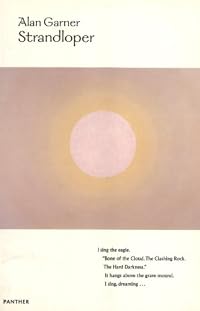
Strandloper
by Alan Garner
On This Page
Description
Based on the true story of William Buckley, Strandloper is an extraordinary feat of imaginative storytelling. The novel opens in rural Cheshire in the 1790s where William has been chosen to take the role of an ancient fertility figure in a village festival known as 'Shick-Shack' Day. When the local landowner discovers the celebration in the church William is arrested, tried and transported. Once he arrives in the strange, distant continent of Australia, he makes his escape and wanders for show more months in the bush. Eventually he is found, starving and delirious, by Aborigines who believe him to be the great hero of their people, returned from the dead. Over the years he spends with the Aborigines he does, indeed, become a law-giver and healer to the people. When he returns to the land of his birth the Dreaming of the Aborigines and the ancient green magic of England become one. show lessTags
Recommendations


























Member Reviews
William Buckley, transported to Australia in the 1790s, escapes, intending to walk north to China, then turn left for England and home, and end up spending thirty years amongst Aboriginals, taken in as a resurrected warrior and becoming a beloved and respected holy man. He eventually returns home.
And that's the story, and a strange, powerful and beautiful story it is, but with Garner it's the language. The words and folk dances of Buckley's home, the babble of dialects and cant on the ship, the precise and evocative language of the Aboriginals that reflect a whole different way of being. The language represents community, gang, tribe, and Buckley is initiated into each and is subjected to injustice, privation brutality and the ravenous show more incursion of colonialism, but the language lives on in Bukley, as does the Dreaming, fused into a transcendental final Dance at the climax of the book.
It's an incredible, beautiful, funny, mind-expanding, heartbreaking book. Garner working at the height of his not inconsiderable powers. There really is nobody else like him. show less
And that's the story, and a strange, powerful and beautiful story it is, but with Garner it's the language. The words and folk dances of Buckley's home, the babble of dialects and cant on the ship, the precise and evocative language of the Aboriginals that reflect a whole different way of being. The language represents community, gang, tribe, and Buckley is initiated into each and is subjected to injustice, privation brutality and the ravenous show more incursion of colonialism, but the language lives on in Bukley, as does the Dreaming, fused into a transcendental final Dance at the climax of the book.
It's an incredible, beautiful, funny, mind-expanding, heartbreaking book. Garner working at the height of his not inconsiderable powers. There really is nobody else like him. show less
This was inspired by the real life story of William Buckley, a giant of a man – between 6ft 5 inches and 6ft 7 inches, apparently – and an ex-soldier, who at the turn of the nineteenth century was transported to Australia for 14 years for carrying a bolt of cloth he maintained he had not known was stolen (British justice – the envy of the world, eh?). Shortly after arrival in what is now Australia, he learnt the penal colony was being moved to Van Diemen’s Land (Tasmania), and escaped. He was taken in by the Wathaurong People and spent thirty years living among them. The protagonist of Strandloper – also called William Buckley – is transported for “lopping” the local squire’s oaks, and sedition – the latter based on show more a piece of paper, a “tract”, containing passages from the Bible, chosen by the squire’s son, the semi-literate Buckley had been using to practice his writing. Buckley survives passage to Australia and, like his namesake, escapes and lives among one of the local peoples. Strandloper is a disconcerting read. There is no clear sense of time running through the narrative. The dialogue is given in local dialect, and for the first section consists mostly of local nonsense words used in songs and pagan practices. The end result is a short book, only 200 pages, which packs quite a punch. I’m reminded of Golding’s Rites of Passage, although that may simply be because they share an historical period. Yet now I think about it, both novels have an impressive immediacy, in Golding’s case generated by the use of journal entries as the narrative… and the fact Garner manages it using a (relatively) straightforward omniscient POV narrative is probably the greater achievement. Previously, I had only read Garner’s children books, and enjoyed them, and a Young Adult I found less satisfying. But Strandloper is good, and persuades me to hunt down more of his adult fiction. show less
A short novel very loosely based on the experiences of William Buckley, a British man transported to Australia who lived among the Aborigines there.
It's an impressive piece of literature; but the ways in which Garner's tale differs from the historical events is very illuminating of Garner's concerns.
One of the main themes of the book is drawing a parallel between the 'primitive' rituals and beliefs of the Aborigines and those of rural Britain - this is done masterfully. It's the sort of goal that, described briefly, sounds doubtful - but Garner describes individuals whose ignorance, from a modern perspective, is shocking - but does so in a way that gives a sense of a deep and abiding respect for human dignity.
(This theme of rural show more ignorance tempered with an ancient dignity is also found in Garner's novel, Thursbitch.)
Does it reflect reality? That's another question. Garner is deeply interested in linguistics and the power of language. In his tale, Buckley's 'crime' is accepting lessons in reading and writing from a local aristocrat's son. (In truth, he was accused of receiving stolen goods, and was illiterate throughout his long life.)
Garner is also a folklorist, specializing in the traditions of the British Isles. The English village that he describes is suffused with 'pagan' rituals, coexisting with Christianity. The rhymes and language of these traditions, as well as the dialect of the villagers, is vivid - the reader can practically hear the songs and the speech of the people. This depiction's convincingness depends on showing a remote, isolated population. Buckley is described as never having been 10 miles from the place of his birth. History records that, on the contrary, he'd been in the army, fought in the Netherlands, and was arrested in London.
This is not to say that I appreciate any less a story which is in large part about the magic of words. But Garner's 'wise fools' are, in a way, as mythical as the folkloric legends he studies.
The bittersweet romance of the story, with Buckley being sustained by the token his sweetheart gave him, and his dream of returning home to his true love, is heartbreakingly effective. The truth, of course, is that Buckley never returned to England (nor was he ever so naive as to think that he would walk home through China). But it makes a good tale; and rings true, in the way that folk tales can often be more true than history. show less
It's an impressive piece of literature; but the ways in which Garner's tale differs from the historical events is very illuminating of Garner's concerns.
One of the main themes of the book is drawing a parallel between the 'primitive' rituals and beliefs of the Aborigines and those of rural Britain - this is done masterfully. It's the sort of goal that, described briefly, sounds doubtful - but Garner describes individuals whose ignorance, from a modern perspective, is shocking - but does so in a way that gives a sense of a deep and abiding respect for human dignity.
(This theme of rural show more ignorance tempered with an ancient dignity is also found in Garner's novel, Thursbitch.)
Does it reflect reality? That's another question. Garner is deeply interested in linguistics and the power of language. In his tale, Buckley's 'crime' is accepting lessons in reading and writing from a local aristocrat's son. (In truth, he was accused of receiving stolen goods, and was illiterate throughout his long life.)
Garner is also a folklorist, specializing in the traditions of the British Isles. The English village that he describes is suffused with 'pagan' rituals, coexisting with Christianity. The rhymes and language of these traditions, as well as the dialect of the villagers, is vivid - the reader can practically hear the songs and the speech of the people. This depiction's convincingness depends on showing a remote, isolated population. Buckley is described as never having been 10 miles from the place of his birth. History records that, on the contrary, he'd been in the army, fought in the Netherlands, and was arrested in London.
This is not to say that I appreciate any less a story which is in large part about the magic of words. But Garner's 'wise fools' are, in a way, as mythical as the folkloric legends he studies.
The bittersweet romance of the story, with Buckley being sustained by the token his sweetheart gave him, and his dream of returning home to his true love, is heartbreakingly effective. The truth, of course, is that Buckley never returned to England (nor was he ever so naive as to think that he would walk home through China). But it makes a good tale; and rings true, in the way that folk tales can often be more true than history. show less
About two-thirds of the way through, my thoughts were:
"Absolutely loving it so far. The story plays fast and lose with the historical story it is 'based' on, doing more with mythic and fantastic elements than would be warranted for a strictly historical story. But in terms of a Garner story, pretty much what I was looking for. Note that I'm not making comment on the Indigenous aspects included, because I don't feel qualified to make comment."
And yet, by the finish:
"This books showcases Garner's fascination with language, with the incomprehensible, with the direct experience of mythology. It is very dreamy in places, very difficult to pick reality from fantasy/dream/delirium. It was fascinating reading, but I'm not sure I enjoyed it."
I'm show more not sure exactly where it lost me, but it was some throwaway line that would better have reflected a racist relative than someone portraying a culture not their own with respect. And it was so subtle that I can't even work out what it was. But for all of that, recommended for fans of Garner. show less
"Absolutely loving it so far. The story plays fast and lose with the historical story it is 'based' on, doing more with mythic and fantastic elements than would be warranted for a strictly historical story. But in terms of a Garner story, pretty much what I was looking for. Note that I'm not making comment on the Indigenous aspects included, because I don't feel qualified to make comment."
And yet, by the finish:
"This books showcases Garner's fascination with language, with the incomprehensible, with the direct experience of mythology. It is very dreamy in places, very difficult to pick reality from fantasy/dream/delirium. It was fascinating reading, but I'm not sure I enjoyed it."
I'm show more not sure exactly where it lost me, but it was some throwaway line that would better have reflected a racist relative than someone portraying a culture not their own with respect. And it was so subtle that I can't even work out what it was. But for all of that, recommended for fans of Garner. show less
You don't so much read Strandloper as immerse yourself in it and let it push and pull you about. It's familiar Garner, right enough, with added metaphysical transcendency (or a bit bonkers, if you prefer). It's not a book you'll forget in a hurry.
A re-interpretation of the tale of William Buckley who was transported to Australia as a convict, escaped and lived with Aborigines for thirty years, then rejoined white society when Melbourne was founded. Garner adds to this tale a spirituality which crosses cultures and a fascination with strange language: not only odd old English dialects and singsong rhymes, but also Aboriginal names and songs. Buckley changes names as he moves through the stages of his life (each represented by a part of the book), and each stage uses different language. Eventually he is called Strandloper -- he is the emissary between Aboriginal and English culture, in reverse. I didn't always understand the words, but rhythm and poetry permeated this unique story.
Members
- Recently Added By
Lists

Myth (Reuse and Retelling)
188 works; 24 members
Author Information

49+ Works 10,975 Members
Awards and Honors
Awards
Series
Belongs to Publisher Series
Common Knowledge
- Canonical title
- Strandloper
- Original publication date
- 1996
- Important places
- Australia; Cheshire, England, UK
- First words
- I sing the eagle.
- Last words
- (Click to show. Warning: May contain spoilers.)Here is the start of the Dream, and how the sweet sorrow is sung.
Classifications
Statistics
- Members
- 229
- Popularity
- 141,716
- Reviews
- 7
- Rating
- (3.87)
- Languages
- English, German
- Media
- Paper, Ebook
- ISBNs
- 6
- ASINs
- 2