
The Hollow Man
by Dan Simmons
On This Page
Description
Fantasy. Fiction. Horror. Science Fiction. HTML:Jeremy Bremen has a secret. All his life he's been cursed with the ability to read minds. He knows the secret thoughts, fears, and desires of others as if they were his own. For years, his wife, Gail, has served as a shield between Jeremy and the burden of this terrible knowledge. But Gail is dying, her mindebbing slowly away, leaving him vulnerable to the chaotic flood of thought that threatens to sweep away his sanity. Now show more Jeremy is on the run—from his mind, from his past, from himself—hoping to find peace in isolation. Instead he witnesses an act of brutality that propels him on a treacherous trek across a
dark and dangerous America. From a fantasy theme park to the lair of a killer to a sterile hospital room in St. Louis, he follows a voice that is calling him to witness the stunning mystery at the heart of mortality. show less
Tags
Recommendations
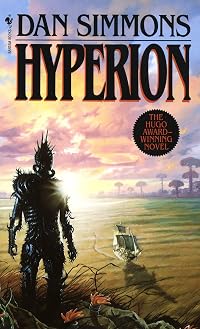






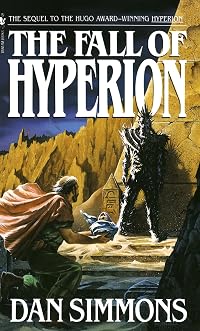


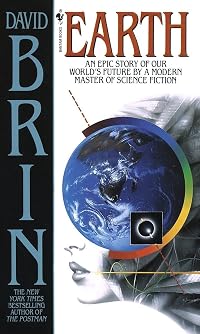


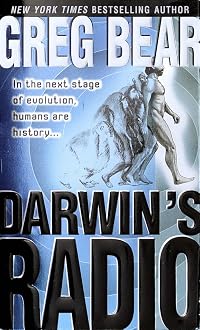


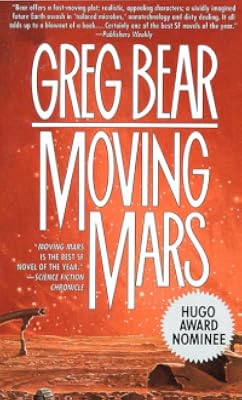
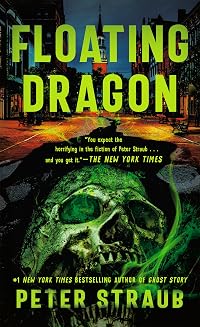








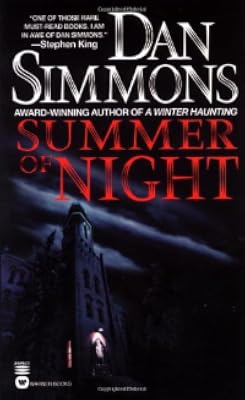






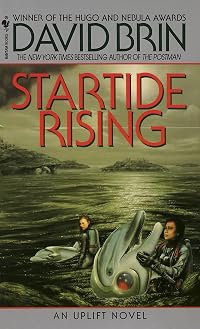










Member Recommendations

Member Reviews
I was torn in two by this book. Half of it – the half dealing with perception and parallel worlds and whether there’s life after death – I really liked. But the other half really turned me off, and not just because it was, in some parts, so totally disgusting. You see, the actual events of the book – rather than the flashbacks – are supposed to represent one man’s descent into metaphorical hell and rise back out after the death of his wife. This man also has the ability to read other peoples’ thoughts, but his wife was the only person with whom he could communicate back and forth telepathically, so after her death, he is exposed to the darkest thoughts that people hide, because he is in the dark himself. Okay, it’s a show more very nice concept – it just wasn’t executed very well. The hellish events that the man goes through – escaping from New York mobsters in Florida and Vegas, living on the streets in Denver, working for a female serial killer who tries to kill him with a special set of razor-blade dentures – are just so unbelievable that they become laughable, and the whole carefully constructed metaphor falls apart. But on the other hand, the flashback scenes and the theories about perception and parallel worlds (and I’m sure you’re wondering how all that fits into the plot) are intriguing and very believable, and the scene at Disney World is wonderful. So I can only just barely recommend this book, but my recommendation has to be lukewarm at best. show less
I have read all of Mr. Simmons work with the exception of his Hard Case books. The last several years have been spent tunneling through his work and enjoying all of it. How The Hollow Man fits into the scheme of things is sneaky and easy to miss if you are a casual Simmons fan. As is the case with several of his lesser known books it begins with a simple “What the Hell is going on?” This is a common thread with Simmons but one that the reader quickly learns not to underestimate. The Hollow man is pretentious and Simmons has no shame in this. The subject matter can and will cause the readers head to twirl and once you get the gist of it the brain opens up and goes ahhhh. Then you see what a genius Simmons is. The Hollow Man is a good show more book and once you read it you will realize that Simmons could have written it in his sleep. By the end of the story you might feel that Simmons has played the part of a devious trickster with the plot. But do not fret. There are many more Simmons novels to make you feel small. show less
Couldn't put it down. This rarely happens.
I read this book in a little over 2 days - the story, structure and language are captivating and sweeping.
That said, it is a sad story, full of pain, sadness and violence. A little too much of the latter to my taste, but it would not be as optimistic and heartwarming without it as a counterpart.
As opposed to other Simmons novels, this is very short, and even the structure of language is simpler and easier in terms of flow and rhythm.
All-in-all a very good read, including all of the familiar Simmons elements from the world of Math and Science, delivered in a masterful way.
I read this book in a little over 2 days - the story, structure and language are captivating and sweeping.
That said, it is a sad story, full of pain, sadness and violence. A little too much of the latter to my taste, but it would not be as optimistic and heartwarming without it as a counterpart.
As opposed to other Simmons novels, this is very short, and even the structure of language is simpler and easier in terms of flow and rhythm.
All-in-all a very good read, including all of the familiar Simmons elements from the world of Math and Science, delivered in a masterful way.
I read this book in two days and only put it down for eating, sleeping and going to work. It has a lot of merits. The literary capabilities of Dan Simmons are far above what we are usally treated to in Science Fiction. He can really tell a story. Most characters in the story are well developed and the progression of the story is fast paced and well told.
Jeremy Bremer is a telepath. He can read the random thoughts of normal people and shares what is called "mind touch" with his wife of 5 years. This means that they can share every single thought, memory and emotion they experience. In the opening chapter Jeremys wife dies. None of them has ever encountered any other telepaths and he feels totally alone. He abandons his pervious life and show more begins on a downward spiral, that brings him into more and more sinester parts of America.
The "mind touch" with his wife served as a shield against the mental background noise of "normal people", that Jeremy thinks of as "neuro-babble". When she dies the neuro-babble rises to to a level where it is painfull for Jeremy to be near too many people. Fleeing society it becomes clear, that Jeremy has become tuned into the darkest wavelengths of human thinking. He is not hearing the neurobabble of ordinary people. He is hearing and beeing drawn in by the dark thoughts of some of the most disturbed people in America.
If I had ratede this book on the night of having finished reading it, I would have given it five stars. Having given it a bit more thought I find that there are a few reasons, that it can not get the top grade. Simmons discribes his main character with little empathy. Often I find myself not believing in Jeremy. His actions seem poorly predicted by the previous story or by his history as a teacher and a mathmatician. Worse by far is the fact, that the central premise of Jeremys telepathy has not been taken to the logical conclusion. Jeremy can read the minds of normal people, he can sense emotions and he can impress thoughts, images and ideas on the minds of others. But he never once uses this ability to defend himself. It seems that it has not occured to Jeremy (or Simmons) that his ability can be used offensively.
I still very much like this book. I just do not think that Simmons takes it all the way, the way he could have. show less
Jeremy Bremer is a telepath. He can read the random thoughts of normal people and shares what is called "mind touch" with his wife of 5 years. This means that they can share every single thought, memory and emotion they experience. In the opening chapter Jeremys wife dies. None of them has ever encountered any other telepaths and he feels totally alone. He abandons his pervious life and show more begins on a downward spiral, that brings him into more and more sinester parts of America.
The "mind touch" with his wife served as a shield against the mental background noise of "normal people", that Jeremy thinks of as "neuro-babble". When she dies the neuro-babble rises to to a level where it is painfull for Jeremy to be near too many people. Fleeing society it becomes clear, that Jeremy has become tuned into the darkest wavelengths of human thinking. He is not hearing the neurobabble of ordinary people. He is hearing and beeing drawn in by the dark thoughts of some of the most disturbed people in America.
If I had ratede this book on the night of having finished reading it, I would have given it five stars. Having given it a bit more thought I find that there are a few reasons, that it can not get the top grade. Simmons discribes his main character with little empathy. Often I find myself not believing in Jeremy. His actions seem poorly predicted by the previous story or by his history as a teacher and a mathmatician. Worse by far is the fact, that the central premise of Jeremys telepathy has not been taken to the logical conclusion. Jeremy can read the minds of normal people, he can sense emotions and he can impress thoughts, images and ideas on the minds of others. But he never once uses this ability to defend himself. It seems that it has not occured to Jeremy (or Simmons) that his ability can be used offensively.
I still very much like this book. I just do not think that Simmons takes it all the way, the way he could have. show less
Dan Simmons is a pretty smart guy. For example, in this novel he works quantum theory and chaos math into a novel about a telepath on the lam. Thaose elements are pretty well done, and the ending really ties everything together with a nice little grace note. That said, I almost put the book down halfway through.
The protagonist, our telepath, is Jeremy Bremer. As the novel begins, Jeremy loses his wife (who was also a telepath) to brain cancer. His connection to his wife was a big part in keeping other peoples thoughts out of his mind, so between grief and a serious case of psychic hypersensitivity, he decides to make a complete break with his life.
At first, that just involves a quiet vacation in the Florida Everglades. Soon enough, show more through a series of unexpected circumstances, he finds himself plunging into darker and darker spaces (both mentally and physically). Incidentally, some of these circumstances arise because Jeremy seems pretty easy to sneak up on for a telepath. (I was unsure if this was meant to be a running gag.) Through another series of circumstances (some might say coincidences), he ends up discovering how he might be able to get back what he has lost.
However, as I said before, I almost gave up on the novel halfway through. Simmons may have a solid grasp of quantum physics, but he doesn't quite manuever all of the dramatic aspects as well. The book really drags while Jeremy is on the aimless part of his journey, and the attempt to liven it up with a horror-story sequence was not entirely convincing, perhaps even a bit jarring. (It was actually sort of fun, but added an extra degree of inconsistency to the tone of the novel.)
Also off-putting was a scene where Jeremy describes Gail's physical beauty, which runs too long and is filled with too many cliches--perhaps it's just a personal thing, but it kind of sabotaged the emotional investment I may have had in their relationship. The poignancy of losing someone with whom one has such a special connection is powerful enough on its own. The description of her hotness, which assures us of the perkiness (and perfect shape) of her breasts and how "finely chiselled" her features are took me out of the story too much.
I have to admit there is the possibility that I'm being overly harsh. Taken on the level of a standard pulpy thriller, like something from Koontz, it's a fairly decent work. But Simmons seems to be attempting something more complex (which he achieves in other works) so it was just sort of frustrating to see the novel fail to live up to those ambitions.
So, there's some interesting elements at work here, and a good ending. But I'd say this is definitely not Simmons' best. If you're interested in high-concept science fiction, stick with the Hyperion series. If you want to see Simmons exploring dark material, stick with his horror novels. (Song of Kali, Carrion Comfort, etc.) show less
The protagonist, our telepath, is Jeremy Bremer. As the novel begins, Jeremy loses his wife (who was also a telepath) to brain cancer. His connection to his wife was a big part in keeping other peoples thoughts out of his mind, so between grief and a serious case of psychic hypersensitivity, he decides to make a complete break with his life.
At first, that just involves a quiet vacation in the Florida Everglades. Soon enough, show more through a series of unexpected circumstances, he finds himself plunging into darker and darker spaces (both mentally and physically). Incidentally, some of these circumstances arise because Jeremy seems pretty easy to sneak up on for a telepath. (I was unsure if this was meant to be a running gag.) Through another series of circumstances (some might say coincidences), he ends up discovering how he might be able to get back what he has lost.
However, as I said before, I almost gave up on the novel halfway through. Simmons may have a solid grasp of quantum physics, but he doesn't quite manuever all of the dramatic aspects as well. The book really drags while Jeremy is on the aimless part of his journey, and the attempt to liven it up with a horror-story sequence was not entirely convincing, perhaps even a bit jarring. (It was actually sort of fun, but added an extra degree of inconsistency to the tone of the novel.)
Also off-putting was a scene where Jeremy describes Gail's physical beauty, which runs too long and is filled with too many cliches--perhaps it's just a personal thing, but it kind of sabotaged the emotional investment I may have had in their relationship. The poignancy of losing someone with whom one has such a special connection is powerful enough on its own. The description of her hotness, which assures us of the perkiness (and perfect shape) of her breasts and how "finely chiselled" her features are took me out of the story too much.
I have to admit there is the possibility that I'm being overly harsh. Taken on the level of a standard pulpy thriller, like something from Koontz, it's a fairly decent work. But Simmons seems to be attempting something more complex (which he achieves in other works) so it was just sort of frustrating to see the novel fail to live up to those ambitions.
So, there's some interesting elements at work here, and a good ending. But I'd say this is definitely not Simmons' best. If you're interested in high-concept science fiction, stick with the Hyperion series. If you want to see Simmons exploring dark material, stick with his horror novels. (Song of Kali, Carrion Comfort, etc.) show less
This is one of Simmons' less-successful works, imo. It uses math and physics to try to explain the mind, thought, memory, consciousness, personality. That's difficult enough, for a left-brained human like myself. The other problem is trying to suspend disbelief in a so-called perfect hetero relationship. Dispersed in chapters between those two authorial concepts is a lot of violence. Meh.
Jeremy Bremen is a mathematician and telepath, his wife - whose combined mind-shield helped keep them both sane - has died and his ground-breaking work in modeling the working of human consciousness is has been abruptly abandoned. Unable to cope with the overpowering 'neurobabble' and his own despair he forsakes his previous life and flees through a series of bizarre and sometimes brutal life experiences. This is kinda cool, there's a healthy dose of chaos theory, quantum physics and neuroscience blended into what could, with a tiny shift in direction, be a horror novel. Simmons has a bit of a leaning toward exploring the darker side.
Members
- Recently Added By
Author Information

133+ Works 69,737 Members
Science fiction writer Dan Simmons was born in East Peoria, Illinois in 1948. He graduated from Wabash College in 1970 and received an M. A. from Washington University the following year. Simmons was an elementary school teacher and worked in the education field for a decade, including working to develop a gifted education program. His first show more successful short story was won a contest and was published in 1982. His first novel, Song of Kali, won a World Fantasy Award, and Simmons has also won a Theodore Sturgeon Award for short fiction, four Bram Stoker Awards, and eight Locus Awards. He is also the author of the Hyperion series, and Simmons and his work have been compared to Herbert's Dune and Asimov's Foundation series. (Bowker Author Biography) show less
Some Editions
Awards and Honors
Awards
Work Relationships
Is contained in
Was inspired by
Common Knowledge
- Original publication date
- 1992
- People/Characters
- Jeremy Bremen; Gail Bremen
- Important places
- St. Louis, Missouri, USA; USA
- First words
- Bremen left the hospital and his dying wife and drove east to the sea.
Classifications
Statistics
- Members
- 1,041
- Popularity
- 24,799
- Reviews
- 18
- Rating
- (3.48)
- Languages
- 9 — Danish, Dutch, English, French, German, Italian, Maltese, Polish, Spanish
- Media
- Paper, Audiobook, Ebook
- ISBNs
- 20
- ASINs
- 6