On This Page
Description
Troubling nightmares about a strange poker game he once attended are calling retired gambler Scott Crane back to Las Vegas. For the mythic game he believed he won did not end that night-and the price of his winnings was his soul.Tags
Recommendations






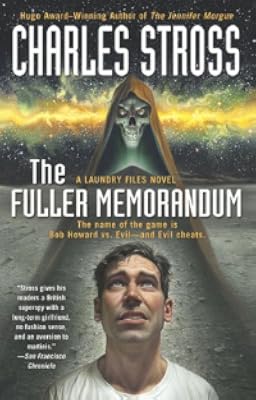
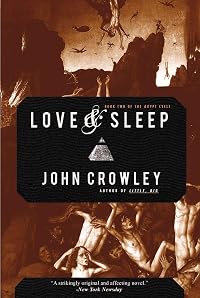
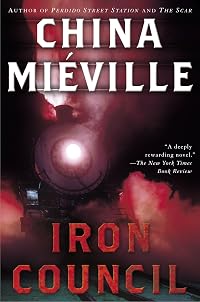

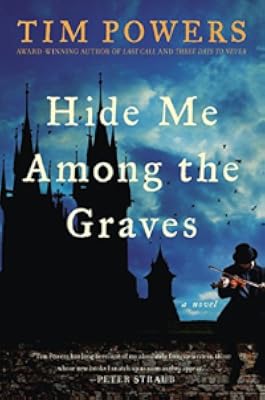




Member Recommendations
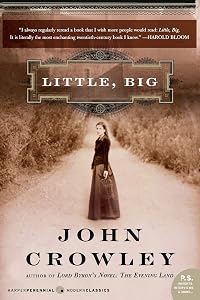
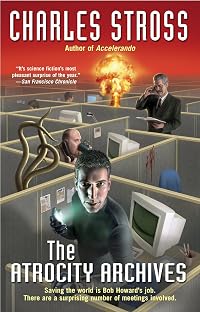
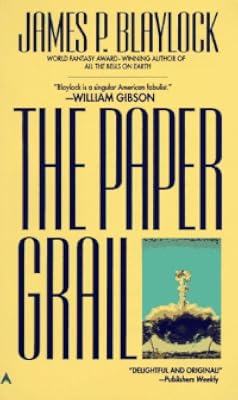
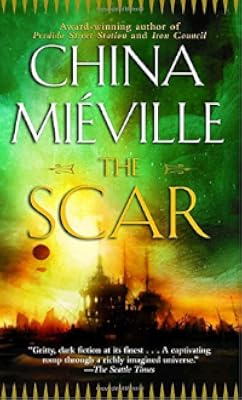
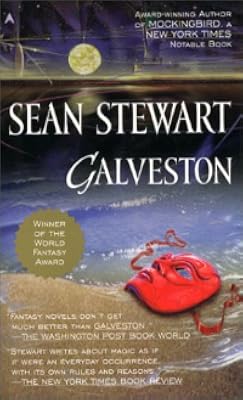
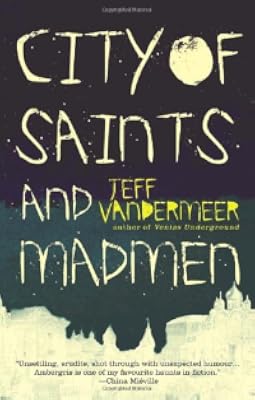
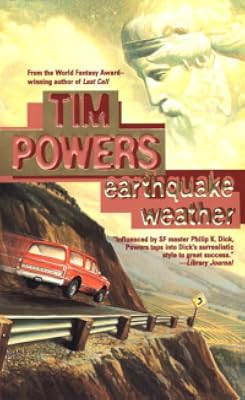
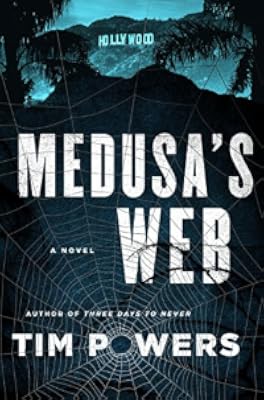
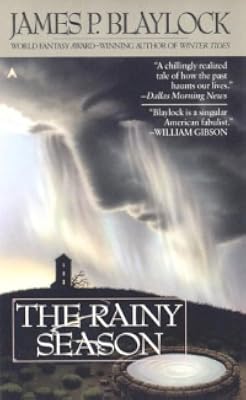
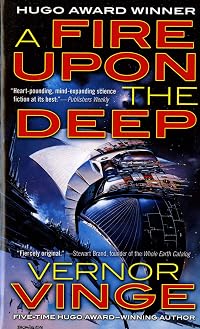
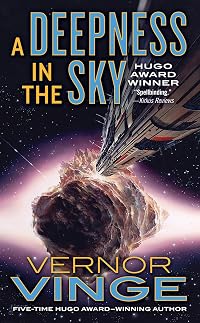
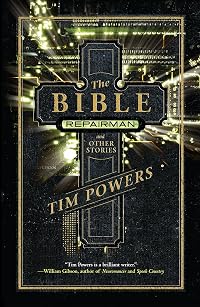
grizzly.anderson Both are about old world gods making their place in the new world.
MyriadBooks For aspiring to win in a bargain with gods.
30

Member Reviews
Last Call (1992) by Tim Powers is a complex urban fantasy that puts Los Vegas deep in the uncanny valley. Think David Lynch’s Twin Peaks (1990) with tarot cards, neon lights, and Bugsy Siegel’s ghost. As a child, Scott Crane lost an eye when his father threw a sharpened poker chip at him. In a car chase with hoodlums, his mother saved his life by throwing him into a yacht that belonged to a local wizard. Naturally, he becomes a gambler who eventually plays poker for his soul.
The book abounds with poker lore, pop culture memes, creepy quotes from T. S. Eliot’s The Waste Land, and symbolic allusions to the Arthurian Grail story. At one point, Powers explains the rules of a fictional version of poker called Assumption. The wary show more reader will note them well.
Last Call is stylish and readable, with plenty of suspense. Lynch should have made a miniseries from it. show less
The book abounds with poker lore, pop culture memes, creepy quotes from T. S. Eliot’s The Waste Land, and symbolic allusions to the Arthurian Grail story. At one point, Powers explains the rules of a fictional version of poker called Assumption. The wary show more reader will note them well.
Last Call is stylish and readable, with plenty of suspense. Lynch should have made a miniseries from it. show less
Of all Tim Power's books I think this is the one that can be safely called his tour-de-force. A magnificent concatenation of tarot, Arthurian myth, chaos theory, the highs and lows of gambling, the glitter and glitz and dead-eyed exhaustion of Las Vegas, secret and not-so-secret histories involving the ganster Bugsy Siegel, and a collection of misfits and loser and degenerates, some of whom are our protagonists.
After young Scott Crane escapes his father's intention to core him out and take over his body, he's found and adopted by a canny gambler with an eye for the magical undercurrents that swirl around card games. Years later he takes part in a strange game on a lake, which causes his foster father to take his foster sister and show more abandon him. Now a debt is being called due, and it looks like he's pretty much doomed. His wife dies, he seeks solace in alcohol, and has visions of awesome powers under the surgface of reality. In an effort to get his life in some sort of order, he goes back to poker playing, but that in turn sets off an alarm that makes the Fisher King aware that one of his jacks is back in play, and like the others he is being drawn back to Las Vegas and another game on the lake where the King will finally take what's his.
It's just an amazing, sprawling, twisting and turning story, held together with a meticulous mythology that fits almost seemlessly with reality. The seamy glamour of Las Vegas never seemed so shiny or so dangerous.
Great, laconic, wry narration and subtle voice work by the reader. show less
After young Scott Crane escapes his father's intention to core him out and take over his body, he's found and adopted by a canny gambler with an eye for the magical undercurrents that swirl around card games. Years later he takes part in a strange game on a lake, which causes his foster father to take his foster sister and show more abandon him. Now a debt is being called due, and it looks like he's pretty much doomed. His wife dies, he seeks solace in alcohol, and has visions of awesome powers under the surgface of reality. In an effort to get his life in some sort of order, he goes back to poker playing, but that in turn sets off an alarm that makes the Fisher King aware that one of his jacks is back in play, and like the others he is being drawn back to Las Vegas and another game on the lake where the King will finally take what's his.
It's just an amazing, sprawling, twisting and turning story, held together with a meticulous mythology that fits almost seemlessly with reality. The seamy glamour of Las Vegas never seemed so shiny or so dangerous.
Great, laconic, wry narration and subtle voice work by the reader. show less
This was one of those rare page-turners... after a certain point I just could not put it down, which is why I started in on the second half of the book around midnight tonight and am just now finishing at 6am. This is a book firing on all cylinders - pitch-perfect characterization, a deep and involving mythology, suspense, thrills, and incredible high stakes. Highly recommended, even to people who don't understand poker (like myself).
Ah, now this is the[[Tim Powers]] novel I needed to read. Reputed to be one of his best, 1992's [Last Call] follows his usual practice of building intriguing secret histories by mixing bits of actual history with the fantastic. Here, history and fantasy meet in Las Vegas, that strange kingdom in the desert, built on hopes for the supernatural in the form of luck at gambling.
The most important bit of real history in the book is the story of Benjamin "Bugsy" Siegel, the gangster who began Las Vegas's journey to becoming a gambling paradise. History tells us that Siegel was gunned down in his girlfriend's house on June 20, 1947, by unknown persons. In [Last Call], we learn that Siegel was the Fisher King, ruling over this arid land, and show more that his killer, one Georges Leon, went on to replace him as Vegas's secret master.
In the Fisher King story, the King has an injury which hinders his ability to rule, and which is reflected in a sickness in the land. The lurid towerscape of modern Las Vegas, gulping water unsustainably, drawing people who desperately game away their savings and the precious energies of their lives, provides Powers's main setting, and an emblem of its ruler's sickness, a sickness derived from Leon's selfish quest for a terrible immortality.
It seems that games of chance link our ordered, daylight world with the chaotic depths of the human subconscious. In those depths swim the great archetypes that rule our selves and our actions. Leon learns to use card games, played not with the standard 52-card deck but with the larger Tarot deck, to steal his opponents' bodies. He can replace their personalities with his own, possessing several at one time, switching his consciousness between them, acquiring younger ones as the current ones age. Only once in 20 years can he play the great game that enables this theft. There, several opponents become marked, slated to be dispossessed of their bodies after the subsequent game, 20 years in the future.
In 1948, Leon tries to short-circuit the process, to capture the body of his five year old son, Scotty. Leon's wife sacrifices her life to get Scotty away from his father, and the boy ends up with a caring, adoptive father, Ozzie, who teaches him to become a superb poker player. In 1969, Scotty defies Ozzie, plays in a game which turns out to be Leon's, and is marked for assimilation in two decades. In 1990, the heart-attack death of his wife, the need to earn more poker money, and increasing attention from Leon's agents bring Scotty Crane, as he's now known, back into his father's kingdom. He must find some way to escape his doom.
The story belongs almost as much to Ozzie's second adopted child, Diana, as to Scotty. Diana's mother was the hidden Queen of Las Vegas, murdered by Leon's agents, for this King will brook no Queen at his side. As the Queen's daughter, Diana is also a murder target, facing attacks against herself and her young sons. As Diana's mother was, in this world, Isis, so Diana's story adds the Osiris and Isis myth to the novel. Tarot lore is relevant throughout. Also hitting Vegas are various other characters who also understand the powers in play, seeking the King's or Queen's seats for themselves, serving as Leon's criminal henchmen, or looking for some sort of rescue or shelter. Chaos theory and the Mandelbrot set make appearances. And the gods and goddesses of the great archetypes are most intent on what may happen.
Despite the many elements in play, Powers maintains a thriller's pace. The several crucial card games are suspenseful, vividly recounted, and easy to follow. The foundational stories of myth are well-integrated and brought up to date. For example, when Scotty's desperate mother, chased by Leon, must give her child to the world, she puts him in a boat, which sits on a car trailer, bound out into the desert - there being no reed baskets or streams available.
Powers takes time for humor, too. Here, Scotty is seeking a copy of Leon's preternaturally dire Lombardy Zeroth Tarot deck. He phones a specialist bookseller, who says none can be found:
"Bullshit," said Crane. "I've seen two different complete decks, one in 1948 and one in 1969. And I've talked to the man who painted one of them."
There was a long silence from the other end of the line. Finally the man said, quietly, "Was he all right?"
"Well, he was blind." Crane was silent now for a few seconds. "He, uh, cut out his eyes twenty years ago."
"Did he indeed. And you've seen the cards, a full deck. Are you all right."
(...)
"No"
"Trust me," said the voice on the telephone, "it won't help you to look at those things again. Absorb yourself with crossword puzzles and daytime soap operas. Actually, obtaining a lobotomy might be your wisest course."
There are sequels, but the book stands alone perfectly well, with a satisfying conclusion. show less
The most important bit of real history in the book is the story of Benjamin "Bugsy" Siegel, the gangster who began Las Vegas's journey to becoming a gambling paradise. History tells us that Siegel was gunned down in his girlfriend's house on June 20, 1947, by unknown persons. In [Last Call], we learn that Siegel was the Fisher King, ruling over this arid land, and show more that his killer, one Georges Leon, went on to replace him as Vegas's secret master.
In the Fisher King story, the King has an injury which hinders his ability to rule, and which is reflected in a sickness in the land. The lurid towerscape of modern Las Vegas, gulping water unsustainably, drawing people who desperately game away their savings and the precious energies of their lives, provides Powers's main setting, and an emblem of its ruler's sickness, a sickness derived from Leon's selfish quest for a terrible immortality.
It seems that games of chance link our ordered, daylight world with the chaotic depths of the human subconscious. In those depths swim the great archetypes that rule our selves and our actions. Leon learns to use card games, played not with the standard 52-card deck but with the larger Tarot deck, to steal his opponents' bodies. He can replace their personalities with his own, possessing several at one time, switching his consciousness between them, acquiring younger ones as the current ones age. Only once in 20 years can he play the great game that enables this theft. There, several opponents become marked, slated to be dispossessed of their bodies after the subsequent game, 20 years in the future.
In 1948, Leon tries to short-circuit the process, to capture the body of his five year old son, Scotty. Leon's wife sacrifices her life to get Scotty away from his father, and the boy ends up with a caring, adoptive father, Ozzie, who teaches him to become a superb poker player. In 1969, Scotty defies Ozzie, plays in a game which turns out to be Leon's, and is marked for assimilation in two decades. In 1990, the heart-attack death of his wife, the need to earn more poker money, and increasing attention from Leon's agents bring Scotty Crane, as he's now known, back into his father's kingdom. He must find some way to escape his doom.
The story belongs almost as much to Ozzie's second adopted child, Diana, as to Scotty. Diana's mother was the hidden Queen of Las Vegas, murdered by Leon's agents, for this King will brook no Queen at his side. As the Queen's daughter, Diana is also a murder target, facing attacks against herself and her young sons. As Diana's mother was, in this world, Isis, so Diana's story adds the Osiris and Isis myth to the novel. Tarot lore is relevant throughout. Also hitting Vegas are various other characters who also understand the powers in play, seeking the King's or Queen's seats for themselves, serving as Leon's criminal henchmen, or looking for some sort of rescue or shelter. Chaos theory and the Mandelbrot set make appearances. And the gods and goddesses of the great archetypes are most intent on what may happen.
Despite the many elements in play, Powers maintains a thriller's pace. The several crucial card games are suspenseful, vividly recounted, and easy to follow. The foundational stories of myth are well-integrated and brought up to date. For example, when Scotty's desperate mother, chased by Leon, must give her child to the world, she puts him in a boat, which sits on a car trailer, bound out into the desert - there being no reed baskets or streams available.
Powers takes time for humor, too. Here, Scotty is seeking a copy of Leon's preternaturally dire Lombardy Zeroth Tarot deck. He phones a specialist bookseller, who says none can be found:
"Bullshit," said Crane. "I've seen two different complete decks, one in 1948 and one in 1969. And I've talked to the man who painted one of them."
There was a long silence from the other end of the line. Finally the man said, quietly, "Was he all right?"
"Well, he was blind." Crane was silent now for a few seconds. "He, uh, cut out his eyes twenty years ago."
"Did he indeed. And you've seen the cards, a full deck. Are you all right."
(...)
"No"
"Trust me," said the voice on the telephone, "it won't help you to look at those things again. Absorb yourself with crossword puzzles and daytime soap operas. Actually, obtaining a lobotomy might be your wisest course."
There are sequels, but the book stands alone perfectly well, with a satisfying conclusion. show less
"Last night I stayed up late playing poker with Tarot cards. I got a full house and four people died." - Steven Wright
While finishing with The Stand, the climax of which takes place in a haunting, demonic ghost town version of Las Vegas, I had to struggle not to compare King's version of bad magic in Sin City to Tim Powers' in Last Call, one of my all-time favorite novels. And the comparison was totally unfair of me to make, because as far as I'm concerned, Tim Powers is the sine qua non of making the ordinary strange, and the strange ordinary, and nowhere has he to date done it better than in this bizarrely awesome novel, in which the archetypes of the Tarot meet the warty fat man in the famous Mandelbrot fractal and Bugsy Siegel was show more once the Fisher King of the American West.
And it all happens because of poker. Well, poker and a special kind of demented hunger for power, the latter satisfied in an exceedingly strange way by means of an extremely strange version of the former. As in a poker game played with an exceptionally powerful Tarot deck. If you get a full house in this game, you don't kill people a la Steven Wright, but you do risk losing your immortal soul, or at least your body; you risk becoming a new host for an evil magician type who is doing his damndest not only to become the new Fisher King, but to stay king forever. Yowza.
Our hero is an aging beery bum of a semi-professional poker player, adopted by a poker legend as a young child after being deposited, Moses-like, in a trailered boat by a doomed mother frantic to escape her terrifying husband. Scott "Scarecrow" Crane is literally and physically scarred by this barely-remembered childhood trauma even before he is manipulated into joining a certain game played with a certain deck under the aegis of a certain mysteriously powerful someone who has been desperately seeking a way to become a metaphysical parent since he was thwarted in being a real one...
The dual nature of the relationship between our man Crane and the evil magician Georges Leon is the first of many neat parallels with the dual Fisher King/Wounded King motif in Arthurian legend, and is just one of the many delights awaiting the literary nerd, the student of nature and human nature, the math and probability geek, the gambling aficionado, the archetypal psychology fan. Powers' magical system, developed here and revisited in later semi-sequels/sidequels (Expiration Date and Earthquake Weather now marketed after the fact with Last Call as a trilogy called "Fault Lines") is the most compellingly believable I've ever encountered, logical and thoroughly imagined and plausible to the point where to this day if I happen to see peoplebplaying cards, I catch myself watching how cigarette smoke billows across the table or levels in drinks tilt or don't tilt, as clues to how the game is going, what the stakes might be, who is going to win -- and how all of this might somehow predict the future. And we won't even talk about what I think of a certain mathematical set, which gives me the creeps to this day.
And oh, the characters. Especially the villains, of whom there are many, in a stunning variety. Al Funo, the social maladroit who thinks he's some kind of major smooth operator, whom Powers imbues with stunning creepiness, banal phrase by banal phrase. Ray-Joe Pogue, resplendent in Elvis gear (hey, this is Vegas, baby) and the Amino Acids (who else but Tim Powers could make a bunch of guys in El Caminos scary?). Vaughan Trumbill, the illustrated fat man with the world's weirdest case of Renfield syndrome.* Dondi Snayheever, raised in a series of Skinner boxes to become the world's greatest poker player, abused into becoming a demented psychic dowsing rod instead. And then there's the bad king, Georges Leon himself, tapped into all of the godlike power this archetypal kingship offers, using it only to prolong his life and keep swapping.
What really sells this novel, though, is the magic, rendered by Powers as a precise set of analogy and correspondence between will and result. It's consistent, powerful and, unlike what we usually see in the urban fantasy genre (I've argued elsewhere that Powers was writing urban fantasy before urban fantasy was a thing), contemporary, even as it also hooks into the good old Jungian archetypes represented by the Tarot and Arthurian legend. These are not people adhering to the rituals and rites found in some dusty 500 year old spell book; there is creativity and cleverness in what they do as a result of observing and learning and, OMG, thinking for themselves. No wise old man is handing out quests here. Hooray!
Since I last read this book, I got to visit Hoover Dam, where one of the climactic scenes of the novel takes place (just before Holy Week, yet, which is next week as I dictate these lines). So of course I shivered, looking out at Lake Mead and wondering if maybe Bugsy Siegel's head wasn't down in the depths somewhere. I watched the other visitors for telltale herky-jerky movements. I prayed I wouldn't see an Elvis. Even though I knew Diana had tamed the water.
Happy Easter, everybody!
I swear all of that will make sense if you read the book. All of that and more.
*There's an illustration by the brilliant J.T. Potter of him as the Mandelbrot Man in the deluxe hardcover edition that will scare the crap out of you. show less
While finishing with The Stand, the climax of which takes place in a haunting, demonic ghost town version of Las Vegas, I had to struggle not to compare King's version of bad magic in Sin City to Tim Powers' in Last Call, one of my all-time favorite novels. And the comparison was totally unfair of me to make, because as far as I'm concerned, Tim Powers is the sine qua non of making the ordinary strange, and the strange ordinary, and nowhere has he to date done it better than in this bizarrely awesome novel, in which the archetypes of the Tarot meet the warty fat man in the famous Mandelbrot fractal and Bugsy Siegel was show more once the Fisher King of the American West.
And it all happens because of poker. Well, poker and a special kind of demented hunger for power, the latter satisfied in an exceedingly strange way by means of an extremely strange version of the former. As in a poker game played with an exceptionally powerful Tarot deck. If you get a full house in this game, you don't kill people a la Steven Wright, but you do risk losing your immortal soul, or at least your body; you risk becoming a new host for an evil magician type who is doing his damndest not only to become the new Fisher King, but to stay king forever. Yowza.
Our hero is an aging beery bum of a semi-professional poker player, adopted by a poker legend as a young child after being deposited, Moses-like, in a trailered boat by a doomed mother frantic to escape her terrifying husband. Scott "Scarecrow" Crane is literally and physically scarred by this barely-remembered childhood trauma even before he is manipulated into joining a certain game played with a certain deck under the aegis of a certain mysteriously powerful someone who has been desperately seeking a way to become a metaphysical parent since he was thwarted in being a real one...
The dual nature of the relationship between our man Crane and the evil magician Georges Leon is the first of many neat parallels with the dual Fisher King/Wounded King motif in Arthurian legend, and is just one of the many delights awaiting the literary nerd, the student of nature and human nature, the math and probability geek, the gambling aficionado, the archetypal psychology fan. Powers' magical system, developed here and revisited in later semi-sequels/sidequels (Expiration Date and Earthquake Weather now marketed after the fact with Last Call as a trilogy called "Fault Lines") is the most compellingly believable I've ever encountered, logical and thoroughly imagined and plausible to the point where to this day if I happen to see peoplebplaying cards, I catch myself watching how cigarette smoke billows across the table or levels in drinks tilt or don't tilt, as clues to how the game is going, what the stakes might be, who is going to win -- and how all of this might somehow predict the future. And we won't even talk about what I think of a certain mathematical set, which gives me the creeps to this day.
And oh, the characters. Especially the villains, of whom there are many, in a stunning variety. Al Funo, the social maladroit who thinks he's some kind of major smooth operator, whom Powers imbues with stunning creepiness, banal phrase by banal phrase. Ray-Joe Pogue, resplendent in Elvis gear (hey, this is Vegas, baby) and the Amino Acids (who else but Tim Powers could make a bunch of guys in El Caminos scary?). Vaughan Trumbill, the illustrated fat man with the world's weirdest case of Renfield syndrome.* Dondi Snayheever, raised in a series of Skinner boxes to become the world's greatest poker player, abused into becoming a demented psychic dowsing rod instead. And then there's the bad king, Georges Leon himself, tapped into all of the godlike power this archetypal kingship offers, using it only to prolong his life and keep swapping.
What really sells this novel, though, is the magic, rendered by Powers as a precise set of analogy and correspondence between will and result. It's consistent, powerful and, unlike what we usually see in the urban fantasy genre (I've argued elsewhere that Powers was writing urban fantasy before urban fantasy was a thing), contemporary, even as it also hooks into the good old Jungian archetypes represented by the Tarot and Arthurian legend. These are not people adhering to the rituals and rites found in some dusty 500 year old spell book; there is creativity and cleverness in what they do as a result of observing and learning and, OMG, thinking for themselves. No wise old man is handing out quests here. Hooray!
Since I last read this book, I got to visit Hoover Dam, where one of the climactic scenes of the novel takes place (just before Holy Week, yet, which is next week as I dictate these lines). So of course I shivered, looking out at Lake Mead and wondering if maybe Bugsy Siegel's head wasn't down in the depths somewhere. I watched the other visitors for telltale herky-jerky movements. I prayed I wouldn't see an Elvis. Even though I knew Diana had tamed the water.
Happy Easter, everybody!
I swear all of that will make sense if you read the book. All of that and more.
*There's an illustration by the brilliant J.T. Potter of him as the Mandelbrot Man in the deluxe hardcover edition that will scare the crap out of you. show less
My reactions to reading this in 2002. Spoilers follow.
This is the first in a trilogy consisting of Last Call, Expiration Date, and Earthquake Weather. There are few obvious links between the first two novels. Neal Obstadt shows up in both books as sort of an occult underworld figure. In Expiration Date, he is a dealer and user of ghosts to inhale. Here he is one of those hunting for protagonist Scott Crane. The issue of ghosts does show up here with the creepy ghost of Susan Crane, Scott Crane's dead wife who is not only a creepy ghost hanging around his house and later haunting him but also a representative of Death who tries to lure Scott into giving up and dying rather than struggling to reclaim his soul. Both books exhibit what show more seems to be Powers' characteristic blend of history, science, literary allusion, and myth, all in the service of a secret history plot wedged into the interstices of historical fact.
Here Powers' blends the history and present of Las Vegas, chaos physics, Arthurian lore, the legend of the Fisher King, pagan myth, gambling, and Tarot lore to produce a compelling plot. On one level, the plot is similar to Expiration Date: a bunch of people engage in violent machinations to attain power or persons who represents great power. That pursued person or person has to take steps to save their life and extricate themselves from danger. The specifics: protagonist Scott Crane is pursued by the soul of his father so his father can possess Crane's soul, which he won in a game of Assumption (a peculiar card game played with a Tarot deck where hands are "married" and "conceived") and others seek to kill him because they suspect he will try to replace the current Fisher King, his father. Here Scott's adopted sister, Diana, is also pursued.
Last Call, though, is a grimmer book; it's characters more desperate, its plot more violent. Scott's adopted father, Ozzie, dies. Indeed, death and onstage violence is more integral to this plot than that of Expiration Date. The book opens with Scott's biological father trying to prepare his body as a repository for his consciousness (as his brother has already been used) and relates how he's wounded "in the thigh" by his wife and how he's killed the old Fisher King, Bugsy Siegel, founder of Las Vegas. (Here a Perilous Castle in a wasteland and a nexus for the gods of randomness and chance.) Human sacrifice is even an integral part of the heroes as well as the villains. (The gods, it seems, are probably not satisfied with the fake sacrifices of mannequins in Doom Town, the atomic bomb testing site outside of town). Each must kill, or facilitate, the death of someone to achieve their ends. (And Powers does a nice job showing how reluctant Scott, Mavranos, and Ozzie are to shed blood.)
Each book has relatively short sections of dialogue (though some of the short exchanges in Last Call, where various people suggest to Scott that he'd just be better off killing himself before father Georges Leon assumes his body, are pretty creepy and memorable). In both cases, the dialogue is sometimes built around literary works -- Lewis Carroll's Alice books in Expiration Date and T.S. Eliot's "The Waste Land", Tennyson's "Idyls of the King", and Ben Jonson's Volpone, amongst others (as well as several popular songs from the Andrew Sisters to the Eagles) in Last Call. As to desperation, Scott Crane is out to save his soul and body (bodyswitching, a prime thematic preoccupation of Powers); Diana Crane must save her children; Mavranos (one of my very favorite characters -- I was very glad he was cured of his cancer) seeks a cure for his illness. It is that increased level of violence and desperation and the presentation of the literal Vegas and its mythic underpinnings (including the giant statues outside of the casinos representing archetypes come to life and threatening Diana Crane and Bernardette Dinh) which make this book more resonant and effective than the still good Expiration Date.
However, I think the presence of poker and the Tarota is what really makes this book more memorable. English, particularly American English, is full of idioms derived from poker. Tarot cards are fascinating, even to a non-mystic like me, for their relation to regular playing cards and their fascinating, often macabre pictures standing in for various elements of the human experience, their combination a colorful, allegedly prophetic version of solitaire. I suspect most of the details Powers relates about it are correct. He does a good job with his factual research. (His gun stuff is good though his guns, at least for his characters, seem to pack a bit too much recoil.) He mentions, in passing, the myth the Studies and Operations Group used against the Viet Cong: the liberator Le Loi and his legendary struggles against Chinese invaders. I also liked his details about the life of a professional poker player like Ozzie and Scott.
Both Expiration Date and Last Call are full of plot coincidences and narrow misses and portentous chance meetings, but that's how is should be in plots dealing with magic and fate. There are some interesting juxtapositions of plot. I find it very interesting that both books end with the assembly of families -- and also heavily feature the destruction of families. At the conclusion of Last Call, Diana and Scott marry and will adopt her children and, symbolically, Dinh. (Interestingly, both novels touch on incest. Diana notes that her marriage to Scott, which, as a child she always assumed would happen before Ozzie cut off contact with Scott after the latter lost his soul in a game of Assumption with Leon, is not really incestuous since they are Ozzie's adopted children with different parents. Also, their marriage is somewhat fated when Scott becomes the Fisher King; indeed, for him to reign wisely (and what he will do with his power is covered vaguely though it seems that it will be restrained and good) he must be married. In Expiration Date, Sukie is incestuously attracted to brother Pete.)
Both books bring in scientific jargon to bolster their magic. In Expiration Date, it's electromagnetism. Here, it's chaos theory. Both novels feature a whole world of magic and myth operating underneath contemporary reality. Last Call, except for the ultimate question of how the Cranes will use their power, ties up more loose ends as a self-contained novel. I did wonder whether Oliver was haunted by an archetype of a boy without a child or a ghost. The archetype option seemed to be the correct one. I was also unclear as to exactly how Bugsy Siegel survived to do in Leon at novel's end. I did like the Fat Man playing into the Green Knight myth, and, as a character, feeling the compulsion to avoid the physical dissolution following death. (He wants to be buried in an airtight, concrete vault so his atoms won't mingle with the soil and being absorbed by organisms. He fears the Thin Man, death.)
A very impressive novel both in its linking of so many disparate elements but also its narrative power and memorable characters and dialogue. show less
This is the first in a trilogy consisting of Last Call, Expiration Date, and Earthquake Weather. There are few obvious links between the first two novels. Neal Obstadt shows up in both books as sort of an occult underworld figure. In Expiration Date, he is a dealer and user of ghosts to inhale. Here he is one of those hunting for protagonist Scott Crane. The issue of ghosts does show up here with the creepy ghost of Susan Crane, Scott Crane's dead wife who is not only a creepy ghost hanging around his house and later haunting him but also a representative of Death who tries to lure Scott into giving up and dying rather than struggling to reclaim his soul. Both books exhibit what show more seems to be Powers' characteristic blend of history, science, literary allusion, and myth, all in the service of a secret history plot wedged into the interstices of historical fact.
Here Powers' blends the history and present of Las Vegas, chaos physics, Arthurian lore, the legend of the Fisher King, pagan myth, gambling, and Tarot lore to produce a compelling plot. On one level, the plot is similar to Expiration Date: a bunch of people engage in violent machinations to attain power or persons who represents great power. That pursued person or person has to take steps to save their life and extricate themselves from danger. The specifics: protagonist Scott Crane is pursued by the soul of his father so his father can possess Crane's soul, which he won in a game of Assumption (a peculiar card game played with a Tarot deck where hands are "married" and "conceived") and others seek to kill him because they suspect he will try to replace the current Fisher King, his father. Here Scott's adopted sister, Diana, is also pursued.
Last Call, though, is a grimmer book; it's characters more desperate, its plot more violent. Scott's adopted father, Ozzie, dies. Indeed, death and onstage violence is more integral to this plot than that of Expiration Date. The book opens with Scott's biological father trying to prepare his body as a repository for his consciousness (as his brother has already been used) and relates how he's wounded "in the thigh" by his wife and how he's killed the old Fisher King, Bugsy Siegel, founder of Las Vegas. (Here a Perilous Castle in a wasteland and a nexus for the gods of randomness and chance.) Human sacrifice is even an integral part of the heroes as well as the villains. (The gods, it seems, are probably not satisfied with the fake sacrifices of mannequins in Doom Town, the atomic bomb testing site outside of town). Each must kill, or facilitate, the death of someone to achieve their ends. (And Powers does a nice job showing how reluctant Scott, Mavranos, and Ozzie are to shed blood.)
Each book has relatively short sections of dialogue (though some of the short exchanges in Last Call, where various people suggest to Scott that he'd just be better off killing himself before father Georges Leon assumes his body, are pretty creepy and memorable). In both cases, the dialogue is sometimes built around literary works -- Lewis Carroll's Alice books in Expiration Date and T.S. Eliot's "The Waste Land", Tennyson's "Idyls of the King", and Ben Jonson's Volpone, amongst others (as well as several popular songs from the Andrew Sisters to the Eagles) in Last Call. As to desperation, Scott Crane is out to save his soul and body (bodyswitching, a prime thematic preoccupation of Powers); Diana Crane must save her children; Mavranos (one of my very favorite characters -- I was very glad he was cured of his cancer) seeks a cure for his illness. It is that increased level of violence and desperation and the presentation of the literal Vegas and its mythic underpinnings (including the giant statues outside of the casinos representing archetypes come to life and threatening Diana Crane and Bernardette Dinh) which make this book more resonant and effective than the still good Expiration Date.
However, I think the presence of poker and the Tarota is what really makes this book more memorable. English, particularly American English, is full of idioms derived from poker. Tarot cards are fascinating, even to a non-mystic like me, for their relation to regular playing cards and their fascinating, often macabre pictures standing in for various elements of the human experience, their combination a colorful, allegedly prophetic version of solitaire. I suspect most of the details Powers relates about it are correct. He does a good job with his factual research. (His gun stuff is good though his guns, at least for his characters, seem to pack a bit too much recoil.) He mentions, in passing, the myth the Studies and Operations Group used against the Viet Cong: the liberator Le Loi and his legendary struggles against Chinese invaders. I also liked his details about the life of a professional poker player like Ozzie and Scott.
Both Expiration Date and Last Call are full of plot coincidences and narrow misses and portentous chance meetings, but that's how is should be in plots dealing with magic and fate. There are some interesting juxtapositions of plot. I find it very interesting that both books end with the assembly of families -- and also heavily feature the destruction of families. At the conclusion of Last Call, Diana and Scott marry and will adopt her children and, symbolically, Dinh. (Interestingly, both novels touch on incest. Diana notes that her marriage to Scott, which, as a child she always assumed would happen before Ozzie cut off contact with Scott after the latter lost his soul in a game of Assumption with Leon, is not really incestuous since they are Ozzie's adopted children with different parents. Also, their marriage is somewhat fated when Scott becomes the Fisher King; indeed, for him to reign wisely (and what he will do with his power is covered vaguely though it seems that it will be restrained and good) he must be married. In Expiration Date, Sukie is incestuously attracted to brother Pete.)
Both books bring in scientific jargon to bolster their magic. In Expiration Date, it's electromagnetism. Here, it's chaos theory. Both novels feature a whole world of magic and myth operating underneath contemporary reality. Last Call, except for the ultimate question of how the Cranes will use their power, ties up more loose ends as a self-contained novel. I did wonder whether Oliver was haunted by an archetype of a boy without a child or a ghost. The archetype option seemed to be the correct one. I was also unclear as to exactly how Bugsy Siegel survived to do in Leon at novel's end. I did like the Fat Man playing into the Green Knight myth, and, as a character, feeling the compulsion to avoid the physical dissolution following death. (He wants to be buried in an airtight, concrete vault so his atoms won't mingle with the soil and being absorbed by organisms. He fears the Thin Man, death.)
A very impressive novel both in its linking of so many disparate elements but also its narrative power and memorable characters and dialogue. show less
My first read of 2017 straddled the old and new year, which is pretty apt for a tale of the death of an old king and the ascension of a new one.
LAST CALL is a dazzling jewel of a book. Powers pulls out all of his vast array of literary tricks, and not for the first time drags his Jungian archetypes to center stage to show off for him.
In this one we get Fisher Kings, blasted lands, fools and knaves, queens and one eyed jacks, all vying for control of the Kingdom and the power that comes with the role of the new King in a plot centered around the casinos of Las Vegas and the surrounding area.
So there's that, but there's also an almost noir feel to the book, like Raymond Chandler filtered through the eyes of a burned out poker player ready show more to cash in his chips for the last time.
As ever with Powers there's wonderful characterization, tremendous set pieces, wild flights of fancy, and lyrical flourishes of brilliance.
This one won the World Fantasy Award in 1993 and fully deserves every plaudit thrown at it. It hasn't dated either - you can still feel the desperation and despair in those Vegas casinos, and still see the lost and fractured people chasing their places in the Kingdom.
The old King wants to be reborn in a new body at the start of a new cycle, and will stop at nothing to avoid slipping away into the waiting dark. But the throne comes at a price, one that many others are also willing to pay. There's a game being played, a high stakes one, and Powers makes sure the tension is ratcheted up all the way to the final hand.
It's a great, great novel, and I'd highly recommend it to anyone with a taste for dark tinged, modern Arthurian Fantasy. show less
LAST CALL is a dazzling jewel of a book. Powers pulls out all of his vast array of literary tricks, and not for the first time drags his Jungian archetypes to center stage to show off for him.
In this one we get Fisher Kings, blasted lands, fools and knaves, queens and one eyed jacks, all vying for control of the Kingdom and the power that comes with the role of the new King in a plot centered around the casinos of Las Vegas and the surrounding area.
So there's that, but there's also an almost noir feel to the book, like Raymond Chandler filtered through the eyes of a burned out poker player ready show more to cash in his chips for the last time.
As ever with Powers there's wonderful characterization, tremendous set pieces, wild flights of fancy, and lyrical flourishes of brilliance.
This one won the World Fantasy Award in 1993 and fully deserves every plaudit thrown at it. It hasn't dated either - you can still feel the desperation and despair in those Vegas casinos, and still see the lost and fractured people chasing their places in the Kingdom.
The old King wants to be reborn in a new body at the start of a new cycle, and will stop at nothing to avoid slipping away into the waiting dark. But the throne comes at a price, one that many others are also willing to pay. There's a game being played, a high stakes one, and Powers makes sure the tension is ratcheted up all the way to the final hand.
It's a great, great novel, and I'd highly recommend it to anyone with a taste for dark tinged, modern Arthurian Fantasy. show less
Members
- Recently Added By
Lists

Best Fantasy Novels
821 works; 361 members

Magic Realism
371 works; 52 members

Books Read in 2013
1,630 works; 51 members

Blue Pyramid 1,276 Best Books of All Time
1,248 works; 32 members

Myth (Reuse and Retelling)
188 works; 24 members

Fantasy Masterworks
66 works; 5 members
Author Information

76+ Works 21,004 Members
Some Editions
Awards and Honors
Awards
Notable Lists
Series

Belongs to Publisher Series
Fantasy Masterworks (New design)
Common Knowledge
- Canonical title
- Last Call
- Original title
- Last Call
- Original publication date
- 1992-04
- People/Characters
- Diana Crane; Oliver Crane (Ozzie); Scott Crane; Nardie Dinh; Art Hanari; Spider Joe (show all 15); Doctor Leaky; Georges Leon; Archimedes "Arky" Mavranos; Betsy Reculver; Bugsy Siegel; Dondi Snayheever; Al Funo; Ray-Joe Pogue; Susan Crane
- Important places
- Las Vegas, Nevada, USA; Lake Mead, Nevada, USA
- First words
- Georges Leon held his little boy's hand too tightly and stared up from under his hatbrim at the unnaturally dark noon sky.
- Last words
- (Click to show. Warning: May contain spoilers.)And in the desert all around, the Joshua trees were heavy with cream-colored blossoms, and the glowing cholla branches shaded the flowering lupine and sundrops, and in the mountains the desert bighorn sheep leaped agilely down to the fresh streams to drink.
- Blurbers
- Doctorow, Cory; Feist, Raymond E.
- Original language
- English
Classifications
Statistics
- Members
- 1,933
- Popularity
- 11,036
- Reviews
- 49
- Rating
- (4.03)
- Languages
- 8 — Czech, Dutch, English, French, Italian, Norwegian, Polish, Spanish
- Media
- Paper, Audiobook, Ebook
- ISBNs
- 35
- ASINs
- 14