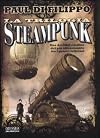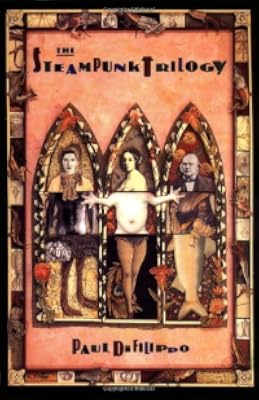
The Steampunk Trilogy
by Paul Di Filippo
On This Page
Description
An outrageous trio of novellas that twist the Victorian era out of shape, by a master of alternate history: "Spooky, haunting, hilarious" (William Gibson). Welcome to the world of steampunk, a nineteenth century outrageously reconfigured through weird science. With his magnificent trilogy, acclaimed author Paul Di Filippo demonstrates how this unique subgenre of science fiction is done to perfection--reinventing a mannered age of corsets and industrial revolution with odd technologies born show more of a truly twisted imagination. In "Victoria," the inexplicable disappearance of the British monarch-to-be prompts a scientist to place a human-lizard hybrid clone on the throne during the search for the missing royal. But the doppelgänger queen comes with a most troubling flaw: an insatiable sexual appetite. The somewhat Lovecraftian "Hottentots" chronicles the very unusual adventure of Swiss naturalist and confirmed bigot Louis Agassiz as his determined search for a rather grisly fetish plunges him into a world of black magic and monsters. Finally, in "Walt and Emily," the hitherto secret and quite steamy love affair between Emily Dickinson and Walt Whitman is revealed in all its sensuous glory--as are their subsequent interdimensional travels aboard a singular ship that transcends the boundaries of time and reality. Ingenious, hilarious, ribald, and utterly remarkable, Di Filippo's The Steampunk Trilogy is a one-of-a-kind literary journey to destinations at once strangely familiar and profoundly strange. show lessTags
Recommendations








Member Recommendations

Member Reviews
A glance at the front cover of this book lets you know what you’re in for: a weird, wonderful and occasionally disturbing race through a fantastically alternative Victorian Age. The young Queen Victoria absconds from Buckingham Palace shortly before her Coronation, and is replaced by a human–newt hybrid; New England is threatened by a mythical sea creature, and can only be saved by a prejudiced Swiss scientist; and Emily Dickinson falls for Walt Whitman, and accompanies him on a strange voyage through the Afterlife.
You’ve got to admire di Filippo’s glorious imagination: I mean, where did he get ideas like these from? It’s all so outlandish that it’s something of a tribute to his writing skills that he manages to get away show more with it. You even manage to suspend your disbelief on occasion, and it’s all great fun in any case.
While I enjoyed 'Victoria' and 'Hottentots', I think it’s with 'Walt and Emily' that di Filippo really hits his stride. Perhaps it’s because the strangeness and the relentless pace of the first two stories let up for long enough to let the characters really shine through: the nervous, lonely Dickinson is both charming and poignant, the hearty Whitman perfect both as her foil and her soulmate. In fact, this strange fictional love affair is so enticing in its own right that I found myself wishing that the weird backdrop against which it is set — a pseudo–scientific exploration of the spirit world — would take up less space, thus allowing the love story to take precedence. But then I am a drippy romantic at heart …
Tremendous entertainment. show less
You’ve got to admire di Filippo’s glorious imagination: I mean, where did he get ideas like these from? It’s all so outlandish that it’s something of a tribute to his writing skills that he manages to get away show more with it. You even manage to suspend your disbelief on occasion, and it’s all great fun in any case.
While I enjoyed 'Victoria' and 'Hottentots', I think it’s with 'Walt and Emily' that di Filippo really hits his stride. Perhaps it’s because the strangeness and the relentless pace of the first two stories let up for long enough to let the characters really shine through: the nervous, lonely Dickinson is both charming and poignant, the hearty Whitman perfect both as her foil and her soulmate. In fact, this strange fictional love affair is so enticing in its own right that I found myself wishing that the weird backdrop against which it is set — a pseudo–scientific exploration of the spirit world — would take up less space, thus allowing the love story to take precedence. But then I am a drippy romantic at heart …
Tremendous entertainment. show less
The Steampunk Trilogy by Paul Di Filippo.
Victoria
As scientist and author John Cramer defines it, in Einstein's Bridge, "hard science fiction" is "that sub-species of the science fiction genre in which the protagonists are often working scientists, careful attention is paid to the scientific accuracy of technical details, and scientific problem solving is an important plot element." [Bridge, Kindle location 5975]. Now, put the timeline in the mid-19th century, but follow all of Cramer's dictates, and you have the beginning of "Victoria." Cosmo Cowperthwaite is an inventor, a scientist of some renown, who has played with the energy he has derived from the newly discovered mineral called uranium, using it as a power source for train show more engines. Cowperthwaite also writes his lab notes and manuscripts using a carefully described machine of his invention that keeps his pen filled with ink and the paper rolling along with the pace of his scrivening. Fascinating - hard steampunk!
However, Di Filippo goes one better, at least in terms of keeping one's interest - the situations and dialogue in "Victoria" are frequently hilarious! Just as one minor example, the name of the antagonist in the story is Chuting-Payne and he lives on his ancestral estate of Carking Fardels (look it up.) England's Princess Victoria is about to have her coronation as Queen but she has disappeared. The Prime Minister calls for Cowperthwaite's assistance and the story moves from hard steampunk to a Shakespearian-style comedy - occasionally bawdy, maintaining a light tension as Cowperthwaite and the PM search for Victoria, with a double taking her place until she is found.
Hottentots
It's odd that a roller-coaster ride such as that presented by "Hottentots" could be so tedious. The reader is immersed in misogyny, anarchism, racism, slavery, superstition, malformed female genitalia, Teutonic imperialism, and all manner of disasters before the conclusion, but the story just didn't hold this reader's interest. Perhaps the problem is that the purpose of the story seems to be more to provide a forum to display Di Filippo's not inconsiderable erudition rather than to entertain or educate. The historical references are given precedence over the plot.
The story takes place in Boston, Massachusetts, in the 1800s. A creationist scientist, Louis Agassiz, wants to disprove the new theory of evolution by finding one of creationism's Cosmogonic Loci, a place where new forms of life are born, whole and complete, unchangeable. This leads to involvement in a quest to find a magical fetish which gives power to the bearer when employed at a Cosmogonic Locus. It is this power that attracts all the various antagonists and provides the motive power for the story. Di Filippo delves into great and mostly accurate detail in describing Boston and its environs, some local disasters such as the Great Molasses Flood in Boston's North End, the arguments behind all of the disparate political and social movements at play, and the extremes in prejudice and bias that seem to have existed at the time. The story itself, however, is weak - essentially an episodic chase by an unlikable protagonist to find the magical item, but with no real tension or suspense developed at any point.
Walt and Emily
As far as we know, Walt Whitman and Emily Dickinson never met in person, but if they had, that encounter might have been very much like the one this story describes. It's also probably unlikely that the two poets actually spoke in the same manner as they do in the story - Emily talking in cryptic symbolism and idiosyncratic capitalization, Walt continuously gushing in free verse - but the story's dialogue does capture the spirit of their poetry. Random thoughts and snippets of off-hand conversation foreshadow the word play found in their poems, even to the point of one individual influencing the other's composition.
The narrator throughout is Emily, from a first-person omniscient point-of-view. Her thoughts and perceptions describe the underlying motivations behind her paralyzing shyness, her phobias and fears and attractions; the events of the story reflect the mysticism that intrigued many in that age. We also observe the sexual mores of the period, as experienced or observed by Emily.
Emily's brother Austin, who lives next door to Emily, has hired a medium who claims to provide the means for him to physically visit the ghosts of his aborted children. He invites a number of people to accompany him on his "journey," including Walt Whitman. Emily is more than skeptical but involves herself anyway. She meets Walt, whose poetry she has admired, and they understand each other on a different level. After a longish build-up, the journey takes place and while it is predictable (hint - Allen Ginsberg makes an appearance), it is also suspenseful. The story is entertaining, but its real attraction is Di Filippo's adroit use of language to mirror and capture the essences of Emily and Walt and to depict the congress of their minds.
I had a visceral reaction to each of the stories - the first story invoked humor and entertainment, but the second repelled me: I felt a strong dislike for the characters, the artifacts of the story and the long, drawn-out storyline. The only thing that appealed in the second story was the scholarship that went into researching it. The third story was amusing with its tongue-in-cheek fantasy and its adroit word-play. Actually, the handling of that story's subject matter, characters and dialogue made it the best of the three! Of course, another reader might have a different, but equally visceral, set of reactions. This underlying emotional power is sufficient for me to recommend the book, with three and one-half stars, even though I intensely disliked one of the three stories.
I received a free copy of this book from the publisher in exchange for an honest review. show less
Victoria
As scientist and author John Cramer defines it, in Einstein's Bridge, "hard science fiction" is "that sub-species of the science fiction genre in which the protagonists are often working scientists, careful attention is paid to the scientific accuracy of technical details, and scientific problem solving is an important plot element." [Bridge, Kindle location 5975]. Now, put the timeline in the mid-19th century, but follow all of Cramer's dictates, and you have the beginning of "Victoria." Cosmo Cowperthwaite is an inventor, a scientist of some renown, who has played with the energy he has derived from the newly discovered mineral called uranium, using it as a power source for train show more engines. Cowperthwaite also writes his lab notes and manuscripts using a carefully described machine of his invention that keeps his pen filled with ink and the paper rolling along with the pace of his scrivening. Fascinating - hard steampunk!
However, Di Filippo goes one better, at least in terms of keeping one's interest - the situations and dialogue in "Victoria" are frequently hilarious! Just as one minor example, the name of the antagonist in the story is Chuting-Payne and he lives on his ancestral estate of Carking Fardels (look it up.) England's Princess Victoria is about to have her coronation as Queen but she has disappeared. The Prime Minister calls for Cowperthwaite's assistance and the story moves from hard steampunk to a Shakespearian-style comedy - occasionally bawdy, maintaining a light tension as Cowperthwaite and the PM search for Victoria, with a double taking her place until she is found.
Hottentots
It's odd that a roller-coaster ride such as that presented by "Hottentots" could be so tedious. The reader is immersed in misogyny, anarchism, racism, slavery, superstition, malformed female genitalia, Teutonic imperialism, and all manner of disasters before the conclusion, but the story just didn't hold this reader's interest. Perhaps the problem is that the purpose of the story seems to be more to provide a forum to display Di Filippo's not inconsiderable erudition rather than to entertain or educate. The historical references are given precedence over the plot.
The story takes place in Boston, Massachusetts, in the 1800s. A creationist scientist, Louis Agassiz, wants to disprove the new theory of evolution by finding one of creationism's Cosmogonic Loci, a place where new forms of life are born, whole and complete, unchangeable. This leads to involvement in a quest to find a magical fetish which gives power to the bearer when employed at a Cosmogonic Locus. It is this power that attracts all the various antagonists and provides the motive power for the story. Di Filippo delves into great and mostly accurate detail in describing Boston and its environs, some local disasters such as the Great Molasses Flood in Boston's North End, the arguments behind all of the disparate political and social movements at play, and the extremes in prejudice and bias that seem to have existed at the time. The story itself, however, is weak - essentially an episodic chase by an unlikable protagonist to find the magical item, but with no real tension or suspense developed at any point.
Walt and Emily
As far as we know, Walt Whitman and Emily Dickinson never met in person, but if they had, that encounter might have been very much like the one this story describes. It's also probably unlikely that the two poets actually spoke in the same manner as they do in the story - Emily talking in cryptic symbolism and idiosyncratic capitalization, Walt continuously gushing in free verse - but the story's dialogue does capture the spirit of their poetry. Random thoughts and snippets of off-hand conversation foreshadow the word play found in their poems, even to the point of one individual influencing the other's composition.
The narrator throughout is Emily, from a first-person omniscient point-of-view. Her thoughts and perceptions describe the underlying motivations behind her paralyzing shyness, her phobias and fears and attractions; the events of the story reflect the mysticism that intrigued many in that age. We also observe the sexual mores of the period, as experienced or observed by Emily.
Emily's brother Austin, who lives next door to Emily, has hired a medium who claims to provide the means for him to physically visit the ghosts of his aborted children. He invites a number of people to accompany him on his "journey," including Walt Whitman. Emily is more than skeptical but involves herself anyway. She meets Walt, whose poetry she has admired, and they understand each other on a different level. After a longish build-up, the journey takes place and while it is predictable (hint - Allen Ginsberg makes an appearance), it is also suspenseful. The story is entertaining, but its real attraction is Di Filippo's adroit use of language to mirror and capture the essences of Emily and Walt and to depict the congress of their minds.
I had a visceral reaction to each of the stories - the first story invoked humor and entertainment, but the second repelled me: I felt a strong dislike for the characters, the artifacts of the story and the long, drawn-out storyline. The only thing that appealed in the second story was the scholarship that went into researching it. The third story was amusing with its tongue-in-cheek fantasy and its adroit word-play. Actually, the handling of that story's subject matter, characters and dialogue made it the best of the three! Of course, another reader might have a different, but equally visceral, set of reactions. This underlying emotional power is sufficient for me to recommend the book, with three and one-half stars, even though I intensely disliked one of the three stories.
I received a free copy of this book from the publisher in exchange for an honest review. show less
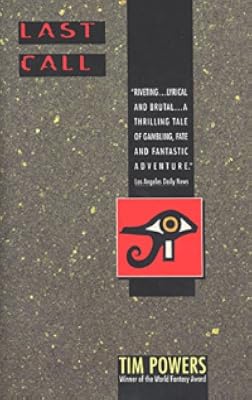
Primero, veamos qué significa el término STEAMPUNK: obras que se desarrollan durante la revolución industrial pero introduciendo tecnología alternativa, con un claro cariz aventurero. Cabe mencionar como autor destacado en este subgénero a Tim Powers.
Paul Di Filippo es un escritor poco conocido (y traducido) en España. Tengo constancia de un par de recopilaciones y algún relato en alguna antología de ciencia ficción. Y no sé el porqué, ya que sus historias son trepidantes y entretenidas, con un alto contenido de humor, inteligencia e imaginación.
A continuación, paso a reseñar brevemente cada una de las tres historias, junto con mi nota, de 0 a 5.
VICTORIA(3). Principios del siglo XIX. Faltan pocos días para la coronación show more de la joven reina Victoria. Pero resulta que ha desaparecido. Es entonces cuando se ve involucrado en la trama nuestro protagonista, Cosmo Cowperthwait, joven caballero, y lo más importante, inventor y científico. Hay un claro exponente de lo que es el steampunk en este relato, cuando Cosmo recuerda uno de sus inventos, el ferrocarril que funciona a base de uranio. O la salamandra gigante con forma de mujer que vuelve locos de pasión a los hombres. Resumiendo, un cuento de aventuras y humor bastante bueno.
HOTENTOTES(5). Es imposible no soltar alguna carcajada leyendo este relato, de verdad. No cabe duda de que Di Filippo tiene un extraño sentido del humor, además de escribir bien y de poseer una gran inteligencia e imaginación. Este cuento, que transcurre en la Norteamérica del XIX, va sobre la búsqueda de una “reliquia” (no voy a decir cuál, pero tiene guasa la cosa) por parte de Louis Agassiz, científico suizo experto en zoología y paleontología. Este personaje, el protagonista de la historia, es un tipo odioso, estás deseando que se meta en problemas constantemente, y en este sentido, Di Filippo no decepciona. Agassiz es reclutado por un holandés y su mujer, Dottie, una hotentote (el encuentro con ellos es memorable), para dicha búsqueda. Pero tras la reliquia va más gente, un anarquista polaco-irlandés, un caballero de una antigua Orden Teutónica (vamos, un nazi) y un hechicero de la tribu de Dottie. Además, Agassiz está luchando por obtener un puesto en Harvard y también ha de lidiar con ayudantes de investigación, que están al borde de la sublevación… La trama es vertiginosa, no paran de suceder cosas constantemente. No hay que perderse tampoco a los personajes secundarios que son desternillantes. Lo he pasado genial leyendo este relato, lleno de aventuras y humor.
WALT Y EMILY(2). Walt Whitman y Emily Dickinson son los protagonistas de este relato. No sé si estos dos poetas llegaron a encontrarse en realidad, pero por lo que parece, Emily sentía adoración por Whitman. La historia está escrita desde el punto de vista de Emily, y en ella se nos cuenta el viaje a la Tierra Estival, una especie de limbo entre la vida y la muerte, que realizan tanto ellos dos como otros compañeros de “viaje” reunidos por Austin, el hermano de Emily. Este relato no me ha gustado tanto como los dos anteriores, la trama avanza a trompicones, le falta agilidad. Lo que más me ha gustado ha sido el principio del cuento, cuando se nos da a conocer cómo es la vida de Emily con frases como esta: “No había un defecto congénito en la propia personalidad de Emily que convertía la perspectiva de aventurarse a salir entre la gente, de enfrentarse a sus caras desnudas y a sus necesidades, en algo intrínsecamente imposible la mayor parte del tiempo, por muy desesperada y paradójica que fuera la necesidad de compañerismo que sentía…”
Recapitulando, me ha parecido todo un descubrimiento, tanto el libro como su autor, Paul di Filippo, su capacidad para crear mundos imaginarios a partir de personajes reales (tomándose bastantes licencias, todo hay que decirlo), de hacerme reír a carcajadas con algunos pasajes, en fin, de hacerme pasar un buen rato. show less
Paul Di Filippo es un escritor poco conocido (y traducido) en España. Tengo constancia de un par de recopilaciones y algún relato en alguna antología de ciencia ficción. Y no sé el porqué, ya que sus historias son trepidantes y entretenidas, con un alto contenido de humor, inteligencia e imaginación.
A continuación, paso a reseñar brevemente cada una de las tres historias, junto con mi nota, de 0 a 5.
VICTORIA(3). Principios del siglo XIX. Faltan pocos días para la coronación show more de la joven reina Victoria. Pero resulta que ha desaparecido. Es entonces cuando se ve involucrado en la trama nuestro protagonista, Cosmo Cowperthwait, joven caballero, y lo más importante, inventor y científico. Hay un claro exponente de lo que es el steampunk en este relato, cuando Cosmo recuerda uno de sus inventos, el ferrocarril que funciona a base de uranio. O la salamandra gigante con forma de mujer que vuelve locos de pasión a los hombres. Resumiendo, un cuento de aventuras y humor bastante bueno.
HOTENTOTES(5). Es imposible no soltar alguna carcajada leyendo este relato, de verdad. No cabe duda de que Di Filippo tiene un extraño sentido del humor, además de escribir bien y de poseer una gran inteligencia e imaginación. Este cuento, que transcurre en la Norteamérica del XIX, va sobre la búsqueda de una “reliquia” (no voy a decir cuál, pero tiene guasa la cosa) por parte de Louis Agassiz, científico suizo experto en zoología y paleontología. Este personaje, el protagonista de la historia, es un tipo odioso, estás deseando que se meta en problemas constantemente, y en este sentido, Di Filippo no decepciona. Agassiz es reclutado por un holandés y su mujer, Dottie, una hotentote (el encuentro con ellos es memorable), para dicha búsqueda. Pero tras la reliquia va más gente, un anarquista polaco-irlandés, un caballero de una antigua Orden Teutónica (vamos, un nazi) y un hechicero de la tribu de Dottie. Además, Agassiz está luchando por obtener un puesto en Harvard y también ha de lidiar con ayudantes de investigación, que están al borde de la sublevación… La trama es vertiginosa, no paran de suceder cosas constantemente. No hay que perderse tampoco a los personajes secundarios que son desternillantes. Lo he pasado genial leyendo este relato, lleno de aventuras y humor.
WALT Y EMILY(2). Walt Whitman y Emily Dickinson son los protagonistas de este relato. No sé si estos dos poetas llegaron a encontrarse en realidad, pero por lo que parece, Emily sentía adoración por Whitman. La historia está escrita desde el punto de vista de Emily, y en ella se nos cuenta el viaje a la Tierra Estival, una especie de limbo entre la vida y la muerte, que realizan tanto ellos dos como otros compañeros de “viaje” reunidos por Austin, el hermano de Emily. Este relato no me ha gustado tanto como los dos anteriores, la trama avanza a trompicones, le falta agilidad. Lo que más me ha gustado ha sido el principio del cuento, cuando se nos da a conocer cómo es la vida de Emily con frases como esta: “No había un defecto congénito en la propia personalidad de Emily que convertía la perspectiva de aventurarse a salir entre la gente, de enfrentarse a sus caras desnudas y a sus necesidades, en algo intrínsecamente imposible la mayor parte del tiempo, por muy desesperada y paradójica que fuera la necesidad de compañerismo que sentía…”
Recapitulando, me ha parecido todo un descubrimiento, tanto el libro como su autor, Paul di Filippo, su capacidad para crear mundos imaginarios a partir de personajes reales (tomándose bastantes licencias, todo hay que decirlo), de hacerme reír a carcajadas con algunos pasajes, en fin, de hacerme pasar un buen rato. show less
The first story, Victoria, is really a mere appetizer for the other two, which are like your very funnest historical fever dreams.
Hottentots takes a Venture Bros. episode and mashes it up with some history and a bit of the Cthulhu mythos, with a bunch of extreme accents thrown in just for fun. (Unfortunately, the part about the genitalia of Saartjie "Sarah" Baartman, the Hottentot Venus, being removed and preserved is absolutely true...as is the part about her being put in a cage and being displayed throughout Europe until she died of pneumonia, which you would, too, if you were stuck in a cage, minimally clothed, and prodded at like that.)
Walt and Emily is also quite fun, especially for those English majors out there...you know who you show more are...and other lovers of poetry. I shall say no more so as not to spoil it.
This book doesn't come across to me as what we now know as the "steampunk" genre, but more of a straight-up alternative history. Mostly, though, it's wink-wink, nudge-nudge fun for the literary set, although the sci-fi tag might drive the same away. (Snobs!) show less
Hottentots takes a Venture Bros. episode and mashes it up with some history and a bit of the Cthulhu mythos, with a bunch of extreme accents thrown in just for fun. (Unfortunately, the part about the genitalia of Saartjie "Sarah" Baartman, the Hottentot Venus, being removed and preserved is absolutely true...as is the part about her being put in a cage and being displayed throughout Europe until she died of pneumonia, which you would, too, if you were stuck in a cage, minimally clothed, and prodded at like that.)
Walt and Emily is also quite fun, especially for those English majors out there...you know who you show more are...and other lovers of poetry. I shall say no more so as not to spoil it.
This book doesn't come across to me as what we now know as the "steampunk" genre, but more of a straight-up alternative history. Mostly, though, it's wink-wink, nudge-nudge fun for the literary set, although the sci-fi tag might drive the same away. (Snobs!) show less
These stories were quite thought-provoking. I really enjoyed the story about Victoria...a fascinating take on some pseudo-historical figures. The alternate history feel of the story allowed for some shortcuts in characterization that worked well. I also enjoyed the second story in the book. The main character is appallingly racists and offensive, but the action around him shows him for the fool he is and it all works out well in the end...sort of. I found the final story less unique but still worth a read.
I give this book a B.
I give this book a B.
This book contains three steampunk novellas (novelettes? I can never remember the difference) by Paul Di Fillippo. And, your enjoyment of these novellas (novelettes? I’ll just stick with novellas) is probably predicated on your enjoyment/acceptance/appreciation of steampunk.
If you do not like steampunk, you will not like these stories.
However, if you are a fan, or if you are someone who appreciates it, or even if you are someone who tolerates it, you will enjoy these stories. For me, it was a slightly different take on the genre. I am used to steampunk being much more about steam and machines. In these stories, it is about biology, anthropology, and alternate universes. It is still modern science and modern ideas being placed in a show more Victorian era which, I guess, is one usable definition of steampunk.
In “Victoria”, a scientist has combined newt and human to make a new creature that exhibits the attributes of both. This new creature has to take the place of the young Queen Victoria when she disappears. The ending was slightly obvious, and not completely fulfilling, but a nice tale nonetheless.
In “Hottentots” (probably the best story of the three), a very racist naturalist (I will use that term even though he explores many different scientific areas) gets involved in trying to find a talisman from Africa. He is constantly confronted by the ludicrousness of his prejudices (he is a firm believer that the white race is supreme), but refuses to accept he is wrong. Let’s just say that, while this isn’t the most important part of the plot, the point of his wrong-headedness is driven home when the not quite perfection of the love of his life is discovered. (By the way, a little H. P. Lovecraft is thrown in towards the end to just make it all a little more exciting.)
The final piece, “Walt and Emily”, is also quite enjoyable. Walt Whitman and Emily Dickinson meet and fall into something close to love. They are also entangled with spiritualists who, eventually, place the team of “explorers” in an alternate universe. Suffice to say they get out, but the revelations from the excursion do not completely disappear with their reemergence in our world.
Greatest stories in the world? Probably not. Fun to read? Definitely. And worth every page/sentence/word that has been devoted. After reading the collection, I can honestly say I’m glad this book came together in that it allowed all three of these to be published in book form. show less
If you do not like steampunk, you will not like these stories.
However, if you are a fan, or if you are someone who appreciates it, or even if you are someone who tolerates it, you will enjoy these stories. For me, it was a slightly different take on the genre. I am used to steampunk being much more about steam and machines. In these stories, it is about biology, anthropology, and alternate universes. It is still modern science and modern ideas being placed in a show more Victorian era which, I guess, is one usable definition of steampunk.
In “Victoria”, a scientist has combined newt and human to make a new creature that exhibits the attributes of both. This new creature has to take the place of the young Queen Victoria when she disappears. The ending was slightly obvious, and not completely fulfilling, but a nice tale nonetheless.
In “Hottentots” (probably the best story of the three), a very racist naturalist (I will use that term even though he explores many different scientific areas) gets involved in trying to find a talisman from Africa. He is constantly confronted by the ludicrousness of his prejudices (he is a firm believer that the white race is supreme), but refuses to accept he is wrong. Let’s just say that, while this isn’t the most important part of the plot, the point of his wrong-headedness is driven home when the not quite perfection of the love of his life is discovered. (By the way, a little H. P. Lovecraft is thrown in towards the end to just make it all a little more exciting.)
The final piece, “Walt and Emily”, is also quite enjoyable. Walt Whitman and Emily Dickinson meet and fall into something close to love. They are also entangled with spiritualists who, eventually, place the team of “explorers” in an alternate universe. Suffice to say they get out, but the revelations from the excursion do not completely disappear with their reemergence in our world.
Greatest stories in the world? Probably not. Fun to read? Definitely. And worth every page/sentence/word that has been devoted. After reading the collection, I can honestly say I’m glad this book came together in that it allowed all three of these to be published in book form. show less
One-sentence summary: Three steampunk short stories: Queen Victoria disappears and is replaced by a newt-human hybrid; naturalist Agassiz is sucked into a bizarre plot involving the pickled remains of the Hottentot Venus; and Emily Dickinson meets Walt Whitman and has a Spiritualist experience.
Why did you get this book?: Brief steampunk lit obsession
Do you like the cover?: Yes.
Did you enjoy the book?: Sort of? On one level, yes, definitely -- the writing was great and the plotting lovely, and the steampunk ambiance was delicious. But even though the second story in the collection, 'Hottentots', was meant (I assume) to be tongue-in-cheek, it was so racist I was embarrassed to read it in public, for fear of someone reading over my shoulder.
Why did you get this book?: Brief steampunk lit obsession
Do you like the cover?: Yes.
Did you enjoy the book?: Sort of? On one level, yes, definitely -- the writing was great and the plotting lovely, and the steampunk ambiance was delicious. But even though the second story in the collection, 'Hottentots', was meant (I assume) to be tongue-in-cheek, it was so racist I was embarrassed to read it in public, for fear of someone reading over my shoulder.
Members
- Recently Added By
Lists

Books Read in 2008
335 works; 8 members

Gaslamp Fantasy
87 works; 15 members
Author Information

Some Editions
Series
Belongs to Publisher Series
Work Relationships
Contains
Common Knowledge
- Canonical title
- The Steampunk Trilogy
- Original title
- The Steampunk Trilogy
- Original publication date
- 1995-04
- People/Characters
- Victoria, Queen of the United Kingdom; William Lamb, 2nd Viscount Melbourne
- Important places
- London, England, UK
- Original language
- English
Classifications
Statistics
- Members
- 505
- Popularity
- 59,595
- Reviews
- 13
- Rating
- (3.30)
- Languages
- English, French, Italian, Spanish
- Media
- Paper, Ebook
- ISBNs
- 14
- ASINs
- 5