On This Page
Description
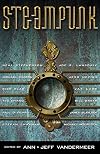
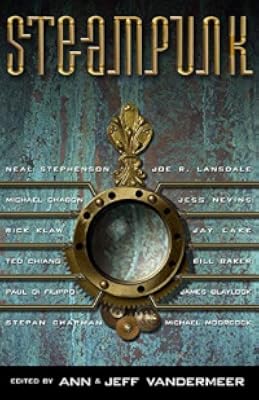
Presents stories about mechanistic golems, infernal machines, airships, alternative histories, other planets, and how the genre has influenced movies, television, comics, and the Internet.Tags
Recommendations
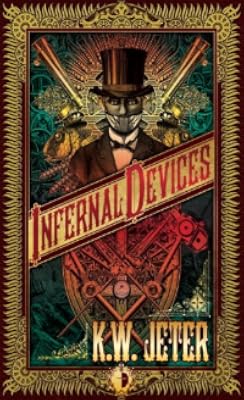
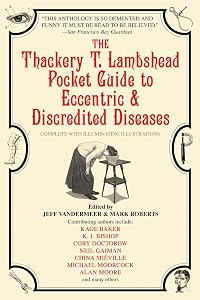
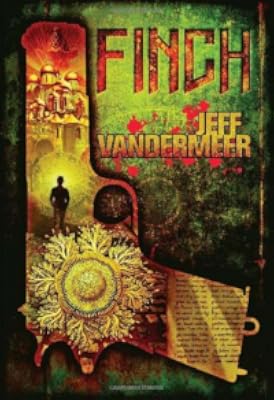
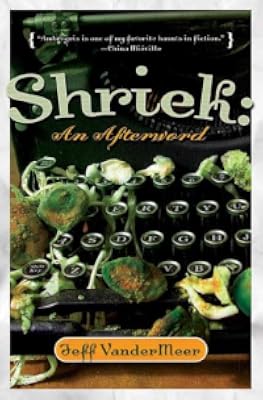




Member Recommendations
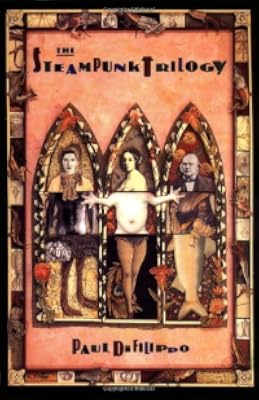
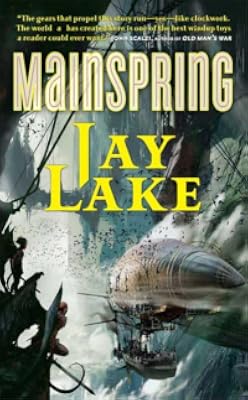
Dead_Dreamer A few of THE NEW WEIRD's authors return for this steam-powered era that never was: Jay Lake, Paul Di Filippo and Michael Moorcock.

Member Reviews
I read a review of another Vandermeer anthology that said these two, as editors, are very good at propaganda for their genre du jour, and I think that is true of them in this anthology as well. Steampunk is here treated like the hip, cool, look-everyone-is-doing-it sub-genre of the moment, which may or may not be true, but that sort of attitude inevitably leads to some overstepping; not all of these stories are dominantly steampunk and several are simply alternate histories that happen to have the odd airship (read: blimp, for those not in steampunk mode) or boiler-driven vehicle in them. It’s always difficult to define a genre, doubly so a sub-genre, but it seems to me that lately people are getting entirely carried away with show more inclusivity. Not every story with a blimp in it has to be steampunk, but perhaps because steampunk started out merely as a neo-victorian aesthetic, here the assumption seems to be that if it touches that aesthetic, it must be steampunk. Hmm. Genre considerations aside, this anthology is still inconsistent. Some of the stories (like Ted Chiang’s “Seventy-Two Letters” which I had read and admired several years ago in an unrelated anthology) are lush and brilliant, some, frankly, suck (Stephen Chapman contributes a steam-nano hybrid which seems to want to be all things to all people – and we know how well that usually works – and offers an ending that’s in the running for “world’s lamest apocalypse”). Several of the best stories here can be found in other, more consistent anthologies, like the sublime Vanishing Acts (where I first encountered Chiang’s story); though I generally enjoy victoriana and do like a lot of steampunk, I probably won’t revisit this anthology as a whole any time soon. show less
Key word for this one: uneven. There were a couple of stories that I really enjoyed (Seventy-Two Letters primary among them), but there were also some that had me shaking my head wondering if I could reclaim those spent minutes. It's a good introduction to the world of steampunk (Steam Man of the Prairie especially), with all the ups and down of the genre. I'm glad I read it, but I think I'll save it for rereading only the couple I mentioned here. And one other story - I quite enjoyed The Giving Mouth (a medieval sort of setting) and the Selene Gardening Club (turn the moon into a garden? LOL).
I'll cheerfully admit that while I thought this was an interesting collection, it was the older material by Michael Moorcock and James Blaylock that I enjoyed the most. At the other end of the spectrum were Mary Gentle and Michael Chabon, whose offerings read too much like fragments of larger works (yes, I noticed that the Moorcock and Blaylock selections are excerpts too). At the top of the list of the best of the rest was Ian MacLeod's exercise in steampunk medievalism, which would be perfect as a film directed by Terry Gilliam.
Special note has to go to Joe Lansdale, who nailed perfectly the flavor of one of Philip Jose Farmer's adventure pastiches heavily larded with outre sex and violence. The question has to be whether you should show more WANT to perfectly nail imitating one of those stories. It's like watching a disgusting freak show act performed with impeccable timing. If nothing else in this collection is punk, it's this story.
As for the critical essays those were quite good for the most part. Though I have to scratch my head over the notion of calling Hayao Miyazaki's film "Spirited Away" steampunk; come again? show less
Special note has to go to Joe Lansdale, who nailed perfectly the flavor of one of Philip Jose Farmer's adventure pastiches heavily larded with outre sex and violence. The question has to be whether you should show more WANT to perfectly nail imitating one of those stories. It's like watching a disgusting freak show act performed with impeccable timing. If nothing else in this collection is punk, it's this story.
As for the critical essays those were quite good for the most part. Though I have to scratch my head over the notion of calling Hayao Miyazaki's film "Spirited Away" steampunk; come again? show less
This anthology of steampunk writers from over twenty years begins with the essay "The 19th-Century Roots of Steampunk" by Jess Nevins, which gives the reader a lot of background about the genre and its roots in the novels of Jules Verne, dime novels, and authors' political responses to science fiction. The stories included then go on to show just how broad this genre can be, from diabolical inventors to a really creepy character who created rifts in time to a sort of comedy-of-manners in which a wife tries to distract her husband from gardening.
You may not love every story here - in fact, considering the range of stories, I would be surprised if you did - but you will surely come away with an appreciation of the breadth of subjects and show more styles that steampunk can encompass. My personal favorite was "Seventy-Two Letters" by Ted Chiang, an intricate short story involving the power of naming, kabbalistic ideas, and automata. On the other hand, I skimmed rather than read "The Steam Man of the Prairie and the Dark Rider Get Down: A Dime Novel" by Joe R. Lansdale. Though an interesting premise, that the main character from H.G. Wells' Time Machine created rifts in time and becomes insane, the story involved such a large amount of violence that only those with a very strong stomach should read it.
Finally, if you enjoy some of the stories, you will come away with a list of further books to read. I want to look for more by Ted Chiang, as well as James Blaylock and Michael Chabon. Besides the authors included, the final two essays give you even more to look into. Rick Klaw surveys steampunk books, movies, and games in his essay "The Steam-Driven Time Machine: A Pop Culture Survey," in which he includes a list of his top-ten steampunk books and movies. The final essay, "The Essential Sequential Steampunk" by Bill Baker gives readers a brief sketch of steampunk stories in comic book format.
If you're interested in learning about the steampunk subgenre, this collection of short stories is an excellent place to start. Though the editors admit in the introduction that the best of steampunk is novel-length, the essays and stories included in this anthology are an excellent source of information, authors, and title suggestions for a newbie like me and I would recommend it to anyone looking for a quick introduction to the genre. show less
You may not love every story here - in fact, considering the range of stories, I would be surprised if you did - but you will surely come away with an appreciation of the breadth of subjects and show more styles that steampunk can encompass. My personal favorite was "Seventy-Two Letters" by Ted Chiang, an intricate short story involving the power of naming, kabbalistic ideas, and automata. On the other hand, I skimmed rather than read "The Steam Man of the Prairie and the Dark Rider Get Down: A Dime Novel" by Joe R. Lansdale. Though an interesting premise, that the main character from H.G. Wells' Time Machine created rifts in time and becomes insane, the story involved such a large amount of violence that only those with a very strong stomach should read it.
Finally, if you enjoy some of the stories, you will come away with a list of further books to read. I want to look for more by Ted Chiang, as well as James Blaylock and Michael Chabon. Besides the authors included, the final two essays give you even more to look into. Rick Klaw surveys steampunk books, movies, and games in his essay "The Steam-Driven Time Machine: A Pop Culture Survey," in which he includes a list of his top-ten steampunk books and movies. The final essay, "The Essential Sequential Steampunk" by Bill Baker gives readers a brief sketch of steampunk stories in comic book format.
If you're interested in learning about the steampunk subgenre, this collection of short stories is an excellent place to start. Though the editors admit in the introduction that the best of steampunk is novel-length, the essays and stories included in this anthology are an excellent source of information, authors, and title suggestions for a newbie like me and I would recommend it to anyone looking for a quick introduction to the genre. show less
A survey of the steampunk genre.
STEAMPUNK begins with a critical essay entitled "The 19th-Century Roots of Steampunk" that I felt helped put some of the following stories in perspective. Similarly, the essays near the end of the book allowed me to consider steampunk in other media in light of what I'd learned from the stories. I was also pleased to see that each piece begins with an introductory blurb explaining how the story its into the subgenre. I was glad to have this information, but it would've been nice if the editors had also mentioned the source for each story and the year in which it was first published. Sometimes they include this information; most of the time they don't.
Regarding the stories themselves: the editors have show more chosen a nice selection of steampunk, with stories ranging from real-world Victorian science, (souped up, of course), to medieval steampunk. There's plenty of alternate history, a touch of imaginary world, and scads of airships. It's good stuff.
Of course, some of the stories are better than others. I don't think there any bad pieces herein, but I personally got the most enjoyment from:
"The Giving Mouth" by Ian R. MacLeod – the medieval steampunk mentioned above. I found the story itself a little uneven, but MacLeod's style more than makes up for it. I also loved the idea of feudal steampunk, and I thought the resolution had some interesting implications.
"A Sun in the Attic" by Mary Gentle – a feminist imaginary world story with some durned tasty worldbuilding. The story also serves as a vehicle for some thoughts on voluntary simplicity.
"The Selene Gardening Society" by Molly Brown – an American steampunk tale in which a group of Baltimore society wives persuade their husbands to turn the moon into a garden. I found it delightful, and I enjoyed the environmental undertones.
"Seventy-Two Letters" by Ted Chiang – a Victorian story that explores the scientific applications of kabbalistic magic. This was far and away my favourite story. I'm a sucker for magic used in a scientific manner. Chiang also deals with the ramifications of his protagonist's research, and that's always nice to see.
"Victoria" by Paul Di Filippo – another Victorian story about monarchy, newts, scientific engineering and sex. I got a big kick out of it.
You'll notice that there's a hefty emphasis on the science there. Somewhere along the line, I got the impression that steampunk was basically a mixture of magic and technology, usually in a Victorian setting. It looks like I got the wrong end of the stick. There's technology, sure, and the Victorian(esque) setting is pretty standard. But magic? Magic is most definitely on the sidelines here, when it's present at all.
Based on the stories the VanderMeers included, I'd argue that steampunk is basically a form of science fiction that looks backwards rather than forwards. Most science fiction explores the future. If we took this technology and extrapolated it, how might it be applied in a hundred years' time? Two hundred? Five hundred? Steampunk, in contrast, takes a piece of technology that we have now, (or that we're close to developing), and imagines what the past might have been like had the science been around back then. It's interesting stuff. I enjoyed my first real foray into the subgenre, and I'm looking forward to reading some more.
(A slightly different version of this review originally appeared on my blog, Stella Matutina). show less
STEAMPUNK begins with a critical essay entitled "The 19th-Century Roots of Steampunk" that I felt helped put some of the following stories in perspective. Similarly, the essays near the end of the book allowed me to consider steampunk in other media in light of what I'd learned from the stories. I was also pleased to see that each piece begins with an introductory blurb explaining how the story its into the subgenre. I was glad to have this information, but it would've been nice if the editors had also mentioned the source for each story and the year in which it was first published. Sometimes they include this information; most of the time they don't.
Regarding the stories themselves: the editors have show more chosen a nice selection of steampunk, with stories ranging from real-world Victorian science, (souped up, of course), to medieval steampunk. There's plenty of alternate history, a touch of imaginary world, and scads of airships. It's good stuff.
Of course, some of the stories are better than others. I don't think there any bad pieces herein, but I personally got the most enjoyment from:
"The Giving Mouth" by Ian R. MacLeod – the medieval steampunk mentioned above. I found the story itself a little uneven, but MacLeod's style more than makes up for it. I also loved the idea of feudal steampunk, and I thought the resolution had some interesting implications.
"A Sun in the Attic" by Mary Gentle – a feminist imaginary world story with some durned tasty worldbuilding. The story also serves as a vehicle for some thoughts on voluntary simplicity.
"The Selene Gardening Society" by Molly Brown – an American steampunk tale in which a group of Baltimore society wives persuade their husbands to turn the moon into a garden. I found it delightful, and I enjoyed the environmental undertones.
"Seventy-Two Letters" by Ted Chiang – a Victorian story that explores the scientific applications of kabbalistic magic. This was far and away my favourite story. I'm a sucker for magic used in a scientific manner. Chiang also deals with the ramifications of his protagonist's research, and that's always nice to see.
"Victoria" by Paul Di Filippo – another Victorian story about monarchy, newts, scientific engineering and sex. I got a big kick out of it.
You'll notice that there's a hefty emphasis on the science there. Somewhere along the line, I got the impression that steampunk was basically a mixture of magic and technology, usually in a Victorian setting. It looks like I got the wrong end of the stick. There's technology, sure, and the Victorian(esque) setting is pretty standard. But magic? Magic is most definitely on the sidelines here, when it's present at all.
Based on the stories the VanderMeers included, I'd argue that steampunk is basically a form of science fiction that looks backwards rather than forwards. Most science fiction explores the future. If we took this technology and extrapolated it, how might it be applied in a hundred years' time? Two hundred? Five hundred? Steampunk, in contrast, takes a piece of technology that we have now, (or that we're close to developing), and imagines what the past might have been like had the science been around back then. It's interesting stuff. I enjoyed my first real foray into the subgenre, and I'm looking forward to reading some more.
(A slightly different version of this review originally appeared on my blog, Stella Matutina). show less
A lackluster compilation with a few gems here and there. Some examples of terrible stories, some examples of terrible writing, and a few shining moments here and there. Frankly, I didn't find most of it to be very steampunk at all. The story that was the most impressive (and the one that got me to buy the book) was Neal Stephenson's "Excerpt from the Third and Last Volume of Tribes of the Pacific Coast. I freely admit it was a neo-Victorian, nanotech-infused future piece, but the story was excellent. Made me wish it was genuinely an excerpt of a series of volumes I could actually acquire.
Unfortunately the number of stories that made me wonder why I had bothered finishing them was the greater number. The amount of torture and mutilation show more found in some portions of the book made me severely question the moral fiber of our generation to even publish such stories, much less choose them for a compilation. "The Steam Man of the Prairie and the Dark Rider Get Down" by Joe R. Lansdale is quite possibly the most disgusting thing I've held in my hands in published form. I'm not sure which is worse, the fact that it was written or the fact that after it was written, someone chose to publish it. show less
Unfortunately the number of stories that made me wonder why I had bothered finishing them was the greater number. The amount of torture and mutilation show more found in some portions of the book made me severely question the moral fiber of our generation to even publish such stories, much less choose them for a compilation. "The Steam Man of the Prairie and the Dark Rider Get Down" by Joe R. Lansdale is quite possibly the most disgusting thing I've held in my hands in published form. I'm not sure which is worse, the fact that it was written or the fact that after it was written, someone chose to publish it. show less
I think for me two and a half stars would be more accurate, but that option is not available. A couple of the stories were good, but others were only so-so. A good thing in this anthology is the opening essay which provides a nice introduction to the genre. That was informational and useful. Compared to Extraordinary Engines, which I also read and which is often compared to this book, this one did not seem as good; the pacing seemed a bit slow for me. However, the stories are pretty rich in terms of detail, so if you are looking to immerse yourself in the steampunk genre, this works. Overall, it was ok. I liked the Lansdale story well enough, which gives a nice twist to H.G. Wells. I won't say more.
Members
- Recently Added By
Published Reviews
ThingScore 75
What a great piece of work this is, from the fascinating triumvirate of essays that recount the history of steampunk in literature and describe its contemporary appeal to the top-notch works of fiction inside, from forgotten proto-steampunk gems by Michael Moorcock and James Blaylock to contemporary pieces from Neal Stephenson, Jay Lake, Ted Chiang and Paul Di Filippo.
added by lampbane
Author Information


Jeffrey Scott VanderMeer was born in Bellefonte, Pennsylvania on July 7, 1968. He is an editor, writer, teacher, and publisher. He is the founding editor and publisher of the Ministry of Whimsy Press. He is the author of several books including City of Saints, Madmen, Finch, and The Southern Reach Trilogy. His novel Annihilation won the Nebula show more Award for Best Novel in 2014. (Bowker Author Biography) show less
All Editions
Some Editions
Awards and Honors
Awards
Distinctions
Series

Work Relationships
Contains
Common Knowledge
- Original publication date
- 2008-05-01
- Dedication
- To Jacob Weisman and Jill Roberts, with respect and affection
Classifications
- Genres
- Fiction and Literature, Science Fiction
- DDC/MDS
- 813.0876608 — Literature & rhetoric American literature in English American fiction in English By type Genre fiction Adventure fiction Speculative fiction Fantasy Collections
- LCC
- PN6071 .F25 .S67 — Language and Literature Literature (General) Literature (General) Collections of general literature
- BISAC
Statistics
- Members
- 876
- Popularity
- 31,024
- Reviews
- 24
- Rating
- (3.31)
- Languages
- English, Italian, Polish, Spanish
- Media
- Paper
- ISBNs
- 4
- ASINs
- 1