
Ted Chiang
Author of Stories of Your Life and Others
About the Author
Image credit: Elze Hamilton
Works by Ted Chiang
Associated Works
The Big Book of Science Fiction: The Ultimate Collection (2016) — Contributor — 522 copies, 8 reviews
The Year's Best Science Fiction: Sixteenth Annual Collection (1999) — Contributor — 519 copies, 1 review
The Year's Best Science Fiction: Twenty-Fifth Annual Collection (2008) — Contributor — 511 copies, 3 reviews
The Thackery T. Lambshead Cabinet of Curiosities: Exhibits, Oddities, Images, and Stories from Top Authors and Artists (2011) — Contributor — 492 copies, 17 reviews
The Best of the Best: 20 Years of the Year's Best Science Fiction (2005) — Contributor — 437 copies, 20 reviews
The Year's Best Science Fiction: Eighth Annual Collection (1991) — Contributor — 415 copies, 6 reviews
The Locus Awards: Thirty Years of the Best in Science Fiction and Fantasy (2004) — Contributor — 290 copies, 11 reviews
The Best Science Fiction and Fantasy of the Year, Volume 2 (2008) — Contributor — 177 copies, 4 reviews
The Year's Best Fantasy and Horror 2008: 21st Annual Collection (2008) — Contributor — 176 copies, 5 reviews
The Very Best of Fantasy & Science Fiction: Sixtieth Anniversary Anthology (2009) — Contributor — 151 copies, 6 reviews
The Best Science Fiction and Fantasy of the Year, Volume 3 (2009) — Contributor — 150 copies, 2 reviews
Mind-Rain: Your Favorite Authors on Scott Westerfeld's Uglies Series (2009) — Contributor — 125 copies, 2 reviews
The Best Science Fiction and Fantasy of the Year, Volume 8 (2014) — Contributor — 116 copies, 6 reviews
The Year's Best Science Fiction Vol. 1: The Saga Anthology of Science Fiction 2020 (2020) — Contributor — 109 copies, 7 reviews
The James Tiptree Award Anthology 3: Subversive Stories about Sex and Gender (2007) — Contributor — 98 copies, 2 reviews
The History of Science Fiction: A Graphic Novel Adventure (2020) — Foreword, some editions — 69 copies, 1 review
Nebula Awards 26: SFWA's Choices for the Best Science Fiction and Fantasy of the Year (1992) — Contributor — 52 copies, 1 review
Philosophy through Science Fiction Stories: Exploring the Boundaries of the Possible (2021) — Contributor — 19 copies, 1 review
Terra Nova. Antología de ciencia ficción contemporánea (Terra Nova, #1) (2012) — Contributor — 16 copies, 3 reviews
Hive of Dreams: Contemporary Science Fiction from the Pacific Northwest (2003) — Contributor — 13 copies
Millemondi Primavera 2001: Nuove avventure nell'ignoto — Contributor — 2 copies
Subterranean Magazine Fall 2010 — Contributor — 1 copy
Locus, July 2011 (606) — Contributor — 1 copy
Tagged
Common Knowledge
- Legal name
- 姜峯楠
Jiāng, Fēngnán - Other names
- Chiang, Feng-nan
- Birthdate
- 1967
- Gender
- male
- Education
- Brown University
- Occupations
- technical writer
science fiction writer - Awards and honors
- John W. Campbell Award (1992)
PEN/Bernard and Ann Malamud Award (2024) - Nationality
- USA
- Birthplace
- Port Jefferson, New York, USA
- Places of residence
- Bellevue, Washington, USA
- Associated Place (for map)
- USA
Members
Discussions
The Story of Your Life in Fine Press Forum (September 2025)
SciFi Short Story: Human Woman Negotiates with Cylindrical Aliens in Name that Book (August 2014)
Reviews

The Merchant and the Alchemist's Gate: In a story-within-a-story, a merchant meets an alchemist who invented a gate through which a traveler can access the future or past. The alchemist tells him an additional layer of stories, and the merchant decides to go to the past and change things.
This story is fine, but not spectacular. It contains some time travel tropes that I enjoy, while also feeling very Arabian Nights. Perhaps a little derivative of it.
Exhalation {short story}: The narrator show more describes their life a bit, and then their discovery that the environment is deteriorating and their species will go extinct in a few hundred years.
A nice little story with a good twist -the people are robots . It felt kind of halfway between Ray Bradbury and H.G. Wells. It's a little bit of a metaphor about climate change, except it falls apart when there's nothing society can do about it. (Solar power would fix their problem but they live inside a titanium dome .) I enjoyed it a lot.
What's Expected of Us: A very short letter from the future explains the invention of a button that lights up one second before you press it, and the effect it had on society.
This story is only 4 pages but it packs a lot. A good lesson - it doesn't matter if we have free will or not, but we have to act like we do.
The Lifecycle of Software Objects: Ana and Derek both work for a company that creates Digients, cute digital pets with a genetics-mimicking algorithm that allows them to grow and change based on how they're raised in their digital world. They love their work, bond with the Digients they've created and raised, and create a community with other Digient owners. The market for these pets is vibrant, with several companies in gentle competition over who has the best algorithm or the cutest interface. Over the next few years, however, the market declines and eventually the company closes. Ana and Derek get jobs elsewhere, but continue to find joy in raising their Digients in their free time. As the tech world continues to move on to shiny new things, the digital world the Digients live in is no longer supported and is in danger of shutting down. The Digients could be ported into a more modern space, but it would cost far more than the dwindling Digient-raising community could ever afford on their own. They are approached by a company with a proposal: sell copies of their hand-raised Digients to be used as sexual companions, and guarantee their survival.
This truly remarkable story has been sitting with me since I first read it 5 years ago. I think about it constantly. It's hard to explain in a plot synopsis but Ana's bond with her Digient feels so true, and the way she feels about losing them is the way I imagine I would feel if, say, LibraryThing shut down tomorrow. The story is about what it's like to form a bond with an internet community, but it's also about what it means to be a sentient being. An adult. To consent. The Digients are in favor of selling copies as sexual companions because for them, like humans who have turned to sex work since time immemorial, it's about an existential threat. To the owners it is unconscionable, because they don't think the pets they've been raising for the last 18 years are capable of consent. Really thought-provoking stuff.
The only bad part of this novella is the relationship between Ana and Derek. The story is told equally from their points of view, but Derek's sections are full of romantic thoughts about Ana. At first he is married but wants to be with Ana, then he gets divorced but Ana is in a relationship and Derek thinks all the time about whether/how he can drive a wedge between them. Ana, on the other hand, never thinks about him romantically in any direction and is apparently unaware of his obsession. It's a gross dynamic that treats an otherwise well-written woman like an object. The point of it in the end is thatDerek "sacrifices" his "chance" of a relationship with Ana by selling a copy of one of his Digients so that she doesn't have to take a possibly abusive job to pay for the port. It's not that she's terribly disgusted with him for doing so (after he explains that he let the Digient choose), but that her boyfriend did not want her to take the abusive job and so by preventing that Derek pushed them together. It left a bad taste in my mouth to end a story about consent on that note.
Despite that fairly big flaw, I do highly recommend this story. I think the good parts will stick with you.
Dacey's Patent Automatic Nanny: An eccentric inventor in 1901 creates a mechanical nanny that will help raise children, after being unhappy with how he saw real nannies treat his son. It doesn't catch on, but later the inventor's son revives the mechanical nanny, and has it raise his own son.
A nice little story with a steampunk vibe. I liked that both of the inventors are well-meaning (the original inventor thinks that nannies should be nicer), and that nothing really bad happens to the young child, he's justemotionally bonded to robots, which is totally fine after he gets a few accommodations . I especially liked that the whole story is presented as the description of an item in a museum catalog.
The Truth of Fact, the Truth of Feeling: Two alternating narratives - a first-person story from a future in which everyone's life is awkwardly recorded on video and the introduction of a new algorithm which analyzes and organizes the videos to anticipate which ones the user might want to revisit, and an historical account from the introduction of written language to a fictional pre-literate African society.
I didn't love this one. I think it goes on too long, especially compared to other stories in this collection which are so concise. The point is that new technology, whether it's written language or a video-analyzing algorithm, will radically change society but society will adapt and move on and everything will be fine. But it takes too long to get there.
The Great Silence: A parrot laments in the first-person that humans spend all their time and energy trying to communicate with aliens beyond earth, when they could be communicating with parrots right here on earth.
I don't think this one really clicked for me, but it's short and sweet.
Omphalos: A world that is mostly the same as ours, except there is substantial tangible proof that all of life was created at once several thousand years ago. The narrator, an archaeologist who specializes in uncovering artifacts proving the creation of life, investigates a black market which leads to an astronomer who has discovered life on another planet which seems to be more favored by God than Earth. A crisis of faith ensues.
This story was fine. The faith vs. proof aspect didn't speak to me but I really liked thinking about how this world differs from ours. I liked the methodology for realizing that life was created (by examining ancient preserved wood they can see the point at which tree trunk rings begin, same with ancient shellfish shells) and how their Earth never discovered how genetics works because there is no evolution.
Anxiety Is the Dizziness of Freedom: A device is invented which causes a single change at the quantum level, branching the timeline into two, and also allows communication between the timelines. The technology is originally used for research, but as it gets less expensive regular people start using the device (called a "prism") to talk to their alternate timeline selves. Some find it comforting, but others become addicted and spend all their time thinking about how their life could be if it was slightly different. Nat works in a shop where people can rent prisms, and on the side she and her coworker hustle prism users out of money whenever they can. Dana is a therapist who sees patients and also runs a support group for prism addicts, which Nat starts attending as part of a scam.
I really loved this story. It's the only story in this collection in which any character has actual bad intentions, and it also provides lots to think about. It's about free will and determinism. If for every action you take there is an alternate timeline in which you make a different choice, does any choice matter? Or, if you consistently act a particular way does that become an inherent part of you that is rarely changeable? I really loved the story's ending.
Overall this is an excellent collection. The stories are varied but still themed - free will, the introduction of new technology, seeing the future. There was a bit more first-person narration than I like, but I really enjoyed that all of the stories are gentle and everyone is well-meaning. Highly recommended, and I’m definitely going to check out the author’s other collection. show less
This story is fine, but not spectacular. It contains some time travel tropes that I enjoy, while also feeling very Arabian Nights. Perhaps a little derivative of it.
Exhalation {short story}: The narrator show more describes their life a bit, and then their discovery that the environment is deteriorating and their species will go extinct in a few hundred years.
A nice little story with a good twist -
What's Expected of Us: A very short letter from the future explains the invention of a button that lights up one second before you press it, and the effect it had on society.
This story is only 4 pages but it packs a lot. A good lesson - it doesn't matter if we have free will or not, but we have to act like we do.
The Lifecycle of Software Objects: Ana and Derek both work for a company that creates Digients, cute digital pets with a genetics-mimicking algorithm that allows them to grow and change based on how they're raised in their digital world. They love their work, bond with the Digients they've created and raised, and create a community with other Digient owners. The market for these pets is vibrant, with several companies in gentle competition over who has the best algorithm or the cutest interface. Over the next few years, however, the market declines and eventually the company closes. Ana and Derek get jobs elsewhere, but continue to find joy in raising their Digients in their free time. As the tech world continues to move on to shiny new things, the digital world the Digients live in is no longer supported and is in danger of shutting down. The Digients could be ported into a more modern space, but it would cost far more than the dwindling Digient-raising community could ever afford on their own. They are approached by a company with a proposal: sell copies of their hand-raised Digients to be used as sexual companions, and guarantee their survival.
This truly remarkable story has been sitting with me since I first read it 5 years ago. I think about it constantly. It's hard to explain in a plot synopsis but Ana's bond with her Digient feels so true, and the way she feels about losing them is the way I imagine I would feel if, say, LibraryThing shut down tomorrow. The story is about what it's like to form a bond with an internet community, but it's also about what it means to be a sentient being. An adult. To consent. The Digients are in favor of selling copies as sexual companions because for them, like humans who have turned to sex work since time immemorial, it's about an existential threat. To the owners it is unconscionable, because they don't think the pets they've been raising for the last 18 years are capable of consent. Really thought-provoking stuff.
The only bad part of this novella is the relationship between Ana and Derek. The story is told equally from their points of view, but Derek's sections are full of romantic thoughts about Ana. At first he is married but wants to be with Ana, then he gets divorced but Ana is in a relationship and Derek thinks all the time about whether/how he can drive a wedge between them. Ana, on the other hand, never thinks about him romantically in any direction and is apparently unaware of his obsession. It's a gross dynamic that treats an otherwise well-written woman like an object. The point of it in the end is that
Despite that fairly big flaw, I do highly recommend this story. I think the good parts will stick with you.
Dacey's Patent Automatic Nanny: An eccentric inventor in 1901 creates a mechanical nanny that will help raise children, after being unhappy with how he saw real nannies treat his son. It doesn't catch on, but later the inventor's son revives the mechanical nanny, and has it raise his own son.
A nice little story with a steampunk vibe. I liked that both of the inventors are well-meaning (the original inventor thinks that nannies should be nicer), and that nothing really bad happens to the young child, he's just
The Truth of Fact, the Truth of Feeling: Two alternating narratives - a first-person story from a future in which everyone's life is awkwardly recorded on video and the introduction of a new algorithm which analyzes and organizes the videos to anticipate which ones the user might want to revisit, and an historical account from the introduction of written language to a fictional pre-literate African society.
I didn't love this one. I think it goes on too long, especially compared to other stories in this collection which are so concise. The point is that new technology, whether it's written language or a video-analyzing algorithm, will radically change society but society will adapt and move on and everything will be fine. But it takes too long to get there.
The Great Silence: A parrot laments in the first-person that humans spend all their time and energy trying to communicate with aliens beyond earth, when they could be communicating with parrots right here on earth.
I don't think this one really clicked for me, but it's short and sweet.
Omphalos: A world that is mostly the same as ours, except there is substantial tangible proof that all of life was created at once several thousand years ago. The narrator, an archaeologist who specializes in uncovering artifacts proving the creation of life, investigates a black market which leads to an astronomer who has discovered life on another planet which seems to be more favored by God than Earth. A crisis of faith ensues.
This story was fine. The faith vs. proof aspect didn't speak to me but I really liked thinking about how this world differs from ours. I liked the methodology for realizing that life was created (by examining ancient preserved wood they can see the point at which tree trunk rings begin, same with ancient shellfish shells) and how their Earth never discovered how genetics works because there is no evolution.
Anxiety Is the Dizziness of Freedom: A device is invented which causes a single change at the quantum level, branching the timeline into two, and also allows communication between the timelines. The technology is originally used for research, but as it gets less expensive regular people start using the device (called a "prism") to talk to their alternate timeline selves. Some find it comforting, but others become addicted and spend all their time thinking about how their life could be if it was slightly different. Nat works in a shop where people can rent prisms, and on the side she and her coworker hustle prism users out of money whenever they can. Dana is a therapist who sees patients and also runs a support group for prism addicts, which Nat starts attending as part of a scam.
I really loved this story. It's the only story in this collection in which any character has actual bad intentions, and it also provides lots to think about. It's about free will and determinism. If for every action you take there is an alternate timeline in which you make a different choice, does any choice matter? Or, if you consistently act a particular way does that become an inherent part of you that is rarely changeable? I really loved the story's ending.
Overall this is an excellent collection. The stories are varied but still themed - free will, the introduction of new technology, seeing the future. There was a bit more first-person narration than I like, but I really enjoyed that all of the stories are gentle and everyone is well-meaning. Highly recommended, and I’m definitely going to check out the author’s other collection. show less
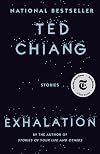
Mind blowing! This is my first time reading Ted Chiang’s stories and every single one was so impactful and really made me think deeper and more critically about things that we often don’t question. They were also just so well written I wanted to keep going to the end of each story in one sitting. The last story, “Anxiety is the Dizziness of Freedom” was the only one that started a little slower for me, but still by the end I found it to be very insightful and intriguing.
Reading the show more story notes on the inspirations and how these stories came into being at the end was also cool. I think my favorite story would have to be the longest one in this collection: “The Lifecycle of Software Objects.” That one really drew me in, and yet I have to say that really and truly each story has stayed with me. This story in particular focuses on the topic of AI and what rights AI “should” have, who gets to decide that, and why. And then it also looks more specifically at the way humans and AI may interact and how those interactions may play out. The AI must interact with the world and continue developing just as humans do, so it would make sense that it would also take some time to develop and during that time, would also need some guiding and nurturing presence. But how would humans respond to that need and what ways would those willing to provide these things go about doing so?
My favorite type of time travel story is the one in which nothing you can do in your traveling can actually change the present, and yet this doesn’t matter so much when you realize the importance of simply gaining a better understanding or a different view of something from your past— essentially, even though nothing will be different in the general sense when you return from the journey, you yourself will be changed as a person. This is the kind of time travel that is seen in the first story of this collection, “The Merchant and the Alchemist’s Gate.”
“Exhalation” dives into the idea of the world becoming increasingly chaotic since it’s beginning and how it constantly strives for a balance but in doing so gets ever closer to an equilibrium. One of my favorite quotes is from this story: “I hope that you were motivated by a desire for knowledge, a yearning to see what can arise from a universe’s exhalation…Our universe might have slid into equilibrium emitting nothing more than a quiet hiss. The fact that it spawned such plentitude is a miracle, one that is matched only by your universe giving rise to you.”
“What’s Expected of Us” really taps into our need for a purpose and the link that this often has with the search for where we came from and why. Many seek their purpose from the creator they place their faith in, and some seek purpose within the environment around them and what they believe this reflects on themselves. But what if we found out through scientific observations that we weren’t created on purpose? And therefore, that we have no purpose given to us? How would this effect our view of ourselves and others? How would it effect our ability to make choices and find meaning in anything we do?
The remaining stories go into similar themes, questioning the way humans interact with one another and non human beings and objects. Questioning what possibilities may arise in our deepening relationship with and dependence upon technology. Questioning when and why a choice matters against the platform of the universe. This will only be the beginning of my readings into Ted Chiang’s imaginatively and immaculately rendered speculations on humanity.
Exhalation: 5/5 ★ ★ ★ ★ ★ show less
Reading the show more story notes on the inspirations and how these stories came into being at the end was also cool. I think my favorite story would have to be the longest one in this collection: “The Lifecycle of Software Objects.” That one really drew me in, and yet I have to say that really and truly each story has stayed with me. This story in particular focuses on the topic of AI and what rights AI “should” have, who gets to decide that, and why. And then it also looks more specifically at the way humans and AI may interact and how those interactions may play out. The AI must interact with the world and continue developing just as humans do, so it would make sense that it would also take some time to develop and during that time, would also need some guiding and nurturing presence. But how would humans respond to that need and what ways would those willing to provide these things go about doing so?
My favorite type of time travel story is the one in which nothing you can do in your traveling can actually change the present, and yet this doesn’t matter so much when you realize the importance of simply gaining a better understanding or a different view of something from your past— essentially, even though nothing will be different in the general sense when you return from the journey, you yourself will be changed as a person. This is the kind of time travel that is seen in the first story of this collection, “The Merchant and the Alchemist’s Gate.”
“Exhalation” dives into the idea of the world becoming increasingly chaotic since it’s beginning and how it constantly strives for a balance but in doing so gets ever closer to an equilibrium. One of my favorite quotes is from this story: “I hope that you were motivated by a desire for knowledge, a yearning to see what can arise from a universe’s exhalation…Our universe might have slid into equilibrium emitting nothing more than a quiet hiss. The fact that it spawned such plentitude is a miracle, one that is matched only by your universe giving rise to you.”
“What’s Expected of Us” really taps into our need for a purpose and the link that this often has with the search for where we came from and why. Many seek their purpose from the creator they place their faith in, and some seek purpose within the environment around them and what they believe this reflects on themselves. But what if we found out through scientific observations that we weren’t created on purpose? And therefore, that we have no purpose given to us? How would this effect our view of ourselves and others? How would it effect our ability to make choices and find meaning in anything we do?
The remaining stories go into similar themes, questioning the way humans interact with one another and non human beings and objects. Questioning what possibilities may arise in our deepening relationship with and dependence upon technology. Questioning when and why a choice matters against the platform of the universe. This will only be the beginning of my readings into Ted Chiang’s imaginatively and immaculately rendered speculations on humanity.
Exhalation: 5/5 ★ ★ ★ ★ ★ show less
But maybe it stops where it does because, like Ana, the author wants to preserve Jax's innocence. And Marco's as well since he has to stop when the story stops. Characters in a story are stuck in their text as surely as software is bound by hardware. I personally don't believe in conscious software any more than I believe the characters in fiction
The tech world with its reliance on money to bring it to life feels tragic to me and the plight of the digients and the humans who love them brings that feeling home to me. Is human life tragic because we have no choice but to mature into sexual beings? Ana says it's the coercion she objects to but the need for finances is a constant coercion in the world.
But some coercions are worse than others. Being a wage slave isn't as bad as being a prostitute. Forced overtime isn't as bad as rape.
Are arranged marriages statistically less successful than those chosen by our own free will? If we're raised in that culture, and our upbringing makes us find a family negotiated union acceptable, perhaps it works out to our advantage?
Is it consensual if we're chemically induced to like what we get? Aren't we chemical beings just like digients are software ones? We like to think we're more than just chemistry which is why we blame junkies for shooting up and think they can just say "no." (I'm in the middle of reading Gabor Maté's book about addiction in which he argues it's possible but prohibitively difficult to walk away from one's drug.) An algorithmic being is nothing BUT coercion even with random number generators hiding the determinism. That a computer generated entity can respond to the love of their human trainer in some deeper way than a mood ring can change color with one's mood is but a literary fiction yet so many of us strive to be more like machines than humans to avoid the pain of being alive. We're all part digient so we can relate.
In the end I think Derek is right. Or maybe no one is right. I'd really like a sequel so we could find out. If this were a movie, there would be money for a sequel and thus there would be a sequel for that is the power of economics.
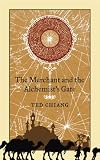
Nested stories of portals to alternative lives, set and told like a Tale of the Arabian Knights.
"Coincidence and intention are two sides of a tapestry, my lord. You may find one more agreeable to look at, but you cannot say one is true and the other is false."
Image: Front and back of tapestry cushion depicting Esther and Ahasuerus in a wreath (Northern Netherlands, 1650-80 - so yes, wrong culture and wrong period!) (Source.)
Traditional sci-fi writers tackle the mechanics and paradoxical show more consequences of time travel. They include futuristic space-faring, alien planets, and exotic lifeforms. Chiang takes a theological, philosophical, alchemical approach, and sets it on Earth, hundreds of years ago.
Sit comfortably and submit to the tangled enchantment of a matryoshka-like story with an ancient, mythical tone. See, hear, and touch the buzz of a Baghdad bazaar long ago. Wander, wonder, and ponder. This has a moral, but does not preach. It might be a tale of Scheherazade.
Framing Story
“My heart was troubled, and neither the purchase of luxuries nor the giving of alms was able to soothe it. Now I stand before you without a single dirham in my purse, but I am at peace.”
A penniless man tells his story to a mighty caliph.
Middle Layer
His story begins when he entered the shop of a metalsmith, where he found wares more varied, exotic, and fine than he had ever seen (“an astrolabe equipped with seven plates inlaid with silver, a water-clock that chimed on the hour, and a nightingale made of brass that sang when the wind blew”). The owner chatted and then took him to a back room, where he told three fantastic stories, all relating to knowledge, understanding, and acceptance of the past and the future: free will versus destiny - the will of Allah. The “alchemy” of which the metalsmith spoke is a time portal.
“He offered an explanation, speaking of his search for tiny pores in the skin of reality, like the holes that worms bore into wood, and how upon finding one he was able to expand and stretch it the way a glassblower turns a dollop of molten glass into a long-necked pipe, and how he then allowed time to flow like water at one mouth while causing it to thicken like syrup at the other.”
Three More Stories
The metalsmith’s tales are of those who used his gate: The Fortunate Rope Maker, The Weaver Who Stole From Himself, and The Wife and Her Lover. All of life is here: treasure, travel, love, loss, robbers, deceit, disguise, and sacrifice.
Most importantly, there is guilt, repentance, atonement, and forgiveness. “That is all, but that is enough.”
What Does it Mean?
Chiang does confront paradoxes, but not the “What if I kill my grandfather?” kind. He drills into the human psyche and soul. And the deeper he goes, the more pleasingly tangled the knots in the back of the tapestry become.
“Past and future are the same, and we cannot change either, only know them more fully. My journey to the past had changed nothing, but what I had learned had changed everything.”
Links
There are echoes of style, setting, and tone of JL Borges’ stories. See my overview review HERE.
Telling a wondrous story to a great man reminded of Calvino’s Invisible Cities, which I reviewed HERE.
This story was published in Chiang’s collection, Exhalation. See HERE for my reviews of the other stories. show less
"Coincidence and intention are two sides of a tapestry, my lord. You may find one more agreeable to look at, but you cannot say one is true and the other is false."
Image: Front and back of tapestry cushion depicting Esther and Ahasuerus in a wreath (Northern Netherlands, 1650-80 - so yes, wrong culture and wrong period!) (Source.)
Traditional sci-fi writers tackle the mechanics and paradoxical show more consequences of time travel. They include futuristic space-faring, alien planets, and exotic lifeforms. Chiang takes a theological, philosophical, alchemical approach, and sets it on Earth, hundreds of years ago.
Sit comfortably and submit to the tangled enchantment of a matryoshka-like story with an ancient, mythical tone. See, hear, and touch the buzz of a Baghdad bazaar long ago. Wander, wonder, and ponder. This has a moral, but does not preach. It might be a tale of Scheherazade.
Framing Story
“My heart was troubled, and neither the purchase of luxuries nor the giving of alms was able to soothe it. Now I stand before you without a single dirham in my purse, but I am at peace.”
A penniless man tells his story to a mighty caliph.
Middle Layer
His story begins when he entered the shop of a metalsmith, where he found wares more varied, exotic, and fine than he had ever seen (“an astrolabe equipped with seven plates inlaid with silver, a water-clock that chimed on the hour, and a nightingale made of brass that sang when the wind blew”). The owner chatted and then took him to a back room, where he told three fantastic stories, all relating to knowledge, understanding, and acceptance of the past and the future: free will versus destiny - the will of Allah. The “alchemy” of which the metalsmith spoke is a time portal.
“He offered an explanation, speaking of his search for tiny pores in the skin of reality, like the holes that worms bore into wood, and how upon finding one he was able to expand and stretch it the way a glassblower turns a dollop of molten glass into a long-necked pipe, and how he then allowed time to flow like water at one mouth while causing it to thicken like syrup at the other.”
Three More Stories
The metalsmith’s tales are of those who used his gate: The Fortunate Rope Maker, The Weaver Who Stole From Himself, and The Wife and Her Lover. All of life is here: treasure, travel, love, loss, robbers, deceit, disguise, and sacrifice.
Most importantly, there is guilt, repentance, atonement, and forgiveness. “That is all, but that is enough.”
What Does it Mean?
Chiang does confront paradoxes, but not the “What if I kill my grandfather?” kind. He drills into the human psyche and soul. And the deeper he goes, the more pleasingly tangled the knots in the back of the tapestry become.
“Past and future are the same, and we cannot change either, only know them more fully. My journey to the past had changed nothing, but what I had learned had changed everything.”
Links
There are echoes of style, setting, and tone of JL Borges’ stories. See my overview review HERE.
Telling a wondrous story to a great man reminded of Calvino’s Invisible Cities, which I reviewed HERE.
This story was published in Chiang’s collection, Exhalation. See HERE for my reviews of the other stories. show less
Lists
Short and Sweet (1)
. (1)
Overdue Podcast (1)
Finished in 2026 (1)
Awards


You May Also Like


Associated Authors
Statistics
- Works
- 35
- Also by
- 66
- Members
- 12,308
- Popularity
- #1,902
- Rating
- 4.0
- Reviews
- 564
- ISBNs
- 124
- Languages
- 19
- Favorited
- 68