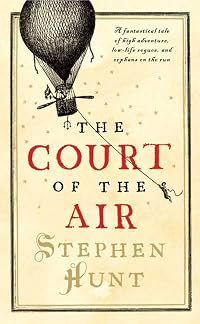
On This Page
Description
Streetwise Molly witnesses a brutal murder at the brothel where she has recently been apprenticed and runs back to the poorhouse where she grew up. There she finds her fellow orphans butchered, and it dawns on her that she was the real target of the attack. For Molly is a special little girl who carries a secret that marks her for destruction by enemies of the state. Oliver has led a sheltered existence in the backwater home of his merchant uncle. When he is framed for his only relative's show more murder he is forced to flee for his life, accompanied by an agent of the mysterious Court of the Air. Chased across the country, Oliver finds himself in the company of low-life rogues, but learns more about the secret that has blighted his life. Soon Molly and Oliver will find themselves battling a grave threat to civilization, an ancient power thought to have been quelled millennia ago. show lessTags
Recommendations


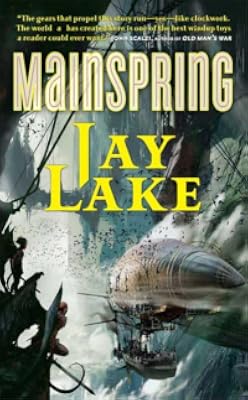
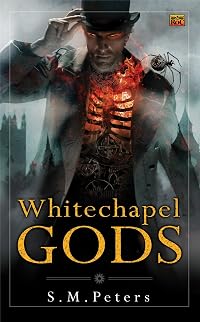
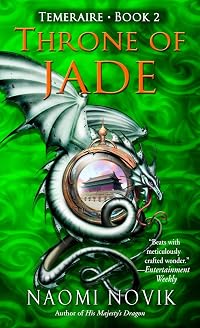
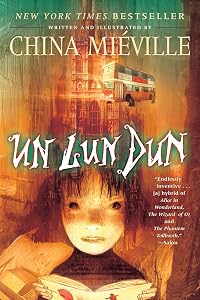
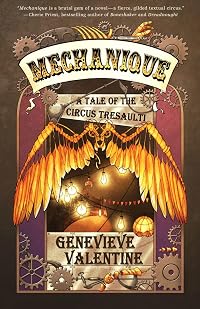
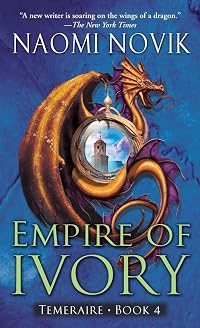
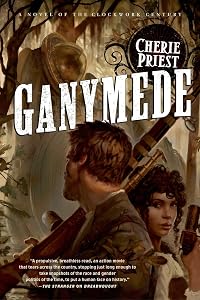
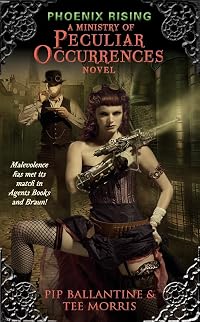

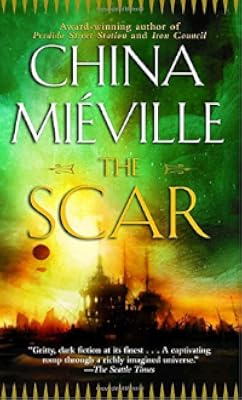
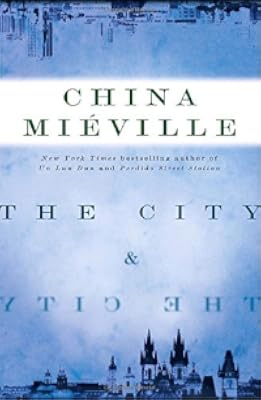
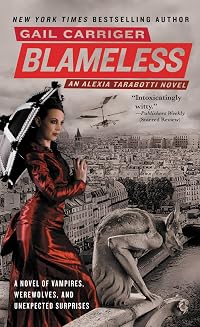
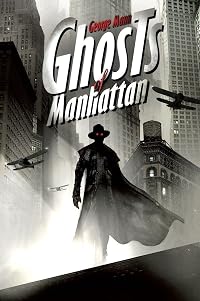
Member Recommendations
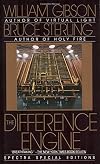
rakerman Babbage's Difference Engines reimagined as the steam-powered transaction engines of The Court of the Air
Member Reviews
Thinly-veiled anti-socialist diatribes aside, the thing that really tweaked me was the evident fascination with horrible things.
How can I show how really horrible these (socialist) people are? By making everybody "equalized" a la Kurt Vonnegut's "Harrison Bergeron" but in a much creepier way, by turning them into machines, or having them cut off body parts.
How can I show how awful the ancient society was? They weren't just doing human sacrifice -- they were making an enormous killing machine out of the blood of their beloved family members, AND turning other people into meat plants so they could be cannibal farmers.
How can I demonstrate the awfulness of people with anti-monarchical sentiments? By embedding ritual humiliation, show more amputation, and torture into their treatment of the royal family.
It was honestly just sort of disturbing, how the author's inventive capacity were most turned toward inventing horrors.
On top of all that, the shallow political analysis (see S. M. Stirling, for example) is hardly even noticeable. The heroic rich adventurers, the monarchs and royalists who aren't as bad as the socialists, the idealist who although not evil is still completely delusional, and so forth. That all just kind of faded into the background of being repeatedly hit over the head with really horrible gross abuses of the imagination.
But I did notice how the attempts to make the book trendily gender balanced failed rather miserably. The boy and girl protagonists were figured as the "defense" and the "offense" by some "watcher" species. But the girl's "offensive" capabilities turned out to be being really good at withstanding torture, and then merging with some mechanical god to supernaturally show up at the last minute and do not much. The "defensive" boy turned out to merge with some kind of warrior spirit who sent him wicking around swords and having a sort of grim bloodthirstiness. Channeling Elric of Melniboné, I guess, because there was a kind of soul-sucking quality to the weapons. Anyway I guess that failed because there wasn't a lot of character development. We were supposed to want to like the characters, but they mostly just were cyphers for the plot as well as for the operators in their own world. So the author ended up falling back on gender stereotypes.
Anyway, I won't be picking up more of these. If you like a lot of horror mixed in with your steampunk, dystopia, adventuring, and capital-L Libertarian-style politics, give these a shot. show less
How can I show how really horrible these (socialist) people are? By making everybody "equalized" a la Kurt Vonnegut's "Harrison Bergeron" but in a much creepier way, by turning them into machines, or having them cut off body parts.
How can I show how awful the ancient society was? They weren't just doing human sacrifice -- they were making an enormous killing machine out of the blood of their beloved family members, AND turning other people into meat plants so they could be cannibal farmers.
How can I demonstrate the awfulness of people with anti-monarchical sentiments? By embedding ritual humiliation, show more amputation, and torture into their treatment of the royal family.
It was honestly just sort of disturbing, how the author's inventive capacity were most turned toward inventing horrors.
On top of all that, the shallow political analysis (see S. M. Stirling, for example) is hardly even noticeable. The heroic rich adventurers, the monarchs and royalists who aren't as bad as the socialists, the idealist who although not evil is still completely delusional, and so forth. That all just kind of faded into the background of being repeatedly hit over the head with really horrible gross abuses of the imagination.
But I did notice how the attempts to make the book trendily gender balanced failed rather miserably. The boy and girl protagonists were figured as the "defense" and the "offense" by some "watcher" species. But the girl's "offensive" capabilities turned out to be being really good at withstanding torture, and then merging with some mechanical god to supernaturally show up at the last minute and do not much. The "defensive" boy turned out to merge with some kind of warrior spirit who sent him wicking around swords and having a sort of grim bloodthirstiness. Channeling Elric of Melniboné, I guess, because there was a kind of soul-sucking quality to the weapons. Anyway I guess that failed because there wasn't a lot of character development. We were supposed to want to like the characters, but they mostly just were cyphers for the plot as well as for the operators in their own world. So the author ended up falling back on gender stereotypes.
Anyway, I won't be picking up more of these. If you like a lot of horror mixed in with your steampunk, dystopia, adventuring, and capital-L Libertarian-style politics, give these a shot. show less
Two young orphans find themselves at the center of vast conspiracy; their world on the brink of apocalypse. Molly, a street punk with strange skills for repairing the race of mechanical steam men, is hunted by both a fearsome assassin and the underground revolutionary communityists, who want to overthrow the current system of government in favor of apocalypse-bringing dark gods. Oliver, who as a child was exposed to the dangerous fey mists, has supernatural powers yet is not cursed with the physical deformities most other fey-children experience. He is set up for the murder of his last surviving relative, and is being pursued by both the oppressive-to-fey government and the secret Court of the Air, a supra-military, supra-government show more body in charge of being in charge of, well, everything.
Sounds complicated? It is. And there is much, much more.
Hunt packs in so much detail to the historical and geographic setting, I was totally overwhelmed. There are so many plot lines, so many side stories, I had a hard time getting a handle on the actual world. Instead of world building, it was more like world-dumping. Never boring the way info-dumping can be, but completely burying the characters and plot.
The story obviously parallels a Victorian-esque England and yet, instead of being fresh and new, I found it derivative and superficial. The parallels were too obvious. Communityists? Communisits. And just like our world, the once social ideal of its writer, Ben Carl (Marx) has turned into Stalin’s Russia, complete with population-killing pogroms against first the elite, then the wealthy, then the middle class, and finally, almost everyone.
Those dark gods, with names like its-a-coatyl, that-a-dopotchli and this-a-zayloc, demanding bloody human sacrifice and a return to the old ways of total enslavement? I kept thinking of alien Mayans, but in an Ice Age, instead of the Yucatan.
At some key moments Oliver or Molly figure out secret motives or unconver conspiracies and I felt totally bewildered— not because it was a great plot twist that I deliciously anticipated, no— because I had no idea in the hundreds of pages past that a clue had come and gone. I found the characters rather flat compared to all of the historical and geographic description; as I read, I did not assign them unknown or deep complexities. When these complexities were revealed, it was rather like having Sherlock Holmes jump out from behind the curtain, screaming “the butler did it! And here are twenty reasons why that you never guessed!”
The book was hard to get through and almost boring, which is strange because the story itself is action-packed. By the end, it becomes a flat out race to the end, and I was fairly hooked. I might have given it three stars, except that until those last 100 pages or so, reading it was kind of a chore rather than a pleasure. show less
Sounds complicated? It is. And there is much, much more.
Hunt packs in so much detail to the historical and geographic setting, I was totally overwhelmed. There are so many plot lines, so many side stories, I had a hard time getting a handle on the actual world. Instead of world building, it was more like world-dumping. Never boring the way info-dumping can be, but completely burying the characters and plot.
The story obviously parallels a Victorian-esque England and yet, instead of being fresh and new, I found it derivative and superficial. The parallels were too obvious. Communityists? Communisits. And just like our world, the once social ideal of its writer, Ben Carl (Marx) has turned into Stalin’s Russia, complete with population-killing pogroms against first the elite, then the wealthy, then the middle class, and finally, almost everyone.
Those dark gods, with names like its-a-coatyl, that-a-dopotchli and this-a-zayloc, demanding bloody human sacrifice and a return to the old ways of total enslavement? I kept thinking of alien Mayans, but in an Ice Age, instead of the Yucatan.
At some key moments Oliver or Molly figure out secret motives or unconver conspiracies and I felt totally bewildered— not because it was a great plot twist that I deliciously anticipated, no— because I had no idea in the hundreds of pages past that a clue had come and gone. I found the characters rather flat compared to all of the historical and geographic description; as I read, I did not assign them unknown or deep complexities. When these complexities were revealed, it was rather like having Sherlock Holmes jump out from behind the curtain, screaming “the butler did it! And here are twenty reasons why that you never guessed!”
The book was hard to get through and almost boring, which is strange because the story itself is action-packed. By the end, it becomes a flat out race to the end, and I was fairly hooked. I might have given it three stars, except that until those last 100 pages or so, reading it was kind of a chore rather than a pleasure. show less
A steampunk fantasy adventure, full of magic and mechanics and political shenanigans; Hunt introduces a richly layered world and a myriad of characters while swiftly corralling them into a cogent story, making the reader catch up with his pace or flounder; it’s well worth it, too, for this is entertaining and enjoyable reading. Description is given on the hoof, character shown because there’s no time to tell, the adventure builds the world in which it unfolds… the effect is complete immersion and disbelief not so much suspended as outdistanced.
Molly and Oliver are orphans – Oliver raised by his uncle, an outcast and subject of charity due to his feyblood, and Molly, who has spent her childhood working for the poorhouse, yet show more whose blood runs with the ability to channel the Hexmachina. Between them, they must save Jackals from the Communityist party, whose attempts to raise old Gods will result in the ‘equalisation’ of its compatriots – the equality of death, that is.
As much of a romp as I found The Court of the Air, I think I’ll leave it a little while before reading another of Hunt’s books, just to get a little breathing done in the interim. O.O show less
Molly and Oliver are orphans – Oliver raised by his uncle, an outcast and subject of charity due to his feyblood, and Molly, who has spent her childhood working for the poorhouse, yet show more whose blood runs with the ability to channel the Hexmachina. Between them, they must save Jackals from the Communityist party, whose attempts to raise old Gods will result in the ‘equalisation’ of its compatriots – the equality of death, that is.
As much of a romp as I found The Court of the Air, I think I’ll leave it a little while before reading another of Hunt’s books, just to get a little breathing done in the interim. O.O show less
I was thinking about giving this book 4 stars but really I said, "Man this book is awesome" way too many times to not give it 5 stars. It's really about action and ideas and a fully realized world. The action is almost constant and it's fun. The characters are badasses (not right away but at some point). People also die so it doesn't feel like a Disney fantasy where everything works out perfect. It's brutal and gritty and political.
All I have to say is voodoo practicing steam men and insane insect gods feeding off the still warm hearts of 1000's of humans, airships dropping dirtgas on protesting socialists and a king with no arms. I think you get.
I actually read the 2nd book in this series first The Kingdom Beyond the Waves but it show more didn't make much of a difference. It's not the same characters just the same world. I actually like this one more. show less
All I have to say is voodoo practicing steam men and insane insect gods feeding off the still warm hearts of 1000's of humans, airships dropping dirtgas on protesting socialists and a king with no arms. I think you get.
I actually read the 2nd book in this series first The Kingdom Beyond the Waves but it show more didn't make much of a difference. It's not the same characters just the same world. I actually like this one more. show less
Among his many literary contributions, Charles Dickens may also go down as the man who made it hip to be an orphan. Or at least, hip to write about orphans as main characters. It’s become so overused that it’s now a Victorian cliché. (That is good heroic orphans are cliché; evil orphans are still an underrepresented minority.) So if you are reading a fantasy novel with strong Victorian overtones, you’d expect to see at least one orphan. If not: shame on you, Victorian-inspired fantasist.
Not to disappoint, Stephen Hunt gives us two orphans, Oliver and Molly, as main characters in “The Court of the Air”. Hunt also gives us a well-imagined and innovative Victorian-inspired fantasy world populated by a menagerie of stunningly show more developed characters. The novel mixes together disparate elements like living machines, Loas, dirigibles, parliamentarianism, underground cities, Big-brother inspired eyes in the sky, insect gods and mysticism. Slow to start and get into mainly due to its wide focus, the novel really hits it stride about halfway through as everything comes together beautifully.
Molly Templar lives at the Sun Gate workhouse, a poorhouse that apprentices its residents to local merchants. Far from a conscientious or good worker, Molly finds herself fired from a variety of jobs until she finally is apprenticed to a brothel. On meeting her first client, Molly finds herself inexplicably attacked by the man, and witnesses the murder of another prostitute by her assailant. Only her resourcefulness saves her, but on her return to the workhouse, tragic events make her realize that something dark and sinister may be afoot. Molly flees, only steps ahead of her assailant, an assassin named Count Vauxtion. This starts Molly off on an adventure that will take her to a rebel city deep in the bowels of the earth, and then back above ground, as she continuously struggles to understand the mystery surrounding her.
Oliver Brooks lives with his uncle, who has cared for him since the death of his parents. In surviving the accident that killed his parents, Oliver suffered a prolonged exposure to feymist, an experience that usually transforms the individual into a superpower-enhanced being. However, Oliver remains surprisingly normal. Quite suddenly, Oliver finds his uncle has been murdered and he is being framed with the deed. Only with the timely assistance of Harry Stave, an agent of the mysterious Court of the Air, does Oliver escape imprisonment. Harry and Oliver flee to evade capture, seeking help from a variety of Harry’s friends along the way. But when Oliver is given an unusual gift, his whole world changes, thrusting him headlong into a battle not only for his life, but also for his homeland.
Hunt crafts a story rich in detail and complexity. At times, the complexity of the story distracts from the flow of the narrative, overcomplicating the book with unnecessary additions. One example of this is the muddied presentation of the various political philosophies of the major factions. These political systems are less black and white and more varying shades of gray which gives the overall effect that all forms of government are imperfect and susceptible to abuse. While it’s a realistic vision of government, it isn’t the clearest. The characters and setting are the real strength of “The Court of the Air”. An innovative mixture of diverse elements successfully accomplishes the world building, creating a setting that is original and fresh. The characterizations are extremely well done as all the characters, human or otherwise, are quite intriguing.
Last Word:
“The Court of the Air” is a well-crafted, original and fresh story that I found more enjoyable the further I read. Though uneven overall, the amazing conclusion definitely makes up for the slow start, and Hunt definitely left me wanting more. And it is this tantalizing promise of more to come that makes Stephen Hunt an author to watch for in the future and “The Court of the Air” a worthwhile read. show less
Not to disappoint, Stephen Hunt gives us two orphans, Oliver and Molly, as main characters in “The Court of the Air”. Hunt also gives us a well-imagined and innovative Victorian-inspired fantasy world populated by a menagerie of stunningly show more developed characters. The novel mixes together disparate elements like living machines, Loas, dirigibles, parliamentarianism, underground cities, Big-brother inspired eyes in the sky, insect gods and mysticism. Slow to start and get into mainly due to its wide focus, the novel really hits it stride about halfway through as everything comes together beautifully.
Molly Templar lives at the Sun Gate workhouse, a poorhouse that apprentices its residents to local merchants. Far from a conscientious or good worker, Molly finds herself fired from a variety of jobs until she finally is apprenticed to a brothel. On meeting her first client, Molly finds herself inexplicably attacked by the man, and witnesses the murder of another prostitute by her assailant. Only her resourcefulness saves her, but on her return to the workhouse, tragic events make her realize that something dark and sinister may be afoot. Molly flees, only steps ahead of her assailant, an assassin named Count Vauxtion. This starts Molly off on an adventure that will take her to a rebel city deep in the bowels of the earth, and then back above ground, as she continuously struggles to understand the mystery surrounding her.
Oliver Brooks lives with his uncle, who has cared for him since the death of his parents. In surviving the accident that killed his parents, Oliver suffered a prolonged exposure to feymist, an experience that usually transforms the individual into a superpower-enhanced being. However, Oliver remains surprisingly normal. Quite suddenly, Oliver finds his uncle has been murdered and he is being framed with the deed. Only with the timely assistance of Harry Stave, an agent of the mysterious Court of the Air, does Oliver escape imprisonment. Harry and Oliver flee to evade capture, seeking help from a variety of Harry’s friends along the way. But when Oliver is given an unusual gift, his whole world changes, thrusting him headlong into a battle not only for his life, but also for his homeland.
Hunt crafts a story rich in detail and complexity. At times, the complexity of the story distracts from the flow of the narrative, overcomplicating the book with unnecessary additions. One example of this is the muddied presentation of the various political philosophies of the major factions. These political systems are less black and white and more varying shades of gray which gives the overall effect that all forms of government are imperfect and susceptible to abuse. While it’s a realistic vision of government, it isn’t the clearest. The characters and setting are the real strength of “The Court of the Air”. An innovative mixture of diverse elements successfully accomplishes the world building, creating a setting that is original and fresh. The characterizations are extremely well done as all the characters, human or otherwise, are quite intriguing.
Last Word:
“The Court of the Air” is a well-crafted, original and fresh story that I found more enjoyable the further I read. Though uneven overall, the amazing conclusion definitely makes up for the slow start, and Hunt definitely left me wanting more. And it is this tantalizing promise of more to come that makes Stephen Hunt an author to watch for in the future and “The Court of the Air” a worthwhile read. show less
Oh, this book. Much like Jonathan Strange, Court of the Air is one that I love to bits but I haven’t read it time after time. It’s one of the first steampunk books that I got into, and it’s definitely a good one.
The world-building’s fantastic. I like that there’s no implication that this is supposed to be our Earth x-number of years or even that it’s an alternate universe, but rather, it’s own Earth with specific races and cultures. There are equivalents with the different countries that you can draw on the references, but even still, Hunt makes this world his own. What’s also important to note is the sheer political detail that gets covered in this, which I think definitely adds to the world-building. While a large show more amount of the book is action and mystery, there’s a healthy amount of political intrigue that adds to the story. Again, there’s many real world parallels, but for the story’s sake, it does illustrate the larger ideologies at play here (and in future volumes). I also like the fact that none of the politics are painted as “This is the absolute one thing we (and by extension, you, the reader) should follow in governance.” Even the main political infrastructure of Jackals has its darker side. It’s sort of interesting to find a book that deals with the warts and all of political ideology. Also, the population of this Earth fascinates me. It’s not just humans and sorcerers and fae, although they all play a major role in the series. We’ve got a race of crustacean people living in steampunk quasi-London. There’s doglike people who pop up (although they have a bigger role in the second book). My personal favorite, and the one I sell the series on, are the Steammen: sentinent steampunk robots who practice voudoun. There were no words for me to describe that awesome aside from “squee!”
And while this all comes off as rather gimmicky, Hunt manages to pull off a finely crafted story that supports and fits this world he’s created. There’s so much complexity in this that I’m not surprised that there’s more to the series than just the one book. And I love the history that we get in here, and that there’s so much more to explore to it.
That all said, there is a LOT going on in this. It’s already bad enough following two narratives that could both support a single book, add in the sheer amount of world-building and backstory and it does feel like you need a list of names to figure out what’s going on. And a lot of the characters don’t appear for more than a few pages to boot. That said though, I think it’s one of the positive aspects of the book, and adds to the world. As for our two main characters, I rather like Molly and Oliver. They start off as kind of boring protagonists—both stuck in boring lives, have super-special abilities, get dragged into adventure, atypical orphans saving the world plot. What I like about them is that they’re very much their own characters. Oliver’s known that he’s got the potential for his special abilities, they’ve just never come to light, and he’s much more focused on trying to stop his powers from manifesting. I also love that there’s this fantastic set-up of him becoming a swashbuckling hero in-universe. (More hood o’the marsh in the next books!) Molly is fantastic—I love that because she reads so many penny dreadfuls, when she learns that someone’s trying to kill, Molly immediately launches into a scenario from one of her books. (And the villain pretty much goes “lol no.”) And while her own special abilities aren’t really alluded to in the beginning, I like that she slowly learns about them and uses them to her advantage. I really want to see more of her as the series goes on. And both Molly and Oliver don’t sit around and let things just happen to them. Oliver definitely isn’t afraid to ask questions that need to be asked, and Molly does her best with trying to piece her past together. They’re presented as these stock characters, but they definitely become more than just stereotypes. Not to mention, while their individual plotlines feel like two random events, everything dovetails neatly together.
I also love the supporting cast. Not so much Oliver’s quasi-guardian, Harry Stave, if only because his motives feel a little too unclear. Molly’s friends and allies, though, are fantastic. I love the steammen who come to help her out; her friends at the workhouse; Professor Amelia Harsh, who unfortunately disappears after two pages (but is the main character in the sequel!)—again, I loved that we get these fleshed-out characters, even if they don’t play a huge part in the narrative. And Prince Alpheus—you can’t help but feel sorry for the poor kid, especially when it’s mentioned early on that members of the royal family are mutilated and subject to public humiliation for past sins. (And this is for the country we’re supposed to like.) My heartstings, all of them. I like that while the main villains are fairly black and white in their motives, the way they’re presented until the reveal is definitely muddled and present different options.
This is a fantastic read, and definitely for someone looking for good steampunk novels. I don’t know if I’d necessarily recommend it for those starting out in the genre, but it does bring many new ideas to the subject, along with some fantastic world-building and just incredibly enjoyable storytelling. Despite the overreaching story arcs and build-up, at the heart of Hunt’s world is a grand adventure tale, which has been continuing throughout the series thus far. It’s an excellent read, and comes highly recommended. show less
The world-building’s fantastic. I like that there’s no implication that this is supposed to be our Earth x-number of years or even that it’s an alternate universe, but rather, it’s own Earth with specific races and cultures. There are equivalents with the different countries that you can draw on the references, but even still, Hunt makes this world his own. What’s also important to note is the sheer political detail that gets covered in this, which I think definitely adds to the world-building. While a large show more amount of the book is action and mystery, there’s a healthy amount of political intrigue that adds to the story. Again, there’s many real world parallels, but for the story’s sake, it does illustrate the larger ideologies at play here (and in future volumes). I also like the fact that none of the politics are painted as “This is the absolute one thing we (and by extension, you, the reader) should follow in governance.” Even the main political infrastructure of Jackals has its darker side. It’s sort of interesting to find a book that deals with the warts and all of political ideology. Also, the population of this Earth fascinates me. It’s not just humans and sorcerers and fae, although they all play a major role in the series. We’ve got a race of crustacean people living in steampunk quasi-London. There’s doglike people who pop up (although they have a bigger role in the second book). My personal favorite, and the one I sell the series on, are the Steammen: sentinent steampunk robots who practice voudoun. There were no words for me to describe that awesome aside from “squee!”
And while this all comes off as rather gimmicky, Hunt manages to pull off a finely crafted story that supports and fits this world he’s created. There’s so much complexity in this that I’m not surprised that there’s more to the series than just the one book. And I love the history that we get in here, and that there’s so much more to explore to it.
That all said, there is a LOT going on in this. It’s already bad enough following two narratives that could both support a single book, add in the sheer amount of world-building and backstory and it does feel like you need a list of names to figure out what’s going on. And a lot of the characters don’t appear for more than a few pages to boot. That said though, I think it’s one of the positive aspects of the book, and adds to the world. As for our two main characters, I rather like Molly and Oliver. They start off as kind of boring protagonists—both stuck in boring lives, have super-special abilities, get dragged into adventure, atypical orphans saving the world plot. What I like about them is that they’re very much their own characters. Oliver’s known that he’s got the potential for his special abilities, they’ve just never come to light, and he’s much more focused on trying to stop his powers from manifesting. I also love that there’s this fantastic set-up of him becoming a swashbuckling hero in-universe. (More hood o’the marsh in the next books!) Molly is fantastic—I love that because she reads so many penny dreadfuls, when she learns that someone’s trying to kill, Molly immediately launches into a scenario from one of her books. (And the villain pretty much goes “lol no.”) And while her own special abilities aren’t really alluded to in the beginning, I like that she slowly learns about them and uses them to her advantage. I really want to see more of her as the series goes on. And both Molly and Oliver don’t sit around and let things just happen to them. Oliver definitely isn’t afraid to ask questions that need to be asked, and Molly does her best with trying to piece her past together. They’re presented as these stock characters, but they definitely become more than just stereotypes. Not to mention, while their individual plotlines feel like two random events, everything dovetails neatly together.
I also love the supporting cast. Not so much Oliver’s quasi-guardian, Harry Stave, if only because his motives feel a little too unclear. Molly’s friends and allies, though, are fantastic. I love the steammen who come to help her out; her friends at the workhouse; Professor Amelia Harsh, who unfortunately disappears after two pages (but is the main character in the sequel!)—again, I loved that we get these fleshed-out characters, even if they don’t play a huge part in the narrative. And Prince Alpheus—you can’t help but feel sorry for the poor kid, especially when it’s mentioned early on that members of the royal family are mutilated and subject to public humiliation for past sins. (And this is for the country we’re supposed to like.) My heartstings, all of them. I like that while the main villains are fairly black and white in their motives, the way they’re presented until the reveal is definitely muddled and present different options.
This is a fantastic read, and definitely for someone looking for good steampunk novels. I don’t know if I’d necessarily recommend it for those starting out in the genre, but it does bring many new ideas to the subject, along with some fantastic world-building and just incredibly enjoyable storytelling. Despite the overreaching story arcs and build-up, at the heart of Hunt’s world is a grand adventure tale, which has been continuing throughout the series thus far. It’s an excellent read, and comes highly recommended. show less
I tried. I really, really tried. But 251 pages into a 500 page book and I still wasn't enjoying it or finding anything with which I could connect, and I placed it in one of those book-sharing boxes near a coffee shop. I realize Stephen Hunt's forte is in world building and he does a magnificent job. But I like characters who do something in a plot, and after the first 50 pages there ceased to be that aspect of this world.
Members
- Recently Added By
Lists

Gaslamp Fantasy
87 works; 15 members

infjsarah's wishlist
408 works; 2 members
Talk Discussions
Past Discussions
Found: Steampunk novel with airships and underground cities in Name that Book (July 2021)
Sci-Fi or Fantasy book, red cover with an aerostatic balloon in Name that Book (September 2012)
Author Information

25 Works 3,256 Members

Stephen Hunt is a LibraryThing Author, an author who lists their personal library on LibraryThing.
Awards and Honors
Series

Work Relationships
Contains
Common Knowledge
- Canonical title
- The Court of the Air
- Original publication date
- 1999
- People/Characters
- Molly Templar; Oliver Brooks; Harry Stave
- Important places
- Middlesteel; Shadowclock
- Dedication
- Thanks where thanks are due. You know who you are.
- First words
- Molly Templar sat dejected by the loading platform of the Handsome Lane laundry.
- Last words
- (Click to show. Warning: May contain spoilers.)'You are quite correct. I don't believe these are the old days any more. But they will do.'
Classifications
Statistics
- Members
- 1,466
- Popularity
- 16,015
- Reviews
- 59
- Rating
- (3.05)
- Languages
- English, German, Portuguese, Spanish
- Media
- Paper, Ebook
- ISBNs
- 13
- ASINs
- 4