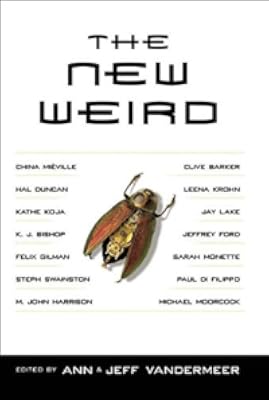
The New Weird
by Ann VanderMeer (Editor), Jeff Vandermeer (Editor)
On This Page
Description
Presents a collection of stories from the "new weird" genre--a overlap of science fiction, fantasy, and horror--from some of its well-known writers, along with commentaries and a story featuring emerging authors within the genre.Tags
Recommendations

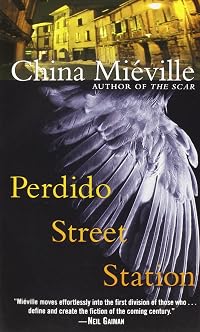
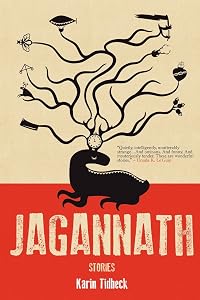
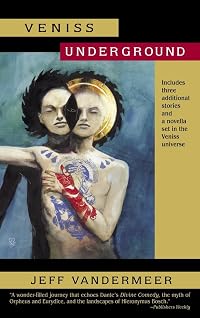
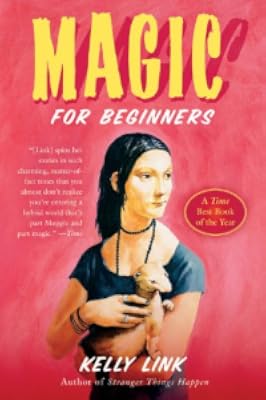
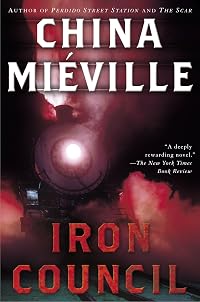


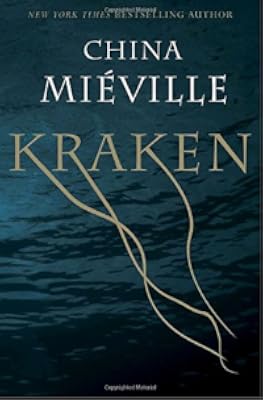
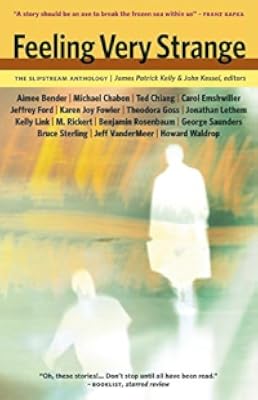
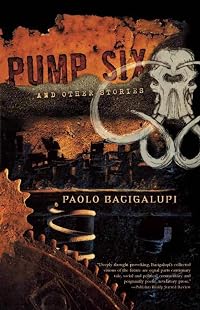
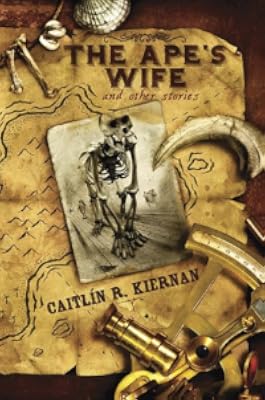

Member Recommendations
Dead_Dreamer A few of THE NEW WEIRD's authors return to describe a steam-powered era that never was: Jay Lake, Paul Di Filippo and Michael Moorcock.
davisfamily A great example of the New Weird genre. Great Characters and a unique setting, not quite steampunk and not quite science fiction.
Member Reviews
It’s easy to imagine two different readers reacting in opposite ways to The New Weird. One might find it delightfully odd; the other might find it as terrifying as Kafka on LSD. And a third might find it delightfully odd because it’s as terrifying as Kafka on LSD. Certainly, no one is likely to find it boring.
The book is well-organized, with a short, useful introduction; a section entitled “Stimuli,” containing older selections (though not very old; the oldest piece, by Michael Moorcock, has an original copyright date of 1979, while the Thomas Ligotti selection was published only in 1997); “Evidence,” stories published mostly in this millennium and intended to demonstrate precisely what New Weird is, or was; “Symposium,” show more short essays by three writers and shorter commentary by European editors; and “Laboratory,” a communal story by “some of our finest fantasists generally not identified as ‘New Weird.’” Each section has its own points of interests, though the last is of dubious value; as discussed below, some writers even seem to be mocking the assignment, though perhaps that is merely a matter of style.
Which brings us back to the definitional problem. In his introduction, Jeff VanderMeer quotes M. John Harrison asking whether New Weird “is…even anything.” It is VanderMeer’s thesis that the popularity of China Mieville’s Perdido Street Station in 2000 crystallized a shift in traditional weird fiction – the sort written by H.P. Lovecraft and Clark Ashton Smith, which ultimately became modern-day horror fiction – into a new type of supernatural or fantastical horror fiction. The twin stimuli for the shift were the New Wave of the 1960s and the “unsettling grotesquery” of 1980s horror, like Clive Barker’s Clive Barker's Books of Blood. The difference was that this new type of fiction surrendered to the weird, without ironic distance, using “rough-hewn but effective plots featuring earnest, proactive characters.”
VanderMeer suggests that this work was not particularly subtle and therefore considerably more accessible to readers than its influences had been. Some writers of work identified as New Weird, like Mieville, also argued that it had a specific political component, particularly in opposition to globalization and global corporations. Others, like Steph Swainston, found political categorization too limiting, finding instead a sort of spiritual meaning in the use of New Weird. It wasn’t long before those authors writing the work most identified as New Weird came to deny the label, particularly as their work continued to grow and evolve. VanderMeer contends that none of them ever wrote anything that was much like what they’d written before “for the most part” – neatly setting aside the fact that a number of these writers, like Harrison, Swainston and Mieville continue to write books set in the universes they originally defined as New Weird. VanderMeer implies that New Weird was essentially a moment in time, a marketing category, a way of shaking up the field that has made it possible for writers to come up with “their own wonderfully bizarre and transgressive recombination[s].” Ultimately, VanderMeer comes up with what he calls a working definition of New Weird:
"New Weird is a type of urban, secondary-world fiction that subverts the romanticized ideas about place found in traditional fantasy, largely by choosing realistic, complex real-world models as the jumping off point for creation of settings that may combine elements of both science fiction and fantasy. New Weird has a visceral, in-the-moment quality that often uses elements of surreal or transgressive horror for its tone, style, and effects – in combination with the stimulus of influence from New Wave writers of their proxies (including such forebears as Mervyn Peake and the French/English Decadents). New Weird fictions are acutely aware of the modern world, even if in disguise, but not always overtly political. As part of this awareness of the modern world, New Weird relies for its visionary power on a “surrender to the weird” that isn’t, for example, hermetically sealed in a haunted house on the moors or in a cave in Antarctica. The “surrender” (or “belief”) of the writer can take many forms, some of them even involving the use of postmodern techniques that do not undermine the surface reality of the text." (xvi)
It’s a good definition, and largely supported by the stories the VanderMeers choose to fill out their anthology. If I were to tinker with it, it would be to emphasize that world-building seems to be especially critical to New Weird, more so than to traditional science fiction, fantasy or horror. Place is primary to character, and place tends to shape events more than characters do.
The first story in the anthology demonstrates this primacy of place in New Weird fiction. M. John Harrison’s “The Luck in the Head” is a complex and very strange story set in Uroconium, “an indifferent city.” This tale of the anniversary of Uroconium’s liberation from the Analeptic Kings and its current rule by the incredibly ancient Mammy Vooley is one that seems to begin in the middle, as if there is much untold, leaving much work to the reader’s imagination, leading one to wish she could unhinge herself from reality to follow the goings on. Ardwick Chrome, the protagonist, is seeking relief from disturbing, senseless dreams that torment him as he lies strapped to his bed. The convoluted plot has Chrome attempting to stop his dreams by assassinating Mammy Vooley at the request of an insect woman, and all flows into ever increasing strange and random changes. No doubt it is weird; it is also repellent. It is not a story to enjoy, but one to be distantly admired as the work of a vivid imagination.
Clive Barker’s “In the Hills, the Cities,” is a more accessible story, but no less weird. This tale strikes me as unlike much of Barker’s work, lacking the vulgarity of his Mister B. Gone or the must-look-away images of his Hellraiser films. It is about an unusual festival conducted by two Eastern European cities, and a tragedy that befalls them. This story is alive with the oddness of cities truly becoming their populations, and the descriptions Barker writes stay vivid long after the pages fall closed.
“Crossing Into Cambodia: A Story of the Third World War” by Michael Moorcock is a more dubious choice for a “weird” tale, striking me more as a straightforward vision of the evils of war in the wake of Vietnam (and, even more so, Iraq, though Moorcock was writing while George W. Bush was still decades away from his Supreme Court victory, much less “Mission Accomplished”). That may be a matter of timing, though, for sometimes reality has a way of catching up with the weird in ways we don’t appreciate.
Who can resist a story that begins, “It was a cold morning, two days before Jape Day, and little children were eating the eyeballs of corpses in Blood Park”? Simon Ings treats us to uncanny horror combined with gruesome humor, in “The Braining of Mother Lamprey.” Kathe Koje’s “The Neglected Garden” tells a tale of unrequited, obsessive love and horrible indifference as a woman becomes a part of her former lover’s garden. Thomas Ligotti once again demonstrates the importance of place to weird tales in “A Soft Voice Whispers Nothing,” a short tale of almost poetic language about a metaphysical parade that closes out the “Stimuli” section.
“Evidence” is a more difficult section of the book because so much of the material makes more sense if one has knowledge of the authors’ larger works. China Mieville’s “Jack,” for instance, is far more intelligible to a reader who knows of the city of New Crobuzon, which first appeared in Mieville’s Perdido Street Station. It’s a good story, and it can stand alone, but without the authority of the city in which it is set surrounding it, it is a lesser tale. Jeffrey Thomas’s “Immolation,” one of the strongest, darkest and saddest stories in the book, takes on new meaning if the reader is aware of Thomas’s Punktown. Leena Krohn’s short novel Tainaron: Mail from Another City is a lovely work, and the excerpt here does not do it justice, just as “The Ride of the Gabbleratchet” from Steph Swainston’s Dangerous Offspring hardly begins to give the reader the slightest taste of her marvelous Fourlands trilogy. New Weird depends so heavily on complex worldbuilding that it is difficult to convey its flavor in a short story, making the task the VanderMeers have set for themselves virtually impossible to accomplish. It takes time and much description and action to show a complete world – and many more words than will fit within the confines of a story. Indeed, most writers require more than a single long novel.
Nonetheless, several stories included, here manage to convey the haunting atmosphere of New Weird. Brian Evenson does it in “Watson’s Boy,” the tale of a man who spends his days picking up keys for no other reason than that they are there and they are all he knows. The world here is small, enclosed, and easier to describe, thus fitting within a single story. Jeffrey Ford, a true master of the short form, astonishes again with “At Reparata, a tale of a wonderful kingdom where everyone gets the title he or she truly deserves. And Alistair Rennie’s “The Gutter Sees the Light that Never Shines” is foul and funny at the same time, a fine last tale to evidence that New Weird is not without a sense of humor.
The next section of the book, “Symposium,” is uneven in its usefulness, but overall is likely to give a kick to anyone who has the slightest penchant for literary criticism and the future of the fantastic. This is the second “definitional” book that I know of (the first was Feeling Very Strange: The Slipstream Anthology by James Patrick Kelly and John Kessel, reviewed here) that has used excerpts from online discussions to try to explain the boundaries of a subgenre of science fiction/fantasy/horror – perhaps a logical outgrowth of the fact that those of us who read in these genres are those most likely to use tools like internet message boards. The discussion, between authors, readers, editors, critics, and some complete unknowns, is thoughtful and thought-provoking, extremely well-edited to convey the best of the conversation while preserving its occasionally playful tone. Essays by Michael Cisco, Darja Malcolm-Clarke and K.J. Bishop develop the idea that New Weird is a fuzzy label, alive and changing but, as Cisco puts it, very much “the scene.” One of the most interesting parts of the book is the section in which the VanderMeers set forth the perspectives of European editors on New Weird. These editors talk about problems of translation and of the development of strange fiction in their own countries and their own languages, and of trends that have developed independently of English-language influence that have occurred simultaneously.
The least successful section of the book is the one labeled “Laboratory.” The VanderMeers commissioned a piece from a number of fantasists not commonly known for their work in New Weird, writing in a round robin. The instigator is Paul Di Filippo, who unfortunately writes as if he is making fun of the whole concept of New Weird, choosing names for characters, gods and places that echo those used by Mieville and Swainston in a way that mocks them, and situations that sound more silly than weird. One almost begins to feel as if one is being laughed at for taking this New Weird stuff so seriously. Fortunately, the writers who follow Di Filippo are not so blatant in their disregard for the form, but their contributions rarely mesh with one another, and the story never coalesces.
Finally, the VanderMeers offer an extremely valuable “Recommended Reading” section at the back of the book. Even those who consider themselves well-versed in the New Weird might find some works here that he or she has overlooked, and be happy to have discovered them. As the VanderMeers state, it is not an exhaustive list, but it is stimulating. I’ve read a number of the works on the list since my first reading of The New Weird, and while some were better than others, they certainly all added to my understanding of this marvelously odd literary movement.
The New Weird is therefore an engaging and thought-provoking if imperfect book. Scholars of the fantastic will certainly wish to include it in their libraries, and it is a good impetus to discussion. Casual readers, however, may find it much more difficult to appreciate; still, it is a good place for them to start on an exploration of this little corner of science fiction/fantasy/horror, one where all three genres seem to be bundled into one very strange whole. show less
The book is well-organized, with a short, useful introduction; a section entitled “Stimuli,” containing older selections (though not very old; the oldest piece, by Michael Moorcock, has an original copyright date of 1979, while the Thomas Ligotti selection was published only in 1997); “Evidence,” stories published mostly in this millennium and intended to demonstrate precisely what New Weird is, or was; “Symposium,” show more short essays by three writers and shorter commentary by European editors; and “Laboratory,” a communal story by “some of our finest fantasists generally not identified as ‘New Weird.’” Each section has its own points of interests, though the last is of dubious value; as discussed below, some writers even seem to be mocking the assignment, though perhaps that is merely a matter of style.
Which brings us back to the definitional problem. In his introduction, Jeff VanderMeer quotes M. John Harrison asking whether New Weird “is…even anything.” It is VanderMeer’s thesis that the popularity of China Mieville’s Perdido Street Station in 2000 crystallized a shift in traditional weird fiction – the sort written by H.P. Lovecraft and Clark Ashton Smith, which ultimately became modern-day horror fiction – into a new type of supernatural or fantastical horror fiction. The twin stimuli for the shift were the New Wave of the 1960s and the “unsettling grotesquery” of 1980s horror, like Clive Barker’s Clive Barker's Books of Blood. The difference was that this new type of fiction surrendered to the weird, without ironic distance, using “rough-hewn but effective plots featuring earnest, proactive characters.”
VanderMeer suggests that this work was not particularly subtle and therefore considerably more accessible to readers than its influences had been. Some writers of work identified as New Weird, like Mieville, also argued that it had a specific political component, particularly in opposition to globalization and global corporations. Others, like Steph Swainston, found political categorization too limiting, finding instead a sort of spiritual meaning in the use of New Weird. It wasn’t long before those authors writing the work most identified as New Weird came to deny the label, particularly as their work continued to grow and evolve. VanderMeer contends that none of them ever wrote anything that was much like what they’d written before “for the most part” – neatly setting aside the fact that a number of these writers, like Harrison, Swainston and Mieville continue to write books set in the universes they originally defined as New Weird. VanderMeer implies that New Weird was essentially a moment in time, a marketing category, a way of shaking up the field that has made it possible for writers to come up with “their own wonderfully bizarre and transgressive recombination[s].” Ultimately, VanderMeer comes up with what he calls a working definition of New Weird:
"New Weird is a type of urban, secondary-world fiction that subverts the romanticized ideas about place found in traditional fantasy, largely by choosing realistic, complex real-world models as the jumping off point for creation of settings that may combine elements of both science fiction and fantasy. New Weird has a visceral, in-the-moment quality that often uses elements of surreal or transgressive horror for its tone, style, and effects – in combination with the stimulus of influence from New Wave writers of their proxies (including such forebears as Mervyn Peake and the French/English Decadents). New Weird fictions are acutely aware of the modern world, even if in disguise, but not always overtly political. As part of this awareness of the modern world, New Weird relies for its visionary power on a “surrender to the weird” that isn’t, for example, hermetically sealed in a haunted house on the moors or in a cave in Antarctica. The “surrender” (or “belief”) of the writer can take many forms, some of them even involving the use of postmodern techniques that do not undermine the surface reality of the text." (xvi)
It’s a good definition, and largely supported by the stories the VanderMeers choose to fill out their anthology. If I were to tinker with it, it would be to emphasize that world-building seems to be especially critical to New Weird, more so than to traditional science fiction, fantasy or horror. Place is primary to character, and place tends to shape events more than characters do.
The first story in the anthology demonstrates this primacy of place in New Weird fiction. M. John Harrison’s “The Luck in the Head” is a complex and very strange story set in Uroconium, “an indifferent city.” This tale of the anniversary of Uroconium’s liberation from the Analeptic Kings and its current rule by the incredibly ancient Mammy Vooley is one that seems to begin in the middle, as if there is much untold, leaving much work to the reader’s imagination, leading one to wish she could unhinge herself from reality to follow the goings on. Ardwick Chrome, the protagonist, is seeking relief from disturbing, senseless dreams that torment him as he lies strapped to his bed. The convoluted plot has Chrome attempting to stop his dreams by assassinating Mammy Vooley at the request of an insect woman, and all flows into ever increasing strange and random changes. No doubt it is weird; it is also repellent. It is not a story to enjoy, but one to be distantly admired as the work of a vivid imagination.
Clive Barker’s “In the Hills, the Cities,” is a more accessible story, but no less weird. This tale strikes me as unlike much of Barker’s work, lacking the vulgarity of his Mister B. Gone or the must-look-away images of his Hellraiser films. It is about an unusual festival conducted by two Eastern European cities, and a tragedy that befalls them. This story is alive with the oddness of cities truly becoming their populations, and the descriptions Barker writes stay vivid long after the pages fall closed.
“Crossing Into Cambodia: A Story of the Third World War” by Michael Moorcock is a more dubious choice for a “weird” tale, striking me more as a straightforward vision of the evils of war in the wake of Vietnam (and, even more so, Iraq, though Moorcock was writing while George W. Bush was still decades away from his Supreme Court victory, much less “Mission Accomplished”). That may be a matter of timing, though, for sometimes reality has a way of catching up with the weird in ways we don’t appreciate.
Who can resist a story that begins, “It was a cold morning, two days before Jape Day, and little children were eating the eyeballs of corpses in Blood Park”? Simon Ings treats us to uncanny horror combined with gruesome humor, in “The Braining of Mother Lamprey.” Kathe Koje’s “The Neglected Garden” tells a tale of unrequited, obsessive love and horrible indifference as a woman becomes a part of her former lover’s garden. Thomas Ligotti once again demonstrates the importance of place to weird tales in “A Soft Voice Whispers Nothing,” a short tale of almost poetic language about a metaphysical parade that closes out the “Stimuli” section.
“Evidence” is a more difficult section of the book because so much of the material makes more sense if one has knowledge of the authors’ larger works. China Mieville’s “Jack,” for instance, is far more intelligible to a reader who knows of the city of New Crobuzon, which first appeared in Mieville’s Perdido Street Station. It’s a good story, and it can stand alone, but without the authority of the city in which it is set surrounding it, it is a lesser tale. Jeffrey Thomas’s “Immolation,” one of the strongest, darkest and saddest stories in the book, takes on new meaning if the reader is aware of Thomas’s Punktown. Leena Krohn’s short novel Tainaron: Mail from Another City is a lovely work, and the excerpt here does not do it justice, just as “The Ride of the Gabbleratchet” from Steph Swainston’s Dangerous Offspring hardly begins to give the reader the slightest taste of her marvelous Fourlands trilogy. New Weird depends so heavily on complex worldbuilding that it is difficult to convey its flavor in a short story, making the task the VanderMeers have set for themselves virtually impossible to accomplish. It takes time and much description and action to show a complete world – and many more words than will fit within the confines of a story. Indeed, most writers require more than a single long novel.
Nonetheless, several stories included, here manage to convey the haunting atmosphere of New Weird. Brian Evenson does it in “Watson’s Boy,” the tale of a man who spends his days picking up keys for no other reason than that they are there and they are all he knows. The world here is small, enclosed, and easier to describe, thus fitting within a single story. Jeffrey Ford, a true master of the short form, astonishes again with “At Reparata, a tale of a wonderful kingdom where everyone gets the title he or she truly deserves. And Alistair Rennie’s “The Gutter Sees the Light that Never Shines” is foul and funny at the same time, a fine last tale to evidence that New Weird is not without a sense of humor.
The next section of the book, “Symposium,” is uneven in its usefulness, but overall is likely to give a kick to anyone who has the slightest penchant for literary criticism and the future of the fantastic. This is the second “definitional” book that I know of (the first was Feeling Very Strange: The Slipstream Anthology by James Patrick Kelly and John Kessel, reviewed here) that has used excerpts from online discussions to try to explain the boundaries of a subgenre of science fiction/fantasy/horror – perhaps a logical outgrowth of the fact that those of us who read in these genres are those most likely to use tools like internet message boards. The discussion, between authors, readers, editors, critics, and some complete unknowns, is thoughtful and thought-provoking, extremely well-edited to convey the best of the conversation while preserving its occasionally playful tone. Essays by Michael Cisco, Darja Malcolm-Clarke and K.J. Bishop develop the idea that New Weird is a fuzzy label, alive and changing but, as Cisco puts it, very much “the scene.” One of the most interesting parts of the book is the section in which the VanderMeers set forth the perspectives of European editors on New Weird. These editors talk about problems of translation and of the development of strange fiction in their own countries and their own languages, and of trends that have developed independently of English-language influence that have occurred simultaneously.
The least successful section of the book is the one labeled “Laboratory.” The VanderMeers commissioned a piece from a number of fantasists not commonly known for their work in New Weird, writing in a round robin. The instigator is Paul Di Filippo, who unfortunately writes as if he is making fun of the whole concept of New Weird, choosing names for characters, gods and places that echo those used by Mieville and Swainston in a way that mocks them, and situations that sound more silly than weird. One almost begins to feel as if one is being laughed at for taking this New Weird stuff so seriously. Fortunately, the writers who follow Di Filippo are not so blatant in their disregard for the form, but their contributions rarely mesh with one another, and the story never coalesces.
Finally, the VanderMeers offer an extremely valuable “Recommended Reading” section at the back of the book. Even those who consider themselves well-versed in the New Weird might find some works here that he or she has overlooked, and be happy to have discovered them. As the VanderMeers state, it is not an exhaustive list, but it is stimulating. I’ve read a number of the works on the list since my first reading of The New Weird, and while some were better than others, they certainly all added to my understanding of this marvelously odd literary movement.
The New Weird is therefore an engaging and thought-provoking if imperfect book. Scholars of the fantastic will certainly wish to include it in their libraries, and it is a good impetus to discussion. Casual readers, however, may find it much more difficult to appreciate; still, it is a good place for them to start on an exploration of this little corner of science fiction/fantasy/horror, one where all three genres seem to be bundled into one very strange whole. show less
THE NEW WEIRD is an anthology dealing with - you guessed it - the New Weird. To this end, the editors have divided it into four segments: Stimuli, being stories that predate the New Weird explosion of the early 2000s; Evidence, being stories from the centre of the New Weird; Symposium, a section filled with critical writings; and Laboratory, an experimental round robin story in which they asked seven writers to create a New Weird piece.
I enjoyed it quite a bit. It was a little lighter on the criticism than I expected, but it still gave me some good stuff to think about. Just knowing that it had been compiled as an attempt to examine this literary movement/phenomenon/thing that just kind of happened, I found myself reading the stories show more more closely and thinking about the ways they intersected and diverged thematically. I had a great time doing so.
That's not to say that I liked each and every story. I definitely enjoyed some more than others. My favourites were "Jack" by China Mieville, "The Art of Dying" by K.J. Bishop, and "At Reparata" by Jeffrey Ford. I also appreciated "The Luck in the Head" by M. John Harrison, "The Braining of Mother Lamprey" by Simon Ings, and "The Gutter Sees the Light That Never Shines" by Alistair Rennie because of how beautifully the authors dealt with the worlds they'd created. I appreciated how they tied each setting's social structures and morality together.
"The Ride of the Gabbleratchet" by Steph Swainston was, without a doubt, my least favourite story. It's an excerpt from a novel, and I felt like I'd been thrust straight into the middle of something without the tools I needed to work with it. This would've been all right if I'd received these tools throughout the course of the story, but I never did. I might have enjoyed it if I'd read the rest of the book surrounding it, but without that... well, it fell flat. I wasn't crazy about Michael Moorcock's "Crossing Into Cambodia," either, and was rather unsure of how it fit into the anthology's theme. So far as this non-sci fi reader is concerned, it read like straight science fiction.
And that brings me to my biggest beef with the anthology as a whole: I think it would have been much stronger if the editors had given us at least a little commentary on each of the stories. Intro blurbs stating where and when each story was published, how it broke new ground, etc. would've been fantastic. It also might've been nice to hear how the editors figure each story fits into the anthology's theme.
But perhaps they felt this would've been steering the reader to too great an extent. They've placed the critical essays after the reprinted works, which leads me to believe that they want us to have formed our own opinions of the New Weird by the time we arrive at them. I know I felt as though I'd been invited to contrast my own thoughts against those of the contributing critics, and I appreciated the opportunity. I found myself considering not only how the stories I'd just read related to one another but how they related to fantasy as a whole. I thought about my own writing and where I'd like it to fit into this brave new world. I was most definitely absorbed and engaged, and I'm glad the criticism was where it was. But I still think intro blurbs would've improved the experience.
All in all, though, I got a lot out of this. It wasn't a perfect anthology, but I find myself sorry it's over. I'd definitely recommend it to anyone interested in the changing landscape of speculative fiction.
(A slightly different version of this review originally appeared on my blog, Stella Matutina). show less
I enjoyed it quite a bit. It was a little lighter on the criticism than I expected, but it still gave me some good stuff to think about. Just knowing that it had been compiled as an attempt to examine this literary movement/phenomenon/thing that just kind of happened, I found myself reading the stories show more more closely and thinking about the ways they intersected and diverged thematically. I had a great time doing so.
That's not to say that I liked each and every story. I definitely enjoyed some more than others. My favourites were "Jack" by China Mieville, "The Art of Dying" by K.J. Bishop, and "At Reparata" by Jeffrey Ford. I also appreciated "The Luck in the Head" by M. John Harrison, "The Braining of Mother Lamprey" by Simon Ings, and "The Gutter Sees the Light That Never Shines" by Alistair Rennie because of how beautifully the authors dealt with the worlds they'd created. I appreciated how they tied each setting's social structures and morality together.
"The Ride of the Gabbleratchet" by Steph Swainston was, without a doubt, my least favourite story. It's an excerpt from a novel, and I felt like I'd been thrust straight into the middle of something without the tools I needed to work with it. This would've been all right if I'd received these tools throughout the course of the story, but I never did. I might have enjoyed it if I'd read the rest of the book surrounding it, but without that... well, it fell flat. I wasn't crazy about Michael Moorcock's "Crossing Into Cambodia," either, and was rather unsure of how it fit into the anthology's theme. So far as this non-sci fi reader is concerned, it read like straight science fiction.
And that brings me to my biggest beef with the anthology as a whole: I think it would have been much stronger if the editors had given us at least a little commentary on each of the stories. Intro blurbs stating where and when each story was published, how it broke new ground, etc. would've been fantastic. It also might've been nice to hear how the editors figure each story fits into the anthology's theme.
But perhaps they felt this would've been steering the reader to too great an extent. They've placed the critical essays after the reprinted works, which leads me to believe that they want us to have formed our own opinions of the New Weird by the time we arrive at them. I know I felt as though I'd been invited to contrast my own thoughts against those of the contributing critics, and I appreciated the opportunity. I found myself considering not only how the stories I'd just read related to one another but how they related to fantasy as a whole. I thought about my own writing and where I'd like it to fit into this brave new world. I was most definitely absorbed and engaged, and I'm glad the criticism was where it was. But I still think intro blurbs would've improved the experience.
All in all, though, I got a lot out of this. It wasn't a perfect anthology, but I find myself sorry it's over. I'd definitely recommend it to anyone interested in the changing landscape of speculative fiction.
(A slightly different version of this review originally appeared on my blog, Stella Matutina). show less
This was a very interesting examination of the New Weird as a genre movement (or potential movement?) The first two sections of the anthology included a variety of short stories, which of course are the main draw to the book. The stories were hit or miss for me; I liked most of them to some degree, although one of them (unfortunately the first story in the book, which made me hesitant initially) my brain just repeatedly rejected and I eventually had to DNF. That said, a few of these stories I'd have given 5 stars, and the majority fell somewhere in the 3 or 4-star range of enjoyment. I'd imagine that there's something in here for everyone (unless you're really not into the idea of weird fiction, in which case, what are you doing reading show more this review in the first place, silly?)
The next section included and excerpt from an internet message board conversation that initially sparked the idea for the anthology as well as several non-fiction essays written by a various authors and editors discussing whether or not they believe in the New Weird as a movement in general and, in the case of a series from foreign editors, what their perception is of the New World's presence in their country. This I found interesting from the perspective of a writer, but if I didn't write I probably would have skipped it.
The last section is actually a "round robin"-style story where seven authors got together and took turns adding onto a New World story, telling their own mini-narratives within a world of their shared creation. I did not try to internally rate this section because it was more experimental, but the story was an interesting read, if unique in its structure.
In general, I think this book makes a good introduction to weird fiction (at least as it stood in the 2000's) and could also serve as a text of sorts for a writer interested in expanding their writing in that direction (keeping in mind that part of the argument of the non-fiction part of this book in the first place is that an over-emphasis on labels can be dangerous because writers shouldn't be writing to fill a specific genre but rather to tell a specific story). show less
The next section included and excerpt from an internet message board conversation that initially sparked the idea for the anthology as well as several non-fiction essays written by a various authors and editors discussing whether or not they believe in the New Weird as a movement in general and, in the case of a series from foreign editors, what their perception is of the New World's presence in their country. This I found interesting from the perspective of a writer, but if I didn't write I probably would have skipped it.
The last section is actually a "round robin"-style story where seven authors got together and took turns adding onto a New World story, telling their own mini-narratives within a world of their shared creation. I did not try to internally rate this section because it was more experimental, but the story was an interesting read, if unique in its structure.
In general, I think this book makes a good introduction to weird fiction (at least as it stood in the 2000's) and could also serve as a text of sorts for a writer interested in expanding their writing in that direction (keeping in mind that part of the argument of the non-fiction part of this book in the first place is that an over-emphasis on labels can be dangerous because writers shouldn't be writing to fill a specific genre but rather to tell a specific story). show less
The short stories included are mostly good, some quite impressive, but my main interest was in the introduction and 'Symposium' sections discussing the definition of the genre, whether it actually warrants being considered one, and the issues addressed by its existence or lack thereof. I don't often see groups of authors so willing to engage and discuss their work and its context to such extent, and it definitely helps to highlight certain aspects of their work and any they might be responding to.
Jeff and Ann VanderMeer seem to have two goals with this anthology: firstly, to bring together some stories from the luminaries of the New Weird sub-genre, and secondly to give a good idea of what New Weird is and where it comes from. I'd have to say they succeed with the first goal, but fall short of achieving their second goal. In all fairness, it can be difficult to discuss something like a sub-genre without drifting into unnecessary hair-splitting or silly semantics. (What makes New Weird different than Interstitial or New Wave Fabulism, for example.) However, the VanderMeers seem to have been unable to choose a specific approach to the material.
To begin with, the book is structured to create the impression of analyzing or tracing show more the development of New Weird. The first section, consisting of six stories, is devoted to works which have been influential, but I actually would have preferred a little bit more explanation as to what exact influence those stories are meant to have provided. Instead, I often found myself wondering why the stories were chosen, what influence they were supposed to have provided, and even what made them distinct from New Weird itself. This was particularly true with M. John Harrison's "The Luck in the Head" and Simon D. Ings' "The Braining of Mother Lamprey," which seem as if they could have been slipped into the second section without the reader being the wiser, especially since Harrison is elsewhere described as a New Weird writer. The other stories in this section were three horror stories (Clive Barker's "In the Hills, the Cities," Kathe Koja's "The Neglected Garden," and Thomas Ligotti's "A Soft Voice Whispers Nothing") which though quite good seemed largely to have at best oblique influence. Michael Moorcock's "Crossing into Cambodia" is more of straight sci-fi, post-apocalyptic homage to Isaac Babel's tales of cossacks.
The second section is by far the best (and thankfully the longest), mostly for the strength of the stories, and left me wishing more of the collection had been devoted to New Weird authors. China Miéville's and Jeffrey Thomas' entries are both quite good stories of life in a dark urban milleu that disfigures soul and flesh. K.J. Bishop's "The Art of Dying" and Jeffrey Ford's "At Reparata" lean more towards the fantasy end of the spectrum, though certainly weird. Some of the entries get really into the surreal, such as Jay Lake's "The Lizard of Ooze" and Brian Evenson's "Watson's Boy," which is downright Kafkaesque. One real revelation was Alistair Rennie's "The Gutter Sees the Light that Never Shines" which was funny and disturbing.
The third section is devoted to the question of "What is the New Weird?" And if you're wondering why that subject is taken up after presenting the collection of New Weird stories, then you know how I felt. This section seemed as if it could have been trimmed down a bit, especially since there seemed to be some repetition. (Most people who accept that there is such a thing as New Weird seem pretty happy with describing it as combining "elements of fantasy, horror and science fiction with more literary or experimental writing.")
The last section is interesting, but again adds to the impression of the collection being a bit unfocused. Paul Di Filippo begins a New Weird story in a setting that appears to be based roughly on India. Then several authors who are not quite New Weird take stabs at continuing it. Overall, I thought the stories were pretty good, but again wasn't sure quite what the purpose of the section was.
So, I'd recommend it highly for the stories, but would warn anyone not to get too caught up in the structure (or the question of what New Weird is) since that's a bit more questionable. show less
To begin with, the book is structured to create the impression of analyzing or tracing show more the development of New Weird. The first section, consisting of six stories, is devoted to works which have been influential, but I actually would have preferred a little bit more explanation as to what exact influence those stories are meant to have provided. Instead, I often found myself wondering why the stories were chosen, what influence they were supposed to have provided, and even what made them distinct from New Weird itself. This was particularly true with M. John Harrison's "The Luck in the Head" and Simon D. Ings' "The Braining of Mother Lamprey," which seem as if they could have been slipped into the second section without the reader being the wiser, especially since Harrison is elsewhere described as a New Weird writer. The other stories in this section were three horror stories (Clive Barker's "In the Hills, the Cities," Kathe Koja's "The Neglected Garden," and Thomas Ligotti's "A Soft Voice Whispers Nothing") which though quite good seemed largely to have at best oblique influence. Michael Moorcock's "Crossing into Cambodia" is more of straight sci-fi, post-apocalyptic homage to Isaac Babel's tales of cossacks.
The second section is by far the best (and thankfully the longest), mostly for the strength of the stories, and left me wishing more of the collection had been devoted to New Weird authors. China Miéville's and Jeffrey Thomas' entries are both quite good stories of life in a dark urban milleu that disfigures soul and flesh. K.J. Bishop's "The Art of Dying" and Jeffrey Ford's "At Reparata" lean more towards the fantasy end of the spectrum, though certainly weird. Some of the entries get really into the surreal, such as Jay Lake's "The Lizard of Ooze" and Brian Evenson's "Watson's Boy," which is downright Kafkaesque. One real revelation was Alistair Rennie's "The Gutter Sees the Light that Never Shines" which was funny and disturbing.
The third section is devoted to the question of "What is the New Weird?" And if you're wondering why that subject is taken up after presenting the collection of New Weird stories, then you know how I felt. This section seemed as if it could have been trimmed down a bit, especially since there seemed to be some repetition. (Most people who accept that there is such a thing as New Weird seem pretty happy with describing it as combining "elements of fantasy, horror and science fiction with more literary or experimental writing.")
The last section is interesting, but again adds to the impression of the collection being a bit unfocused. Paul Di Filippo begins a New Weird story in a setting that appears to be based roughly on India. Then several authors who are not quite New Weird take stabs at continuing it. Overall, I thought the stories were pretty good, but again wasn't sure quite what the purpose of the section was.
So, I'd recommend it highly for the stories, but would warn anyone not to get too caught up in the structure (or the question of what New Weird is) since that's a bit more questionable. show less
Overall, not a bad anthology, mixing elements of horror, sci-fi and fantasy. Most of the stories are not original to this book, so if you're a fan of the authors, it's likely you've read them before. They tend toward the dark, extreme and often grotesque and disgusting, so if that's not your scene, you probably won't enjoy.
My main issue with the book is its tendency toward navel-gazing. It should have just stuck with presenting the work, rather than going on and on about how to define the term "new weird," reprinting online forum arguments, and asking random industry people what they think of it. The introduction is also 'weirdly' full of China-Mieville-hero-worship. Not that Mr. Mieville doesn't necessarily deserve it, but it was show more slightly odd. Basically, I don't care about ultra-narrow genre-defining; let's just skip to the stories, and let them speak for themselves!
Contents:
Introduction
“The New Weird: ‘It’s Alive?’ Jeff VanderMeer
Stimuli
M. John Harrison “The Luck in the Head”
Michael Moorcock “Crossing into Cambodia”
Clive Barker “In the Hills, the Cities”
Simon D. Ings “The Braining of Mother Lamprey”
Kathe Koja “The Neglected Garden”
Thomas Ligotti “A Soft Voice Whispers Nothing”
Evidence
China Mieville “Jack”
Jeffrey Thomas “Immolation”
Jay Lake “The Lizard of Ooze”
Brian Evenson “Watson’s Boy”
K .J. Bishop “The Art of Dying”
Jeffrey Ford “At Reparata”
Leena Krohn “Letters from Tainaron”
Steph Swainston “The Ride of the Gabbleratchet”
Alistair Rennie “The Gutter Sees the Light That Never Shines” (original)
Discussion
“New Weird: The Creation of a Term”
Michael Cisco “‘New Weird’: I Think We’re the Scene”
Darja Malcolm-Clarke “Tracking Phantoms”
K. J. Bishop “Whose Words You Wear”
“European Editor Perspectives on the New Weird” (featuring the views of Michael Haulica from Romania, Martin Sust from the Czech Republic, Hannes Riffel from Germany, Konrad Waleski from Poland, and Jukka Halme from Finland)
Laboratory (Original round-robin story)
“Festival Lives”
Preamble: Ann and Jeff VanderMeer
View 1: “Death in a Dirty Dhoti” Paul Di Filippo
View 2: “Cornflowers Beside the Unuttered” Cat Rambo
View 3: “All God’s Chillun Got Wings” Sarah Monette
View 4: “Locust-Mind” Daniel Abraham
View 5: “Constable Chalch and the Ten Thousand Heroes” Felix Gilman
View 6: “Golden Lads All Must…” Hal Duncan
View 7: “Forfend the Heavens’ Rending” Conrad Williams
Recommended Reading
Biographical Notes show less
My main issue with the book is its tendency toward navel-gazing. It should have just stuck with presenting the work, rather than going on and on about how to define the term "new weird," reprinting online forum arguments, and asking random industry people what they think of it. The introduction is also 'weirdly' full of China-Mieville-hero-worship. Not that Mr. Mieville doesn't necessarily deserve it, but it was show more slightly odd. Basically, I don't care about ultra-narrow genre-defining; let's just skip to the stories, and let them speak for themselves!
Contents:
Introduction
“The New Weird: ‘It’s Alive?’ Jeff VanderMeer
Stimuli
M. John Harrison “The Luck in the Head”
Michael Moorcock “Crossing into Cambodia”
Clive Barker “In the Hills, the Cities”
Simon D. Ings “The Braining of Mother Lamprey”
Kathe Koja “The Neglected Garden”
Thomas Ligotti “A Soft Voice Whispers Nothing”
Evidence
China Mieville “Jack”
Jeffrey Thomas “Immolation”
Jay Lake “The Lizard of Ooze”
Brian Evenson “Watson’s Boy”
K .J. Bishop “The Art of Dying”
Jeffrey Ford “At Reparata”
Leena Krohn “Letters from Tainaron”
Steph Swainston “The Ride of the Gabbleratchet”
Alistair Rennie “The Gutter Sees the Light That Never Shines” (original)
Discussion
“New Weird: The Creation of a Term”
Michael Cisco “‘New Weird’: I Think We’re the Scene”
Darja Malcolm-Clarke “Tracking Phantoms”
K. J. Bishop “Whose Words You Wear”
“European Editor Perspectives on the New Weird” (featuring the views of Michael Haulica from Romania, Martin Sust from the Czech Republic, Hannes Riffel from Germany, Konrad Waleski from Poland, and Jukka Halme from Finland)
Laboratory (Original round-robin story)
“Festival Lives”
Preamble: Ann and Jeff VanderMeer
View 1: “Death in a Dirty Dhoti” Paul Di Filippo
View 2: “Cornflowers Beside the Unuttered” Cat Rambo
View 3: “All God’s Chillun Got Wings” Sarah Monette
View 4: “Locust-Mind” Daniel Abraham
View 5: “Constable Chalch and the Ten Thousand Heroes” Felix Gilman
View 6: “Golden Lads All Must…” Hal Duncan
View 7: “Forfend the Heavens’ Rending” Conrad Williams
Recommended Reading
Biographical Notes show less
not bad collection of short stories. Some hits, some misses. Certainly the most original collection I've seen in a while. I'll need to read some more of the various authors collected here.
Members
- Recently Added By
Lists

New Weird Fiction
69 works; 12 members
Author Information


Jeffrey Scott VanderMeer was born in Bellefonte, Pennsylvania on July 7, 1968. He is an editor, writer, teacher, and publisher. He is the founding editor and publisher of the Ministry of Whimsy Press. He is the author of several books including City of Saints, Madmen, Finch, and The Southern Reach Trilogy. His novel Annihilation won the Nebula show more Award for Best Novel in 2014. (Bowker Author Biography) show less
All Editions
Some Editions
Awards and Honors
Awards
Distinctions
Work Relationships
Contains
Common Knowledge
- Original title
- The New Weird
- Original publication date
- 2008
- People/Characters
- Ardwick Crome; Ansel Verdigris; Mammy Vooley; Vaslav Jelovsek; Jack Half-a-Prayer; Magnesium Jones (show all 13); Nevin Parr; Ephraim Mayda; Edgar Allan Jones; Mona Skye; Vali Jardine; Ingess; Sirimon
- Original language
- English
Classifications
- Genres
- Fiction and Literature, Fantasy, Horror
- DDC/MDS
- 813.0876608 — Literature & rhetoric American literature in English American fiction in English By type Genre fiction Adventure fiction Speculative fiction Fantasy Collections
- LCC
- PN6120.95 .H727 .N49 — Language and Literature Literature (General) Literature (General) Collections of general literature Fiction
- BISAC
Statistics
- Members
- 568
- Popularity
- 51,938
- Reviews
- 13
- Rating
- (3.63)
- Languages
- Czech, English, Romanian
- Media
- Paper, Ebook
- ISBNs
- 4
- ASINs
- 1