
Felix Gilman
Author of The Half-Made World
About the Author
Image credit: Fantasy Book Critic
Series
Works by Felix Gilman
Associated Works
Last Drink Bird Head : A Flash Fiction Anthology for Charity (2009) — Contributor — 33 copies, 1 review
Tagged
Common Knowledge
- Canonical name
- Felix Gilman
- Birthdate
- ukjent
- Gender
- male
- Nationality
- USA
- Places of residence
- New York, New York, USA
- Associated Place (for map)
- New York, USA
Members
Reviews
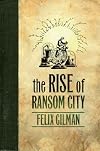
Quite a few of us here at the 2013 Challenge group have been pretty taken by ”The Half-Made World”, the previous book in this duology. And appreciation itself aside, I think we can all pretty much agree that is a fairly tough act to follow. Structured almost like an unwinding clock, the perspective of it was moving from a broad, world building scope, to a narrower and narrower focus on just three (or perhaps four)characters in a setting almost without features. In it’s final hundred show more pages, time seems to stand almost still. How do you go on from that kind of dense concentration?
I’m happy to announce that Gilman does the smart thing and starts in another end altogether. The narrator of ”The rise of Ransom City”, ”Professor” Harry Ransom features as a background character in a single episode of ”The half-made world”. This book is his autobiography, written during his journey to the unmade, western lands, and sent in parts to a journalist he briefly knew in Jasper City.
Ransom’s book is all about setting the record straight about certain myths concerning himself: the real deal behind the famous/infamous Ransom Process of Free Energy , his travels with John Creedmore and Dr. Alverhuysen, the so called miracle of White Rock – and the rumors of his treason at the battle of Jasper. Written in his own meandering and slightly pompous style, occasionally interrupted by footnotes by the much later editor, this is stylistically quite different from the first book. Ransom is a reliable narrator, not out to make himself look better than he was (which is heartbreaking at times), but he focuses on what he wants. Often in the middle of things, but seldom exactly where the action is, this is a rather unusual fantasy novel indeed. I think the closest I come to a comparison is Vander Meer’s ”Shriek: an afterword” (even if this is less complicated).
The world building continues to be amazing, with as much detail paid to small, drab towns on the Rim as to Folk magic or describing how the Line operates further east. It seems almost a waste to let this marvellous landscape go after just two books. But the ending here is so perfect in all it’s wide open inevitability, I kind of hope the next book will take us somewhere else completely.
Be warned however: I guess it is completely possible to hate this book even after loving the first. The are different. Me, I’m giving this book 5 stars. I’m not sure it means it’s better than the first one though. Rather, it’s the combination of the two, creating a whole from two so different books, and the perfect blend of questions and answers, that makes this second book shine even a little brighter. show less
I’m happy to announce that Gilman does the smart thing and starts in another end altogether. The narrator of ”The rise of Ransom City”, ”Professor” Harry Ransom features as a background character in a single episode of ”The half-made world”. This book is his autobiography, written during his journey to the unmade, western lands, and sent in parts to a journalist he briefly knew in Jasper City.
Ransom’s book is all about setting the record straight about certain myths concerning himself: the real deal behind the famous/infamous Ransom Process of Free Energy , his travels with John Creedmore and Dr. Alverhuysen, the so called miracle of White Rock – and the rumors of his treason at the battle of Jasper. Written in his own meandering and slightly pompous style, occasionally interrupted by footnotes by the much later editor, this is stylistically quite different from the first book. Ransom is a reliable narrator, not out to make himself look better than he was (which is heartbreaking at times), but he focuses on what he wants. Often in the middle of things, but seldom exactly where the action is, this is a rather unusual fantasy novel indeed. I think the closest I come to a comparison is Vander Meer’s ”Shriek: an afterword” (even if this is less complicated).
The world building continues to be amazing, with as much detail paid to small, drab towns on the Rim as to Folk magic or describing how the Line operates further east. It seems almost a waste to let this marvellous landscape go after just two books. But the ending here is so perfect in all it’s wide open inevitability, I kind of hope the next book will take us somewhere else completely.
Be warned however: I guess it is completely possible to hate this book even after loving the first. The are different. Me, I’m giving this book 5 stars. I’m not sure it means it’s better than the first one though. Rather, it’s the combination of the two, creating a whole from two so different books, and the perfect blend of questions and answers, that makes this second book shine even a little brighter. show less
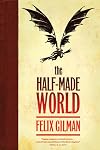
A slow burning fantastical wonder
Poised deliciously between wonderful world building and fantastic characterisation this 1st in a dulogy(?) slowly built but the by end left me quite breathless.
The world? Well it's a A wild west frontier torn between the logical, industriousness of the Line and their giant locomotives ripping through the landscape, consuming and twisting all to their needs. Their armies full of grey men, with their mind shattering bombs. Humanities last gasp, the Red Army was show more defeated long ago and The Guns, chaotic beings who love to possess outlaws cannot hold them back. No one thinks much about the natives who sulk on the edge of reality or are enslaved by the thundering progress of The Line. Into all this, looking for an adventurous new start is psychologist Liv. From the staid East to a home for the war broken. A home that contains an old general who in his broken mind may hold the secret to ending the war.
It’s a wonderful premise, that as you can tell is hard to summarise. The characters that form it grow to be delicious, the pitch perfect tone of the demonic gun, wheedling and cruel in equal measure or the terribly fragile humanity of Liv (one of my favourite characters period). Liv's journey West and the drawing together of all forces keeps you entertained whilst furiously building the story and then goes in unexpected places. Be warned I don't think it hits the wow factor for a while and it always refuses to fall into easy plot tropes of epic battles and glorious romance; passivity with chaos and sudden, very real bravery against familiar cowardice. It maybe a page turner but it’s not nonstop action.
It is the first book is in a series, but the ending is satisfying whilst leaving it wide open for the next. Yet I think whether this books really shines is going to rest on the next book.. I have much invested in this now. show less
Poised deliciously between wonderful world building and fantastic characterisation this 1st in a dulogy(?) slowly built but the by end left me quite breathless.
The world? Well it's a A wild west frontier torn between the logical, industriousness of the Line and their giant locomotives ripping through the landscape, consuming and twisting all to their needs. Their armies full of grey men, with their mind shattering bombs. Humanities last gasp, the Red Army was show more defeated long ago and The Guns, chaotic beings who love to possess outlaws cannot hold them back. No one thinks much about the natives who sulk on the edge of reality or are enslaved by the thundering progress of The Line. Into all this, looking for an adventurous new start is psychologist Liv. From the staid East to a home for the war broken. A home that contains an old general who in his broken mind may hold the secret to ending the war.
It’s a wonderful premise, that as you can tell is hard to summarise. The characters that form it grow to be delicious, the pitch perfect tone of the demonic gun, wheedling and cruel in equal measure or the terribly fragile humanity of Liv (one of my favourite characters period). Liv's journey West and the drawing together of all forces keeps you entertained whilst furiously building the story and then goes in unexpected places. Be warned I don't think it hits the wow factor for a while and it always refuses to fall into easy plot tropes of epic battles and glorious romance; passivity with chaos and sudden, very real bravery against familiar cowardice. It maybe a page turner but it’s not nonstop action.
It is the first book is in a series, but the ending is satisfying whilst leaving it wide open for the next. Yet I think whether this books really shines is going to rest on the next book.. I have much invested in this now. show less
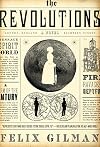
Arthur Shaw is not the most interesting man in the not-quite-historical Victorian London of Felix Gilman’s The Revolutions. That’s a problem, since he’s one of the main characters in the book. Thankfully, Shaw’s very mundanity – he needs a job and is willing to do just about anything for money – leads him into something very interesting indeed.
Oh, and there’s his fiancé, Josephine, who makes for a considerably more interesting companion.
This London is one where the kind of show more quasi-scientific spiritualism that was popular in our reality was not just popular, it was actually true. In particular, Arthur and Josephine find themselves bound up in a group trying to astral project to other planets, particularly Mars. Doing this requires not only the right people (sort of – the group gets less selective as things progress), but massive calculations produced by a massive machine with countless human parts. Babbage’s engine writ large.
The book takes a while to set all this up, which is either fascinating world building (for me) or dull sluggishness (for others). Things really kick into high gear when one of the astral flights is interrupted by Arthur, leaving Josephine trapped – in spiritual, if not physical form – on one of the moons of Mars.
What Gilman does next is a clever sleight of hand. The book focuses on Arthur for a bit and how he and the rest of the society plan to get Josephine back. Just when you think she might be nothing more than a damsel in need of rescue, the POV shifts and we’re treated to Josephine’s lengthy observation of (and, eventually, interactions with) the Martians and their society. This is the best part of the book, harkening back to the days of science fiction before science itself killed off the chance of finding life on Mars. Reminds me of some of the more esoteric parts of The Martian Chronicles.
Naturally, a rescue mission is mounted and while it has its own charms as an adventure story, it can’t match the peak that is Josephine’s experience with the truly alien. But all stories must end and I’d be lying if I said that the ending ruined all that came before.
So Arthur might be kind of dull. Don’t let that put you off. He’ll lead you into some very neat places.
www.jdbyrne.net show less
Oh, and there’s his fiancé, Josephine, who makes for a considerably more interesting companion.
This London is one where the kind of show more quasi-scientific spiritualism that was popular in our reality was not just popular, it was actually true. In particular, Arthur and Josephine find themselves bound up in a group trying to astral project to other planets, particularly Mars. Doing this requires not only the right people (sort of – the group gets less selective as things progress), but massive calculations produced by a massive machine with countless human parts. Babbage’s engine writ large.
The book takes a while to set all this up, which is either fascinating world building (for me) or dull sluggishness (for others). Things really kick into high gear when one of the astral flights is interrupted by Arthur, leaving Josephine trapped – in spiritual, if not physical form – on one of the moons of Mars.
What Gilman does next is a clever sleight of hand. The book focuses on Arthur for a bit and how he and the rest of the society plan to get Josephine back. Just when you think she might be nothing more than a damsel in need of rescue, the POV shifts and we’re treated to Josephine’s lengthy observation of (and, eventually, interactions with) the Martians and their society. This is the best part of the book, harkening back to the days of science fiction before science itself killed off the chance of finding life on Mars. Reminds me of some of the more esoteric parts of The Martian Chronicles.
Naturally, a rescue mission is mounted and while it has its own charms as an adventure story, it can’t match the peak that is Josephine’s experience with the truly alien. But all stories must end and I’d be lying if I said that the ending ruined all that came before.
So Arthur might be kind of dull. Don’t let that put you off. He’ll lead you into some very neat places.
www.jdbyrne.net show less
Wonderful. Felix Gilman's part fantasy, part western, part steampunk, part meta-fictional commentary on the european conquest of North America and our twin obsessions of industrialism and rabid individualism is also a fabulously written and well-characterized trip. Start with Half-Made World. Gilman proves that there is still something brilliantly original to be done in fantasy literature that is worth doing, a lovely escapist treat and intelligent at the same time. I can't ask for a single show more improvement. Can't wait for #3. show less
Lists
Awards


You May Also Like


Associated Authors
Statistics
- Works
- 7
- Also by
- 5
- Members
- 1,780
- Popularity
- #14,465
- Rating
- 3.8
- Reviews
- 80
- ISBNs
- 22
- Languages
- 2
- Favorited
- 9

