
The Emigrants
by W. G. Sebald 
On This Page
Description
The road to exile of four men. One is a teacher, fired by the Nazis from his job for having a Jewish ancestor, then inducted into the German army. Of the others, all Jews, one is a surgeon who commits suicide as he is unable to assimilate into British society, a second is an artist, a third becomes a butler in New York.Tags
Recommendations
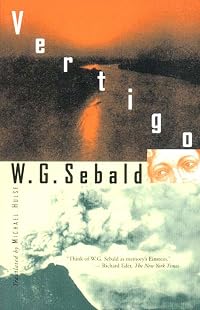
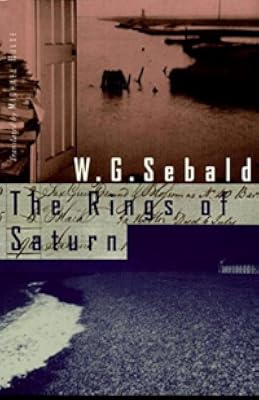

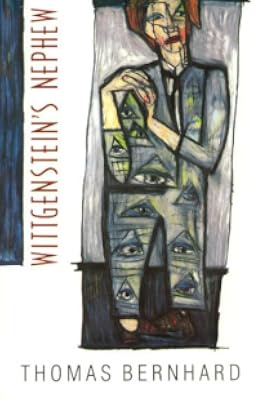

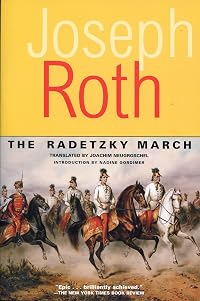














Member Recommendations
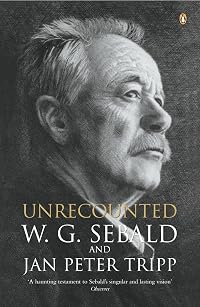
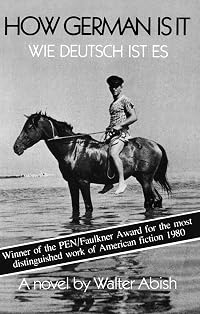
thorold Two accounts of exile bridging fiction and non-fiction
Member Reviews
I discovered Sebald when a friend recommended Austerlitz, so, having started at the end, I'm inevitably going backwards. Die Ausgewanderten is the second of his books I've read.
Superficially at least, this is a much simpler book than Austerlitz -- four extended stories, apparently self-contained, each presenting a portrait of an exile. I'll try not to repeat what antimuzak has already said in a very detailed review.
What struck me was, first of all, to find many of the same characteristic Sebald features as in Austerlitz: photographs in the text; spare layout without quotation marks and with only very occasional paragraph breaks; a fascination with big buildings (hotels here; libraries, stations and forts in Austerlitz); obfuscation of show more the boundary between fact and fiction (Sebald-like narrator); evidence-based narrative -- we only hear what the narrator has experienced directly, or reports a third person as telling him.
The narratives are certainly simpler in structure than that of Austerlitz: we don't get into multiply-nested levels of narrators. Everything is either told by or to the narrator. However, the book is clearly not as simple as meets the eye. Trivially, the stories are all about the nature of exile and about memory, individual and collective. as you read, there are little facts that establish connections between the stories, places and minor characters that suddenly pop up, but at the same time there are destabilising elements that warn us not to make assumptions about what we are not told - is the narrator who grew up in the Bavarian town of S. and went to school taught by Paul Bereyter the same as the narrator who grew up in W. and is the great-nephew of Ambros Adelwarth?
It's tempting to speculate about the significance of the butterfly collector who appears in all the stories. The same one? Again, we don't know. We want to make patterns and say that he is, but Sebald doesn't give any clues. Is he a metaphor for the author, collecting the fragile fragments of colour in his Botanisiertrommel then letting them out for the reader? Or memory? Or the reader? Or just a butterfly collector? show less
Superficially at least, this is a much simpler book than Austerlitz -- four extended stories, apparently self-contained, each presenting a portrait of an exile. I'll try not to repeat what antimuzak has already said in a very detailed review.
What struck me was, first of all, to find many of the same characteristic Sebald features as in Austerlitz: photographs in the text; spare layout without quotation marks and with only very occasional paragraph breaks; a fascination with big buildings (hotels here; libraries, stations and forts in Austerlitz); obfuscation of show more the boundary between fact and fiction (Sebald-like narrator); evidence-based narrative -- we only hear what the narrator has experienced directly, or reports a third person as telling him.
The narratives are certainly simpler in structure than that of Austerlitz: we don't get into multiply-nested levels of narrators. Everything is either told by or to the narrator. However, the book is clearly not as simple as meets the eye. Trivially, the stories are all about the nature of exile and about memory, individual and collective. as you read, there are little facts that establish connections between the stories, places and minor characters that suddenly pop up, but at the same time there are destabilising elements that warn us not to make assumptions about what we are not told - is the narrator who grew up in the Bavarian town of S. and went to school taught by Paul Bereyter the same as the narrator who grew up in W. and is the great-nephew of Ambros Adelwarth?
It's tempting to speculate about the significance of the butterfly collector who appears in all the stories. The same one? Again, we don't know. We want to make patterns and say that he is, but Sebald doesn't give any clues. Is he a metaphor for the author, collecting the fragile fragments of colour in his Botanisiertrommel then letting them out for the reader? Or memory? Or the reader? Or just a butterfly collector? show less
This is a fascinating book. Four distinct narratives (Dr. Henry Selwyn/Paul Bereyter/Ambros Adelwarth/Max Ferber) all are unique but start to interweave central motifs and concepts. Central to all this is reflections on memory and exile. What it means to survive trauma and live in it's aftermath. A Sebaldian conceit is the interspercing of blurry photos that suggests histories that may or may not be true. Is this evidence of a real lives or staged recreations not to believed. That is up to the associations that the reader brings to the reading experience. How reliable is memory anyway? Are even remembered things processed and reprocessed in the mind to the point where it's versimilitude to "truth" could be questioned?
It has been many years since I read Sebald and I had forgotten how melancholy his writing is. That he is talented is without question. This recounting of the (fictional) lives of four German emigrants is almost unrelentingly depressing. The four stories that Sebald constructs are, for the most part, quite believable…even to the point of making me wonder on occasion if he isn’t simply telling non-fiction stories. But each one also has a few twists that struck me as not quite believable and reiterated that this is, in fact, fiction. Each story, in its way, addresses concerns of trauma and isolation, memory and belonging. I am not quite certain what it is about Sebald’s voice (in addition to his settings) that makes the overall show more effect so cheerless but I find it both consistent and compelling, in its way. One point that I think is essential to make is that the translation (into British, as opposed to U.S., English) is superb. I can’t read German and so have no way to compare but I find that Michael Hulse’s rendering is really quite extraordinary. show less
4.5 Sebald’s books always take me a while to warm up to, and this was no exception, but as usual I got there. This work has the stories of four individuals, each of whom emigrated at some point. Each individual is the sum of their history, so Sebald delves into not only the individual’s past, but often that of their families- in one case his own, in another one of his old schoolteachers, in others chance associates. As he interviews the people, or their acquaintances and families, and snaps his odd little photos, he convinces them to not only share their own and the character's pasts, often their journals, pictures and more. Long passages from diaries are included and are simply extraordinary. He cuts and pastes his own thoughts and show more experiences and feelings with those of his cast and the output is set of amazing lives, from rich polo playboys touring the middle east to a skyscraper roofing metal worker, to a victim of the US mental health viciousness of the 1960’s, to the ghetto of Nazi Germany and rural England. The depth of Sebald’s research and the manner in which he melds all these tales is quite incredible. show less
«E si diventava di giorno in giorno, di ora in ora, da una pulsazione del cuore all'altra, sempre più incomprensibili, più poveri di qualità, più astratti».
Sebald racconta l'Olocausto da lontano e insieme da dentro, dal punto di vista di chi, come recita il titolo, è emigrato portando con sé dolore e memoria e ha vissuto nell'impossibilità di dimenticare e in definitiva di ricominciare a vivere. Quattro storie vere ed esemplari, che Sebald indaga da vicino unendovi - soprattutto nel caso del racconto dedicato al pittore Ferber - la propria storia di emigrazione. Inoltrarsi in queste vite genera una tristezza insieme terribile e placida cui è impossibile sottrarsi. Sebald accompagna il lettore facendolo a poco a poco sempre show more più entrare nelle storie, anche grazie al frequente passaggio alla prima persona attraverso la voce dei personaggi e al suo usuale (per me nuovo, visto che è il suo primo libro che leggo) impiego delle immagini che arricchiscono il testo. show less
Sebald racconta l'Olocausto da lontano e insieme da dentro, dal punto di vista di chi, come recita il titolo, è emigrato portando con sé dolore e memoria e ha vissuto nell'impossibilità di dimenticare e in definitiva di ricominciare a vivere. Quattro storie vere ed esemplari, che Sebald indaga da vicino unendovi - soprattutto nel caso del racconto dedicato al pittore Ferber - la propria storia di emigrazione. Inoltrarsi in queste vite genera una tristezza insieme terribile e placida cui è impossibile sottrarsi. Sebald accompagna il lettore facendolo a poco a poco sempre show more più entrare nelle storie, anche grazie al frequente passaggio alla prima persona attraverso la voce dei personaggi e al suo usuale (per me nuovo, visto che è il suo primo libro che leggo) impiego delle immagini che arricchiscono il testo. show less
Négy emigránsportré, kapocs köztük az elbeszélő, aki rekonstruálni igyekszik sorsukat, megtölteni a születésük és haláluk közötti űrt valamivel, ami történetnek nevezhető – helyenként már-már a rögeszmébe hajló elhivatottsággal, mintha elégtételt akarna adni nekik azzal, hogy a hajuknál fogva kiráncigálja őket a feledésből. Ami a lenyűgöző, az a szöveg pontossága. Nincs túlírtság, nabokovi* tökéletességig kicsiszolt mondatok teremtik meg a teret az emlékezésnek – Sebald pontossága éppúgy képes élesen érzékeltetni egy táj szépségét vagy magányát, mint a lélek ürességét. Mit is lehetne még mondani egy ennyire sallangmentes regényről? Talán annyit, hogy kölcsön show more tudom adni.
* Nyilván az sem véletlen, hogy Nabokov, az emigráns írók doyenje utalás szintjén mind a négy portréban felbukkan. show less
* Nyilván az sem véletlen, hogy Nabokov, az emigráns írók doyenje utalás szintjén mind a négy portréban felbukkan. show less
Published in 1992, this book tells the separate stories of four people known by the unnamed narrator (possibly a stand-in for the author). Taken together, they reflect the impact of historical forces in the aftermath of WWII. The first story focuses on the narrator’s friend, Dr. Selwyn, an emigrant to London from Lithuania. The second tells of the narrator’s primary schoolteacher, Paul Bereyter, who fights in the German Army despite being a quarter Jewish. The third relates the story of the narrator’s Great Uncle Ambros Adelwarth, who emigrated to America. The fourth deals with the narrator’s friend, Max Ferber, an artist, whose work has grown in popularity when the two meet after two and a half decades apart.
Though the show more Holocaust is never specifically mentioned, it looms in the background of these characters’ lives. The stories are interspersed with photographs and journal entries. The tone is melancholic. Common themes include memory, cultural displacement, loneliness, the lingering impact of traumatic events on a person’s mental health. The writing is almost mesmerizing in its somber beauty. It is a book that kept me looking for subtle connections among the four stories. It is a memorable work. show less
Though the show more Holocaust is never specifically mentioned, it looms in the background of these characters’ lives. The stories are interspersed with photographs and journal entries. The tone is melancholic. Common themes include memory, cultural displacement, loneliness, the lingering impact of traumatic events on a person’s mental health. The writing is almost mesmerizing in its somber beauty. It is a book that kept me looking for subtle connections among the four stories. It is a memorable work. show less
Members
- Recently Added By
Published Reviews
ThingScore 88
His book is tragic, stunningly beautiful, strange, and haunting. What makes it beautiful is the fastidious prose with its sad resigned rhythm—as appealing and hypnotic in Michael Hulse's English translation as in the German original; and also Sebald's wonderfully desolate landscapes and townscapes, where depression rises like mist from quite factual, unemphatic descriptions of people and things.
added by jburlinson
Yet ''The Emigrants'' is not exactly a fictional memoir. Rather, it is the record of its narrator's investigations into the mysterious memories of others, preserved in stories that dramatize the sometimes treacherous enchantment of memory itself. In the shaping of these stories, Mr. Sebald's book reflects the irresistible retrospective circlings of our contemporary culture, even as he pursues show more a post-modern fictional inspection of the delicate relationship between memory and history. show less
added by DieFledermaus
Lists

1001 Books You Must Read Before You Die
1,448 works; 1,136 members

20th Century Literature
1,161 works; 55 members

German Literature
518 works; 56 members

EU Fiction: 1950-2022
223 works; 70 members

Boarding House and Hotel Fiction
73 works; 25 members

Books Set in Germany
74 works; 12 members

1990s
309 works; 17 members

Houses and Buildings as Characters in Fiction
182 works; 28 members

Blackwell's Five Foot Bookshelf
72 works; 4 members

thinking of reading in 2016
99 works; 1 member

Books Read in 2021
5,361 works; 114 members

Mustich's 1000 Books to Read Before You Die: A Life Changing List
1,001 works; 20 members

NTS Book Channel
316 works; 1 member
Author Information

33+ Works 17,031 Members
He studied German language and literature in Freiburg, Switzerland and Manchester. He has taught at the University of East Anglia in Norwich, England since 1970. He became a professor of European literature in 1987. From 1989 to 1994 was the first director of the British Centre for Literary Translation. He was born in Wertach in Allgau, Germany in show more 1944. (Bowker Author Biography) show less
W. G. Sebald has a Legacy Library. Legacy libraries are the personal libraries of famous readers, entered by LibraryThing members from the Legacy Libraries group.
Some Editions
Awards and Honors
Awards
Series
Belongs to Publisher Series
Fabula [Adelphi] (185)
New Directions Paperbook (853)
Work Relationships
Common Knowledge
- Canonical title*
- De émigrés
- Original title
- Die Ausgewanderten; Die Ausgewanderten : Vier lange Erzählungen
- Alternate titles*
- De emigrés : vier geïllustreerde verhalen
- Original publication date
- 1992 (Duits) (Duits); 1993 (Nederlands) (Nederlands)
- People/Characters
- Narrator; Clara; Dr. Henry Selwyn; Elli Selwyn; Johannes Naegli; Paul Bereyter (show all 13); Lucy Landau; Helen Hollaender; Great-Uncle Ambros Adelwarth; Uncle Kasimir; Aunt Lina; Cosmo Solomon; Max Ferber
- Important places
- Manchester, England, UK; Hingham, Norfolk, England, UK; Bad Kissingen, Bavaria, Germany; Jerusalem; Deauville, Calvados, Normandy, France; Ithaca, New York, USA (show all 8); Lancashire, England, UK; Norfolk, England, UK
- Important events
- World War II
- Epigraph
- And the last remnants memory destroys
There is mist that no eye can dispel
My field of corn is but a crop of tears
They come when night falls to search for life - First words
- At the end of september 1970, shortly before I took up my position in Norwich, I drove out to Hingham with Clara in search of somewhere to live.
- Quotations
- And so they are ever returning to us, the dead. At times they come back from the ice more than seven decades later and are found at the edge of the moraine, a few polished bones and a pair of hobnailed boots.
Such endeavours to imagine his life and death did not, as I had to admit, bring me any closer to Paul except at best for brief emotional moments of the kind that seemed presumptuous to me. It is in order to avoid this sort of... (show all) wrongful trespass that I have written down what I know of Paul Bereyter.
Always before our religion lessons, Paul would always top up to the brim the holy water stoup, embellished with a flaming Sacred Heart that was fixed by the door, using (I often saw him do it) the watering can with which he n... (show all)ormally watered the geraniums. Because of this, the Beneficiary never managed to put the holy water bottle he always carried in his shiny black pigskin briefcase to use. He did not dare simply to tip out the water from the brimful stoup, and so, in his endeavour to account for the seemingly inexhaustible Sacred Heart, he was torn between his suspicion that systematic malice was involved and the intermittent hope that this was a sign from a Higher Place, perhaps indeed a miracle.
He was an amazingly good whistler; the sound he produced was marvellously rich, exactly like a flute's. And even when he was climbing a mountain, he would with apparent ease whistle whole runs and ties in connected sequence, ... (show all)not just anything, but fine, thoroughly composed passages and melodies that none of us had ever heard before, and which infallibly gave a wrench to my heart whenever, years later, I rediscovered them in a Bellini opera or a Brahms sonata.
It was not only music, though, that affected Paul in this way; indeed, at any time - in the middle of a lesson, at break, or on one of our outings - he might stop or sit down somewhere, alone and apart from us all, as if he, ... (show all)who was always in good spirits and seemed so cheerful, was in fact desolation itself.
what he referred to as his condition had been deteriorating in recent years to the point where his claustrophobia made him unable to teach and he saw his pupils, although he had always felt affection for them (he stressed thi... (show all)s), as contemptible and repulsive creatures, the very sigh of whom prompted an utterly groundless violence in him on more than one occasion.
Three weeks after she arrived, on every visit, she would still be weeping with the joy of reunion, and three weeks before she left she would again be weeping with the pain of separation. If her stay with us was longer than si... (show all)x weeks, there would be a becalmed period in the middle that she would mostly fill with needlework; but if her stay was shorter there were times when one really did not know whether she was in tears because she was at home at long last or because she was already dreading having to leave again.
Even the least of his reminiscences, which he fetched up very slowly from depths that were evidently unfathomable, was of astounding precision, so that, listening to him, I gradually became convinced that Uncle Adelwarth had ... (show all)an infallible memory, but that, at the same time, he scarcely allowed himself access to it. For that reason, telling stories was as much a torment to him as an attempt at self-liberation. He was at once saving himself, in some way, and mercilessly destroying himself.
They were silent, as the dead usually are when they appear in our dreams, and seemed somewhat downcast and dejected. Generally, in fact, they behaved as if their altered condition, so to speak, were a terrible family secret n... (show all)ot to be revealed under any circumstances.
He felt closer to dust, he said, than to light, air or water. There was nothing he found so unbearable as a well-dusted house, and he never felt more at home than in places where things remained undisturbed, muted under the g... (show all)rey, velvety sinter left when matter dissolved, little by little, into nothingness.
He might reject as many as forty variants, or smudge them back into the paper and overdraw new attempts upon them; and if he then decided that the portrait was done, no so much because he was convinced that it was finished as... (show all) through sheer exhaustion, an onlooker might well feel that it had evolved from a long lineage of grey, ancestral faces, rendered unto ash but still there, as ghostly presences, on the harried paper.
Looking at those gashed bodies, and at the witnesses of the execution, doubled up by grief like snapped reeds, I gradually understood that, beyond a certain point, pain blots out the one thing that is essential to its being e... (show all)xperienced - consciousness - and so perhaps extinguishes itself; we know very little about this. What is certain, though, is that mental suffering is effectively without end. One may think one has reached the very limit, but there are always more torments to come.
I began to fear that I would be condemned to spend the rest of my life amongst the patrons of Kissingen who were in all likelihood preoccupied first and foremost with the state of their bowels. - Last words
- (Click to show. Warning: May contain spoilers.)I wonder what the three women's names were - Roza, Luisa and Lea, or Nona, Decuma and Morta, the daughters of night, with spindle, scissors and thread.
- Blurbers
- Eder, Richard; Ozick, Cynthia; Dirda, Michael; McGonigle, Thomas; Sontag, Susan
- Original language
- German
*Some information comes from Common Knowledge in other languages. Click "Edit" for more information.
Classifications
- Genres
- Fiction and Literature, General Fiction
- DDC/MDS
- 833.914 — Literature & rhetoric German & related literatures German fiction 1900- 1900-1990 1945-1990
- LCC
- PT2681 .E18 .A9413 — Language and Literature German, Dutch and Scandinavian literatures German literature Individual authors or works 1961-2000
- BISAC
Statistics
- Members
- 2,807
- Popularity
- 6,526
- Reviews
- 55
- Rating
- (4.12)
- Languages
- 22 — Catalan, Chinese, Danish, Dutch, English, Estonian, Finnish, French, German, Greek, Hungarian, Italian, Japanese, Lithuanian, Norwegian (Bokmål), Norwegian, Polish, Portuguese, Croatian, Spanish, Swedish, Turkish
- Media
- Paper, Audiobook, Ebook
- ISBNs
- 63
- ASINs
- 12