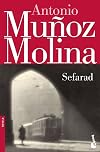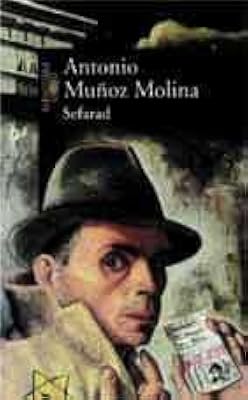
Sepharad
by Antonio Muñoz Molina
On This Page
Description
From one of Spain's most celebrated writers, an extraordinary, inspired book-at once fiction, history, and memoir-that draws on the Sephardic diaspora, the Holocaust, and Stalin's purges to tell a twentieth-century story. Shifting seamlessly from the past to the present and following the routes of escape across countries and continents, Mu z Molina evokes people real and imagined who come together in a richly allusive pattern-from Eugenia Ginsburg to Grete Buber-Neumann, the one on a train show more to the gulag, the other heading toward a Nazi concentration camp; from a shoemaker and a nun who become lovers in a small Spanish town to Primo Levi bound for Auschwitz. From the well-known to the virtually unknown-all of Molina's characters are voices of separation, nostalgia, love, and endless waiting. Written with clarity of vision and passion, in a style both lyrical and accessible, Sepharad makes the experience our own. show lessTags
Recommendations



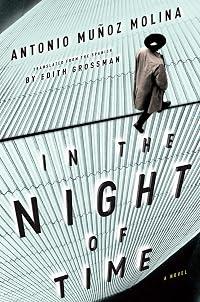
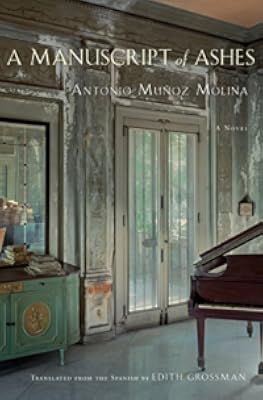























Member Recommendations

thorold Two accounts of exile bridging fiction and non-fiction
Member Reviews
This is an unusual book in form: not only is it a novel that mixes non-fiction with fiction (something that a lot of books I've read recently do), but it also muddies the distinction between the novel and short fiction, in that its seventeen chapters can all be read as individual stories, testimonies or essays, and it is only when you read them all together that you start to see that there is also an underlying deep structure that links them together into a single work. And as if that wasn't enough, Muñoz Molina uses the disconcerting narrative trick of jumping unpredictably backwards and forwards within each chapter between a third person omniscient narrator, the first-person view of the "writer" character, the first-person view of show more someone who is telling him a story, and sometimes a second-person view of the person who is telling that person a story. But it all seems to work very well, once you get inside the book.
The many different stories Muñoz Molina brings together the book all dig into different aspects of exile or alienation - Spanish and German communists in Russia during the second world war, the narrator and his compatriots who are economic migrants from southern Spain to Madrid, Jews who found themselves suddenly declared undesirable aliens in their own countries under the Nazis, Kafka going secretly to the frontier to meet his lover Milena Jesenska, and Milena's death in the Ravensbrück concentration camp 25 years later. And much more, all tied in together by the underlying image of the expulsion of the Jews from Spain in 1492.
The subject-matter is often difficult and painful, but it's a pleasure to follow the rhythms of Muñoz Molina's writing and the understated way he navigates through it all without hitting us over the head with unnecessary explanations. But be warned: it's a book that comes with a heavy reading list you will almost certainly want to follow up yourself. Quite apart from the cunning way he ends the book with a huge advertisement for the museum of the Hispanic Society of America in New York (but it turns out that they are currently closed for renovations, so check before booking your flight...). show less
The many different stories Muñoz Molina brings together the book all dig into different aspects of exile or alienation - Spanish and German communists in Russia during the second world war, the narrator and his compatriots who are economic migrants from southern Spain to Madrid, Jews who found themselves suddenly declared undesirable aliens in their own countries under the Nazis, Kafka going secretly to the frontier to meet his lover Milena Jesenska, and Milena's death in the Ravensbrück concentration camp 25 years later. And much more, all tied in together by the underlying image of the expulsion of the Jews from Spain in 1492.
The subject-matter is often difficult and painful, but it's a pleasure to follow the rhythms of Muñoz Molina's writing and the understated way he navigates through it all without hitting us over the head with unnecessary explanations. But be warned: it's a book that comes with a heavy reading list you will almost certainly want to follow up yourself. Quite apart from the cunning way he ends the book with a huge advertisement for the museum of the Hispanic Society of America in New York (but it turns out that they are currently closed for renovations, so check before booking your flight...). show less
This is a book of reconstructed memories related to Madrid during the Spanish Civil War, WWII, and Stalin’s regime. It is based on eye-witness accounts from the author’s research (letters, oral history, and notable works of literature), but rather than write a non-fiction, the author ties everything together through various fictional narrators. The main characters have ties to Spain and Spanish history.
The narrative is comprised of seventeen loosely connected short stories. It is told in a non-linear fashion, moving forward and backward to different countries and time periods. The novel is structured around journeys on trains, and the stories people have told each other while traveling. Primary themes are memory, displacement, show more identity, and storytelling.
We encounter literary references to well-known authors such as Franz Kafka, Margarete Buber-Neumann, Evgenia Ginzburg, Jean Améry, Primo Levi, Stephan Koch, Tzvetan Todorov, and others. Their experiences are woven into the stories told on the trains. The overall effect is that of a montage of memories. As one narrator states, the idea is not to invent these stories but “to fit them together like pieces of a jigsaw puzzle. Each became a mystery, illuminating the others, creating multiple links that I could break or modify at my whim, patterns in which no image nullified the others or gained precedence or lost its uniqueness within the whole.”
I had never read anything by Antonio Muñoz Molina. What an amazing writer. He creates a vivid sense of place, establishes atmosphere, and strings words together in a pleasing lyrical manner. I read the English translation so due credit goes to the translator, Margaret Sayers Peden. I will definitely be searching for more of his works.
My e-book is filled with highlights. Here are a few of the many memorable passages:
- “THERE’S NO LIMIT TO the surprising stories you can hear if you listen to the novels in people’s lives.”
- “At night we would watch the flickering lights of Tangiers through the ocean fog. I was in Tangiers once, many years ago, in another lifetime. As the doctor squeezes the curve of the shell, he is squeezing the hand of his son two summers before. His wife is pressed to his other side, to protect herself from the west wind off the sea, blowing from the direction of the dark mass of Africa and the lights of Tangiers, a wind smelling of seaweed.”
- “People always want to know how stories end; whether well or badly, they want the resolution to be as neat as the beginning, they want sense and symmetry. But few adventures in life tie up all the loose strings, unless fate steps in, or death, and some stories never develop, they come to nothing or are interrupted just as they are beginning.”
- “YOU ARE NOT AN isolated person and do not have an isolated story, and neither your face nor your profession nor the other circumstances of your past or present life are cast in stone. The past shifts and reforms, and mirrors are unpredictable.”
- “Who could guess the life of this man, seeing him as he crosses the street or stands in the entryway of that anonymous building? A vigorous old man with a sparkle in his small eyes, a little bent, and with very fine white hair, like Spencer Tracy toward the end, or like my paternal grandfather, who was also in a war, but not one he marched off to voluntarily, and it may be that my grandfather never completely understood why they took him or realized the magnitude of the cataclysm his life had been dragged into, a life of which mine, if I stop to think about it, is in part a distant echo.”
-
- “The war was filled with coincidences … with chains of random events that dragged you away or saved you; your life could depend not on your heroism or caution or cleverness but on whether you bent down to tighten a boot one second before a bullet or shard of shrapnel passed through the place where your head would have been, or whether a comrade took your turn in a scouting patrol from which no one came back.” show less
The narrative is comprised of seventeen loosely connected short stories. It is told in a non-linear fashion, moving forward and backward to different countries and time periods. The novel is structured around journeys on trains, and the stories people have told each other while traveling. Primary themes are memory, displacement, show more identity, and storytelling.
We encounter literary references to well-known authors such as Franz Kafka, Margarete Buber-Neumann, Evgenia Ginzburg, Jean Améry, Primo Levi, Stephan Koch, Tzvetan Todorov, and others. Their experiences are woven into the stories told on the trains. The overall effect is that of a montage of memories. As one narrator states, the idea is not to invent these stories but “to fit them together like pieces of a jigsaw puzzle. Each became a mystery, illuminating the others, creating multiple links that I could break or modify at my whim, patterns in which no image nullified the others or gained precedence or lost its uniqueness within the whole.”
I had never read anything by Antonio Muñoz Molina. What an amazing writer. He creates a vivid sense of place, establishes atmosphere, and strings words together in a pleasing lyrical manner. I read the English translation so due credit goes to the translator, Margaret Sayers Peden. I will definitely be searching for more of his works.
My e-book is filled with highlights. Here are a few of the many memorable passages:
- “THERE’S NO LIMIT TO the surprising stories you can hear if you listen to the novels in people’s lives.”
- “At night we would watch the flickering lights of Tangiers through the ocean fog. I was in Tangiers once, many years ago, in another lifetime. As the doctor squeezes the curve of the shell, he is squeezing the hand of his son two summers before. His wife is pressed to his other side, to protect herself from the west wind off the sea, blowing from the direction of the dark mass of Africa and the lights of Tangiers, a wind smelling of seaweed.”
- “People always want to know how stories end; whether well or badly, they want the resolution to be as neat as the beginning, they want sense and symmetry. But few adventures in life tie up all the loose strings, unless fate steps in, or death, and some stories never develop, they come to nothing or are interrupted just as they are beginning.”
- “YOU ARE NOT AN isolated person and do not have an isolated story, and neither your face nor your profession nor the other circumstances of your past or present life are cast in stone. The past shifts and reforms, and mirrors are unpredictable.”
- “Who could guess the life of this man, seeing him as he crosses the street or stands in the entryway of that anonymous building? A vigorous old man with a sparkle in his small eyes, a little bent, and with very fine white hair, like Spencer Tracy toward the end, or like my paternal grandfather, who was also in a war, but not one he marched off to voluntarily, and it may be that my grandfather never completely understood why they took him or realized the magnitude of the cataclysm his life had been dragged into, a life of which mine, if I stop to think about it, is in part a distant echo.”
-
- “The war was filled with coincidences … with chains of random events that dragged you away or saved you; your life could depend not on your heroism or caution or cleverness but on whether you bent down to tighten a boot one second before a bullet or shard of shrapnel passed through the place where your head would have been, or whether a comrade took your turn in a scouting patrol from which no one came back.” show less
On page 140, the author appears to describe a vision for this book:
"For two or three years I have flirted with the idea of writing a novel, imagined situations and places, like snapshots, or like those posters displayed on large billboards at the entrance to a movie theater. That these stills were never in narrative sequence made them all the more powerful, freed them of the weight and vulgar conventions of a scenario; they were revelations in the present, with no before or after. When I didn't have the money to go inside, I would spend hours looking at the photographs outside the theater, not needing to invent a story to fit them together like pieces of a jigsaw puzzle. Each became a mystery, illuminating the others, creating multiple show more links that I could break or modify at my whim, patterns in which no image nullified the others or gained precedence or lost its uniqueness within the whole."
Here, it is as if Muñoz Molina is describing not only his journey, but mine; or, as if he is describing what living is like for many of us. The journey is our life. From pages 153/154:
"Days before leaving, my life had already been turned by the magnet of my journey, pulled toward the hour of departure, which approached with agonizing slowness. I was still here yet distant, though no one noticed my absence, not from the places I lived and worked, not from the things that were extensions of myself and indicated my existence, my immobilized life, confined to a single city, to a few streets….
"Never was I so obsessed with impossible journeys as then, so distanced from myself and from the tangible and real around me. It wasn't that an important part of me was hidden from others' eyes; my whole self was hidden. The shell that others saw didn't matter at all, it had nothing to do with me. … With literary vanity, I sought refuge in being unknown, hidden, but there was a conformity in me at least as strong as my rebellion, with the difference that the conformity was practical while the rebellion showed only occasionally as a blurry discontent…"
"There were two worlds, one visible and the other invisible, and I adapted tamely to the norms of the first so I could retreat without too much inconvenience into the second."
My thoughts upon completion:
This book didn’t make me want to pick it up between readings. But why should it be the book’s responsibility to make me? It was I who needed this book, and not the other way around. And as I took my time, for weeks, reading it, I was unable to forget that need of mine. I could not find a desire to read anything else between my short sessions with Muñoz Molina’s journey in this novel. And, with each paragraph, each chapter, each page, I was filled up with his poetry of thought and his longing for memory. There was no other way for me to read this book.
His journey is a long one. His memories and reflections, his connections between one train, one place, one tense and another take time. I was surprised each time I picked it up that this book is a light 385 pages, when his travels between the book’s covers are so weighty. The traveling between past and present, between history and personal memoir, between what appears to be fiction and is known to be nonfiction, goes so very deep and so very far. After finally finishing it, I know I am still there, in those pages, almost nauseous from the whirlwind of the author’s processing. I am relieved to be done, yet I know I have to read the book again. His words and reflections resonate with an ancestral me. I have never been to Spain, though my maternal ancestors were emigrants from there. As far as I know, I have no Jewish ancestors. But over the course of my reading I ponder more and more how impossible it seems that we are not each to some degree related within the diaspora of the human soul.
As I read this I found that almost instantly – if I was not terribly distracted, and even when I was – I was drawn in as if by an old friend who by chance meets me on a street in some gray city of my past, and with an arm around my shoulders walks with me and picks up a tale he has been telling me for years. I was captured, almost against my will, and yet mesmerized, flattered and transfixed by the tale and the intimacy of the encounter. I would go into a trance.
It occurred to me fleetingly that the book I insist on writing is no longer necessary now that I have read Sepharad. It is not my book, but the journey I have taken with the author in his book has been exhaustive. And though my own memories and history are different in the details, his writing on the displacement and isolation of those whose home is lost, is not so different from what I would wish to write about, having never had a home at heart. It has made me wonder at the displacement of an individual's soul, and how the history of exile and cruelty and shadow still shines a dim beacon for all of us who might know what it means to be alienated from our own past and future. show less
"For two or three years I have flirted with the idea of writing a novel, imagined situations and places, like snapshots, or like those posters displayed on large billboards at the entrance to a movie theater. That these stills were never in narrative sequence made them all the more powerful, freed them of the weight and vulgar conventions of a scenario; they were revelations in the present, with no before or after. When I didn't have the money to go inside, I would spend hours looking at the photographs outside the theater, not needing to invent a story to fit them together like pieces of a jigsaw puzzle. Each became a mystery, illuminating the others, creating multiple show more links that I could break or modify at my whim, patterns in which no image nullified the others or gained precedence or lost its uniqueness within the whole."
Here, it is as if Muñoz Molina is describing not only his journey, but mine; or, as if he is describing what living is like for many of us. The journey is our life. From pages 153/154:
"Days before leaving, my life had already been turned by the magnet of my journey, pulled toward the hour of departure, which approached with agonizing slowness. I was still here yet distant, though no one noticed my absence, not from the places I lived and worked, not from the things that were extensions of myself and indicated my existence, my immobilized life, confined to a single city, to a few streets….
"Never was I so obsessed with impossible journeys as then, so distanced from myself and from the tangible and real around me. It wasn't that an important part of me was hidden from others' eyes; my whole self was hidden. The shell that others saw didn't matter at all, it had nothing to do with me. … With literary vanity, I sought refuge in being unknown, hidden, but there was a conformity in me at least as strong as my rebellion, with the difference that the conformity was practical while the rebellion showed only occasionally as a blurry discontent…"
"There were two worlds, one visible and the other invisible, and I adapted tamely to the norms of the first so I could retreat without too much inconvenience into the second."
My thoughts upon completion:
This book didn’t make me want to pick it up between readings. But why should it be the book’s responsibility to make me? It was I who needed this book, and not the other way around. And as I took my time, for weeks, reading it, I was unable to forget that need of mine. I could not find a desire to read anything else between my short sessions with Muñoz Molina’s journey in this novel. And, with each paragraph, each chapter, each page, I was filled up with his poetry of thought and his longing for memory. There was no other way for me to read this book.
His journey is a long one. His memories and reflections, his connections between one train, one place, one tense and another take time. I was surprised each time I picked it up that this book is a light 385 pages, when his travels between the book’s covers are so weighty. The traveling between past and present, between history and personal memoir, between what appears to be fiction and is known to be nonfiction, goes so very deep and so very far. After finally finishing it, I know I am still there, in those pages, almost nauseous from the whirlwind of the author’s processing. I am relieved to be done, yet I know I have to read the book again. His words and reflections resonate with an ancestral me. I have never been to Spain, though my maternal ancestors were emigrants from there. As far as I know, I have no Jewish ancestors. But over the course of my reading I ponder more and more how impossible it seems that we are not each to some degree related within the diaspora of the human soul.
As I read this I found that almost instantly – if I was not terribly distracted, and even when I was – I was drawn in as if by an old friend who by chance meets me on a street in some gray city of my past, and with an arm around my shoulders walks with me and picks up a tale he has been telling me for years. I was captured, almost against my will, and yet mesmerized, flattered and transfixed by the tale and the intimacy of the encounter. I would go into a trance.
It occurred to me fleetingly that the book I insist on writing is no longer necessary now that I have read Sepharad. It is not my book, but the journey I have taken with the author in his book has been exhaustive. And though my own memories and history are different in the details, his writing on the displacement and isolation of those whose home is lost, is not so different from what I would wish to write about, having never had a home at heart. It has made me wonder at the displacement of an individual's soul, and how the history of exile and cruelty and shadow still shines a dim beacon for all of us who might know what it means to be alienated from our own past and future. show less
Sepharad is a wonderful book, short on plot, long on insight. Beautiful, tragic, saddening and uplifting all at the same time.
The title is a reference to the diaspora of the Jews expelled from Spain in 1492 who ended up spread all over Eastern Europe, northern Africa and the Middle East. Sepharad concerns itself with the mid-20th Century consequences of this expulsion, specifically the terrible ends many Sephardic communities came to at the hands of the Nazis in places like Rhodes, Hungary and Romania. But while that subject may be the touchstone around which the narrative revolves, it is really, overall, a book about repression, fear, tyranny (especially in the guise of Nazism, Stalinism and Francoism), loss,and the merciless show more enforcement of "otherness" onto entire groups, but with healthy components of laughter, love and hope worked throughout.
Rather than telling a single tale, or even multiple tales, Sepharad instead presents an interweaving of stories and meditations. The stories jump around in time and place, moving effortlessly (at least for this reader) between first and third person, sometimes even moving into second person. The reader is thereby encouraged and skillfully enabled to enter the minds and hearts of the storytellers and their subjects:
A Spanish solder fighting with the German Army on the Russian Front lies in a barn at night, awakened from a restless slumber to the hushed sounds of Russian partisans who have come to slit his throat; a Jewish mother and daughter return to their small town in France to try to learn the fate of their husband/father, only to walk into a den of fear and resentment; a German Communist, one of the leading lights of his party when the Nazi's take power, is marked for execution post-war by the very Stalinists he has served all his life; a Hungarian Jew who might have received a Spanish passport and been saved from the Nazis is instead lost when her name cannot be found by her husband on any of the deportation lists for the simple reason that she has been sent to a relatively obscure death camp that nobody has ever heard of; a father relates the idyllic summer in a Spanish seaside resort with his wife and young son, then tells again of the emptiness of the return trip two years later when his loving son has turned, quite naturally, into a sullen teen. That's just a small sampling of the interwoven stories. Once you get used to the form and the pace, it becomes easy to go with the flow because one quickly sees that the whole is adding up to something entirely coherent and immensely moving.
I am not doing this book justice.
It is not for everyone, I know. If you enjoy your novels more plot driven or even, really, character driven, this might be a hard go in some ways. i guess I would say this book is idea-driven. And humanity-driven. show less
The title is a reference to the diaspora of the Jews expelled from Spain in 1492 who ended up spread all over Eastern Europe, northern Africa and the Middle East. Sepharad concerns itself with the mid-20th Century consequences of this expulsion, specifically the terrible ends many Sephardic communities came to at the hands of the Nazis in places like Rhodes, Hungary and Romania. But while that subject may be the touchstone around which the narrative revolves, it is really, overall, a book about repression, fear, tyranny (especially in the guise of Nazism, Stalinism and Francoism), loss,and the merciless show more enforcement of "otherness" onto entire groups, but with healthy components of laughter, love and hope worked throughout.
Rather than telling a single tale, or even multiple tales, Sepharad instead presents an interweaving of stories and meditations. The stories jump around in time and place, moving effortlessly (at least for this reader) between first and third person, sometimes even moving into second person. The reader is thereby encouraged and skillfully enabled to enter the minds and hearts of the storytellers and their subjects:
A Spanish solder fighting with the German Army on the Russian Front lies in a barn at night, awakened from a restless slumber to the hushed sounds of Russian partisans who have come to slit his throat; a Jewish mother and daughter return to their small town in France to try to learn the fate of their husband/father, only to walk into a den of fear and resentment; a German Communist, one of the leading lights of his party when the Nazi's take power, is marked for execution post-war by the very Stalinists he has served all his life; a Hungarian Jew who might have received a Spanish passport and been saved from the Nazis is instead lost when her name cannot be found by her husband on any of the deportation lists for the simple reason that she has been sent to a relatively obscure death camp that nobody has ever heard of; a father relates the idyllic summer in a Spanish seaside resort with his wife and young son, then tells again of the emptiness of the return trip two years later when his loving son has turned, quite naturally, into a sullen teen. That's just a small sampling of the interwoven stories. Once you get used to the form and the pace, it becomes easy to go with the flow because one quickly sees that the whole is adding up to something entirely coherent and immensely moving.
I am not doing this book justice.
It is not for everyone, I know. If you enjoy your novels more plot driven or even, really, character driven, this might be a hard go in some ways. i guess I would say this book is idea-driven. And humanity-driven. show less
Book Review:Sepharad by Antonio Munoz Molina
A book I thoroughly enjoyed yet am at a loss to describe. What is it about? What are the themes? Is it a novel? Is it autofiction? Is it an extended essay? All these questions roll around as I attempt to pull this review together. I read through some notes I jotted down as I read through this magnificent piece of literature.
The book begins with people in the process of travel. Bus riders; train occupants; strangers meeting up travelers on the road enamored with The “lightness of being” ( a shout out to Kundera) one experiences when away from home and daily routines.
The narrator riffs on books he read while he too was on the road: on a trip to Patagonia, in a hotel room in Buenos Aires he show more reads Bruce Chatwin’s masterpiece while at the same time Chatwin lies bedridden close to death from an unnamed virus.
Exiles, never able to return home, subjected to round-ups, in Europe and in Moscow, grabbed by fascist Nazis or Communist revolutionaries, ‘with beating hearts we fixed our attention on the sound of boots closer and closer”, and as I read these historical events I cannot but think of the undocumented immigrants, my neighbors right here in America as they cower in this age of Trump and his ICE troops. He names names: Professor Klemperer, a WWI Iron Cross recipient, a war hero of the German nation of Jewish descent goes about his daily routines in denial that the rising fascist forces would ensnare him, Eugenia Ginzberg, a Communist party member refuses to notice the alarm signals she ends up in the Gulag for 18 years.
Many of the stories told are from the Iberian Peninsula. Molina well aware of the history of persecution, the Inquisition a 15th century stain on the Spanish country, he narrates the story of Senor Salama who escaped from Budapest, he and his son on a business trip while his wife and daughters are caught and sent to Auschwitz. He and his son make their way to safety in Tangiers, his son retuning to Spain after the war, the father left to decide should he stay or go to Israel, of the Moroccans he says, “I hope they throw us out with better manners than the Hungarians, or the Spanish in 1492…Sepharad was the name of our true homeland, although we’d been expelled from it more than four centuries ago. My father told me that for generations out family kept the key of the house that had been ours in Toledo, and he detailed every journey they’d made since they left Spain, as if he were telling me about a single life that had lasted nearly five hundred years, He always spoke in the first person plural: WE emigrated to North Africa, and then some of US made our homes in Salonika, and others in Istanbul, to which WE brought the first printing presses, and in the nineteenth century WE arrived in Bulgaria…involved in the grain trade along the ports of the Danube, settled in Budapest. WE were Spanish, my father would say, using his prideful plural. Did you know that a 1924 decree restored Spanish nationality to the Sephardim?”
Molina writes of insomnia, reading in bed he turns the light out but “I’ve missed falling asleep the way you miss a train, by a minute, by seconds and I know that I will have to wait for it to return and that it may be hours before it comes. When I can’t fall asleep, the ghosts of the dead return, the ghosts of the living as well, people I haven’t seen or thought of in a long time, events, actions, names from earlier lives, laced not with nostalgia, but rather with regret or shame, Fear returns too, a childish fear of the dark, of shadows or shapes that take on the form of an animal or a human presence of the door about to open.” He goes on to describe a Willi Munzenberg in Moscow, 1936 lying awake next to his wife, and every time he heard footsteps in the corridor outside their room, he thought with a shudder of clearsighted panic, ‘they’ve come, they’re here’.
These are the stories and people Molina writes about, the terror, the uprootedness, the alienation, the persecuted, these are people of the Sepharad. How the assimilated Jews of Germany, the war heroes, those proud of German culture, Molina’s interpretation of Kafka how “you can wake up one morning at an unpleasant hour of the working man and discover you’ve been transformed into an enormous insect. You can go to your usual café believing that nothing has changed, and learn from the newspaper that you are not the person you thought you were and no longer safe from shame and persecution”. The Nuremberg Laws changed everything in a day, you were no longer a German, you were a Jew, made to wear a yellow star and be expelled from daily customs.
As the book nears its end, the narrator relates his visit to Germany to lecture about his latest book, unable to sleep he finds himself in a café filled with older Germans, imagining them as they might have been fifty years earlier, stiff armed salutes yelling Heil Hitler and then further imagining himself sitting there “wearing a yellow star stitched on my overcoat…had I been in this same pastry shop, would one of those men, in a black leather coat, have approached me and asked for my papers.”
Molina reflects on all he has written, the Inquisition, the Nazi terror, the Stalin purges, the pogroms, all of those lives lost, many in unburied graves, and asks: “each had a life unlike any other, just as each face, each voice was unique, and the horror of each death was unrepeatable even though it happened amid so many millions of similar deaths, How, when there are so many lives that deserve to be told, one can attempt to invent a novel for each, in a vast network of interlinking novels and lives?”
Indeed, Molina has answered his own question. This masterpiece, his book, Sepharad, is a testament to those many lives. show less
A book I thoroughly enjoyed yet am at a loss to describe. What is it about? What are the themes? Is it a novel? Is it autofiction? Is it an extended essay? All these questions roll around as I attempt to pull this review together. I read through some notes I jotted down as I read through this magnificent piece of literature.
The book begins with people in the process of travel. Bus riders; train occupants; strangers meeting up travelers on the road enamored with The “lightness of being” ( a shout out to Kundera) one experiences when away from home and daily routines.
The narrator riffs on books he read while he too was on the road: on a trip to Patagonia, in a hotel room in Buenos Aires he show more reads Bruce Chatwin’s masterpiece while at the same time Chatwin lies bedridden close to death from an unnamed virus.
Exiles, never able to return home, subjected to round-ups, in Europe and in Moscow, grabbed by fascist Nazis or Communist revolutionaries, ‘with beating hearts we fixed our attention on the sound of boots closer and closer”, and as I read these historical events I cannot but think of the undocumented immigrants, my neighbors right here in America as they cower in this age of Trump and his ICE troops. He names names: Professor Klemperer, a WWI Iron Cross recipient, a war hero of the German nation of Jewish descent goes about his daily routines in denial that the rising fascist forces would ensnare him, Eugenia Ginzberg, a Communist party member refuses to notice the alarm signals she ends up in the Gulag for 18 years.
Many of the stories told are from the Iberian Peninsula. Molina well aware of the history of persecution, the Inquisition a 15th century stain on the Spanish country, he narrates the story of Senor Salama who escaped from Budapest, he and his son on a business trip while his wife and daughters are caught and sent to Auschwitz. He and his son make their way to safety in Tangiers, his son retuning to Spain after the war, the father left to decide should he stay or go to Israel, of the Moroccans he says, “I hope they throw us out with better manners than the Hungarians, or the Spanish in 1492…Sepharad was the name of our true homeland, although we’d been expelled from it more than four centuries ago. My father told me that for generations out family kept the key of the house that had been ours in Toledo, and he detailed every journey they’d made since they left Spain, as if he were telling me about a single life that had lasted nearly five hundred years, He always spoke in the first person plural: WE emigrated to North Africa, and then some of US made our homes in Salonika, and others in Istanbul, to which WE brought the first printing presses, and in the nineteenth century WE arrived in Bulgaria…involved in the grain trade along the ports of the Danube, settled in Budapest. WE were Spanish, my father would say, using his prideful plural. Did you know that a 1924 decree restored Spanish nationality to the Sephardim?”
Molina writes of insomnia, reading in bed he turns the light out but “I’ve missed falling asleep the way you miss a train, by a minute, by seconds and I know that I will have to wait for it to return and that it may be hours before it comes. When I can’t fall asleep, the ghosts of the dead return, the ghosts of the living as well, people I haven’t seen or thought of in a long time, events, actions, names from earlier lives, laced not with nostalgia, but rather with regret or shame, Fear returns too, a childish fear of the dark, of shadows or shapes that take on the form of an animal or a human presence of the door about to open.” He goes on to describe a Willi Munzenberg in Moscow, 1936 lying awake next to his wife, and every time he heard footsteps in the corridor outside their room, he thought with a shudder of clearsighted panic, ‘they’ve come, they’re here’.
These are the stories and people Molina writes about, the terror, the uprootedness, the alienation, the persecuted, these are people of the Sepharad. How the assimilated Jews of Germany, the war heroes, those proud of German culture, Molina’s interpretation of Kafka how “you can wake up one morning at an unpleasant hour of the working man and discover you’ve been transformed into an enormous insect. You can go to your usual café believing that nothing has changed, and learn from the newspaper that you are not the person you thought you were and no longer safe from shame and persecution”. The Nuremberg Laws changed everything in a day, you were no longer a German, you were a Jew, made to wear a yellow star and be expelled from daily customs.
As the book nears its end, the narrator relates his visit to Germany to lecture about his latest book, unable to sleep he finds himself in a café filled with older Germans, imagining them as they might have been fifty years earlier, stiff armed salutes yelling Heil Hitler and then further imagining himself sitting there “wearing a yellow star stitched on my overcoat…had I been in this same pastry shop, would one of those men, in a black leather coat, have approached me and asked for my papers.”
Molina reflects on all he has written, the Inquisition, the Nazi terror, the Stalin purges, the pogroms, all of those lives lost, many in unburied graves, and asks: “each had a life unlike any other, just as each face, each voice was unique, and the horror of each death was unrepeatable even though it happened amid so many millions of similar deaths, How, when there are so many lives that deserve to be told, one can attempt to invent a novel for each, in a vast network of interlinking novels and lives?”
Indeed, Molina has answered his own question. This masterpiece, his book, Sepharad, is a testament to those many lives. show less
This is certainly an arresting and intriguing book, though its billing as 'a novel' is misleading. Rather, it is a loosely-themed collection of sketches, essays and stories. The author writes very beautifully, though I must confess that his habit of obscuring the identity and gender of the narrator was a little disconcerting. Perhaps that is intentional, as one theme running through the 17 chapters is that of uncertainty and dispossesion. This is essentially a book about the lives of the disappeared.
Some of the tales refer to well known historic figures such as Kafka or Primo Levi, while others concern less well known people such as Jean Amery or Grete Buber-Neumann, wife of the 1930s German Communist leader Hans Neumann. Other pieces show more centre on the author's own life from his past or his present. The sensation is one of transience and impermanence. The lives of those others are in transit, from or to incarceration or persecution, typically alone in the world and often filled with tragic outcomes for either themselves or their loved ones. The fear of a totalitarian society is conveyed, as you may enter a cafe to sit and drink coffee and read the newspaper - only to leave on the run newly aware of the latest decree marking you as a pariah...
Molina's writing is tender and very moving. The chapters of Sheherazade, America, You are.., and Narva, were my favourites coming as they do in sequence near the end of the book. Suddenly, for me the book made complete sense. Only 4 stars as I found the first third of it slightly befogging... show less
Some of the tales refer to well known historic figures such as Kafka or Primo Levi, while others concern less well known people such as Jean Amery or Grete Buber-Neumann, wife of the 1930s German Communist leader Hans Neumann. Other pieces show more centre on the author's own life from his past or his present. The sensation is one of transience and impermanence. The lives of those others are in transit, from or to incarceration or persecution, typically alone in the world and often filled with tragic outcomes for either themselves or their loved ones. The fear of a totalitarian society is conveyed, as you may enter a cafe to sit and drink coffee and read the newspaper - only to leave on the run newly aware of the latest decree marking you as a pariah...
Molina's writing is tender and very moving. The chapters of Sheherazade, America, You are.., and Narva, were my favourites coming as they do in sequence near the end of the book. Suddenly, for me the book made complete sense. Only 4 stars as I found the first third of it slightly befogging... show less
This is one of the few thought-provoking, not-structured-like-a-novel novels that is, mostly, a real pleasure to read. What are the family relations between twentieth century totalitarianisms? This is the sort of academic question that usually results in a bad fiction, but the people who inhabit the pages of Sepharad kept me engaged, even if viewed only in glimpses. And there are other intriguing questions about the writing: does Sepharad, the homeland of Sephardic Jews, figure in each of the novel's vignettes, or only most of them? I would need to re-read to have an answer -- and the book is good enough that I might at some point.
Members
- Recently Added By
Lists

Top Five Books of 2019
387 works; 107 members

Literature in Translation
113 works; 4 members

1001 Books You Must Read Before You Die
1,448 works; 1,134 members

España en cien libros
100 works; 1 member
Author Information

59+ Works 5,147 Members
Antonio Munoz Molina was director of the Cervantes Institute from 2004 to 2006.
Awards and Honors
Series
Belongs to Publisher Series
Keltainen pokkari (15)
Keltainen kirjasto (383)
Common Knowledge
- Canonical title*
- Sefarad
- Original title
- Sefarad
- Original publication date
- 2001; 2003 (English: Sayers Peden) (English: Sayers Peden)
- Important places
- Bioko (Fernando Poo)
- Epigraph*
- "Niin", sanoi oikeudenpalvelija, "he ovat syytettyjä,
kaikki jotka me täällä näemme, ovat
syytettyjä." "Todellako!" K. sanoi. "Sittenhän
he ovat minun tovereitani."
FRANZ KAFKA, Oikeusjuttu... (show all)i> (suom. Aarno Peromies) - Dedication*
- Antoniolle, Miguelille,
Arturolle ja Elenalle
toivoen heidän elävän täydesti
elämänsä tulevat romaanit. - First words*
- Meillä on jo elämämme muualla, kaukana synnyinkaupungistamme, mutta emme vain millään totu siihen ettemme enää asu siellä, ja kun edellisestä käynnistä alkaa olla aikaa, ruokimme mieluusti koti-ikäväämme liioitt... (show all)elemalla aksenttiamme puhuessamme keskenämme ja käyttämällä kotoisia sanoja ja ilmauksia, joita olemme hartaasti vaalineet vuosien varrella ja joita lapsemme hädin tuskin ymmärtävät, niin paljon kuin he ovat niitä kuulleetkin.
- Last words*
- (Click to show. Warning: May contain spoilers.)Kuka tietää, vaikka juuri nyt, kun kello on New Yorkissa vartin yli kaksi iltapäivällä ja täällä alkaa hämärtää joulukuun illan myötä, joku katsoo sen tytön kasvoja, joku joka huomaa tai tunnistaa tämän tummista silmistä pitkän maastakarkoituksen kaihon.
*Some information comes from Common Knowledge in other languages. Click "Edit" for more information.
Classifications
Statistics
- Members
- 587
- Popularity
- 49,966
- Reviews
- 17
- Rating
- (4.04)
- Languages
- 13 — Danish, Dutch, English, Finnish, French, German, Hebrew, Italian, Norwegian (Bokmål), Portuguese, Romanian, Spanish, Swedish
- Media
- Paper, Audiobook, Ebook
- ISBNs
- 30
- ASINs
- 7