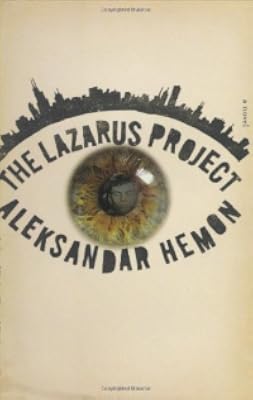
The Lazarus Project
by Aleksandar Hemon
On This Page
Description
On March 2, 1908, nineteen-year-old Lazarus Averbuch, a recent Jewish immigrant from Eastern Europe to Chicago, knocked on the front door of the house of George Shippy, the chief of Chicago police. When Shippy came to the door, Averbuch offered him what he said was an important letter. Instead of taking the letter, Shippy shot Averbuch twice, killing him. When Shippy released a statement casting Averbuch as a would-be anarchist assassin and agent of foreign political operatives, he all but show more set off a city and a country already simmering with ethnic and political tensions. Now, in the twenty-first century, a young writer in Chicago, Brik, also from Eastern Europe, becomes obsessed with Lazarus story--what really happened, and why?--From publisher description. show lessTags
Recommendations






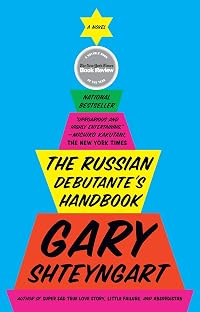
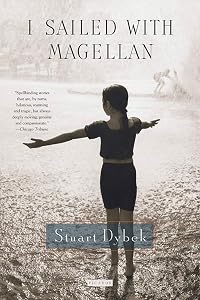
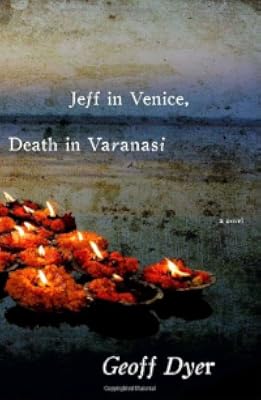
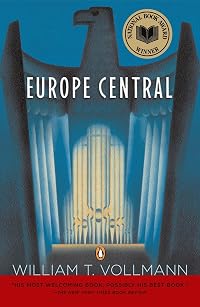




Member Recommendations
by kaionvin
Member Reviews
Lazarus Averbuch survived a Ukrainian pogrom, but in 1908 he's shot by the Chicago Chief of Police in the entry of the Chief's home. A century later, Vladimir Brik, an immigrant from Bosnia now married and living in Chicago, becomes interested in Averbuch and decides to write about him, sending him to Eastern Europe along with an old friend from Sarajevo, a photographer who survived the war there.
It's impossible to communicate how very brilliant and well-constructed this novel is without going into far too much detail. There's a lot going on, but it's so well-juggled that each thread shines on its own, and enhances the book as a whole. There's much about the life of Eastern Europeans in Chicago along with the nascent labor movement, show more the war in the former Yugoslavia and how one man survived, the memory of the Jews of Moldova and Ukraine, the current state of life in those two countries, and a recent immigrant's struggles to belong to the new life he finds himself in. Aleksandar Hemon's writing style is razor-sharp and tinged with a black humor. show less
It's impossible to communicate how very brilliant and well-constructed this novel is without going into far too much detail. There's a lot going on, but it's so well-juggled that each thread shines on its own, and enhances the book as a whole. There's much about the life of Eastern Europeans in Chicago along with the nascent labor movement, show more the war in the former Yugoslavia and how one man survived, the memory of the Jews of Moldova and Ukraine, the current state of life in those two countries, and a recent immigrant's struggles to belong to the new life he finds himself in. Aleksandar Hemon's writing style is razor-sharp and tinged with a black humor. show less
Ad un certo punto sei circondata la gente che lo vuole leggere. Un occhio veloce alla trama, 5 euri il digitale. Ci sta.
Cominci, aspettandoti la storia di un tizio che va a cercare di ricostruire la storia di un altro tizio, ammazzato nel 1908 a Chicago in circostanze abbastanza discutibili. Ma no, questa è solo la superficie, perché la storia di Lazarus è una scusa per Brik, emigrato bosniaco negli Stati Uniti, per fare un viaggio nelle sue origini e in se stesso. E Lazarus è la scusa per raccontare e raccontarsi. Ma raccontarsi molto bene, in maniera molto ironica e lasciando lì una quantità di cose su cui riflettere impressionante. Perché Brik riflette su se stesso come marito, come emigrato, come bosniaco, ma soprattutto come show more scrittore, e si conseguenza sul senso di raccontare.
Quando un libro dispiace finirlo e all'ultima pagina si ha l'istinto a riguardare le sottolineature e rileggere pagine, vuol dire che ha colpito nel segno. show less
Cominci, aspettandoti la storia di un tizio che va a cercare di ricostruire la storia di un altro tizio, ammazzato nel 1908 a Chicago in circostanze abbastanza discutibili. Ma no, questa è solo la superficie, perché la storia di Lazarus è una scusa per Brik, emigrato bosniaco negli Stati Uniti, per fare un viaggio nelle sue origini e in se stesso. E Lazarus è la scusa per raccontare e raccontarsi. Ma raccontarsi molto bene, in maniera molto ironica e lasciando lì una quantità di cose su cui riflettere impressionante. Perché Brik riflette su se stesso come marito, come emigrato, come bosniaco, ma soprattutto come show more scrittore, e si conseguenza sul senso di raccontare.
Quando un libro dispiace finirlo e all'ultima pagina si ha l'istinto a riguardare le sottolineature e rileggere pagine, vuol dire che ha colpito nel segno. show less
This is a fascinating and irresistible book, full of stories within stories and wonderful language and imagery. As the back of the book tells us, "On March 2, 1908, nineteen-year-old Lazarus Averbuch, an Eastern European Jewish immigrant, was shot to death while visiting the home of the Chicago police chief and cast as a would-be anarchist assassin." This, in fact, is an actual event, and out of it Memon has spun a web of stories within stories, sending his protagonist, Brik, modern-day would-be writer, a Bosnian immigrant to America unsure of his place in his new country and his marriage, on a journey of memory, discovery and loss. Brik goes off to Eastern Europe in search of Averbuch's story. He starts in Averbuch's native Moldova, show more where he had been a survivor of the infamous Kishinev pogrom of 1903, traces his journey through the Ukraine and Romania, then takes a turn to visit his own home city, Sarajevo. On this journey he brings along his own Scheherazade, Rora, a photographer and a boyhood friend from Sarajevo. The difference between the two friends is that while Brik left Bosnia before the obviously imminent war there actually broke out, Rora stayed to live through the deadly siege of the city. So throughout the narrative, Brik is spinning tales, imaginary episodes in the life of Averbuch's death and the circumstances of his life, as well as the horrific experiences of his sister afterwards interweaved with incidents of his journey with Rora and reflections on his sadly unsettled marriage with an American surgeon patiently waiting for her husband to get with the program of American life. And Rora is spinning tales for Brik about his experiences during the bloody siege of Sarajevo, tales just tall enough to waver at the border between believable and fanciful.
It all sounds confusing, yet is rendered completely comprehensible and often moving by Hemon's beautiful writing. Here is an example, longer than I usually like to provide but hard to chop up:
"Often, before I went to sleep, I remembered--or I should say I tried not to forget. Before I passed out, I recollected particular moments in slumberous tranquility; I replayed conversations; I reflected upon smells and colors; I remembered myself as I used to be, twenty years before, or earlier that day. The ritual was my nightly prayer, a contemplation of my presence in the world.
"It often got out of hand: possible stories sprouted from the recalled instants and images. Take the afternoon in Lviv when I stepped out of the bathroom after a long and torturous time in the trickling shower to find Rora napping, so peacefully invested in his dream that he looked like somebody I did not know. When, fading to sleep that night, I reflected upon his face, I envisioned a story in which I woke up and found him dead in a hotel room we were sharing. I had to call the reception desk and deal with all the logistics of removing his body from the room, from the world. I had to call his sister and break the heartbreaking news and so I went through his stuff, only to discover that he had a forged Austrian passport with a different name and a plane ticket to Vienna for the next morning. When I called the only phone number I found among his belongings, nobody picked up the phone.
"Many of these stories turned unnoticeably into a dream, whereby the narrative went completely haywire and I become but a confused character within it, unable to escape the plot. I could only snap out of it, and if I did I instantly lost the dream, its reality vanishing the moment I woke up. Occasionally, a violently involuntary memory of a dream emerged in my mind, like a corpse released from the bottom of the lake. Once, with a perfect sensory clarity, I recalled the weight of the schoolbag on my shoulder in which I carried, like a puppy, the war criminal Rodovan Karadzic."
In addition the descriptions of the places the pair visits together provide a gritty feeling for the often stark circumstances of life in those countries. show less
It all sounds confusing, yet is rendered completely comprehensible and often moving by Hemon's beautiful writing. Here is an example, longer than I usually like to provide but hard to chop up:
"Often, before I went to sleep, I remembered--or I should say I tried not to forget. Before I passed out, I recollected particular moments in slumberous tranquility; I replayed conversations; I reflected upon smells and colors; I remembered myself as I used to be, twenty years before, or earlier that day. The ritual was my nightly prayer, a contemplation of my presence in the world.
"It often got out of hand: possible stories sprouted from the recalled instants and images. Take the afternoon in Lviv when I stepped out of the bathroom after a long and torturous time in the trickling shower to find Rora napping, so peacefully invested in his dream that he looked like somebody I did not know. When, fading to sleep that night, I reflected upon his face, I envisioned a story in which I woke up and found him dead in a hotel room we were sharing. I had to call the reception desk and deal with all the logistics of removing his body from the room, from the world. I had to call his sister and break the heartbreaking news and so I went through his stuff, only to discover that he had a forged Austrian passport with a different name and a plane ticket to Vienna for the next morning. When I called the only phone number I found among his belongings, nobody picked up the phone.
"Many of these stories turned unnoticeably into a dream, whereby the narrative went completely haywire and I become but a confused character within it, unable to escape the plot. I could only snap out of it, and if I did I instantly lost the dream, its reality vanishing the moment I woke up. Occasionally, a violently involuntary memory of a dream emerged in my mind, like a corpse released from the bottom of the lake. Once, with a perfect sensory clarity, I recalled the weight of the schoolbag on my shoulder in which I carried, like a puppy, the war criminal Rodovan Karadzic."
In addition the descriptions of the places the pair visits together provide a gritty feeling for the often stark circumstances of life in those countries. show less
This stunning novel interleaves the story of Lazarus Averbuch, a young Jewish immigrant, killed in Chicago in 1908 and framed as part of the "anarchist menace", with that of Vladimir Brik, an early-21st century writer, a Bosnian immigrant to the US (like Hemon himself) who becomes interested in the case and travels through the Balkans and Eastern Europe researching Lazarus' family history, hoping to get a novel out of it.
The 1908 section - the anti-anarchist panic, the callous framing of an innocent young man and the media response to Lazarus' supposed evil crime - is properly angry-making, although it does lose its way a little as the novel goes on. The sections set in the modern-day, desperate and gangster-ridden Eastern Europe are show more more depressing than angering. But the prose is incredible, and the book stirs up all sorts of ideas, about home, freedom, the old world and the new, and what it means to know someone else. The echoes between the events of both sections lead the reader to think about twenty-first century genocides and xenophobias, as well as the nineteenth- and twentieth-century ones which are directly explored. I had to keep forcing myself to slow down so that I could really get the most out of the writing itself and also the ideas behind it.
Sample: One morning in Chicago I had tiptoed to the kitchen with the intention of making some coffee. While customarily spilling coffee grounds all over the counter, I spotted a can in the corner whose red label read SADNESS. Was there so much of it they could can it and sell it? A bolt of pain went through my intestines before I realized that it was not SADNESS but SARDINES. It was too late for recovery, for sadness was now the dark matter in the universe of still objects around me: the salt and pepper shakers; the honey jar; the bag of sun-dried tomatoes; the blunt knife; a desiccated loaf of bread; the two coffee cups, waiting. My country's main exports are stolen cars and sadness. show less
The 1908 section - the anti-anarchist panic, the callous framing of an innocent young man and the media response to Lazarus' supposed evil crime - is properly angry-making, although it does lose its way a little as the novel goes on. The sections set in the modern-day, desperate and gangster-ridden Eastern Europe are show more more depressing than angering. But the prose is incredible, and the book stirs up all sorts of ideas, about home, freedom, the old world and the new, and what it means to know someone else. The echoes between the events of both sections lead the reader to think about twenty-first century genocides and xenophobias, as well as the nineteenth- and twentieth-century ones which are directly explored. I had to keep forcing myself to slow down so that I could really get the most out of the writing itself and also the ideas behind it.
Sample: One morning in Chicago I had tiptoed to the kitchen with the intention of making some coffee. While customarily spilling coffee grounds all over the counter, I spotted a can in the corner whose red label read SADNESS. Was there so much of it they could can it and sell it? A bolt of pain went through my intestines before I realized that it was not SADNESS but SARDINES. It was too late for recovery, for sadness was now the dark matter in the universe of still objects around me: the salt and pepper shakers; the honey jar; the bag of sun-dried tomatoes; the blunt knife; a desiccated loaf of bread; the two coffee cups, waiting. My country's main exports are stolen cars and sadness. show less
"When the bus finally left the station, I was unsettled by the feeling that we could not return now. Where can you go from nowhere, except deeper into nowhere?" (p 178)
The Lazarus Project is the second book by Aleksandar Hemon that I have read. I found the previous one, his first novel Nowhere Man, to be a flawed attempt at novel-writing due both to Hemon's inexperience and his attempt to relate an immigrant's experience in a postmodern way that did not appeal to me; nor did the characters or story or his style help.
The Lazarus Project is narrated by a young Chicagoan named Vladimir Brik and like Hemon himself, he grew up in Sarajevo, came to Chicago on a visit and was forced to stay in the United States when war broke out in what was show more then Yugoslavia. While the new novel is in some ways a continuation of Hemon’s vision of an immigrant’s slanted, postmodern world, its narrator, Vladimir Brik, is also a departure from the ironic yet naïve young man of his earlier book. This is a mature novel about a grown man who is animated by and indeed savors the nuances of disappointment. In one scene, Brik tiptoes into his Chicago kitchen to make coffee before his wife wakes up:
"I spotted a can in the corner whose red label read SADNESS. Was there so much of it they could can it and sell it? A bolt of pain went through my intestines before I realized that it was not SADNESS but SARDINES.”(p 73)
Brik is married to a successful American neurosurgeon who saves lives from “her high position of surgically American decency.” He, on the other hand, struggles “through permanent confusion.” Living with an acute sense of the loss of his homeland and, so, the loss of his identity, Brik has become intrigued with another immigrant: Lazarus Averbuch, a young Jew who escaped the 1903 Kishinev pogrom in what is now Moldova and came to Chicago. This Averbuch is a historical figure whose story is still something of a mystery; but it is known that he arrived at the house of the Chicago chief of police on March 2, 1908; there was some kind of scuffle, and the young man was shot and killed. Still haunted by the anarchist Haymarket riots, in which seven police officers died, and fearing a violent reaction to the mayor’s cancellation of a speech by Emma Goldman, Chicago moved into a state of turmoil.
When Brik gets a research grant and takes off for Eastern Europe, following in Lazarus’s footsteps, he brings an old friend along, a photographer and fellow Sarajevan named Rora. Rora and Brik’s road trip is an Eastern European nightmare. They are driven to Bucharest by a somnolent pimp with a terrified young girl held captive in the back seat. In one chapter, set at a bordello hotel called Business Center Bukovina, Hemon constructs a delicate, beautifully rendered fable of ugliness, desolation and heartlessness. They pass a mangy dog as they enter. The window looks out on a huge garbage bin “brimming with glass bottles,” their sparkle providing a brief moment of pleasure: “I always like to see a full garbage container, because I relish the thought of emptying it, the complete unburdening implicit in it.” At the end of the chapter, Brik hears a drunken couple shouting, then laughter, a dog howling and the shattering of glass. “The man and woman had thrown the dog in the garbage container full of bottles and then must have watched it writhing, shredding and slicing itself, trying to escape.”
There is to be no escape, no “complete unburdening” for Brik, no emptying of the life he has known and tried both to remember and forget. “Your nightmares follow you like a shadow, forever,” he notes. I note that this is yet another novel that attempts two different stories, connected at several different levels, but not always successfully. I am reminded of Louis de Berniere's Birds Without Wings which was a similar attempt to interlink two related stories, also unsuccessfully in my estimation. Hemon's attempt is more concise and retains its ability to capture the reader's attention with mystery and intrigue, along with some humor, that propel both stories. The novel's short chapters interspersed with introductory historical photographs (does he think that the readers' imaginations need help?) also keep the narrative from flagging. The result is a satisfying read but one that for me was not quite as "stunning" as opined by some critics. show less
The Lazarus Project is the second book by Aleksandar Hemon that I have read. I found the previous one, his first novel Nowhere Man, to be a flawed attempt at novel-writing due both to Hemon's inexperience and his attempt to relate an immigrant's experience in a postmodern way that did not appeal to me; nor did the characters or story or his style help.
The Lazarus Project is narrated by a young Chicagoan named Vladimir Brik and like Hemon himself, he grew up in Sarajevo, came to Chicago on a visit and was forced to stay in the United States when war broke out in what was show more then Yugoslavia. While the new novel is in some ways a continuation of Hemon’s vision of an immigrant’s slanted, postmodern world, its narrator, Vladimir Brik, is also a departure from the ironic yet naïve young man of his earlier book. This is a mature novel about a grown man who is animated by and indeed savors the nuances of disappointment. In one scene, Brik tiptoes into his Chicago kitchen to make coffee before his wife wakes up:
"I spotted a can in the corner whose red label read SADNESS. Was there so much of it they could can it and sell it? A bolt of pain went through my intestines before I realized that it was not SADNESS but SARDINES.”(p 73)
Brik is married to a successful American neurosurgeon who saves lives from “her high position of surgically American decency.” He, on the other hand, struggles “through permanent confusion.” Living with an acute sense of the loss of his homeland and, so, the loss of his identity, Brik has become intrigued with another immigrant: Lazarus Averbuch, a young Jew who escaped the 1903 Kishinev pogrom in what is now Moldova and came to Chicago. This Averbuch is a historical figure whose story is still something of a mystery; but it is known that he arrived at the house of the Chicago chief of police on March 2, 1908; there was some kind of scuffle, and the young man was shot and killed. Still haunted by the anarchist Haymarket riots, in which seven police officers died, and fearing a violent reaction to the mayor’s cancellation of a speech by Emma Goldman, Chicago moved into a state of turmoil.
When Brik gets a research grant and takes off for Eastern Europe, following in Lazarus’s footsteps, he brings an old friend along, a photographer and fellow Sarajevan named Rora. Rora and Brik’s road trip is an Eastern European nightmare. They are driven to Bucharest by a somnolent pimp with a terrified young girl held captive in the back seat. In one chapter, set at a bordello hotel called Business Center Bukovina, Hemon constructs a delicate, beautifully rendered fable of ugliness, desolation and heartlessness. They pass a mangy dog as they enter. The window looks out on a huge garbage bin “brimming with glass bottles,” their sparkle providing a brief moment of pleasure: “I always like to see a full garbage container, because I relish the thought of emptying it, the complete unburdening implicit in it.” At the end of the chapter, Brik hears a drunken couple shouting, then laughter, a dog howling and the shattering of glass. “The man and woman had thrown the dog in the garbage container full of bottles and then must have watched it writhing, shredding and slicing itself, trying to escape.”
There is to be no escape, no “complete unburdening” for Brik, no emptying of the life he has known and tried both to remember and forget. “Your nightmares follow you like a shadow, forever,” he notes. I note that this is yet another novel that attempts two different stories, connected at several different levels, but not always successfully. I am reminded of Louis de Berniere's Birds Without Wings which was a similar attempt to interlink two related stories, also unsuccessfully in my estimation. Hemon's attempt is more concise and retains its ability to capture the reader's attention with mystery and intrigue, along with some humor, that propel both stories. The novel's short chapters interspersed with introductory historical photographs (does he think that the readers' imaginations need help?) also keep the narrative from flagging. The result is a satisfying read but one that for me was not quite as "stunning" as opined by some critics. show less
Lazarus, a Jewish immigrant from Bosnia is shot to death at the doorstep of the Chicago chief of police. The time is sometime after the Bosnian and Kosovo War putting it in the 1990. Writer Brek, born Bosnian but a US citizen of many years, travels to Bosnia and surrounding countries, to find out who Lazarus was and why he was shot.
Lazarus has a sister and brother in Chicago still, but Brek wants to find out what went on back in Bosnia that might explain why Lazarus was shot. Once in Bosnia Brek is accompanied by a brilliant but whacky photographer, Rora who has no fear. Brek is USA-acclimated and is astounded at how his compatriots now seem to him. Their body hair and lack of respect for the law, to say nothing of the state of the show more roads.
There’s a play on the idea of a man arising from the dead which I didn’t always pick up on as I know little of the Bible and used to play with a boy called Lazarus, so kept thinking of my childhood buddy.
The Lazarus Project is a sort of whacky road trip through the Ukraine, Moldova, to Sarajevo. But it’s dead serious. People die. We read of pogroms of the early 20th centurey, murder, and corruption.
Brek has a wife Mary back in the United States, and at the beginning of the book, the writer/Brek? presents her as lovely professional woman dedicated to her work as a doctor. The marriage is described as happy and peaceful.
By the end of the book Brek is Bosnian-ized. He’s starting to fall in love with the photographer‘s attractive wife and has decided to stay in his true homeland and to leave Mary for good. His description of his wife Mary is now this.
Mary could hold a cockroach in her hand, spooked, broccoli, and bloody steaks and carrots, but she disliked ice cream and chocolate her favorite books were sense and sensibility and to kill a Mockingbird when she listen to music, she would sometimes tap her fingers on her knee, but denied it if I pointed out to her she was wearing commodious frumpy clothes, but had an impeccable fetishistic taste in shoes..
Although being fond of Brek, I had an instant compassion for Mary. Men!
There’s plenty of violence, adventure, humor, schemes to augment one’s horror of anti-semeticism. It’s a well written book though the details of physical abuse only just manage to be tolerable because of the occasional humor and the fascinating character of the photographer.
As another LT review, it put it, The book meanders. Sometimes it is in first person with Brik's life aimless thoughts, moods, and experiences. Some parts are in 3rd person with Lazarus' story. It is a lot of Brik's feelings and what the mood strikes him to consider. @nx74defiant here
I really enjoyed parts of the book, and identified with Beck’s musings of being an immigrant in the USA. As he puts it, “Home is a place where people notice you are missing.”
Jefferson Mayes did a good job narration [The Lazarus Project], especially given the switches between first and third person.
It’s certainly a book that is worth the experience of reading but is just a smidge off being memorable.
—
Posted with comments on my thread here:
https://www.librarything.com/topic/370242#8835542 show less
Lazarus has a sister and brother in Chicago still, but Brek wants to find out what went on back in Bosnia that might explain why Lazarus was shot. Once in Bosnia Brek is accompanied by a brilliant but whacky photographer, Rora who has no fear. Brek is USA-acclimated and is astounded at how his compatriots now seem to him. Their body hair and lack of respect for the law, to say nothing of the state of the show more roads.
There’s a play on the idea of a man arising from the dead which I didn’t always pick up on as I know little of the Bible and used to play with a boy called Lazarus, so kept thinking of my childhood buddy.
The Lazarus Project is a sort of whacky road trip through the Ukraine, Moldova, to Sarajevo. But it’s dead serious. People die. We read of pogroms of the early 20th centurey, murder, and corruption.
Brek has a wife Mary back in the United States, and at the beginning of the book, the writer/Brek? presents her as lovely professional woman dedicated to her work as a doctor. The marriage is described as happy and peaceful.
By the end of the book Brek is Bosnian-ized. He’s starting to fall in love with the photographer‘s attractive wife and has decided to stay in his true homeland and to leave Mary for good. His description of his wife Mary is now this.
Mary could hold a cockroach in her hand, spooked, broccoli, and bloody steaks and carrots, but she disliked ice cream and chocolate her favorite books were sense and sensibility and to kill a Mockingbird when she listen to music, she would sometimes tap her fingers on her knee, but denied it if I pointed out to her she was wearing commodious frumpy clothes, but had an impeccable fetishistic taste in shoes..
Although being fond of Brek, I had an instant compassion for Mary. Men!
There’s plenty of violence, adventure, humor, schemes to augment one’s horror of anti-semeticism. It’s a well written book though the details of physical abuse only just manage to be tolerable because of the occasional humor and the fascinating character of the photographer.
As another LT review, it put it, The book meanders. Sometimes it is in first person with Brik's life aimless thoughts, moods, and experiences. Some parts are in 3rd person with Lazarus' story. It is a lot of Brik's feelings and what the mood strikes him to consider. @nx74defiant here
I really enjoyed parts of the book, and identified with Beck’s musings of being an immigrant in the USA. As he puts it, “Home is a place where people notice you are missing.”
Jefferson Mayes did a good job narration [The Lazarus Project], especially given the switches between first and third person.
It’s certainly a book that is worth the experience of reading but is just a smidge off being memorable.
—
Posted with comments on my thread here:
https://www.librarything.com/topic/370242#8835542 show less
The Lazarus Project (2008) by Bosnian-American author Aleksander Hemon represents Bosnia and Herzegovina in my Around the World For a Good Book project, albeit only a small portion of the novel takes place in that stricken country. Still it captures the spirit of ATWFAGB in the way it travels between the "countries" of America and Europe, and of past and present. The author Hemon was born in Sarajevo of Ukrainian and Serbian ancestry. He went to Chicago in 1990 and found himself unable to return home once the war began.
The Lazarus Project tells two stories. First, there's Lazarus Averbuch, an Eastern European Jew who having survived a pogrom emigrates with his sister to Chicago. There on March 2, 1908, Lazarus attempted to deliver a show more letter to the chief of police, the latter refusing the letter and instead shooting and killing Lazarus. Amplifying the attrocity, the police chief concocts a tale that Lazarus was a dangerous anarchist. From this kernel of a true story Hemon draws out the aftermath of the anti-anarchist hysteria on Lazarus' sister Olga and his colleague Isador.
The second story, in alternating chapters, is the contemporary tale of Brik, a man much like Hemon himself - an immigrant from Sarajevo suffering a sort of survivor's guilt for not being at home during the war and attrocities. He's out of work and in a loveless marriage with an American-born neurosurgeon, but holds on to the promise of writing a book about Lazarus Averbuch. Receiving grant money for his research, he sets of on a journey through Eastern Europe to follow Lazarus' path to America.
Accompanying Brik is a friend and photographer Rora. Each chapter begins with a beautiful photograph with the conceit that they are from the lens of Rora himself. Rora is also a counterpart to Brik as a survivor of the war, participating in a paramilitary group in Sarajevo. Rora's stories of the war and Brik's ceaseless curiosity about them are a major theme in this book.
This is not a cheerful book. Brik and Rora's journey seems to be through an Eastern Europe full of sad prostitutes, mobsters, and sterile fast-food chains. Olga and Isador must survive insults and degradation. It would be hard to read this book without gaining a sense of fatalism. Yet, Hemon's way with language redeems the book, drawing beauty out of suffering. show less
The Lazarus Project tells two stories. First, there's Lazarus Averbuch, an Eastern European Jew who having survived a pogrom emigrates with his sister to Chicago. There on March 2, 1908, Lazarus attempted to deliver a show more letter to the chief of police, the latter refusing the letter and instead shooting and killing Lazarus. Amplifying the attrocity, the police chief concocts a tale that Lazarus was a dangerous anarchist. From this kernel of a true story Hemon draws out the aftermath of the anti-anarchist hysteria on Lazarus' sister Olga and his colleague Isador.
The second story, in alternating chapters, is the contemporary tale of Brik, a man much like Hemon himself - an immigrant from Sarajevo suffering a sort of survivor's guilt for not being at home during the war and attrocities. He's out of work and in a loveless marriage with an American-born neurosurgeon, but holds on to the promise of writing a book about Lazarus Averbuch. Receiving grant money for his research, he sets of on a journey through Eastern Europe to follow Lazarus' path to America.
Accompanying Brik is a friend and photographer Rora. Each chapter begins with a beautiful photograph with the conceit that they are from the lens of Rora himself. Rora is also a counterpart to Brik as a survivor of the war, participating in a paramilitary group in Sarajevo. Rora's stories of the war and Brik's ceaseless curiosity about them are a major theme in this book.
This is not a cheerful book. Brik and Rora's journey seems to be through an Eastern Europe full of sad prostitutes, mobsters, and sterile fast-food chains. Olga and Isador must survive insults and degradation. It would be hard to read this book without gaining a sense of fatalism. Yet, Hemon's way with language redeems the book, drawing beauty out of suffering. show less
Members
- Recently Added By
Lists

Vulture's 100 Best Books of the 21st Century (So Far)
98 works; 9 members

Writers at Risk
106 works; 17 members

National Book Award Finalists - Fiction
377 works; 12 members
Author Information

33+ Works 4,172 Members
Aleksandar Hemon was born in Sarajevo. He lives in Chicago. (Bowker Author Biography)
All Editions
Some Editions
Awards and Honors
Awards
Distinctions
Notable Lists
Common Knowledge
- Canonical title*
- Il progetto Lazarus
- Original title
- The Lazarus Project
- Original publication date
- 2008
- People/Characters
- Lazarus Averbuch; Olga Averbuch; Vladimir Brik; Rora; George Shippy; Rambo (show all 8); William P. Miller; Azra Halilbasic
- Important places
- Lincoln Park, Chicago, Illinois, USA; Chicago, Illinois, USA; Sarajevo, Bosnia
- Epigraph
- And when he thus had spoken, he cried with a loud voice, Lazarus, come forth. And he that was dead came forth, bound hand and foot with rags, and his face was covered with a cloth. Jesus saith unto them, Loose him and let him... (show all) go.
- Dedication
- For my sister, Kristina
- First words
- The time and place are the only things I am certain of: March 2, 1908, Chicago.
- Quotations
- My dreams were but a means of forgetting, they were the branches tied to the galloping horses of our days, the emptying of the garbage so that tomorrow—assuming there would be a tomorrow—could be filled up with new life. ... (show all)You die, you forget, you wake up new.
Home is where somebody notices when you are no longer there. - Last words
- (Click to show. Warning: May contain spoilers.)You will need it for writing.
- Canonical DDC/MDS
- 813.54
- Canonical LCC
- PS3608.E48
*Some information comes from Common Knowledge in other languages. Click "Edit" for more information.
Classifications
Statistics
- Members
- 1,353
- Popularity
- 17,675
- Reviews
- 52
- Rating
- (3.54)
- Languages
- 10 — Bosnian, Danish, Dutch, English, French, German, Italian, Russian, Spanish, Swedish
- Media
- Paper, Audiobook, Ebook
- ISBNs
- 34
- ASINs
- 10