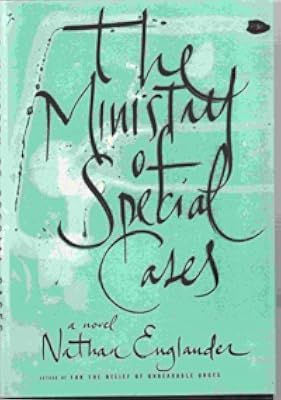
The Ministry of Special Cases
by Nathan Englander
On This Page
Description
Fiction. Literature. HTML:From its unforgettable opening scene in the darkness of a forgotten cemetery in Buenos Aires, The Ministry of Special Cases casts a powerful spell. In the heart of Argentina’s Dirty War, Kaddish Poznan struggles with a son who won’t accept him; strives for a wife who forever saves him; and spends his nights protecting the good name of a community that denies his existence–and denies a checkered history that only Kaddish holds dear.Nathan Englander’s first show more novel is a timeless story of fathers and sons. In a world turned upside down, where the past and the future, the nature of truth itself, all take shape according to a corrupt government’s whims, one man–one spectacularly hopeless man–fights to overcome his history and his name, and, if for only once in his life, to put things right. The Ministry of Special Cases, like Englander’s stories before it, is a celebration of our humanity, in all its weakness, and–despite that–hope. show less
Tags
Recommendations






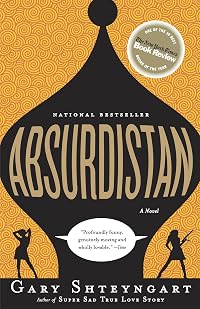
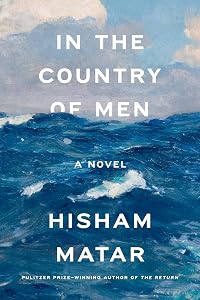





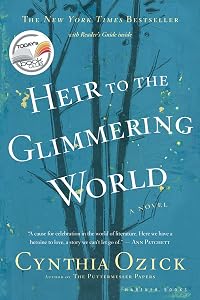
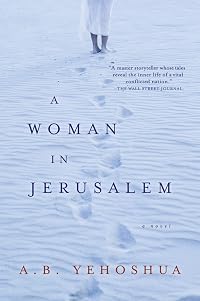











Member Recommendations

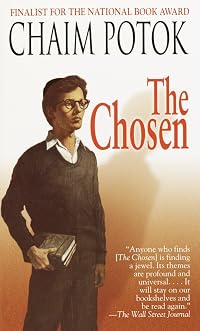
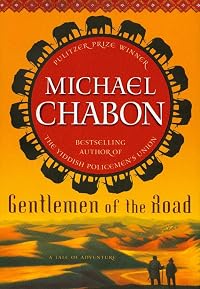
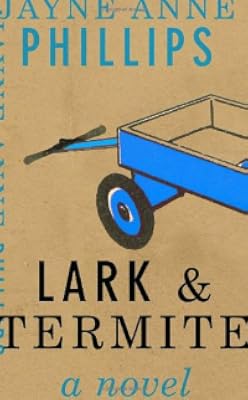
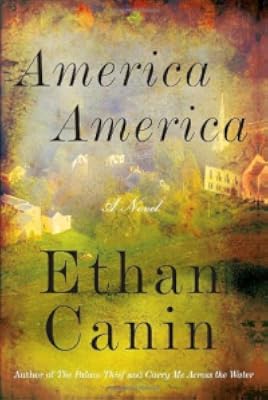
jayne_charles Different countries, different times, but both books tell of ordinary people battling against a powerful regime

hairball While one is an alternative history and the other is based around historical fact (Argentina's disappeared), they have a similar flavor to them.
22



SqueakyChu historical novels of Jewish importance
Member Reviews
Set during the years of the Argentine dirty war this novel follows the pereginations of Lillian and Kaddish Poznan desperately searching for their teenage son Pato (Pablo) who arrested after a night out at a concert is released into his fathers' care only to be re-arrested several hours later. As Jews they are all suspect but Pato as an university student and would be liberal intellectual is doubly suspect. Lillian and Kaddish--each in their own way go about trying to find him but are stonewalled by a government covering up its own atrocities against anyone it considers an enemy. Drawn from the real events of that time Englander does a fine job of keeping this his first novel from descending merely into pathos. The tragic certainly show more outweighs the comic but there are humorous aspects to his characterization especially of the hapless Kaddish. To go further all of his characterizations are very finely drawn and well thought out. Some scenes may verge on the absurd but there is always a reality underpinning everything. Beyond that this is extremely well concieved and written--one wonders if Englander who has astounded me with this will ever be able to surpass it. If he does watch out. I can't say that I was bored even once with this. This could be a great writer. Anyway I would very highly recommend it. show less
this isn't an easy, fun, quick, or traditionally enjoyable read, but wow i still really liked it. first of all - nathan englander can really write. i remember *loving* his book of short stories, for the relief of unbearable urges and looking forward to this one for a long time. that always makes me nervous, but right away i could tell that i was going to love his writing, and the intimate jewishness that he writes with, just assuming readers will know what he's talking about. (and, really, i don't know that unfamiliarity with jewish custom/law/ritual would make the book hard to understand or anything, but knowing it certainly adds to the experience of reading him.)
this takes place in a time period i'm ashamed to have known nothing about show more - the disappearing of people in argentina under the junta. it's about community acceptance (or ostracism), labels, loss. how two married people can approach/react to/recover from a traumatic situation so differently, and how this can lead to impossible distances between them. irrecoverable distances. it's a sad, terrible story, but told somehow with lightness and even some humor (those parts, to me, recall john irving, as he can make a reader surprised to laugh when reading about tragedy) and a touch of the tone of a fable (those parts, to me, recall gabriel garcia marquez).
his writing talent is extraordinary. i will read anything he writes.
"'To dream of one government ending doesn't mean you'll want the one that comes in its place.'"
"A flatbed truck with a tank on its back crawled across the next avenue. Another one followed behind. These trucks, moving through the city at a speed fit only for funeral processions, lumbering along. Where is the surprise at this speed? Trouble does not break out anywhere in the world, Lillian thought. War is not unleashed. It is slowly, it is carefully, installed."
"We make adjustments, Lillian thought. We ignore things bit by bit until they've gone too far." show less
this takes place in a time period i'm ashamed to have known nothing about show more - the disappearing of people in argentina under the junta. it's about community acceptance (or ostracism), labels, loss. how two married people can approach/react to/recover from a traumatic situation so differently, and how this can lead to impossible distances between them. irrecoverable distances. it's a sad, terrible story, but told somehow with lightness and even some humor (those parts, to me, recall john irving, as he can make a reader surprised to laugh when reading about tragedy) and a touch of the tone of a fable (those parts, to me, recall gabriel garcia marquez).
his writing talent is extraordinary. i will read anything he writes.
"'To dream of one government ending doesn't mean you'll want the one that comes in its place.'"
"A flatbed truck with a tank on its back crawled across the next avenue. Another one followed behind. These trucks, moving through the city at a speed fit only for funeral processions, lumbering along. Where is the surprise at this speed? Trouble does not break out anywhere in the world, Lillian thought. War is not unleashed. It is slowly, it is carefully, installed."
"We make adjustments, Lillian thought. We ignore things bit by bit until they've gone too far." show less
Powerfully written, a creative and magical story that is a bit like a Russian novel, but set in South America. In a Jewish community, the father of a family makes money by chipping names off gravestones, in essence, erasing people's connection to the Jewish past to preserve their lives in the present. His son disappears, and the way the family unit falls apart at the seams is played out on the novel's pages. It's a powerful story about the Jews circumstances post war and the political climate, and it's also a powerful story about a family unit and how fragile and strong the ties are. It's got a lot of comedy in it, tragic comedy.
My criticism: the last 1/4 of the book is beautifully written, but the plot stalls out on those pages so show more nothing much happens. You're just reading and reading and the plot is staying still. It stalled out a bit for me. show less
My criticism: the last 1/4 of the book is beautifully written, but the plot stalls out on those pages so show more nothing much happens. You're just reading and reading and the plot is staying still. It stalled out a bit for me. show less
Lillian and Kaddish Poznan live with their 19-year-old son Pato in Buenos Aires, Argentina, in the 1970’s. Kaddish makes a living by rubbing out names on Jewish gravestones. He lives his life in a way to distance himself from his Jewishness. Both parents have a sense of fear and attempt to fortify their personal security when suddenly police come to their home to remove their son. In their search for their disappeared son, the parents find that most acquaintances fearfully withdraw any alliance they have to Pato. Both friends and the government beaurocracy combine to become one forceful labyrinth into which the parents delve differently in an effort to retrieve their son.
This book presents what seems at first a humorous look at a show more serious problem - that of the disappeared Jews in Argentina’s "dirty war". As the story progresses, the reader learns that the situation is not quite as funny as it first seems. Although I know some reviewers disapprove of the light-hearted approach with which this book was written, I think that the black humor only makes this book more readable. I love the funny characters who reinforce a sense of poignancy in their desperate attempt to limit their vulnerability in an especially precarious time for Jews in Argentina’s history. Englander’s taut construction of the story, thoughtful approach to a heart-breaking situation, and outrageous material makes me think of him as a Jewish John Irving! show less
This book presents what seems at first a humorous look at a show more serious problem - that of the disappeared Jews in Argentina’s "dirty war". As the story progresses, the reader learns that the situation is not quite as funny as it first seems. Although I know some reviewers disapprove of the light-hearted approach with which this book was written, I think that the black humor only makes this book more readable. I love the funny characters who reinforce a sense of poignancy in their desperate attempt to limit their vulnerability in an especially precarious time for Jews in Argentina’s history. Englander’s taut construction of the story, thoughtful approach to a heart-breaking situation, and outrageous material makes me think of him as a Jewish John Irving! show less
Nathan Englander’s scathing indictment of the military dictatorship in place in Argentina in the mid-1970s is told through the tale of one family’s harrowing experience. Kaddish Poznan and his wife Lillian live a quiet life with their college-age son, Pato. Kaddish has a hard time providing for his family and he and Pato have a contentious father-son relationship. Lillian, in the meantime, is waiting for Kaddish to come home for the first time ever, having made things right. She’s lived with so much disappointment but now she knows that part of her life is done. That is, until the worst possible thing happens and tears their little family apart.
What an education this book provided about a period in history that I knew nothing show more about---Argentina’s Dirty Wars between 1976 and 1983, when the disappearance of young people occurred on a regular basis and torture and murder happen commonly, leaving family members the only one option: haunting the halls of the Ministry of Special Cases, searching for justice.
Englander’s prose sings and keeps the very dark narrative humming along. At the time of the U.S. Bicentennial in 1976, things were different in Argentina:
“A beggar sat in a doorway. In this neighborhood he looked twice as poor. Kaddish fished for change but had passed before he came up with something small. He walked on and spent the money on a “Clarin,” scanning the front page and shaking his head. Everything is coming apart around them and his newspaper runs a picture of an Uncle Sam up on stilts; the Yankees always happy to throw a party for themselves. The only thing Argentina will have to celebrate on its two hundredth anniversary is the miracle of turning back the clocks. The Stone Age would reach Buenos Aires before the future did, of this Kaddish was sure.” (Page 33)
Highly recommended. show less
What an education this book provided about a period in history that I knew nothing show more about---Argentina’s Dirty Wars between 1976 and 1983, when the disappearance of young people occurred on a regular basis and torture and murder happen commonly, leaving family members the only one option: haunting the halls of the Ministry of Special Cases, searching for justice.
Englander’s prose sings and keeps the very dark narrative humming along. At the time of the U.S. Bicentennial in 1976, things were different in Argentina:
“A beggar sat in a doorway. In this neighborhood he looked twice as poor. Kaddish fished for change but had passed before he came up with something small. He walked on and spent the money on a “Clarin,” scanning the front page and shaking his head. Everything is coming apart around them and his newspaper runs a picture of an Uncle Sam up on stilts; the Yankees always happy to throw a party for themselves. The only thing Argentina will have to celebrate on its two hundredth anniversary is the miracle of turning back the clocks. The Stone Age would reach Buenos Aires before the future did, of this Kaddish was sure.” (Page 33)
Highly recommended. show less
The Ministry of Special Cases is an amazing and heart-breaking tale set during the Argentinean Dirty War of the mid 1970’s. Kaddish Poznan is an outcast Jew. A ner-do-well who makes a bit of money by chiseling the names off of tombstones by Jewish residents of Argentina who are desperate to hide their Jewish origins. Kaddish is married to the beautiful, intelligent and proud Lillian, who takes care of her little family and provides the stability that Kaddish is unable to.
The horror of the Dirty War comes home when Kaddish and Lillian’s college age son Pato is taken by the Junta and ‘disappeared’. The full horror of what it means to be disappeared by one’s own government slowly unfolds as Kaddish and Lillian desperately search show more for their son. At every turn the government denies that Pato was ever taken. Finally Kaddish uncovers the full horror that the Argentinean Junta visits upon its own people, in particular the youth of the country and just what it means when a citizen is erased from existence.
The Ministry of Special Cases is both horrifying and moving as it tries to explain what happened to thousands of these ‘disappeared’ Argentineans. And even more horrifying is how an entire country can ignore its own government as it cannibalizes it’s own future. show less
The horror of the Dirty War comes home when Kaddish and Lillian’s college age son Pato is taken by the Junta and ‘disappeared’. The full horror of what it means to be disappeared by one’s own government slowly unfolds as Kaddish and Lillian desperately search show more for their son. At every turn the government denies that Pato was ever taken. Finally Kaddish uncovers the full horror that the Argentinean Junta visits upon its own people, in particular the youth of the country and just what it means when a citizen is erased from existence.
The Ministry of Special Cases is both horrifying and moving as it tries to explain what happened to thousands of these ‘disappeared’ Argentineans. And even more horrifying is how an entire country can ignore its own government as it cannibalizes it’s own future. show less
Review: The Ministry of Special Cases by Nathan Englander. 09/09/2017
The book started out slow for the first seventy five pages and I wasn’t to sure what genre I was reading. The novel was well written, I enjoyed the characters but for quite a while I kept thinking, “What a strange story” but I couldn’t put it down. The more I read the more I wanted to read. I don’t know why I was so captivated but the pages kept turning. The only thing I didn’t like was the repetitive scenes. I think the story could have been shorter but yet I still enjoyed it and figured out the themes, yes more than one. What was really great about the novel is the author’s talent for combining horror and humor, tragedy and comedy, realism and fable.
The show more setting was in Argentina during the mid-1970’s war where a vast amount of citizens, including many students, disappeared by the authoritarian regime. The beginning scene was in a dark neglected cemetery in Buenos Aires with the main character, Kaddish Poznan, a shunned Jewish man who works in the cemetery. His job is chiseling off the names on grave stones whose children want to forget their parents past activities. Some days he takes his son Pato who is a rebellious teenager who will not accept his father’s work and think he is bad-mannered and crude. Kaddish’s wife Lillian works stressfully at a dishonest insurance company trying to provide for her family. Soon, their son is kidnapped like so many others and Kaddish and Lillian search for their son in a harsh society and through the Ministry of Special Cases, who are the government were not helpful or honest.
The story focuses on many different issues and events throughout the book. Kaddish accidentally chiseled the tip of one of Pato’s finger off and his parents get surgical nose jobs, Lillian challenges the administrative officials, Kaddish picks an embarrassing embroidered name off a curtain in the synagogue, citizens are still disappearing, and Kaddish continues spending his nights protecting the good name of a community that only denies his existence. Kaddish’s life turns upside down while he fights to overcome his history and name while trying to make things right. show less
The book started out slow for the first seventy five pages and I wasn’t to sure what genre I was reading. The novel was well written, I enjoyed the characters but for quite a while I kept thinking, “What a strange story” but I couldn’t put it down. The more I read the more I wanted to read. I don’t know why I was so captivated but the pages kept turning. The only thing I didn’t like was the repetitive scenes. I think the story could have been shorter but yet I still enjoyed it and figured out the themes, yes more than one. What was really great about the novel is the author’s talent for combining horror and humor, tragedy and comedy, realism and fable.
The show more setting was in Argentina during the mid-1970’s war where a vast amount of citizens, including many students, disappeared by the authoritarian regime. The beginning scene was in a dark neglected cemetery in Buenos Aires with the main character, Kaddish Poznan, a shunned Jewish man who works in the cemetery. His job is chiseling off the names on grave stones whose children want to forget their parents past activities. Some days he takes his son Pato who is a rebellious teenager who will not accept his father’s work and think he is bad-mannered and crude. Kaddish’s wife Lillian works stressfully at a dishonest insurance company trying to provide for her family. Soon, their son is kidnapped like so many others and Kaddish and Lillian search for their son in a harsh society and through the Ministry of Special Cases, who are the government were not helpful or honest.
The story focuses on many different issues and events throughout the book. Kaddish accidentally chiseled the tip of one of Pato’s finger off and his parents get surgical nose jobs, Lillian challenges the administrative officials, Kaddish picks an embarrassing embroidered name off a curtain in the synagogue, citizens are still disappearing, and Kaddish continues spending his nights protecting the good name of a community that only denies his existence. Kaddish’s life turns upside down while he fights to overcome his history and name while trying to make things right. show less
Members
- Recently Added By
Published Reviews
ThingScore 88
On its own, highly individual terms, however, the novel proves that Englander is well on the way to justifying the euphoria that his name evokes.
added by lkernagh
Englander's contention is similar: in a corrupt and murderous system the scale of moral values shifts, and actions can no longer be judged on their proper terms. No one remains unscathed in a society that betrays its own laws and turns a blind eye to its murderers and torturers. Maybe for that reason we require, in time, the gaze of literature that, dismissing official versions and political show more assessments, forces us to look once again upon the suffering Zeus has sent us. show less
added by lkernagh
Hoe nadrukkelijk ook een vertelling door een wikkende en wegende auteur, die zijn personages in zijn macht heeft en gretig strooit met relativerende humoristische frasen, grijpt deze roman je vanaf zijn eerste schitterende zin naar de keel.
Met zijn bijna provocerend-literaire aanpak en zijn vermogen om humor en drama op een zowel ongemakkelijke als onlosmakelijke wijze met elkaar te show more vervlechten, doet Englander denken aan Jonathan Safran Foer.
Beiden beschikken over het vermogen om hartverscheurend grappig te zijn. Dat duidt op een groot talent. show less
Met zijn bijna provocerend-literaire aanpak en zijn vermogen om humor en drama op een zowel ongemakkelijke als onlosmakelijke wijze met elkaar te show more vervlechten, doet Englander denken aan Jonathan Safran Foer.
Beiden beschikken over het vermogen om hartverscheurend grappig te zijn. Dat duidt op een groot talent. show less
added by sneuper
Lists

Jewish Books
367 works; 24 members

Book Riot's 100 must-read works of Jewish Fiction
100 works; 8 members

Fiction: Historical
288 works; 3 members

2008-2012 Notable Books for Adults
127 works; 10 members

Biggest Disappointments
606 works; 168 members
Author Information

Some Editions
Awards and Honors
Awards
Common Knowledge
- Original publication date
- 2007-04-24
- People/Characters
- Kaddish Poznan; Lillian Poznan; Pato Poznan 'Pablo'; Cacho; Rafa; Flavia (show all 8); Gustavo; Dr. Mazursky
- Important places
- Buenos Aires, Argentina
- Epigraph
- WOMAN Come, let me go at once and incense burn In thanks to Heav'n for my child's safe return.
The Doctor and the Gravedigger, they are partners. - Yiddish Proverb - First words
- Jews bury themselves the way they live, crowded together, encroaching on one another's space.
- Last words
- (Click to show. Warning: May contain spoilers.)And as she did every night, Lillian thought, He will turn.
- Publisher's editor
- Pavlin, Jordan
- Blurbers
- Ali, Monica
Classifications
Statistics
- Members
- 1,143
- Popularity
- 22,015
- Reviews
- 38
- Rating
- (3.68)
- Languages
- 9 — Danish, Dutch, English, Finnish, French, German, Italian, Portuguese, Spanish
- Media
- Paper, Audiobook, Ebook
- ISBNs
- 33
- ASINs
- 12