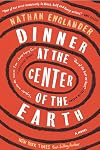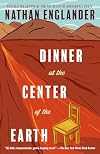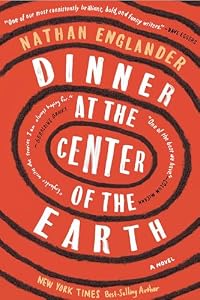
Dinner at the Center of the Earth
by Nathan Englander
On This Page
Description
"A prisoner in a secret cell. The guard who has watched over him a dozen years. An American waitress in Paris. A young Palestinian man in Berlin who strikes up an odd friendship with a wealthy Canadian businessman. And The General, Israel's most controversial leader, who lies dying in a hospital, the only man who knows of the prisoner's existence. From these vastly different lives Nathan Englander has woven a powerful, intensely suspenseful portrait of a nation riven by insoluble conflict, show more even as the lives of its citizens become fatefully and inextricably entwined--a political thriller of the highest order that interrogates the anguished, violent division between Israelis and Palestinians, and dramatizes the immense moral ambiguities haunting both sides. Who is right, who is wrong--who is the guard, who is truly the prisoner? A tour de force from one of America's most acclaimed voices in contemporary fiction"-- show lessTags
Recommendations



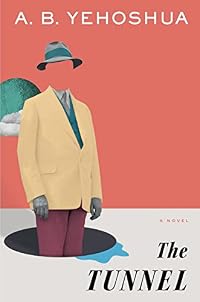


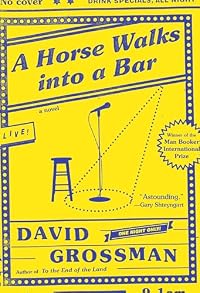



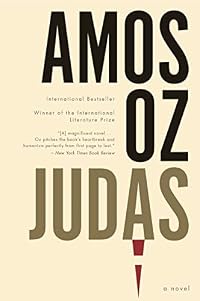

















Member Recommendations
SqueakyChu novels about Israeli spies
SqueakyChu historical novels of Jewish importance
Member Reviews
I thought this was very fine. Perhaps the most Israeli novel I have ever read, combining a deep love of the country with real ambivalence for the things such love demands of its people. It's a bold narrative choice to write a number of chapters from the POV of Ariel Sharon... while he was in permanent vegetative state, but that's just the kind of book this is. Probably not for everyone, but very definitely for me.
***.5
This is a very theatrical book. Most of it consists of short scenes between two people. A Mossad agent and his Palestinian mark. A political prisoner and his guard. The guard and his mother. The spy and his mother. The spy and his girlfriend. And Ariel Sharon's dreams while lying in a coma after suffering his massive stroke.
The action is divided between two time periods, first 2002 during the height of the second intifada, and the latter in 2014 in the lead up to the "Operation Protective Edge" war in Gaza. These violent bookends are used to epitomize the endless cycles of violence in a brutal and seemingly unending war. Those who seek alternate approaches are ignored or punished, and even the most noble and well intentioned cannot show more escape their fated roles.
But still, despite the despair there is still a glimmer of hope, that if only the two sides could give themselves and each other the opportunity, things could be better. Chillingly, the book opens with a stroll along the border fence in one of the Kibbutzim that was brutally attacked on October 7, with a warning that unless something changes, there will be another war, more deadly than the last one (Protective Edge), which was worse than the one that came before it, on and on.
Sharon is referred to as "The General," and viewed as the one figure in Israeli politics who had the strength of character and streak of do-whatever-it-takes reckless patriotism to make a real deal, but even then the gulf to Arafat and Abbas is too far to bridge. But mostly the political stuff sits in the background, influencing the events and the characters, but not quite absolving them of personal agency and responsibility for their actions.
It's not a great spy story, or political commentary, or theatrical drama, or love story, but the overall impact is greater than the sum of its parts. The experiences of being a foreign student in an Israeli university and eating lunch at the cafeteria were especially nostalgic for me, as was capturing the feelings of being homesick in Europe and ordering both rye bread and pita. The book is filled with such personal and poignant moments, which make up for the somewhat lackluster plot. show less
This is a very theatrical book. Most of it consists of short scenes between two people. A Mossad agent and his Palestinian mark. A political prisoner and his guard. The guard and his mother. The spy and his mother. The spy and his girlfriend. And Ariel Sharon's dreams while lying in a coma after suffering his massive stroke.
The action is divided between two time periods, first 2002 during the height of the second intifada, and the latter in 2014 in the lead up to the "Operation Protective Edge" war in Gaza. These violent bookends are used to epitomize the endless cycles of violence in a brutal and seemingly unending war. Those who seek alternate approaches are ignored or punished, and even the most noble and well intentioned cannot show more escape their fated roles.
But still, despite the despair there is still a glimmer of hope, that if only the two sides could give themselves and each other the opportunity, things could be better. Chillingly, the book opens with a stroll along the border fence in one of the Kibbutzim that was brutally attacked on October 7, with a warning that unless something changes, there will be another war, more deadly than the last one (Protective Edge), which was worse than the one that came before it, on and on.
Sharon is referred to as "The General," and viewed as the one figure in Israeli politics who had the strength of character and streak of do-whatever-it-takes reckless patriotism to make a real deal, but even then the gulf to Arafat and Abbas is too far to bridge. But mostly the political stuff sits in the background, influencing the events and the characters, but not quite absolving them of personal agency and responsibility for their actions.
It's not a great spy story, or political commentary, or theatrical drama, or love story, but the overall impact is greater than the sum of its parts. The experiences of being a foreign student in an Israeli university and eating lunch at the cafeteria were especially nostalgic for me, as was capturing the feelings of being homesick in Europe and ordering both rye bread and pita. The book is filled with such personal and poignant moments, which make up for the somewhat lackluster plot. show less
What?!! After carefully noting who did what where and when throughout the entire book, I finished the last sentence of this novel and have no idea of what I just read. That is not to say I didn't like it. What I took from this book was that you can't believe what you read and you can trust no one.
The book deals with the way individuals deal with the Israeli-Palestinian conflict. It includes an Ariel Sharon-like character, a prisoner in a secret prison, multiple spies, and some characters involved in romance.
I was uncomfortable with the political background of this novel, but it is necessary to know ahead of time to fully understand the book's quiet commentary. I did very much like the intimacy with Israeli culture as the story show more mentions trampiada and shakshuka. :)
Should you read this story? I would say yes if you like other works by this author (I do...very much), and you don't mind entering a mental labyrinth. Happy traveling, fellow reader! show less
The book deals with the way individuals deal with the Israeli-Palestinian conflict. It includes an Ariel Sharon-like character, a prisoner in a secret prison, multiple spies, and some characters involved in romance.
I was uncomfortable with the political background of this novel, but it is necessary to know ahead of time to fully understand the book's quiet commentary. I did very much like the intimacy with Israeli culture as the story show more mentions trampiada and shakshuka. :)
Should you read this story? I would say yes if you like other works by this author (I do...very much), and you don't mind entering a mental labyrinth. Happy traveling, fellow reader! show less
Nathan Englander is an excellent writer and this book is a welcome addition to his body of work. However, I enjoyed this least of his 4 books but it was an interesting read. It deals with the Israeli conflict and it does so over different time frames with different characters. The writing is excellent and at 252 pages it was an easy read. It does show the ambiguity of the conflict with both sides having people whose positions constantly shift. There were elements of the plot that didn't make sense but this book was less about plot and more about the characters. For those who have read Englander this is a welcome addition but for those who have not read him, I would start with "What we talk about when we talk about Anne Frank" which is show more short stories and in my opinion Englander's best. show less
A book that is absorbing to read but difficult to pin down. The narrative voices of the characters, each separate but intersecting, even connecting biefly, creates a compelling picture. Much of what it illuminates is from the Israeli perspective and struck me as a subtle, persuasive construct. It left me feeling more aware but when I try to formulate aware of what, it slips through my fingers. 7 November 2017.
Englander’s new book received rave reviews from The New York Times, The Wall Street Journal, Esquire, and the Los Angeles Times among others. It unfolds in the highly charged territory of the Israeli-Palestinian conflict and pivots on the complex relationship between a secret prisoner and his guard. Nathan Englander has woven a powerful intensely suspenseful portrait of a nation riven by insoluble conflict, even as the lives of its citizens become fatefully and inextricably entwined. This story dramatizes the immense moral ambiguities haunting both sides. Who is the guard and who is truly the prisoner? Who is right and who is wrong? Dinner at the Center of the Earth is considered Englander’s best yet!
The disparate strands never coalesced for me and bugged me rather than propelling me forward to see how they would resolve. This isn't one I'm giving two objective stars to because I think its take on Israel and Palestine would appeal to a lot of people, and Englander can obviously write a sentence, but the only reason I finished it was because it was so short.
Members
- Recently Added By
Author Information

20+ Works 3,882 Members
Awards and Honors
Distinctions
The Guardian Book of the Day (2017-10-07)
Notable Lists
Common Knowledge
- Canonical title
- Dinner at the Center of the Earth
- People/Characters
- The General; Ruthi; Prisoner Z; Italian waitress
- Important places
- Gaza border (Israeli side); Berlin, Germany; Paris, France; Jerusalem, Israel; Limbo; Hospital (Tel Aviv, Israel) (show all 7); Black Site (Negev dessert)
- Epigraph
- There is accumulation. There is responsibility. And beyond these, there is unrest. There is great unrest. --Julian Barnes
- Dedication
- For Nicole Aragi
- First words
- It's never about you.
- Quotations
- Ruthi waves her hands before the flames and the presses them to her eyes for the blessing. It is in this window where's mother's wishes are made. (p. 102)
He is letting his people know that however painful the sacrifices he will ask--this place, hallowed ground, he will never surrender. Not the jewel of their unified, undivided city. (p. 125) - Blurbers
- Brooks, Geraldine; Eggers, Dave; McCann, Colum; Whitehead, Colson
Classifications
Statistics
- Members
- 298
- Popularity
- 107,278
- Reviews
- 12
- Rating
- (3.53)
- Languages
- Dutch, English, Italian
- Media
- Paper, Audiobook, Ebook
- ISBNs
- 14
- ASINs
- 4