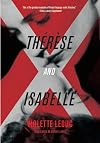
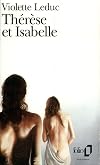
Thérèse et Isabelle
by Violette Leduc
On This Page
Description
Two French schoolgirls discover obsessive pleasures in repressed secrets in this “masterpiece on the tyranny of love” (Independent, UK). “Violette Leduc was Simone de Beauvoir’s protege, an erotic writer to match Jean Genet and a feminist tour de force” (Rafia Zakaria, The Guardian). With this startling new translation of Leduc’s hidden classic, the groundbreaking Thérèse and Isabelle proves an authentic and liberating exploration of queer sensibilities, which still stands as show more “one of the greatest examples of French-Language erotic literature” ever written (Times Literary Supplement). Censored for half a century for its vivid depiction of budding female sexuality, this is the “dark and luminous” (Nicole Borssard) novel of two young women in the consuming and at times frightening throes of first love. Navigating their schoolgirl relationship becomes a rapturous secret, as they sneak away from repressive boundaries to go beyond the limits of friendship with “all the raw urgency of female adolescent sexuality: its energy and intensity, the push-pull of excitement, its dangers and glories” (Kate Millett, award-winning author of Sexual Politics and Mother Millett). Filmed in 1968 by Radley Metzger, starring Essy Persson and Anna Gaël, Thérèse and Isabelle is finally available as it was intended to be read. “I have waited a very long time to slip back into the unexpurgated, delicious darkness with these iconic lesbian lovers” (Amber Dawn, Lambda Literary Award-winning author Sodom Road Exit). show lessTags
Recommendations























Member Reviews
In the mid-1950s, Violette Leduc wrote a novel called Ravages. The first hundred and fifty pages comprised a semi-autobiographical depiction of two schoolgirls in a torrid lesbian relationship, which Leduc said she hoped would be ‘no more shocking than Mme Bloom’. Yes they said Yes it is more shocking yes. Her publishers refused to print it, and the novel appeared without its opening section in 1955 (and did very well). Ten years later, a different publisher agreed to print the excised material as a stand-alone novella, although they still insisted on certain cuts for legality: this was the original 1966 form of Thérèse et Isabelle, the fully uncensored version of which did not appear in French until the year 2000, nearly thirty show more years after its author had died.
It is very explicit in places, but also deeply poetic. Leduc said her aim was to ‘render as minutely as possible the sensations experienced during physical love’ and while at times this feels like a slightly limited goal, she succeeds at it brilliantly. In terms of purely physical sensations, this short book contains the best sex scenes I've ever read. And yet they're not all that sexy – to me, anyway – because it is purely physical sensation: there is almost no emotional background, no build-up, no characterisation of either Thérèse or Isabelle that goes beyond each girl's overwhelming desire for the other.
Nevertheless the language is remarkable. Leduc has a tendency to come out with these gnomic, existential remarks, which don't always make perfect sense but which demand to be quoted for their sheer inventive pleasure:
At times these lapidary flourishes work very well; at other times, they topple over into high-flown nonsense (‘I was seized by the glove of infinity’, and much more in the same vein). There is also something a bit…oppressive about the tone for my tastes, with zero sense of humour and much earnestness. Admittedly these characters are only seventeen, and sex does tend to feel like the end of the world at that age, but still, wow!, talk about intense. Just hours after hooking up, Thérèse is already fantasizing about cutting off the hands of everyone else that touches her new lover, while Isabelle is raising the prospect of the two of them jumping off a cliff together so that neither outlives the other. It made me laugh because of the whole running joke in the LGBT world that gay women are super clingy super fast (you remember the classic gag: what does a lesbian bring to a second date? A U-Haul). At the same time I was impressed by it, just because of how few writers are attempting this sort of thing now.
I became fixated on the pronouns. They were still referring to each other by the formal vous until nearly halfway through the story! It was blowing my mind. You would think by the time you're knuckle-deep inside another person that one of you would have coughed politely and said, ‘Actually, do you mind if we tutoie each other?’ It's one of those little things that make me realise how much mental space is separating me from this world of 1950s provincial France.
All the more reason to experience it, though. The book is short and it builds, like a good quickie, to an intense and powerful climax where all of Leduc's characteristics work to best effect. An orgasm is captured in words like you would hardly believe possible (in a riot of synaesthesia: ‘my eyes heard, my ears saw’), and there are several more flashes of unexpected simile (Thérèse, trying to learn how to give oral sex, describes her gestures as feeling ‘like a scratched record repeating itself’ – this is fantastic).
For post-climactic comedown, Leduc leaves us with two final sentences that are the more devastating for being so simple after all the poetry that has gone before. It's a beautiful piece of work – limited in what it sets out to do, perhaps, and a little overblown at times, but nonetheless studded with frantic and extraordinary delights. show less
It is very explicit in places, but also deeply poetic. Leduc said her aim was to ‘render as minutely as possible the sensations experienced during physical love’ and while at times this feels like a slightly limited goal, she succeeds at it brilliantly. In terms of purely physical sensations, this short book contains the best sex scenes I've ever read. And yet they're not all that sexy – to me, anyway – because it is purely physical sensation: there is almost no emotional background, no build-up, no characterisation of either Thérèse or Isabelle that goes beyond each girl's overwhelming desire for the other.
Nevertheless the language is remarkable. Leduc has a tendency to come out with these gnomic, existential remarks, which don't always make perfect sense but which demand to be quoted for their sheer inventive pleasure:
La caresse est au frisson ce que le crépuscule est à l'éclair.
(The caress is to the shiver what dusk is to the lightning-bolt.)
Quand on aime on est toujours sur le quai d'une gare.
(When one is in love, one is eternally on a railway-station platform.)
Je la regarde comme je regarde la mer le soir quand je ne la vois plus.
(I watch her the way I watch the sea in the evening when I can no longer see it.)
Ma bouche rencontra so bouche comme la feuille morte la terre.
(My mouth met her mouth as a dead leaf meets the earth.)
J'entrais dans sa bouche comme on entre dans la guerre
(I entered her mouth the way you enter a war.)
At times these lapidary flourishes work very well; at other times, they topple over into high-flown nonsense (‘I was seized by the glove of infinity’, and much more in the same vein). There is also something a bit…oppressive about the tone for my tastes, with zero sense of humour and much earnestness. Admittedly these characters are only seventeen, and sex does tend to feel like the end of the world at that age, but still, wow!, talk about intense. Just hours after hooking up, Thérèse is already fantasizing about cutting off the hands of everyone else that touches her new lover, while Isabelle is raising the prospect of the two of them jumping off a cliff together so that neither outlives the other. It made me laugh because of the whole running joke in the LGBT world that gay women are super clingy super fast (you remember the classic gag: what does a lesbian bring to a second date? A U-Haul). At the same time I was impressed by it, just because of how few writers are attempting this sort of thing now.
I became fixated on the pronouns. They were still referring to each other by the formal vous until nearly halfway through the story! It was blowing my mind. You would think by the time you're knuckle-deep inside another person that one of you would have coughed politely and said, ‘Actually, do you mind if we tutoie each other?’ It's one of those little things that make me realise how much mental space is separating me from this world of 1950s provincial France.
All the more reason to experience it, though. The book is short and it builds, like a good quickie, to an intense and powerful climax where all of Leduc's characteristics work to best effect. An orgasm is captured in words like you would hardly believe possible (in a riot of synaesthesia: ‘my eyes heard, my ears saw’), and there are several more flashes of unexpected simile (Thérèse, trying to learn how to give oral sex, describes her gestures as feeling ‘like a scratched record repeating itself’ – this is fantastic).
For post-climactic comedown, Leduc leaves us with two final sentences that are the more devastating for being so simple after all the poetry that has gone before. It's a beautiful piece of work – limited in what it sets out to do, perhaps, and a little overblown at times, but nonetheless studded with frantic and extraordinary delights. show less
Quand on aime on est toujours sur le quai d'une gare.
This boarding-school romance is actually a censored chapter from Leduc's 1955 novel Ravages, eventually published as a standalone novella eleven years later. Its reputation has had trouble recovering from the unapologetic soft-porn film Radley Metzger made out of it in 1968, but it deserves to be read as more than just erotica. Although the story is told in the first person by Thérèse, this isn't a simple teenage love story like Les mauvais anges, but a concentrated and very grown-up meditation on the complicated changes love and physical desire for another person - and the satisfying of that desire - bring about in our awareness of ourself and of the other person. Plus quite a lot show more of explicit talk about sex.
Adolescent same-sex romances, by all the rules of narrative that were current at the time, are supposed to end badly, but this one is unexpectedly spared the depressingly inevitable tragic conclusion as a result of the way it has been cut out of a longer work - Leduc stops abruptly in the middle of a steamy sex-scene and has her narrator tie up the story, unconvincingly, in two short sentences, leaving us free to go on our way imagining whatever we please. show less
This boarding-school romance is actually a censored chapter from Leduc's 1955 novel Ravages, eventually published as a standalone novella eleven years later. Its reputation has had trouble recovering from the unapologetic soft-porn film Radley Metzger made out of it in 1968, but it deserves to be read as more than just erotica. Although the story is told in the first person by Thérèse, this isn't a simple teenage love story like Les mauvais anges, but a concentrated and very grown-up meditation on the complicated changes love and physical desire for another person - and the satisfying of that desire - bring about in our awareness of ourself and of the other person. Plus quite a lot show more of explicit talk about sex.
Adolescent same-sex romances, by all the rules of narrative that were current at the time, are supposed to end badly, but this one is unexpectedly spared the depressingly inevitable tragic conclusion as a result of the way it has been cut out of a longer work - Leduc stops abruptly in the middle of a steamy sex-scene and has her narrator tie up the story, unconvincingly, in two short sentences, leaving us free to go on our way imagining whatever we please. show less
Anfang der 1950er Jahre in einem katholischen Mädcheninternat in Frankreich. Isabelle ist die beste Schülerin, die alle bewundern, die neue Schülerin Thérèse ist die Tochter einer alleinerziehenden Mutter, die zum Zielobjekt ihres Hasses wird. Doch die anfängliche Abneigung der beiden gegeneinander wandelt sich und wird zu einer leidenschaftlichen Liebesbeziehung. Nachts im Schlafsaal, wenn alle anderen in ihre Träume versunken sind, geben sie sich ihren Gefühlen hin und entdecken die Liebe, die nicht sein darf. Nicht bei Minderjährigen, nicht bei zwei jungen Frauen und gleich dreimal nicht im Internat. Immerzu drohen sie aufzufliegen und Thérèses intensive Abhängigkeit macht es bald unmöglich für sie, einen Schultag zu show more durchzustehen.
Auch wenn Violette Leducs Schilderung der unerlaubten Liebe voller versierter Sprachbilder ist und die Emotionen der Mädchen, das überwältigende Gefühl der ersten echten Liebe, die erwidert wird, minutiös einfängt, sind es doch mehr noch die Umstände der Entstehung und die Geschichte der Novelle, die daran faszinieren.
Die Autorin verfasste „Thérèse und Isabelle“ als ersten von drei Teilen ihres Romans „Ravages“, der drei autobiografisch geprägte Liebesepisoden schildert. Von Simone de Beauvoir unterstützt, die das Potenzial der Geschichte und Leducs erkannte, wurde er verschiedenen Verlegern vorgelegt, die jedoch 1954 alle Angst vor der Zensur hatten und wussten, dass die Zeit für eine so offene Schilderung gleichgeschlechtlicher Liebe noch nicht gekommen war. Es erschienen erst viel später redigierte Fassungen, bis 2000 Gallimard erstmals die ursprüngliche Version als Einzelband herausgab.
Violette Leduc wollte keinen Skandal provozieren, sie schildert einfach nur das Erleben großer Leidenschaft in völlig unschuldiger Form. Es ist für Leser von heute kaum mehr nachvollziehbar, was an dem Text anstößig sein soll, ja, er ist explizit, aber in einer poetischen Weise und nicht plump wie das, was einem tagtäglich online entgegenspringt. Auch das die Protagonistinnen zwei junge Frauen sind, die ihre Zuneigung ausleben, sollte hoffentlich niemanden mehr schockieren. Der Roman ist nicht pornografisch oder voyeuristisch, sondern wirkt geradezu naiv in Thérèses Faszination von Isabelle. Es ist schlicht das Zeugnis einer verbotenen Liebe, die sich dennoch ihren Weg bahnt. show less
Auch wenn Violette Leducs Schilderung der unerlaubten Liebe voller versierter Sprachbilder ist und die Emotionen der Mädchen, das überwältigende Gefühl der ersten echten Liebe, die erwidert wird, minutiös einfängt, sind es doch mehr noch die Umstände der Entstehung und die Geschichte der Novelle, die daran faszinieren.
Die Autorin verfasste „Thérèse und Isabelle“ als ersten von drei Teilen ihres Romans „Ravages“, der drei autobiografisch geprägte Liebesepisoden schildert. Von Simone de Beauvoir unterstützt, die das Potenzial der Geschichte und Leducs erkannte, wurde er verschiedenen Verlegern vorgelegt, die jedoch 1954 alle Angst vor der Zensur hatten und wussten, dass die Zeit für eine so offene Schilderung gleichgeschlechtlicher Liebe noch nicht gekommen war. Es erschienen erst viel später redigierte Fassungen, bis 2000 Gallimard erstmals die ursprüngliche Version als Einzelband herausgab.
Violette Leduc wollte keinen Skandal provozieren, sie schildert einfach nur das Erleben großer Leidenschaft in völlig unschuldiger Form. Es ist für Leser von heute kaum mehr nachvollziehbar, was an dem Text anstößig sein soll, ja, er ist explizit, aber in einer poetischen Weise und nicht plump wie das, was einem tagtäglich online entgegenspringt. Auch das die Protagonistinnen zwei junge Frauen sind, die ihre Zuneigung ausleben, sollte hoffentlich niemanden mehr schockieren. Der Roman ist nicht pornografisch oder voyeuristisch, sondern wirkt geradezu naiv in Thérèses Faszination von Isabelle. Es ist schlicht das Zeugnis einer verbotenen Liebe, die sich dennoch ihren Weg bahnt. show less
For those who have seen Radley Metzger's film adaptation of Therese and Isabelle and are hoping the book will give you more in the way of character development and context, you will be sadly disappointed. Therese and Isabelle is a slim, 100 page semi-autobiographical novel, of which 80 pages are descriptions of the two schoolgirls making love. This isn't without its own merit. Therese and Isabelle is as titillating as it is insightful. Leduc has an undeniably sharp eye when it comes to describing the complexities of lesbian sex, and her use of language (aided by an excellent English translation by Derek Coltman) makes for some unforgettable passages.
The events of Therese and Isabelle (based upon Leduc's brief but passionate affair with show more her school friend) were deleted from Ravages (I think) by the publisher, and alluded to in Leduc's autobiography, La Batarde. Readers of her autobiography will be interested to note how differently Violette portrayed herself as Therese while on the other hand will be haunted by Leduc's familiar pattern of forming obsessive relationships that are taken on as quickly as they are cast aside (though not forgotten). One finds passion hand in hand with ambivalence, celebration alongside degradation, and hope paired with dissipation.
Pick up the book because you think it's going to be sexy, and finish reading it because it's more jarring and intricate than you ever thought it could be. show less
The events of Therese and Isabelle (based upon Leduc's brief but passionate affair with show more her school friend) were deleted from Ravages (I think) by the publisher, and alluded to in Leduc's autobiography, La Batarde. Readers of her autobiography will be interested to note how differently Violette portrayed herself as Therese while on the other hand will be haunted by Leduc's familiar pattern of forming obsessive relationships that are taken on as quickly as they are cast aside (though not forgotten). One finds passion hand in hand with ambivalence, celebration alongside degradation, and hope paired with dissipation.
Pick up the book because you think it's going to be sexy, and finish reading it because it's more jarring and intricate than you ever thought it could be. show less
she has this way of capturing the overwhelming intensity of first love and the passion and doubt and uncertainty (even paranoia?) that often comes with it, especially (i'd imagine) for teenagers. couple those emotions with having to hide that love and connection, and all the thoughts that must go through a young girl's mind when her lover is pretending not to care about her, and it makes for a realistic, if confusing jumble of emotions and feelings and even actions. the writing borders on manic, is unenjoyable (for me), and is difficult to read and sometimes even to follow, but i do think it captures what those girls must have been going through. plus, it not just discusses, but shows women's sexuality in a time that that was shrouded show more in darkness. and lesbian sexuality at that. so it's a brave and important piece of writing, even as i didn't particularly like its style.
this edition has sections after the novella that discuss the original censorship of the text as well as leduc's life. i found each of those really interesting and helpful in seeing the story in a different light. it was, for me, easily the best and most interesting part of the book, and managed to make me appreciate the rest more. show less
this edition has sections after the novella that discuss the original censorship of the text as well as leduc's life. i found each of those really interesting and helpful in seeing the story in a different light. it was, for me, easily the best and most interesting part of the book, and managed to make me appreciate the rest more. show less
Couldn't finish it.
Rédigé en 1954, paru sous forme censurée en 1966, puis en version intégrale en 2000 seulement, le roman court de Violette Leduc évoque l'éveil à la sexualité de deux adolescentes dans un pensionnat. Tandis que l'éditeur Gallimard décrit une "langue nue et violente", j'y ai pour ma part trouvé une tentative de poésie érotique indigente au point de friser régulièrement le ridicule. Exemple : "Nous avons oublié notre doigt dans l'ancien monde, nous avons été béantes de lumière, nous avons eu une irruption de félicité". Ce type de phrases peuple à l'envi les quelque 140 pages du livre qui se dissolvent dans une caricature métaphorique.
L'écriture, faite de phrases courtes, de dialogues creux et faux, est show more répétitive, parfois carrément laborieuse : "Son bras au-dessous du mien en se soulevant souleva le mien. Isabelle s'étudiait. Elle remit ma main, elle commença le mouvement, avec sa main sur la mienne, elle me laissa à mon mouvement".
Comment faire ressentir les vibrations et le vertige de la découverte du sexe à l'adolescence avec des mots et un style pareils ?
Les scènes, sous lumière crue et artificielle, se succèdent en étant plantées abruptement comme dans un mauvais porno.
J'aurais aimé pouvoir apprécier l'audace de ce texte (heureusement court car terriblement ennuyeux). En effet, combien de femmes (a fortiori pendant les années 1950) écrivaient de la littérature érotique (a fortiori sur des amours saphiques) vouée à une édition chez Gallimard ? Le livre est un OVNI littéraire mais il me paraît raté. Et plus cucu que cul, si je peux me permettre ce commentaire oiseux. show less
L'écriture, faite de phrases courtes, de dialogues creux et faux, est show more répétitive, parfois carrément laborieuse : "Son bras au-dessous du mien en se soulevant souleva le mien. Isabelle s'étudiait. Elle remit ma main, elle commença le mouvement, avec sa main sur la mienne, elle me laissa à mon mouvement".
Comment faire ressentir les vibrations et le vertige de la découverte du sexe à l'adolescence avec des mots et un style pareils ?
Les scènes, sous lumière crue et artificielle, se succèdent en étant plantées abruptement comme dans un mauvais porno.
J'aurais aimé pouvoir apprécier l'audace de ce texte (heureusement court car terriblement ennuyeux). En effet, combien de femmes (a fortiori pendant les années 1950) écrivaient de la littérature érotique (a fortiori sur des amours saphiques) vouée à une édition chez Gallimard ? Le livre est un OVNI littéraire mais il me paraît raté. Et plus cucu que cul, si je peux me permettre ce commentaire oiseux. show less
Apr 15, 2020French
Members
- Recently Added By
Lists

Pre-1969 LGBTQ Literature
182 works; 69 members

Publishing Triangle 100 Best Lesbian and Gay Novels
97 works; 6 members

Books Read in 2016
4,666 works; 197 members
Author Information

23+ Works 1,334 Members
Violette Leduc had been publishing works of an autobiographical nature in France since 1945. But, aside from the enthusiastic support of Simone de Beauvoir, Jean-Paul Sartre and certain other intellectuals, she had gone unnoticed until the publication of La Batarde (1964) propelled her to fame---in part, no doubt, for "the candor in the totally show more uninhibited descriptions of [her] Lesbian loves. . . . This, the story of [her] first forty years, is a courageous confession and a work of art, . . . a weird mixture of burning, naive, lucid, and unadorned sincerity . . . and of poetic inner monologue" (Henri Peyre, SR). (Bowker Author Biography) show less
Some Editions
Awards and Honors
Series
Belongs to Publisher Series
Gallimard, Folio (5357)
Work Relationships
Is contained in
Has the adaptation
Common Knowledge
- Canonical title*
- Thérèse et Isabelle
- Original title
- Thérèse et Isabelle
- Original publication date
- 1966; 1969 (Dutch ed.) (Dutch ed.)
- Related movies
- Therese and Isabelle (1968 | IMDb)
- Dedication
- À Jacques Guérin
avec ma fidèle affection - First words
- Nous commencions la semaine le dimanche soir dans la cordonnerie.
- Last words
- (Click to show. Warning: May contain spoilers.)Je ne revis jamais Isabelle.
- Original language
- French
- Canonical DDC/MDS
- 843.914
- Canonical LCC
- PQ2623.E36
*Some information comes from Common Knowledge in other languages. Click "Edit" for more information.
Classifications
Statistics
- Members
- 256
- Popularity
- 126,498
- Reviews
- 8
- Rating
- (3.41)
- Languages
- 9 — Catalan, Danish, Dutch, English, French, German, Italian, Portuguese, Spanish
- Media
- Paper, Ebook
- ISBNs
- 19
- ASINs
- 6