
The Eye of the Heron
by Ursula K. Le Guin
On This Page
Description
The story of two communities of outcasts from Earth living on another planet. In Victoria on a former prison colony, two exiled groups--the farmers of Shantih and the City dwellers--live in apparent harmony. All is not as it seems, however. While the peace-loving farmers labor endlessly to provide food for the City, the City Bosses rule the Shantih with an iron fist. When a group of farmers decide to from a new settlement further away, the Bosses retaliate by threatening to crush the show more "rebellion." Luz understands what it means to have no choices. Her father is a Boss and he has ruled over her life with the same iron fist. Luz wonders what it might be like to make her own choices. To be free to choose her own destiny. When the crisis over the new settlement reaches a flash point, Luz will have her chance. show lessTags
Recommendations

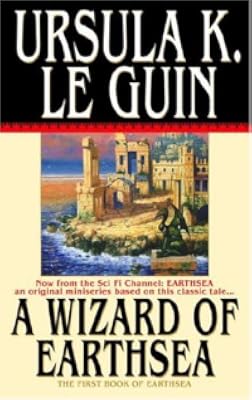
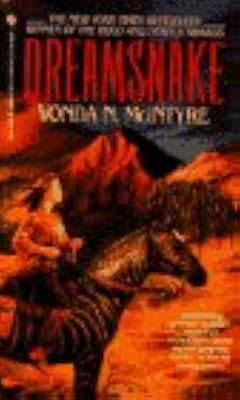
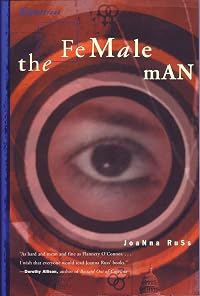
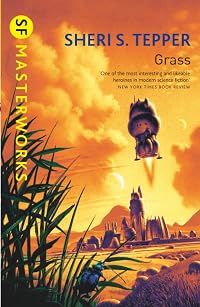






















Member Recommendations
Member Reviews
This was a short, timely read, a novel of ideas that had as much in common with late 19th and early 20th-century literature as it did with science fiction.
As a novel, The Eye of the Heron isn't as nuanced as Le Guin's best SF fiction; it's a bit self-consciously political in a way that reminded me of The Word for World Is Forest, and some of the characters felt like platforms for philosophical musings that would be better explored in an essay or short story.
But I still found it memorable and compelling. Le Guin plays with the setting of a young colony world struggling to define its own political process. The text poses urgent questions about our political and moral obligations to one another, giving tentative answers through images and show more story.
A worthwhile book for the end of 2016. show less
As a novel, The Eye of the Heron isn't as nuanced as Le Guin's best SF fiction; it's a bit self-consciously political in a way that reminded me of The Word for World Is Forest, and some of the characters felt like platforms for philosophical musings that would be better explored in an essay or short story.
But I still found it memorable and compelling. Le Guin plays with the setting of a young colony world struggling to define its own political process. The text poses urgent questions about our political and moral obligations to one another, giving tentative answers through images and show more story.
A worthwhile book for the end of 2016. show less
In The Eye of the Heron Ursula Le Guin addresses the question of non-violent resistance. Is it reasonable, can it be successful in the face of ruthless power, is the refusal to respond to violence with violence even possible? The setting is interesting - we are on a newly colonized planet with two communities, one industrial and hoarding, the other agricultural and sharing. There is a nuanced symbolism of the local flora and fauna. There are compelling characters. Clearly this was supposed to be the first book of a series…
The author made one mistake that doomed the book - as far as I remember, this is the only novel where she made such a blunder. She decided to tie the origin of the communities on her planet to specific countries and show more policies of the the third planet from the Sun. The industrial thugs come from Brazil(?), while the peaceful march of future agricultural settlers originates in Moscow.
Really - Moscow!?! How pathetic this assumption seems in the face of recent history! How little Le Guin understood about the unknowable people behind the Iron Curtain if she assumed them to be some potential followers of non-violent resistance like Tolstoy and Gandhi! show less
The author made one mistake that doomed the book - as far as I remember, this is the only novel where she made such a blunder. She decided to tie the origin of the communities on her planet to specific countries and show more policies of the the third planet from the Sun. The industrial thugs come from Brazil(?), while the peaceful march of future agricultural settlers originates in Moscow.
Really - Moscow!?! How pathetic this assumption seems in the face of recent history! How little Le Guin understood about the unknowable people behind the Iron Curtain if she assumed them to be some potential followers of non-violent resistance like Tolstoy and Gandhi! show less
Note: This review contains mild spoilers.
The Eye of the Heron is a short novel that was originally published in the collection Millennial Women, edited by Virginia Kidd. A straightforward story that reads like a fable, The Eye of the Heron is set on the alien planet of Victoria, where there are two groups of settlers: the farmers of the village of Shantih and the wealthier City inhabitants. The rest of the planet is uninhabited except by strange animals, including the long-legged, elegant, gray creatures called “herons” because of their resemblance to the bird, who gaze on the humans’ activities impassively; and the small, funny shape shifters called “wotsits,” who die in captivity but will sometimes alight on a person’s show more hand.
The book opens and closes with a person watching a wotsit change shape and color in his palm before flying away. These two framing incidents are both hopeful, representing a brief communion between the human and his new world. In fact, The Eye of the Heron could be classified as fantasy, if we did not know that both groups of settlers came to the planet on spaceships, exiles from a future Earth. The City dwellers were descended from prisoners, while the people of Shantih were leaders of a movement called the People of the Peace, a nonviolence movement that had gained too many adherents back on Earth. The brief glimpses of Earth’s future history, as related in the tales of the exiles’ descendants, add some layers of complexity to this otherwise straightforward tale.
Lev, the young leader of the Villagers, is returning home with a scouting party when the story opens. The Villagers have found a location for a new settlement, but the City Council won’t let them go, not wanting to lose their supply of low-paid workers and farmers. The People of the Peace respond with nonviolent civil disobedience, and several of them are arrested. One of the older leaders, Vera, is imprisoned in a Councilor’s house, where she begins to influence the Councilor’s daughter, Luz.
Luz, learning that her father has recruited an army of brutish young men to enslave the Villagers, flees her home to warn Lev and the others. Once there, she chooses to stay, a decision that drives her father and her suitor back in the City to irrational action. Luz tries to talk Lev into simply leaving Shantih, but he insists on following his people’s nonviolent ideals, which leads to tragedy. After things return to normal, though, Luz’s arguments eventually win over some of the Villagers, and she takes a group on an expedition to found a new home as the story ends.
Though unambiguous and very short, The Eye of the Heron explores many interesting ideas. The People of the Peace believe strongly that each individual makes his or her own choices, and the choices that the settlers make after being stranded on an alien planet — after being given a clean slate, in effect — are of interest to Le Guin. Do they wall themselves off in the City and attempt to control the uncontrollable? Do they hold on to the ways of Earth and refuse to adapt, even when it might mean their deaths? Or do they embrace their circumstances and make this planet their new home, adapting to it? Le Guin explores all of these choices, but clearly, it is the last one that holds the most promise at the end. I wouldn’t say that this is Le Guin’s best work, but it is certainly enjoyable and thought-provoking. show less
The Eye of the Heron is a short novel that was originally published in the collection Millennial Women, edited by Virginia Kidd. A straightforward story that reads like a fable, The Eye of the Heron is set on the alien planet of Victoria, where there are two groups of settlers: the farmers of the village of Shantih and the wealthier City inhabitants. The rest of the planet is uninhabited except by strange animals, including the long-legged, elegant, gray creatures called “herons” because of their resemblance to the bird, who gaze on the humans’ activities impassively; and the small, funny shape shifters called “wotsits,” who die in captivity but will sometimes alight on a person’s show more hand.
The book opens and closes with a person watching a wotsit change shape and color in his palm before flying away. These two framing incidents are both hopeful, representing a brief communion between the human and his new world. In fact, The Eye of the Heron could be classified as fantasy, if we did not know that both groups of settlers came to the planet on spaceships, exiles from a future Earth. The City dwellers were descended from prisoners, while the people of Shantih were leaders of a movement called the People of the Peace, a nonviolence movement that had gained too many adherents back on Earth. The brief glimpses of Earth’s future history, as related in the tales of the exiles’ descendants, add some layers of complexity to this otherwise straightforward tale.
Lev, the young leader of the Villagers, is returning home with a scouting party when the story opens. The Villagers have found a location for a new settlement, but the City Council won’t let them go, not wanting to lose their supply of low-paid workers and farmers. The People of the Peace respond with nonviolent civil disobedience, and several of them are arrested. One of the older leaders, Vera, is imprisoned in a Councilor’s house, where she begins to influence the Councilor’s daughter, Luz.
Luz, learning that her father has recruited an army of brutish young men to enslave the Villagers, flees her home to warn Lev and the others. Once there, she chooses to stay, a decision that drives her father and her suitor back in the City to irrational action. Luz tries to talk Lev into simply leaving Shantih, but he insists on following his people’s nonviolent ideals, which leads to tragedy. After things return to normal, though, Luz’s arguments eventually win over some of the Villagers, and she takes a group on an expedition to found a new home as the story ends.
Though unambiguous and very short, The Eye of the Heron explores many interesting ideas. The People of the Peace believe strongly that each individual makes his or her own choices, and the choices that the settlers make after being stranded on an alien planet — after being given a clean slate, in effect — are of interest to Le Guin. Do they wall themselves off in the City and attempt to control the uncontrollable? Do they hold on to the ways of Earth and refuse to adapt, even when it might mean their deaths? Or do they embrace their circumstances and make this planet their new home, adapting to it? Le Guin explores all of these choices, but clearly, it is the last one that holds the most promise at the end. I wouldn’t say that this is Le Guin’s best work, but it is certainly enjoyable and thought-provoking. show less
The late Ursula K. Le Guin out to be a Nobel nominee in my opinion. I've never read a book of hers that didn't speak to me of profound and important things. In this novel, she imagines a confrontation between violence and nonviolence and she is realistic about the outcome but as the story proceeds, so do her explorations of what those terms mean and how they might apply to human behavior and relationships.
Powerful, and a bit sad, as are all tales pitting arrogant men with guns against peaceful people with peaceful ideas; in the end, absent combat, only flight will do, and one cannot know for how long that will suffice.
Le Guin has developed yet another “peaceful” society on another planet. This one, though, originated on Earth many years into our future. The Victoria Settlement was at first a penal colony, but about 50 years later The People of the Peace were sent. Obviously, there’s a lot of conflict between the two groups. The latest confrontation has arisen because the Peace People would like to start another settlement. The criminal descendants don’t want to let them go because they do a lot of the menial labor and farming. The People are committed to non-violence, but the others embrace it. The dilemma becomes how to get what they want without anyone getting hurt.
This is a largely philosophical novel, though not completely lacking in show more action. I would have liked for it to have gone on longer and explored the aftermath of the conflict’s “resolution.”
I have been reading a lot of LeGuin lately, and it seems to me that she enjoys creating a complex society of peaceful people and then putting them in situations where their values are tested. I wonder if she is doing serial thought experiments, trying to come up with a possible utopian society. It’s interesting to think about because all of her peaceful societies have some values in common, but different structures. It’s endlessly fascinating to me, but I can see how some might get bored of reading them in succession. show less
This is a largely philosophical novel, though not completely lacking in show more action. I would have liked for it to have gone on longer and explored the aftermath of the conflict’s “resolution.”
I have been reading a lot of LeGuin lately, and it seems to me that she enjoys creating a complex society of peaceful people and then putting them in situations where their values are tested. I wonder if she is doing serial thought experiments, trying to come up with a possible utopian society. It’s interesting to think about because all of her peaceful societies have some values in common, but different structures. It’s endlessly fascinating to me, but I can see how some might get bored of reading them in succession. show less
This book was published almost ten years after "The Left Hand of Darkness" and considerably after "The Dispossessed" and yet it seems much less mature than either. It is quite short, almost a novella, and that may contribute to this impression.
It is interesting because it is a story of the failure of ideals. A culture which defines itself by its non-violence comes into violent conflict with its adversary culture. In her earlier books the good usually triumphs over the bad but here the end result seems closer to defeat than to victory.
As usual with LeGuin there are a few excellent feminist observations, typically brief and integral to the plot.
It is interesting because it is a story of the failure of ideals. A culture which defines itself by its non-violence comes into violent conflict with its adversary culture. In her earlier books the good usually triumphs over the bad but here the end result seems closer to defeat than to victory.
As usual with LeGuin there are a few excellent feminist observations, typically brief and integral to the plot.
Members
- Recently Added By
Lists

Best Feminist Science Fiction
188 works; 35 members

Bibliography for Among Others
159 works; 15 members

Recommended Speculative Fiction by Women and People of Color
298 works; 45 members

Women in War
148 works; 30 members

Female Protagonist
1,056 works; 57 members

Literature About Women and Girls
394 works; 39 members

Most thought-provoking novels
30 works; 28 members

1970s
657 works; 23 members
Animals in the Title
498 works; 11 members
Books With Body Parts in the Title
153 works; 9 members

Books Read in 2009
464 works; 11 members
Science fiction novels with a female protagonist
105 works; 30 members
Author Information

499+ Works 167,632 Members
Ursula K. Le Guin was born Ursula Kroeber in Berkeley, California on October 21, 1929. She received a bachelor's degree from Radcliffe College in 1951 and a master's degree in romance literature of the Middle Ages and Renaissance from Columbia University in 1952. She won a Fulbright fellowship in 1953 to study in Paris, where she met and married show more Charles Le Guin. Her first science-fiction novel, Rocannon's World, was published in 1966. Her other books included the Earthsea series, The Left Hand of Darkness, The Dispossessed: An Ambiguous Utopia, The Lathe of Heaven, Four Ways to Forgiveness, and The Telling. A Wizard of Earthsea received an American Library Association Notable Book citation, a Horn Book Honor List citation, and the Lewis Carroll Shelf Award in 1979. She received the Medal for Distinguished Contribution to American Letters in 2014. She also received the Nebula Award and the Hugo Award. She also wrote books of poetry, short stories collections, collections of essays, children's books, a guide for writers, and volumes of translation including the Tao Te Ching of Lao Tzu and selected poems by Gabriela Mistral. She died on January 22, 2018 at the age of 88. (Bowker Author Biography) show less
Some Editions
Awards and Honors
Awards
Series
Belongs to Publisher Series
Prisma Fantasy (2152)
Work Relationships
Common Knowledge
- Canonical title*
- Haikaran silmä
- Original publication date
- 1978
- People/Characters
- Lev Shults; Luz Marina Falco Cooper; Vera Adelson; Councillor Luis Fermin Falco; Herman Macmilan; Alexander "Sasha" Shults (show all 10); Southwind; Andre; Hari; Martin
- Important places
- Victoria (Planet); The City, Victoria (Planet); Shantih Town, Victoria (Planet)
- First words
- In the sunlight in the center of a ring of trees Lev sat cross-legged, his head bent above his hands.
- Last words
- (Click to show. Warning: May contain spoilers.)"They'll dance tonight," she said, under her breath; and she stopped a moment, standing with her heavy load on the path, still as the herons; then went on.
- Original language
- English
- Disambiguation notice
- Please do not combine with 'The Eye of the Heron' (ISBN 0575050608), which is believed to be the work that contains both 'The Eye of the Heron' and 'The Word for World is Forest'.
*Some information comes from Common Knowledge in other languages. Click "Edit" for more information.
Classifications
Statistics
- Members
- 1,124
- Popularity
- 22,542
- Reviews
- 22
- Rating
- (3.52)
- Languages
- 9 — Danish, Dutch, English, Finnish, French, Italian, Polish, Portuguese, Spanish
- Media
- Paper, Audiobook, Ebook
- ISBNs
- 30
- ASINs
- 11