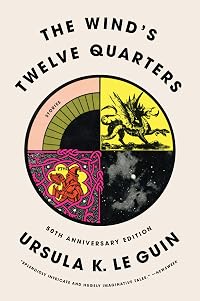
The Wind's Twelve Quarters
by Ursula K. Le Guin
Secrets of Mary's Bookshop (4), The Wind's Twelve Quarters (Collections and Selections — Complete)
On This Page
Description
The recipient of numerous literary prizes, including the National Book Award, the Kafka Award, and the Pushcart Prize, Ursula K. Le Guin is renowned for her lyrical writing, rich characters, and diverse worlds. The Wind's Twelve Quarters collects seventeen powerful stories, each with an introduction by the author, ranging from fantasy to intriguing scientific concepts, from medieval settings to the future. Including an insightful foreword by Le Guin, describing her experience, her show more inspirations, and her approach to writing, this stunning collection explores human values, relationships, and survival, and showcases the myriad talents of one of the most provocative writers of our time. show lessTags
Recommendations

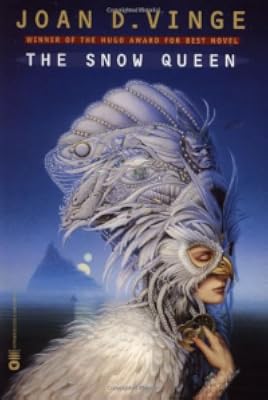
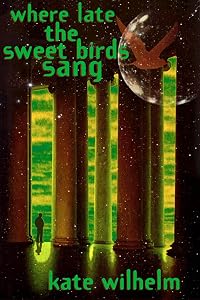
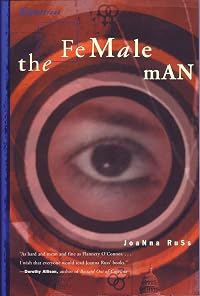
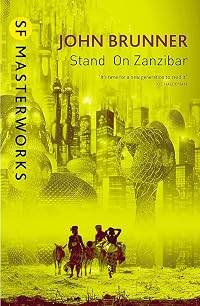



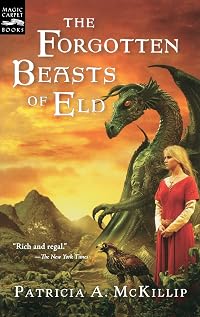

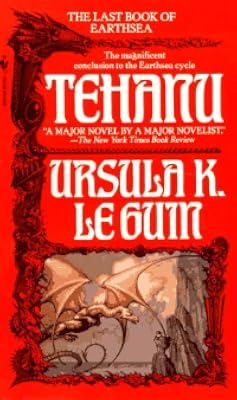



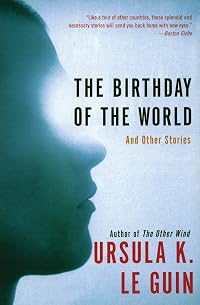
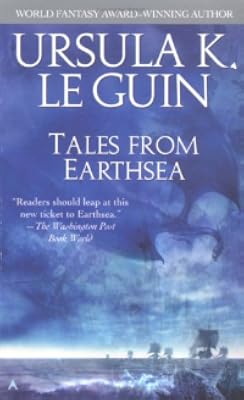


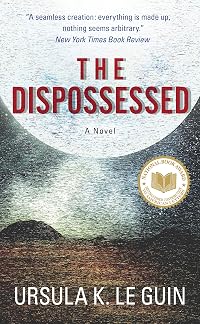
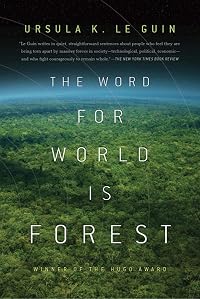







Member Recommendations
Member Reviews
I can't think of an author whose stories generate such sharply contrasting reactions in me as Le Guin. Her stories either click solidly or leave me entirely cold. This volume collects 17 stories from her first (roughly) decade of work, originally published between 1962 and 1974, and it contains some of both.
Let's start with the high points. "Nine Lives" and "Vaster Than Empires and More Slow" are, as Le Guin notes in her introductions to the stories, as close as she comes to traditional SF adventure stories; each is the story of a small spaceship crew finding something unexpected on a distant planet. But even as she nears the traditional, Le Guin's angle of approach is distinctive; she's less interested in space battles and aliens than show more she is in psychology and the internal lives/conflicts of her characters.
And the story that is (of what I've read) by far my favorite of her work, "The Ones Who Walk Away from Omelas," is by some definitions barely even a story. There's no plot to speak of; you can't really summarize the piece without simply reiterating it in full. There's only one distinct character, and that character is more a symbol than a person. It's a piece about mood-setting and effect, more of a philosophical hypothetical than anything. In fact, in this volume, it carries the subtitle "Variations on a theme by William James," which I don't remember seeing when I've come across the story before. And yet, for all the "barely a story"-ness of it, it is an unforgettable piece of writing that shifts the way you see the world.
But when Le Guin doesn't click for me, which is most of the time, getting through her stories is like an uphill slog through molasses. There's a chilly intellectual detachment that puts me off, and let's face it, "chilly intellectual detachment" is pretty much my brand, so if it's too much for ME? (And yes, ChillIntDet is a large part of "Omelas;" if I could explain why it works so perfectly there and falls so flat everywhere else, they'd be paying me the big bucks to write literary criticism.)
She leans, I think, too heavily to the literary end of the spectrum to hold much interest for me. Is there a contradiction between that and my recent gushing over the literary innovations of Harlan Ellison? Perhaps, but I think the difference is that in Ellison, the style enhances and is subordinate to the stories, which are strong enough to stand up to the stylistic hyperactivity; in Le Guin, the stories are more fragile to begin with, and they disappear behind the wall of ice surrounding them.
Your mileage, of course, may vary, and Le Guin is a revered figure, one of the few SF authors to get her own volumes in the Library of America series. There are another 20-ish Le Guin stories waiting for me on my slow survey of award-nominated short SF, but I will take them one by one, as they pop up in various "year's best" volumes. Pushing my way through another volume of nothing but Le Guin stories would be more effort than I could take. show less
Let's start with the high points. "Nine Lives" and "Vaster Than Empires and More Slow" are, as Le Guin notes in her introductions to the stories, as close as she comes to traditional SF adventure stories; each is the story of a small spaceship crew finding something unexpected on a distant planet. But even as she nears the traditional, Le Guin's angle of approach is distinctive; she's less interested in space battles and aliens than show more she is in psychology and the internal lives/conflicts of her characters.
And the story that is (of what I've read) by far my favorite of her work, "The Ones Who Walk Away from Omelas," is by some definitions barely even a story. There's no plot to speak of; you can't really summarize the piece without simply reiterating it in full. There's only one distinct character, and that character is more a symbol than a person. It's a piece about mood-setting and effect, more of a philosophical hypothetical than anything. In fact, in this volume, it carries the subtitle "Variations on a theme by William James," which I don't remember seeing when I've come across the story before. And yet, for all the "barely a story"-ness of it, it is an unforgettable piece of writing that shifts the way you see the world.
But when Le Guin doesn't click for me, which is most of the time, getting through her stories is like an uphill slog through molasses. There's a chilly intellectual detachment that puts me off, and let's face it, "chilly intellectual detachment" is pretty much my brand, so if it's too much for ME? (And yes, ChillIntDet is a large part of "Omelas;" if I could explain why it works so perfectly there and falls so flat everywhere else, they'd be paying me the big bucks to write literary criticism.)
She leans, I think, too heavily to the literary end of the spectrum to hold much interest for me. Is there a contradiction between that and my recent gushing over the literary innovations of Harlan Ellison? Perhaps, but I think the difference is that in Ellison, the style enhances and is subordinate to the stories, which are strong enough to stand up to the stylistic hyperactivity; in Le Guin, the stories are more fragile to begin with, and they disappear behind the wall of ice surrounding them.
Your mileage, of course, may vary, and Le Guin is a revered figure, one of the few SF authors to get her own volumes in the Library of America series. There are another 20-ish Le Guin stories waiting for me on my slow survey of award-nominated short SF, but I will take them one by one, as they pop up in various "year's best" volumes. Pushing my way through another volume of nothing but Le Guin stories would be more effort than I could take. show less
Even her early stories are better than much of the field, so this Ursula K. Le Guin anthology is a joy, even if an uneven one. A couple of the stories here are weaker than others ("A Trip to the Head" reads more like a private writer's exercise), but there are some real winners. "April in Paris" is a lot of fun, "Nine Lives" is disturbing and profound, and "Vaster Than Empires and More Slow" is brilliant; what these share is a focus on the psychological, on the inner course of human thought and existence. Really, the human inner life is what these stories are about.
And the final story, "The Day Before the Revolution," is very satisfying to me as it's a prefatory tale to her novel "The Dispossessed," my favorite of her novels, and show more because it peeks into the mind and life of the instigator of the revolution that produced the society of TD. Good stuff. show less
And the final story, "The Day Before the Revolution," is very satisfying to me as it's a prefatory tale to her novel "The Dispossessed," my favorite of her novels, and show more because it peeks into the mind and life of the instigator of the revolution that produced the society of TD. Good stuff. show less
Just stunning. Some stories in this collection (particularly "April in Paris") speak more to me than others, but the language is so precise and dazzling that even the darker tales are a pleasure to read. The premises are imaginative too, especially since LeGuin, as she says in her introduction and headnotes, doesn't do typical fantasy and science fiction, and thankfully she cares more about characters and relationships than fancy spells and spiffy gadgets. As with Ray Bradbury, the only reason I won't rush off and read more is because I can only digest so much rich prose at a time.
In her foreword to this short story collection, Le Guin refers to it as a retrospective. 17 short stories are assembled here from the first 10-12 years of Le Guin's publication. They cover the period 1962 to 1974 and originally appeared in anthologies such as Orbit, New Dimensions and various magazines.
I had read one or two of these stories several decades ago, but such time has passed that I have no real recollection of them other than the title. I picked this up primarily to read two Earthsea "prequel" stories, ones that were written before any of the Earthsea novels. However, I am discovering that there are a number of seminal stories in the book, including the first story "Semley's Necklace", which became the spring off point for show more Rocannon's World, a novel I liked a lot as a youngster. It was a treat to read this and it had echoes of remembrance for me. There is also a brief mention of Rocannon in the story "Vaster than Empires and More Slow".
In addition to the foreword to this collection from Le Guin, she prefaces each story within with background information about the story. This is a real bonus giving us insight into the writer's mind, trivia and ideas. I also liked discovering that Le Guin had a short story rejected from John Campbell at Astounding - and was proud of the rejection slip - she had written and submitted the story at the age of 12. It would be dozens of stories and about twenty years before a story of hers was finally published in Fantastic Magazine at the age of 32. Slightly annoying, though, was Le Guin's constant use of a term in relation to her writing, one I had never heard before and which perhaps she made up, and which really didn't have meaning to me: "Psychomyth". So her repeated references to something either being or not being a psychomyth was not instructive.
What is possibly Le Guin's most famous or renowned short story, "The ones who walk away from Omelas" is included in this collection. This book provided the reason for the name Omelas. I was rather surprised. The story never rocked my world.
The oldest story in the collection, "April in Paris" is nearly 50 years old as I write this, and it is a fairly good tale. The quality of the stories overall is somewhat uneven, and I was even bored a bit at times ("Darkness Box", "The Trip") and rather disinterested in some of the others. I didn't care for the style of writing in a number of the stories.
The two Earthsea stories, which prompted me to read this collection were quite short (about 22 pgs total including the introductions by Le Guin) and are mostly of interest from a historical view as the beginnings of the Earthsea world. I'm surprised, though, that Le Guin did not set more short stories within Earthsea. The "Left hand of Darkness" related story "Winter's King" was interesting and quite good. My least favorite stories and the ones that felt the most dated were the stories told in a "hip" or with a bit of a trippy stream of consciousness manner. Overall this is an uneven collection that I expected to enjoy a lot more than I did. I'd rate it at the low end of my average reading. show less
I had read one or two of these stories several decades ago, but such time has passed that I have no real recollection of them other than the title. I picked this up primarily to read two Earthsea "prequel" stories, ones that were written before any of the Earthsea novels. However, I am discovering that there are a number of seminal stories in the book, including the first story "Semley's Necklace", which became the spring off point for show more Rocannon's World, a novel I liked a lot as a youngster. It was a treat to read this and it had echoes of remembrance for me. There is also a brief mention of Rocannon in the story "Vaster than Empires and More Slow".
In addition to the foreword to this collection from Le Guin, she prefaces each story within with background information about the story. This is a real bonus giving us insight into the writer's mind, trivia and ideas. I also liked discovering that Le Guin had a short story rejected from John Campbell at Astounding - and was proud of the rejection slip - she had written and submitted the story at the age of 12. It would be dozens of stories and about twenty years before a story of hers was finally published in Fantastic Magazine at the age of 32. Slightly annoying, though, was Le Guin's constant use of a term in relation to her writing, one I had never heard before and which perhaps she made up, and which really didn't have meaning to me: "Psychomyth". So her repeated references to something either being or not being a psychomyth was not instructive.
What is possibly Le Guin's most famous or renowned short story, "The ones who walk away from Omelas" is included in this collection. This book provided the reason for the name Omelas. I was rather surprised. The story never rocked my world.
The oldest story in the collection, "April in Paris" is nearly 50 years old as I write this, and it is a fairly good tale. The quality of the stories overall is somewhat uneven, and I was even bored a bit at times ("Darkness Box", "The Trip") and rather disinterested in some of the others. I didn't care for the style of writing in a number of the stories.
The two Earthsea stories, which prompted me to read this collection were quite short (about 22 pgs total including the introductions by Le Guin) and are mostly of interest from a historical view as the beginnings of the Earthsea world. I'm surprised, though, that Le Guin did not set more short stories within Earthsea. The "Left hand of Darkness" related story "Winter's King" was interesting and quite good. My least favorite stories and the ones that felt the most dated were the stories told in a "hip" or with a bit of a trippy stream of consciousness manner. Overall this is an uneven collection that I expected to enjoy a lot more than I did. I'd rate it at the low end of my average reading. show less
There are short stories in here from okay to brilliant (Direction of the Road for example) but what really got me (yes, we are going above brilliant here) is the last one. It is sort of a prequel to my favorite book The Dispossessed, in that it shows us a day of a 72 years old Odo and it's absolutely stunning. I mean - for me at least - Odo was a great character in The Dispossessed despite not even appearing (unless you count her statue) but now here she is in the flesh and that makes this a must-read for anyone who liked The Dispossessed.
Maybe it's just me but the anthology is somehow edited that the stories just get better and better, so just keep reading it ;)
Maybe it's just me but the anthology is somehow edited that the stories just get better and better, so just keep reading it ;)
Le Guin is rightly famous for her incredible novels, but she's also a master of short fiction. This collection focuses on her early career, start with her first published stories and ending with "The Day Before the Revolution". Each story has introductory remarks be Le Guin, which provide lovely guidance to the themes and what she was thinking about as she was writing the story.
There are many acknowledged classics in here, but I particularly enjoyed two smaller stories, "April in Paris" and "The Rule of Names", which demonstrated Le Guin's deft touch with language and mood. The only miss was "The Good Trip", a nothing piece of psychedelic ephemera.
There are many acknowledged classics in here, but I particularly enjoyed two smaller stories, "April in Paris" and "The Rule of Names", which demonstrated Le Guin's deft touch with language and mood. The only miss was "The Good Trip", a nothing piece of psychedelic ephemera.
While my usual reading preferences tend toward nonfiction history these days, I grew up on science fiction novels, avidly devouring them every summer when I was not laboriously wading through high school textbooks. Even now, six decades later, I occasionally enjoy diving back into my long-ago favorite genre and thought that Le Guin's The Wind's Twelve Quarters might be a fast and fun dip back into sci-fi waters. It proved to be not a bad dip but was just a teensy bit less fun than I had envisioned.
I'm tempted to attribute my tepid reaction to the fact that, with fiction, I enjoy novels more than short stories, yet that isn't universally true. Bradbury Stories, a collection of short stories by Ray Bradbury that I read quite some time show more ago, remains among the best fictional reads I've ever encountered, some of the stories remaining with me several years after having read them. The gist of Le Guin's stories, on the other hand, is already fading only days after finishing her book. While I did enjoy reading them—Le Guin's prose being clear and commanding—I just do not find most of the stories in this collection to be particularly memorable.
The collection contains 17 previously published stories written over a span of many years. In her foreward, Le Quin describes it as a retrospective, and readers who have followed Le Guin's writings over time may find nothing new here. That was not the case with me and each story was new to my reckoning. As one might expect in any collection of stories, some appear more complete, some are better constructed, some are more pleasing, and some are more memorable than others, a fact that makes assigning “quality stars” to the overall book a very inexact and perhaps an even unfair thing to do. Without critiquing each individual story, how can one accurately describe such a collection?
Speaking of these stories generally—and there are exceptions to what I'm about to write—I found the endings to be weak, as though the author could never quite decide how to wrap everything up. I really do prefer books with a clear dénouement or at least a clear observation on the “human condition” or whatever “moral lesson” the writer intends to communicate. While the first story, “Semley's Necklace,” does that quite well, many of the others do not, and the reader is left wondering just what the serious point underlying the fictional narrative may be.
There is one other story in this collection, “The Field of Vision,” that also makes its point very clear at the end. Unfortunately, that point is overly “preachy” and can basically be summarized as “he who fails to accept God's revelations is doomed, and he who accepts them is blessed.” At best this message is overly simplistic and didactic; at worst, it throws religious mythology into the reader's face even more blatantly than proselytizing doorbell ringers. This may be one story whose conclusion should have remained ambiguous.
I would not, however, condemn The Wind's Twelve Quarters to obscurity. As I've emphasized, the stories vary in quality, and some are certainly worth the reading. Even “The Field of Vision” is fascinating right up to its disappointing end. There is also the fact (which I usually repeat in every observation I write about a book) that, to cite Edmund Wilson, no two people ever read the same book, which is to say that you may enjoy this collection of stories quite a bit. Le Guin's writing does make it easy for the reader to suspend disbelief (per the admonition of Samuel Taylor Coleridge) and to become caught up in the story, at least right up to the occasional unfulfilling conclusion. show less
I'm tempted to attribute my tepid reaction to the fact that, with fiction, I enjoy novels more than short stories, yet that isn't universally true. Bradbury Stories, a collection of short stories by Ray Bradbury that I read quite some time show more ago, remains among the best fictional reads I've ever encountered, some of the stories remaining with me several years after having read them. The gist of Le Guin's stories, on the other hand, is already fading only days after finishing her book. While I did enjoy reading them—Le Guin's prose being clear and commanding—I just do not find most of the stories in this collection to be particularly memorable.
The collection contains 17 previously published stories written over a span of many years. In her foreward, Le Quin describes it as a retrospective, and readers who have followed Le Guin's writings over time may find nothing new here. That was not the case with me and each story was new to my reckoning. As one might expect in any collection of stories, some appear more complete, some are better constructed, some are more pleasing, and some are more memorable than others, a fact that makes assigning “quality stars” to the overall book a very inexact and perhaps an even unfair thing to do. Without critiquing each individual story, how can one accurately describe such a collection?
Speaking of these stories generally—and there are exceptions to what I'm about to write—I found the endings to be weak, as though the author could never quite decide how to wrap everything up. I really do prefer books with a clear dénouement or at least a clear observation on the “human condition” or whatever “moral lesson” the writer intends to communicate. While the first story, “Semley's Necklace,” does that quite well, many of the others do not, and the reader is left wondering just what the serious point underlying the fictional narrative may be.
There is one other story in this collection, “The Field of Vision,” that also makes its point very clear at the end. Unfortunately, that point is overly “preachy” and can basically be summarized as “he who fails to accept God's revelations is doomed, and he who accepts them is blessed.” At best this message is overly simplistic and didactic; at worst, it throws religious mythology into the reader's face even more blatantly than proselytizing doorbell ringers. This may be one story whose conclusion should have remained ambiguous.
I would not, however, condemn The Wind's Twelve Quarters to obscurity. As I've emphasized, the stories vary in quality, and some are certainly worth the reading. Even “The Field of Vision” is fascinating right up to its disappointing end. There is also the fact (which I usually repeat in every observation I write about a book) that, to cite Edmund Wilson, no two people ever read the same book, which is to say that you may enjoy this collection of stories quite a bit. Le Guin's writing does make it easy for the reader to suspend disbelief (per the admonition of Samuel Taylor Coleridge) and to become caught up in the story, at least right up to the occasional unfulfilling conclusion. show less
Members
- Recently Added By
Lists

Bibliography for Among Others
159 works; 15 members

S.F. Masterworks (Complete)
229 works; 15 members

Favorite Short Fiction
228 works; 99 members

Short Story Collections and Anthologies
261 works; 42 members

Political Science Fiction
43 works; 3 members

1970s
657 works; 23 members

Speculative Fiction to Read
706 works; 32 members

Shannon's Read-Alikes List
71 works; 8 members

Books With Numbers in the Title
308 works; 13 members

Favorite Books from the 1970s
28 works; 3 members

Books Read in 2024
4,727 works; 128 members

Short Story and Novella Collections
47 works; 6 members

1960s
281 works; 16 members

Fiction Set During a Revolution
55 works; 24 members

Books Read in 2010
631 works; 11 members

Swinging Seventies
255 works; 18 members

Books Read in 2016
4,666 works; 199 members
Ten Books That Have Stayed With Me
160 works; 30 members

Favorite Science Fiction
458 works; 224 members
Author Information

525+ Works 167,803 Members
Ursula K. Le Guin was born Ursula Kroeber in Berkeley, California on October 21, 1929. She received a bachelor's degree from Radcliffe College in 1951 and a master's degree in romance literature of the Middle Ages and Renaissance from Columbia University in 1952. She won a Fulbright fellowship in 1953 to study in Paris, where she met and married show more Charles Le Guin. Her first science-fiction novel, Rocannon's World, was published in 1966. Her other books included the Earthsea series, The Left Hand of Darkness, The Dispossessed: An Ambiguous Utopia, The Lathe of Heaven, Four Ways to Forgiveness, and The Telling. A Wizard of Earthsea received an American Library Association Notable Book citation, a Horn Book Honor List citation, and the Lewis Carroll Shelf Award in 1979. She received the Medal for Distinguished Contribution to American Letters in 2014. She also received the Nebula Award and the Hugo Award. She also wrote books of poetry, short stories collections, collections of essays, children's books, a guide for writers, and volumes of translation including the Tao Te Ching of Lao Tzu and selected poems by Gabriela Mistral. She died on January 22, 2018 at the age of 88. (Bowker Author Biography) show less
Some Editions
Awards and Honors
Awards
Notable Lists
Series

Secrets of Mary's Bookshop
25 works (4)

The Wind's Twelve Quarters
2 works (Collections and Selections — Complete)
Belongs to Publisher Series
VGSF Classics (37)
ハヤカワ文庫 SF (399)
Harper Perennial Olive Editions (2022 Olive)
Science Fiction Book Club (1901)
Perennial Library (PL1434)
Work Relationships
Is contained in
Contains
Common Knowledge
- Canonical title*
- Die zwölf Striche der Windrose
- Original title
- The Wind's Twelve Quarters
- Original publication date
- 1975-10 (collection) (collection)
- Important places
- A-Io, Urras
- Epigraph
- From far, from eve and morning
And you twelve-winded sky,
The stuff of life to knit me
Blew hither; here am I.
Now--for a breath I tarry
Nor yet disperse apart--
Take my hand quick and tell me,
Wha... (show all)t have you in your heart.
Speak now, and I will answer;
How shall I help you, say;
Ere to the wind's twelve quarters
I take my endless way.
A. E. Housman: A Shropshire Lad - First words
- FOREWORD
This collection is what painters call a retrospective; it gives a roughly chronological survey of my short stories during the first ten years after I broke into print, belated but undaunted, at the age ... (show all)of thirty-two.
How can you tell the legend from the fact on those worlds that lie so many years away?
How can you tell the legend from the fact on those worlds that lie so many years away?—planets without names, called by their people simply The World, planets without history, where the past is the matter of myth, and a ret... (show all)urning explorer finds his own doings of a few years back have become the gestures of a god. - Quotations
- "He had been trying to measure the distance between the earth and God."
- Last words
- (Click to show. Warning: May contain spoilers.)Seventy-two years and she had never had time to learn what they were called.
- Blurbers
- Rogan, Helen; La Rouche, Robert; Walk, Eliot; Hartwell, D. G.
- Original language
- English
- Disambiguation notice
- While the eBook edition published by HarperCollins in 2017 (ISBN 9780062471031 0062471031) is subtitled "A Story", it is indeed the complete collection. / 0586046224 is Volume 1 in the Panther Science Fiction series, and sho... (show all)uldn't be included in this work.
*Some information comes from Common Knowledge in other languages. Click "Edit" for more information.
Classifications
Statistics
- Members
- 2,745
- Popularity
- 6,744
- Reviews
- 40
- Rating
- (3.93)
- Languages
- 13 — Catalan, Dutch, English, Finnish, French, German, Italian, Japanese, Korean, Polish, Spanish, Swedish, Turkish
- Media
- Paper, Audiobook, Ebook
- ISBNs
- 36
- ASINs
- 17