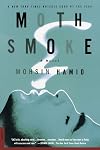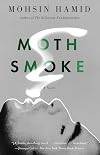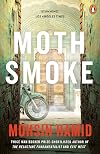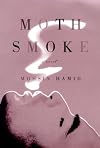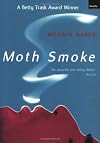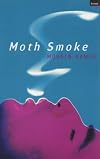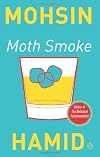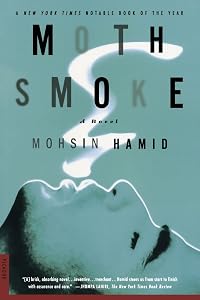
Moth Smoke
by Mohsin Hamid
On This Page
Description
Through a brilliant array of perspectives, author Mohsin Hamid tells the story of one love-struck Daru Shezad who, when fired from his banking job, instantly removes himself from the ranks of Pakistan's cell-phone-toting elite and plunges into a life of drugs and crime. But when a heist goes awry, Daru finds himself on trial for a murder he may or may not have committed. His uncertain fate mirrors that of Pakistan itself, animated by nuclear weapons and sapped by corruption.Tags
Recommendations









Member Reviews
Reading Moth Smoke by Mohsin Hamid was a little like seeing a car accident and being unable to turn away. Set in Lahore, Pakistan during 1998, we read about Daru Shezad a young banker, who loses his job, falls in love with his friend’s wife and enters into a life of drugs and crime. The story unfolds as if we are watching a trial and in alternating chapters feature a different voice as various characters tell how Daru’s life spiralled downward and out of control. What emerges is a tight story with a definite noir feel.
This is a familiar story of a personal downfall but with an exotic, unfamiliar background. The author appears to use this story about contemporary young people in an emerging Muslim country to express his feelings show more about the corrupt elite class in Pakistan that uses it’s power and privilege in an amoral way. Sharply observed, beautifully written, Moth Smoke was an interesting and slightly strange read that despite a few flaws show that this is an author who has both something to say and the ability to vividly portray his words on paper. show less
This is a familiar story of a personal downfall but with an exotic, unfamiliar background. The author appears to use this story about contemporary young people in an emerging Muslim country to express his feelings show more about the corrupt elite class in Pakistan that uses it’s power and privilege in an amoral way. Sharply observed, beautifully written, Moth Smoke was an interesting and slightly strange read that despite a few flaws show that this is an author who has both something to say and the ability to vividly portray his words on paper. show less
This debut novel is very similar to Hamid’s second and even better novel, The Reluctant Fundamentalist, with another main character who makes stupid decisions, frequently acts in the heat of anger, and is afflicted with desire for an unattainable woman. But there is something about his writing that makes the reader feel that she is in every room the character enters and can observe the swerves with great frustration. Here, Daru loses his temper and his bank position in Lahore, and his status suffers, especially as compared to his wealthy friends. You can see the train wreck coming and the deceptions Daru feeds himself, and how he feels taken advantage of even as he lies and oppresses others. As unlikable as he can be, Hamid's massive show more skills makes Daru completely compelling.
Quote: "It's hard to start thinking once you've started." show less
Quote: "It's hard to start thinking once you've started." show less
kind of lackluster. i feel like the characters lacked depth (even though mohsin hamid seemed to have tried to give them more dimension) and something about this book felt missing. it pulls you in well enough but it isn't a book that stays with you. also like... the symbolism was cool but i think it became a bit too much at times. you can tell this book was a first novel at times and i'm glad to see that mohsin hamid's style has gotten better.
also, listen, i know the use of the n-word by Ozi (or was it Daru who said that?) was done to show how ~gritty~ and ~edgy~ he is but it is bad writing to throw around slurs like they don't mean anything. pakistani authors should know that it's not their place to do that and i'm appalled that the show more editor gave it an ok and didn't think this was problematic. show less
also, listen, i know the use of the n-word by Ozi (or was it Daru who said that?) was done to show how ~gritty~ and ~edgy~ he is but it is bad writing to throw around slurs like they don't mean anything. pakistani authors should know that it's not their place to do that and i'm appalled that the show more editor gave it an ok and didn't think this was problematic. show less
I thought this was a very intriguing debut novel. It brought the culture of the city of Lahore to the forefront during a time of economic depression. Daru Shezad loses his job at a bank and becomes more and more withdrawn as he descends into drug use and becomes increasingly aware of his lower socioeconomic status relative to that of his closest friends. Struggling to prevent his friends from knowing he has no income, he dabbled in drug sales and agreed to carry out a robbery.
The story is not a simple one because, at intervals, characters other than Daru tell about themselves, each in a blameless way. Daru's voice sounds very real and tells a sad story.
The story is not a simple one because, at intervals, characters other than Daru tell about themselves, each in a blameless way. Daru's voice sounds very real and tells a sad story.
The news we get of Pakistan and surrounding war-torn regions would not suggest that there is a wide division of class culture. This book is not about war, but describes the elite of Pakistan, those who have "made it" and those who want to "make it." Daru, our main character has the intelligence and ability. But because of the death of his father in the war, and an early death of his mother, he has to depend on others for his fortune. When he asserts his independence he begins his downward spiral. And he really hits bottom. The story is very well-written and vividly shows this different slice of Pakistani life.
There's no doubt about it:Moth Smoke, by Mohsin Hamid, is an unforgettable reading experience. No matter what background you bring to this book, you'll come away entertained and enlightened...and don't be surprised if you feel a bit jet-lagged, as well. This novel immerses you in a fascinating cultural experience. For the duration of the book, you feel like you are living in modern Lahore, Pakistan.
The story is part love story, part satire, and wholly symbolic about the political state of modern Pakistan. The book is both a morality tale and a political parable.
At the start of the novel the protagonist, Daru, stands accused of murder. The structure of the novel forms a stylized trial. Daru tells us the story of the summer that lead up show more to his arrest. The summer begins when his bank executive boss fires him for a minor error of social class when dealing with a wealthy customer. Unable to get another job, Daru descends into drugs and crime. Along the way he falls in love with his best friend's wife and carries on a steamy affair with her. Alternating chapter-by-chapter with Daru's story, "witnesses" each take a chapter to talk directly to the reader to condemn or defend the accused, or to provide other relevant information. The book is filled with irony, parable, satire, humor, politics, morality, lust and longing. In the end, the reader is left to make up his mind concerning the guilt or innocence of the accused.
I was dumbfounded to learn that because the book centers on a trial, the author was successfully able to submit it as his J.D. thesis at Harvard Law School. Subsequently, it was picked up by a publisher and won widespread international literary acclaim as his debut novel. I must say I've rarely heard of another book with a stranger beginning!
What is most fascinating about this book for the Western reader, is its intricate and detailed portrayal of four levels of Pakistani culture: the ultra rich elite, the white-collar middle class, the blue-collar middle class, and the poor. The novel provides a culturally eye-opening literary adventure that makes you feel like your taking a journey through the seedy side of Lahore. The novel focuses on the decadent lifestyle of the ultra-rich-in particular, the Generation X children of the corrupt civil servants, politicians, government bureaucrats, and industrialists that form Pakistan's elite upper half-a-percentile.
The author knows this territory well. His father is a member of Pakistan's American-educated upper class. The author spent his early childhood living near Stanford University where his father was attending graduate school. Thus he learned to read and write English before he ever learned Urdu. After his father graduated, the family returned to Pakistan where Hamid spent his later childhood and adolescence. He returned to American for an undergraduate degree at Princeton and a law degree from Harvard. He worked for a few years as a management consultant in New York, and later as a freelance journalist. He now lives in London where he has dual Pakistani and U.K. citizenship.
Moth Smoketakes place in Lahore over the course of the long hot summer of 1998. This time period plays a key role in the thematic undercurrent of the novel. In May of 1998 India successfully tested five nuclear bombs, and in the summer of 1998, Pakistan responded with its first successful nuclear bomb tests. Naturally, the people of Pakistan were triumphant. Their jubilation forms the background for parts of this novel, and highlights its political themes.
The book begins and ends with a parable drawn directly from the glory days of South Asian prehistory, namely: the 17th-century Mogul Empire of Shah Jahan, the legendary Emperor who ruled over a vast Islamic empire including all of what is now India, Pakistan, and Bangladesh, as well considerable territory from other bordering states. Shah Jahan is revered in Pakistan. He was born and raised in Lahore, but established many palaces, gardens, and mosques in other major cities including the Taj Mahal as a tomb for his beloved wife Mumtaz Mahal. All the characters inMoth Smokeare named after actual historical people who played significant roles in the life of Emperor Shah Jahan.
Moth Smokeis a book that can be read, reread, analyzed, interpreted, and enjoyed on many levels. But the casual reader does not need to delve into its many layers, or know anything about Pakistan, in order to enjoy the book. The novel has a compelling story in its own right—if the truth be told, it's a literary page-turner.
For me,Moth Smoke,has been one of the most fascinating books I've read in the past year, but I must add this caveat: I've just completely an academic course on Pakistani history and culture, and this novel played a significant role in helping me pull together all the complexity and abundant problems Pakistan has to deal with on its road toward establishing a stable democracy.
The book has much to recommend it: the prose is outstanding, the characters are wholly-real and unforgettable, the plot is darkly alluring, the structure is intriguing, and the ending leaves you with a great deal to ponder.
[Note: If you finish the book and are curious about the author's take on its political themes, I recommend you visit his website (mohsinhamid.com) and read this interview he had in 2000 with Newsweek magazine concerning this novel.] show less
The story is part love story, part satire, and wholly symbolic about the political state of modern Pakistan. The book is both a morality tale and a political parable.
At the start of the novel the protagonist, Daru, stands accused of murder. The structure of the novel forms a stylized trial. Daru tells us the story of the summer that lead up show more to his arrest. The summer begins when his bank executive boss fires him for a minor error of social class when dealing with a wealthy customer. Unable to get another job, Daru descends into drugs and crime. Along the way he falls in love with his best friend's wife and carries on a steamy affair with her. Alternating chapter-by-chapter with Daru's story, "witnesses" each take a chapter to talk directly to the reader to condemn or defend the accused, or to provide other relevant information. The book is filled with irony, parable, satire, humor, politics, morality, lust and longing. In the end, the reader is left to make up his mind concerning the guilt or innocence of the accused.
I was dumbfounded to learn that because the book centers on a trial, the author was successfully able to submit it as his J.D. thesis at Harvard Law School. Subsequently, it was picked up by a publisher and won widespread international literary acclaim as his debut novel. I must say I've rarely heard of another book with a stranger beginning!
What is most fascinating about this book for the Western reader, is its intricate and detailed portrayal of four levels of Pakistani culture: the ultra rich elite, the white-collar middle class, the blue-collar middle class, and the poor. The novel provides a culturally eye-opening literary adventure that makes you feel like your taking a journey through the seedy side of Lahore. The novel focuses on the decadent lifestyle of the ultra-rich-in particular, the Generation X children of the corrupt civil servants, politicians, government bureaucrats, and industrialists that form Pakistan's elite upper half-a-percentile.
The author knows this territory well. His father is a member of Pakistan's American-educated upper class. The author spent his early childhood living near Stanford University where his father was attending graduate school. Thus he learned to read and write English before he ever learned Urdu. After his father graduated, the family returned to Pakistan where Hamid spent his later childhood and adolescence. He returned to American for an undergraduate degree at Princeton and a law degree from Harvard. He worked for a few years as a management consultant in New York, and later as a freelance journalist. He now lives in London where he has dual Pakistani and U.K. citizenship.
Moth Smoketakes place in Lahore over the course of the long hot summer of 1998. This time period plays a key role in the thematic undercurrent of the novel. In May of 1998 India successfully tested five nuclear bombs, and in the summer of 1998, Pakistan responded with its first successful nuclear bomb tests. Naturally, the people of Pakistan were triumphant. Their jubilation forms the background for parts of this novel, and highlights its political themes.
The book begins and ends with a parable drawn directly from the glory days of South Asian prehistory, namely: the 17th-century Mogul Empire of Shah Jahan, the legendary Emperor who ruled over a vast Islamic empire including all of what is now India, Pakistan, and Bangladesh, as well considerable territory from other bordering states. Shah Jahan is revered in Pakistan. He was born and raised in Lahore, but established many palaces, gardens, and mosques in other major cities including the Taj Mahal as a tomb for his beloved wife Mumtaz Mahal. All the characters inMoth Smokeare named after actual historical people who played significant roles in the life of Emperor Shah Jahan.
Moth Smokeis a book that can be read, reread, analyzed, interpreted, and enjoyed on many levels. But the casual reader does not need to delve into its many layers, or know anything about Pakistan, in order to enjoy the book. The novel has a compelling story in its own right—if the truth be told, it's a literary page-turner.
For me,Moth Smoke,has been one of the most fascinating books I've read in the past year, but I must add this caveat: I've just completely an academic course on Pakistani history and culture, and this novel played a significant role in helping me pull together all the complexity and abundant problems Pakistan has to deal with on its road toward establishing a stable democracy.
The book has much to recommend it: the prose is outstanding, the characters are wholly-real and unforgettable, the plot is darkly alluring, the structure is intriguing, and the ending leaves you with a great deal to ponder.
[Note: If you finish the book and are curious about the author's take on its political themes, I recommend you visit his website (mohsinhamid.com) and read this interview he had in 2000 with Newsweek magazine concerning this novel.] show less
Moth Smoke is the debut novel by Mohsin Hamid and tells of the descent of Daru Shezad as he loses his job, becomes more dependent on drugs and turns to crime. The story is set in 1990's Lahore in Pakistan with most of the narration coming from Daru as we witness his disintegration. Daru's narration is interspersed with stories from his former college tutor, his best friend and his best friend's wife whom Daru is in love with.
Hamid tells this story within the context of a class system where you are nobody unless you have money, air conditioning and a servant. Hamid is a great writer. The book flows well and is an easy read. However, and this is no doubt intentional, I found the main characters to be unsympathetic, self-absorbed, show more contemptable and cruel. I found Daru to be the most contemptable of all which, for me, can bring about difficulties seeing as though he is the main character. His opinion and treatment of Manucci, his 'servant', especially demonstrates his character. Daru doesn't pay Manucci and expects him to continue working for him as he treats him like crap.
"I let go and he runs into the kitchen. I know I haven't paid him in a long time. But he isn't going hungry: he eats food from my kitchen and sleeps under my roof. Sometimes servants want their pay so they can leave, and if that's his plan I won't make it easy for him. Not that he has anywhere else to go." p.217
The book is said by many reviews to provide a commentary on 1990s Pakistan and the class system that pervades. It certainly portrays an awful picture of the upper-middle classes and can be quite graphic in this portrayal and Hamid succeeds in getting this across. However, whilst I did enjoy Hamid's writing and will be seeking out more of his work, I do think the book tries to pack too much in and, as a consequence, spreads itself thinly. It didn't really hit the spot for me and it wasn't until I got to the last third of the book that I felt it had found its place. Yes, it flows along well, but in some parts it does lumber and at times I couldn't decide what it was meant to be. Is it a commentary on drug abuse? Pakistan and politics? The feudal system? A love triangle? I think it is trying to be all of these things but in doing so I think it loses an opportunity. However, my grumbles aside, it is a good book and one to recommend to those interested in this genre. show less
Hamid tells this story within the context of a class system where you are nobody unless you have money, air conditioning and a servant. Hamid is a great writer. The book flows well and is an easy read. However, and this is no doubt intentional, I found the main characters to be unsympathetic, self-absorbed, show more contemptable and cruel. I found Daru to be the most contemptable of all which, for me, can bring about difficulties seeing as though he is the main character. His opinion and treatment of Manucci, his 'servant', especially demonstrates his character. Daru doesn't pay Manucci and expects him to continue working for him as he treats him like crap.
"I let go and he runs into the kitchen. I know I haven't paid him in a long time. But he isn't going hungry: he eats food from my kitchen and sleeps under my roof. Sometimes servants want their pay so they can leave, and if that's his plan I won't make it easy for him. Not that he has anywhere else to go." p.217
The book is said by many reviews to provide a commentary on 1990s Pakistan and the class system that pervades. It certainly portrays an awful picture of the upper-middle classes and can be quite graphic in this portrayal and Hamid succeeds in getting this across. However, whilst I did enjoy Hamid's writing and will be seeking out more of his work, I do think the book tries to pack too much in and, as a consequence, spreads itself thinly. It didn't really hit the spot for me and it wasn't until I got to the last third of the book that I felt it had found its place. Yes, it flows along well, but in some parts it does lumber and at times I couldn't decide what it was meant to be. Is it a commentary on drug abuse? Pakistan and politics? The feudal system? A love triangle? I think it is trying to be all of these things but in doing so I think it loses an opportunity. However, my grumbles aside, it is a good book and one to recommend to those interested in this genre. show less
Members
- Recently Added By
Published Reviews
ThingScore 75
Mohsin Hamid's first novel turns on a brutal hit-and-run accident involving a complex socioeconomic triangle: the perpetrator of the crime, heir to a corrupt family fortune, drives a pricey Pajero S.U.V.; the sole witness is an unemployed banker in a modest Suzuki; and the victim is a poor boy on a bicycle.
added by jlelliott
Author Information

13+ Works 13,148 Members
Mohsin Hamid grew up in Lahore, attended Princeton University and Harvard Law School and worked for several years as a management consultant in New York. His first novel, Moth Smoke, was published in ten languages, won a Betty Trask Award, and was a finalist for the PEN/Hemingway Award. His essays and journalism have appeared in Time, the New York show more Times and the Guardian, among others. His latest novel is The Reluctant Fundamentalist (2007) published by Penguin. He will be featured at the Ubud Writers and Readers Festival 2015 program. He is the author of Exit West, which in 2018, won the inaugural Aspen Words Literary Prize. (Bowker Author Biography) show less
Some Editions
Awards and Honors
Awards
Notable Lists
Common Knowledge
- Original title
- Moth smoke
- Original publication date
- 2000
- People/Characters
- Darashikoh "Daru" Shezad; Manucci; Aurangzeb “Ozi” Shah; Mumtaz Kashmiri; Murad Badshah; Zulfikar Manto (alias for Mumtaz)
- Important places
- Lahore, Punjab, Pakistan
- Important events
- Chagai-I (five simultaneous underground nuclear tests conducted by Pakistan on 28 May 1998)
- Dedication
- For Nasim, Naved, and Zebunnisa
- First words
- It was said that one evening, in the year his stomach was to fail him, the Emperor Shah Jahan asked a Sufi saint what would become of the Mughal Empire (prologue).
My cell is full of shadows. - Last words
- (Click to show. Warning: May contain spoilers.)It is perhaps between hope and memory, in the atomized, atomic lands once Aurangzeb's empire, that our poets tell us Darashikoh, the apostate, called out to God as he died.
- Publisher's editor
- Saletan, Becky
Classifications
Statistics
- Members
- 873
- Popularity
- 31,161
- Reviews
- 31
- Rating
- (3.71)
- Languages
- 6 — English, French, German, Italian, Spanish, Swedish
- Media
- Paper, Audiobook, Ebook
- ISBNs
- 24
- UPCs
- 1
- ASINs
- 7