
Mohsin Hamid
Author of The Reluctant Fundamentalist
About the Author
Mohsin Hamid grew up in Lahore, attended Princeton University and Harvard Law School and worked for several years as a management consultant in New York. His first novel, Moth Smoke, was published in ten languages, won a Betty Trask Award, and was a finalist for the PEN/Hemingway Award. His essays show more and journalism have appeared in Time, the New York Times and the Guardian, among others. His latest novel is The Reluctant Fundamentalist (2007) published by Penguin. He will be featured at the Ubud Writers and Readers Festival 2015 program. He is the author of Exit West, which in 2018, won the inaugural Aspen Words Literary Prize. (Bowker Author Biography) show less
Image credit: Mohsin Hamid, Lahore, 2004. Photo Credit: Ed Kashi.
Works by Mohsin Hamid
Discontent and Its Civilizations: Dispatches from Lahore, New York, and London (2014) 199 copies, 4 reviews
A Beheading 2 copies
The Third-Born 1 copy
Associated Works
The Penguin Book of Migration Literature: Departures, Arrivals, Generations, Returns (2019) — Contributor — 96 copies
Tagged
Common Knowledge
- Birthdate
- 1971-07-23
- Gender
- male
- Education
- Princeton University (BA|1993)
Harvard Law School (JD|1997)
Lahore American School - Occupations
- novelist
management consultant - Organizations
- McKinsey & Company
Wolff Olins - Awards and honors
- Ambassador Book Award of the English Speaking Union (2008)
Asian American Literary Award (2008)
South Bank Show Annual Award for Literature (2008)
Premio Speciale Dal Testo Allo Schermo (2009)
Foreign Policy magazine's 100 Leading Global Thinkers (2013) - Nationality
- Pakistan (birth)
UK (naturalized 2006) - Birthplace
- Lahore, Pakistan
- Places of residence
- Lahore, Pakistan
New York, New York, USA
London, England, UK - Associated Place (for map)
- Lahore, Pakistan
Members
Discussions
British Author Challenge July 2026: Natalie Haynes & Mohsin Hamid in 75 Books Challenge for 2026 (Sunday 5:55pm)
Reviews

Actual rating: 4.5/5
Well, this is a tough one. I definitely liked this book, but am struggling to find words to explain why... Exit West is an emotionally powerful book, yet it is always soft: it moves slowly and delicately through Saeed and Nadia's story, never quite developing into a full-blown drama (despite the war setting), but despite that I felt a certain heaviness of heart throughout.
Hamid's prose is gentle and poetic, and manages to conjure all sorts of feelings, from the most show more noble to their complete opposite. I had read only one of his books previously, The Reluctant Fundamentalist, and felt the same sort of vibe here. I personally love his writing style, but am fully aware that it is fairly unique and as such may not appeal to everyone. Beware if you like reasonable, logic books, as this is definitely not one of them: while I wouldn't go as far as calling Exit West magical realism, it does ask the reader to suspend their disbelief as our protagonists cross magical doors that link their war-stricken country to move to Europe.
Exit West is a highly metaphorical read which, through its quiet and lyrical prose, provides one of the best accounts of the so-called "refugee crisis" I have read so far. Following two young people in love as they do their best to continue living normally while their country crumbles around them under the weight of war, it is a heartbreaking account of the difficult choices and sacrifices that so many are forced to make - and reminds us that deciding to leave is only the beginning of the struggle. Going further than this, Hamid shows us the long-term effects of forced displacement and how it forces change both in Saeed, Nadia and the other migrants around them, and in the societies that receive them.
Incredibly relevant to today's debates, Exit West is a touching tale of love, war and disillusionment; a harrowing account of displacement, survival and growing up. This book reaches across the whole spectrum of human emotions, and that is what makes it especially hard for me to review. In short, highly recommended.
I received an e-arc of this book from the publisher via NetGalley in exchange for my honest review. This did not affect my opinion of the book in any way. show less
Well, this is a tough one. I definitely liked this book, but am struggling to find words to explain why... Exit West is an emotionally powerful book, yet it is always soft: it moves slowly and delicately through Saeed and Nadia's story, never quite developing into a full-blown drama (despite the war setting), but despite that I felt a certain heaviness of heart throughout.
Hamid's prose is gentle and poetic, and manages to conjure all sorts of feelings, from the most show more noble to their complete opposite. I had read only one of his books previously, The Reluctant Fundamentalist, and felt the same sort of vibe here. I personally love his writing style, but am fully aware that it is fairly unique and as such may not appeal to everyone. Beware if you like reasonable, logic books, as this is definitely not one of them: while I wouldn't go as far as calling Exit West magical realism, it does ask the reader to suspend their disbelief as our protagonists cross magical doors that link their war-stricken country to move to Europe.
Exit West is a highly metaphorical read which, through its quiet and lyrical prose, provides one of the best accounts of the so-called "refugee crisis" I have read so far. Following two young people in love as they do their best to continue living normally while their country crumbles around them under the weight of war, it is a heartbreaking account of the difficult choices and sacrifices that so many are forced to make - and reminds us that deciding to leave is only the beginning of the struggle. Going further than this, Hamid shows us the long-term effects of forced displacement and how it forces change both in Saeed, Nadia and the other migrants around them, and in the societies that receive them.
Incredibly relevant to today's debates, Exit West is a touching tale of love, war and disillusionment; a harrowing account of displacement, survival and growing up. This book reaches across the whole spectrum of human emotions, and that is what makes it especially hard for me to review. In short, highly recommended.
I received an e-arc of this book from the publisher via NetGalley in exchange for my honest review. This did not affect my opinion of the book in any way. show less
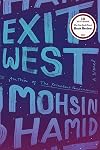
Very beautiful, elegant prose. An unspecified country and time creates a timeless setting for Nadia and Saeed, young when their love story unfolds, but never innocent. War rips their lives and country apart so they escape through a series of mysterious doors that lead them places that are not necessarily any better. An eloquent story about the human condition during mass migration and amidst often terrifying situations. "We are all migrants through time."
Does the fairy-tale tone of this novel serve to make the story a universal one of human suffering, or does it instead distance the story from actual human happenings and make it less relevant?
That seems to be the central question when considering how to evaluate this novel.
My initial reaction is to feel that the tone was too distancing, leading to a thin story with flat characters, and that disappointed me. The abundance of narrative summary combined with the lack of representational detail show more in how displaced people genuinely suffer didn't work for me. (For example, the substitution of 'doors' short-circuits and diminishes the real trials that accompany becoming a refugee.)
I was also put off by the nearly deadpan, nearly comic way that horrific acts of violence came across, in a story that is all told in narrative summary. Nadia's cousin gets blown to bits. Saeed's mother loses the top half of her head while searching for an earring in her car. It's all described in the same dispassionate distant way as the rest of the daily happenings. It could be a way to demonstrate that violence soon becomes daily fact--only, there is no moment or event that ever breaks through that distant tone, so it all becomes a little too easy to dismiss.
And I was wary of the unnamed vagueness of a country in upheaval in the beginning of the novel, especially when combined with the concreteness of the places where the couple fled--as if any non-Western upheaval can be substituted for the next one, so the name of the country doesn't matter, whereas the West is full of concrete places with unique characteristics.
And: I felt more than a little manipulated by the representation of Nadia--the "look, a woman from a Muslim country who can swear and have premarital sex!" message felt forced because over and over again she does the unexpected thing--her assertion that she doesn't pray, her swearing, her comfort with promiscuity and psychotropic drugs...it was too much.
But I'm such an outlier here from the reviews in places I respect--The Atlantic, The New Yorker...so I think it comes down to "this wasn't the book I wanted to read," rather than any fault of the book itself. show less
That seems to be the central question when considering how to evaluate this novel.
My initial reaction is to feel that the tone was too distancing, leading to a thin story with flat characters, and that disappointed me. The abundance of narrative summary combined with the lack of representational detail show more in how displaced people genuinely suffer didn't work for me. (For example, the substitution of 'doors' short-circuits and diminishes the real trials that accompany becoming a refugee.)
I was also put off by the nearly deadpan, nearly comic way that horrific acts of violence came across, in a story that is all told in narrative summary. Nadia's cousin gets blown to bits. Saeed's mother loses the top half of her head while searching for an earring in her car. It's all described in the same dispassionate distant way as the rest of the daily happenings. It could be a way to demonstrate that violence soon becomes daily fact--only, there is no moment or event that ever breaks through that distant tone, so it all becomes a little too easy to dismiss.
And I was wary of the unnamed vagueness of a country in upheaval in the beginning of the novel, especially when combined with the concreteness of the places where the couple fled--as if any non-Western upheaval can be substituted for the next one, so the name of the country doesn't matter, whereas the West is full of concrete places with unique characteristics.
And: I felt more than a little manipulated by the representation of Nadia--the "look, a woman from a Muslim country who can swear and have premarital sex!" message felt forced because over and over again she does the unexpected thing--her assertion that she doesn't pray, her swearing, her comfort with promiscuity and psychotropic drugs...it was too much.
But I'm such an outlier here from the reviews in places I respect--The Atlantic, The New Yorker...so I think it comes down to "this wasn't the book I wanted to read," rather than any fault of the book itself. show less
In almost four decades of reading, only two books have moved me to tears. Alan Lightman's Einstein's Dreams, because of its vignette about children's inevitable separation, and this book.
Seeing the events currently tearing our world apart (war, militancy, premature violent death, emigration) through the eyes of the refugees instead of citizens was refreshing and informative but it moves us only to sympathy.
It is the arc of the love story of the two main characters, the refugees fleeing show more their homeland, that left me grabbing tissues. Their initial wooing, the codependence, the further progress of their lives together is unfurled with such detail and honesty it becomes the universal story of anyone who has ever experienced infatuation, true intimacy and its aftermath. show less
Seeing the events currently tearing our world apart (war, militancy, premature violent death, emigration) through the eyes of the refugees instead of citizens was refreshing and informative but it moves us only to sympathy.
It is the arc of the love story of the two main characters, the refugees fleeing show more their homeland, that left me grabbing tissues. Their initial wooing, the codependence, the further progress of their lives together is unfurled with such detail and honesty it becomes the universal story of anyone who has ever experienced infatuation, true intimacy and its aftermath. show less
Lists
Booker Prize (2)
. (1)
Review 2 (1)
Library List 4.5 (1)
To read (1)
Indie Next Picks (1)
Asia (1)
Best of 2017 (1)
Short and Sweet (1)
To Read (1)
Allie's Wishlist (1)
Magic Realism (1)
Fiction: BLM (1)
Awards


You May Also Like


Associated Authors
Statistics
- Works
- 13
- Also by
- 6
- Members
- 13,160
- Popularity
- #1,772
- Rating
- 3.8
- Reviews
- 672
- ISBNs
- 223
- Languages
- 17
- Favorited
- 13
