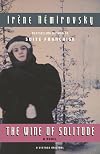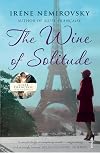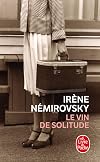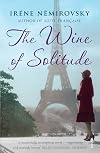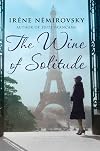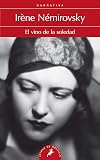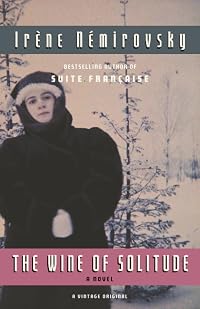
The Wine of Solitude
by Irène Némirovsky
On This Page
Description
"Beginning in a fictionalized Kiev, The Wine of Solitude follows the Karol family through the Great War and the Russian Revolution, as the young Hélène grows from a dreamy, unhappy child into a strong willed young woman. From the hot Kiev summers to the cruel winters of St Petersburg and eventually to springtime in Paris, the would-be writer Hélène blossoms, despite her mother's neglect, into a clear-eyed observer of the life around her. Here is a powerful tale of disillusionment-the show more story of an upbringing that produces a young woman as hard as a diamond, prepared to wreak a shattering revenge on her mother."--P. [4] of cover. show lessTags
Recommendations
















Member Reviews
In what is regarded as at least a semi-autobiographical work, The Wine of Solitude relates the coming-of-age of Helene, who is 8 when the novel begins and 21 when it ends. While her father makes a lot of money through his various business ventures in Kiev, it’s a very sad family, with her mother openly carrying on an affair with a man 15 years younger than she is, and completely uncaring towards her daughter. Meanwhile her father has a gambling problem and is often away from the home, at one point for a couple of years. She takes solace in her French governess and her own development into a young woman noticed by the men around her.
Even if her mother is an awful person, someone who is shallow, vain, and unloving, the open descriptions show more of her sexual desire are liberating. “To hold a man tightly in her arms when she didn’t even know his name or where he came from, a man she would never see again, that and that alone gave her the sharp thrill of pleasure she desired,” Nemirovsky writes early on. But the child observes little signs that gradually develop into full understanding, like her mother “stuffed into a corset at three o’clock in the afternoon,” and hatred grows in her heart. Central to this novel is just how broken this mother-daughter relationship is, and whether Helene will find herself acting in the same ways when she becomes an adult.
Her father is hardly better, at one point leaving her as a child, alone and hungry in the lobby of a casino, until late at night while he gambles. “I feel like a suitcase forgotten at the left luggage office,” she thinks to herself. These characters are all sharply drawn, including the grandmother who is such a timid soul, and the novel is evocative of the time period and the places the family goes. They flee the Russian Revolution by going to Finland, and then eventually make their way to Paris. By the time the parents are in their mid-40’s, we feel the full pathos of the lives they’ve led catching up to them, in sad but honest writing.
The opulence of the family as it rises into the nouveau riche is contrasted with the horrible things going on in the world – WWI in addition to the revolution, and things like people desperately marching for food – but those things are only distantly felt because Nemirovsky doesn’t devote a lot of space to them. While that may have been honest to the experience of the young woman, it would have been more satisfying to me had these things been expanded on. In the little bits we get, though, like when people outside are carrying their dead children to the cemetery in sacks because there aren’t enough coffins, and a man is executed against a wall, after which Helene is studying Racine and the history of the Russian tsars, it’s devastating.
It's also absolutely heartbreaking to know that Nemirovsky would die at Auschwitz just seven years later, at the age of 39, followed shortly after by her husband. Such a tragedy, and such a waste.
Quotes:
On desire:
“She let him kiss her, even leaned in towards him, offering her face, her hands, her lips, savoring waves of delight, aching waves of bliss that pierced straight through her body.”
On families, this bitter cynicism from Helene:
“The father is thinking about a woman he met in the street, and the mother has only just said goodbye to her lover. They do not understand their children, and their children do not love hem; the young girl is thinking about the boy she’s in love with, and the boy about the naughty words he’s learned at school. The little children will grow up and be just like them. Books lie. There is no virtue, no love in the world. Every household is the same. In every family there is nothing but greed, lies and mutual misunderstanding.”
On solitude:
“’I’m not afraid of life,’ she thought. ‘The past has given me my first experiences of the world. They have been exceptionally difficult, but they have forged my courage and my pride. And that immutable treasure is mine, belongs to me. I may be alone, but my solitude is powerful and intoxicating.’” show less
Even if her mother is an awful person, someone who is shallow, vain, and unloving, the open descriptions show more of her sexual desire are liberating. “To hold a man tightly in her arms when she didn’t even know his name or where he came from, a man she would never see again, that and that alone gave her the sharp thrill of pleasure she desired,” Nemirovsky writes early on. But the child observes little signs that gradually develop into full understanding, like her mother “stuffed into a corset at three o’clock in the afternoon,” and hatred grows in her heart. Central to this novel is just how broken this mother-daughter relationship is, and whether Helene will find herself acting in the same ways when she becomes an adult.
Her father is hardly better, at one point leaving her as a child, alone and hungry in the lobby of a casino, until late at night while he gambles. “I feel like a suitcase forgotten at the left luggage office,” she thinks to herself. These characters are all sharply drawn, including the grandmother who is such a timid soul, and the novel is evocative of the time period and the places the family goes. They flee the Russian Revolution by going to Finland, and then eventually make their way to Paris. By the time the parents are in their mid-40’s, we feel the full pathos of the lives they’ve led catching up to them, in sad but honest writing.
The opulence of the family as it rises into the nouveau riche is contrasted with the horrible things going on in the world – WWI in addition to the revolution, and things like people desperately marching for food – but those things are only distantly felt because Nemirovsky doesn’t devote a lot of space to them. While that may have been honest to the experience of the young woman, it would have been more satisfying to me had these things been expanded on. In the little bits we get, though, like when people outside are carrying their dead children to the cemetery in sacks because there aren’t enough coffins, and a man is executed against a wall, after which Helene is studying Racine and the history of the Russian tsars, it’s devastating.
It's also absolutely heartbreaking to know that Nemirovsky would die at Auschwitz just seven years later, at the age of 39, followed shortly after by her husband. Such a tragedy, and such a waste.
Quotes:
On desire:
“She let him kiss her, even leaned in towards him, offering her face, her hands, her lips, savoring waves of delight, aching waves of bliss that pierced straight through her body.”
On families, this bitter cynicism from Helene:
“The father is thinking about a woman he met in the street, and the mother has only just said goodbye to her lover. They do not understand their children, and their children do not love hem; the young girl is thinking about the boy she’s in love with, and the boy about the naughty words he’s learned at school. The little children will grow up and be just like them. Books lie. There is no virtue, no love in the world. Every household is the same. In every family there is nothing but greed, lies and mutual misunderstanding.”
On solitude:
“’I’m not afraid of life,’ she thought. ‘The past has given me my first experiences of the world. They have been exceptionally difficult, but they have forged my courage and my pride. And that immutable treasure is mine, belongs to me. I may be alone, but my solitude is powerful and intoxicating.’” show less
[This is a review I wrote in 2012]
**Powerful story about a young girl's loss of innocence**
The novel begins in a shabby apartment in a provincial town in the Ukraine ...'The silence of this sleepy provincial town, lost deep within Russia, was intense, heavy and overwhelmingly sad.' Eight-year-old Hélène sits at the dinner table with her mother, father, grandparents and French governess, Mademoiselle Rose. Devoid of affection from her mother, indifferent to the affections of her grandparents, Hélène has only eyes for her beloved Papa, who rarely makes the time to notice her, and her practical and caring Mademoiselle Rose. In this environment young Hélène's distance from her mother begins its descent to hatred, fuelled by her show more mother's love affairs, her treatment of her papa, her coldness towards her daughter and treatment of Mlle Rose.
As the family's fortunes change, Boris moves them first to St. Petersburg, leaving Hélène's grandparents behind and taking with them Hélène's cousin and Bella's lover, Max; subsequently, the Russian Revolution leads Boris and Bella to hide money and share certificates in every available piece of furniture, stuffing notes into sofas for safekeeping. Hélène sadly watches the Revolution go on around them from her privileged position, despondent at her parents ignorance of the hardships surrounding them. The Revolution then leads them to flee first to the Finnish borders, and then to Helsinki; later, after the War's end, to Paris. Hélène's teenage years are spent mostly in isolation, against this backdrop of war and upheaval, changing fortunes, lies and deceit. She grows up devoid of affection, falls into an innocent, brief affair with a married man and hatches a plot to wreak revenge on her mother. In all, we see her emerge into a hard and bitter young woman; her redeeming features being her determination to turn out differently and not succumb to the same path as her mother. It's not difficult to empathise with this bitter, young Hélène as what else has she known?
A number of Irène Némirovsky's novels carry this theme of mother-daughter estrangement and the rebellious daughter, and 'The Wine of Solitude' is believed to be the most autobiographical of these - the fleeing from the Russian Empire, the year spent in Finland, before settling in Paris. The denouement of the novel is perhaps more final than Irène's gradual estrangement from her mother (reference. Jonathan Weiss, 'Irène Némirovsky: Her Life and Works'). It leaves the reader to wonder if this is the dramatic exit from her mother's life that Irene wishes she had taken.
It's a very well-executed novel, short on words but not lacking in description; fluidly written, evocative and shocking and undeniably, a powerful coming-of-age story. show less
**Powerful story about a young girl's loss of innocence**
The novel begins in a shabby apartment in a provincial town in the Ukraine ...'The silence of this sleepy provincial town, lost deep within Russia, was intense, heavy and overwhelmingly sad.' Eight-year-old Hélène sits at the dinner table with her mother, father, grandparents and French governess, Mademoiselle Rose. Devoid of affection from her mother, indifferent to the affections of her grandparents, Hélène has only eyes for her beloved Papa, who rarely makes the time to notice her, and her practical and caring Mademoiselle Rose. In this environment young Hélène's distance from her mother begins its descent to hatred, fuelled by her show more mother's love affairs, her treatment of her papa, her coldness towards her daughter and treatment of Mlle Rose.
As the family's fortunes change, Boris moves them first to St. Petersburg, leaving Hélène's grandparents behind and taking with them Hélène's cousin and Bella's lover, Max; subsequently, the Russian Revolution leads Boris and Bella to hide money and share certificates in every available piece of furniture, stuffing notes into sofas for safekeeping. Hélène sadly watches the Revolution go on around them from her privileged position, despondent at her parents ignorance of the hardships surrounding them. The Revolution then leads them to flee first to the Finnish borders, and then to Helsinki; later, after the War's end, to Paris. Hélène's teenage years are spent mostly in isolation, against this backdrop of war and upheaval, changing fortunes, lies and deceit. She grows up devoid of affection, falls into an innocent, brief affair with a married man and hatches a plot to wreak revenge on her mother. In all, we see her emerge into a hard and bitter young woman; her redeeming features being her determination to turn out differently and not succumb to the same path as her mother. It's not difficult to empathise with this bitter, young Hélène as what else has she known?
A number of Irène Némirovsky's novels carry this theme of mother-daughter estrangement and the rebellious daughter, and 'The Wine of Solitude' is believed to be the most autobiographical of these - the fleeing from the Russian Empire, the year spent in Finland, before settling in Paris. The denouement of the novel is perhaps more final than Irène's gradual estrangement from her mother (reference. Jonathan Weiss, 'Irène Némirovsky: Her Life and Works'). It leaves the reader to wonder if this is the dramatic exit from her mother's life that Irene wishes she had taken.
It's a very well-executed novel, short on words but not lacking in description; fluidly written, evocative and shocking and undeniably, a powerful coming-of-age story. show less
En una larga sobremesa en el restaurante del Grémio Literário, el histórico club de Lisboa, un viejo camarero recuerda lo que una vez le contara un anciano mexicano. Fue en la noche revolucionaria del 25 de Abril de 1974. El que fuera consejero de la legación mexicana en el Portugal de los años treinta y cuarenta, rememora el auge del fascismo, el inicio de la guerra civil española, la muerte del general Sanjurjo, la soledad del embajador Sánchez Albornoz y las maniobras de Nicolás Franco. Recuerda también su propio papel en la protección de los refugiados republicanos, desde campesinos, obreros y milicianos hasta el poeta Miguel Hernández, llevado a cabo con la ayuda de una red clandestina y de otros diplomáticos como show more Gabriela Mistral, cónsul de Chile. Las tensiones con el gobierno portugués fueron constantes. En un ambiente de intrigas cosmopolitas, la amenaza de una invasión española, las presiones del Eje para que Portugal entrara en la guerra mundial, además de las de los británicos para que mantuviese su neutralidad, fueron el caldo de cultivo de un extraño grupúsculo, formado por periodistas, policías y artistas, que buscaba refundar la nación, tal vez en algún lugar de Ultramar. show less
Originally published in 1935, this is Nemirovsky’s latest novel to be translated into English. Autobiographical in nature, it is very much a portrait of the artist as a young woman.
The Karol family (Boris, Bella and their daughter Helene) moves from Kiev to St. Petersburg to Finland to Paris as the events of World War I and the Russian Revolution unfold and force the family to flee. Told largely from Helene’s point of view, we see the life of a lonely girl whose only emotional stability is provided by her French governess. Helene’s father is seldom home and once even abandons his only daughter for hours while he goes inside a casino to satisfy his gambling addiction. Her totally self-absorbed mother has no maternal instinct show more whatsoever. She sees Helene as a nuisance and inconvenience: “A child, a living reproach, an embarrassment” (30).
It is the portrayal of Bella that I found most interesting. She “only lived to enjoy herself” (26). Bella’s lover even admits, “’To Bella, relationships, simple human relationships, family ties, friendships, companionship, don’t exist’” (199). Bella longs for nothing other than wealth and lovers. Animal imagery is frequently used to describe her; her movements remind Helene of the serpents on Medusa’s head (16) and her nails are “shaped like claws” (194). What is troubling about the portrayal is that Bella has no redeeming qualities. When Helene threatens to disclose her mother’s infidelity, Bella’s reaction is extreme: “’You miserable thing, you ungrateful little hussy. You’re a horrible liar! You’re nothing but a fool, do you hear me? Nothing but a wretched idiot’” (106). She then goes on to punish her in the one way that will hurt her daughter the most.
The book is a coming-of-age novel. We see Helene from the age of 8 to the age of 21. In that time she realizes many truths. Because of her dysfunctional family, it is not surprising that she concludes, “Books lie. There is no virtue, no love in the world. Every household is the same. In every family there is nothing but greed, lies and mutual misunderstanding” (104). It is also not surprising that she wants more than anything to be free: “’free from my house, my childhood, my mother, free from everything I hated, everything that weighed heavily on my heart’” (246). As she matures, she acknowledges that her past has “forged my courage and my pride” but she opts for a life of solitude, “but my solitude is powerful and intoxicating” (247).
This book is not as good as "Suite Francaise", Nemirovsky’s best-known novel, but it clearly foreshadows her later work in its astute observations of people. show less
The Karol family (Boris, Bella and their daughter Helene) moves from Kiev to St. Petersburg to Finland to Paris as the events of World War I and the Russian Revolution unfold and force the family to flee. Told largely from Helene’s point of view, we see the life of a lonely girl whose only emotional stability is provided by her French governess. Helene’s father is seldom home and once even abandons his only daughter for hours while he goes inside a casino to satisfy his gambling addiction. Her totally self-absorbed mother has no maternal instinct show more whatsoever. She sees Helene as a nuisance and inconvenience: “A child, a living reproach, an embarrassment” (30).
It is the portrayal of Bella that I found most interesting. She “only lived to enjoy herself” (26). Bella’s lover even admits, “’To Bella, relationships, simple human relationships, family ties, friendships, companionship, don’t exist’” (199). Bella longs for nothing other than wealth and lovers. Animal imagery is frequently used to describe her; her movements remind Helene of the serpents on Medusa’s head (16) and her nails are “shaped like claws” (194). What is troubling about the portrayal is that Bella has no redeeming qualities. When Helene threatens to disclose her mother’s infidelity, Bella’s reaction is extreme: “’You miserable thing, you ungrateful little hussy. You’re a horrible liar! You’re nothing but a fool, do you hear me? Nothing but a wretched idiot’” (106). She then goes on to punish her in the one way that will hurt her daughter the most.
The book is a coming-of-age novel. We see Helene from the age of 8 to the age of 21. In that time she realizes many truths. Because of her dysfunctional family, it is not surprising that she concludes, “Books lie. There is no virtue, no love in the world. Every household is the same. In every family there is nothing but greed, lies and mutual misunderstanding” (104). It is also not surprising that she wants more than anything to be free: “’free from my house, my childhood, my mother, free from everything I hated, everything that weighed heavily on my heart’” (246). As she matures, she acknowledges that her past has “forged my courage and my pride” but she opts for a life of solitude, “but my solitude is powerful and intoxicating” (247).
This book is not as good as "Suite Francaise", Nemirovsky’s best-known novel, but it clearly foreshadows her later work in its astute observations of people. show less
(7.5) This continues the theme from some of Nemirovsky's other novels of desperate societal women who need constant reassurance of their beauty and the daughter who is ignored and neglected. It is a slow contemplative story but worth persevering to a positive ending. I note from other reviewers it is considered autobiographical, that being the case , what a sad early life this author lead and then to die in the concentration camps after finally finding love and happiness. A beautiful title, too. I loved one of the closing sentences - 'I may be alone, but my solitude is powerful and intoxicating.'
I don't know if it was the writing or just the translation, but I found myself totally indifferent to this bizarre novel.
A cold story full of colder still characters, it was like reading the narrative through a thick pane of glass. I couldn't connect with the characters, and the story ran along at such a pace that I kept feeling like I was only just catching up and getting into it when she'd be off at a sprint to the next part of the story.
It was my first Russian novel, so perhaps it's just a cultural way of writing that I don't get, or maybe I didn't pick such a great novel to start on my Russian literary journey. The internal dialogue of Helene kept reminding me of wooden English-speaking actors in cruddy B-movies speaking with show more horrendously fake Russian accents.
I believe this is Nemirovsky's most autobiographical novel. I feel a teenage "whatever" coming on...
3 stars - yawn. show less
A cold story full of colder still characters, it was like reading the narrative through a thick pane of glass. I couldn't connect with the characters, and the story ran along at such a pace that I kept feeling like I was only just catching up and getting into it when she'd be off at a sprint to the next part of the story.
It was my first Russian novel, so perhaps it's just a cultural way of writing that I don't get, or maybe I didn't pick such a great novel to start on my Russian literary journey. The internal dialogue of Helene kept reminding me of wooden English-speaking actors in cruddy B-movies speaking with show more horrendously fake Russian accents.
I believe this is Nemirovsky's most autobiographical novel. I feel a teenage "whatever" coming on...
3 stars - yawn. show less
"I'm only sixteen but my heart is filled with poison", 25 July 2015
This review is from: The Wine of Solitude (Paperback)
Nemirovsky's most autobiographical work, starting with the central character - Helene - as a child. Her father loves her but is far more interested in gambling, while her mother (for whom Helene is growing to increasingly hate) is preoccupied with her younger lover.
As World War I and the Russian Revolution go on around them, the family are forced to relocate to St Petersburg and then Finland and France (just like the Nemirovskys actually did.)
There are wonderful descriptive passages, notably of her few happy times in Finland. But life is harsh, and as Helene grows up she starts to contemplate revenge on her mother...
I show more quite enjoyed this but it's not in the same league as the superlative 'Suite Francaise'. show less
This review is from: The Wine of Solitude (Paperback)
Nemirovsky's most autobiographical work, starting with the central character - Helene - as a child. Her father loves her but is far more interested in gambling, while her mother (for whom Helene is growing to increasingly hate) is preoccupied with her younger lover.
As World War I and the Russian Revolution go on around them, the family are forced to relocate to St Petersburg and then Finland and France (just like the Nemirovskys actually did.)
There are wonderful descriptive passages, notably of her few happy times in Finland. But life is harsh, and as Helene grows up she starts to contemplate revenge on her mother...
I show more quite enjoyed this but it's not in the same league as the superlative 'Suite Francaise'. show less
Members
- Recently Added By
Lists

Books Read in 2025
4,128 works; 98 members
Author Information

75+ Works 16,990 Members
Some Editions
Awards and Honors
Notable Lists
Series
Belongs to Publisher Series
Les ales esteses (280)
Work Relationships
Is contained in
Has as a commentary on the text
Common Knowledge
- Canonical title
- The Wine of Solitude
- Original title
- Le Vin de solitude
- Original publication date
- 1935
- People/Characters
- Helene Karol; Bella Karol (nee Safronov); Boris Karol; Max; Mademoiselle Rose
- Important places
- Kyiv, Ukraine; St Petersburg, Russia; Finland; France
- Important events
- World War I; Russian Revolution
- First words
- In the part of the world where Hélène Karol was born, dusk began with a thick cloud of dust that swirled slowly in the air before drifting to the ground, bringing the damp night with it.
- Last words
- (Click to show. Warning: May contain spoilers.)She stood up and and that very moment the clouds parted; inbetween the pillars of the Arc de Triomphe, blue sky appeared to light her way.
- Original language*
- Francès
*Some information comes from Common Knowledge in other languages. Click "Edit" for more information.
Classifications
Statistics
- Members
- 378
- Popularity
- 83,092
- Reviews
- 23
- Rating
- (3.55)
- Languages
- 9 — Catalan, English, Finnish, French, German, Italian, Portuguese, Spanish, Swedish
- Media
- Paper, Ebook
- ISBNs
- 31
- ASINs
- 9